
Articles | Volume 19, issue 4
https://doi.org/10.5194/amt-19-1201-2026
© Author(s) 2026. This work is distributed under
the Creative Commons Attribution 4.0 License.
the Creative Commons Attribution 4.0 License.
https://doi.org/10.5194/amt-19-1201-2026
© Author(s) 2026. This work is distributed under
the Creative Commons Attribution 4.0 License.
the Creative Commons Attribution 4.0 License.
Research article
| Highlight paper
| 
18 Feb 2026
Research article | Highlight paper |
| 18 Feb 2026
| 18 Feb 2026
Enhancing dust aerosols monitoring capabilities across North Africa and the Middle East using the A-Train satellite constellation

Department of Physics, Aristotle University of Thessaloniki, Thessaloniki, 54124, Greece
Physicalisch Meteorologisches Observatorium, World Radiation Center, Davos, 7260, Switzerland
Institute for Astronomy, Astrophysics, Space Applications and Remote Sensing, National Observatory of Athens, Athens, 11810, Greece
Nikolaos Siomos
Chair of Experimental Meteorology, Faculty of Physics, Ludwig-Maximilians-Universität München, 80539 München, Germany
Stelios Kazadzis
Physicalisch Meteorologisches Observatorium, World Radiation Center, Davos, 7260, Switzerland
Emmanouil Proestakis
Institute for Astronomy, Astrophysics, Space Applications and Remote Sensing, National Observatory of Athens, Athens, 11810, Greece
Kalliopi Artemis Voudouri
Institute for Astronomy, Astrophysics, Space Applications and Remote Sensing, National Observatory of Athens, Athens, 11810, Greece
Department of Physics, Aristotle University of Thessaloniki, Thessaloniki, 54124, Greece
Anton Lopatin
GRASP SAS, Lille, 59000, France
Oleg Dubovik
Laboratoire d'Optique Atmosphérique, CNRS/Université de Lille, Villeneuve-d'Ascq, 59650, France
Kleareti Tourpali
Department of Physics, Aristotle University of Thessaloniki, Thessaloniki, 54124, Greece
Christos Zerefos
Research Centre for Atmospheric Physics and Climatology, Academy of Athens, Athens, 11521, Greece
Biomedical Research Foundation, Academy of Athens, Athens, 11527, Greece
Navarino Environmental Observatory (N.E.O.), Messinia, 24001, Greece
Mariolopoulos-Kanaginis Foundation for the Environmental Sciences, Athens, 11251, Greece
Vassilis Amiridis
Institute for Astronomy, Astrophysics, Space Applications and Remote Sensing, National Observatory of Athens, Athens, 11810, Greece
Antonis Gkikas
Research Centre for Atmospheric Physics and Climatology, Academy of Athens, Athens, 11521, Greece
Institute for Astronomy, Astrophysics, Space Applications and Remote Sensing, National Observatory of Athens, Athens, 11810, Greece
Related authors
Georgia Charalampous, Konstantinos Fragkos, Ilias Fountoulakis, Kyriakoula Papachristopoulou, Anna Moustaka, Argyro Nisantzi, Diofantos Hadjimitsis, and Stelios Kazadzis
EGUsphere, https://doi.org/10.5194/egusphere-2026-6018, https://doi.org/10.5194/egusphere-2026-6018, 2026
This preprint is open for discussion and under review for Atmospheric Measurement Techniques (AMT).
Short summary
Short summary
Cyprus has very high levels of ultraviolet radiation from the Sun, so reliable daily forecasts help people protect their health. We compared two forecasting systems with measurements from five stations across the island. Both worked well on clear days but were less accurate when clouds were present. During a wildfire in July 2025, smoke cut the measured ultraviolet levels by about 40 percent, which the forecasts missed. Better cloud and smoke information is needed to improve forecasts.
Georgia Charalampous, Konstantinos Fragkos, Ilias Fountoulakis, Kyriakoula Papachristopoulou, Anna Moustaka, Franco Marenco, Yevgeny Derimian, Argyro Nisantzi, Rodanthi-Elisavet Mamouri, Diofantos Hadjimitsis, and Stelios Kazadzis
Atmos. Meas. Tech., 19, 5753–5783, https://doi.org/10.5194/amt-19-5753-2026, https://doi.org/10.5194/amt-19-5753-2026, 2026
Short summary
Short summary
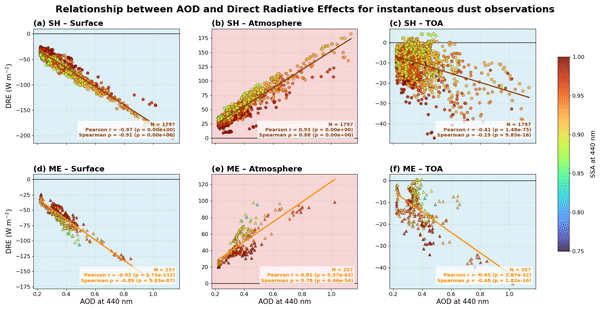
This study analyses seven years of dust events over Cyprus to identify their origin and quantify their impact on surface solar radiation. Most events originated from the Sahara. Dust reduces surface solar radiation, leading to surface cooling, while also causing atmospheric heating and cooling at the top of the atmosphere. Surface reductions in solar radiation reach about 5 %–15 % on average, with effects mainly controlled by dust amount.
Dimitra Kouklaki, Georgia Charalampous, Anna Moustaka, Alkistis Papetta, Celia Herrero del Barrio, Rizos-Theodoros Chadoulis, S. Yeşer Aslanoğlu, Sara Herrero-Anta, Michail Mytilinaios, Nikolaos Papadimitriou, Katerina Anyfanti, Christos Spyrou, Daniela Meloni, Konstantinos Fragkos, Yevgeny Derimian, Tatiana Di Iorio, Rodanthi-Elisavet Mamouri, Vassilis Amiridis, Stavros Solomos, Stelios Kazadzis, and Ilias Fountoulakis
Atmos. Meas. Tech., 19, 5633–5657, https://doi.org/10.5194/amt-19-5633-2026, https://doi.org/10.5194/amt-19-5633-2026, 2026
Short summary
Short summary
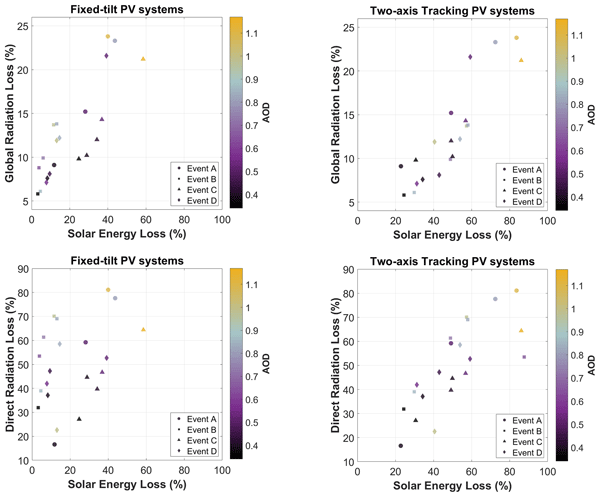
In the present study we investigated how aerosols, and specifically dust, affect solar radiation and energy production by investigating several dust events across multiple sites in the Mediterranean Basin between 2021 and 2022 through ground-based observations and model simulations. The results revealed that dust can significantly attenuate solar radiation and, therefore, lead to considerable losses in solar power generation, specifically in the case of solar tracking systems.
Anna Moustaka, Kyriakoula Papachristopoulou, Georgia Charalampous, and Stelios Kazadzis
EGUsphere, https://doi.org/10.5194/egusphere-2026-4413, https://doi.org/10.5194/egusphere-2026-4413, 2026
Short summary
Short summary
Atmospheric particles affect how much sunlight reaches the Earth's surface, but their uncertainty is rarely considered in solar energy studies. We estimated this uncertainty from a global atmospheric dataset and examined its effect on sunlight reaching the ground between 2003 and 2024. The results improve confidence in solar energy assessments, particularly in dusty and polluted regions.
Alkistis Papetta, Celia Herrero del Barrio, S. Yeşer Aslanoğlu, Rizos-Theodoros Chadoulis, Georgia Charalampous, Sara Herrero-Anta, Dimitra Kouklaki, Michail Mytilinaios, Anna Moustaka, Emmanouil Proestakis, Vassilis Amiridis, Christos Spyrou, Antonis Gkikas, Michael Pikridas, Maria Kezoudi, Franco Marenco, Jean Sciare, Sophie Vandenbussche, Stavros Solomos, Stelios Kazadzis, and Ilias Fountoulakis
Atmos. Chem. Phys., 26, 12395–12434, https://doi.org/10.5194/acp-26-12395-2026, https://doi.org/10.5194/acp-26-12395-2026, 2026
Short summary
Short summary
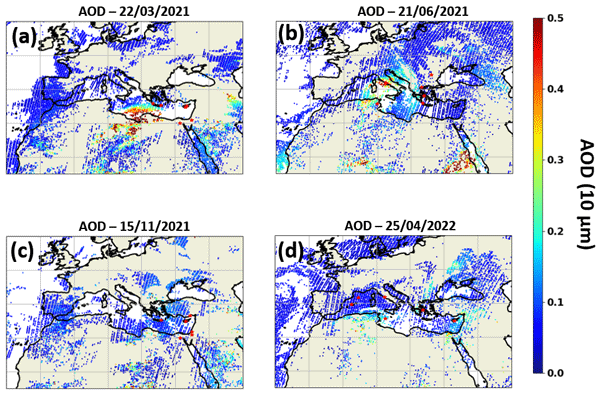
We studied four major dust events from the Sahara and the Middle East over the Mediterranean. Saharan dust events exhibited coarser and more scattering particles, while Middle Eastern dust was finer and mixed with pollution. Differences in absorption could not be explained by mineralogy and are attributed to mixing.
Anna Moustaka, Antonis Gkikas, Stavros-Andreas Logothetis, Johannes Flemming, Samuel Rémy, Melanie Ades, Angela Benedetti, Kleareti Tourpali, Vassilis Amiridis, and Stelios Kazadzis
EGUsphere, https://doi.org/10.5194/egusphere-2026-1107, https://doi.org/10.5194/egusphere-2026-1107, 2026
This preprint is open for discussion and under review for Atmospheric Chemistry and Physics (ACP).
Short summary
Short summary
We examined how atmospheric aerosols have changed worldwide over the past two decades using a global atmospheric reanalysis together with ground-based observations. We found strong regional differences, with clear declines in some industrialized areas and increases in parts of South Asia and the Middle East. These long-term records help improve understanding of changes in climate and air quality.
Georgia Charalampous, Konstantinos Fragkos, Ilias Fountoulakis, Kyriakoula Papachristopoulou, Anna Moustaka, Argyro Nisantzi, Diofantos Hadjimitsis, and Stelios Kazadzis
EGUsphere, https://doi.org/10.5194/egusphere-2026-6018, https://doi.org/10.5194/egusphere-2026-6018, 2026
This preprint is open for discussion and under review for Atmospheric Measurement Techniques (AMT).
Short summary
Short summary
Cyprus has very high levels of ultraviolet radiation from the Sun, so reliable daily forecasts help people protect their health. We compared two forecasting systems with measurements from five stations across the island. Both worked well on clear days but were less accurate when clouds were present. During a wildfire in July 2025, smoke cut the measured ultraviolet levels by about 40 percent, which the forecasts missed. Better cloud and smoke information is needed to improve forecasts.
Konstantin Kuznetsov, Oleg Dubovik, Anton Lopatin, Elena Lind, and David Fuertes
EGUsphere, https://doi.org/10.5194/egusphere-2026-5392, https://doi.org/10.5194/egusphere-2026-5392, 2026
This preprint is open for discussion and under review for Geoscientific Model Development (GMD).
Short summary
Short summary
We developed a new computer model to track gases and airborne particles using weather records, with future pollution monitoring in mind. Tests using controlled releases in Europe and North America showed agreement with observed pollution movement and amounts. A Saharan dust study showed moderate agreement with satellite estimates. The model provides a reproducible basis for combining satellite measurements and simulations.
Sean M. Davis, William T. Ball, Yue Jia, Gabriel Chiodo, Justin A. Alsing, James Keeble, Hideharu Akiyoshi, Carlo Arosio, Ewa M. Bednarz, Andreas Chrysanthou, Melanie Coldewey-Egbers, Robert Damadeo, Sandip Dhomse, Mohamadou A. Diallo, Simone Dietmuller, Roland Eichinger, Stacey Frith, Birgit Hassler, Michaela I. Hegglin, Daan Hubert, Patrick Jöckel, Béatrice Josse, Natalya Kramarova, Diego Loyola, Eliane Maillard Barras, Marion Marchand, Olaf Morgenstern, David Plummer, Robert W. Portmann, Karen H. Rosenlof, Alexei Rozanov, Viktoria F. Sofieva, Johannes Staehelin, Timofei Sukhodolov, Kleareti Tourpali, Ronald J. Van der A, H. J. Ray Wang, Krzysztof Wargan, Shingo Watanabe, Mark Weber, Jeannette D. Wild, Yousuke Yamashita, and Jerry Ziemke
Atmos. Chem. Phys., 26, 13817–13843, https://doi.org/10.5194/acp-26-13817-2026, https://doi.org/10.5194/acp-26-13817-2026, 2026
Short summary
Short summary
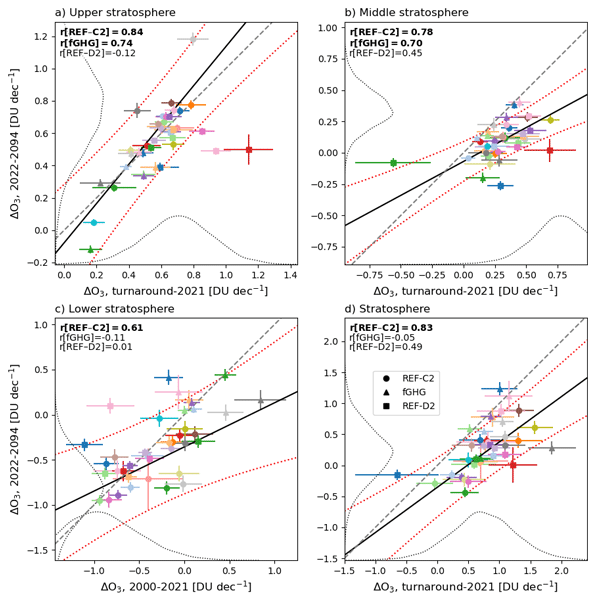
This study investigates tropical ozone changes in models and satellite observations to determine how well they agree and whether observations can constrain model projections. At some levels, satellite records disagree significantly on the magnitude of ozone changes. While early and late 21st century trends are correlated across models, suggesting a potential emergent constraint, the spread in observations means they are unable to provide guidance on the credibility of model projections.
Thomas F. Eck, Jeffrey S. Reid, Alexander Sinyuk, Pawan Gupta, Antti Arola, Ilya Slutsker, Brent N. Holben, Philippe Goloub, Oleg Dubovik, Joel S. Schafer, Mikhail G. Sorokin, Alexander Smirnov, Hongbin Yu, Dongchul Kim, Elena Lind, Jason Kraft, Elizabeth A. Reid, Aboubacry Diallo, Thierno Ndiaye, Africa Barreto, Sidi Baika, Lahouari Zeudmi-Sahraoui, Francisco Evora, Gael Dubois, Luc Blarel, Rachel T. Pinker, Isaac Abiodun Adimula, Jean Louis Rajot, Aliko Maman, Muguette Allegre, Cassandra Gaston, Peter Sealy, Edmund Blades, Rebecca Chewitt-Lucas, Ian Lau, David Barker, Adel Saad Alshihiween, Abdulrahman Alsaferan, Odbayar Mishigdorj, and Chogsom Jargalsaixan
EGUsphere, https://doi.org/10.5194/egusphere-2026-5531, https://doi.org/10.5194/egusphere-2026-5531, 2026
This preprint is open for discussion and under review for Atmospheric Chemistry and Physics (ACP).
Short summary
Short summary
The optical properties of airborne soil particles from major desert regions measured by ground based remote sensing retrievals are presented. The relative spectral absorption of these particles from the remote sensing data agree very well with absorption of soil dust samples measured in a laboratory. A large fraction of the optical effects were attributed to relatively small submicron sized dust particles which would also be more easily inhalable and therefore may impact human health.
Georgia Charalampous, Konstantinos Fragkos, Ilias Fountoulakis, Kyriakoula Papachristopoulou, Anna Moustaka, Franco Marenco, Yevgeny Derimian, Argyro Nisantzi, Rodanthi-Elisavet Mamouri, Diofantos Hadjimitsis, and Stelios Kazadzis
Atmos. Meas. Tech., 19, 5753–5783, https://doi.org/10.5194/amt-19-5753-2026, https://doi.org/10.5194/amt-19-5753-2026, 2026
Short summary
Short summary
This study analyses seven years of dust events over Cyprus to identify their origin and quantify their impact on surface solar radiation. Most events originated from the Sahara. Dust reduces surface solar radiation, leading to surface cooling, while also causing atmospheric heating and cooling at the top of the atmosphere. Surface reductions in solar radiation reach about 5 %–15 % on average, with effects mainly controlled by dust amount.
Dimitra Kouklaki, Georgia Charalampous, Anna Moustaka, Alkistis Papetta, Celia Herrero del Barrio, Rizos-Theodoros Chadoulis, S. Yeşer Aslanoğlu, Sara Herrero-Anta, Michail Mytilinaios, Nikolaos Papadimitriou, Katerina Anyfanti, Christos Spyrou, Daniela Meloni, Konstantinos Fragkos, Yevgeny Derimian, Tatiana Di Iorio, Rodanthi-Elisavet Mamouri, Vassilis Amiridis, Stavros Solomos, Stelios Kazadzis, and Ilias Fountoulakis
Atmos. Meas. Tech., 19, 5633–5657, https://doi.org/10.5194/amt-19-5633-2026, https://doi.org/10.5194/amt-19-5633-2026, 2026
Short summary
Short summary
In the present study we investigated how aerosols, and specifically dust, affect solar radiation and energy production by investigating several dust events across multiple sites in the Mediterranean Basin between 2021 and 2022 through ground-based observations and model simulations. The results revealed that dust can significantly attenuate solar radiation and, therefore, lead to considerable losses in solar power generation, specifically in the case of solar tracking systems.
Anna Moustaka, Kyriakoula Papachristopoulou, Georgia Charalampous, and Stelios Kazadzis
EGUsphere, https://doi.org/10.5194/egusphere-2026-4413, https://doi.org/10.5194/egusphere-2026-4413, 2026
Short summary
Short summary
Atmospheric particles affect how much sunlight reaches the Earth's surface, but their uncertainty is rarely considered in solar energy studies. We estimated this uncertainty from a global atmospheric dataset and examined its effect on sunlight reaching the ground between 2003 and 2024. The results improve confidence in solar energy assessments, particularly in dusty and polluted regions.
Alkistis Papetta, Celia Herrero del Barrio, S. Yeşer Aslanoğlu, Rizos-Theodoros Chadoulis, Georgia Charalampous, Sara Herrero-Anta, Dimitra Kouklaki, Michail Mytilinaios, Anna Moustaka, Emmanouil Proestakis, Vassilis Amiridis, Christos Spyrou, Antonis Gkikas, Michael Pikridas, Maria Kezoudi, Franco Marenco, Jean Sciare, Sophie Vandenbussche, Stavros Solomos, Stelios Kazadzis, and Ilias Fountoulakis
Atmos. Chem. Phys., 26, 12395–12434, https://doi.org/10.5194/acp-26-12395-2026, https://doi.org/10.5194/acp-26-12395-2026, 2026
Short summary
Short summary
We studied four major dust events from the Sahara and the Middle East over the Mediterranean. Saharan dust events exhibited coarser and more scattering particles, while Middle Eastern dust was finer and mixed with pollution. Differences in absorption could not be explained by mineralogy and are attributed to mixing.
Jianyu Zheng, Hongbin Yu, Chamara Rajapakse, Mian Chin, Michael Schulz, Yves Balkanski, Susanne E. Bauer, Huisheng Bian, Peter Colarco, Dongchul Kim, Ramiro Checa-Garcia, Yevgeny Derimian, Oleg Dubovik, Paul Ginoux, Zak Kipling, Jasper F. Kok, Harri Kokkola, Philippe Le Sager, Lei Li, Marianne Tronstad Lund, Gunnar Myhre, Hitoshi Matsui, Dirk J. L. Olivie, Samuel Remy, Oyvind Seland, Qianqian Song, Toshihiko Takemura, Qian Tan, Kostas Tsigaridis, Twan van Noije, David Winker, Bin Xie, Hua Zhang, Xindan Zhang, and Zhibo Zhang
EGUsphere, https://doi.org/10.5194/egusphere-2026-4322, https://doi.org/10.5194/egusphere-2026-4322, 2026
This preprint is open for discussion and under review for Atmospheric Chemistry and Physics (ACP).
Short summary
Short summary
Winds carry vast amounts of Saharan dust across the Atlantic Ocean, influencing climate, air quality, and ocean ecosystems. Within the Aerosol Comparisons between Observations and Models (AeroCom) project, we evaluated 17 numerical models against observations. Models deposit dust too quickly, so too little reaches the Caribbean. Better simulations require emitting larger particles, treating their non-spherical shapes, and capturing processes that keep dust aloft during transport.
Fiona Lippert, Andrew Gerald Barr, Marcos Herreras-Giralda, Masahiro Momoi, Fernando Rejano, Sha Lu, Otto Hasekamp, Oleg Dubovik, Edward Malina, and Jochen Landgraf
EGUsphere, https://doi.org/10.5194/egusphere-2026-4724, https://doi.org/10.5194/egusphere-2026-4724, 2026
Short summary
Short summary
Retrieving greenhouse gas concentrations from satellite measurements is computationally demanding. We show that machine learning can greatly accelerate this process while maintaining high accuracy and interpretability. Combining simplified atmospheric simulations with neural networks proved substantially more reliable than using machine learning alone. This hybrid approach could facilitate near-real time processing of rapidly increasing data volumes.
Yannis Gschwind, Kyriaki Papachristopoulou, Jason N. S. Cole, Alkiviadis F. Bais, and Stelios Kazadzis
EGUsphere, https://doi.org/10.5194/egusphere-2026-4519, https://doi.org/10.5194/egusphere-2026-4519, 2026
Short summary
Short summary
The EarthCARE satellite, launched in 2024, measures aerosol, cloud, and precipitation properties, serving as input for radiative transfer models. Given its recent launch, validation is crucial. In this analysis, we validate the resulting surface irradiance against ground-based measurements and compare with estimates from geostationary satellites. Our study indicates that EarthCARE slightly underestimates surface irradiance. These early tests provide essential context for EarthCARE data users.
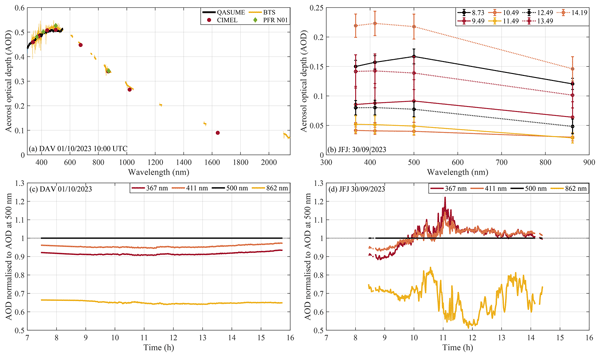
Akriti Masoom, Stelios Kazadzis, Robin Lewis Modini, Martin Gysel-Beer, Julian Gröbner, Martine Collaud Coen, Francisco Navas-Guzman, Natalia Kouremeti, Benjamin Tobias Brem, Nora Kristina Nowak, Giovanni Martucci, and Maxime Hervo
Atmos. Chem. Phys., 26, 10801–10834, https://doi.org/10.5194/acp-26-10801-2026, https://doi.org/10.5194/acp-26-10801-2026, 2026
Short summary
Short summary
This article aims at providing details on the spectral aerosol properties observed during 2023 Canadian wildfire plume transport and exploring the synergism between remote sensing and in situ measurements for investigating the cause of the occurrence of the observations of spectral aerosol properties.
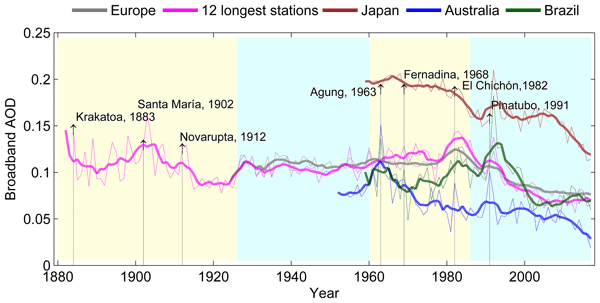
William Wandji Nyamsi, Ville Leinonen, Antti Lipponen, Else van den Besselaar, Santtu Mikkonen, Arturo Sanchez-Lorenzo, Martin Wild, Doris Folini, Tero Mielonen, Harri Kokkola, Antti Kukkurainen, Neus Sabater, Rei Kudo, Ben Liley, Raghav Srinivasan, Bruce W. Forgan, Alexandru Dumitrescu, Grzegorz Urban, Michał K. Kowalewski, Márcia Akemi Yamasoe, Nilton Évora do Rosário, Dimitra Founda, Stelios Kazadzis, Veronica Manara, Derbetini A. Vondou, Christian Gueymard, Anders V. Lindfors, Atsumu Ohmura, and Antti Arola
Atmos. Chem. Phys., 26, 10767–10788, https://doi.org/10.5194/acp-26-10767-2026, https://doi.org/10.5194/acp-26-10767-2026, 2026
Short summary
Short summary
Worldwide reconstructed historical aerosol load reveals that during the period of:
- 1900–1959: the atmosphere became cleaner in most European cities;
- 1960–1985: anthropogenic aerosols were responsible for the dimming phenomenon in Europe. AOD increased over Southeast Brazil and decreased noticeably over Japan while a small negative trend was found over Oceania;
- 1986–2015: generally, the atmosphere has become much cleaner everywhere after the reversal trend around 1980s mainly observed in Europe.

Sophie Vandenbussche, Christodoulos Biskas, Maria-Elissavet Koukouli, Stelios Kazadzis, and Martine De Mazière
Atmos. Meas. Tech., 19, 4889–4922, https://doi.org/10.5194/amt-19-4889-2026, https://doi.org/10.5194/amt-19-4889-2026, 2026
Short summary
Short summary
Mineral dust aerosols are tiny particles uplifted by winds from deserts, which may be transported for long distances. They are climate forcers and affect human health and socio-economic sectors, making near-real-time and long-term monitoring essential. Here, we use satellite observations to retrieve global 3D distributions of dust aerosols. We present an updated and improved algorithm and its long-term consistent data since late 2007, with high potential for climate analyses and alert systems.
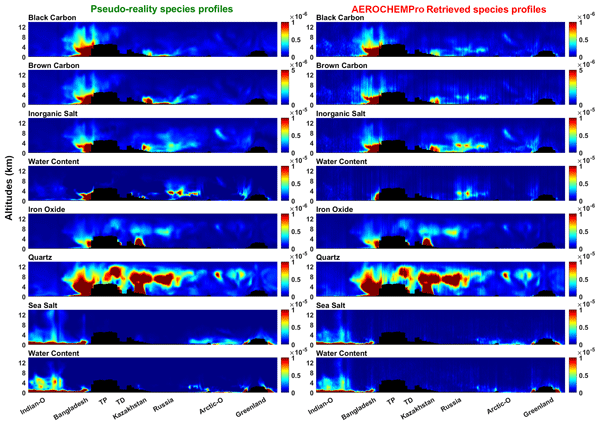
Abou Bakr Merdji, Juan Cuesta, Fazzal Qayyum, Anton Lopatin, Oleg Dubovik, Durgesh Nandan Piyush, Laaziz El Amraoui, Paolo Di Girolamo, and Charles R. Trepte
Atmos. Meas. Tech., 19, 4669–4701, https://doi.org/10.5194/amt-19-4669-2026, https://doi.org/10.5194/amt-19-4669-2026, 2026
Short summary
Short summary
This study presents a novel satellite approach to retrieve the vertical distribution of aerosol chemical species in the atmosphere. By combining spaceborne LIDAR and polarimetric observations, it distinguishes major natural and anthropogenic chemical particle species and their optical properties. Tests with realistic simulations show accurate retrieval of dust, pollution, and sea salt layers, enhancing global monitoring of aerosols relevant to air quality and climate.
Georgia Peletidou, Kalliopi A. Voudouri, Konstantinos Michailidis, Peristera Paschou, Nikolaos Siomos, Jens Reichardt, and Dimitrios Balis
EGUsphere, https://doi.org/10.5194/egusphere-2026-3856, https://doi.org/10.5194/egusphere-2026-3856, 2026
Short summary
Short summary
Using advanced lidar measurements over Thessaloniki, we showed that aerosol fluorescence helps characterize dust, smoke, pollen and pollution more clearly than conventional methods alone. The results improve our ability to identify aerosol sources and enhance atmospheric monitoring, with implications for air quality assessment and climate research.
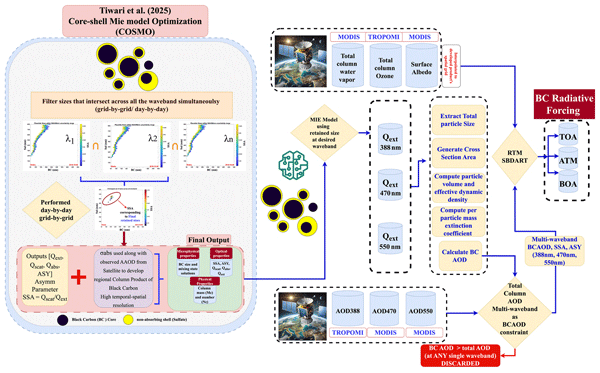
Pravash Tiwari, Jason Blake Cohen, Hongrui Gao, Lingxiao Lu, Jun Wang, Oleg Dubovik, and Kai Qin
Atmos. Chem. Phys., 26, 9149–9180, https://doi.org/10.5194/acp-26-9149-2026, https://doi.org/10.5194/acp-26-9149-2026, 2026
Short summary
Short summary
Black carbon's climate impact is highly uncertain because its radiative effect depends on particle size, mixing state, and column loading. This study combines satellite data, physics-based simulations, and machine learning to estimate black carbon forcing across contrasting regions. The same black carbon amount can warm or cool the atmosphere depending on local aerosol properties. The machine learning framework provides a fast, transferable tool for regional climate assessment.
Semontee Deb, Elena Louca, Angelos Violaris, Pantelis Kiriakidis, Yannis Proestos, Jonilda Kushta, Antonis Gkikas, Andrea Pozzer, and Theodoros Christoudias
EGUsphere, https://doi.org/10.5194/egusphere-2026-1900, https://doi.org/10.5194/egusphere-2026-1900, 2026
Short summary
Short summary
This study presents an extensive model evaluation of WRF-Chem (v4.7.1) dust simulations over the dust belt. We test three dust emission schemes and two land surface models using different measurements and reanalysis datasets. Our results identify effective model configurations and propose empirical scaling factors that improve dust representation and may be applicable more broadly.
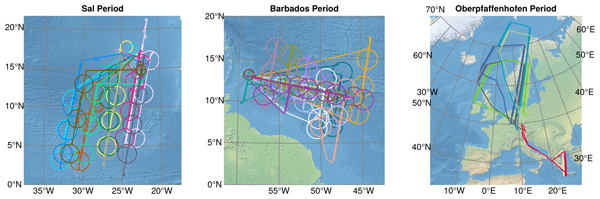
Silke Groß, Florian Ewald, Bjorn Stevens, Martin Wirth, Georgios Dekoutsidis, André Ehrlich, Dimitra Kouklaki, Konstantin Krüger, Sophie Rosenburg, Lea Volkmer, Jonas von Bismark, Lutz Hirsch, Anna E. Luebke, Eleni Marinou, Bernhard Mayer, Montserrat Pinol Sole, Manfred Wendisch, Julia Windmiller, Vassilis Amiridis, Rob Koopman, Takuji Kubota, and Markus Rapp
Atmos. Meas. Tech., 19, 3933–3959, https://doi.org/10.5194/amt-19-3933-2026, https://doi.org/10.5194/amt-19-3933-2026, 2026
Short summary
Short summary
In May 2024 the joint European Space Agency (ESA) and the Japan Aerospace Exploration Agency (JAXA) mission EarthCARE was launched. A similar payload as on the satellite was set up on the German research aircraft HALO, and deployed during an extensive measurement campaign to validated the satellite. We present our instrumentation, the measurements, and its potential for the validation of EarthCARE. We show first validation results and assessments of the EarthCARE data quality.
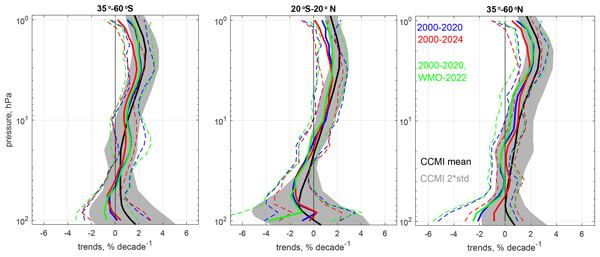
Viktoria F. Sofieva, Monika E. Szelag, Natalya A. Kramarova, Robert Damadeo, Wolfgang Steinbrecht, Irina Petropavlovskikh, Corinne Vigouroux, Eliane Maillard Barras, Daniel Zawada, Kleareti Tourpali, Stacey M. Frith, Jeannette D. Wild, Sean M. Davis, Carlo Arosio, Mark Weber, Alexei Rozanov, Brian Auffarth, Lucien Froidevaux, Ryan Fuller, Doug Degenstein, Kimberlee Dube, Peter Effertz, Thierry Leblanc, Gérard Ancellet, Sophie Godin-Beekmann, Glen McConville, Richard Querel, Dan Smale, Marie-Renee DeBacker, Emmanuel Mahieu, and Ralf Sussmann
Atmos. Chem. Phys., 26, 7387–7405, https://doi.org/10.5194/acp-26-7387-2026, https://doi.org/10.5194/acp-26-7387-2026, 2026
Short summary
Short summary
We present an updated evaluation of stratospheric ozone profile trends in the 60°S–60°N latitude range using long-term ground-based and satellite climate data records, as well as simulations by chemistry-climate models. Analyses confirm the statistically significant positive ozone trends in the upper stratosphere of ~1–3 % decade-1. The trends are close to zero in the middle stratosphere, and mostly negative in the lower stratosphere, but they are not statistically significant.
Maria Tsichla, Konrad Kandler, Sudharaj Aryasree, Stavros Solomos, Christos Spyrou, Alexandra Tsekeri, Anna Kampouri, Anna Gialitaki, Eleni Drakaki, Thanasis Natsis, Maria Kezoudi, Alkistis Papetta, Franco Marenco, Jean Sciare, Eleni Marinou, Kalliopi Artemis Voudouri, Nikos Mihalopoulos, and Vassilis Amiridis
EGUsphere, https://doi.org/10.5194/egusphere-2026-921, https://doi.org/10.5194/egusphere-2026-921, 2026
Short summary
Short summary
Desert dust plays an important role in the Earth–atmosphere system by affecting clouds, radiation, and ocean processes. Here, we determine the composition of desert dust over Cabo Verde using drones and microscopy analysis, and compare the measurements with model simulations. We find that the main dust mineral is illite, while the dominant element is silicon. Our results highlight the value of airborne in-situ observations for improving dust models and understanding dust–climate interactions.
Kalliopi Artemis Voudouri, Eleni Marinou, Ilianna Koutsoupi, Vassilis Spyrakos, Dimitra Karkani, Ioanna Tsikoudi, Alessandro Battaglia, Pavlos Kollias, Eleni Giannakaki, and Vassilis Amiridis
EGUsphere, https://doi.org/10.5194/egusphere-2026-2384, https://doi.org/10.5194/egusphere-2026-2384, 2026
Short summary
Short summary
Cloud observations from the CloudSat mission (2007–2017) reveal how clouds vary per altitude and season across the Mediterranean. Comparisons with ERA5 reanalysis show good overall agreement, though ice clouds are often underestimated. Early EarthCARE mission data are also presented, towards improving long-term climate records.
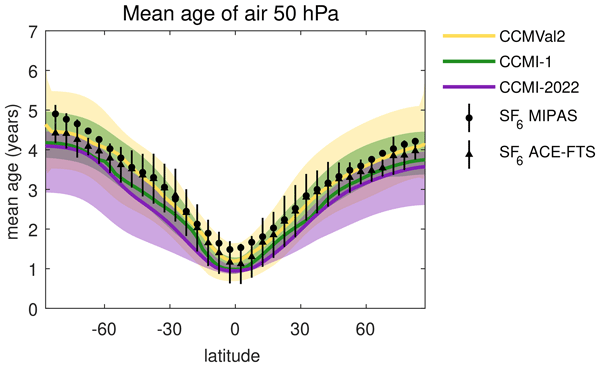
Marta Abalos, Thomas Birner, Andreas Chrysanthou, Sean Davis, Alvaro de la Cámara, Sandip Dhomse, Hella Garny, Michaela I. Hegglin, Daan Hubert, Oksana Ivaniha, James Keeble, Marianna Linz, Daniele Minganti, Jessica Neu, David Plummer, Laura Saunders, Kasturi Shah, Gabriele Stiller, Kleareti Tourpali, Darryn Waugh, Nathan Luke Abraham, Hideharu Akiyoshi, Martyn P. Chipperfield, Patrick Jöckel, Béatrice Josse, Marion Marchand, Patrick Martineau, Olaf Morgenstern, Timofei Sukhodolov, Shingo Watanabe, and Yousuke Yamashita
Atmos. Chem. Phys., 26, 5249–5291, https://doi.org/10.5194/acp-26-5249-2026, https://doi.org/10.5194/acp-26-5249-2026, 2026
Short summary
Short summary
Accurate representation of stratospheric transport in Chemistry-Climate Models is essential for reliable climate projections. This study evaluates three generations of models using observational data and reanalyses, identifying persistent biases and their potential causes. Some biases persist or even worsen in newer models. These findings highlight key limitations and inform efforts to improve models and advance understanding through process-based studies and enhanced observations.
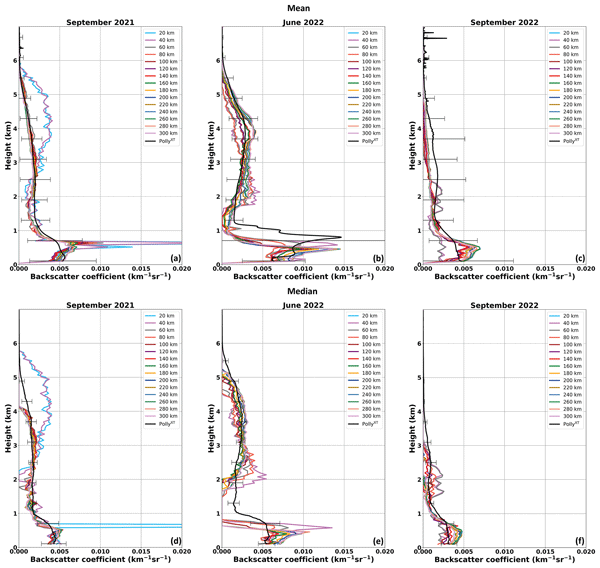
Athena Augusta Floutsi, Konstantinos Rizos, Dimitri Trapon, Ronny Engelmann, Dietrich Althausen, Eleni Marinou, Peristera Paschou, Julian Hofer, Emmanouil Proestakis, Henriette Gebauer, Annett Skupin, Albert Ansmann, Thorsten Fehr, Timon Hummel, Rob Koopman, Vassilis Amiridis, Ulla Wandinger, and Holger Baars
Atmos. Meas. Tech., 19, 1901–1925, https://doi.org/10.5194/amt-19-1901-2026, https://doi.org/10.5194/amt-19-1901-2026, 2026
Short summary
Short summary
We assess the representativeness of a remote ground-based station in Mindelo, Cabo Verde by utilizing continuous observations of a ground-based multiwavelength polarization Raman lidar and the LIdar climatology of Vertical Aerosol Structure (LIVAS) products. Based on a statistical analysis of the optical properties at different radii around Mindelo and case studies, we conclude that overall, the ground-based station in Mindelo can be considered conditionally representative.
Anna Moustaka, Antonis Gkikas, Stavros-Andreas Logothetis, Johannes Flemming, Samuel Rémy, Melanie Ades, Angela Benedetti, Kleareti Tourpali, Vassilis Amiridis, and Stelios Kazadzis
EGUsphere, https://doi.org/10.5194/egusphere-2026-1107, https://doi.org/10.5194/egusphere-2026-1107, 2026
This preprint is open for discussion and under review for Atmospheric Chemistry and Physics (ACP).
Short summary
Short summary
We examined how atmospheric aerosols have changed worldwide over the past two decades using a global atmospheric reanalysis together with ground-based observations. We found strong regional differences, with clear declines in some industrialized areas and increases in parts of South Asia and the Middle East. These long-term records help improve understanding of changes in climate and air quality.
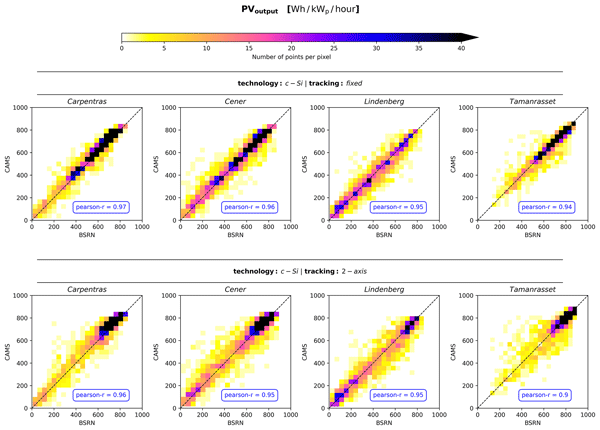
Nikolaos Papadimitriou, Ilias Fountoulakis, Antonis Gkikas, Kyriakoula Papachristopoulou, Andreas Kazantzidis, Stelios Kazadzis, Stefan Pfenninger, John Kapsomenakis, Kostas Eleftheratos, Athanassios A. Argiriou, Lionel Doppler, and Christos S. Zerefos
Atmos. Meas. Tech., 19, 1227–1244, https://doi.org/10.5194/amt-19-1227-2026, https://doi.org/10.5194/amt-19-1227-2026, 2026
Short summary
Short summary
We perform Photovoltaic (PV) power simulations with the Global Solar Energy Estimator and assess the uncertainty linked to the use of a diffuse fraction model. Validation is conducted under diverse atmospheric conditions, including cloudiness and aerosols, using input data from ground-based measurements and the Copernicus Atmosphere Monitoring Service (CAMS). Results indicate that simulations are reliable under most conditions, with overestimations occurring during intense dust events.
Greema Regmi, William Reed Espinosa, Jose Vanderlei Martins, Anin Puthukkudy, Masanori Saito, Oleg Dubovik, Masahiro Momoi, and Anton Lopatin
EGUsphere, https://doi.org/10.5194/egusphere-2025-5865, https://doi.org/10.5194/egusphere-2025-5865, 2026
Short summary
Short summary
We retrieved dust size and absorption properties by combining information from lidar and Multi Angle Polarimeter (MAP) and compared them with results from each instrument alone. We tested two particle shapes, spheroid and hexahedral. The spheroid model could not match the Lidar+MAP observations without producing unrealistic dust behavior, while the hexahedral model gave consistent and physically reasonable retrievals across all setups.
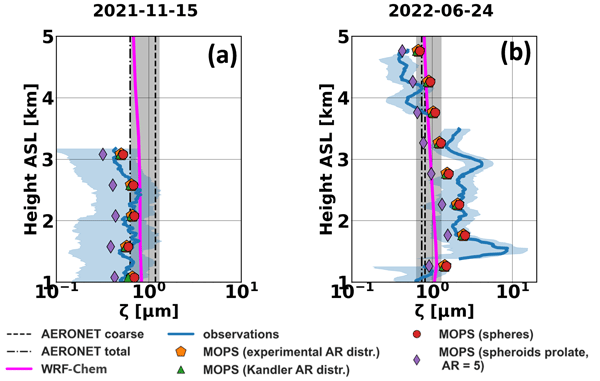
Alkistis Papetta, Maria Kezoudi, Holger Baars, Athina Floutsi, Eleni Drakaki, Konrad Kandler, Sudharaj Aryasree, Elena Louca, Theodoros Christoudias, Eleni Marinou, Chris Stopford, Troy Thornberry, Vassilis Amiridis, Jean Sciare, and Franco Marenco
Atmos. Chem. Phys., 26, 2055–2082, https://doi.org/10.5194/acp-26-2055-2026, https://doi.org/10.5194/acp-26-2055-2026, 2026
Short summary
Short summary
Dust in the atmosphere affects air quality, weather, and climate, but measuring it is challenging. We used drones and ground-based instruments to study how dust particles interact with light and relate this to their mass. Current methods often underestimate large dust particles, leading to errors in dust quantity. Our results show that regional differences in dust must be considered to improve climate models and satellite observations.
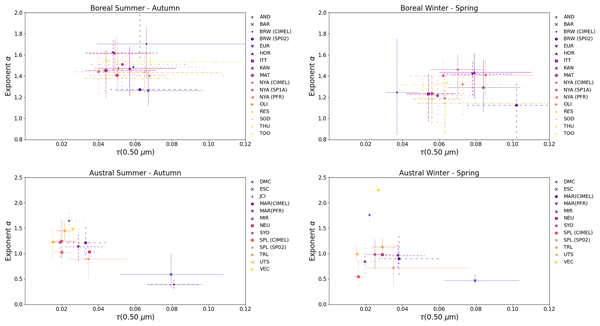
Simone Pulimeno, Angelo Lupi, Vito Vitale, Claudia Frangipani, Carlos Toledano, Stelios Kazadzis, Natalia Kouremeti, Christoph Ritter, Sandra Graßl, Kerstin Stebel, Vitali Fioletov, Ihab Abboud, Sandra Blindheim, Lynn Ma, Norm O'Neill, Piotr Sobolewski, Pawan Gupta, Elena Lind, Thomas F. Eck, Antti Hyvärinen, Veijo Aaltonen, Rigel Kivi, Janae Csavina, Dmitry Kabanov, Sergey M. Sakerin, Olga R. Sidorova, Robert S. Stone, Hagen Telg, Laura Riihimaki, Raul R. Cordero, Martin Radenz, Ronny Engelmann, Michel Van Roozendal, Anatoli Chaikovsky, Philippe Goloub, Junji Hisamitsu, and Mauro Mazzola
Atmos. Chem. Phys., 26, 1809–1846, https://doi.org/10.5194/acp-26-1809-2026, https://doi.org/10.5194/acp-26-1809-2026, 2026
Short summary
Short summary
This study analyzed aerosols optical properties over the Arctic and Antarctic to measure them even during long periods of darkness. It found that pollution in the Arctic is decreasing, likely due to European emission regulations, while wildfires are becoming a more important source of particles. In Antarctica, particle levels are higher near the coast than inland, and vary by season. These results help us better understand how air pollution and climate are changing at the Earth’s poles.
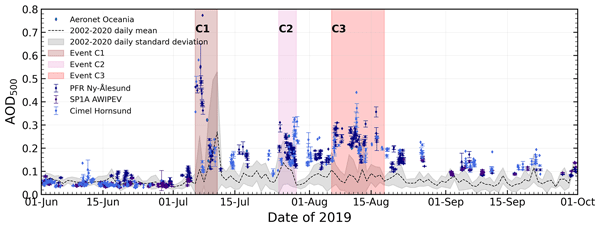
Sara Herrero-Anta, Sabine Eckhardt, Nikolaos Evangeliou, Stefania Gilardoni, Sandra Graßl, Dominic Heslin-Rees, Stelios Kazadzis, Natalia Kouremeti, Radovan Krejci, David Mateos, Mauro Mazzola, Christoph Ritter, Roberto Román, Kerstin Stebel, and Tymon Zielinski
Atmos. Chem. Phys., 26, 1435–1457, https://doi.org/10.5194/acp-26-1435-2026, https://doi.org/10.5194/acp-26-1435-2026, 2026
Short summary
Short summary
In summer 2019, unusually high aerosol concentrations were measured in the Arctic, extending through the troposphere and stratosphere up to 16 km. Using multiple instruments and models, aerosol particles were linked to wildfires, volcanic eruptions, and anthropogenic pollution. The aerosol consisted of spherical, fine-mode, weakly absorbing particles, which significantly reduced direct solar radiation. This combined approach improves understanding of Arctic aerosol events and climate processes.
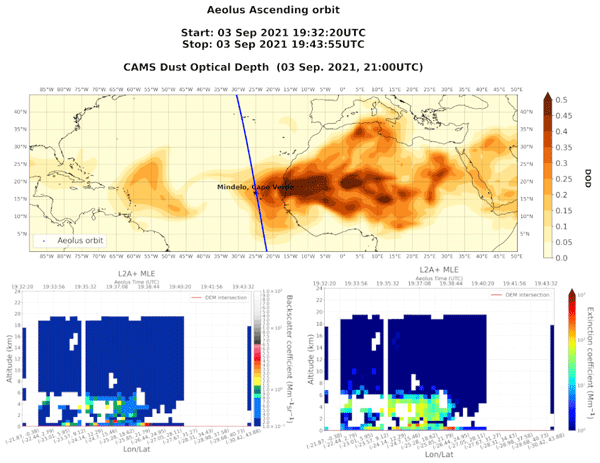
Konstantinos Rizos, Emmanouil Proestakis, Thanasis Georgiou, Antonis Gkikas, Eleni Marinou, Peristera Paschou, Kalliopi Artemis Voudouri, Athanasios Tsikerdekis, David P. Donovan, Gerd-Jan van Zadelhoff, Angela Benedetti, Holger Baars, Athena Augusta Floutsi, Nikos Benas, Martin Stengel, Christian Retscher, Edward Malina, and Vassilis Amiridis
Atmos. Meas. Tech., 19, 699–728, https://doi.org/10.5194/amt-19-699-2026, https://doi.org/10.5194/amt-19-699-2026, 2026
Short summary
Short summary
The Aeolus satellite's lidar system had limitations in detecting certain atmospheric layers and distinguishing between aerosol and cloud types. To improve accuracy, a new dust detection product was developed. By combining data from various sources and validating it with ground-based measurements, this enhanced product performs better than the original. It helps improve dust transport models and weather predictions, making it a valuable tool for atmospheric monitoring and forecasting.
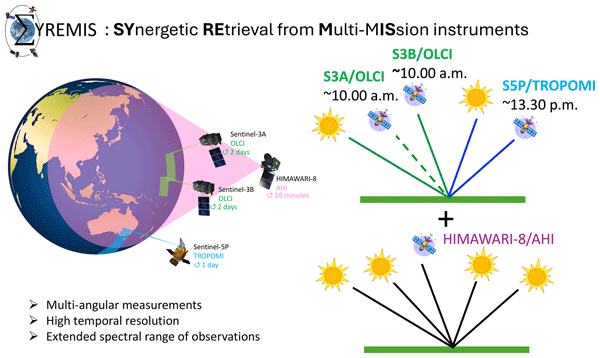
Pavel Litvinov, Cheng Chen, Oleg Dubovik, Siyao Zhai, Christian Matar, Chong Li, Anton Lopatin, David Fuertes, Tatyana Lapyonok, Lukas Bindreiter, Manuel Dornacher, Arthur Lehner, Alexandru Dandocsi, Daniele Gasbarra, and Christian Retscher
Atmos. Meas. Tech., 18, 7679–7716, https://doi.org/10.5194/amt-18-7679-2025, https://doi.org/10.5194/amt-18-7679-2025, 2025
Short summary
Short summary
Developed SYREMIS (SYnergetic REtrieval from Multi-MISsion instruments) approach is based on three main principles: (i) harmonization of the multi-instruments L1 measurements, (ii) their “weighting”, and (iii) optimization of the forward models and the retrieval setups. It substantially enhances aerosol and surface characterization from spaceborne measurements. The approach can be extended to future missions, including synergy with multi-angular, multi-spectral, and polarimetric measurements.

Angelos Karanikolas, Benjamin Torres, Masahiro Momoi, Marcos Herreras Giralda, Natalia Kouremeti, Julian Gröbner, Lionel Doppler, and Stelios Kazadzis
Atmos. Meas. Tech., 18, 7651–7677, https://doi.org/10.5194/amt-18-7651-2025, https://doi.org/10.5194/amt-18-7651-2025, 2025
Short summary
Short summary
Several techniques retrieve of the aerosol size distribution. The Generalized Retrieval of Atmosphere and Surface Properties algorithm can retrieve aerosol size distribution parameters using only aerosol optical depth (AOD) as input that is continuously observed by sun photometers worldwide. In this study, we apply the algorithm to AOD measured by sun photometers and spectroradiometers to assess the performance and limitations of such retrievals and investigate the effect of the spectral range.
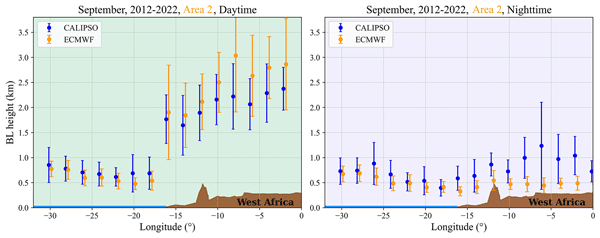
Ioanna Tsikoudi, Eleni Marinou, Maria Tombrou, Eleni Giannakaki, Emmanouil Proestakis, Konstantinos Rizos, Ville Vakkari, Holger Baars, Annett Skupin, Ronny Engelmann, Zhenping Yin, and Vassilis Amiridis
Atmos. Chem. Phys., 25, 16491–16510, https://doi.org/10.5194/acp-25-16491-2025, https://doi.org/10.5194/acp-25-16491-2025, 2025
Short summary
Short summary
We study the characteristics of the boundary layer over three areas: the tropical Atlantic, the tropical West African continent, and near Cabo Verde using PollyXT and CALIPSO (Cloud-Aerosol Lidar and Infrared Pathfinder Satellite Observations) lidar measurements, as well as ECMWF (European Centre for Medium-Range Weather Forecasts) data. The findings underline the strengths and limitations of different observational and modeling approaches, and emphasizes on the importance of considering aerosol conditions and local meteorology when interpreting boundary layer dynamics.
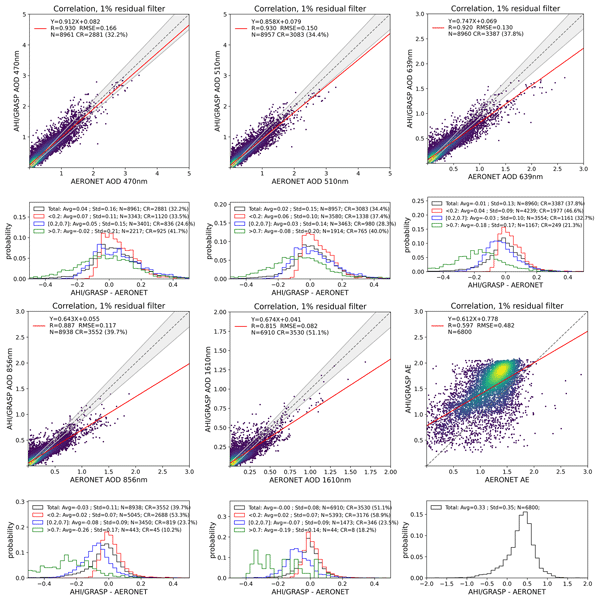
Chong Li, Oleg Dubovik, Jing Li, David Fuertes, Anton Lopatin, Pavel Litvinov, Tatsiana Lapyonok, Lukas Bindreiter, Christian Matar, Yiqi Chu, and Wangshu Tan
Atmos. Meas. Tech., 18, 6609–6643, https://doi.org/10.5194/amt-18-6609-2025, https://doi.org/10.5194/amt-18-6609-2025, 2025
Short summary
Short summary
Using observational data from Japan's geostationary satellite – Himawari-8 , this study improved how we track air pollution (aerosols) across East Asia and the Western Pacific. By applying an advanced aerosol retrieval algorithm called GRASP, we were able to more accurately observe both atmospheric and ground conditions and their dynamics over time. The results closely matched ground-based measurements and showed potential for even better monitoring when combined with ground-based lidar data.
Emmanouil Proestakis, Kyriakoula Papachristopoulou, Thanasis Georgiou, Sofia Eirini Chatoutsidou, Mihalis Lazaridis, Antonis Gkikas, Ilias Fountoulakis, Ioanna Tsikoudi, Manolis P. Petrakis, and Vassilis Amiridis
Atmos. Chem. Phys., 25, 14777–14823, https://doi.org/10.5194/acp-25-14777-2025, https://doi.org/10.5194/acp-25-14777-2025, 2025
Short summary
Short summary
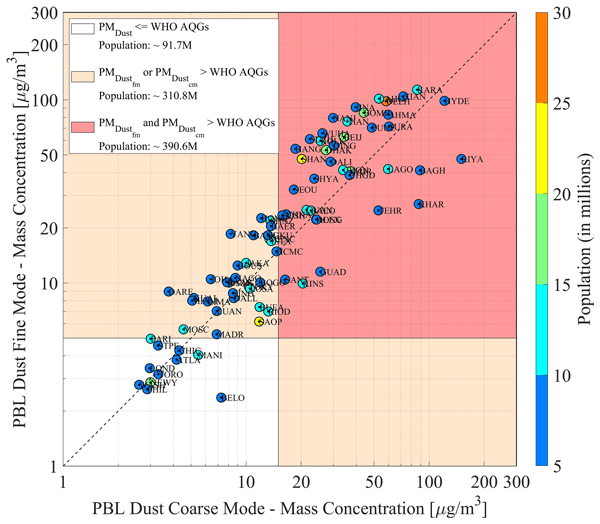
Based on Earth observations of dust the study addresses the questions: To what extent have the fine and coarse modes of atmospheric dust within the planetary boundary layer (PBL) changed over major cities worldwide? Which areas experience fine-mode and coarse-mode dust mass concentrations within the PBL that exceed World Health Organization air quality guidelines, and which areas are projected to exceed these guidelines in the near future? Can we quantify associated impacts on human health?

Ilias Fountoulakis, Kyriaki Papachristopoulou, Stelios Kazadzis, Gregor Hülsen, Julian Gröbner, Ioannis-Panagiotis Raptis, Dimitra Kouklaki, Akriti Masoom, Natalia Kouremeti, Charalampos Kontoes, and Christos S. Zerefos
Geosci. Model Dev., 18, 7451–7473, https://doi.org/10.5194/gmd-18-7451-2025, https://doi.org/10.5194/gmd-18-7451-2025, 2025
Short summary
Short summary
The UVIOS2 model has been evaluated at Davos, Switzerland during the UVCIII campaign. The accuracy in the modelled UV indices has been assessed for different combinations of model inputs. A good overall agreement between UVIOS2 and the world reference spectroradiometer QASUME was found (average ratio of ~ 1 between the modelled and measured UV index), although the variability in the ratio can be large under cloudy conditions.
Peristera Paschou, Nikolaos Siomos, Eleni Marinou, Antonis Gkikas, Samira M. Idrissa, Daniel T. Quaye, Désiré D. Fiogbe Attannon, Kalliopi Artemis Voudouri, Charikleia Meleti, David P. Donovan, George Georgoussis, Tommaso Parrinello, Thorsten Fehr, Jonas von Bismarck, and Vassilis Amiridis
Atmos. Meas. Tech., 18, 4731–4754, https://doi.org/10.5194/amt-18-4731-2025, https://doi.org/10.5194/amt-18-4731-2025, 2025
Short summary
Short summary
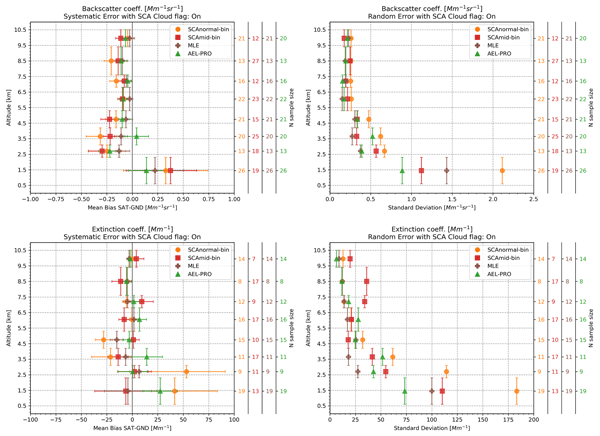
This study presents the results from a validation study on the Level 2A products (aerosol optical properties) of the ESA's (European Space Agency) Aeolus mission. Measurements from the eVe lidar, a combined linear/circular polarization and Raman lidar and ESA's ground reference system, that have been collected during the Joint Aeolus Tropical Atlantic Campaign are compared with collocated Aeolus Level 2A profiles obtained from the latest version (Baseline 16) of the Aeolus algorithms.
Xinyuan Hou, Kyriakoula Papachristopoulou, and Stelios Kazadzis
Atmos. Meas. Tech., 18, 4543–4557, https://doi.org/10.5194/amt-18-4543-2025, https://doi.org/10.5194/amt-18-4543-2025, 2025
Short summary
Short summary
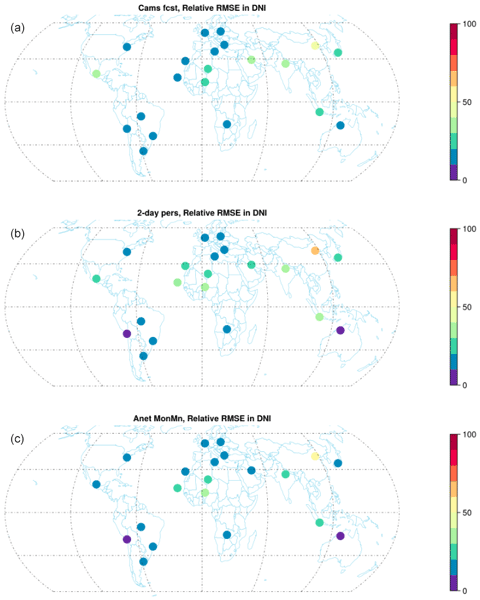
We analyzed aerosol ground measurements and model based aerosol optical depth (AOD) forecasts to study variations in AOD at different global sites. We compared day-ahead AOD forecast methods and assessed their impact on forecasting clear-sky direct normal irradiance (DNI). While none of the methods accurately forecast DNI within 5 %, most sites showed a DNI deviation within 20 %, especially at sites with urban-industrial aerosols.

Emmanouil Proestakis, Vassilis Amiridis, Carlos Pérez García-Pando, Svetlana Tsyro, Jan Griesfeller, Antonis Gkikas, Thanasis Georgiou, María Gonçalves Ageitos, Jeronimo Escribano, Stelios Myriokefalitakis, Elisa Bergas Masso, Enza Di Tomaso, Sara Basart, Jan-Berend W. Stuut, and Angela Benedetti
Earth Syst. Sci. Data, 17, 4351–4395, https://doi.org/10.5194/essd-17-4351-2025, https://doi.org/10.5194/essd-17-4351-2025, 2025
Short summary
Short summary
Quantification of dust deposition into the broader Atlantic Ocean is provided, with the estimates established based on Earth observations. The dataset is considered unique with respect to a range of applications, including compensating for spatiotemporal gaps of sediment-trap measurements, assessments of model simulations, shedding light on physical processes related to the dust cycle, and improving the understanding of dust biogeochemical impacts on oceanic ecosystems, weather, and climate.
Mégane Ventura, Fabien Waquet, Isabelle Chiapello, Gérard Brogniez, Frédéric Parol, Frédérique Auriol, Rodrigue Loisil, Cyril Delegove, Luc Blarel, Oleg Dubovik, Marc Mallet, Cyrille Flamant, and Paola Formenti
Atmos. Meas. Tech., 18, 4005–4024, https://doi.org/10.5194/amt-18-4005-2025, https://doi.org/10.5194/amt-18-4005-2025, 2025
Short summary
Short summary
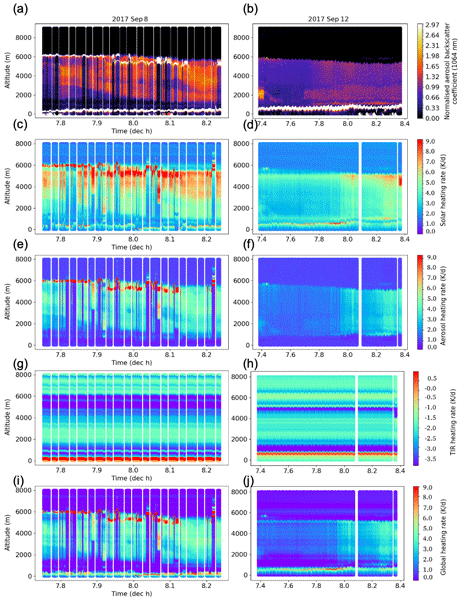
Biomass-burning aerosols (BBAs) from Central Africa are transported above stratocumulus clouds. The absorption of solar energy by aerosols induces warming, altering the cloud dynamics. We developed an approach that combines polarimeter and lidar to quantify this. This methodology is assessed during the AEROCLO-sA (AErosol RadiatiOn and CLOud in Southern Africa) campaign. To validate it, we used irradiance measurements acquired during aircraft spiral descents. A major perspective is the generalization of this method to the global level.
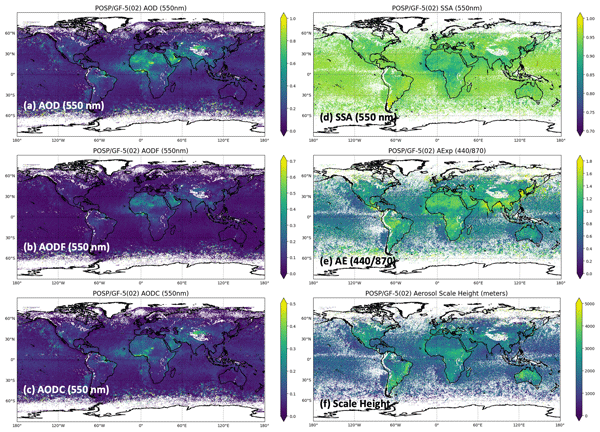
Cheng Chen, Xuefeng Lei, Zhenhai Liu, Haorang Gu, Oleg Dubovik, Pavel Litvinov, David Fuertes, Yujia Cao, Haixiao Yu, Guangfeng Xiang, Binghuan Meng, Zhenwei Qiu, Xiaobing Sun, Jin Hong, and Zhengqiang Li
Earth Syst. Sci. Data, 17, 3497–3519, https://doi.org/10.5194/essd-17-3497-2025, https://doi.org/10.5194/essd-17-3497-2025, 2025
Short summary
Short summary
Particulate Observing Scanning Polarization (POSP) on board the second GaoFen-5 (GF-5(02)) satellite is the first space-borne ultraviolet–visible–near-infrared–shortwave-infrared (UV–VIS–NIR–SWIR) multi-spectral cross-track scanning polarimeter. Due to its wide spectral range and polarimetric capabilities, POSP measurements provide rich information for aerosol and surface characterization. We present the detailed aerosol/surface products generated from POSP's first 18 months of operation, including spectral aerosol optical depth, aerosol-size-/absorption-related properties, surface black-sky and white-sky albedos, etc.
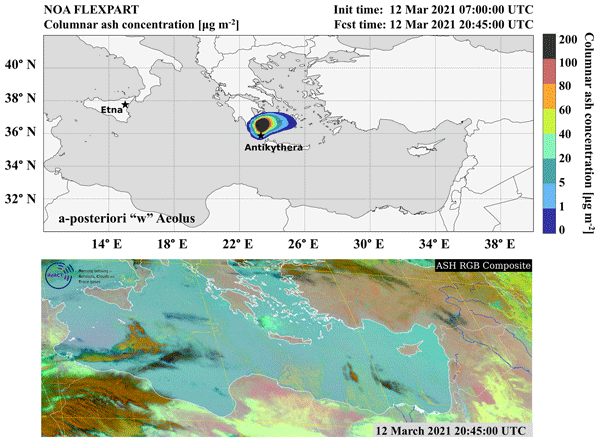
Anna Kampouri, Vassilis Amiridis, Thanasis Georgiou, Stavros Solomos, Anna Gialitaki, Maria Tsichla, Michael Rennie, Simona Scollo, and Prodromos Zanis
Atmos. Chem. Phys., 25, 7343–7368, https://doi.org/10.5194/acp-25-7343-2025, https://doi.org/10.5194/acp-25-7343-2025, 2025
Short summary
Short summary
This study proposes a novel inverse modeling framework coupled with remote sensing data for improving volcanic ash dispersion forecasts, essential for aviation safety. By integrating FLEXPART dispersion model outputs with ground-based ACTRIS lidar observations, the approach estimates Etna's volcanic particle emissions and highlights a significant enhancement in the forecast accuracy.
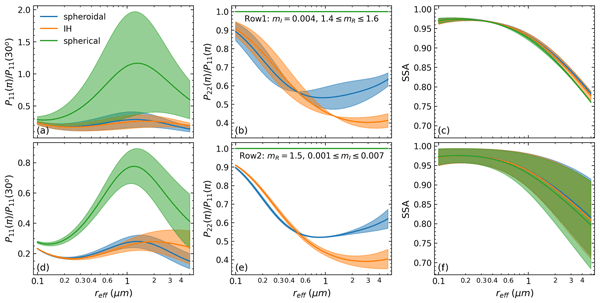
Yuyang Chang, Qiaoyun Hu, Philippe Goloub, Thierry Podvin, Igor Veselovskii, Fabrice Ducos, Gaël Dubois, Masanori Saito, Anton Lopatin, Oleg Dubovik, and Cheng Chen
Atmos. Chem. Phys., 25, 6787–6821, https://doi.org/10.5194/acp-25-6787-2025, https://doi.org/10.5194/acp-25-6787-2025, 2025
Short summary
Short summary
Our study retrieved dust aerosol microphysical properties from lidar measurements using different scattering models. Numeric simulations and real data applications revealed the importance of considering depolarization measurements and the superiority of the irregular–hexahedral model in the retrieval of dust aerosols from lidar measurements.
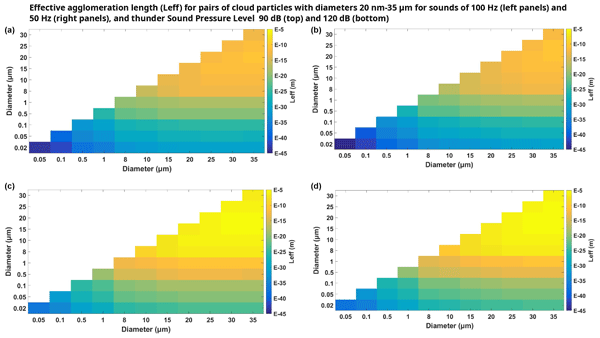
Konstantinos Kourtidis, Stavros Stathopoulos, and Vassilis Amiridis
Atmos. Chem. Phys., 25, 5935–5946, https://doi.org/10.5194/acp-25-5935-2025, https://doi.org/10.5194/acp-25-5935-2025, 2025
Short summary
Short summary
The sound of thunder induces mechanical effects on cloud droplets and ice particles, causing changes in their size distribution. A shock wave near the lightning channel causes extensive shattering of cloud particles. At a distance, the audio wave will cause agglomeration of particles. So, thunder may influence the rain generation process and the radiative properties of clouds. As global warming may influence the occurrence rate of lightning, a climate feedback may be induced by these mechanisms.
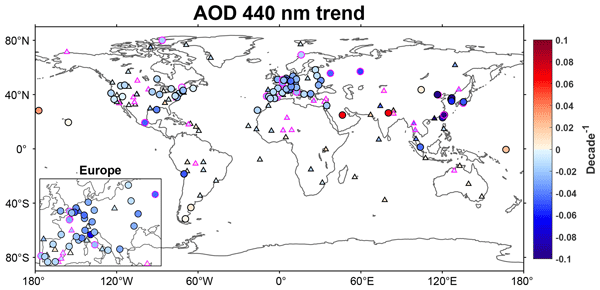
Zhenyu Zhang, Jing Li, Huizheng Che, Yueming Dong, Oleg Dubovik, Thomas Eck, Pawan Gupta, Brent Holben, Jhoon Kim, Elena Lind, Trailokya Saud, Sachchida Nand Tripathi, and Tong Ying
Atmos. Chem. Phys., 25, 4617–4637, https://doi.org/10.5194/acp-25-4617-2025, https://doi.org/10.5194/acp-25-4617-2025, 2025
Short summary
Short summary
We used ground-based remote sensing data from the Aerosol Robotic Network to examine long-term trends in aerosol characteristics. We found aerosol loadings generally decreased globally, and aerosols became more scattering. These changes are closely related to variations in aerosol compositions, such as decreased anthropogenic emissions over East Asia, Europe, and North America; increased anthropogenic sources over northern India; and increased dust activity over the Arabian Peninsula.

Angelos Karanikolas, Natalia Kouremeti, Monica Campanelli, Victor Estellés, Masahiro Momoi, Gaurav Kumar, Stephan Nyeki, and Stelios Kazadzis
Atmos. Meas. Tech., 17, 6085–6105, https://doi.org/10.5194/amt-17-6085-2024, https://doi.org/10.5194/amt-17-6085-2024, 2024
Short summary
Short summary
Different sun photometer networks use different instruments, post-processing algorithms and calibration protocols for aerosol optical depth (AOD) retrieval. Such differences can affect the homogeneity and comparability of their measurements. In this study, we assess the homogeneity between the sun photometer networks GAW-PFR and SKYNET, analysing common measurements during three campaigns between 2017–2021, and investigate the main cause of the differences.
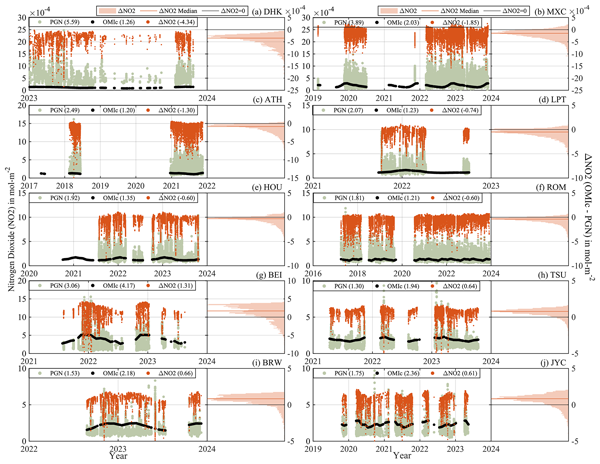
Akriti Masoom, Stelios Kazadzis, Masimo Valeri, Ioannis-Panagiotis Raptis, Gabrielle Brizzi, Kyriakoula Papachristopoulou, Francesca Barnaba, Stefano Casadio, Axel Kreuter, and Fabrizio Niro
Atmos. Meas. Tech., 17, 5525–5549, https://doi.org/10.5194/amt-17-5525-2024, https://doi.org/10.5194/amt-17-5525-2024, 2024
Short summary
Short summary
Aerosols, which have a wide impact on climate, radiative forcing, and human health, are widely represented by aerosol optical depth (AOD). AOD retrievals require Rayleigh scattering and atmospheric absorption (ozone, NO2, etc.) corrections. We analysed the NO2 (which has a high spatiotemporal variation) uncertainty impact on AOD retrievals using the synergy of co-located ground-based instruments with a long-term dataset at worldwide sites and found significant AOD over- or underestimations.
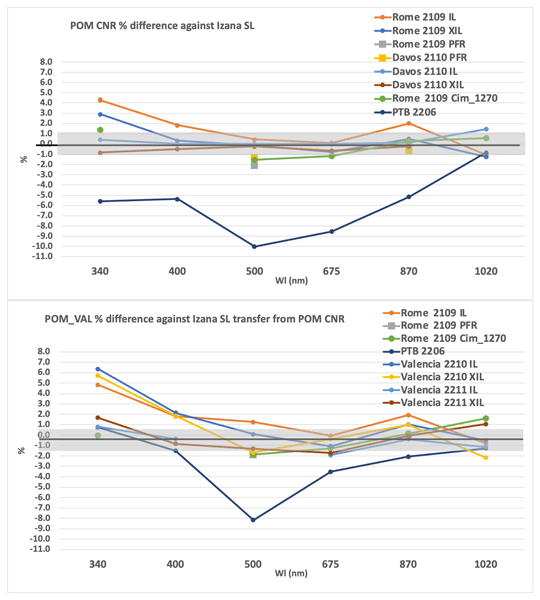
Monica Campanelli, Victor Estellés, Gaurav Kumar, Teruyuki Nakajima, Masahiro Momoi, Julian Gröbner, Stelios Kazadzis, Natalia Kouremeti, Angelos Karanikolas, Africa Barreto, Saulius Nevas, Kerstin Schwind, Philipp Schneider, Iiro Harju, Petri Kärhä, Henri Diémoz, Rei Kudo, Akihiro Uchiyama, Akihiro Yamazaki, Anna Maria Iannarelli, Gabriele Mevi, Annalisa Di Bernardino, and Stefano Casadio
Atmos. Meas. Tech., 17, 5029–5050, https://doi.org/10.5194/amt-17-5029-2024, https://doi.org/10.5194/amt-17-5029-2024, 2024
Short summary
Short summary
To retrieve columnar aerosol properties from sun photometers, some calibration factors are needed. The on-site calibrations, performed as frequently as possible to monitor changes in the machine conditions, allow operators to track and evaluate the calibration status on a continuous basis, reducing the data gaps incurred by the periodic shipments for performing centralized calibrations. The performance of the on-site calibration procedures was evaluated, providing very good results.
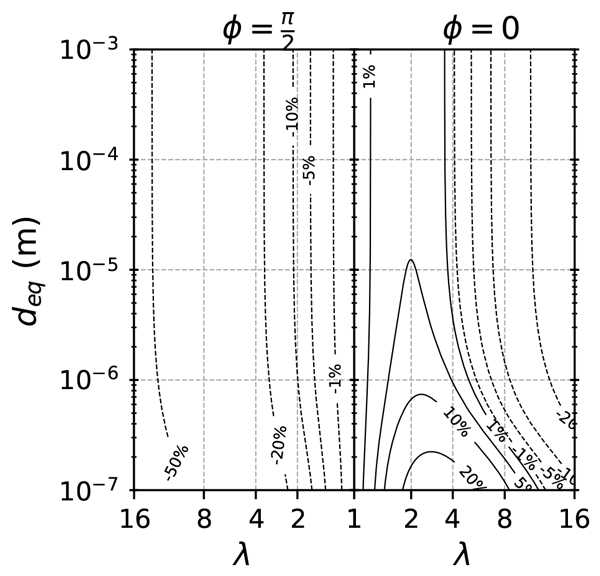
Sylvain Mailler, Sotirios Mallios, Arineh Cholakian, Vassilis Amiridis, Laurent Menut, and Romain Pennel
Geosci. Model Dev., 17, 5641–5655, https://doi.org/10.5194/gmd-17-5641-2024, https://doi.org/10.5194/gmd-17-5641-2024, 2024
Short summary
Short summary
We propose two explicit expressions to calculate the settling speed of solid atmospheric particles with prolate spheroidal shapes. The first formulation is based on theoretical arguments only, while the second one is based on computational fluid dynamics calculations. We show that the first method is suitable for virtually all atmospheric aerosols, provided their shape can be adequately described as a prolate spheroid, and we provide an implementation of the first method in AerSett v2.0.2.
Anton Lopatin, Oleg Dubovik, Georgiy Stenchikov, Ellsworth J. Welton, Illia Shevchenko, David Fuertes, Marcos Herreras-Giralda, Tatsiana Lapyonok, and Alexander Smirnov
Atmos. Meas. Tech., 17, 4445–4470, https://doi.org/10.5194/amt-17-4445-2024, https://doi.org/10.5194/amt-17-4445-2024, 2024
Short summary
Short summary
We compare aerosol properties over the King Abdullah University of Science and Technology campus using Generalized Retrieval of Aerosol and Surface Properties (GRASP) and the Micro-Pulse Lidar Network (MPLNET). We focus on the impact of different aerosol retrieval assumptions on daytime and nighttime retrievals and analyze seasonal variability in aerosol properties, aiding in understanding aerosol behavior and improving retrieval. Our work has implications for climate and public health.
Claire L. Ryder, Clément Bézier, Helen F. Dacre, Rory Clarkson, Vassilis Amiridis, Eleni Marinou, Emmanouil Proestakis, Zak Kipling, Angela Benedetti, Mark Parrington, Samuel Rémy, and Mark Vaughan
Nat. Hazards Earth Syst. Sci., 24, 2263–2284, https://doi.org/10.5194/nhess-24-2263-2024, https://doi.org/10.5194/nhess-24-2263-2024, 2024
Short summary
Short summary
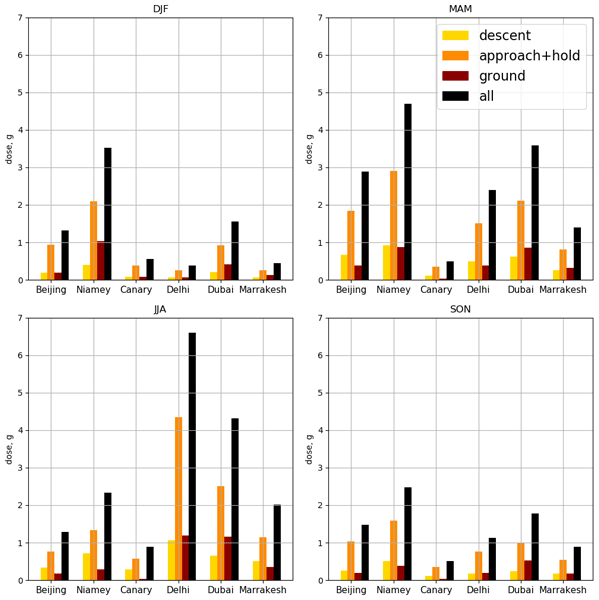
Desert dust poses a hazard to aircraft via degradation of engine components. This has financial implications for the aviation industry and results in increased fuel burn with climate impacts. Here we quantify dust ingestion by aircraft engines at airports worldwide. We find Dubai and Delhi in summer are among the dustiest airports, where substantial engine degradation would occur after 1000 flights. Dust ingestion can be reduced by changing take-off times and the altitude of holding patterns.
Emmanouil Proestakis, Antonis Gkikas, Thanasis Georgiou, Anna Kampouri, Eleni Drakaki, Claire L. Ryder, Franco Marenco, Eleni Marinou, and Vassilis Amiridis
Atmos. Meas. Tech., 17, 3625–3667, https://doi.org/10.5194/amt-17-3625-2024, https://doi.org/10.5194/amt-17-3625-2024, 2024
Short summary
Short summary
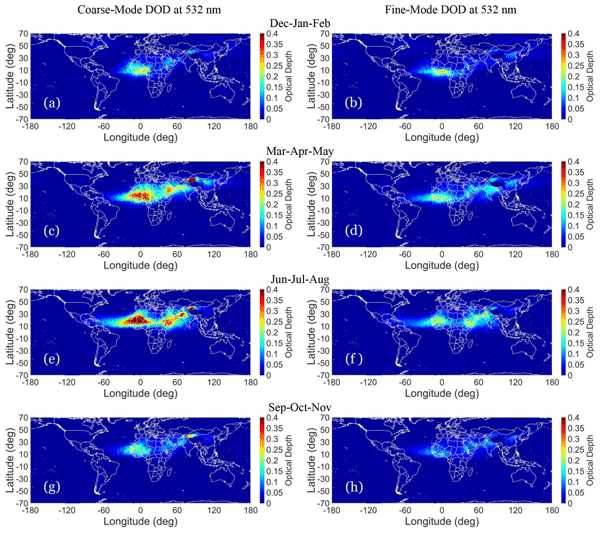
A new four-dimensional, multiyear, and near-global climate data record of the fine-mode (submicrometer diameter) and coarse-mode (supermicrometer diameter) components of atmospheric pure dust is presented. The dataset is considered unique with respect to a wide range of potential applications, including climatological, time series, and trend analysis over extensive geographical domains and temporal periods, validation of atmospheric dust models and datasets, and air quality.
Ilias Fountoulakis, Alexandra Tsekeri, Stelios Kazadzis, Vassilis Amiridis, Angelos Nersesian, Maria Tsichla, Emmanouil Proestakis, Antonis Gkikas, Kyriakoula Papachristopoulou, Vasileios Barlakas, Claudia Emde, and Bernhard Mayer
Atmos. Chem. Phys., 24, 4915–4948, https://doi.org/10.5194/acp-24-4915-2024, https://doi.org/10.5194/acp-24-4915-2024, 2024
Short summary
Short summary
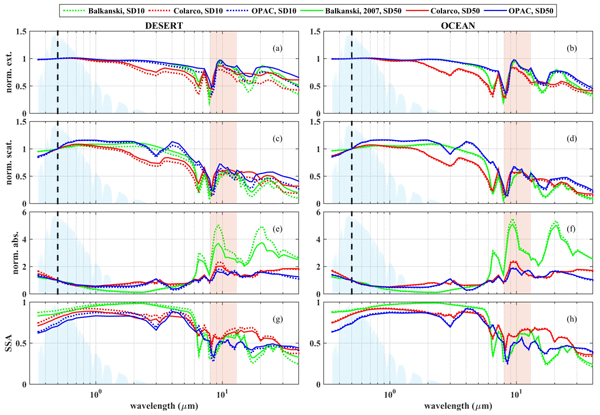
In our study we provide an assessment, through a sensitivity study, of the limitations of models to calculate the dust direct radiative effect (DRE) due to the underrepresentation of its size, refractive index (RI), and shape. Our results indicate the necessity of including more realistic sizes and RIs for dust particles in dust models, in order to derive better estimations of the dust direct radiative effects.
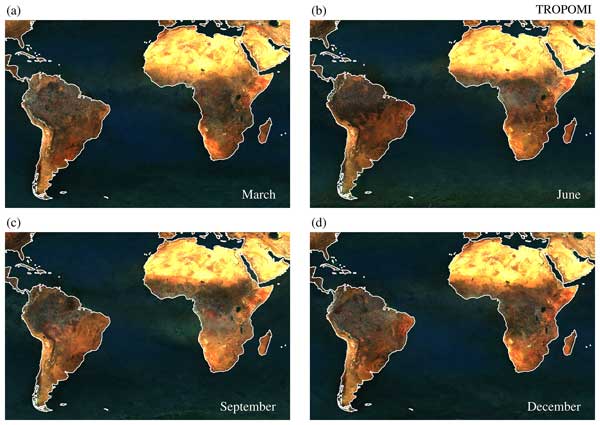
Lieuwe G. Tilstra, Martin de Graaf, Victor J. H. Trees, Pavel Litvinov, Oleg Dubovik, and Piet Stammes
Atmos. Meas. Tech., 17, 2235–2256, https://doi.org/10.5194/amt-17-2235-2024, https://doi.org/10.5194/amt-17-2235-2024, 2024
Short summary
Short summary
This paper introduces a new surface albedo climatology of directionally dependent Lambertian-equivalent reflectivity (DLER) observed by TROPOMI on the Sentinel-5 Precursor satellite. The database contains monthly fields of DLER for 21 wavelength bands at a relatively high spatial resolution of 0.125 by 0.125 degrees. The anisotropy of the surface reflection is handled by parameterisation of the viewing angle dependence.
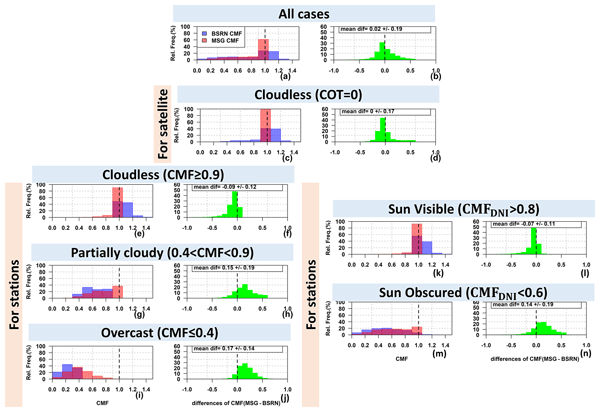
Kyriakoula Papachristopoulou, Ilias Fountoulakis, Alkiviadis F. Bais, Basil E. Psiloglou, Nikolaos Papadimitriou, Ioannis-Panagiotis Raptis, Andreas Kazantzidis, Charalampos Kontoes, Maria Hatzaki, and Stelios Kazadzis
Atmos. Meas. Tech., 17, 1851–1877, https://doi.org/10.5194/amt-17-1851-2024, https://doi.org/10.5194/amt-17-1851-2024, 2024
Short summary
Short summary
The upgraded systems SENSE2 and NextSENSE2 focus on improving the quality of solar nowcasting and forecasting. SENSE2 provides real-time estimates of solar irradiance across a wide region every 15 min. NextSENSE2 offers short-term forecasts of irradiance up to 3 h ahead. Evaluation with actual data showed that the instantaneous comparison yields the most discrepancies due to the uncertainties of cloud-related information and satellite versus ground-based spatial representativeness limitations.
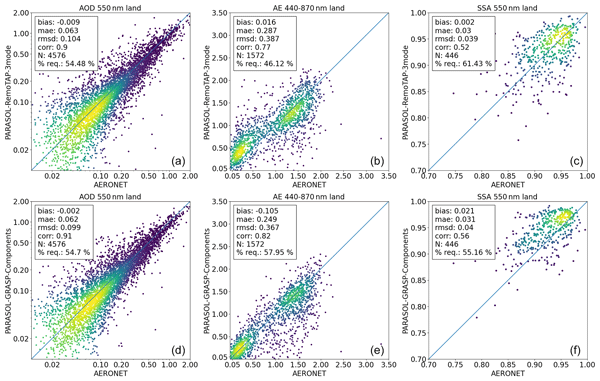
Otto Hasekamp, Pavel Litvinov, Guangliang Fu, Cheng Chen, and Oleg Dubovik
Atmos. Meas. Tech., 17, 1497–1525, https://doi.org/10.5194/amt-17-1497-2024, https://doi.org/10.5194/amt-17-1497-2024, 2024
Short summary
Short summary
Aerosols are particles in the atmosphere that cool the climate by reflecting and absorbing sunlight (direct effect) and changing cloud properties (indirect effect). The scale of aerosol cooling is uncertain, hampering accurate climate predictions. We compare two algorithms for the retrieval of aerosol properties from multi-angle polarimetric measurements: Generalized Retrieval of Atmosphere and Surface Properties (GRASP) and Remote sensing of Trace gas and Aerosol Products (RemoTAP).
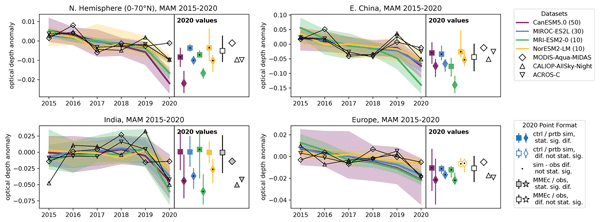
Ruth A. R. Digby, Nathan P. Gillett, Adam H. Monahan, Knut von Salzen, Antonis Gkikas, Qianqian Song, and Zhibo Zhang
Atmos. Chem. Phys., 24, 2077–2097, https://doi.org/10.5194/acp-24-2077-2024, https://doi.org/10.5194/acp-24-2077-2024, 2024
Short summary
Short summary
The COVID-19 lockdowns reduced aerosol emissions. We ask whether these reductions affected regional aerosol optical depth (AOD) and compare the observed changes to predictions from Earth system models. Only India has an observed AOD reduction outside of typical variability. Models overestimate the response in some regions, but when key biases have been addressed, the agreement is improved. Our results suggest that current models can realistically predict the effects of future emission changes.
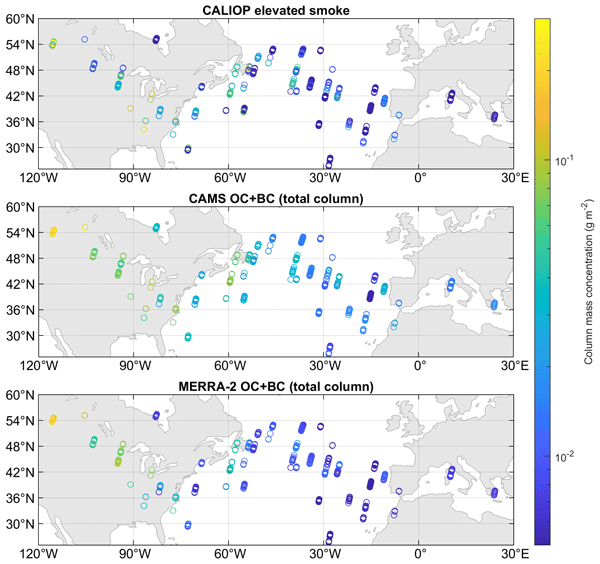
Xiaoxia Shang, Antti Lipponen, Maria Filioglou, Anu-Maija Sundström, Mark Parrington, Virginie Buchard, Anton S. Darmenov, Ellsworth J. Welton, Eleni Marinou, Vassilis Amiridis, Michael Sicard, Alejandro Rodríguez-Gómez, Mika Komppula, and Tero Mielonen
Atmos. Chem. Phys., 24, 1329–1344, https://doi.org/10.5194/acp-24-1329-2024, https://doi.org/10.5194/acp-24-1329-2024, 2024
Short summary
Short summary
In June 2019, smoke particles from a Canadian wildfire event were transported to Europe. The long-range-transported smoke plumes were monitored with a spaceborne lidar and reanalysis models. Based on the aerosol mass concentrations estimated from the observations, the reanalysis models had difficulties in reproducing the amount and location of the smoke aerosols during the transport event. Consequently, more spaceborne lidar missions are needed for reliable monitoring of aerosol plumes.
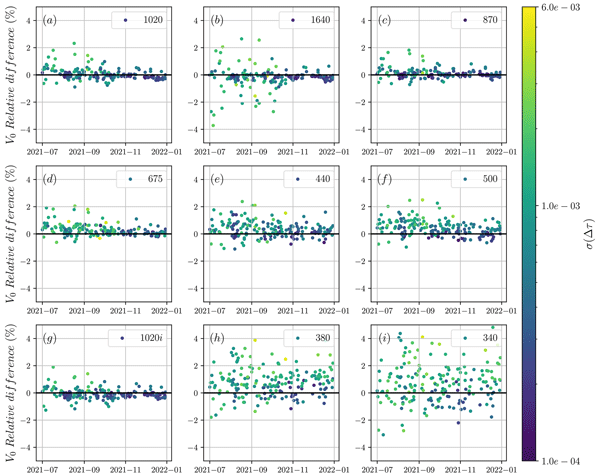
Antonio Fernando Almansa, África Barreto, Natalia Kouremeti, Ramiro González, Akriti Masoom, Carlos Toledano, Julian Gröbner, Rosa Delia García, Yenny González, Stelios Kazadzis, Stéphane Victori, Óscar Álvarez, Fabrice Maupin, Virgilio Carreño, Victoria Eugenia Cachorro, and Emilio Cuevas
Atmos. Meas. Tech., 17, 659–675, https://doi.org/10.5194/amt-17-659-2024, https://doi.org/10.5194/amt-17-659-2024, 2024
Short summary
Short summary
This paper applies sun photometer synergies to improve calibration transference between different sun photometers and also enhance their quality assurance and quality control. We have validated this technique using different instrumentation, the WMO-GAW and NASA-AERONET references, under different aerosol regimes using the standard Langley calibration method as a reference.
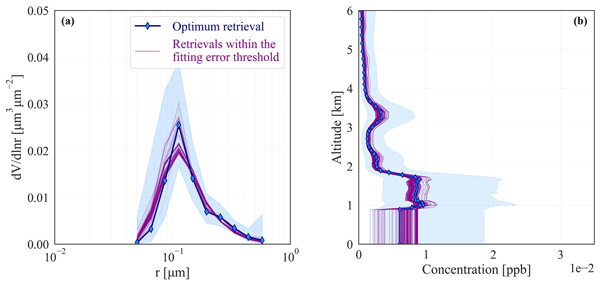
Alexandra Tsekeri, Anna Gialitaki, Marco Di Paolantonio, Davide Dionisi, Gian Luigi Liberti, Alnilam Fernandes, Artur Szkop, Aleksander Pietruczuk, Daniel Pérez-Ramírez, Maria J. Granados Muñoz, Juan Luis Guerrero-Rascado, Lucas Alados-Arboledas, Diego Bermejo Pantaleón, Juan Antonio Bravo-Aranda, Anna Kampouri, Eleni Marinou, Vassilis Amiridis, Michael Sicard, Adolfo Comerón, Constantino Muñoz-Porcar, Alejandro Rodríguez-Gómez, Salvatore Romano, Maria Rita Perrone, Xiaoxia Shang, Mika Komppula, Rodanthi-Elisavet Mamouri, Argyro Nisantzi, Diofantos Hadjimitsis, Francisco Navas-Guzmán, Alexander Haefele, Dominika Szczepanik, Artur Tomczak, Iwona S. Stachlewska, Livio Belegante, Doina Nicolae, Kalliopi Artemis Voudouri, Dimitris Balis, Athena A. Floutsi, Holger Baars, Linda Miladi, Nicolas Pascal, Oleg Dubovik, and Anton Lopatin
Atmos. Meas. Tech., 16, 6025–6050, https://doi.org/10.5194/amt-16-6025-2023, https://doi.org/10.5194/amt-16-6025-2023, 2023
Short summary
Short summary
EARLINET/ACTRIS organized an intensive observational campaign in May 2020, with the objective of monitoring the atmospheric state over Europe during the COVID-19 lockdown and relaxation period. The work presented herein focuses on deriving a common methodology for applying a synergistic retrieval that utilizes the network's ground-based passive and active remote sensing measurements and deriving the aerosols from anthropogenic activities over Europe.
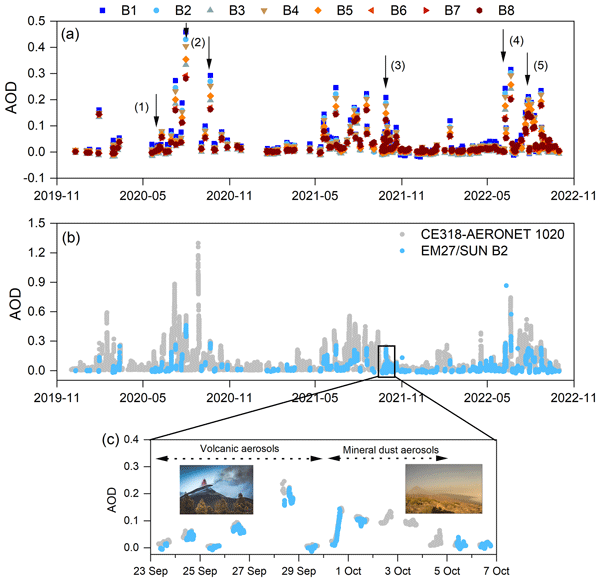
Óscar Alvárez, África Barreto, Omaira E. García, Frank Hase, Rosa D. García, Julian Gröbner, Sergio F. León-Luis, Eliezer Sepúlveda, Virgilio Carreño, Antonio Alcántara, Ramón Ramos, A. Fernando Almansa, Stelios Kazadzis, Noémie Taquet, Carlos Toledano, and Emilio Cuevas
Atmos. Meas. Tech., 16, 4861–4884, https://doi.org/10.5194/amt-16-4861-2023, https://doi.org/10.5194/amt-16-4861-2023, 2023
Short summary
Short summary
In this work, we have extended the capabilities of a portable Fourier transform infrared (FTIR) instrument, which was originally designed to provide high-quality greenhouse gas monitoring within COCCON (COllaborative Carbon Column Observing Network). The extension allows the spectrometer to now also provide coincidentally column-integrated aerosol information. This addition of a reference instrument to a global network will be utilised to enhance our understanding of atmospheric chemistry.
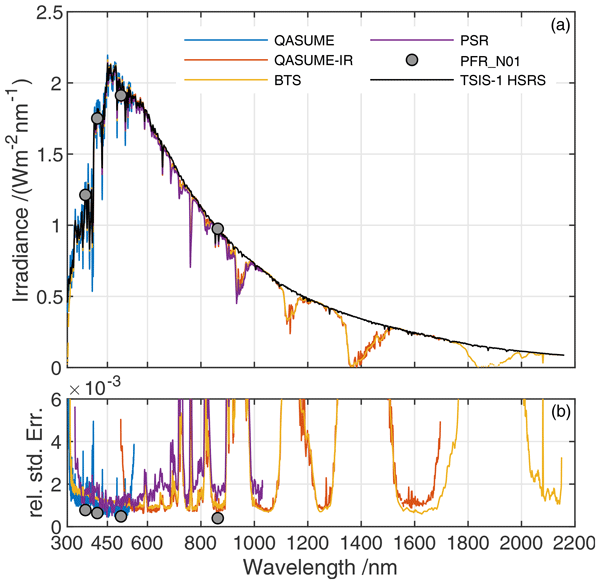
Julian Gröbner, Natalia Kouremeti, Gregor Hülsen, Ralf Zuber, Mario Ribnitzky, Saulius Nevas, Peter Sperfeld, Kerstin Schwind, Philipp Schneider, Stelios Kazadzis, África Barreto, Tom Gardiner, Kavitha Mottungan, David Medland, and Marc Coleman
Atmos. Meas. Tech., 16, 4667–4680, https://doi.org/10.5194/amt-16-4667-2023, https://doi.org/10.5194/amt-16-4667-2023, 2023
Short summary
Short summary
Spectral solar irradiance measurements traceable to the International System of Units (SI) allow for intercomparability between instruments and for their validation according to metrological standards. Here we also validate and reduce the uncertainties of the top-of-atmosphere TSIS-1 Hybrid Solar Reference Spectrum (HSRS). The management of large networks, e.g. AERONET or GAW-PFR, will benefit from reducing logistical overhead, improving their resilience and achieving metrological traceability.
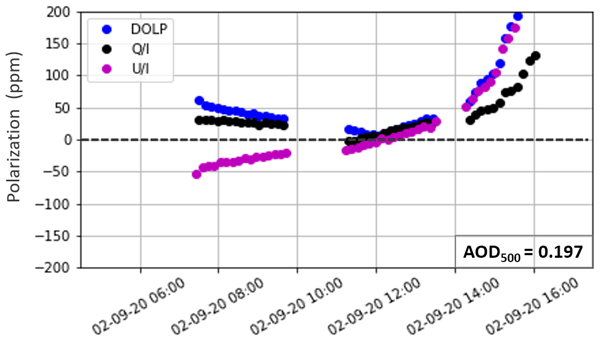
Vasiliki Daskalopoulou, Panagiotis I. Raptis, Alexandra Tsekeri, Vassilis Amiridis, Stelios Kazadzis, Zbigniew Ulanowski, Vassilis Charmandaris, Konstantinos Tassis, and William Martin
Atmos. Meas. Tech., 16, 4529–4550, https://doi.org/10.5194/amt-16-4529-2023, https://doi.org/10.5194/amt-16-4529-2023, 2023
Short summary
Short summary
Atmospheric dust particles may present a preferential alignment due to their shape on long range transport. Since dust is abundant and plays a key role to global climate, the elusive observation of orientation will be a game changer to existing measurement techniques and the representation of particles in climate models. We utilize a specifically designed instrument, SolPol, and target the Sun from the ground for large polarization values under dusty conditions, a clear sign of orientation.
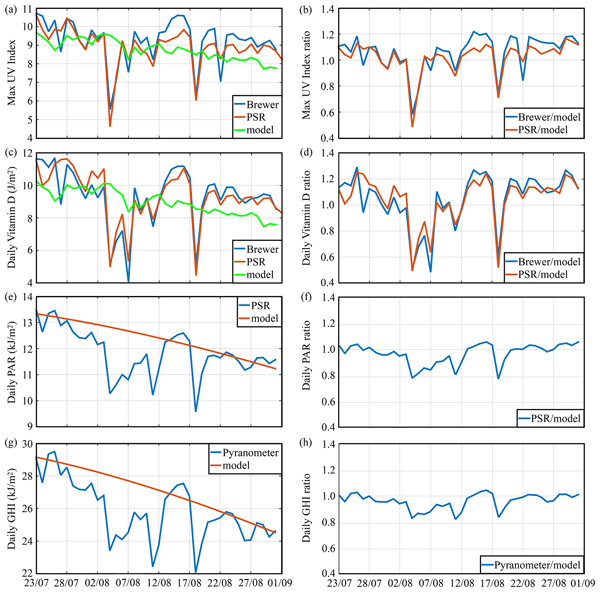
Akriti Masoom, Ilias Fountoulakis, Stelios Kazadzis, Ioannis-Panagiotis Raptis, Anna Kampouri, Basil E. Psiloglou, Dimitra Kouklaki, Kyriakoula Papachristopoulou, Eleni Marinou, Stavros Solomos, Anna Gialitaki, Dimitra Founda, Vasileios Salamalikis, Dimitris Kaskaoutis, Natalia Kouremeti, Nikolaos Mihalopoulos, Vassilis Amiridis, Andreas Kazantzidis, Alexandros Papayannis, Christos S. Zerefos, and Kostas Eleftheratos
Atmos. Chem. Phys., 23, 8487–8514, https://doi.org/10.5194/acp-23-8487-2023, https://doi.org/10.5194/acp-23-8487-2023, 2023
Short summary
Short summary
We analyse the spatial and temporal aerosol spectral optical properties during the extreme wildfires of August 2021 in Greece and assess their effects on air quality and solar radiation quantities related to health, agriculture, and energy. Different aerosol conditions are identified (pure smoke, pure dust, dust–smoke together); the largest impact on solar radiation quantities is found for cases with mixed dust–smoke aerosols. Such situations are expected to occur more frequently in the future.
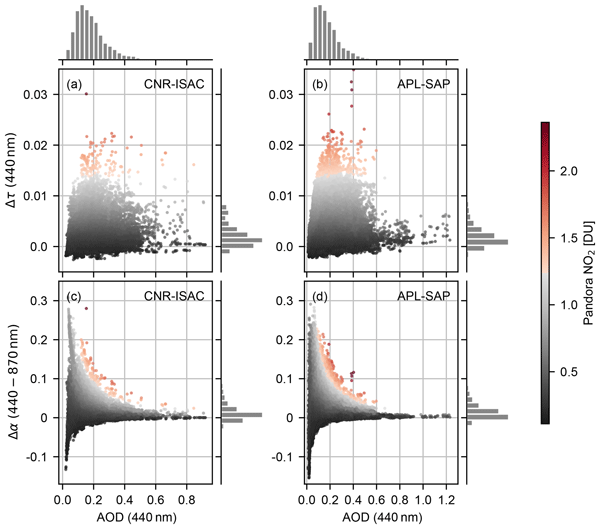
Theano Drosoglou, Ioannis-Panagiotis Raptis, Massimo Valeri, Stefano Casadio, Francesca Barnaba, Marcos Herreras-Giralda, Anton Lopatin, Oleg Dubovik, Gabriele Brizzi, Fabrizio Niro, Monica Campanelli, and Stelios Kazadzis
Atmos. Meas. Tech., 16, 2989–3014, https://doi.org/10.5194/amt-16-2989-2023, https://doi.org/10.5194/amt-16-2989-2023, 2023
Short summary
Short summary
Aerosol optical properties derived from sun photometers depend on the optical depth of trace gases absorbing solar radiation at specific spectral ranges. Various networks use satellite-based climatologies to account for this or neglect their effect. In this work, we evaluate the effect of NO2 absorption in aerosol retrievals from AERONET and SKYNET over two stations in Rome, Italy, with relatively high NO2 spatiotemporal variations, using NO2 data from the Pandora network and the TROPOMI sensor.
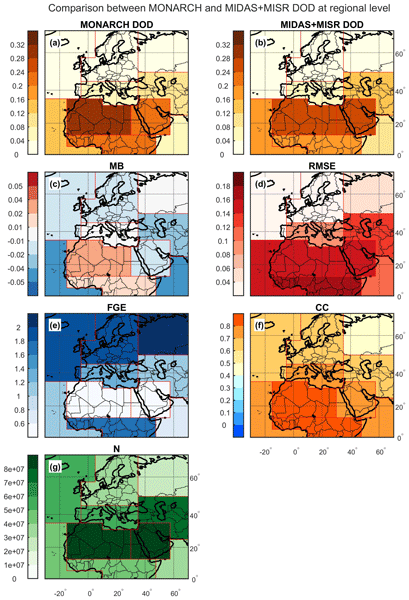
Michail Mytilinaios, Sara Basart, Sergio Ciamprone, Juan Cuesta, Claudio Dema, Enza Di Tomaso, Paola Formenti, Antonis Gkikas, Oriol Jorba, Ralph Kahn, Carlos Pérez García-Pando, Serena Trippetta, and Lucia Mona
Atmos. Chem. Phys., 23, 5487–5516, https://doi.org/10.5194/acp-23-5487-2023, https://doi.org/10.5194/acp-23-5487-2023, 2023
Short summary
Short summary
Multiscale Online Non-hydrostatic AtmospheRe CHemistry model (MONARCH) dust reanalysis provides a high-resolution 3D reconstruction of past dust conditions, allowing better quantification of climate and socioeconomic dust impacts. We assess the performance of the reanalysis needed to reproduce dust optical depth using dust-related products retrieved from satellite and ground-based observations and show that it reproduces the spatial distribution and seasonal variability of atmospheric dust well.
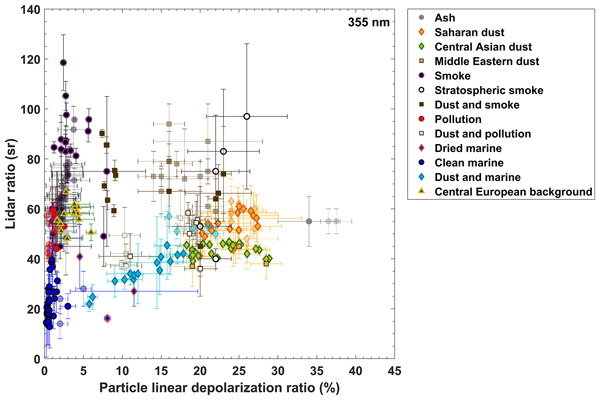
Athena Augusta Floutsi, Holger Baars, Ronny Engelmann, Dietrich Althausen, Albert Ansmann, Stephanie Bohlmann, Birgit Heese, Julian Hofer, Thomas Kanitz, Moritz Haarig, Kevin Ohneiser, Martin Radenz, Patric Seifert, Annett Skupin, Zhenping Yin, Sabur F. Abdullaev, Mika Komppula, Maria Filioglou, Elina Giannakaki, Iwona S. Stachlewska, Lucja Janicka, Daniele Bortoli, Eleni Marinou, Vassilis Amiridis, Anna Gialitaki, Rodanthi-Elisavet Mamouri, Boris Barja, and Ulla Wandinger
Atmos. Meas. Tech., 16, 2353–2379, https://doi.org/10.5194/amt-16-2353-2023, https://doi.org/10.5194/amt-16-2353-2023, 2023
Short summary
Short summary
DeLiAn is a collection of lidar-derived aerosol intensive optical properties for several aerosol types, namely the particle linear depolarization ratio, the extinction-to-backscatter ratio (lidar ratio) and the Ångström exponent. The data collection is based on globally distributed, long-term, ground-based, multiwavelength, Raman and polarization lidar measurements and currently covers two wavelengths, 355 and 532 nm, for 13 aerosol categories ranging from basic aerosol types to mixtures.
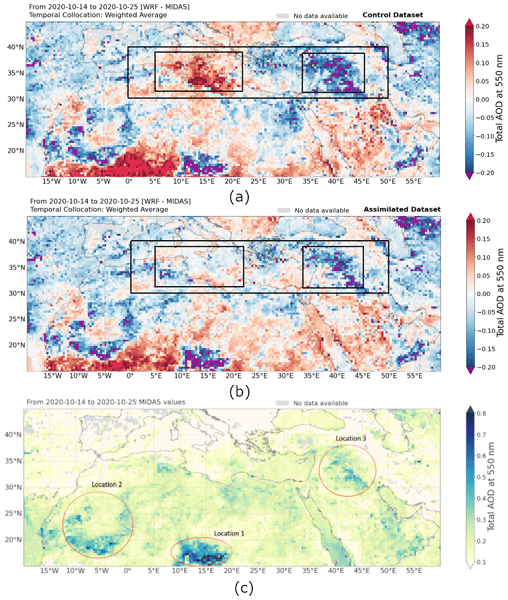
Pantelis Kiriakidis, Antonis Gkikas, Georgios Papangelis, Theodoros Christoudias, Jonilda Kushta, Emmanouil Proestakis, Anna Kampouri, Eleni Marinou, Eleni Drakaki, Angela Benedetti, Michael Rennie, Christian Retscher, Anne Grete Straume, Alexandru Dandocsi, Jean Sciare, and Vasilis Amiridis
Atmos. Chem. Phys., 23, 4391–4417, https://doi.org/10.5194/acp-23-4391-2023, https://doi.org/10.5194/acp-23-4391-2023, 2023
Short summary
Short summary
With the launch of the Aeolus satellite, higher-accuracy wind products became available. This research was carried out to validate the assimilated wind products by testing their effect on the WRF-Chem model predictive ability of dust processes. This was carried out for the eastern Mediterranean and Middle East region for two 2-month periods in autumn and spring 2020. The use of the assimilated products improved the dust forecasts of the autumn season (both quantitatively and qualitatively).
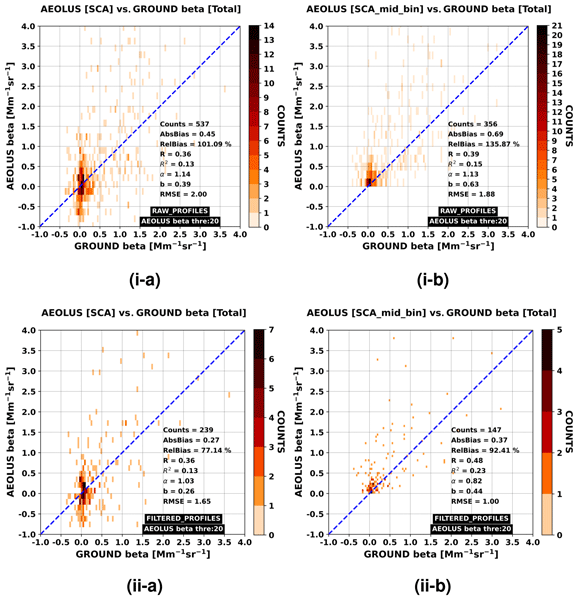
Antonis Gkikas, Anna Gialitaki, Ioannis Binietoglou, Eleni Marinou, Maria Tsichla, Nikolaos Siomos, Peristera Paschou, Anna Kampouri, Kalliopi Artemis Voudouri, Emmanouil Proestakis, Maria Mylonaki, Christina-Anna Papanikolaou, Konstantinos Michailidis, Holger Baars, Anne Grete Straume, Dimitris Balis, Alexandros Papayannis, Tomasso Parrinello, and Vassilis Amiridis
Atmos. Meas. Tech., 16, 1017–1042, https://doi.org/10.5194/amt-16-1017-2023, https://doi.org/10.5194/amt-16-1017-2023, 2023
Short summary
Short summary
We perform an assessment analysis of the Aeolus Standard Correct Algorithm (SCA) backscatter coefficient retrievals against reference observations acquired at three Greek lidar stations (Athens, Thessaloniki and Antikythera) of the PANACEA network. Overall, 43 cases are analysed, whereas specific aerosol scenarios in the vicinity of Antikythera island (SW Greece) are emphasised. All key Cal/Val aspects and recommendations, and the ongoing related activities, are thoroughly discussed.
Konstantinos Michailidis, Maria-Elissavet Koukouli, Dimitris Balis, J. Pepijn Veefkind, Martin de Graaf, Lucia Mona, Nikolaos Papagianopoulos, Gesolmina Pappalardo, Ioanna Tsikoudi, Vassilis Amiridis, Eleni Marinou, Anna Gialitaki, Rodanthi-Elisavet Mamouri, Argyro Nisantzi, Daniele Bortoli, Maria João Costa, Vanda Salgueiro, Alexandros Papayannis, Maria Mylonaki, Lucas Alados-Arboledas, Salvatore Romano, Maria Rita Perrone, and Holger Baars
Atmos. Chem. Phys., 23, 1919–1940, https://doi.org/10.5194/acp-23-1919-2023, https://doi.org/10.5194/acp-23-1919-2023, 2023
Short summary
Short summary
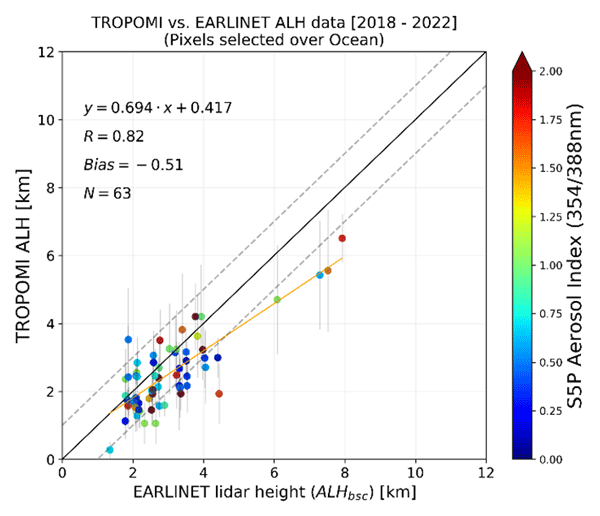
Comparisons with ground-based correlative lidar measurements constitute a key component in the validation of satellite aerosol products. This paper presents the validation of the TROPOMI aerosol layer height (ALH) product, using archived quality assured ground-based data from lidar stations that belong to the EARLINET network. Comparisons between the TROPOMI ALH and co-located EARLINET measurements show good agreement over the ocean.

Kyriakoula Papachristopoulou, Ioannis-Panagiotis Raptis, Antonis Gkikas, Ilias Fountoulakis, Akriti Masoom, and Stelios Kazadzis
Atmos. Chem. Phys., 22, 15703–15727, https://doi.org/10.5194/acp-22-15703-2022, https://doi.org/10.5194/acp-22-15703-2022, 2022
Short summary
Short summary
Megacities' air quality is determined by atmospheric aerosols. We focus on changes over the last two decades in the 81 largest cities, using satellite data. European and American cities have lower aerosol compared to African and Asian cities. For European, North American and East Asian cities, aerosols are decreasing over time, especially in China and the US. In the remaining cities, aerosol loads are increasing, particularly in India.
Huilin Huang, Yun Qian, Ye Liu, Cenlin He, Jianyu Zheng, Zhibo Zhang, and Antonis Gkikas
Atmos. Chem. Phys., 22, 15469–15488, https://doi.org/10.5194/acp-22-15469-2022, https://doi.org/10.5194/acp-22-15469-2022, 2022
Short summary
Short summary
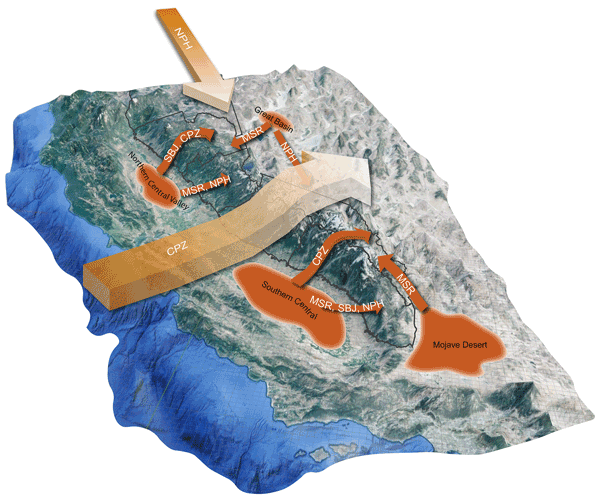
Using a clustering method developed in the field of artificial neural networks, we identify four typical dust transport patterns across the Sierra Nevada, associated with the mesoscale and regional-scale wind circulations. Our results highlight the connection between dust transport and dominant weather patterns, which can be used to understand dust transport in a changing climate.
Milagros E. Herrera, Oleg Dubovik, Benjamin Torres, Tatyana Lapyonok, David Fuertes, Anton Lopatin, Pavel Litvinov, Cheng Chen, Jose Antonio Benavent-Oltra, Juan L. Bali, and Pablo R. Ristori
Atmos. Meas. Tech., 15, 6075–6126, https://doi.org/10.5194/amt-15-6075-2022, https://doi.org/10.5194/amt-15-6075-2022, 2022
Short summary
Short summary
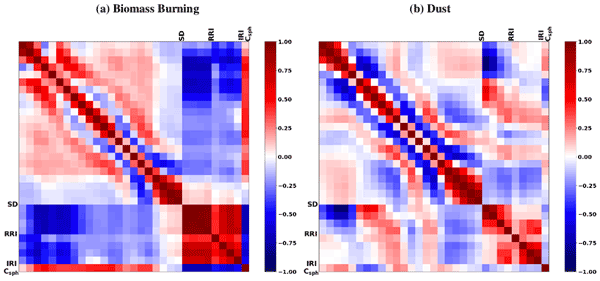
This study deals with the dynamic error estimates of the aerosol-retrieved properties by the GRASP algorithm, which are provided for directly retrieved and derived parameters. Moreover, GRASP provides full covariance matrices that appear to be a useful approach for optimizing observation schemes and retrieval set-ups. The validation of the retrieved dynamic error estimates is done through real and synthetic measurements using sun photometer and lidar observations.
Angelos Karanikolas, Natalia Kouremeti, Julian Gröbner, Luca Egli, and Stelios Kazadzis
Atmos. Meas. Tech., 15, 5667–5680, https://doi.org/10.5194/amt-15-5667-2022, https://doi.org/10.5194/amt-15-5667-2022, 2022
Short summary
Short summary
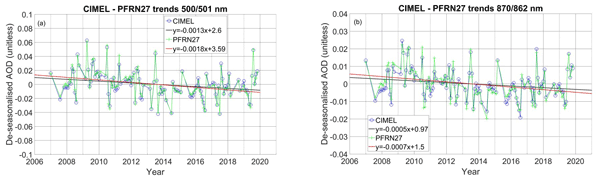
The aim of this work is to investigate the limitations of calculating long-term trends of a parameter that quantifies the overall effect of atmospheric aerosols on the solar radiation. A main finding is that even instruments with good agreement between their observations can show significantly different linear trends. By calculating time-varying trends, the trend agreement is shown to improve. We also show that different methods of trend estimation can result in significant trend differences.
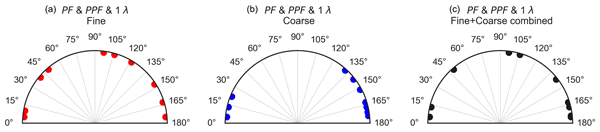
Alireza Moallemi, Rob L. Modini, Tatyana Lapyonok, Anton Lopatin, David Fuertes, Oleg Dubovik, Philippe Giaccari, and Martin Gysel-Beer
Atmos. Meas. Tech., 15, 5619–5642, https://doi.org/10.5194/amt-15-5619-2022, https://doi.org/10.5194/amt-15-5619-2022, 2022
Short summary
Short summary
Aerosol properties (size distributions, refractive indices) can be retrieved from in situ, angularly resolved light scattering measurements performed with polar nephelometers. We apply an established framework to assess the aerosol property retrieval potential for different instrument configurations, target applications, and assumed prior knowledge. We also demonstrate how a reductive greedy algorithm can be used to determine the optimal placements of the angular sensors in a polar nephelometer.
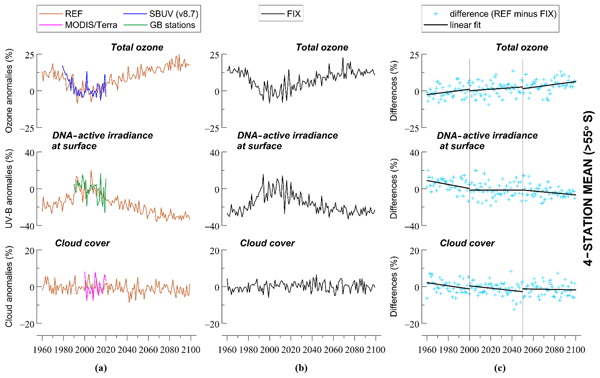
Kostas Eleftheratos, John Kapsomenakis, Ilias Fountoulakis, Christos S. Zerefos, Patrick Jöckel, Martin Dameris, Alkiviadis F. Bais, Germar Bernhard, Dimitra Kouklaki, Kleareti Tourpali, Scott Stierle, J. Ben Liley, Colette Brogniez, Frédérique Auriol, Henri Diémoz, Stana Simic, Irina Petropavlovskikh, Kaisa Lakkala, and Kostas Douvis
Atmos. Chem. Phys., 22, 12827–12855, https://doi.org/10.5194/acp-22-12827-2022, https://doi.org/10.5194/acp-22-12827-2022, 2022
Short summary
Short summary
We present the future evolution of DNA-active ultraviolet (UV) radiation in view of increasing greenhouse gases (GHGs) and decreasing ozone depleting substances (ODSs). It is shown that DNA-active UV radiation might increase after 2050 between 50° N–50° S due to GHG-induced reductions in clouds and ozone, something that is likely not to happen at high latitudes, where DNA-active UV radiation will continue its downward trend mainly due to stratospheric ozone recovery from the reduction in ODSs.

Eleni Drakaki, Vassilis Amiridis, Alexandra Tsekeri, Antonis Gkikas, Emmanouil Proestakis, Sotirios Mallios, Stavros Solomos, Christos Spyrou, Eleni Marinou, Claire L. Ryder, Demetri Bouris, and Petros Katsafados
Atmos. Chem. Phys., 22, 12727–12748, https://doi.org/10.5194/acp-22-12727-2022, https://doi.org/10.5194/acp-22-12727-2022, 2022
Short summary
Short summary
State-of-the-art atmospheric dust models have limitations in accounting for a realistic dust size distribution (emission, transport). We modify the parameterization of the mineral dust cycle by including particles with diameter >20 μm, as indicated by observations over deserts. Moreover, we investigate the effects of reduced settling velocities of dust particles. Model results are evaluated using airborne and spaceborne dust measurements above Cabo Verde.

Thomas Drugé, Pierre Nabat, Marc Mallet, Martine Michou, Samuel Rémy, and Oleg Dubovik
Atmos. Chem. Phys., 22, 12167–12205, https://doi.org/10.5194/acp-22-12167-2022, https://doi.org/10.5194/acp-22-12167-2022, 2022
Short summary
Short summary
This study presents the implementation of brown carbon in the atmospheric component of the CNRM global climate model and particularly in its aerosol scheme TACTIC. Several simulations were carried out with this climate model, over the period 2000–2014, to evaluate the model by comparison with different reference datasets (PARASOL-GRASP, OMI-OMAERUVd, MACv2, FMI_SAT, AERONET) and to analyze the brown carbon radiative and climatic effects.
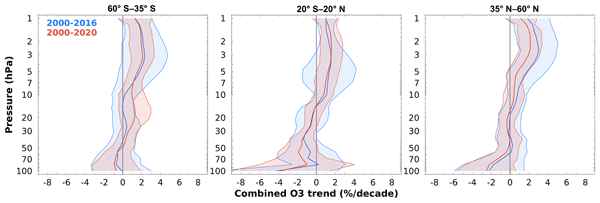
Sophie Godin-Beekmann, Niramson Azouz, Viktoria F. Sofieva, Daan Hubert, Irina Petropavlovskikh, Peter Effertz, Gérard Ancellet, Doug A. Degenstein, Daniel Zawada, Lucien Froidevaux, Stacey Frith, Jeannette Wild, Sean Davis, Wolfgang Steinbrecht, Thierry Leblanc, Richard Querel, Kleareti Tourpali, Robert Damadeo, Eliane Maillard Barras, René Stübi, Corinne Vigouroux, Carlo Arosio, Gerald Nedoluha, Ian Boyd, Roeland Van Malderen, Emmanuel Mahieu, Dan Smale, and Ralf Sussmann
Atmos. Chem. Phys., 22, 11657–11673, https://doi.org/10.5194/acp-22-11657-2022, https://doi.org/10.5194/acp-22-11657-2022, 2022
Short summary
Short summary
An updated evaluation up to 2020 of stratospheric ozone profile long-term trends at extrapolar latitudes based on satellite and ground-based records is presented. Ozone increase in the upper stratosphere is confirmed, with significant trends at most latitudes. In this altitude region, a very good agreement is found with trends derived from chemistry–climate model simulations. Observed and modelled trends diverge in the lower stratosphere, but the differences are non-significant.
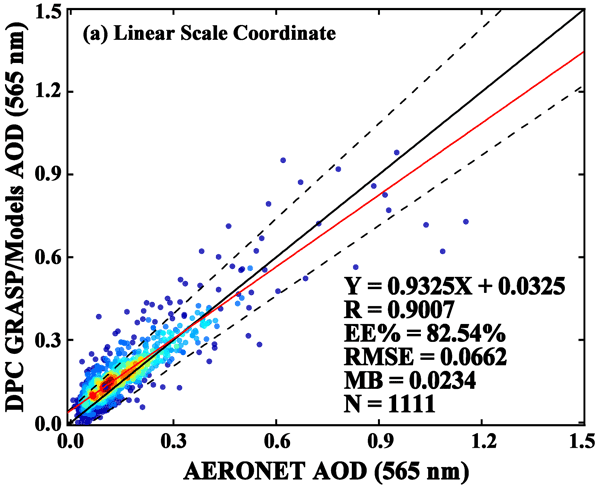
Shikuan Jin, Yingying Ma, Cheng Chen, Oleg Dubovik, Jin Hong, Boming Liu, and Wei Gong
Atmos. Meas. Tech., 15, 4323–4337, https://doi.org/10.5194/amt-15-4323-2022, https://doi.org/10.5194/amt-15-4323-2022, 2022
Short summary
Short summary
Aerosol parameter retrievals have always been a research focus. In this study, we used an advanced aerosol algorithms (GRASP, developed by Oleg Dubovik) to test the ability of DPC/Gaofen-5 (the first polarized multi-angle payload developed in China) images to obtain aerosol parameters. The results show that DPC/GRASP achieves good results (R > 0.9). This research will contribute to the development of hardware and algorithms for aerosols
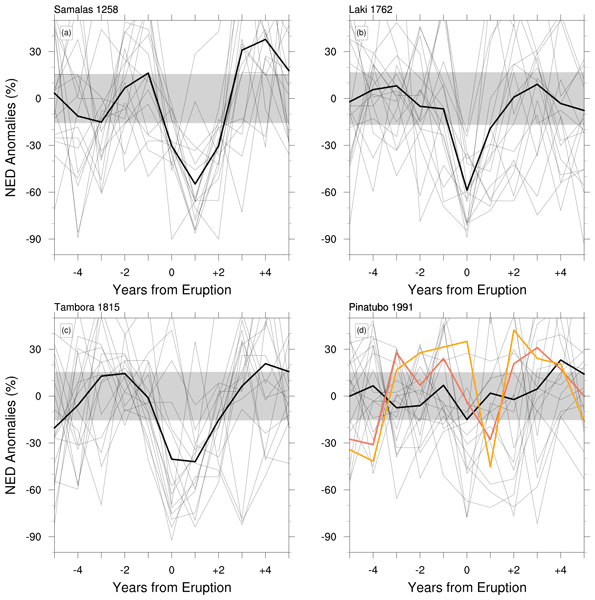
Stergios Misios, Ioannis Logothetis, Mads F. Knudsen, Christoffer Karoff, Vassilis Amiridis, and Kleareti Tourpali
Weather Clim. Dynam., 3, 811–823, https://doi.org/10.5194/wcd-3-811-2022, https://doi.org/10.5194/wcd-3-811-2022, 2022
Short summary
Short summary
We investigate the impact of strong volcanic eruptions on the northerly Etesian winds blowing in the eastern Mediterranean. Μodel simulations of the last millennium demonstrate a robust reduction in the total number of days with Etesian winds in the post-eruption summers. The decline in the Etesian winds is attributed to a weakened Indian summer monsoon in the post-eruption summer. These findings could improve seasonal predictions of the wind circulation in the eastern Mediterranean.
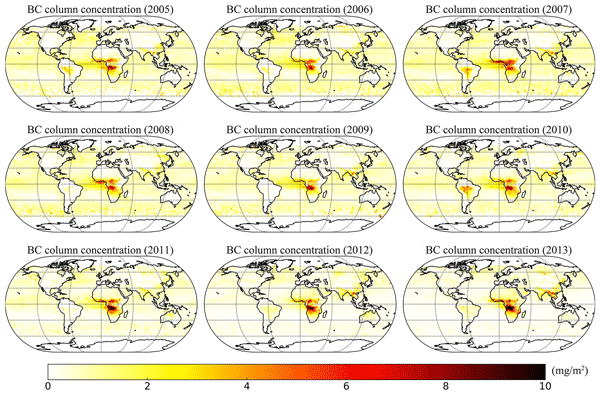
Lei Li, Yevgeny Derimian, Cheng Chen, Xindan Zhang, Huizheng Che, Gregory L. Schuster, David Fuertes, Pavel Litvinov, Tatyana Lapyonok, Anton Lopatin, Christian Matar, Fabrice Ducos, Yana Karol, Benjamin Torres, Ke Gui, Yu Zheng, Yuanxin Liang, Yadong Lei, Jibiao Zhu, Lei Zhang, Junting Zhong, Xiaoye Zhang, and Oleg Dubovik
Earth Syst. Sci. Data, 14, 3439–3469, https://doi.org/10.5194/essd-14-3439-2022, https://doi.org/10.5194/essd-14-3439-2022, 2022
Short summary
Short summary
A climatology of aerosol composition concentration derived from POLDER-3 observations using GRASP/Component is presented. The conceptual specifics of the GRASP/Component approach are in the direct retrieval of aerosol speciation without intermediate retrievals of aerosol optical characteristics. The dataset of satellite-derived components represents scarce but imperative information for validation and potential adjustment of chemical transport models.

Alexander Sinyuk, Brent N. Holben, Thomas F. Eck, David M. Giles, Ilya Slutsker, Oleg Dubovik, Joel S. Schafer, Alexander Smirnov, and Mikhail Sorokin
Atmos. Meas. Tech., 15, 4135–4151, https://doi.org/10.5194/amt-15-4135-2022, https://doi.org/10.5194/amt-15-4135-2022, 2022
Short summary
Short summary
This paper describes modification of smoothness constraints on the imaginary part of the refractive index employed in the AERONET aerosol retrieval algorithm. This modification is termed relaxed due to the weaker strength of this new smoothness constraint. Applying the modified version of the smoothness constraint results in a significant reduction of retrieved light absorption by brown-carbon-containing aerosols.

Mark Weber, Carlo Arosio, Melanie Coldewey-Egbers, Vitali E. Fioletov, Stacey M. Frith, Jeannette D. Wild, Kleareti Tourpali, John P. Burrows, and Diego Loyola
Atmos. Chem. Phys., 22, 6843–6859, https://doi.org/10.5194/acp-22-6843-2022, https://doi.org/10.5194/acp-22-6843-2022, 2022
Short summary
Short summary
Long-term trends in column ozone have been determined from five merged total ozone datasets spanning the period 1978–2020. We show that ozone recovery due to the decline in stratospheric halogens after the 1990s (as regulated by the Montreal Protocol) is evident outside the tropical region and amounts to half a percent per decade. The ozone recovery in the Northern Hemisphere is however compensated for by the negative long-term trend contribution from atmospheric dynamics since the year 2000.

Peristera Paschou, Nikolaos Siomos, Alexandra Tsekeri, Alexandros Louridas, George Georgoussis, Volker Freudenthaler, Ioannis Binietoglou, George Tsaknakis, Alexandros Tavernarakis, Christos Evangelatos, Jonas von Bismarck, Thomas Kanitz, Charikleia Meleti, Eleni Marinou, and Vassilis Amiridis
Atmos. Meas. Tech., 15, 2299–2323, https://doi.org/10.5194/amt-15-2299-2022, https://doi.org/10.5194/amt-15-2299-2022, 2022
Short summary
Short summary
The eVe lidar delivers quality-assured aerosol and cloud optical properties according to the standards of ACTRIS. It is a mobile reference system for the validation of the ESA's Aeolus satellite mission (L2 aerosol and cloud products). eVe provides linear and circular polarisation measurements with Raman capabilities. Here, we describe the system design, the polarisation calibration techniques, and the software for the retrieval of the optical products.
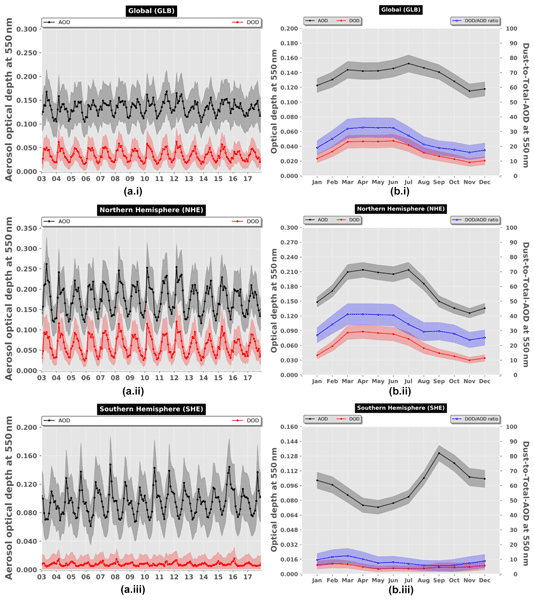
Antonis Gkikas, Emmanouil Proestakis, Vassilis Amiridis, Stelios Kazadzis, Enza Di Tomaso, Eleni Marinou, Nikos Hatzianastassiou, Jasper F. Kok, and Carlos Pérez García-Pando
Atmos. Chem. Phys., 22, 3553–3578, https://doi.org/10.5194/acp-22-3553-2022, https://doi.org/10.5194/acp-22-3553-2022, 2022
Short summary
Short summary
We present a comprehensive climatological analysis of dust optical depth (DOD) relying on the MIDAS dataset. MIDAS provides columnar mid-visible (550 nm) DOD at fine spatial resolution (0.1° × 0.1°) over a 15-year period (2003–2017). In the current study, the analysis is performed at various spatial (from regional to global) and temporal (from months to years) scales. More specifically, focus is given to specific regions hosting the major dust sources as well as downwind areas of the planet.
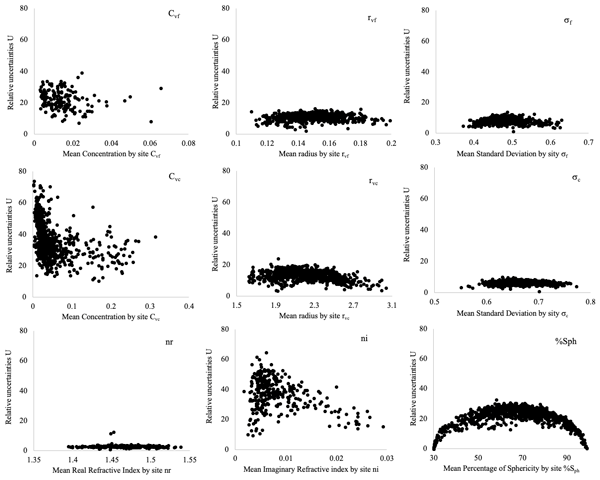
Jean-Claude Roger, Eric Vermote, Sergii Skakun, Emilie Murphy, Oleg Dubovik, Natacha Kalecinski, Bruno Korgo, and Brent Holben
Atmos. Meas. Tech., 15, 1123–1144, https://doi.org/10.5194/amt-15-1123-2022, https://doi.org/10.5194/amt-15-1123-2022, 2022
Short summary
Short summary
From measurements of the sky performed by AERONET, we determined the microphysical properties of the atmospheric particles (aerosols) for each AERONET site. We used the aerosol optical thickness and its variation over the visible spectrum. This allows us to determine an aerosol model useful for (but not only) the validation of the surface reflectance satellite-derived product. The impact of the aerosol model uncertainties on the surface reflectance validation has been found to be 1 % to 3 %.
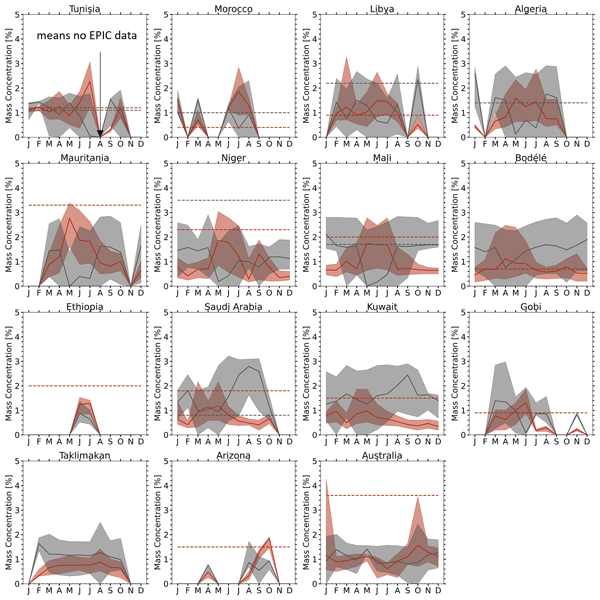
Sujung Go, Alexei Lyapustin, Gregory L. Schuster, Myungje Choi, Paul Ginoux, Mian Chin, Olga Kalashnikova, Oleg Dubovik, Jhoon Kim, Arlindo da Silva, Brent Holben, and Jeffrey S. Reid
Atmos. Chem. Phys., 22, 1395–1423, https://doi.org/10.5194/acp-22-1395-2022, https://doi.org/10.5194/acp-22-1395-2022, 2022
Short summary
Short summary
This paper presents a retrieval algorithm of iron-oxide species (hematite, goethite) content in the atmosphere from DSCOVR EPIC observations. Our results display variations within the published range of hematite and goethite over the main dust-source regions but show significant seasonal and spatial variability. This implies a single-viewing satellite instrument with UV–visible channels may provide essential information on shortwave dust direct radiative effects for climate modeling.
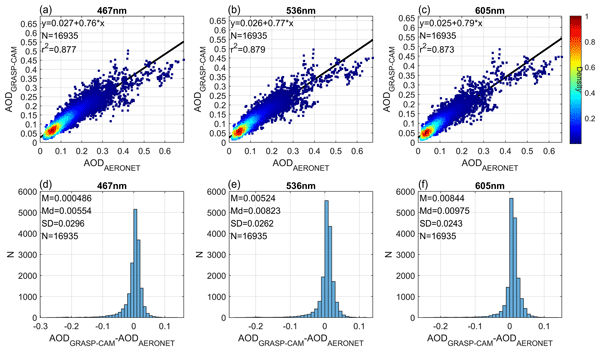
Roberto Román, Juan C. Antuña-Sánchez, Victoria E. Cachorro, Carlos Toledano, Benjamín Torres, David Mateos, David Fuertes, César López, Ramiro González, Tatyana Lapionok, Marcos Herreras-Giralda, Oleg Dubovik, and Ángel M. de Frutos
Atmos. Meas. Tech., 15, 407–433, https://doi.org/10.5194/amt-15-407-2022, https://doi.org/10.5194/amt-15-407-2022, 2022
Short summary
Short summary
An all-sky camera is used to obtain the relative sky radiance, and this radiance is used as input in an inversion code to obtain aerosol properties. This paper is really interesting because it pushes forward the use and capability of sky cameras for more advanced science purposes. Enhanced aerosol properties can be retrieved with accuracy using only an all-sky camera, but synergy with other instruments providing aerosol optical depth could even increase the power of these low-cost instruments.
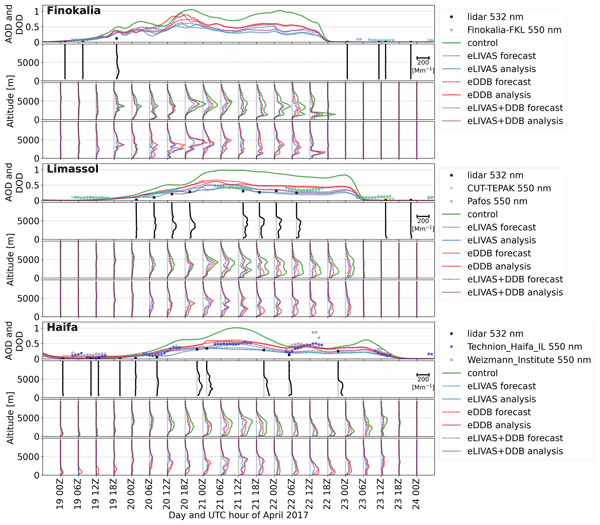
Jerónimo Escribano, Enza Di Tomaso, Oriol Jorba, Martina Klose, Maria Gonçalves Ageitos, Francesca Macchia, Vassilis Amiridis, Holger Baars, Eleni Marinou, Emmanouil Proestakis, Claudia Urbanneck, Dietrich Althausen, Johannes Bühl, Rodanthi-Elisavet Mamouri, and Carlos Pérez García-Pando
Atmos. Chem. Phys., 22, 535–560, https://doi.org/10.5194/acp-22-535-2022, https://doi.org/10.5194/acp-22-535-2022, 2022
Short summary
Short summary
We explore the benefits and consistency in adding lidar dust observations in a dust optical depth assimilation. We show that adding lidar data to a dust optical depth assimilation has valuable benefits and the dust analysis improves. We discuss the impact of the narrow satellite footprint of the lidar dust observations on the assimilation.
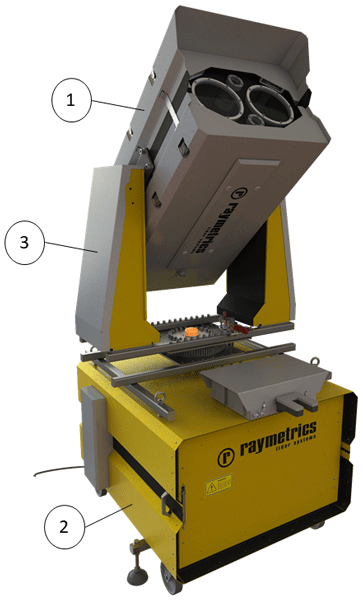
Alexandra Tsekeri, Vassilis Amiridis, Alexandros Louridas, George Georgoussis, Volker Freudenthaler, Spiros Metallinos, George Doxastakis, Josef Gasteiger, Nikolaos Siomos, Peristera Paschou, Thanasis Georgiou, George Tsaknakis, Christos Evangelatos, and Ioannis Binietoglou
Atmos. Meas. Tech., 14, 7453–7474, https://doi.org/10.5194/amt-14-7453-2021, https://doi.org/10.5194/amt-14-7453-2021, 2021
Short summary
Short summary
Dust orientation in the Earth's atmosphere has been an ongoing investigation in recent years, and its potential proof will be a paradigm shift for dust remote sensing. We have designed and developed a polarization lidar that provides direct measurements of dust orientation, as well as more detailed information of the particle microphysics. We provide a description of its design as well as its first measurements.

Stavros-Andreas Logothetis, Vasileios Salamalikis, Antonis Gkikas, Stelios Kazadzis, Vassilis Amiridis, and Andreas Kazantzidis
Atmos. Chem. Phys., 21, 16499–16529, https://doi.org/10.5194/acp-21-16499-2021, https://doi.org/10.5194/acp-21-16499-2021, 2021
Short summary
Short summary
This study investigates the temporal trends of dust optical depth (DOD; 550 nm) on global, regional and seasonal scales over a 15-year period (2003–2017) using the MIDAS (ModIs Dust AeroSol) dataset. The findings of this study revealed that the DOD was increased across the central Sahara and the Arabian Peninsula, with opposite trends over the eastern and western Sahara, the Thar and Gobi deserts, in the Bodélé Depression, and in the southern Mediterranean.
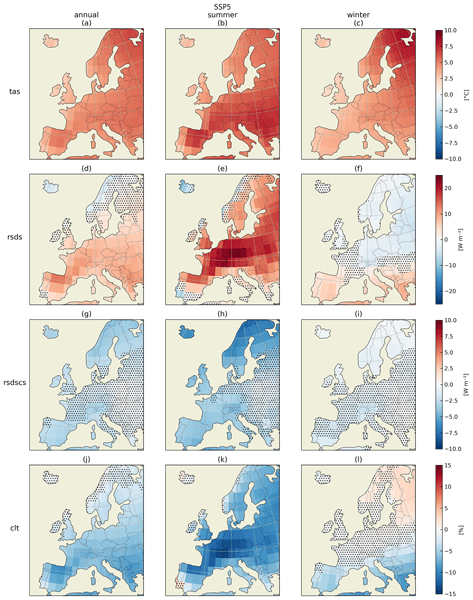
Xinyuan Hou, Martin Wild, Doris Folini, Stelios Kazadzis, and Jan Wohland
Earth Syst. Dynam., 12, 1099–1113, https://doi.org/10.5194/esd-12-1099-2021, https://doi.org/10.5194/esd-12-1099-2021, 2021
Short summary
Short summary
Solar photovoltaics (PV) matters for the carbon neutrality goal. We use climate scenarios to quantify climate risk for PV in Europe and find higher PV potential. The seasonal cycle of PV generation changes in most places. We find an increase in the spatial correlations of daily PV production, implying that PV power balancing through redistribution will be more difficult in the future. Thus, changes in the spatiotemporal structure of PV generation should be included in power system design.
Mariana Adam, Iwona S. Stachlewska, Lucia Mona, Nikolaos Papagiannopoulos, Juan Antonio Bravo-Aranda, Michaël Sicard, Doina N. Nicolae, Livio Belegante, Lucja Janicka, Dominika Szczepanik, Maria Mylonaki, Christina-Anna Papanikolaou, Nikolaos Siomos, Kalliopi Artemis Voudouri, Luca Alados-Arboledas, Arnoud Apituley, Ina Mattis, Anatoli Chaikovsky, Constantino Muñoz-Porcar, Aleksander Pietruczuk, Daniele Bortoli, Holger Baars, Ivan Grigorov, and Zahary Peshev
Atmos. Chem. Phys. Discuss., https://doi.org/10.5194/acp-2021-759, https://doi.org/10.5194/acp-2021-759, 2021
Revised manuscript not accepted
Short summary
Short summary
Results over 10 years of biomass burning events measured by EARLINET are analysed by means of the intensive parameters, based on the methodology described in Part I. Smoke type is characterized for each of the four geographical regions based on continental smoke origin. Relationships between intensive parameters or colour ratios are shown. The smoke is labelled in average as aged smoke.
Cited articles
Ahmady-Birgani, H., Engelbrecht, J. P., and Bazgir, M.: How different source regions across the Middle East change aerosol and dust particle characteristics, Desert, 24, 61–73, https://doi.org/10.22059/jdesert.2019.72441, 2019.
Al-Hemoud, A., Al-Dashti, H., Al-Saleh, A., Petrov, P., Malek, M., Elhamoud, E., Karam, R., Al-Khatib, L., Alyahya, M., Al-Azemi, H., Al-Mutairi, N., Moulton, J., and Middleton, N.: Dust storm “hot spots” and transport pathways affecting the Arabian Peninsula, J. Atmos. Sol.-Terr. Phy., 238, 105932, https://doi.org/10.1016/j.jastp.2022.105932, 2022.
Althausen, D., Abdullaev, S., and Hofer, J.: Scientists share results of dust belt research, EOS, 100, https://doi.org/10.1029/2019EO131683, 28 August 2019.
Amiridis, V., Wandinger, U., Marinou, E., Giannakaki, E., Tsekeri, A., Basart, S., Kazadzis, S., Gkikas, A., Taylor, M., Baldasano, J., and Ansmann, A.: Optimizing CALIPSO Saharan dust retrievals, Atmos. Chem. Phys., 13, 12089–12106, https://doi.org/10.5194/acp-13-12089-2013, 2013.
Amiridis, V., Marinou, E., Tsekeri, A., Wandinger, U., Schwarz, A., Giannakaki, E., Mamouri, R., Kokkalis, P., Binietoglou, I., Solomos, S., Herekakis, T., Kazadzis, S., Gerasopoulos, E., Proestakis, E., Kottas, M., Balis, D., Papayannis, A., Kontoes, C., Kourtidis, K., Papagiannopoulos, N., Mona, L., Pappalardo, G., Le Rille, O., and Ansmann, A.: LIVAS: a 3-D multi-wavelength aerosol/cloud database based on CALIPSO and EARLINET, Atmos. Chem. Phys., 15, 7127–7153, https://doi.org/10.5194/acp-15-7127-2015, 2015.
Anderson, T. L., Wu, Y., Chu, D. A., Schmid, B., Redemann, J., and Dubovik, O.: Testing the MODIS satellite retrieval of aerosol fine-mode fraction, J. Geophys. Res., 110, D18204, https://doi.org/10.1029/2005JD005978, 2005.
Ångström, A.: On the atmospheric transmission of Sun radiation and on dust in the air, Geogr. Ann., 11, 156–166, https://doi.org/10.2307/519399, 1929.
Ansmann, A. and Müller, D.: Lidar and atmospheric aerosol particles, in: Lidar – Range-Resolved Optical Remote Sensing of the Atmosphere, Vol. 102 of Springer Series in Optical Sciences, edited by: Weitkamp, C., Springer, Berlin, Heidelberg, 105–141, https://doi.org/10.1007/0-387-25101-4_4, 2005.
Ansmann, A., Petzold, A., Kandler, K., Tegen, I., Wendisch, M., Müller, D., Weinzierl, B., Müller, T., and Heintzenberg, J.: Saharan Mineral Dust Experiments SAMUM–1 and SAMUM–2: what have we learned?, Tellus B, 63, 403–429, https://doi.org/10.1111/j.1600-0889.2011.00555.x, 2011.
Baars, H., Kanitz, T., Engelmann, R., Althausen, D., Heese, B., Komppula, M., Preißler, J., Tesche, M., Ansmann, A., Wandinger, U., Lim, J.-H., Ahn, J. Y., Stachlewska, I. S., Amiridis, V., Marinou, E., Seifert, P., Hofer, J., Skupin, A., Schneider, F., Bohlmann, S., Foth, A., Bley, S., Pfüller, A., Giannakaki, E., Lihavainen, H., Viisanen, Y., Hooda, R. K., Pereira, S. N., Bortoli, D., Wagner, F., Mattis, I., Janicka, L., Markowicz, K. M., Achtert, P., Artaxo, P., Pauliquevis, T., Souza, R. A. F., Sharma, V. P., van Zyl, P. G., Beukes, J. P., Sun, J., Rohwer, E. G., Deng, R., Mamouri, R.-E., and Zamorano, F.: An overview of the first decade of PollyNET: an emerging network of automated Raman-polarization lidars for continuous aerosol profiling, Atmos. Chem. Phys., 16, 5111–5137, https://doi.org/10.5194/acp-16-5111-2016, 2016.
Banks, J. R., Heinold, B., and Schepanski, K.: Impacts of the desiccation of the Aral Sea on the Central Asian dust life-cycle, J. Geophys. Res.-Atmos., 127, e2022JD036618, https://doi.org/10.1029/2022JD036618, 2022.
Benkhalifa, J., Leon, J. F., and Chaabane, M.: Aerosol optical properties of Western Mediterranean basin from multi-year AERONET data, J. Atmos. Sol.-Terr. Phy., 164, 222–228, https://doi.org/10.1016/j.jastp.2017.08.029, 2017.
Bohlmann, S., Baars, H., Radenz, M., Engelmann, R., and Macke, A.: Ship-borne aerosol profiling with lidar over the Atlantic Ocean: from pure marine conditions to complex dust–smoke mixtures, Atmos. Chem. Phys., 18, 9661–9679, https://doi.org/10.5194/acp-18-9661-2018, 2018.
Burton, S. P., Ferrare, R. A., Hostetler, C. A., Hair, J. W., Rogers, R. R., Obland, M. D., Butler, C. F., Cook, A. L., Harper, D. B., and Froyd, K. D.: Aerosol classification using airborne High Spectral Resolution Lidar measurements – methodology and examples, Atmos. Meas. Tech., 5, 73–98, https://doi.org/10.5194/amt-5-73-2012, 2012.
Burton, S. P., Ferrare, R. A., Vaughan, M. A., Omar, A. H., Rogers, R. R., Hostetler, C. A., and Hair, J. W.: Aerosol classification from airborne HSRL and comparisons with the CALIPSO vertical feature mask, Atmos. Meas. Tech., 6, 1397–1412, https://doi.org/10.5194/amt-6-1397-2013, 2013.
Caquineau, S., Gaudichet, A., Gomes, L., and Legrand, M.: Mineralogy of Saharan dust transported over northwestern tropical Atlantic Ocean in relation to source regions, J. Geophys. Res., 107, 4251, https://doi.org/10.1029/2000jd000247, 2002.
Castellanos, P., Colarco, P., Espinosa, W. R., Guzewich, S. D., Levy, R. C., Miller, R. L., Chin, M., Kahn, R. A., Kemppinen, O., Moosmüller, H., Nowottnick, E. P., Rocha-Lima, A., Smith, M. D., Yorks, J. E., and Yu, H.: Mineral dust optical properties for remote sensing andglobal modeling: A review, Remote Sens. Environ., 303, 113982, https://doi.org/10.1016/j.rse.2023.113982, 2024.
Chen, C., Dubovik, O., Fuertes, D., Litvinov, P., Lapyonok, T., Lopatin, A., Ducos, F., Derimian, Y., Herman, M., Tanré, D., Remer, L. A., Lyapustin, A., Sayer, A. M., Levy, R. C., Hsu, N. C., Descloitres, J., Li, L., Torres, B., Karol, Y., Herrera, M., Herreras, M., Aspetsberger, M., Wanzenboeck, M., Bindreiter, L., Marth, D., Hangler, A., and Federspiel, C.: Validation of GRASP algorithm product from POLDER/PARASOL data and assessment of multi-angular polarimetry potential for aerosol monitoring, Earth Syst. Sci. Data, 12, 3573–3620, https://doi.org/10.5194/essd-12-3573-2020, 2020.
Chen, S., Jiang, N., Huang, J., Xu, X., Zhang, H., Zang, Z., Huang, K., Xu, X., Wei, Y., Guan, X., Zhang, X., Luo, Y., Hu, Z., and Feng, T.: Quantifying contributions of natural and anthropogenic dust emission from different climatic regions, Atmos. Environ., 191, 94–104, https://doi.org/10.1016/j.atmosenv.2018.07.043, 2018.
Coleman, R. W., Thompson, D. R., Brodrick, P. G., Dor, E. B., Cox, E., García-Pando, C. P., Hoefen, T., Kokaly, R. F., Meyer, J. M., Ochoa, F., Okin, G. S., Pearlshtien, D. H., Swayze, G., and Green, R. O.: An accuracy assessment of the surface reflectance product from the EMIT imaging spectrometer, Remote Sens. Environ., 315, 114450, https://doi.org/10.1016/j.rse.2024.114450, 2024.
Connelly, D. S., Thompson, D. R., Mahowald, N. M., Li, L., Carmon, N., Okin, G. S., and Green, R. O.: The EMIT mission information yield for mineral dust radiative forcing, Remote Sens. Environ., 258, 112380, https://doi.org/10.1016/j.rse.2021.112380, 2021.
Dai, G., Wu, S., Long, W., Liu, J., Xie, Y., Sun, K., Meng, F., Song, X., Huang, Z., and Chen, W.: Aerosol and cloud data processing and optical property retrieval algorithms for the spaceborne ACDL/DQ-1, Atmos. Meas. Tech., 17, 1879–1890, https://doi.org/10.5194/amt-17-1879-2024, 2024.
Deshler, T., Johnson, B. J., and Rozier, W. R.: Balloonborne measurements of Pinatubo aerosol during 1991 and 1992 at 41° N: vertical profiles, size distribution, and volatility, Geophys. Res. Lett., 20, 1435–1438, https://doi.org/10.1029/93GL01337, 1993.
Dubovik, O., Sinyuk, A., Lapyonok, T., Holben, B. N., Mishchenko, M., Yang, P., Eck, T. F., Volten, H., Muñoz, O., Veihelmann, B., van der Zande, W. J., Leon, J. F., Sorokin, M., and Slutsker, I.: Application of spheroid models to account for aerosol particle nonsphericity in remote sensing of desert dust, J. Geophys. Res.-Atmos., 111, D11208, https://doi.org/10.1029/2005JD006619, 2006.
Dubovik, O., Herman, M., Holdak, A., Lapyonok, T., Tanré, D., Deuzé, J. L., Ducos, F., Sinyuk, A., and Lopatin, A.: Statistically optimized inversion algorithm for enhanced retrieval of aerosol properties from spectral multi-angle polarimetric satellite observations, Atmos. Meas. Tech., 4, 975–1018, https://doi.org/10.5194/amt-4-975-2011, 2011.
Dubovik, O., Lapyonok, T., Litvinov, P., Herman, M., Fuertes, D., Ducos, F., Torres, B., Derimian, Y., Huang, X., Lopatin, A., Chaikovsky, A., Aspetsberger, M., and Federspiel, C.: GRASP: a versatile algorithm for characterizing the atmosphere, SPIE Newsroom, 2-1201408, https://doi.org/10.1117/2.1201408.005558, 2014.
Dubovik, O., Schuster, G. L., Xu, F., Hu, Y., Bösch, H., Landgraf, J., and Li, Z.: Grand Challenges in Satellite Remote Sensing, Front. Remote Sens., 2, 1–10, https://doi.org/10.3389/frsen.2021.619818, 2021.
Engelstaedter, S., Tegen, I., and Washington, R.: North African dust emissions and transport, Earth-Sci. Rev., 79, 73–100, https://doi.org/10.1016/j.earscirev.2006.06.004, 2007.
Filioglou, M., Giannakaki, E., Backman, J., Kesti, J., Hirsikko, A., Engelmann, R., O'Connor, E., Leskinen, J. T. T., Shang, X., Korhonen, H., Lihavainen, H., Romakkaniemi, S., and Komppula, M.: Optical and geometrical aerosol particle properties over the United Arab Emirates, Atmos. Chem. Phys., 20, 8909–8922, https://doi.org/10.5194/acp-20-8909-2020, 2020.
Floutsi, A. A., Baars, H., Engelmann, R., Althausen, D., Ansmann, A., Bohlmann, S., Heese, B., Hofer, J., Kanitz, T., Haarig, M., Ohneiser, K., Radenz, M., Seifert, P., Skupin, A., Yin, Z., Abdullaev, S. F., Komppula, M., Filioglou, M., Giannakaki, E., Stachlewska, I. S., Janicka, L., Bortoli, D., Marinou, E., Amiridis, V., Gialitaki, A., Mamouri, R.-E., Barja, B., and Wandinger, U.: DeLiAn – a growing collection of depolarization ratio, lidar ratio and Ångström exponent for different aerosol types and mixtures from ground-based lidar observations, Atmos. Meas. Tech., 16, 2353–2379, https://doi.org/10.5194/amt-16-2353-2023, 2023.
Fountoulakis, I., Kosmopoulos, P., Papachristopoulou, K., Raptis, I.-P., Mamouri, R.-E., Nisantzi, A., Gkikas, A., Witthuhn, J., Bley, S., Moustaka, A., Buehl, J., Seifert, P., Hadjimitsis, D., Kontoes, C., and Kazadzis, S.: Effects of Aerosols and Clouds on the Levels of Surface Solar Radiation and Solar Energy in Cyprus, Remote Sens., 13, 2319, https://doi.org/10.3390/rs13122319, 2021.
Fountoulakis, I., Papachristopoulou, K., Proestakis, E., Amiridis, V., Kontoes, C., and Kazadzis, S.: Effect of Aerosol Vertical Distribution on the Modeling of Solar Radiation, Remote Sens., 14, 1143, https://doi.org/10.3390/rs14051143, 2022.
Gelaro, R., McCarty, W., Suárez, M. J., Todling, R., Molod, A., Takacs, L., Randles, C. A., Darmenov, A., Bosilovich, M. G., Reichle, R., Wargan, K., Coy, L., Cullather, R., Draper, C., Akella, S., Buchard, V., Conaty, A., da Silva, A. M., Gu, W., Kim, G.-K., Koster, R., Lucchesi, R., Merkova, D., Nielsen, J. E., Partyka, G., Pawson, S., Putman, W., Rienecker, M., Schubert, S. D., Sienkiewicz, M., and Zhao, B.: The modern-era retrospective analysis for research and applications, version 2 (MERRA-2), J. Climate, 30, 5419–5454, https://doi.org/10.1175/JCLI-D-16-0758.1, 2017.
Ginoux, P., Prospero, J. M., Gill, T. E., Hsu, N. C., and Zhao, M.: Global-scale attribution of anthropogenic and nat ural dust sources and their emission rates based on MODIS Deep Blue aerosol products, Rev. Geophys., 50, RG3005, https://doi.org/10.1029/2012RG000388, 2012.
Gkikas, A., Proestakis, E., Amiridis, V., Kazadzis, S., Di Tomaso, E., Tsekeri, A., Marinou, E., Hatzianastassiou, N., and Pérez García-Pando, C.: ModIs Dust AeroSol (MIDAS): A global fine resolution dust optical depth dataset, Version v2, Zenodo [data set], https://doi.org/10.5281/zenodo.4244106, 2020.
Gkikas, A., Proestakis, E., Amiridis, V., Kazadzis, S., Di Tomaso, E., Tsekeri, A., Marinou, E., Hatzianastassiou, N., and Pérez García-Pando, C.: ModIs Dust AeroSol (MIDAS): a global fine-resolution dust optical depth data set, Atmos. Meas. Tech., 14, 309–334, https://doi.org/10.5194/amt-14-309-2021, 2021.
Gkikas, A., Proestakis, E., Amiridis, V., Kazadzis, S., Di Tomaso, E., Marinou, E., Hatzianastassiou, N., Kok, J. F., and García-Pando, C. P.: Quantification of the dust optical depth across spatiotemporal scales with the MIDAS global dataset (2003–2017), Atmos. Chem. Phys., 22, 3553–3578, https://doi.org/10.5194/acp-22-3553-2022, 2022.
Gómez Maqueo Anaya, S., Althausen, D., Hofer, J., Haarig, M., Wandinger, U., Heinold, B., Tegen, I., Faust, M., Baars, H., Ansmann, A., Engelmann, R., Skupin, A., Heese, B., and Schepanski, K.: Investigating the link between mineral dust hematite content and intensive optical properties by means of lidar measurements and aerosol modeling, Atmos. Chem. Phys., 25, 9737–9764, https://doi.org/10.5194/acp-25-9737-2025, 2025.
González-Romero, A., González-Flórez, C., Panta, A., Yus-Díez, J., Reche, C., Córdoba, P., Moreno, N., Alastuey, A., Kandler, K., Klose, M., Baldo, C., Clark, R. N., Shi, Z., Querol, X., and Pérez García-Pando, C.: Variability in sediment particle size, mineralogy, and Fe mode of occurrence across dust-source inland drainage basins: the case of the lower Drâa Valley, Morocco, Atmos. Chem. Phys., 23, 15815–15834, https://doi.org/10.5194/acp-23-15815-2023, 2023.
Groß, S., Tesche, M., Freudenthaler, V., Toledano, C., Wiegner, M., Ansmann, A., Althausen, D., and Seefeldner, M.: Characterization of Saharan dust, marine aerosols and mixtures of biomass-burning aerosols and dust by means of multi-wavelength depolarization and Raman lidar measurements during SAMUM 2, Tellus B, 63, 706–724, https://doi.org/10.1111/j.1600-0889.2011.00556.x, 2011.
Groß, S., Freudenthaler, V., Schepanski, K., Toledano, C., Schäfler, A., Ansmann, A., and Weinzierl, B.: Optical properties of long-range transported Saharan dust over Barbados as measured by dual-wavelength depolarization Raman lidar measurements, Atmos. Chem. Phys., 15, 11067–11080, https://doi.org/10.5194/acp-15-11067-2015, 2015.
Gui, L., Tao, M., Wang, Y., Wang, L., Chen, L., Lin, C., Tao, J., Wang, J., and Yu, C.: Climatology of aerosol types and their vertical distribution over East Asia based on CALIPSO lidar measurements, Int. J. Climatol., 42, 6042–6054, https://doi.org/10.1002/joc.7599, 2022.
Gupta, P., Remer, L. A., Patadia, F., Levy, R. C., and Christopher, S. A.: High-resolution gridded level 3 aerosol optical depth data from MODIS, Remote Sens., 12, 2847, https://doi.org/10.3390/rs12172847, 2020.
Haarig, M., Ansmann, A., Althausen, D., Klepel, A., Groß, S., Freudenthaler, V., Toledano, C., Mamouri, R.-E., Farrell, D. A., Prescod, D. A., Marinou, E., Burton, S. P., Gasteiger, J., Engelmann, R., and Baars, H.: Triple-wavelength depolarization-ratio profiling of Saharan dust over Barbados during SALTRACE in 2013 and 2014, Atmos. Chem. Phys., 17, 10767–10794, https://doi.org/10.5194/acp-17-10767-2017, 2017a.
Haarig, M., Ansmann, A., Gasteiger, J., Kandler, K., Althausen, D., Baars, H., Radenz, M., and Farrell, D. A.: Dry versus wet marine particle optical properties: RH dependence of depolarization ratio, backscatter, and extinction from multiwavelength lidar measurements during SALTRACE, Atmos. Chem. Phys., 17, 14199–14217, https://doi.org/10.5194/acp-17-14199-2017, 2017b.
Haarig, M., Ansmann, A., Baars, H., Jimenez, C., Veselovskii, I., Engelmann, R., and Althausen, D.: Depolarization and lidar ratios at 355, 532, and 1064 nm and microphysical properties of aged tropospheric and stratospheric Canadian wildfire smoke, Atmos. Chem. Phys., 18, 11847–11861, https://doi.org/10.5194/acp-18-11847-2018, 2018.
Haarig, M., Ansmann, A., Engelmann, R., Baars, H., Toledano, C., Torres, B., Althausen, D., Radenz, M., and Wandinger, U.: First triple-wavelength lidar observations of depolarization and extinction-to-backscatter ratios of Saharan dust, Atmos. Chem. Phys., 22, 355–369, https://doi.org/10.5194/acp-22-355-2022, 2022.
Hamidi, M., Kavianpour, M. R., and Shao, Y.: Synoptic analysis of dust storms in the Middle East, Asia-Pacific, J. Atmos. Sci., 49, 279–286, https://doi.org/10.1007/s13143-013-0027-9, 2013.
Hansen, J., Rossow, W., Carlson, B., Lacis, A., Travis, L., Del Genio, A., Fung, I., Cairns, B., Mishchenko, M., and Sato, M.: Low-cost long-term monitoring of global cli mate forcings and feedbacks, Climatic Change, 31, 247–271, https://doi.org/10.1007/BF01095149, 1995.
Hofer, J., Ansmann, A., Althausen, D., Engelmann, R., Baars, H., Fomba, K. W., Wandinger, U., Abdullaev, S. F., and Makhmudov, A. N.: Optical properties of Central Asian aerosol relevant for spaceborne lidar applications and aerosol typing at 355 and 532 nm, Atmos. Chem. Phys., 20, 9265–9280, https://doi.org/10.5194/acp-20-9265-2020, 2020.
Holben, B. N., Eck, T. F., Slutsker, I., Tanré, D., Buis, J. P., Setzer, A., Vermote, E., Reagan, J. A., Kaufman, Y., Nakajima, T., Lavenu, F., Jankowiak, I., and Smirnov, A.: AERONET – A federated instrument network and data archive for aerosol characterization, Remote Sens. Environ., 66, 1–16, https://doi.org/10.1016/S0034-4257(98)00031-5, 1998.
Holben, B. N., Tanre, D., Smirnov, A., Eck, T. F., Slutsker, I., Abuhassan, N., Newcomb, W. W., Schafer, J., Chatenet, B., Lavenue, F., Kaufman, Y., Vande Castle, J., Setzer, A., Markham, B., Clark, D., Frouin, R., Halthore, R., Karnieli, A., O'Neill, N. T., Pietras, C., Pinker, R. T., Voss, K., and Zibordi, G.: An emerging ground-based aerosol climatology: Aerosol optical depth from AERONET, J. Geophys. Res., 106, 12067–12097, https://doi.org/10.1029/2001JD900014, 2001.
Hu, Y., Winker, D., Vaughan, M., Lin, B., Omar, A., Trepte, C., Flittner, D., Yang, P., Sun, W., Liu, Z., Wang, Z., Young, S., Stamnes, K., Huang, J., Kuehn, R., Baum, B., and Holz, R.: CALIPSO/CALIOP Cloud Phase Discrimination Algorithm, J. Atmos. Ocean. Tech., 26, 2293–2309, https://doi.org/10.1175/2009JTECHA1280.1, 2009.
Huang, J. P., Wang, T. H., Wang, W. C., Li, Z. Q., and Yan, H. R.: Climate effects of dust aerosols over East Asian arid and semiarid regions, J. Geophys. Res.-Atmos., 119, 11398–11416, https://doi.org/10.1002/2014JD021796, 2014.
Hyer, E. J., Reid, J. S., and Zhang, J.: An over-land aerosol optical depth data set for data assimilation by filtering, correction, and aggregation of MODIS Collection 5 optical depth retrievals, Atmos. Meas. Tech., 4, 379–408, https://doi.org/10.5194/amt-4-379-2011, 2011.
Illingworth, A. J., Barker, H. W., Beljaars, A., Ceccaldi, M., Chepfer, H., Cierbaux, N., Cole, J., Delanoë, J., Domenech, C., Donovan, D. P., Fukuda, S., Hirakata, M., Hogan, R. J., Huenerbein, A., Kolias, P., Kubota, T., Nakajima, T. Y., Nishizawa, T., Ohno, Y., Okamoto, H., Oki, R., Sato, K., Satoh, M., Shepherd, M. W., Velazques-Blazquez, A., Wandinger, U., Wehr, T., and van Zadelhoff, G.-J.: The EarthCARE satellite: The next step forward in global measurements of clouds, aerosols, precipitation, and radiation, B. Am. Meteorol. Soc., 96, 1311–1332, https://doi.org/10.1175/BAMS-D-12-00227.1, 2015.
Jish Prakash, P., Stenchikov, G., Kalenderski, S., Osipov, S., and Bangalath, H.: The impact of dust storms on the Arabian Peninsula and the Red Sea, Atmos. Chem. Phys., 15, 199–222, https://doi.org/10.5194/acp-15-199-2015, 2015.
Kaduk, C.: Characterization of the optical properties of complex aerosol mixtures observed with a multiwavelength–Raman polarization lidar during the 6-weeks BACCHUS campaign in Cyprus in spring 2015, MSc thesis, Leipzig University, https://www.tropos.de/fileadmin/user_upload/Institut/Abteilungen/Fernerkundung/Daten_PDF/MA_Clara_Kaduk.pdf (last access: 12 December 2024), 2017.
Kang, E., Park, S., Kim, M., Yoo, C., Im, J., and Song, C. K.: Direct aerosol optical depth retrievals using MODIS reflectance data and machine learning over East Asia, Atmos. Environ., 309, 119951, https://doi.org/10.1016/j.atmosenv.2023.119951, 2023.
Kanitz, T., Ansmann, A., Engelmann, R., and Althausen, D.: North-south cross sections of the vertical aerosol distribution over the At lantic Ocean from multiwavelength Raman/polarization lidar during Polarstern cruises, J. Geophys. Res.-Atmos., 118, 2643–2655, https://doi.org/10.1002/jgrd.50273, 2013.
Kim, M.-H., Kim, S.-W., and Omar, A. H.: Dust Lidar Ratios Retrieved from the CALIOP Measurements Using the MODIS AOD as a Constraint, Remote Sens., 12, 251, https://doi.org/10.3390/rs12020251, 2020.
Kim, M.-H., Omar, A. H., Tackett, J. L., Vaughan, M. A., Winker, D. M., Trepte, C. R., Hu, Y., Liu, Z., Poole, L. R., Pitts, M. C., Kar, J., and Magill, B. E.: The CALIPSO version 4 automated aerosol classification and lidar ratio selection algorithm, Atmos. Meas. Tech., 11, 6107–6135, https://doi.org/10.5194/amt-11-6107-2018, 2018.
Kiriakidis, P., Gkikas, A., Papangelis, G., Christoudias, T., Kushta, J., Proestakis, E., Kampouri, A., Marinou, E., Drakaki, E., Benedetti, A., Rennie, M., Retscher, C., Straume, A. G., Dandocsi, A., Sciare, J., and Amiridis, V.: The impact of using assimilated Aeolus wind data on regional WRF-Chem dust simulations, Atmos. Chem. Phys., 23, 4391–4417, https://doi.org/10.5194/acp-23-4391-2023, 2023.
Kok, J. F., Ridley, D. A., Zhou, Q., Miller, R. L., Zhao, C., Heald, C. L., Ward, D. S., Albani, S., and Haustein, K.: Smaller desert dust cooling effect estimated from analysis of dust size and abundance, Nat. Geosci., 10, 274–278, https://doi.org/10.1038/ngeo2912, 2017.
Kok, J. F., Adebiyi, A. A., Albani, S., Balkanski, Y., Checa-Garcia, R., Chin, M., Colarco, P. R., Hamilton, D. S., Huang, Y., Ito, A., Klose, M., Li, L., Mahowald, N. M., Miller, R. L., Obiso, V., Pérez García-Pando, C., Rocha-Lima, A., and Wan, J. S.: Contribution of the world's main dust source regions to the global cycle of desert dust, Atmos. Chem. Phys., 21, 8169–8193, https://doi.org/10.5194/acp-21-8169-2021, 2021.
Kok, J. F., Storelvmo, T., Karydis, V. A., Adebiyi, A. A., Mahowald, N. M., Evan, A. T., He, C., and Leung, D. M.: Mineral dust aerosol impacts on global climate and climate change, Nat. Rev. Earth Environ., 4, 71–86, https://doi.org/10.1038/s43017-022-00379-5, 2023.
Konsta, D., Binietoglou, I., Gkikas, A., Solomos, S., Marinou, E., Proestakis, E., Basart, S., Pérez García-Pando, C., El-Askary, H., and Amiridis, V.: Evaluation of the BSC-DREAM8b regional dust model using the 3D LIVAS-CALIPSO product, Atmos. Environ., 195, 46–62, https://doi.org/10.1016/j.atmosenv.2018.09.047, 2018.
Li, D., Zhang, Y., Saito, M., Yang, P., and Hu, Y.: The impact of dust mineralogical compositions on CALIOP-IIR-based retrievals of the optical and microphysical properties of dust plumes, J. Geophys. Res.-Atmos., 130, e2025JD043829, https://doi.org/10.1029/2025JD043829, 2025.
Li, L. and Sokolik, I.: Analysis of Dust Aerosol Retrievals Using Satellite Data in Central Asia, Atmosphere, 9, 288, https://doi.org/10.3390/atmos9080288, 2018.
Li, L., Dubovik, O., Derimian, Y., Schuster, G. L., Lapyonok, T., Litvinov, P., Ducos, F., Fuertes, D., Chen, C., Li, Z., Lopatin, A., Torres, B., and Che, H.: Retrieval of aerosol components directly from satellite and ground-based measurements, Atmos. Chem. Phys., 19, 13409–13443, https://doi.org/10.5194/acp-19-13409-2019, 2019.
Li, Z., Painemal, D., Schuster, G., Clayton, M., Ferrare, R., Vaughan, M., Josset, D., Kar, J., and Trepte, C.: Assessment of tropospheric CALIPSO Version 4.2 aerosol types over the ocean using independent CALIPSO–SODA lidar ratios, Atmos. Meas. Tech., 15, 2745–2766, https://doi.org/10.5194/amt-15-2745-2022, 2022.
Logothetis, S.-A., Salamalikis, V., Gkikas, A., Kazadzis, S., Amiridis, V., and Kazantzidis, A.: 15-year variability of desert dust optical depth on global and regional scales, Atmos. Chem. Phys., 21, 16499–16529, https://doi.org/10.5194/acp-21-16499-2021, 2021.
Luo, Y., Zheng, X., and Chen, J.: A climatology of aerosol optical depth over China from recent 10 years of MODIS remote sensing data, Int. J. Climatol., 34, 863–870, https://doi.org/10.1002/joc.3728, 2014.
Ma, X., Bartlett, K., Harmon, K., and Yu, F.: Comparison of AOD between CALIPSO and MODIS: significant differences over major dust and biomass burning regions, Atmos. Meas. Tech., 6, 2391–2401, https://doi.org/10.5194/amt-6-2391-2013, 2013.
Mahowald, N., Albani, S., Kok, J. F., Engelstaeder, S., Scanza, R., Ward, D. S., and Flanner, M. G.: The size distribution of desert dust aerosols and its impact on the Earth system, Aeolian Res., 15, 53–71, https://doi.org/10.1016/j.aeolia.2013.09.002, 2014.
Mao, K. B., Ma, Y., Xia, L., Chen, W. Y., Shen, X. Y., He, T. J., and Xu, T. R.: Global aerosol change in the last decade: An analysis based on MODIS data, Atmos. Environ., 94, 680–686, https://doi.org/10.1016/j.atmosenv.2014.04.053, 2014.
Marinou, E., Amiridis, V., Binietoglou, I., Tsikerdekis, A., Solomos, S., Proestakis, E., Konsta, D., Papagiannopoulos, N., Tsekeri, A., Vlastou, G., Zanis, P., Balis, D., Wandinger, U., and Ansmann, A.: Three-dimensional evolution of Saharan dust transport towards Europe based on a 9-year EARLINET-optimized CALIPSO dataset, Atmos. Chem. Phys., 17, 5893–5919, https://doi.org/10.5194/acp-17-5893-2017, 2017.
Masoom, A., Kosmopoulos, P., Bansal, A., Gkikas, A., Proestakis, E., Kazadzis, S., and Amiridis, V.: Forecasting dust impact on solar energy using remote sensing and modeling techniques, Sol. Energy, 228, 317–332, https://doi.org/10.1016/j.solener.2021.09.033, 2021.
Mbourou, G. N., Bertrand, J. J., and Nicholson, S. E.: The diurnal and seasonal cycles of wind-borne dust over Africa north of the Equator, J. Appl. Meteorol., 36, 868–882, https://doi.org/10.1175/1520-0450(1997)036<0868:TDASCO>2.0.CO;2, 1997.
McGill, M., Vaughan, M., Trepte, C., Hart, W., Hlavka, D., Winker, D., and Kuehn, R.: Airborne validation of spatial properties measured by the CALIPSO lidar, J. Geophys. Res., 112, D20201, https://doi.org/10.1029/2007JD008768, 2007.
Mishchenko, M. I. and Travis, L. D.: Satellite retrieval of aerosol properties over the ocean using polarization as well as intensity of reflected sunlight, J. Geophys. Res., 102, 16989–17013, https://doi.org/10.1029/96JD02425, 1997a.
Mishchenko, M. I. and Travis, L. D.: Satellite retrieval of aerosol properties over the ocean using measurements of reflected sun light: Effect of instrumental errors and aerosol absorption, J. Geophys. Res., 102, 13543–13553, https://doi.org/10.1029/97JD01124, 1997b.
Moustaka, A., Korras-Carraca, M. B., Papachristopoulou, K., Stamatis, M., Fountoulakis, I., Kazadzis, S., Proestakis., E., Amiridis, V., Tourpali, K., Georgiou, T., Solomos, S., Spyrou, C., Zerefos, C., and Gkikas, A.: Assessing Lidar Ratio Impact on CALIPSO Retrievals Utilized for the Estimation of Aerosol SW Radiative Effects across North Africa, the Middle East, and Europe, Remote Sens., 16, 1689, https://doi.org/10.3390/rs16101689, 2024.
Moustaka, A., Korras-Carraca, M. B., Papachristopoulou, K., Fountoulakis, I., Kazadzis, S., Proestakis, E., Amiridis, V., Tourpali, K., and Gkikas, A.: Assessment of Cloud-Aerosol Lidar with Orthogonal Polarization–Cloud-Aerosol Lidar and Infrared Pathfinder Satellite Observations Retrievals towards Estimating the Aerosol Direct Impact on the Shortwave Radiation Budgets in North Africa, Europe, and the Middle East, Environ. Sci. Proc., 26, 139, https://doi.org/10.3390/environsciproc2023026139, 2023.
Moustaka, A., Siomos, N., Kazadzis, S., Proestakis, E., Voudouri, K. A., Lopatin, A., Dubovik, O., Tourpali, K., Zerefos, C., Amiridis, V., and Gkikas, A.: Enhancing dust aerosols monitoring capabilities across North Africa and the Middle East using the A-Train satellite constellation, Version v2, Zenodo [data set], https://doi.org/10.5281/zenodo.18016524, 2025.
Müller, D., Ansmann, A., Mattis, I., Tesche, M., Wandinger, U., Althausen, D., and Pisani, G.: Aerosol-type-dependent lidar ratios observed with Raman lidar, J. Geophys. Res., 112, D16202, https://doi.org/10.1029/2006JD008292, 2007.
NASA Langley Research Center: CALIPSO quality statements: Lidar Level 1B profile products, Version 2.01, NASA, Hampton, VA, USA, https://asdc.larc.nasa.gov/documents/calipso/quality_summaries/CALIOP_L1ProfileProducts_2.01.pdf (last access: 10 February 2026), 2007.
Ningombam, S., Larson, E. J. L., Dumka, U. C., Estellés, V., Campanelli, M., and Colwell, S.: Long-term (1995–2018) aerosol optical depth derived using ground based AERONET and SKYNET measurements from aerosol aged-background sites, Atmos. Pollut. Res., 10, 608–620, https://doi.org/10.1016/j.apr.2018.10.008, 2019.
Omar, A. H., Won, J.-G., Winker, D. M., Yoon, S.-C., Dubovik, O., and McCormick, M. P.: Development of global aerosol models using cluster analysis of Aerosol Robotic Network (AERONET) measurements, J. Geophys. Res., 110, D10S14, https://doi.org/10.1029/2004JD004874, 2005.
Omar, A. H., Winker, D. M., Vaughan, M. A., Hu, Y., Trepte, C. R., Ferrare, R. A., Lee, K. P., Hostetler, C. A., Kittaka, C., Rogers, R. R., and Kuehn, R. E.: The CALIPSO Automated Aerosol Classification and Lidar Ratio Selection Algorithm, J. Atmos. Ocean. Tech., 26, 1994–2014, https://doi.org/10.1175/2009JTECHA1231.1, 2009.
Omar, A. H., Winker, D. M., Tackett, J. L., Giles, D. M., Kar, J., Liu, Z., Vaughan, M. A., Powell, K. A., and Trepte, C. R.: CALIOP and AERONET aerosol optical depth comparisons: One size fits none, J. Geophys. Res.-Atmos., 118, 4748–4766, https://doi.org/10.1002/jgrd.50330, 2013.
Papachristopoulou, K., Fountoulakis, I., Gkikas, A., Kosmopoulos, P. G., Nastos, P. T., Hatzaki, M., and Kazadzis, S.: 15-Year Analysis of Direct Effects of Total and Dust Aerosols in Solar Radiation/Energy over the Mediterranean Basin, Remote Sens.-Basel, 14, 1535, https://doi.org/10.3390/rs14071535, 2022.
Pease, P. P., Tchakerian, V. P., and Tindale, N. W.: Aerosols over the Arabian Sea: geochemistry and source areas for Aeolian desert dust, J. Arid Environ., 39, 477–496, https://doi.org/10.1006/jare.1997.0368, 1998.
Preißler, J., Wagner, F., Pereira, S. N., and Guerrero-Rascado, J. L.: Multi-instrumental observation of an exceptionally strong Saharan dust outbreak over Portugal, J. Geophys. Res.-Atmos., 116, D24204, https://doi.org/10.1029/2011JD016527, 2011.
Proestakis, E., Amiridis, V., Marinou, E., Georgoulias, A. K., Solomos, S., Kazadzis, S., Chimot, J., Che, H., Alexandri, G., Binietoglou, I., Daskalopoulou, V., Kourtidis, K. A., de Leeuw, G., and van der A, R. J.: Nine-year spatial and temporal evolution of desert dust aerosols over South and East Asia as revealed by CALIOP, Atmos. Chem. Phys., 18, 1337–1362, https://doi.org/10.5194/acp-18-1337-2018, 2018.
Prospero, J. M. and Mayol-Bracero, O. L.: Understanding the transport and impact of African dust on the Caribbean basin, B. Am. Meteorol. Soc., 94, 1329–1337, https://doi.org/10.1175/BAMS-D-12-00142.1, 2013.
Raptis, I.-P., Kazadzis, S., Amiridis, V., Gkikas, A., Gerasopoulos, E., and Mihalopoulos, N.: A Decade of Aerosol Optical Properties Measurements over Athens, Greece, Atmosphere, 11, 154, https://doi.org/10.3390/atmos11020154, 2020.
Rezazadeh, M., Irannejad, P., and Shao, Y. J. A. R.: Climatology of the Middle East dust events, Aeolian Res., 10, 103–109, https://doi.org/10.1016/j.aeolia.2013.04.001, 2013.
Rittmeister, F., Ansmann, A., Engelmann, R., Skupin, A., Baars, H., Kanitz, T., and Kinne, S.: Profiling of Saharan dust from the Caribbean to western Africa – Part 1: Layering structures and optical properties from shipborne polarization/Raman lidar observations, Atmos. Chem. Phys., 17, 12963–12983, https://doi.org/10.5194/acp-17-12963-2017, 2017.
Roccetti, G., Bugliaro, L., Gödde, F., Emde, C., Hamann, U., Manev, M., Sterzik, M. F., and Wehrum, C.: HAMSTER: Hyperspectral Albedo Maps dataset with high Spatial and TEmporal Resolution, Atmos. Meas. Tech., 17, 6025–6046, https://doi.org/10.5194/amt-17-6025-2024, 2024.
Sayer, A. M., Hsu, N. C., Bettenhausen, C., and Jeong, M.-J.: Validation and uncertainty estimates for MODIS Collection 6 “Deep Blue” aerosol data, J. Geophys. Res. Atmos., 118, 7864–7872, https://doi.org/10.1002/jgrd.50600, 2013.
Sayer, A. M., Smirnov, A., Hsu, N. C., and Holben, B. N.: A pure marine aerosol model, for use in remote sensing applications, J. Geophys. Res., 117, D05213, https://doi.org/10.1029/2011JD016689, 2012.
Schepanski, K.: Transport of Mineral Dust and Its Impact on Climate, Geosciences, 8, 151, https://doi.org/10.3390/geosciences8050151, 2018.
Scheuvens, D., Schütz, L., Kandler, K., Ebert, M., and Weinbruch, S.: Bulk composition of northern African dust and its source sediments – A compilation, Earth-Sci. Rev., 116, 170194, https://doi.org/10.1016/j.earscirev.2012.08.005, 2013.
Schuster, G. L., Vaughan, M., MacDonnell, D., Su, W., Winker, D., Dubovik, O., Lapyonok, T., and Trepte, C.: Comparison of CALIPSO aerosol optical depth retrievals to AERONET measurements, and a climatology for the lidar ratio of dust, Atmos. Chem. Phys., 12, 7431–7452, https://doi.org/10.5194/acp-12-7431-2012, 2012.
Schuster, G. L., Dubovik, O., and Arola, A.: Remote sensing of soot carbon – Part 1: Distinguishing different absorbing aerosol species, Atmos. Chem. Phys., 16, 1565–1585, https://doi.org/10.5194/acp-16-1565-2016, 2016.
Shi, Y., Zhang, J., Reid, J. S., Holben, B., Hyer, E. J., and Curtis, C.: An analysis of the collection 5 MODIS over-ocean aerosol optical depth product for its implication in aerosol assimilation, Atmos. Chem. Phys., 11, 557–565, https://doi.org/10.5194/acp-11-557-2011, 2011.
Solmon, F., Nair, V. S., and Mallet, M.: Increasing Arabian dust activity and the Indian summer monsoon, Atmos. Chem. Phys., 15, 8051–8064, https://doi.org/10.5194/acp-15-8051-2015, 2015.
Steinmetz, F., Ramon, D., Deschamps, P. Y., and Nicolas, J. M.: Analysis of the first ocean color products from POLDER 3 onboard PARASOL. In Remote Sensing of the Ocean, Sea Ice, and Large Water Regions 2005, 5977, 209–217, https://doi.org/10.1117/12.629878, 2005.
Szczepanik, D. M., Stachlewska, I. S., Tetoni, E., and Althausen, D.: Properties of Saharan Dust Versus Local Urban Dust – A Case Study, Earth Space Sci., 8, e2021EA001816, https://doi.org/10.1029/2021EA001816, 2021.
Tackett, J. L., Winker, D. M., Getzewich, B. J., Vaughan, M. A., Young, S. A., and Kar, J.: CALIPSO lidar level 3 aerosol profile product: version 3 algorithm design, Atmos. Meas. Tech., 11, 4129–4152, https://doi.org/10.5194/amt-11-4129-2018, 2018.
Tackett, J. L., Kar, J., Vaughan, M. A., Getzewich, B. J., Kim, M.-H., Vernier, J.-P., Omar, A. H., Magill, B. E., Pitts, M. C., and Winker, D. M.: The CALIPSO version 4.5 stratospheric aerosol subtyping algorithm, Atmos. Meas. Tech., 16, 745–768, https://doi.org/10.5194/amt-16-745-2023, 2023.
Tesche, M., Ansmann, A., Müller, D., Althausen, D., Mattis, I., Heese, B., Freudenthaler, V., Wiegner, M., Esselborn, M., Pisani, G., and Knippertz, P.: Vertical profiling of Saharan dust with Raman lidars and airborne HSRL in southern Morocco during SAMUM, Tellus B, 61, 144–164, https://doi.org/10.1111/j.1600-0889.2008.00390.x, 2009.
Tesche, M., Groß, S., Ansmann, A., Müller, D., Althausen, D., Freudenthaler, V., and Esselborn, M.: Profiling of Saharan dust and biomass-burning smoke with multiwavelength polarization Raman lidar at Cape Verde, Tellus B, 63, 16360, https://doi.org/10.3402/tellusb.v63i4.16360, 2011.
Textor, C., Schulz, M., Guibert, S., Kinne, S., Balkanski, Y., Bauer, S., Berntsen, T., Berglen, T., Boucher, O., Chin, M., Dentener, F., Diehl, T., Easter, R., Feichter, H., Fillmore, D., Ghan, S., Ginoux, P., Gong, S., Grini, A., Hendricks, J., Horowitz, L., Huang, P., Isaksen, I., Iversen, I., Kloster, S., Koch, D., Kirkevåg, A., Kristjansson, J. E., Krol, M., Lauer, A., Lamarque, J. F., Liu, X., Montanaro, V., Myhre, G., Penner, J., Pitari, G., Reddy, S., Seland, Ø., Stier, P., Takemura, T., and Tie, X.: Analysis and quantification of the diversities of aerosol life cycles within AeroCom, Atmos. Chem. Phys., 6, 1777–1813, https://doi.org/10.5194/acp-6-1777-2006, 2006.
Tindan, J. Z., Jin, Q., and Pu, B.: Understanding day–night differences in dust aerosols over the dust belt of North Africa, the Middle East, and Asia, Atmos. Chem. Phys., 23, 5435–5466, https://doi.org/10.5194/acp-23-5435-2023, 2023.
Urbanneck, C.: Retrieval of aerosol optical and microphysical properties in Cyprus during A-LIFE and CyCARE by lidar and closure studies with airborne insitu measurements – Towards aerosol-cloud interaction investigations, MSc thesis, Leipzig University, https://www.tropos.de/fileadmin/user_upload/Institut/Abteilungen/Fernerkundung/Daten_PDF/MA_claudia_urbanneck.pdf (last access: 25 November 2024), 2018.
U.S. Committee on Extension to the Standard Atmosphere (COESA): U.S. Standard Atmosphere, 1976, U.S. Government Printing Office, Washington, D.C., https://ntrs.nasa.gov/citations/19770009539 (last access: 10 February 2026), 1976.
Wandinger, U., Ansmann, A., Reichardt, J., and Deshler, T.: Determination of stratospheric aerosol microphysical properties from independent extinction and backscattering measurements with a Raman lidar, Appl. Optics, 34, 8315, https://doi.org/10.1364/AO.34.008315, 1995.
Wandinger, U., Hiebsch, A., Mattis, I., Pappalardo, G., Mona, L., and Madonna, F.: Aerosols and Clouds: Long-term Database from Spaceborne Lidar Measurements, Executive Summary, ESTEC Contract 21487/08/NL/HE, http://esamultimedia.esa.int/docs/gsp/C21487ExS.pdf (last access: 10 November 2024), 2011.
Wandinger, U., Floutsi, A. A., Baars, H., Haarig, M., Ansmann, A., Hünerbein, A., Docter, N., Donovan, D., van Zadelhoff, G.-J., Mason, S., and Cole, J.: HETEAC – the Hybrid End-To-End Aerosol Classification model for EarthCARE, Atmos. Meas. Tech., 16, 2485–2510, https://doi.org/10.5194/amt-16-2485-2023, 2023.
Warren, A., Chappell, A., Todd, M. C., Bristow, C., Drake, N., Engelstaedter, S., Martins, V., M'Bainayel, S., and Washington, R.: Dust-raising in the dustiest place on earth, Geomorphology, 92, 25–37, https://doi.org/10.1016/j.geomorph.2007.02.007, 2007.
Washington, R., Bouet, C., Cautenet, G., Mackenzie, E., Ashpole, I., Engelstaedter, S., Lizcano, G., Henderson, G. M., Schepanski, K., and Tegen, I.: Dust as a tipping element: The Bodele Depression, Chad, P. Natl. Acad. Sci. USA, 106, 20564–20571, https://doi.org/10.1073/pnas.0711850106, 2009.
Wehr, T., Kubota, T., Tzeremes, G., Wallace, K., Nakatsuka, H., Ohno, Y., Koopman, R., Rusli, S., Kikuchi, M., Eisinger, M., Tanaka, T., Taga, M., Deghaye, P., Tomita, E., and Bernaerts, D.: The EarthCARE mission – science and system overview, Atmos. Meas. Tech., 16, 3581–3608, https://doi.org/10.5194/amt-16-3581-2023, 2023.
Weinzierl, B., Ansmann, A., Prospero, J., Althausen, D., Benker, N., Chouza, F., Dollner, M., Farrell, D., Fomba, W., Freudenthaler, V., Gasteiger, J., Groß, S., Haarig, M., Heinold, B., Kandler, K., Kristensen, T., Mayol-Bracero, O., Müller, T., Reitebuch, O., Sauer, D., Schäfler, A., Schepanski, K., Spanu, A., Tegen, I., Toledano, C., and Walser, A.: The Saharan Aerosol Long-range Transport and Aerosol-Cloud Interaction Experiment (SALTRACE): overview and selected highlights, B. Am. Meteorol. Soc., 98, 1427–1451, https://doi.org/10.1175/BAMS-D-15-00142.1, 2017.
Winker, D. M., Vaughan, M. A., Omar, A., Hu, Y., Powell, K. A., Liu, Z., Hunt, W. H., and Young, S. A.: Overview of the CALIPSO mission and CALIOP data processing algorithms, J. Atmos. Ocean. Tech., 26, 2310–2323, https://doi.org/10.1175/2009JTECHA1281.1, 2009.
Winker, D. M., Pelon, J., Coakley Jr., J. A., Ackerman, S. A., Charlson, R. J., Colarco, P. R., Flamant, P., Fu, Q., Hoff, R. M., Kittaka, C., Kubar, T. L., Le Treut, H., McCormick, M. P., Mégie, G., Poole, L., Powell, K., Trepte, C., Vaughan, M. A., and Wielicki, B. A.: The CALIPSO mission: A global 3D view of aerosols and clouds, B. Am. Meteorol. Soc., 91, 1211–1229, https://doi.org/10.1175/2010BAMS3009.1, 2010.
Winker, D. M., Tackett, J. L., Getzewich, B. J., Liu, Z., Vaughan, M. A., and Rogers, R. R.: The global 3-D distribution of tropospheric aerosols as characterized by CALIOP, Atmos. Chem. Phys., 13, 3345–3361, https://doi.org/10.5194/acp-13-3345-2013, 2013.
Xiong, J., Zhao, T., Bai, Y., Liu, Y., Han, Y., and Guo, C.: Climate characteristics of dust aerosol and its transport in major global dust source regions, J. Atmos. Sol.-Terr. Phy., 209, 105415, https://doi.org/10.1016/j.jastp.2020.105415, 2020.
Yu, Y., Notaro, M., Liu, Z., Kalashnikova, O., Alkolibi, F., Fadda, E., and Bakhrjy, F.: Assessing temporal and spatial variations in atmospheric dust over Saudi Arabia through satellite, radiometric, and station data, J. Geophys. Res.-Atmos., 118, 13253–13264, https://doi.org/10.1002/2013JD020677, 2013.
Yu, Y., Notaro, M., Liu, Z., Wang, F., Alkolibi, F., Fadda, E., and Bakhrjy, F.: Climatic controls on the interannual to decadal variability in Saudi Arabian dust activity: toward the development of a seasonal dust prediction model, J. Geophys. Res.-Atmos., 120, 1739–1758, https://doi.org/10.1002/2014JD022611, 2015.
Yu, X., Nichol, J., Lee, K. H., Li, J., and Wong, M. S.: Analysis of long-term aerosol optical properties combining AERONET sunphotometer and satellite-based observations in Hong Kong, Remote Sens., 14, 5220, https://doi.org/10.3390/rs14205220, 2022.
Zender, C. S., Miller, R. L. R. L., and Tegen, I.: Quantifying mineral dust mass budgets: Terminology, constraints, and current estimates, Eos Trans. Am. Geophys. Union, 85, 509–512, https://doi.org/10.1029/2004EO480002, 2004.
Zhang, J. and Reid, J. S.: MODIS aerosol product analysis for data assimilation: Assessment of over-ocean level 2 aerosol optical thickness retrievals, J. Geophys. Res.-Atmos., 111, D22207, https://doi.org/10.1029/2005JD006898, 2006.
Zhang, X., Li, L., Chen, C., Chen, X., Dubovik, O., Derimian, Y., Gui, K., Zheng, Y., Zhao, H., Zhang, L., Guo, B., Wang, Y., Holben, B., Che, H., and Zhang, X.: Validation of the aerosol optical property products derived by the GRASP/Component approach from multi-angular polarimetric observations, Atmos. Res., 263, 105802, https://doi.org/10.1016/j.atmosres.2021.105802, 2021.
Editorial statement
This paper stands out by proving that the synergistic use of CALIOP and passive imagers leads to a marked improvement in global dust load retrieval. These more accurate global maps are essential for the next generation of climate models, specifically for refining estimates of dust radiative forcing
This paper stands out by proving that the synergistic use of CALIOP and passive imagers leads to...
Short summary
North Africa and the Middle East are home to the world’s most active dust sources, but accurately monitoring airborne dust remains challenging. We combine active and passive satellite aerosol products to dynamically estimate dust lidar ratios over a 12-year period. The results reveal pronounced and physically meaningful regional variability, improving aerosol characterization and supporting climate and air-quality applications.
North Africa and the Middle East are home to the world’s most active dust sources, but...


