
Articles | Volume 19, issue 4
https://doi.org/10.5194/amt-19-1227-2026
© Author(s) 2026. This work is distributed under
the Creative Commons Attribution 4.0 License.
the Creative Commons Attribution 4.0 License.
https://doi.org/10.5194/amt-19-1227-2026
© Author(s) 2026. This work is distributed under
the Creative Commons Attribution 4.0 License.
the Creative Commons Attribution 4.0 License.
Research article
| 
19 Feb 2026
Research article |
| 19 Feb 2026
| 19 Feb 2026
PV power modelling using solar radiation from ground-based measurements and CAMS: Assessing the diffuse component related uncertainties leveraging the Global Solar Energy Estimator (GSEE)
Nikolaos Papadimitriou
CORRESPONDING AUTHOR

Department of Physics, University of Patras, 26500 Patras, Greece
Research Centre for Atmospheric Physics and Climatology, Academy of Athens, 11521 Athens, Greece
Ilias Fountoulakis
Research Centre for Atmospheric Physics and Climatology, Academy of Athens, 11521 Athens, Greece
Antonis Gkikas
Research Centre for Atmospheric Physics and Climatology, Academy of Athens, 11521 Athens, Greece
Kyriakoula Papachristopoulou
Physikalish-Meteorologisches Observatorium Davos, World Radiation Center (PMOD/WRC), 7260 Davos, Switzerland
Andreas Kazantzidis
Department of Physics, University of Patras, 26500 Patras, Greece
Stelios Kazadzis
Physikalish-Meteorologisches Observatorium Davos, World Radiation Center (PMOD/WRC), 7260 Davos, Switzerland
Stefan Pfenninger
Faculty of Technology, Policy, and Management (TPM), Delft University of Technology, 2628 BX Delft, the Netherlands
John Kapsomenakis
Research Centre for Atmospheric Physics and Climatology, Academy of Athens, 11521 Athens, Greece
Kostas Eleftheratos
Department of Geology and Geoenvironment, National and Kapodistrian University of Athens, 15784 Athens, Greece
Biomedical Research Foundation, Academy of Athens, 11527 Athens, Greece
Athanassios A. Argiriou
Department of Physics, University of Patras, 26500 Patras, Greece
Lionel Doppler
Deutscher Wetterdienst, Meteorologisches Observatorium Lindenberg – Richard Assman Observatorium (DWD, MOL-RAO), 15848 Lindenberg (Tauche), Germany
Christos S. Zerefos
Research Centre for Atmospheric Physics and Climatology, Academy of Athens, 11521 Athens, Greece
Biomedical Research Foundation, Academy of Athens, 11527 Athens, Greece
Navarino Environmental Observatory (N.E.O.), 24001 Messinia, Greece
Mariolopoulos-Kanaginis Foundation for the Environmental Sciences, 10675 Athens, Greece
Related authors
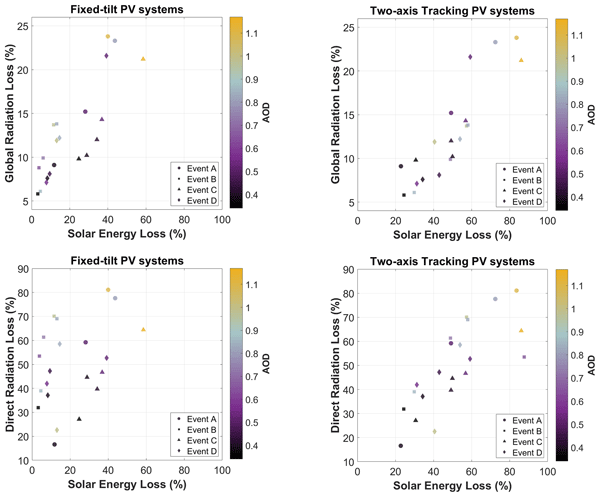
Dimitra Kouklaki, Georgia Charalampous, Anna Moustaka, Alkistis Papetta, Celia Herrero del Barrio, Rizos-Theodoros Chadoulis, S. Yeşer Aslanoğlu, Sara Herrero-Anta, Michail Mytilinaios, Nikolaos Papadimitriou, Katerina Anyfanti, Christos Spyrou, Daniela Meloni, Konstantinos Fragkos, Yevgeny Derimian, Tatiana Di Iorio, Rodanthi-Elisavet Mamouri, Vassilis Amiridis, Stavros Solomos, Stelios Kazadzis, and Ilias Fountoulakis
Atmos. Meas. Tech., 19, 5633–5657, https://doi.org/10.5194/amt-19-5633-2026, https://doi.org/10.5194/amt-19-5633-2026, 2026
Short summary
Short summary
In the present study we investigated how aerosols, and specifically dust, affect solar radiation and energy production by investigating several dust events across multiple sites in the Mediterranean Basin between 2021 and 2022 through ground-based observations and model simulations. The results revealed that dust can significantly attenuate solar radiation and, therefore, lead to considerable losses in solar power generation, specifically in the case of solar tracking systems.
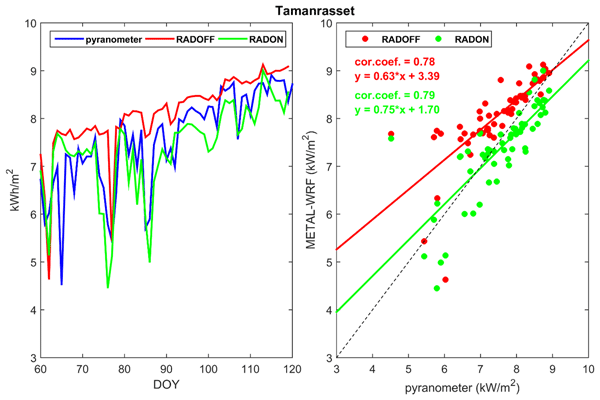
Christos Spyrou, Ilias Fountoulakis, Stavros Solomos, Nikolaos Papadimitriou, Alkiviadis Bais, Julian Gröbner, Daniela Meloni, and Christos Zerefos
Atmos. Meas. Tech., 18, 7717–7734, https://doi.org/10.5194/amt-18-7717-2025, https://doi.org/10.5194/amt-18-7717-2025, 2025
Short summary
Short summary
Dust particles originating from desert areas of the planet have significant radiative impacts on the ground and atmospheric column. The magnitude of the dust radiative effect is dependent on their optical properties and mineralogical content. Therefore, we upgrade the METAL-WRF model to incorporate the direct radiative impact of the minerals in dust. The capabilities of the model to simulate the chemical composition and associated impacts is significantly improved.
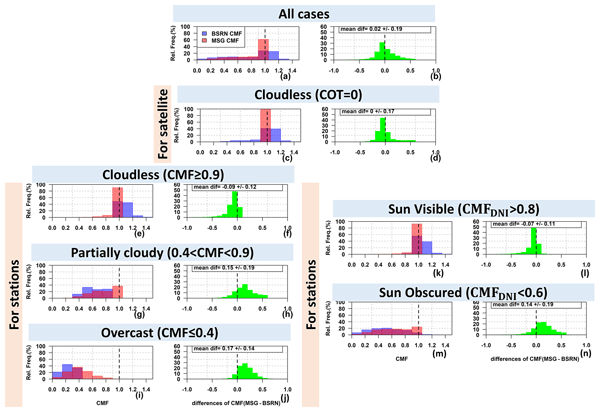
Kyriakoula Papachristopoulou, Ilias Fountoulakis, Alkiviadis F. Bais, Basil E. Psiloglou, Nikolaos Papadimitriou, Ioannis-Panagiotis Raptis, Andreas Kazantzidis, Charalampos Kontoes, Maria Hatzaki, and Stelios Kazadzis
Atmos. Meas. Tech., 17, 1851–1877, https://doi.org/10.5194/amt-17-1851-2024, https://doi.org/10.5194/amt-17-1851-2024, 2024
Short summary
Short summary
The upgraded systems SENSE2 and NextSENSE2 focus on improving the quality of solar nowcasting and forecasting. SENSE2 provides real-time estimates of solar irradiance across a wide region every 15 min. NextSENSE2 offers short-term forecasts of irradiance up to 3 h ahead. Evaluation with actual data showed that the instantaneous comparison yields the most discrepancies due to the uncertainties of cloud-related information and satellite versus ground-based spatial representativeness limitations.
Theano Drosoglou, Athanasios Natsis, Dimitris Dimitriadis, Kyriakoula Papachristopoulou, Stelios Kazadzis, Angelos Georgakis, Kevin Kilchhofer, Grigorios Tsoumakas, and Vassilis Amiridis
EGUsphere, https://doi.org/10.5194/egusphere-2026-5862, https://doi.org/10.5194/egusphere-2026-5862, 2026
This preprint is open for discussion and under review for Atmospheric Measurement Techniques (AMT).
Short summary
Short summary
Better short-term forecasts of clouds can help improve solar energy planning, as clouds can change sunlight rapidly. We developed a deep learning model that learns how cloud patterns evolve from satellite images and compared it with established forecasting methods. The model produced more accurate forecasts, especially for changing cloud conditions, and remained useful for longer forecast periods. The results show its potential for improving short-term cloud and solar radiation forecasting.
Georgia Charalampous, Konstantinos Fragkos, Ilias Fountoulakis, Kyriakoula Papachristopoulou, Anna Moustaka, Argyro Nisantzi, Diofantos Hadjimitsis, and Stelios Kazadzis
EGUsphere, https://doi.org/10.5194/egusphere-2026-6018, https://doi.org/10.5194/egusphere-2026-6018, 2026
This preprint is open for discussion and under review for Atmospheric Measurement Techniques (AMT).
Short summary
Short summary
Cyprus has very high levels of ultraviolet radiation from the Sun, so reliable daily forecasts help people protect their health. We compared two forecasting systems with measurements from five stations across the island. Both worked well on clear days but were less accurate when clouds were present. During a wildfire in July 2025, smoke cut the measured ultraviolet levels by about 40 percent, which the forecasts missed. Better cloud and smoke information is needed to improve forecasts.
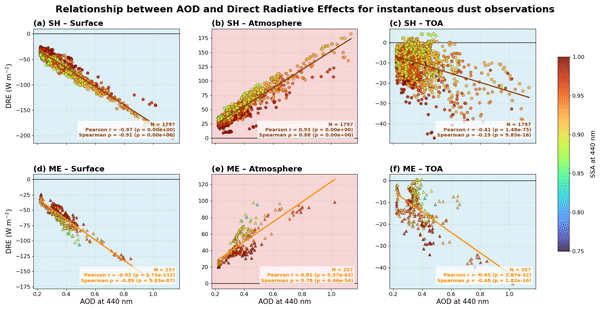
Georgia Charalampous, Konstantinos Fragkos, Ilias Fountoulakis, Kyriakoula Papachristopoulou, Anna Moustaka, Franco Marenco, Yevgeny Derimian, Argyro Nisantzi, Rodanthi-Elisavet Mamouri, Diofantos Hadjimitsis, and Stelios Kazadzis
Atmos. Meas. Tech., 19, 5753–5783, https://doi.org/10.5194/amt-19-5753-2026, https://doi.org/10.5194/amt-19-5753-2026, 2026
Short summary
Short summary
This study analyses seven years of dust events over Cyprus to identify their origin and quantify their impact on surface solar radiation. Most events originated from the Sahara. Dust reduces surface solar radiation, leading to surface cooling, while also causing atmospheric heating and cooling at the top of the atmosphere. Surface reductions in solar radiation reach about 5 %–15 % on average, with effects mainly controlled by dust amount.
Dimitra Kouklaki, Georgia Charalampous, Anna Moustaka, Alkistis Papetta, Celia Herrero del Barrio, Rizos-Theodoros Chadoulis, S. Yeşer Aslanoğlu, Sara Herrero-Anta, Michail Mytilinaios, Nikolaos Papadimitriou, Katerina Anyfanti, Christos Spyrou, Daniela Meloni, Konstantinos Fragkos, Yevgeny Derimian, Tatiana Di Iorio, Rodanthi-Elisavet Mamouri, Vassilis Amiridis, Stavros Solomos, Stelios Kazadzis, and Ilias Fountoulakis
Atmos. Meas. Tech., 19, 5633–5657, https://doi.org/10.5194/amt-19-5633-2026, https://doi.org/10.5194/amt-19-5633-2026, 2026
Short summary
Short summary
In the present study we investigated how aerosols, and specifically dust, affect solar radiation and energy production by investigating several dust events across multiple sites in the Mediterranean Basin between 2021 and 2022 through ground-based observations and model simulations. The results revealed that dust can significantly attenuate solar radiation and, therefore, lead to considerable losses in solar power generation, specifically in the case of solar tracking systems.
Anna Moustaka, Kyriakoula Papachristopoulou, Georgia Charalampous, and Stelios Kazadzis
EGUsphere, https://doi.org/10.5194/egusphere-2026-4413, https://doi.org/10.5194/egusphere-2026-4413, 2026
Short summary
Short summary
Atmospheric particles affect how much sunlight reaches the Earth's surface, but their uncertainty is rarely considered in solar energy studies. We estimated this uncertainty from a global atmospheric dataset and examined its effect on sunlight reaching the ground between 2003 and 2024. The results improve confidence in solar energy assessments, particularly in dusty and polluted regions.
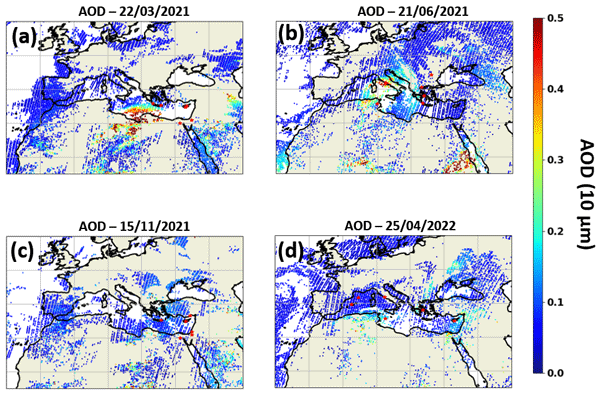
Alkistis Papetta, Celia Herrero del Barrio, S. Yeşer Aslanoğlu, Rizos-Theodoros Chadoulis, Georgia Charalampous, Sara Herrero-Anta, Dimitra Kouklaki, Michail Mytilinaios, Anna Moustaka, Emmanouil Proestakis, Vassilis Amiridis, Christos Spyrou, Antonis Gkikas, Michael Pikridas, Maria Kezoudi, Franco Marenco, Jean Sciare, Sophie Vandenbussche, Stavros Solomos, Stelios Kazadzis, and Ilias Fountoulakis
Atmos. Chem. Phys., 26, 12395–12434, https://doi.org/10.5194/acp-26-12395-2026, https://doi.org/10.5194/acp-26-12395-2026, 2026
Short summary
Short summary
We studied four major dust events from the Sahara and the Middle East over the Mediterranean. Saharan dust events exhibited coarser and more scattering particles, while Middle Eastern dust was finer and mixed with pollution. Differences in absorption could not be explained by mineralogy and are attributed to mixing.
Yannis Gschwind, Kyriaki Papachristopoulou, Jason N. S. Cole, Alkiviadis F. Bais, and Stelios Kazadzis
EGUsphere, https://doi.org/10.5194/egusphere-2026-4519, https://doi.org/10.5194/egusphere-2026-4519, 2026
Short summary
Short summary
The EarthCARE satellite, launched in 2024, measures aerosol, cloud, and precipitation properties, serving as input for radiative transfer models. Given its recent launch, validation is crucial. In this analysis, we validate the resulting surface irradiance against ground-based measurements and compare with estimates from geostationary satellites. Our study indicates that EarthCARE slightly underestimates surface irradiance. These early tests provide essential context for EarthCARE data users.
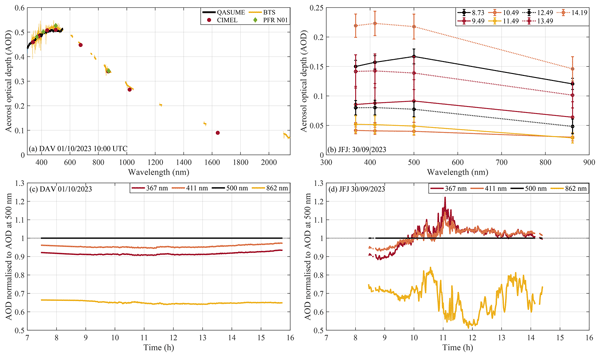
Akriti Masoom, Stelios Kazadzis, Robin Lewis Modini, Martin Gysel-Beer, Julian Gröbner, Martine Collaud Coen, Francisco Navas-Guzman, Natalia Kouremeti, Benjamin Tobias Brem, Nora Kristina Nowak, Giovanni Martucci, and Maxime Hervo
Atmos. Chem. Phys., 26, 10801–10834, https://doi.org/10.5194/acp-26-10801-2026, https://doi.org/10.5194/acp-26-10801-2026, 2026
Short summary
Short summary
This article aims at providing details on the spectral aerosol properties observed during 2023 Canadian wildfire plume transport and exploring the synergism between remote sensing and in situ measurements for investigating the cause of the occurrence of the observations of spectral aerosol properties.
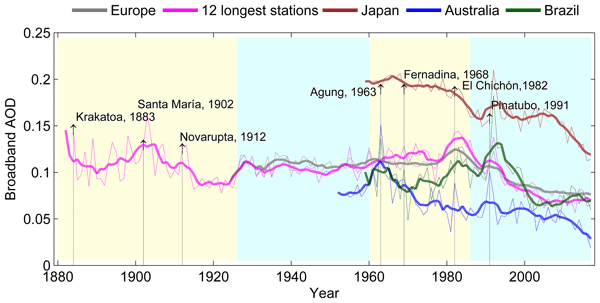
William Wandji Nyamsi, Ville Leinonen, Antti Lipponen, Else van den Besselaar, Santtu Mikkonen, Arturo Sanchez-Lorenzo, Martin Wild, Doris Folini, Tero Mielonen, Harri Kokkola, Antti Kukkurainen, Neus Sabater, Rei Kudo, Ben Liley, Raghav Srinivasan, Bruce W. Forgan, Alexandru Dumitrescu, Grzegorz Urban, Michał K. Kowalewski, Márcia Akemi Yamasoe, Nilton Évora do Rosário, Dimitra Founda, Stelios Kazadzis, Veronica Manara, Derbetini A. Vondou, Christian Gueymard, Anders V. Lindfors, Atsumu Ohmura, and Antti Arola
Atmos. Chem. Phys., 26, 10767–10788, https://doi.org/10.5194/acp-26-10767-2026, https://doi.org/10.5194/acp-26-10767-2026, 2026
Short summary
Short summary
Worldwide reconstructed historical aerosol load reveals that during the period of:
- 1900–1959: the atmosphere became cleaner in most European cities;
- 1960–1985: anthropogenic aerosols were responsible for the dimming phenomenon in Europe. AOD increased over Southeast Brazil and decreased noticeably over Japan while a small negative trend was found over Oceania;
- 1986–2015: generally, the atmosphere has become much cleaner everywhere after the reversal trend around 1980s mainly observed in Europe.

Sophie Vandenbussche, Christodoulos Biskas, Maria-Elissavet Koukouli, Stelios Kazadzis, and Martine De Mazière
Atmos. Meas. Tech., 19, 4889–4922, https://doi.org/10.5194/amt-19-4889-2026, https://doi.org/10.5194/amt-19-4889-2026, 2026
Short summary
Short summary
Mineral dust aerosols are tiny particles uplifted by winds from deserts, which may be transported for long distances. They are climate forcers and affect human health and socio-economic sectors, making near-real-time and long-term monitoring essential. Here, we use satellite observations to retrieve global 3D distributions of dust aerosols. We present an updated and improved algorithm and its long-term consistent data since late 2007, with high potential for climate analyses and alert systems.
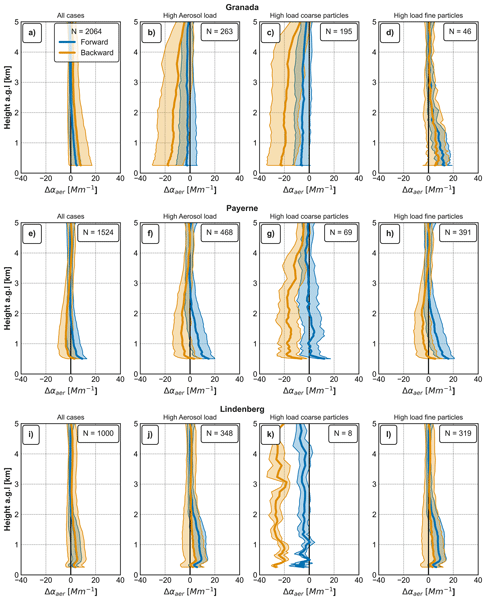
Jorge Muñiz-Rosado, Alberto Cazorla, Eric Sauvageat, Alexander Haefele, Celia Herrero del Barrio, Ramiro González, Roberto Román, Pedro Luis Molina-Molero, Arlett Díaz-Zurita, Víctor Manuel Naval-Hernández, Onel Rodríguez-Navarro, María José Granados-Muñoz, Juan Antonio Bravo-Aranda, Milagros Herrera, Daniel Pérez-Ramírez, Lionel Doppler, Lucas Alados-Arboledas, and Francisco Navas-Guzmán
Atmos. Chem. Phys., 26, 10255–10285, https://doi.org/10.5194/acp-26-10255-2026, https://doi.org/10.5194/acp-26-10255-2026, 2026
Short summary
Short summary
Ceilometers can track dust and pollution particles in the atmosphere, but their measurements need validation. This study statistically compared two processing methods against thousands of measurements from sun-tracking instruments and balloon soundings at three European sites over two years. One method, using an independent calibration procedure, proved more accurate across all conditions, cutting uncertainties by around half. This supports its wider use for air quality monitoring.
Semontee Deb, Elena Louca, Angelos Violaris, Pantelis Kiriakidis, Yannis Proestos, Jonilda Kushta, Antonis Gkikas, Andrea Pozzer, and Theodoros Christoudias
EGUsphere, https://doi.org/10.5194/egusphere-2026-1900, https://doi.org/10.5194/egusphere-2026-1900, 2026
Short summary
Short summary
This study presents an extensive model evaluation of WRF-Chem (v4.7.1) dust simulations over the dust belt. We test three dust emission schemes and two land surface models using different measurements and reanalysis datasets. Our results identify effective model configurations and propose empirical scaling factors that improve dust representation and may be applicable more broadly.
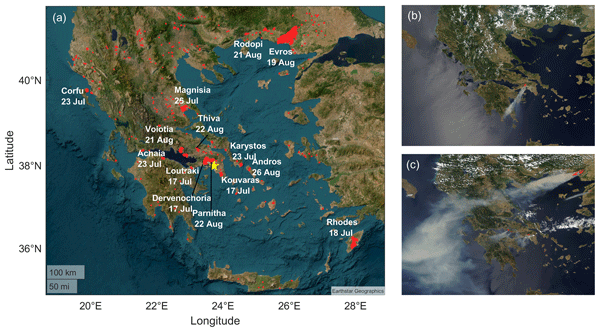
Marilena Gidarakou, Alexandros Papayannis, Maria Mylonaki, Eleni Kralli, Kostas Eleftheratos, Ilias Fountoulakis, Olga Zografou, Evangelia Diapouli, Maria I. Gini, Stergios Vratolis, Konstantinos Granakis, Konstantinos Eleftheriadis, Nikolaos Evangeliou, Christine Groot Zwaaftink, Eugenia Giagka, Marios-Andreas Zagklis, and Igor Veselovskii
Atmos. Chem. Phys., 26, 4313–4339, https://doi.org/10.5194/acp-26-4313-2026, https://doi.org/10.5194/acp-26-4313-2026, 2026
Short summary
Short summary
In summer 2023, Greece experienced one of its most intense wildfire seasons, with major fires across several regions. This study examines how smoke from two major fire events affected air quality and ultraviolet radiation in Athens using satellite images, modelling, and ground-based measurements to understand the optical and microphysical behavior of airborne particles.
Anna Moustaka, Antonis Gkikas, Stavros-Andreas Logothetis, Johannes Flemming, Samuel Rémy, Melanie Ades, Angela Benedetti, Kleareti Tourpali, Vassilis Amiridis, and Stelios Kazadzis
EGUsphere, https://doi.org/10.5194/egusphere-2026-1107, https://doi.org/10.5194/egusphere-2026-1107, 2026
This preprint is open for discussion and under review for Atmospheric Chemistry and Physics (ACP).
Short summary
Short summary
We examined how atmospheric aerosols have changed worldwide over the past two decades using a global atmospheric reanalysis together with ground-based observations. We found strong regional differences, with clear declines in some industrialized areas and increases in parts of South Asia and the Middle East. These long-term records help improve understanding of changes in climate and air quality.
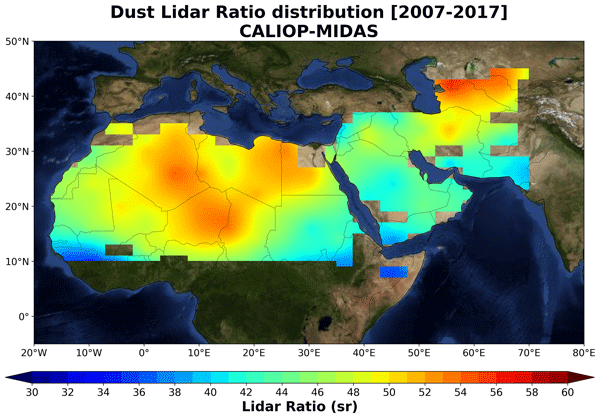
Anna Moustaka, Nikolaos Siomos, Stelios Kazadzis, Emmanouil Proestakis, Kalliopi Artemis Voudouri, Anton Lopatin, Oleg Dubovik, Kleareti Tourpali, Christos Zerefos, Vassilis Amiridis, and Antonis Gkikas
Atmos. Meas. Tech., 19, 1201–1225, https://doi.org/10.5194/amt-19-1201-2026, https://doi.org/10.5194/amt-19-1201-2026, 2026
Short summary
Short summary
North Africa and the Middle East are home to the world’s most active dust sources, but accurately monitoring airborne dust remains challenging. We combine active and passive satellite aerosol products to dynamically estimate dust lidar ratios over a 12-year period. The results reveal pronounced and physically meaningful regional variability, improving aerosol characterization and supporting climate and air-quality applications.
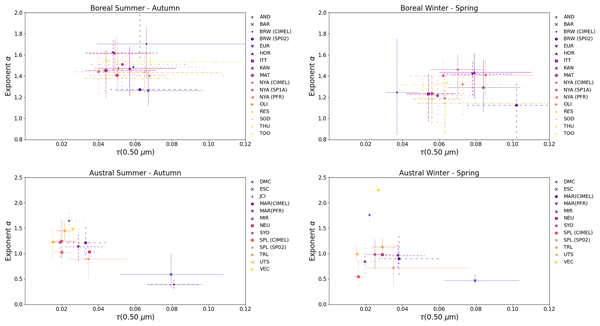
Simone Pulimeno, Angelo Lupi, Vito Vitale, Claudia Frangipani, Carlos Toledano, Stelios Kazadzis, Natalia Kouremeti, Christoph Ritter, Sandra Graßl, Kerstin Stebel, Vitali Fioletov, Ihab Abboud, Sandra Blindheim, Lynn Ma, Norm O'Neill, Piotr Sobolewski, Pawan Gupta, Elena Lind, Thomas F. Eck, Antti Hyvärinen, Veijo Aaltonen, Rigel Kivi, Janae Csavina, Dmitry Kabanov, Sergey M. Sakerin, Olga R. Sidorova, Robert S. Stone, Hagen Telg, Laura Riihimaki, Raul R. Cordero, Martin Radenz, Ronny Engelmann, Michel Van Roozendal, Anatoli Chaikovsky, Philippe Goloub, Junji Hisamitsu, and Mauro Mazzola
Atmos. Chem. Phys., 26, 1809–1846, https://doi.org/10.5194/acp-26-1809-2026, https://doi.org/10.5194/acp-26-1809-2026, 2026
Short summary
Short summary
This study analyzed aerosols optical properties over the Arctic and Antarctic to measure them even during long periods of darkness. It found that pollution in the Arctic is decreasing, likely due to European emission regulations, while wildfires are becoming a more important source of particles. In Antarctica, particle levels are higher near the coast than inland, and vary by season. These results help us better understand how air pollution and climate are changing at the Earth’s poles.
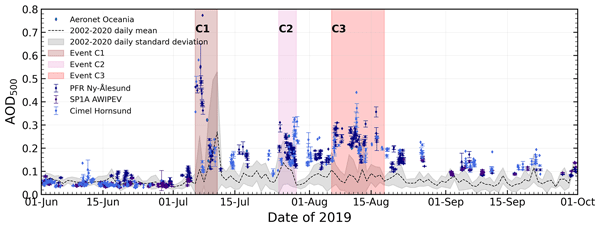
Sara Herrero-Anta, Sabine Eckhardt, Nikolaos Evangeliou, Stefania Gilardoni, Sandra Graßl, Dominic Heslin-Rees, Stelios Kazadzis, Natalia Kouremeti, Radovan Krejci, David Mateos, Mauro Mazzola, Christoph Ritter, Roberto Román, Kerstin Stebel, and Tymon Zielinski
Atmos. Chem. Phys., 26, 1435–1457, https://doi.org/10.5194/acp-26-1435-2026, https://doi.org/10.5194/acp-26-1435-2026, 2026
Short summary
Short summary
In summer 2019, unusually high aerosol concentrations were measured in the Arctic, extending through the troposphere and stratosphere up to 16 km. Using multiple instruments and models, aerosol particles were linked to wildfires, volcanic eruptions, and anthropogenic pollution. The aerosol consisted of spherical, fine-mode, weakly absorbing particles, which significantly reduced direct solar radiation. This combined approach improves understanding of Arctic aerosol events and climate processes.
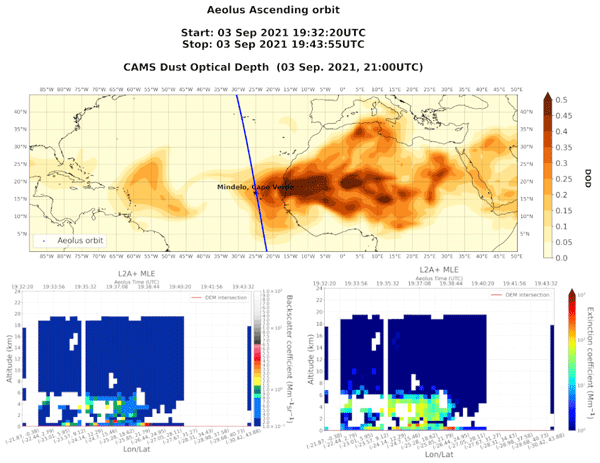
Konstantinos Rizos, Emmanouil Proestakis, Thanasis Georgiou, Antonis Gkikas, Eleni Marinou, Peristera Paschou, Kalliopi Artemis Voudouri, Athanasios Tsikerdekis, David P. Donovan, Gerd-Jan van Zadelhoff, Angela Benedetti, Holger Baars, Athena Augusta Floutsi, Nikos Benas, Martin Stengel, Christian Retscher, Edward Malina, and Vassilis Amiridis
Atmos. Meas. Tech., 19, 699–728, https://doi.org/10.5194/amt-19-699-2026, https://doi.org/10.5194/amt-19-699-2026, 2026
Short summary
Short summary
The Aeolus satellite's lidar system had limitations in detecting certain atmospheric layers and distinguishing between aerosol and cloud types. To improve accuracy, a new dust detection product was developed. By combining data from various sources and validating it with ground-based measurements, this enhanced product performs better than the original. It helps improve dust transport models and weather predictions, making it a valuable tool for atmospheric monitoring and forecasting.
Christos Spyrou, Ilias Fountoulakis, Stavros Solomos, Nikolaos Papadimitriou, Alkiviadis Bais, Julian Gröbner, Daniela Meloni, and Christos Zerefos
Atmos. Meas. Tech., 18, 7717–7734, https://doi.org/10.5194/amt-18-7717-2025, https://doi.org/10.5194/amt-18-7717-2025, 2025
Short summary
Short summary
Dust particles originating from desert areas of the planet have significant radiative impacts on the ground and atmospheric column. The magnitude of the dust radiative effect is dependent on their optical properties and mineralogical content. Therefore, we upgrade the METAL-WRF model to incorporate the direct radiative impact of the minerals in dust. The capabilities of the model to simulate the chemical composition and associated impacts is significantly improved.

Angelos Karanikolas, Benjamin Torres, Masahiro Momoi, Marcos Herreras Giralda, Natalia Kouremeti, Julian Gröbner, Lionel Doppler, and Stelios Kazadzis
Atmos. Meas. Tech., 18, 7651–7677, https://doi.org/10.5194/amt-18-7651-2025, https://doi.org/10.5194/amt-18-7651-2025, 2025
Short summary
Short summary
Several techniques retrieve of the aerosol size distribution. The Generalized Retrieval of Atmosphere and Surface Properties algorithm can retrieve aerosol size distribution parameters using only aerosol optical depth (AOD) as input that is continuously observed by sun photometers worldwide. In this study, we apply the algorithm to AOD measured by sun photometers and spectroradiometers to assess the performance and limitations of such retrievals and investigate the effect of the spectral range.
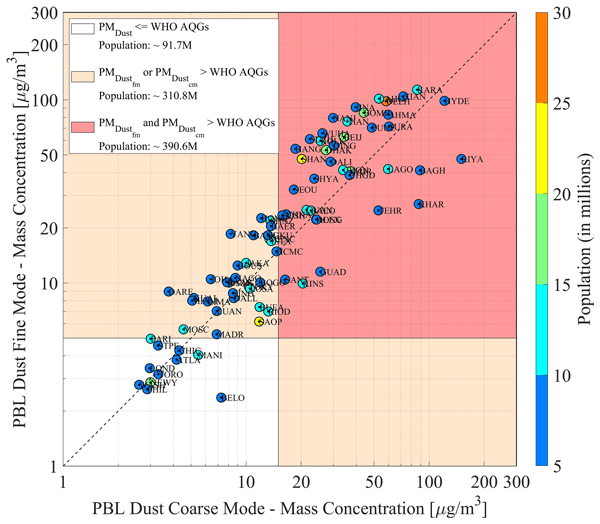
Emmanouil Proestakis, Kyriakoula Papachristopoulou, Thanasis Georgiou, Sofia Eirini Chatoutsidou, Mihalis Lazaridis, Antonis Gkikas, Ilias Fountoulakis, Ioanna Tsikoudi, Manolis P. Petrakis, and Vassilis Amiridis
Atmos. Chem. Phys., 25, 14777–14823, https://doi.org/10.5194/acp-25-14777-2025, https://doi.org/10.5194/acp-25-14777-2025, 2025
Short summary
Short summary
Based on Earth observations of dust the study addresses the questions: To what extent have the fine and coarse modes of atmospheric dust within the planetary boundary layer (PBL) changed over major cities worldwide? Which areas experience fine-mode and coarse-mode dust mass concentrations within the PBL that exceed World Health Organization air quality guidelines, and which areas are projected to exceed these guidelines in the near future? Can we quantify associated impacts on human health?

Ilias Fountoulakis, Kyriaki Papachristopoulou, Stelios Kazadzis, Gregor Hülsen, Julian Gröbner, Ioannis-Panagiotis Raptis, Dimitra Kouklaki, Akriti Masoom, Natalia Kouremeti, Charalampos Kontoes, and Christos S. Zerefos
Geosci. Model Dev., 18, 7451–7473, https://doi.org/10.5194/gmd-18-7451-2025, https://doi.org/10.5194/gmd-18-7451-2025, 2025
Short summary
Short summary
The UVIOS2 model has been evaluated at Davos, Switzerland during the UVCIII campaign. The accuracy in the modelled UV indices has been assessed for different combinations of model inputs. A good overall agreement between UVIOS2 and the world reference spectroradiometer QASUME was found (average ratio of ~ 1 between the modelled and measured UV index), although the variability in the ratio can be large under cloudy conditions.
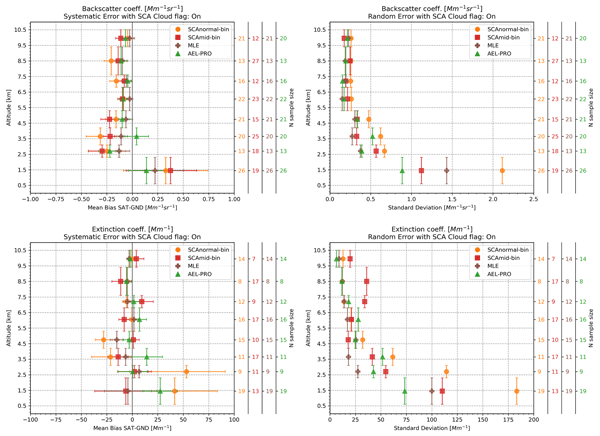
Peristera Paschou, Nikolaos Siomos, Eleni Marinou, Antonis Gkikas, Samira M. Idrissa, Daniel T. Quaye, Désiré D. Fiogbe Attannon, Kalliopi Artemis Voudouri, Charikleia Meleti, David P. Donovan, George Georgoussis, Tommaso Parrinello, Thorsten Fehr, Jonas von Bismarck, and Vassilis Amiridis
Atmos. Meas. Tech., 18, 4731–4754, https://doi.org/10.5194/amt-18-4731-2025, https://doi.org/10.5194/amt-18-4731-2025, 2025
Short summary
Short summary
This study presents the results from a validation study on the Level 2A products (aerosol optical properties) of the ESA's (European Space Agency) Aeolus mission. Measurements from the eVe lidar, a combined linear/circular polarization and Raman lidar and ESA's ground reference system, that have been collected during the Joint Aeolus Tropical Atlantic Campaign are compared with collocated Aeolus Level 2A profiles obtained from the latest version (Baseline 16) of the Aeolus algorithms.
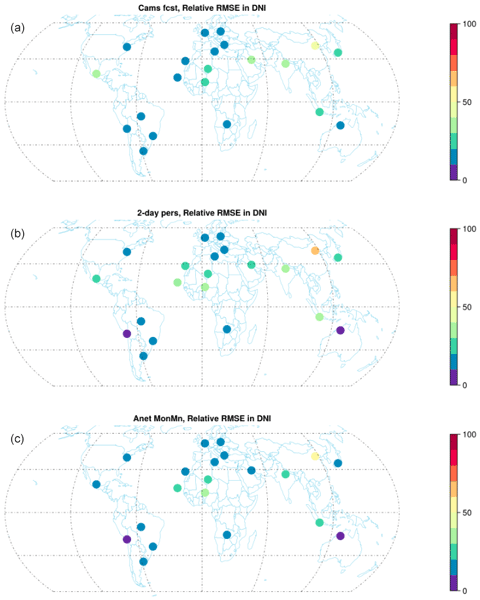
Xinyuan Hou, Kyriakoula Papachristopoulou, and Stelios Kazadzis
Atmos. Meas. Tech., 18, 4543–4557, https://doi.org/10.5194/amt-18-4543-2025, https://doi.org/10.5194/amt-18-4543-2025, 2025
Short summary
Short summary
We analyzed aerosol ground measurements and model based aerosol optical depth (AOD) forecasts to study variations in AOD at different global sites. We compared day-ahead AOD forecast methods and assessed their impact on forecasting clear-sky direct normal irradiance (DNI). While none of the methods accurately forecast DNI within 5 %, most sites showed a DNI deviation within 20 %, especially at sites with urban-industrial aerosols.

Emmanouil Proestakis, Vassilis Amiridis, Carlos Pérez García-Pando, Svetlana Tsyro, Jan Griesfeller, Antonis Gkikas, Thanasis Georgiou, María Gonçalves Ageitos, Jeronimo Escribano, Stelios Myriokefalitakis, Elisa Bergas Masso, Enza Di Tomaso, Sara Basart, Jan-Berend W. Stuut, and Angela Benedetti
Earth Syst. Sci. Data, 17, 4351–4395, https://doi.org/10.5194/essd-17-4351-2025, https://doi.org/10.5194/essd-17-4351-2025, 2025
Short summary
Short summary
Quantification of dust deposition into the broader Atlantic Ocean is provided, with the estimates established based on Earth observations. The dataset is considered unique with respect to a range of applications, including compensating for spatiotemporal gaps of sediment-trap measurements, assessments of model simulations, shedding light on physical processes related to the dust cycle, and improving the understanding of dust biogeochemical impacts on oceanic ecosystems, weather, and climate.
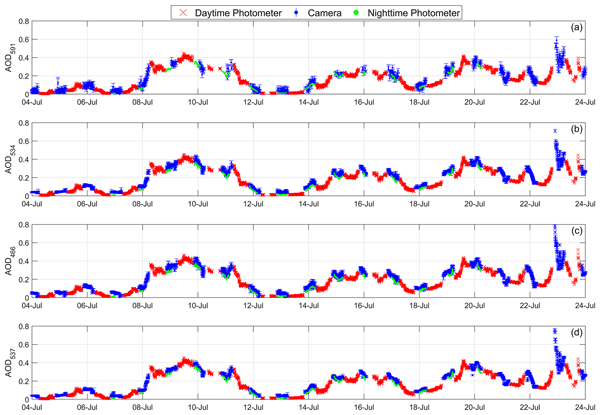
Roberto Román, Daniel González-Fernández, Juan Carlos Antuña-Sánchez, Celia Herrero del Barrio, Sara Herrero-Anta, África Barreto, Victoria E. Cachorro, Lionel Doppler, Ramiro González, Christoph Ritter, David Mateos, Natalia Kouremeti, Gustavo Copes, Abel Calle, María José Granados-Muñoz, Carlos Toledano, and Ángel M. de Frutos
Atmos. Meas. Tech., 18, 2847–2875, https://doi.org/10.5194/amt-18-2847-2025, https://doi.org/10.5194/amt-18-2847-2025, 2025
Short summary
Short summary
This paper presents a novel technique to extract starlight signals from all-sky images and retrieve aerosol optical depth (AOD). It is validated against lunar photometry, showing a strong correlation between data series. This innovative approach will expand nocturnal AOD measurements to more locations, as all-sky cameras are a simpler and more cost-effective alternative to stellar and lunar photometers.

Angelos Karanikolas, Natalia Kouremeti, Monica Campanelli, Victor Estellés, Masahiro Momoi, Gaurav Kumar, Stephan Nyeki, and Stelios Kazadzis
Atmos. Meas. Tech., 17, 6085–6105, https://doi.org/10.5194/amt-17-6085-2024, https://doi.org/10.5194/amt-17-6085-2024, 2024
Short summary
Short summary
Different sun photometer networks use different instruments, post-processing algorithms and calibration protocols for aerosol optical depth (AOD) retrieval. Such differences can affect the homogeneity and comparability of their measurements. In this study, we assess the homogeneity between the sun photometer networks GAW-PFR and SKYNET, analysing common measurements during three campaigns between 2017–2021, and investigate the main cause of the differences.
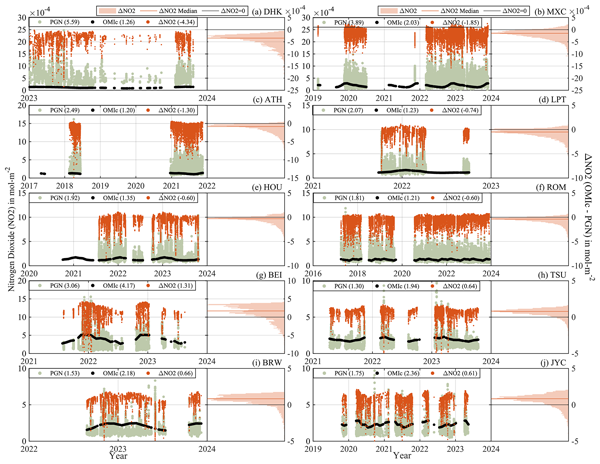
Akriti Masoom, Stelios Kazadzis, Masimo Valeri, Ioannis-Panagiotis Raptis, Gabrielle Brizzi, Kyriakoula Papachristopoulou, Francesca Barnaba, Stefano Casadio, Axel Kreuter, and Fabrizio Niro
Atmos. Meas. Tech., 17, 5525–5549, https://doi.org/10.5194/amt-17-5525-2024, https://doi.org/10.5194/amt-17-5525-2024, 2024
Short summary
Short summary
Aerosols, which have a wide impact on climate, radiative forcing, and human health, are widely represented by aerosol optical depth (AOD). AOD retrievals require Rayleigh scattering and atmospheric absorption (ozone, NO2, etc.) corrections. We analysed the NO2 (which has a high spatiotemporal variation) uncertainty impact on AOD retrievals using the synergy of co-located ground-based instruments with a long-term dataset at worldwide sites and found significant AOD over- or underestimations.
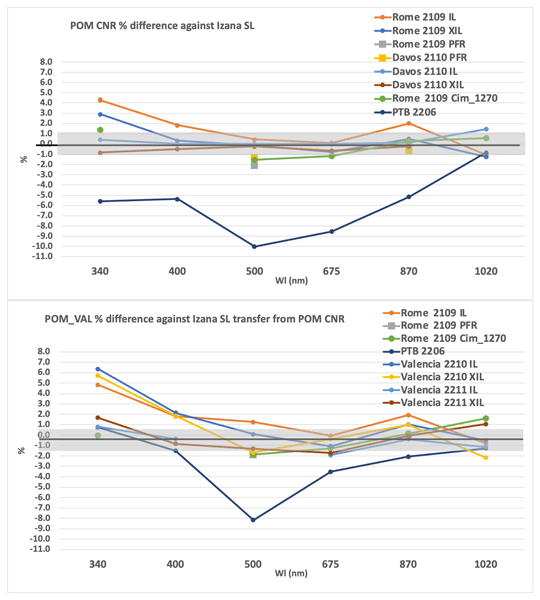
Monica Campanelli, Victor Estellés, Gaurav Kumar, Teruyuki Nakajima, Masahiro Momoi, Julian Gröbner, Stelios Kazadzis, Natalia Kouremeti, Angelos Karanikolas, Africa Barreto, Saulius Nevas, Kerstin Schwind, Philipp Schneider, Iiro Harju, Petri Kärhä, Henri Diémoz, Rei Kudo, Akihiro Uchiyama, Akihiro Yamazaki, Anna Maria Iannarelli, Gabriele Mevi, Annalisa Di Bernardino, and Stefano Casadio
Atmos. Meas. Tech., 17, 5029–5050, https://doi.org/10.5194/amt-17-5029-2024, https://doi.org/10.5194/amt-17-5029-2024, 2024
Short summary
Short summary
To retrieve columnar aerosol properties from sun photometers, some calibration factors are needed. The on-site calibrations, performed as frequently as possible to monitor changes in the machine conditions, allow operators to track and evaluate the calibration status on a continuous basis, reducing the data gaps incurred by the periodic shipments for performing centralized calibrations. The performance of the on-site calibration procedures was evaluated, providing very good results.
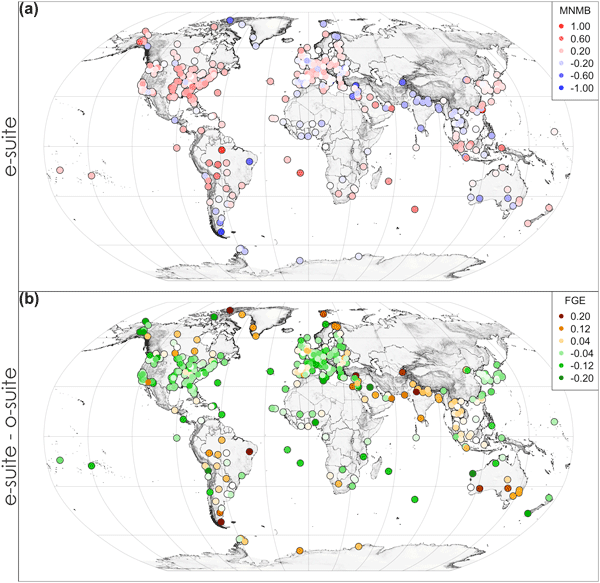
Henk Eskes, Athanasios Tsikerdekis, Melanie Ades, Mihai Alexe, Anna Carlin Benedictow, Yasmine Bennouna, Lewis Blake, Idir Bouarar, Simon Chabrillat, Richard Engelen, Quentin Errera, Johannes Flemming, Sebastien Garrigues, Jan Griesfeller, Vincent Huijnen, Luka Ilić, Antje Inness, John Kapsomenakis, Zak Kipling, Bavo Langerock, Augustin Mortier, Mark Parrington, Isabelle Pison, Mikko Pitkänen, Samuel Remy, Andreas Richter, Anja Schoenhardt, Michael Schulz, Valerie Thouret, Thorsten Warneke, Christos Zerefos, and Vincent-Henri Peuch
Atmos. Chem. Phys., 24, 9475–9514, https://doi.org/10.5194/acp-24-9475-2024, https://doi.org/10.5194/acp-24-9475-2024, 2024
Short summary
Short summary
The Copernicus Atmosphere Monitoring Service (CAMS) provides global analyses and forecasts of aerosols and trace gases in the atmosphere. On 27 June 2023 a major upgrade, Cy48R1, became operational. Comparisons with in situ, surface remote sensing, aircraft, and balloon and satellite observations show that the new CAMS system is a significant improvement. The results quantify the skill of CAMS to forecast impactful events, such as wildfires, dust storms and air pollution peaks.
Emmanouil Proestakis, Antonis Gkikas, Thanasis Georgiou, Anna Kampouri, Eleni Drakaki, Claire L. Ryder, Franco Marenco, Eleni Marinou, and Vassilis Amiridis
Atmos. Meas. Tech., 17, 3625–3667, https://doi.org/10.5194/amt-17-3625-2024, https://doi.org/10.5194/amt-17-3625-2024, 2024
Short summary
Short summary
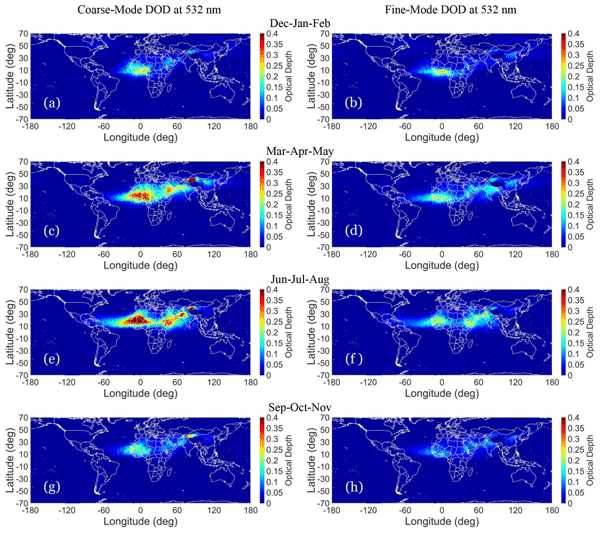
A new four-dimensional, multiyear, and near-global climate data record of the fine-mode (submicrometer diameter) and coarse-mode (supermicrometer diameter) components of atmospheric pure dust is presented. The dataset is considered unique with respect to a wide range of potential applications, including climatological, time series, and trend analysis over extensive geographical domains and temporal periods, validation of atmospheric dust models and datasets, and air quality.
Ilias Fountoulakis, Alexandra Tsekeri, Stelios Kazadzis, Vassilis Amiridis, Angelos Nersesian, Maria Tsichla, Emmanouil Proestakis, Antonis Gkikas, Kyriakoula Papachristopoulou, Vasileios Barlakas, Claudia Emde, and Bernhard Mayer
Atmos. Chem. Phys., 24, 4915–4948, https://doi.org/10.5194/acp-24-4915-2024, https://doi.org/10.5194/acp-24-4915-2024, 2024
Short summary
Short summary
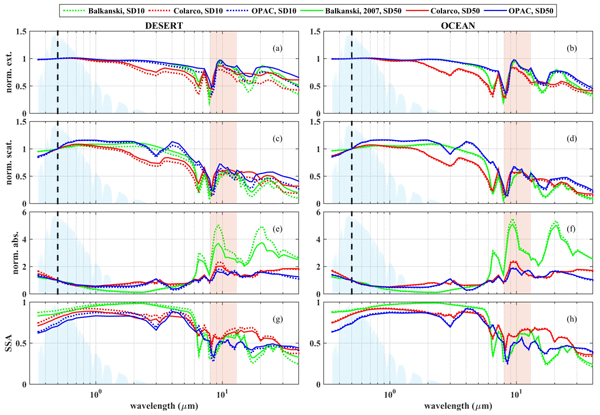
In our study we provide an assessment, through a sensitivity study, of the limitations of models to calculate the dust direct radiative effect (DRE) due to the underrepresentation of its size, refractive index (RI), and shape. Our results indicate the necessity of including more realistic sizes and RIs for dust particles in dust models, in order to derive better estimations of the dust direct radiative effects.
Kyriakoula Papachristopoulou, Ilias Fountoulakis, Alkiviadis F. Bais, Basil E. Psiloglou, Nikolaos Papadimitriou, Ioannis-Panagiotis Raptis, Andreas Kazantzidis, Charalampos Kontoes, Maria Hatzaki, and Stelios Kazadzis
Atmos. Meas. Tech., 17, 1851–1877, https://doi.org/10.5194/amt-17-1851-2024, https://doi.org/10.5194/amt-17-1851-2024, 2024
Short summary
Short summary
The upgraded systems SENSE2 and NextSENSE2 focus on improving the quality of solar nowcasting and forecasting. SENSE2 provides real-time estimates of solar irradiance across a wide region every 15 min. NextSENSE2 offers short-term forecasts of irradiance up to 3 h ahead. Evaluation with actual data showed that the instantaneous comparison yields the most discrepancies due to the uncertainties of cloud-related information and satellite versus ground-based spatial representativeness limitations.
Ruth A. R. Digby, Nathan P. Gillett, Adam H. Monahan, Knut von Salzen, Antonis Gkikas, Qianqian Song, and Zhibo Zhang
Atmos. Chem. Phys., 24, 2077–2097, https://doi.org/10.5194/acp-24-2077-2024, https://doi.org/10.5194/acp-24-2077-2024, 2024
Short summary
Short summary
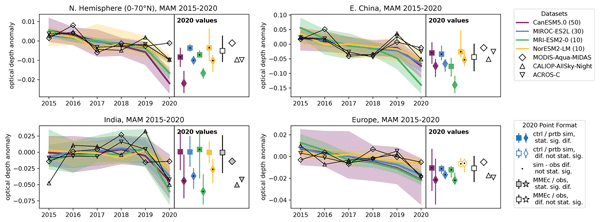
The COVID-19 lockdowns reduced aerosol emissions. We ask whether these reductions affected regional aerosol optical depth (AOD) and compare the observed changes to predictions from Earth system models. Only India has an observed AOD reduction outside of typical variability. Models overestimate the response in some regions, but when key biases have been addressed, the agreement is improved. Our results suggest that current models can realistically predict the effects of future emission changes.
Antonio Fernando Almansa, África Barreto, Natalia Kouremeti, Ramiro González, Akriti Masoom, Carlos Toledano, Julian Gröbner, Rosa Delia García, Yenny González, Stelios Kazadzis, Stéphane Victori, Óscar Álvarez, Fabrice Maupin, Virgilio Carreño, Victoria Eugenia Cachorro, and Emilio Cuevas
Atmos. Meas. Tech., 17, 659–675, https://doi.org/10.5194/amt-17-659-2024, https://doi.org/10.5194/amt-17-659-2024, 2024
Short summary
Short summary
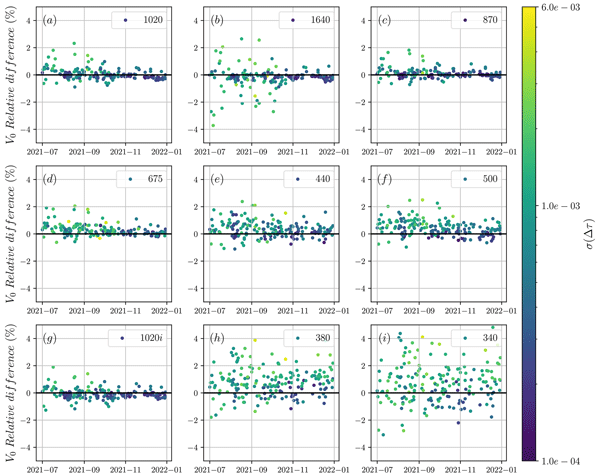
This paper applies sun photometer synergies to improve calibration transference between different sun photometers and also enhance their quality assurance and quality control. We have validated this technique using different instrumentation, the WMO-GAW and NASA-AERONET references, under different aerosol regimes using the standard Langley calibration method as a reference.
Óscar Alvárez, África Barreto, Omaira E. García, Frank Hase, Rosa D. García, Julian Gröbner, Sergio F. León-Luis, Eliezer Sepúlveda, Virgilio Carreño, Antonio Alcántara, Ramón Ramos, A. Fernando Almansa, Stelios Kazadzis, Noémie Taquet, Carlos Toledano, and Emilio Cuevas
Atmos. Meas. Tech., 16, 4861–4884, https://doi.org/10.5194/amt-16-4861-2023, https://doi.org/10.5194/amt-16-4861-2023, 2023
Short summary
Short summary
In this work, we have extended the capabilities of a portable Fourier transform infrared (FTIR) instrument, which was originally designed to provide high-quality greenhouse gas monitoring within COCCON (COllaborative Carbon Column Observing Network). The extension allows the spectrometer to now also provide coincidentally column-integrated aerosol information. This addition of a reference instrument to a global network will be utilised to enhance our understanding of atmospheric chemistry.
Vasiliki Daskalopoulou, Panagiotis I. Raptis, Alexandra Tsekeri, Vassilis Amiridis, Stelios Kazadzis, Zbigniew Ulanowski, Vassilis Charmandaris, Konstantinos Tassis, and William Martin
Atmos. Meas. Tech., 16, 4529–4550, https://doi.org/10.5194/amt-16-4529-2023, https://doi.org/10.5194/amt-16-4529-2023, 2023
Short summary
Short summary
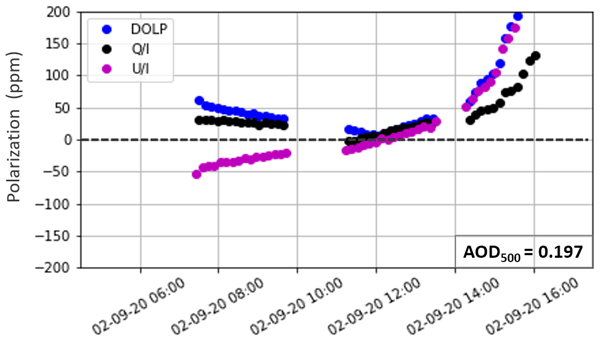
Atmospheric dust particles may present a preferential alignment due to their shape on long range transport. Since dust is abundant and plays a key role to global climate, the elusive observation of orientation will be a game changer to existing measurement techniques and the representation of particles in climate models. We utilize a specifically designed instrument, SolPol, and target the Sun from the ground for large polarization values under dusty conditions, a clear sign of orientation.
Julian Gröbner, Natalia Kouremeti, Gregor Hülsen, Ralf Zuber, Mario Ribnitzky, Saulius Nevas, Peter Sperfeld, Kerstin Schwind, Philipp Schneider, Stelios Kazadzis, África Barreto, Tom Gardiner, Kavitha Mottungan, David Medland, and Marc Coleman
Atmos. Meas. Tech., 16, 4667–4680, https://doi.org/10.5194/amt-16-4667-2023, https://doi.org/10.5194/amt-16-4667-2023, 2023
Short summary
Short summary
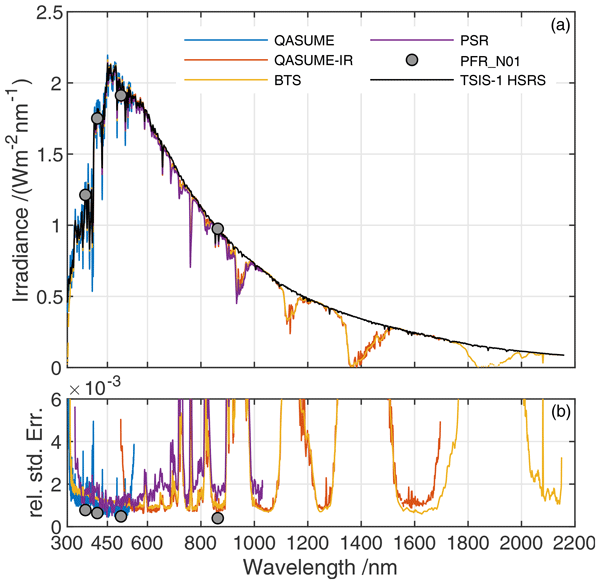
Spectral solar irradiance measurements traceable to the International System of Units (SI) allow for intercomparability between instruments and for their validation according to metrological standards. Here we also validate and reduce the uncertainties of the top-of-atmosphere TSIS-1 Hybrid Solar Reference Spectrum (HSRS). The management of large networks, e.g. AERONET or GAW-PFR, will benefit from reducing logistical overhead, improving their resilience and achieving metrological traceability.
P. Russo, A. Laguarda, G. Abal, and L. Doppler
Int. Arch. Photogramm. Remote Sens. Spatial Inf. Sci., XLVIII-M-1-2023, 565–572, https://doi.org/10.5194/isprs-archives-XLVIII-M-1-2023-565-2023, https://doi.org/10.5194/isprs-archives-XLVIII-M-1-2023-565-2023, 2023
Akriti Masoom, Ilias Fountoulakis, Stelios Kazadzis, Ioannis-Panagiotis Raptis, Anna Kampouri, Basil E. Psiloglou, Dimitra Kouklaki, Kyriakoula Papachristopoulou, Eleni Marinou, Stavros Solomos, Anna Gialitaki, Dimitra Founda, Vasileios Salamalikis, Dimitris Kaskaoutis, Natalia Kouremeti, Nikolaos Mihalopoulos, Vassilis Amiridis, Andreas Kazantzidis, Alexandros Papayannis, Christos S. Zerefos, and Kostas Eleftheratos
Atmos. Chem. Phys., 23, 8487–8514, https://doi.org/10.5194/acp-23-8487-2023, https://doi.org/10.5194/acp-23-8487-2023, 2023
Short summary
Short summary
We analyse the spatial and temporal aerosol spectral optical properties during the extreme wildfires of August 2021 in Greece and assess their effects on air quality and solar radiation quantities related to health, agriculture, and energy. Different aerosol conditions are identified (pure smoke, pure dust, dust–smoke together); the largest impact on solar radiation quantities is found for cases with mixed dust–smoke aerosols. Such situations are expected to occur more frequently in the future.
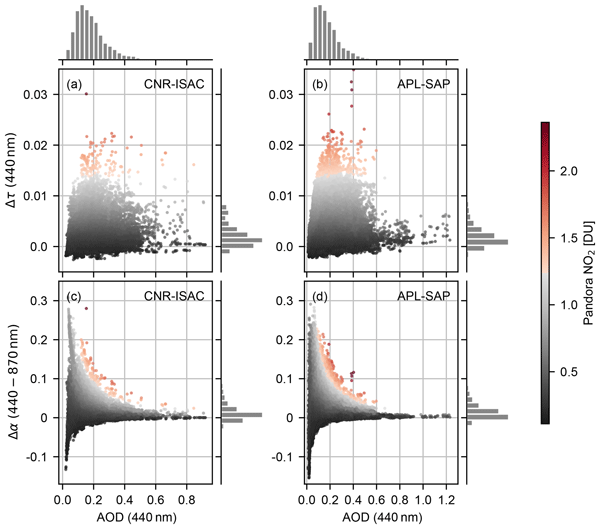
Theano Drosoglou, Ioannis-Panagiotis Raptis, Massimo Valeri, Stefano Casadio, Francesca Barnaba, Marcos Herreras-Giralda, Anton Lopatin, Oleg Dubovik, Gabriele Brizzi, Fabrizio Niro, Monica Campanelli, and Stelios Kazadzis
Atmos. Meas. Tech., 16, 2989–3014, https://doi.org/10.5194/amt-16-2989-2023, https://doi.org/10.5194/amt-16-2989-2023, 2023
Short summary
Short summary
Aerosol optical properties derived from sun photometers depend on the optical depth of trace gases absorbing solar radiation at specific spectral ranges. Various networks use satellite-based climatologies to account for this or neglect their effect. In this work, we evaluate the effect of NO2 absorption in aerosol retrievals from AERONET and SKYNET over two stations in Rome, Italy, with relatively high NO2 spatiotemporal variations, using NO2 data from the Pandora network and the TROPOMI sensor.
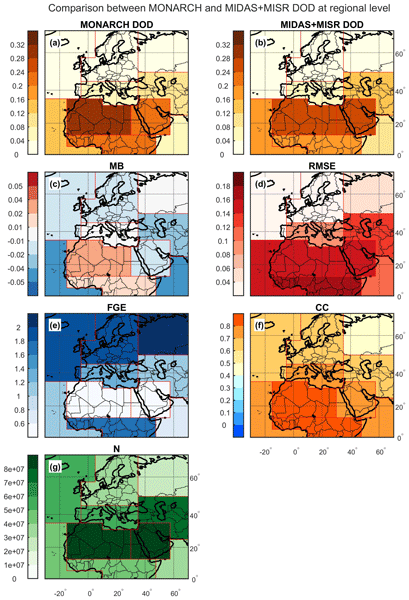
Michail Mytilinaios, Sara Basart, Sergio Ciamprone, Juan Cuesta, Claudio Dema, Enza Di Tomaso, Paola Formenti, Antonis Gkikas, Oriol Jorba, Ralph Kahn, Carlos Pérez García-Pando, Serena Trippetta, and Lucia Mona
Atmos. Chem. Phys., 23, 5487–5516, https://doi.org/10.5194/acp-23-5487-2023, https://doi.org/10.5194/acp-23-5487-2023, 2023
Short summary
Short summary
Multiscale Online Non-hydrostatic AtmospheRe CHemistry model (MONARCH) dust reanalysis provides a high-resolution 3D reconstruction of past dust conditions, allowing better quantification of climate and socioeconomic dust impacts. We assess the performance of the reanalysis needed to reproduce dust optical depth using dust-related products retrieved from satellite and ground-based observations and show that it reproduces the spatial distribution and seasonal variability of atmospheric dust well.
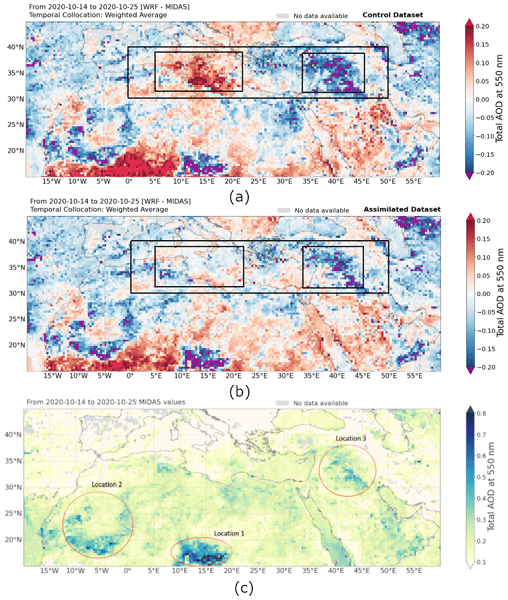
Pantelis Kiriakidis, Antonis Gkikas, Georgios Papangelis, Theodoros Christoudias, Jonilda Kushta, Emmanouil Proestakis, Anna Kampouri, Eleni Marinou, Eleni Drakaki, Angela Benedetti, Michael Rennie, Christian Retscher, Anne Grete Straume, Alexandru Dandocsi, Jean Sciare, and Vasilis Amiridis
Atmos. Chem. Phys., 23, 4391–4417, https://doi.org/10.5194/acp-23-4391-2023, https://doi.org/10.5194/acp-23-4391-2023, 2023
Short summary
Short summary
With the launch of the Aeolus satellite, higher-accuracy wind products became available. This research was carried out to validate the assimilated wind products by testing their effect on the WRF-Chem model predictive ability of dust processes. This was carried out for the eastern Mediterranean and Middle East region for two 2-month periods in autumn and spring 2020. The use of the assimilated products improved the dust forecasts of the autumn season (both quantitatively and qualitatively).
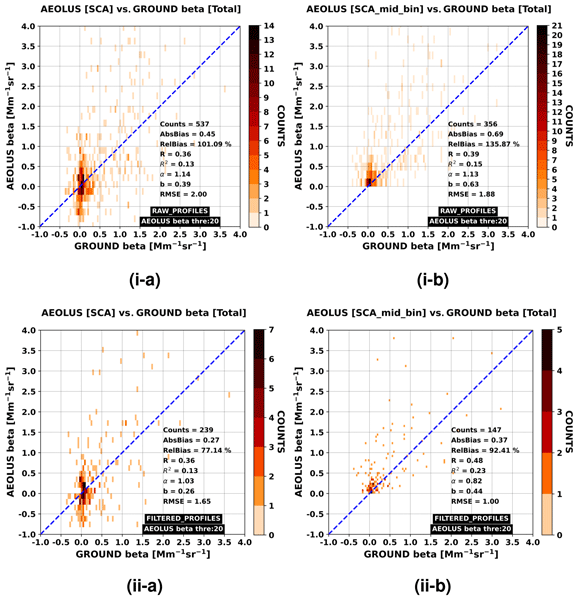
Antonis Gkikas, Anna Gialitaki, Ioannis Binietoglou, Eleni Marinou, Maria Tsichla, Nikolaos Siomos, Peristera Paschou, Anna Kampouri, Kalliopi Artemis Voudouri, Emmanouil Proestakis, Maria Mylonaki, Christina-Anna Papanikolaou, Konstantinos Michailidis, Holger Baars, Anne Grete Straume, Dimitris Balis, Alexandros Papayannis, Tomasso Parrinello, and Vassilis Amiridis
Atmos. Meas. Tech., 16, 1017–1042, https://doi.org/10.5194/amt-16-1017-2023, https://doi.org/10.5194/amt-16-1017-2023, 2023
Short summary
Short summary
We perform an assessment analysis of the Aeolus Standard Correct Algorithm (SCA) backscatter coefficient retrievals against reference observations acquired at three Greek lidar stations (Athens, Thessaloniki and Antikythera) of the PANACEA network. Overall, 43 cases are analysed, whereas specific aerosol scenarios in the vicinity of Antikythera island (SW Greece) are emphasised. All key Cal/Val aspects and recommendations, and the ongoing related activities, are thoroughly discussed.

Kyriakoula Papachristopoulou, Ioannis-Panagiotis Raptis, Antonis Gkikas, Ilias Fountoulakis, Akriti Masoom, and Stelios Kazadzis
Atmos. Chem. Phys., 22, 15703–15727, https://doi.org/10.5194/acp-22-15703-2022, https://doi.org/10.5194/acp-22-15703-2022, 2022
Short summary
Short summary
Megacities' air quality is determined by atmospheric aerosols. We focus on changes over the last two decades in the 81 largest cities, using satellite data. European and American cities have lower aerosol compared to African and Asian cities. For European, North American and East Asian cities, aerosols are decreasing over time, especially in China and the US. In the remaining cities, aerosol loads are increasing, particularly in India.
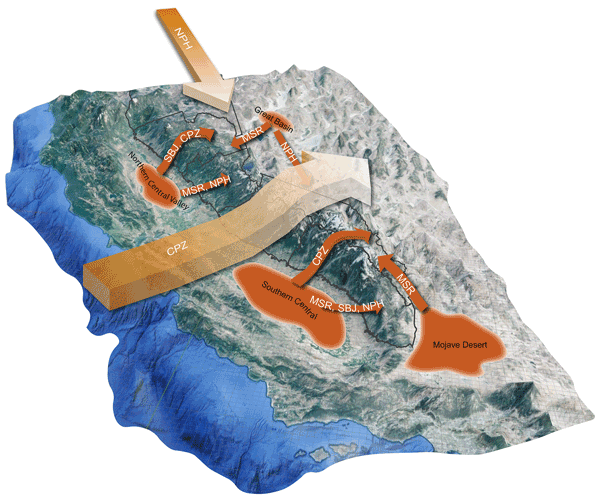
Huilin Huang, Yun Qian, Ye Liu, Cenlin He, Jianyu Zheng, Zhibo Zhang, and Antonis Gkikas
Atmos. Chem. Phys., 22, 15469–15488, https://doi.org/10.5194/acp-22-15469-2022, https://doi.org/10.5194/acp-22-15469-2022, 2022
Short summary
Short summary
Using a clustering method developed in the field of artificial neural networks, we identify four typical dust transport patterns across the Sierra Nevada, associated with the mesoscale and regional-scale wind circulations. Our results highlight the connection between dust transport and dominant weather patterns, which can be used to understand dust transport in a changing climate.
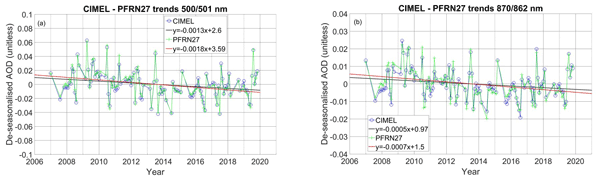
Angelos Karanikolas, Natalia Kouremeti, Julian Gröbner, Luca Egli, and Stelios Kazadzis
Atmos. Meas. Tech., 15, 5667–5680, https://doi.org/10.5194/amt-15-5667-2022, https://doi.org/10.5194/amt-15-5667-2022, 2022
Short summary
Short summary
The aim of this work is to investigate the limitations of calculating long-term trends of a parameter that quantifies the overall effect of atmospheric aerosols on the solar radiation. A main finding is that even instruments with good agreement between their observations can show significantly different linear trends. By calculating time-varying trends, the trend agreement is shown to improve. We also show that different methods of trend estimation can result in significant trend differences.
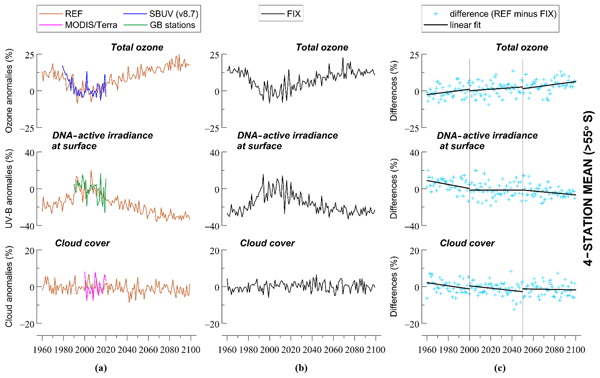
Kostas Eleftheratos, John Kapsomenakis, Ilias Fountoulakis, Christos S. Zerefos, Patrick Jöckel, Martin Dameris, Alkiviadis F. Bais, Germar Bernhard, Dimitra Kouklaki, Kleareti Tourpali, Scott Stierle, J. Ben Liley, Colette Brogniez, Frédérique Auriol, Henri Diémoz, Stana Simic, Irina Petropavlovskikh, Kaisa Lakkala, and Kostas Douvis
Atmos. Chem. Phys., 22, 12827–12855, https://doi.org/10.5194/acp-22-12827-2022, https://doi.org/10.5194/acp-22-12827-2022, 2022
Short summary
Short summary
We present the future evolution of DNA-active ultraviolet (UV) radiation in view of increasing greenhouse gases (GHGs) and decreasing ozone depleting substances (ODSs). It is shown that DNA-active UV radiation might increase after 2050 between 50° N–50° S due to GHG-induced reductions in clouds and ozone, something that is likely not to happen at high latitudes, where DNA-active UV radiation will continue its downward trend mainly due to stratospheric ozone recovery from the reduction in ODSs.

Eleni Drakaki, Vassilis Amiridis, Alexandra Tsekeri, Antonis Gkikas, Emmanouil Proestakis, Sotirios Mallios, Stavros Solomos, Christos Spyrou, Eleni Marinou, Claire L. Ryder, Demetri Bouris, and Petros Katsafados
Atmos. Chem. Phys., 22, 12727–12748, https://doi.org/10.5194/acp-22-12727-2022, https://doi.org/10.5194/acp-22-12727-2022, 2022
Short summary
Short summary
State-of-the-art atmospheric dust models have limitations in accounting for a realistic dust size distribution (emission, transport). We modify the parameterization of the mineral dust cycle by including particles with diameter >20 μm, as indicated by observations over deserts. Moreover, we investigate the effects of reduced settling velocities of dust particles. Model results are evaluated using airborne and spaceborne dust measurements above Cabo Verde.
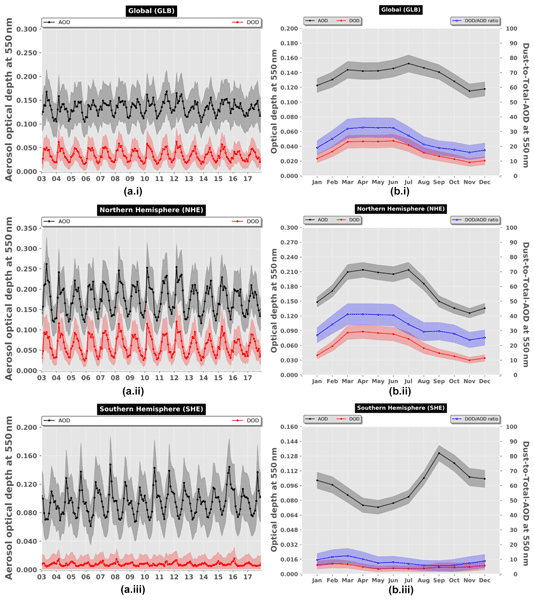
Antonis Gkikas, Emmanouil Proestakis, Vassilis Amiridis, Stelios Kazadzis, Enza Di Tomaso, Eleni Marinou, Nikos Hatzianastassiou, Jasper F. Kok, and Carlos Pérez García-Pando
Atmos. Chem. Phys., 22, 3553–3578, https://doi.org/10.5194/acp-22-3553-2022, https://doi.org/10.5194/acp-22-3553-2022, 2022
Short summary
Short summary
We present a comprehensive climatological analysis of dust optical depth (DOD) relying on the MIDAS dataset. MIDAS provides columnar mid-visible (550 nm) DOD at fine spatial resolution (0.1° × 0.1°) over a 15-year period (2003–2017). In the current study, the analysis is performed at various spatial (from regional to global) and temporal (from months to years) scales. More specifically, focus is given to specific regions hosting the major dust sources as well as downwind areas of the planet.
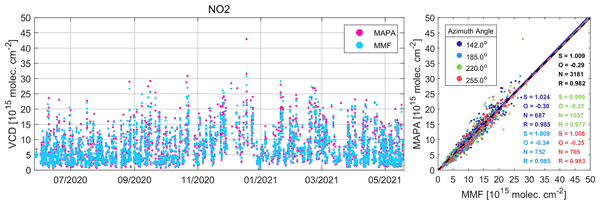
Dimitris Karagkiozidis, Martina Michaela Friedrich, Steffen Beirle, Alkiviadis Bais, François Hendrick, Kalliopi Artemis Voudouri, Ilias Fountoulakis, Angelos Karanikolas, Paraskevi Tzoumaka, Michel Van Roozendael, Dimitris Balis, and Thomas Wagner
Atmos. Meas. Tech., 15, 1269–1301, https://doi.org/10.5194/amt-15-1269-2022, https://doi.org/10.5194/amt-15-1269-2022, 2022
Short summary
Short summary
In this study we focus on the retrieval of aerosol, NO2, and HCHO vertical profiles from multi-axis differential optical absorption spectroscopy (MAX-DOAS) observations for the first time over Thessaloniki, Greece. We use two independent inversion algorithms for the profile retrievals. We evaluate their performance, we intercompare their results, and we validate their products with ancillary data, measured by other co-located reference instruments.
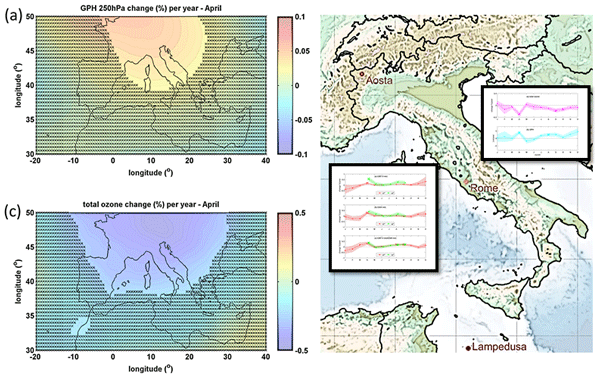
Ilias Fountoulakis, Henri Diémoz, Anna Maria Siani, Alcide di Sarra, Daniela Meloni, and Damiano M. Sferlazzo
Atmos. Chem. Phys., 21, 18689–18705, https://doi.org/10.5194/acp-21-18689-2021, https://doi.org/10.5194/acp-21-18689-2021, 2021
Short summary
Short summary
The variability and trends of solar spectral UV irradiance have been studied for the periods 1996–2020 (for Rome) and 2006–2020 (for Lampedusa, Rome, and Aosta) with respect to the variability and trends of total ozone and geopotential height. Analyses revealed increasing UV in particular months at all sites, possibly due to decreasing lower-stratospheric ozone (at Rome in 1996–2020) and decreasing attenuation by aerosols and/or clouds (at all stations in 2006–2020).

Stavros-Andreas Logothetis, Vasileios Salamalikis, Antonis Gkikas, Stelios Kazadzis, Vassilis Amiridis, and Andreas Kazantzidis
Atmos. Chem. Phys., 21, 16499–16529, https://doi.org/10.5194/acp-21-16499-2021, https://doi.org/10.5194/acp-21-16499-2021, 2021
Short summary
Short summary
This study investigates the temporal trends of dust optical depth (DOD; 550 nm) on global, regional and seasonal scales over a 15-year period (2003–2017) using the MIDAS (ModIs Dust AeroSol) dataset. The findings of this study revealed that the DOD was increased across the central Sahara and the Arabian Peninsula, with opposite trends over the eastern and western Sahara, the Thar and Gobi deserts, in the Bodélé Depression, and in the southern Mediterranean.
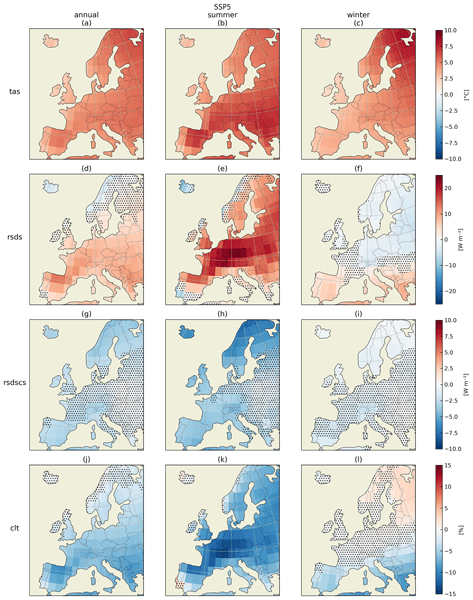
Xinyuan Hou, Martin Wild, Doris Folini, Stelios Kazadzis, and Jan Wohland
Earth Syst. Dynam., 12, 1099–1113, https://doi.org/10.5194/esd-12-1099-2021, https://doi.org/10.5194/esd-12-1099-2021, 2021
Short summary
Short summary
Solar photovoltaics (PV) matters for the carbon neutrality goal. We use climate scenarios to quantify climate risk for PV in Europe and find higher PV potential. The seasonal cycle of PV generation changes in most places. We find an increase in the spatial correlations of daily PV production, implying that PV power balancing through redistribution will be more difficult in the future. Thus, changes in the spatiotemporal structure of PV generation should be included in power system design.
Cited articles
Anderson, G. P., Clough, S. A., Kneizys, F. X., Chetwynd, J. H., and Shettle, E. P.: AFGL atmospheric constituent profiles (0.120 km), Air Force Geophysics Lab Hanscom AFB MA, https://apps.dtic.mil/sti/tr/pdf/ADA175173.pdf (last access: 16 February 2026), 1986.
Anderson, K. S., Hansen, C. W., Holmgren, W. F., Jensen, A. R., Mikofski, M. A., and Driesse, A.: pvlib python: 2023 project update, J. Open Source Softw., 8, 5994, https://doi.org/10.21105/joss.05994, 2023.
Ångström, A.: On the Atmospheric Transmission of Sun Radiation and on Dust in the Air, Geografiska Annaler, 11, 156–166, https://doi.org/10.1080/20014422.1929.11880498, 1929.
Barreto, Á., García, R. D., Guirado-Fuentes, C., Cuevas, E., Almansa, A. F., Milford, C., Toledano, C., Expósito, F. J., Díaz, J. P., and León-Luis, S. F.: Aerosol characterisation in the subtropical eastern North Atlantic region using long-term AERONET measurements, Atmos. Chem. Phys., 22, 11105–11124, https://doi.org/10.5194/acp-22-11105-2022, 2022.
Blaga, R., Mares, O., Paulescu, E., Boata, R., Sabadus, A., Hategan, S.-M., Calinoiu, D., Stefu, N., and Paulescu, M.: Diffuse fraction as a tool for exploring the sensitivity of parametric clear-sky models to changing aerosol conditions, Solar Energy, 277, 112731, https://doi.org/10.1016/j.solener.2024.112731, 2024.
Blanc, P., Remund, J., and Vallance, L.: Short-term solar power forecasting based on satellite images, in: Renewable Energy Forecasting, Elsevier, 179–198, https://doi.org/10.1016/B978-0-08-100504-0.00006-8, 2017.
Boland, J., Scott, L., and Luther, M.: Modelling the diffuse fraction of global solar radiation on a horizontal surface, Environmetrics, 12, 103–116, https://doi.org/10.1002/1099-095X(200103)12:2<103::AID-ENV447>3.0.CO;2-2, 2001.
Buras, R., Dowling, T., and Emde, C.: New secondary-scattering correction in DISORT with increased efficiency for forward scattering, J. Quant. Spectrosc. Radiat. Transf., 112, 2028–2034, https://doi.org/10.1016/j.jqsrt.2011.03.019, 2011.
Cañadillas-Ramallo, D., Moutaoikil, A., Shephard, L. E., and Guerrero-Lemus, R.: The influence of extreme dust events in the current and future 100 % renewable power scenarios in Tenerife, Renew. Energy, 184, 948–959, https://doi.org/10.1016/j.renene.2021.12.013, 2022.
Copernicus Atmospheric Monitoring Service (CAMS): CAMS solar radiation time-series, Copernicus Atmosphere Monitoring Service (CAMS) Atmosphere Data Store [data set], https://doi.org/10.24381/5cab0912, 2020.
Cuevas, E., Romero-Campos, P. M., Kouremeti, N., Kazadzis, S., Räisänen, P., García, R. D., Barreto, A., Guirado-Fuentes, C., Ramos, R., Toledano, C., Almansa, F., and Gröbner, J.: Aerosol optical depth comparison between GAW-PFR and AERONET-Cimel radiometers from long-term (2005–2015) 1 min synchronous measurements, Atmos. Meas. Tech., 12, 4309–4337, https://doi.org/10.5194/amt-12-4309-2019, 2019.
Driemel, A., Augustine, J., Behrens, K., Colle, S., Cox, C., Cuevas-Agulló, E., Denn, F. M., Duprat, T., Fukuda, M., Grobe, H., Haeffelin, M., Hodges, G., Hyett, N., Ijima, O., Kallis, A., Knap, W., Kustov, V., Long, C. N., Longenecker, D., Lupi, A., Maturilli, M., Mimouni, M., Ntsangwane, L., Ogihara, H., Olano, X., Olefs, M., Omori, M., Passamani, L., Pereira, E. B., Schmithüsen, H., Schumacher, S., Sieger, R., Tamlyn, J., Vogt, R., Vuilleumier, L., Xia, X., Ohmura, A., and König-Langlo, G.: Baseline Surface Radiation Network (BSRN): structure and data description (1992–2017), Earth Syst. Sci. Data, 10, 1491–1501, https://doi.org/10.5194/essd-10-1491-2018, 2018.
Dubey, S., Sarvaiya, J. N., and Seshadri, B.: Temperature Dependent Photovoltaic (PV) Efficiency and Its Effect on PV Production in the World – A Review, Energy Procedia, 33, 311–321, https://doi.org/10.1016/j.egypro.2013.05.072, 2013.
Dubovik, O. and King, M. D.: A flexible inversion algorithm for retrieval of aerosol optical properties from Sun and sky radiance measurements, Journal of Geophysical Research: Atmospheres, 105, 20673–20696, https://doi.org/10.1029/2000JD900282, 2000.
Dubovik, O., Holben, B., Eck, T. F., Smirnov, A., Kaufman, Y. J., King, M. D., Tanré, D., and Slutsker, I.: Variability of Absorption and Optical Properties of Key Aerosol Types Observed in Worldwide Locations, J. Atmos. Sci., 59, 590–608, https://doi.org/10.1175/1520-0469(2002)059<0590:VOAAOP>2.0.CO;2, 2002.
Edenhofer, O., Pichs-Madruga, R., Sokona, Y., Seyboth, K., Matschoss, P., Kadner, S., Zwickel, T., Eickemeier, P., Hansen, G., and Schlömer, S.: IPCC special report on renewable energy sources and climate change mitigation, Prepared By Working Group III of the Intergovernmental Panel on Climate Change, Cambridge University Press, Cambridge, UK, ISBN 978-1-107- 02340-6, 2011.
Emde, C., Buras-Schnell, R., Kylling, A., Mayer, B., Gasteiger, J., Hamann, U., Kylling, J., Richter, B., Pause, C., Dowling, T., and Bugliaro, L.: The libRadtran software package for radiative transfer calculations (version 2.0.1), Geosci. Model Dev., 9, 1647–1672, https://doi.org/10.5194/gmd-9-1647-2016, 2016.
Faid, A., Smara, Y., Caselles, V., and Khireddine, A.: Evaluation of the Saharan Aerosol Impact on Solar Radiation over the Tamanrasset Area, Algeria, IJARET, 3, 24–32 pp., https://www.researchgate.net/publication/234312286_Models_of_aerosols_clouds_and_precipitation_for_atmospheric_propagation_studies (last access: 16 February 2026), 2012.
Fountoulakis, I., Kosmopoulos, P., Papachristopoulou, K., Raptis, I.-P., Mamouri, R.-E., Nisantzi, A., Gkikas, A., Witthuhn, J., Bley, S., Moustaka, A., Buehl, J., Seifert, P., Hadjimitsis, D. G., Kontoes, C., and Kazadzis, S.: Effects of Aerosols and Clouds on the Levels of Surface Solar Radiation and Solar Energy in Cyprus, Remote Sens. (Basel), 13, 2319, https://doi.org/10.3390/rs13122319, 2021.
Fountoulakis, I., Papachristopoulou, K., Proestakis, E., Amiridis, V., Kontoes, C., and Kazadzis, S.: Effect of Aerosol Vertical Distribution on the Modeling of Solar Radiation, Remote Sens. (Basel), 14, 1143, https://doi.org/10.3390/rs14051143, 2022.
Giles, D. M., Sinyuk, A., Sorokin, M. G., Schafer, J. S., Smirnov, A., Slutsker, I., Eck, T. F., Holben, B. N., Lewis, J. R., Campbell, J. R., Welton, E. J., Korkin, S. V., and Lyapustin, A. I.: Advancements in the Aerosol Robotic Network (AERONET) Version 3 database – automated near-real-time quality control algorithm with improved cloud screening for Sun photometer aerosol optical depth (AOD) measurements, Atmos. Meas. Tech., 12, 169–209, https://doi.org/10.5194/amt-12-169-2019, 2019.
GSEE: Climate Data Interface documentation, GSEE, https://gsee.readthedocs.io/en/latest/climatedata-interface/ (last access: 6 February 2026), 2026.
Holben, B. N., Eck, T. F., Slutsker, I., Tanré, D., Buis, J. P., Setzer, A., Vermote, E., Reagan, J. A., Kaufman, Y. J., Nakajima, T., Lavenu, F., Jankowiak, I., and Smirnov, A.: AERONET – A Federated Instrument Network and Data Archive for Aerosol Characterization, Remote Sens. Environ., 66, 1–16, https://doi.org/10.1016/S0034-4257(98)00031-5, 1998.
Hou, X., Wild, M., Folini, D., Kazadzis, S., and Wohland, J.: Climate change impacts on solar power generation and its spatial variability in Europe based on CMIP6, Earth Syst. Dynam., 12, 1099–1113, https://doi.org/10.5194/esd-12-1099-2021, 2021.
Huld, T., Gottschalg, R., Beyer, H. G., and Topič, M.: Mapping the performance of PV modules, effects of module type and data averaging, Solar Energy, 84, 324–338, https://doi.org/10.1016/j.solener.2009.12.002, 2010.
IPCC: Summary for Policymakers, in: Impacts, Adaptation and Vulnerability, Contribution of Working Group II to the Sixth Assessment Report of the Intergovernmental Panel on Climate Change, edited by: Pörtner, H.-O., Roberts, D. C., Tignor, M., Poloczanska, E. S., Mintenbeck, K., Alegría, A., Craig, M., Langsdorf, S., Löschke, S., Möller, V., Okem, A., and Rama, B., Climate Change 2022, Cambridge University Press, Cambridge, UK and New York, NY, USA, 3–33, https://doi.org/10.1017/9781009325844.001, 2022.
International Renewable Energy Agency (IRENA): Global LCOE and Auction Values, IRENA, https://www.irena.org/Data/View-data-by-topic/Costs/Global-LCOE-and-Auction-values (last access: 6 February 2026), 2026.
Jacovides, C. P., Tymvios, F. S., Assimakopoulos, V. D., and Kaltsounides, N. A.: Comparative study of various correlations in estimating hourly diffuse fraction of global solar radiation, Renew. Energy, 31, 2492–2504, https://doi.org/10.1016/j.renene.2005.11.009, 2006.
Kakran, S., Rathore, J. S., Sidhu, A., and Kumar, A.: Solar energy advances and CO2 emissions: A comparative review of leading nations' path to sustainable future, J. Clean. Prod., 475, 143598, https://doi.org/10.1016/j.jclepro.2024.143598, 2024.
Kato, S., Ackerman, T. P., Mather, J. H., and Clothiaux, E. E.: The k-distribution method and correlated-k approximation for a shortwave radiative transfer model, J. Quant. Spectrosc. Radiat. Transf., 62, 109–121, https://doi.org/10.1016/S0022-4073(98)00075-2, 1999.
Kazantzidis, A., Tzoumanikas, P., Blanc, P., Massip, P., Wilbert, S., and Ramirez-Santigosa, L.: Short-term forecasting based on all-sky cameras, in: Renewable Energy Forecasting, Elsevier, 153–178, https://doi.org/10.1016/B978-0-08-100504-0.00005-6, 2017.
Kosmopoulos, P., Kazadzis, S., El-Askary, H., Taylor, M., Gkikas, A., Proestakis, E., Kontoes, C., and El-Khayat, M.: Earth-Observation-Based Estimation and Forecasting of Particulate Matter Impact on Solar Energy in Egypt, Remote Sens. (Basel), 10, 1870, https://doi.org/10.3390/rs10121870, 2018.
Kouklaki, D., Kazadzis, S., Raptis, I.-P., Papachristopoulou, K., Fountoulakis, I., and Eleftheratos, K.: Photovoltaic Spectral Responsivity and Efficiency under Different Aerosol Conditions, Energies (Basel), 16, 6644, https://doi.org/10.3390/en16186644, 2023.
Lauret, P., Boland, J., and Ridley, B.: Bayesian statistical analysis applied to solar radiation modelling, Renew. Energy, 49, 124–127, https://doi.org/10.1016/j.renene.2012.01.049, 2013.
Liu, B. Y. H. and Jordan, R. C.: The interrelationship and characteristic distribution of direct, diffuse and total solar radiation, Solar Energy, 4, 1–19, https://doi.org/10.1016/0038-092X(60)90062-1, 1960.
Logothetis, S.-A., Salamalikis, V., and Kazantzidis, A.: Aerosol classification in Europe, Middle East, North Africa and Arabian Peninsula based on AERONET Version 3, Atmos. Res., 239, 104893, https://doi.org/10.1016/j.atmosres.2020.104893, 2020.
Long, C. N. and Dutton, E. G.: BSRN Global Network recommended QC tests, V2.x, https://epic.awi.de/id/eprint/30083/1/BSRN_recommended_QC_tests_V2.pdf (last access: 6 February 2026), 2010.
Mayer, B. and Kylling, A.: Technical note: The libRadtran software package for radiative transfer calculations – description and examples of use, Atmos. Chem. Phys., 5, 1855–1877, https://doi.org/10.5194/acp-5-1855-2005, 2005.
McMahan, A. C., Grover, C. N., and Vignola, F. E.: Evaluation of Resource Risk in Solar-Project Financing, in: Solar Energy Forecasting and Resource Assessment, Elsevier, 81–95, https://doi.org/10.1016/B978-0-12-397177-7.00004-8, 2013.
Owusu, P. A. and Asumadu-Sarkodie, S.: A review of renewable energy sources, sustainability issues and climate change mitigation, Cogent Eng., 3, 1167990, https://doi.org/10.1080/23311916.2016.1167990, 2016.
Papachristopoulou, K., Fountoulakis, I., Gkikas, A., Kosmopoulos, P. G., Nastos, P. T., Hatzaki, M., and Kazadzis, S.: 15-Year Analysis of Direct Effects of Total and Dust Aerosols in Solar Radiation/Energy over the Mediterranean Basin, Remote Sens. (Basel), 14, 1535, https://doi.org/10.3390/rs14071535, 2022.
Papachristopoulou, K., Fountoulakis, I., Bais, A. F., Psiloglou, B. E., Papadimitriou, N., Raptis, I.-P., Kazantzidis, A., Kontoes, C., Hatzaki, M., and Kazadzis, S.: Effects of clouds and aerosols on downwelling surface solar irradiance nowcasting and short-term forecasting, Atmos. Meas. Tech., 17, 1851–1877, https://doi.org/10.5194/amt-17-1851-2024, 2024.
Paulescu, E. and Blaga, R.: A simple and reliable empirical model with two predictors for estimating 1-minute diffuse fraction, Solar Energy, 180, 75–84, https://doi.org/10.1016/j.solener.2019.01.029, 2019.
Pedro, H. T. C., Inman, R. H., and Coimbra, C. F. M.: Mathematical methods for optimized solar forecasting, in: Renewable Energy Forecasting, Elsevier, 111–152, https://doi.org/10.1016/B978-0-08-100504-0.00004-4, 2017.
Pfenninger, S. and Staffell, I.: Long-term patterns of European PV output using 30 years of validated hourly reanalysis and satellite data, Energy, 114, 1251–1265, https://doi.org/10.1016/j.energy.2016.08.060, 2016.
Qu, Z., Oumbe, A., Blanc, P., Espinar, B., Gesell, G., Gschwind, B., Klüser, L., Lefèvre, M., Saboret, L., Schroedter-Homscheidt, M., and Wald, L.: Fast radiative transfer parameterisation for assessing the surface solar irradiance: The Heliosat 4 method, Meteorologische Zeitschrift, 26, 33–57, https://doi.org/10.1127/metz/2016/0781, 2017.
Raptis, I.-P., Kazadzis, S., Fountoulakis, I., Papachristopoulou, K., Kouklaki, D., Psiloglou, B. E., Kazantzidis, A., Benetatos, C., Papadimitriou, N., and Eleftheratos, K.: Evaluation of the Solar Energy Nowcasting System (SENSE) during a 12-Months Intensive Measurement Campaign in Athens, Greece, Energies (Basel), 16, 5361, https://doi.org/10.3390/en16145361, 2023.
Ridley, B., Boland, J., and Lauret, P.: Modelling of diffuse solar fraction with multiple predictors, Renew. Energy, 35, 478–483, https://doi.org/10.1016/j.renene.2009.07.018, 2010.
Schroedter-Homscheidt, M., Azam, F., Betcke, J., Hanrieder, N., Lefèvre, M., Saboret, L., and Saint-Drenan, Y. M.: Surface solar irradiation retrieval from MSG/SEVIRI based on APOLLO Next Generation and HELIOSAT 4 methods, Meteorologische Zeitschrift, 31, 455–476, https://doi.org/10.1127/metz/2022/1132, 2022.
Shettle, E. P.: Models of aerosols, clouds and precipitation for atmospheric propagation studies, paper presented at Conference on Atmospheric Propagation in the UV, Visible, IR and MM-Region and Related System Aspects, NATO Adv. Group for Aerosp, Res. and Dev., Copenhagen, https://www.researchgate.net/publication/234312286_Models_of_aerosols_clouds_and_precipitation_for_atmospheric_propagation_studies (last access: 16 February 2026), 1989.
Stoffel, T.: Terms and Definitions, in: Solar Energy Forecasting and Resource Assessment, Elsevier, 1–19, https://doi.org/10.1016/B978-0-12-397177-7.00001-2, 2013.
Toledano, C., González, R., Fuertes, D., Cuevas, E., Eck, T. F., Kazadzis, S., Kouremeti, N., Gröbner, J., Goloub, P., Blarel, L., Román, R., Barreto, Á., Berjón, A., Holben, B. N., and Cachorro, V. E.: Assessment of Sun photometer Langley calibration at the high-elevation sites Mauna Loa and Izaña, Atmos. Chem. Phys., 18, 14555–14567, https://doi.org/10.5194/acp-18-14555-2018, 2018.
WMO: Guide to instruments and methods of observation (WMO-No. 8), https://library.wmo.int/doc_num.php?explnum_id=57838 (last access: 1 May 2025), 2021.
Yang, D.: SolarData package update v1.1: R functions for easy access of Baseline Surface Radiation Network (BSRN), Solar Energy, 188, 970–975, https://doi.org/10.1016/j.solener.2019.05.068, 2019.
Short summary
We perform Photovoltaic (PV) power simulations with the Global Solar Energy Estimator and assess the uncertainty linked to the use of a diffuse fraction model. Validation is conducted under diverse atmospheric conditions, including cloudiness and aerosols, using input data from ground-based measurements and the Copernicus Atmosphere Monitoring Service (CAMS). Results indicate that simulations are reliable under most conditions, with overestimations occurring during intense dust events.
We perform Photovoltaic (PV) power simulations with the Global Solar Energy Estimator and assess...


