
Articles | Volume 19, issue 19
https://doi.org/10.5194/amt-19-6447-2026
© Author(s) 2026. This work is distributed under
the Creative Commons Attribution 4.0 License.
the Creative Commons Attribution 4.0 License.
Special issue:
https://doi.org/10.5194/amt-19-6447-2026
© Author(s) 2026. This work is distributed under
the Creative Commons Attribution 4.0 License.
the Creative Commons Attribution 4.0 License.
Research article
| 
14 Oct 2026
Research article |
| 14 Oct 2026
| 14 Oct 2026
Spectral signatures of zenith sky radiance from surface-based sky radiometers: implications for clear- and cloudy-sky detection

Department of Green Technology, Faculty of Science and Engineering, Soka University, Hachioji, Tokyo, Japan
Hitoshi Irie
Center for Environmental Remote Sensing, Chiba University, Chiba, Japan
Hiroshi Kobayashi
Department of Environmental Sciences, Faculty of Life and Environmental Sciences, University of Yamanashi, Yamanashi, Japan
Isamu Morino
Earth System Division, National Institute for Environmental Studies, Tsukuba, Japan
Yoshitaka Jin
Earth System Division, National Institute for Environmental Studies, Tsukuba, Japan
Tadahiro Hayasaka
Graduate School of Science, Tohoku University, Sendai, Japan
Hironobu Iwabuchi
Center for Atmospheric and Oceanic Studies, Graduate School of Science, Tohoku University, Sendai, Japan
Tamio Takamura
Center for Environmental Remote Sensing, Chiba University, Chiba, Japan
Yoshiki Takayama
Graduate School of Environment and Information Sciences, Yokohama National University, Yokohama, Japan
Related authors
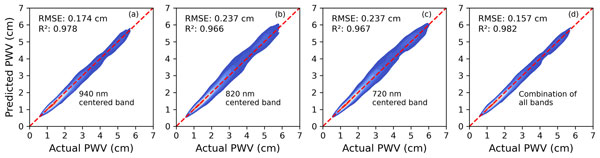
Pradeep Khatri, Tamio Takamura, and Hitoshi Irie
Atmos. Meas. Tech., 19, 231–247, https://doi.org/10.5194/amt-19-231-2026, https://doi.org/10.5194/amt-19-231-2026, 2026
Short summary
Short summary
Precipitable water vapor (PWV) is important for various climate and weather studies, but difficult to monitor under various weather conditions. This study shows that surface-based spectral irradiance combined with deep neural network models can accurately estimate PWV under various atmospheric conditions. Models using global, direct, and diffuse irradiances performed best, while even global-only data gave reliable results.
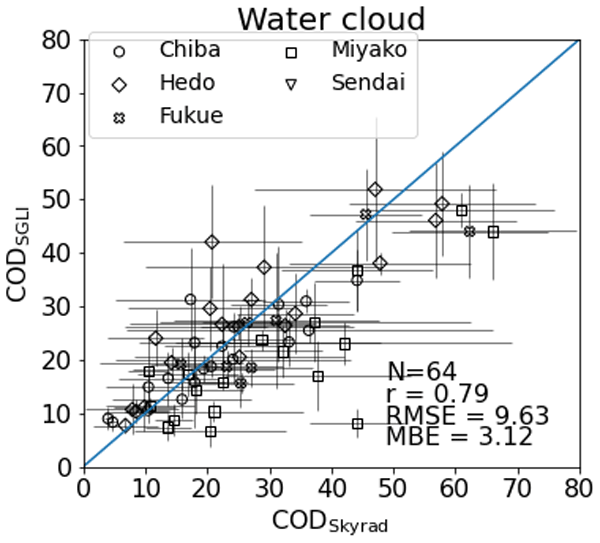
Pradeep Khatri, Tadahiro Hayasaka, Hitoshi Irie, Husi Letu, Takashi Y. Nakajima, Hiroshi Ishimoto, and Tamio Takamura
Atmos. Meas. Tech., 15, 1967–1982, https://doi.org/10.5194/amt-15-1967-2022, https://doi.org/10.5194/amt-15-1967-2022, 2022
Short summary
Short summary
Cloud properties observed by the Second-generation Global Imager (SGLI) onboard the Global Change Observation Mission – Climate (GCOM-C) satellite are evaluated using surface observation data. The study finds that SGLI-observed cloud properties are qualitative enough, although water cloud properties are suggested to be more qualitative, and both water and ice cloud properties can reproduce surface irradiance quite satisfactorily. Thus, SGLI cloud products are very useful for different studies.
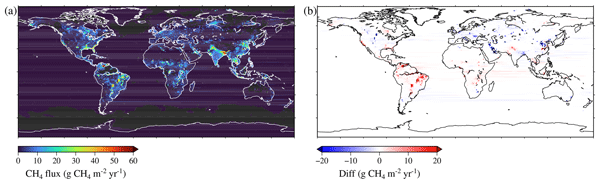
Fenjuan Wang, Shamil Maksyutov, Rajesh Janardanan, Dmitry A. Belikov, Prabir K. Patra, Ruosi Liang, Yuzhong Zhang, Ge Ren, Hong Lin, Nicole Montenegro, Antoine Berchet, Marielle Saunois, Adrien Martinez, Sara Hyvärinen, Aki Tsuruta, Samuel Takele Kenea, Miao Liang, Xin Lan, Yukio Terao, M. Kawser Ahmed, Manish Naja, Akihiko Ito, Isamu Morino, Yukio Yoshida, Yu Someya, Tazu Saeki, and Tsuneo Matsunaga
Earth Syst. Sci. Data Discuss., https://doi.org/10.5194/essd-2026-420, https://doi.org/10.5194/essd-2026-420, 2026
Preprint under review for ESSD
Short summary
Short summary
Methane is a potent greenhouse gas driving climate change, yet Asian emissions remain highly uncertain. We conducted the first Methane Inversion inter-Comparison for Asia (MICA) combining seven models to estimate methane across Asia from 2010 to 2021 using satellite and ground data. We found that emissions are generally lower than prior inventories, though some countries underreport. This study provides a comprehensive, transparent dataset to quantify regional methane budgets across Asia.
Makoto Saito, Yosuke Niwa, Yukio Yoshida, Hiroshi Suto, Kei Shiomi, Akihide Kamei, Fumie Kataoka, Isamu Morino, Hibiki M. Noda, Hirofumi Ohyama, Tazu Saeki, Yu Someya, Hisashi Yashiro, and Tsuneo Matsunaga
Earth Syst. Sci. Data, 18, 6565–6588, https://doi.org/10.5194/essd-18-6565-2026, https://doi.org/10.5194/essd-18-6565-2026, 2026
Short summary
Short summary
This study evaluates the ability of the GOSAT‑2 satellite to observe atmospheric methane and estimate global emissions. Using a global analysis, we show that GOSAT‑2 provides wider coverage than earlier missions and produces emission estimates consistent with independent references. The results demonstrate that satellite data offer useful information on methane sources, especially in regions with few ground measurements.
Hayoung Park, Sujong Jeong, Jaewon Joo, Dong Yeong Chang, Yu-Ri Lee, Hyuckjae Lee, Jueun Kim, Jaewon Shin, Jonghyuk Lee, Jaemin Hong, Jae Hyun Lim, Donghee Kim, Isamu Morino, Matthias M. Frey, Gwangju Moon, Hyojin Eom, Sumin Kim, Sunran Lee, Jungho Yu, and Kyucheol Shin
EGUsphere, https://doi.org/10.5194/egusphere-2026-3755, https://doi.org/10.5194/egusphere-2026-3755, 2026
This preprint is open for discussion and under review for Atmospheric Chemistry and Physics (ACP).
Short summary
Short summary
This study analyzed greenhouse gas emissions from one of South Korea’s largest petrochemical complexes using ground, mobile, aircraft, and satellite measurements. The results revealed higher emissions, including methane leaks, than what was reported in existing inventory estimates. By integrating different types of observations, this study shows a more accurate way to measure industrial emissions and provides information that can support better emissions reporting and climate action.
Robert J. Parker, Michael P. Cartwright, Dan Orr, Lakshmi N. Bharathan, Neil Humpage, Alex J. Webb, Peter Somkuti, Hartmut Boesch, Antonio Di Noia, Hiroshi Suto, Matthias Buschmann, Nicholas M. Deutscher, David W. T. Griffith, Frank Hase, Rigel Kivi, Erin McGee, Isamu Morino, Hirofumi Ohyama, Christof Petri, John Robinson, Coleen M. Roehl, Mahesh Kumar Sha, Kei Shiomi, Kimberly Strong, Ralf Sussmann, Yao Té, Voltaire A. Velazco, Mihalis Vrekoussis, Wei Wang, Thorsten Warneke, Damien Weidmann, Debra Wunch, and Minqiang Zhou
Earth Syst. Sci. Data Discuss., https://doi.org/10.5194/essd-2026-625, https://doi.org/10.5194/essd-2026-625, 2026
Preprint under review for ESSD
Short summary
Short summary
Methane is a powerful greenhouse gas and its concentration in the atmosphere is rising rapidly. We present a new record of atmospheric methane measured from space by the Japanese GOSAT-2 satellite, covering 2019 to 2025. The measurements are processed identically to those from its predecessor GOSAT and checked against ground-based instruments around the world. Together the two satellites provide a continuous 17-year record that helps track where methane comes from and how quickly it is changing.
Beatriz Herrera, Enrico Dammers, Martine De Maziere, Omaira Garcia, Michel Grutter, James W. Hannigan, Dylan B. A. Jones, Nicholas Jones, Emmanuel Mahieu, Maria Makarova, Kazuyuki Miyazaki, Isamu Morino, Isao Murata, Ivan Ortega, Mathias Palm, Anatoly Poverovskii, Takashi Sekiya, Dan Smale, Hannah Sill, Wolfgang Stremme, Ralf Sussmann, Geoffrey Toon, Corinne Vigouroux, Wei Wang, Tyler Wizenberg, and Kimberly Strong
EGUsphere, https://doi.org/10.5194/egusphere-2026-3138, https://doi.org/10.5194/egusphere-2026-3138, 2026
Short summary
Short summary
This work investigates how atmospheric ammonia changes over time using long-term observations and simulations at locations around the world. While its main sources are related to agriculture, wildfires, vehicles, and volcanoes also contribute. The results show that ammonia levels vary strongly during the day and across seasons, and are rising at most locations. These findings improve our understanding of air pollution and its impacts.
Yueming Cheng, Tie Dai, Daisuke Goto, Keiya Yumimoto, Tomoaki Nishizawa, Rei Kudo, Min Zhao, Akiko Higurashi, Yoshitaka Jin, Atsushi Shimizu, Haoran Peng, Guangyu Shi, and Teruyuki Nakajima
EGUsphere, https://doi.org/10.5194/egusphere-2026-2340, https://doi.org/10.5194/egusphere-2026-2340, 2026
Short summary
Short summary
To understand how air pollution affects climate, we must know where different particles reside in the sky. We combined satellite lidar measurements of specific particle types with a numerical model to build a three-dimensional map of pollution over East Asia. Our method successfully located hidden layers of heat-absorbing soot high in the atmosphere that previous models missed. This greatly improves our ability to calculate how these particles trap sunlight and alter regional temperatures.
Mizuo Kajino, Narihiro Orikasa, Rei Kudo, Atsushi Shimizu, Tomoaki Nishizawa, Yoshitaka Jin, Kazuo Osada, Satoko Kayaba, Tomoki Kajikawa, Rio Ishikawa, and Keiya Yumimoto
EGUsphere, https://doi.org/10.5194/egusphere-2026-1666, https://doi.org/10.5194/egusphere-2026-1666, 2026
This preprint is open for discussion and under review for Geoscientific Model Development (GMD).
Short summary
Short summary
Aerosol size distribution is important for understanding the climate impacts of aerosols; however, it is difficult to validate modeled size distributions. This study introduces a new method that compares physical variables, such as cloud condensation nuclei and light extinction coefficients, derived from size distribution measurements. Using data from Tsukuba, Japan, the method shows that the new model (v2.0) improves predictions of aerosol size distribution by about 17% compared to v1.0.
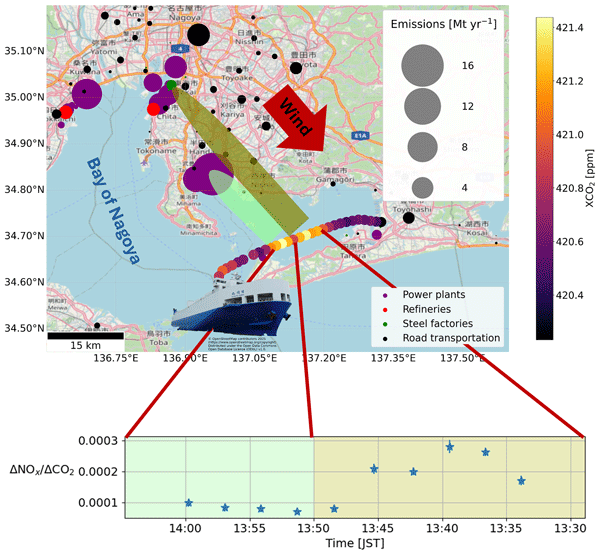
Vincent Enders, Astrid Müller, Matthias Max Frey, Frank Hase, Ralph Kleinschek, Marvin Knapp, Benedikt Löw, Isamu Morino, Shin-Ichiro Nakaoka, Hideki Nara, Hiroshi Tanimoto, Sanam N. Vardag, Karolin Voss, and André Butz
Atmos. Meas. Tech., 19, 2633–2655, https://doi.org/10.5194/amt-19-2633-2026, https://doi.org/10.5194/amt-19-2633-2026, 2026
Short summary
Short summary
We have deployed two spectrometers on a ship traveling along the coast of Japan. By that, we were able to repeatedly measure the greenhouse gas and air pollutant emissions of power plants, large industrial facilities, and cities. Using the ratios between the different gases, we are able to identify sources based on their unique signature. In addition, we are able to show that spectrometers can be operated on a ship, while still fulfilling the high standards of land-based observation networks.
Bavo Langerock, Minqiang Zhou, Martine De Mazière, Mahesh Kumar Sha, Filip Desmet, Bart Dils, Corinne Vigouroux, Rigel Kivi, Isamu Morino, Mathias Palm, Gopala Krishna Darbha, Soumik Banerjee, Sujata Ray, and Mohmmed Talib
EGUsphere, https://doi.org/10.5194/egusphere-2026-1890, https://doi.org/10.5194/egusphere-2026-1890, 2026
This preprint is open for discussion and under review for Atmospheric Measurement Techniques (AMT).
Short summary
Short summary
This work describes an algorithm to correct measurements obtained from Fourier-Transform Infrared spectrometers (FTIR) for nonlinear detector response. The method is demonstrated for remote sensing observational networks for atmospheric gas products (NDACC, TCCON and COCCON). Diagnostic metrics are introduced and have the potential to characterize the cause of the underlying nonlinearity (saturation or optical misalignment). The algorithm is made available in python.
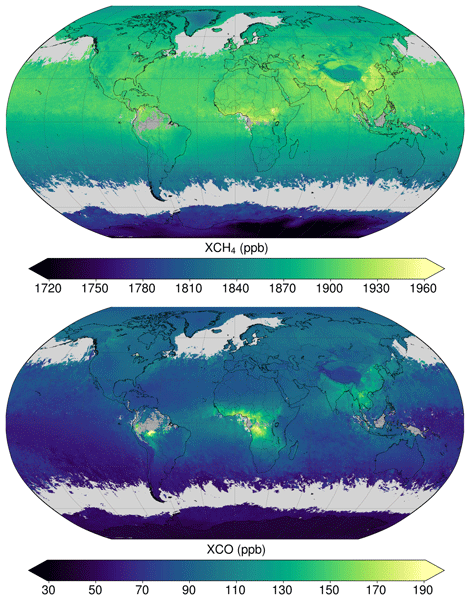
Oliver Schneising, Heinrich Bovensmann, Michael Buchwitz, Matthias Buschmann, Nicholas M. Deutscher, David W. T. Griffith, Jonas Hachmeister, Frank Hase, Laura T. Iraci, Rigel Kivi, Isamu Morino, Hirofumi Ohyama, Christof Petri, Maximilian Reuter, John Robinson, Coleen Roehl, Mahesh Kumar Sha, Kei Shiomi, Kimberly Strong, Ralf Sussmann, Yao Té, Voltaire A. Velazco, Mihalis Vrekoussis, Wei Wang, Thorsten Warneke, Damien Weidmann, Debra Wunch, Minqiang Zhou, and Hartmut Bösch
Atmos. Meas. Tech., 19, 2407–2435, https://doi.org/10.5194/amt-19-2407-2026, https://doi.org/10.5194/amt-19-2407-2026, 2026
Short summary
Short summary
We present an improved version of the TROPOMI/WFMD (TROPOspheric Monitoring Instrument/Weighting Function Modified Differential) algorithm for the simultaneous retrieval of atmospheric methane and carbon monoxide from satellite observations. The updated data product combines higher data yield with better precision and accuracy, expanding its suitability for a wider range of scientific applications. These substantial advances are mainly due to refined quality filtering, enabling more reliable identification of cloudy scenes and mitigating specific aerosol-related issues.
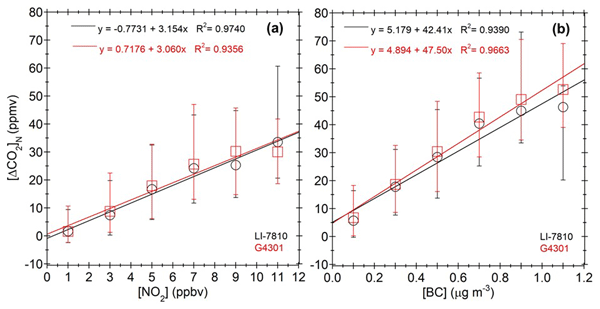
Hitoshi Irie, Masataka Nomoto, Yoshikazu Kamiya, and Yukio Terao
Atmos. Meas. Tech., 19, 2369–2378, https://doi.org/10.5194/amt-19-2369-2026, https://doi.org/10.5194/amt-19-2369-2026, 2026
Short summary
Short summary
Continuous year-round measurements in Chiba, Japan, combining in‑situ CO2 observations with MAX‑DOAS (Multi-Axis Differential Optical Absorption Spectroscopy) NO2, showed that CO2 levels decrease on days with low near-surface NO2. CO2 enhancements quantified using these low-NO2 days correlated strongly with NO₂ and black carbon, indicating that this metric effectively tracks fossil-fuel-derived CO₂. The approach offers a simple, accurate method for monitoring urban CO2 emissions in megacities.
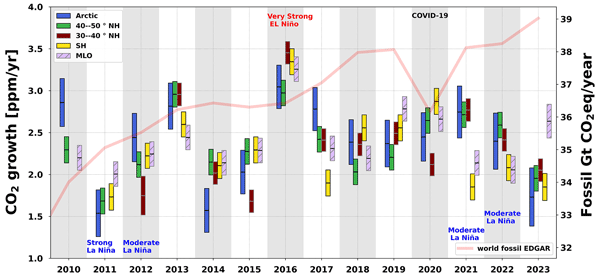
Nasrin Mostafavi Pak, Jonas Hachmeister, Markus Rettinger, Matthias Buschmann, Nicholas M. Deutscher, David W. T. Griffith, Laura T. Iraci, Xin Lan, Erin McGee, Isamu Morino, Dave Pollard, Coleen M. Roehl, Kimberly Strong, Rigel Kivi, and Paul Wennberg
Biogeosciences, 23, 1477–1495, https://doi.org/10.5194/bg-23-1477-2026, https://doi.org/10.5194/bg-23-1477-2026, 2026
Short summary
Short summary
We studied how carbon dioxide (CO2) levels change each year using long-term measurements from twelve sites worldwide. Average growth rates from 2010 to 2024 were about 2.4 ppm/year, with notable year-to-year and regional differences. Natural climate patterns influenced these changes, while temporary shifts in human emissions, such as during COVID‑19, had modest local effects. Monitoring CO2 growth across regions helps track emissions and assess mitigation efforts.
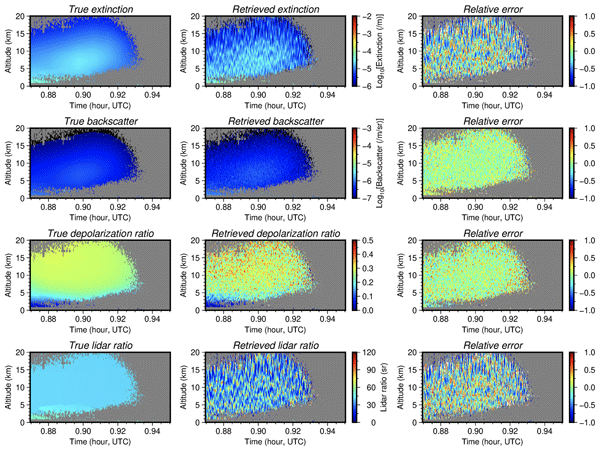
Tomoaki Nishizawa, Rei Kudo, Eiji Oikawa, Akiko Higurashi, Yoshitaka Jin, Nobuo Sugimoto, Kaori Sato, and Hajime Okamoto
Atmos. Meas. Tech., 19, 729–744, https://doi.org/10.5194/amt-19-729-2026, https://doi.org/10.5194/amt-19-729-2026, 2026
Short summary
Short summary
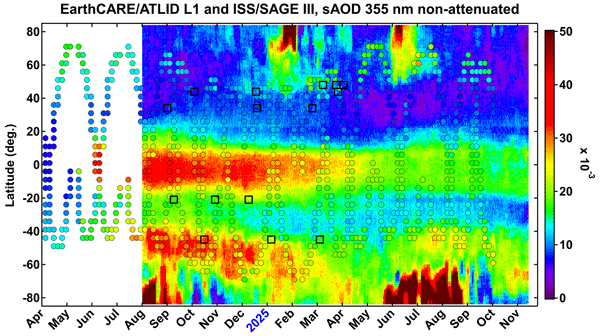
We developed algorithms to produce JAXA ATLID L2 aerosol products using ATLID L1 data. The algorithms estimate layer identifiers such as (1) aerosol or cloud layers, (2) particle optical properties at 355 nm, (3) particle type identifiers, and (4) planetary boundary layer height. We demonstrated the algorithm performance using the simulated ATLID L1 data and found the algorithm’s capability to provide valuable insights into the global distribution of aerosols and clouds.
Sergey Khaykin, Michaël Sicard, Thierry Leblanc, Tetsu Sakai, Nickolay Balugin, Gwenaël Berthet, Stëphane Chevrier, Fernando Chouza, Artem Feofilov, Dominique Gantois, Sophie Godin-Beekmann, Arezki Haddouche, Yoshitaka Jin, Isamu Morino, Nicolas Kadygrov, Thomas Lecas, Ben Liley, Richard Querel, Ghasssan Taha, and Vladimir Yushkov
Atmos. Chem. Phys., 26, 607–622, https://doi.org/10.5194/acp-26-607-2026, https://doi.org/10.5194/acp-26-607-2026, 2026
Short summary
Short summary
In April 2024, the Ruang volcano in Indonesia sent large amounts of gas and particles high into the atmosphere, which then spread worldwide. Using the new European EarthCARE satellite and its advanced laser instrument ATLID (Atmospheric LIDar), together with ground and balloon observations, we tracked how these particles doubled levels in the tropics and spread into both hemispheres. The study shows ATLID’s power to reveal how eruptions can affect climate, clouds, and ozone for more than a year.
Pradeep Khatri, Tamio Takamura, and Hitoshi Irie
Atmos. Meas. Tech., 19, 231–247, https://doi.org/10.5194/amt-19-231-2026, https://doi.org/10.5194/amt-19-231-2026, 2026
Short summary
Short summary
Precipitable water vapor (PWV) is important for various climate and weather studies, but difficult to monitor under various weather conditions. This study shows that surface-based spectral irradiance combined with deep neural network models can accurately estimate PWV under various atmospheric conditions. Models using global, direct, and diffuse irradiances performed best, while even global-only data gave reliable results.
Sina Voshtani, Dylan B. A. Jones, Debra Wunch, Drew C. Pendergrass, Paul O. Wennberg, David F. Pollard, Isamu Morino, Hirofumi Ohyama, Nicholas M. Deutscher, Frank Hase, Ralf Sussmann, Damien Weidmann, Rigel Kivi, Omaira García, Yao Té, Jack Chen, Kerry Anderson, Robin Stevens, Shobha Kondragunta, Aihua Zhu, Douglas Worthy, Senen Racki, Kathryn McKain, Maria V. Makarova, Nicholas Jones, Emmanuel Mahieu, Andrea Cadena-Caicedo, Paolo Cristofanelli, Casper Labuschagne, Elena Kozlova, Thomas Seitz, Martin Steinbacher, Reza Mahdi, and Isao Murata
Atmos. Chem. Phys., 25, 15527–15565, https://doi.org/10.5194/acp-25-15527-2025, https://doi.org/10.5194/acp-25-15527-2025, 2025
Short summary
Short summary
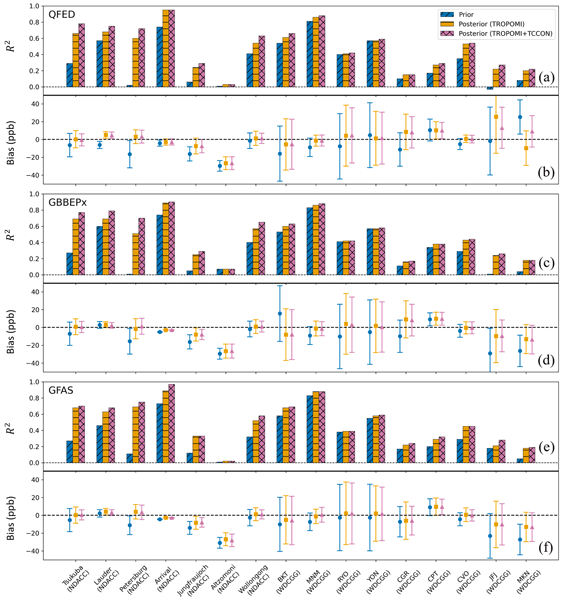
We assess the complementarity of the greater temporal coverage provided by ground-based remote sensing data with the spatial coverage of satellite observations when these data are used together to quantify CO emissions from extreme wildfires in 2023. Our results reveal that the commonly used biomass burning emission inventories significantly underestimate the fire emissions and emphasize the importance of the ground-based remote sensing data in reducing uncertainties in the estimated emissions.
Andrew Gerald Barr, Jochen Landgraf, Mari Martinez-Velarte, Mihalis Vrekoussis, Ralf Sussmann, Isamu Morino, Kimberly Strong, Minqiang Zhou, Voltaire A. Velazco, Hirofumi Ohyama, Thorsten Warneke, Frank Hase, and Tobias Borsdorff
Atmos. Meas. Tech., 18, 6093–6123, https://doi.org/10.5194/amt-18-6093-2025, https://doi.org/10.5194/amt-18-6093-2025, 2025
Short summary
Short summary
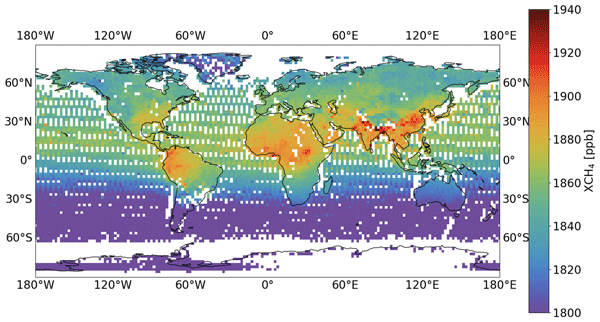
The Greenhouse Gases Observing Satellite-2 (GOSAT-2) is a satellite dedicated to measuring concentrations of greenhouse gases from space. Since its launch, the increase of CH4 and CO2 concentrations in the atmosphere is clear. The datasets obtained from GOSAT-2 are used in the Copernicus atmospheric services to monitor the climate, in light of the Paris Agreement. Here we present robust datasets of these gases from GOSAT-2, including a novel machine learning approach to data quality filtering.
Roeland Van Malderen, Zhou Zang, Kai-Lan Chang, Robin Björklund, Owen R. Cooper, Jane Liu, Eliane Maillard Barras, Corinne Vigouroux, Irina Petropavlovskikh, Thierry Leblanc, Valérie Thouret, Pawel Wolff, Peter Effertz, Audrey Gaudel, David W. Tarasick, Herman G. J. Smit, Anne M. Thompson, Ryan M. Stauffer, Debra E. Kollonige, Deniz Poyraz, Gérard Ancellet, Marie-Renée De Backer, Matthias M. Frey, James W. Hannigan, José L. Hernandez, Bryan J. Johnson, Nicholas Jones, Rigel Kivi, Emmanuel Mahieu, Isamu Morino, Glen McConville, Katrin Müller, Isao Murata, Justus Notholt, Ankie Piters, Maxime Prignon, Richard Querel, Vincenzo Rizi, Dan Smale, Wolfgang Steinbrecht, Kimberly Strong, and Ralf Sussmann
Atmos. Chem. Phys., 25, 9905–9935, https://doi.org/10.5194/acp-25-9905-2025, https://doi.org/10.5194/acp-25-9905-2025, 2025
Short summary
Short summary
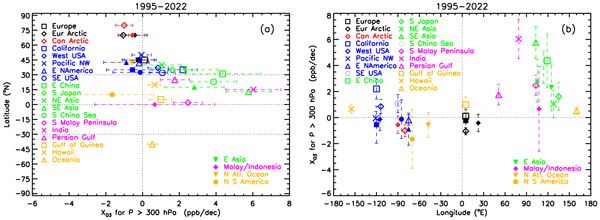
Tropospheric ozone is an important greenhouse gas and an air pollutant whose distribution and time variability are mainly governed by anthropogenic emissions and dynamics. In this paper, we assess regional trends of tropospheric ozone column amounts, based on two different approaches of merging or synthesizing ground-based observations and their trends within specific regions. Our findings clearly demonstrate regional trend differences but also consistently higher pre-COVID than post-COVID trends.
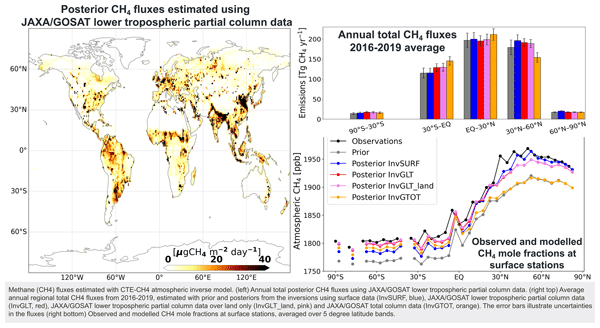
Aki Tsuruta, Akihiko Kuze, Kei Shiomi, Fumie Kataoka, Nobuhiro Kikuchi, Tuula Aalto, Leif Backman, Ella Kivimäki, Maria K. Tenkanen, Kathryn McKain, Omaira E. García, Frank Hase, Rigel Kivi, Isamu Morino, Hirofumi Ohyama, David F. Pollard, Mahesh K. Sha, Kimberly Strong, Ralf Sussmann, Yao Te, Voltaire A. Velazco, Mihalis Vrekoussis, Thorsten Warneke, Minqiang Zhou, and Hiroshi Suto
Atmos. Chem. Phys., 25, 7829–7862, https://doi.org/10.5194/acp-25-7829-2025, https://doi.org/10.5194/acp-25-7829-2025, 2025
Short summary
Short summary
Satellite data bring invaluable information about greenhouse gas emissions globally. We found that a new type of data from the Greenhouse Gas Observing Satellite (GOSAT), which contains information about methane in the lowest layer of Earth's atmosphere, could provide reliable estimates of recent methane emissions when combined with atmospheric modelling. Therefore, the use of such data is encouraged to improve emission quantification methods and advance our understanding of methane cycles.
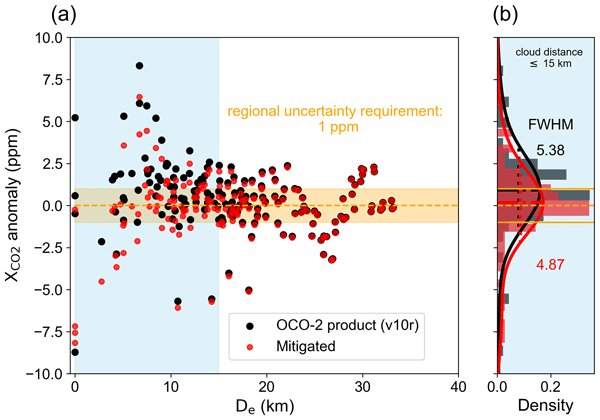
Yu-Wen Chen, K. Sebastian Schmidt, Hong Chen, Steven T. Massie, Susan S. Kulawik, and Hironobu Iwabuchi
Atmos. Meas. Tech., 18, 1859–1884, https://doi.org/10.5194/amt-18-1859-2025, https://doi.org/10.5194/amt-18-1859-2025, 2025
Short summary
Short summary
CO2 column-averaged dry-air mole fractions can be retrieved from space using spectrometers like OCO-2. However, nearby clouds induce spectral distortions that bias these retrievals beyond the accuracy needed for global CO2 source and sink assessments. This study employs a physics-based linearization approach to represent 3D cloud effects and introduces radiance-level mitigation techniques for actual OCO-2 data, enabling the operational implementation of these corrections.
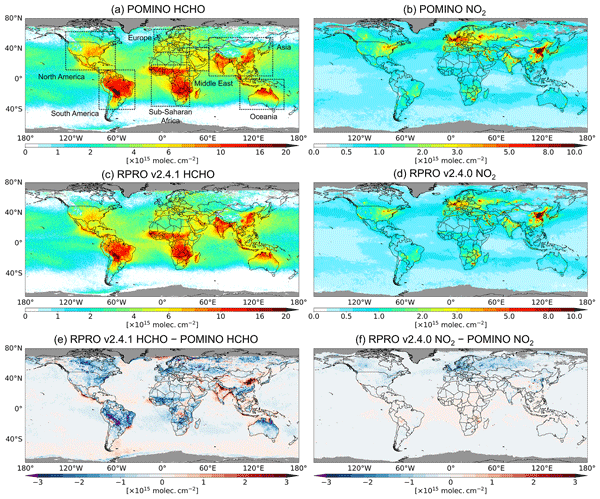
Yuhang Zhang, Huan Yu, Isabelle De Smedt, Jintai Lin, Nicolas Theys, Michel Van Roozendael, Gaia Pinardi, Steven Compernolle, Ruijing Ni, Fangxuan Ren, Sijie Wang, Lulu Chen, Jos Van Geffen, Mengyao Liu, Alexander M. Cede, Martin Tiefengraber, Alexis Merlaud, Martina M. Friedrich, Andreas Richter, Ankie Piters, Vinod Kumar, Vinayak Sinha, Thomas Wagner, Yongjoo Choi, Hisahiro Takashima, Yugo Kanaya, Hitoshi Irie, Robert Spurr, Wenfu Sun, and Lorenzo Fabris
Atmos. Meas. Tech., 18, 1561–1589, https://doi.org/10.5194/amt-18-1561-2025, https://doi.org/10.5194/amt-18-1561-2025, 2025
Short summary
Short summary
We developed an advanced algorithm for global retrieval of TROPOspheric Monitoring Instrument (TROPOMI) HCHO and NO2 vertical column densities with much improved consistency. Sensitivity tests demonstrate the complexity and nonlinear interactions of auxiliary parameters in the air mass factor calculation. An improved agreement is found with measurements from a global ground-based instrument network. The scientific retrieval provides a useful source of information for studies combining HCHO and NO2.
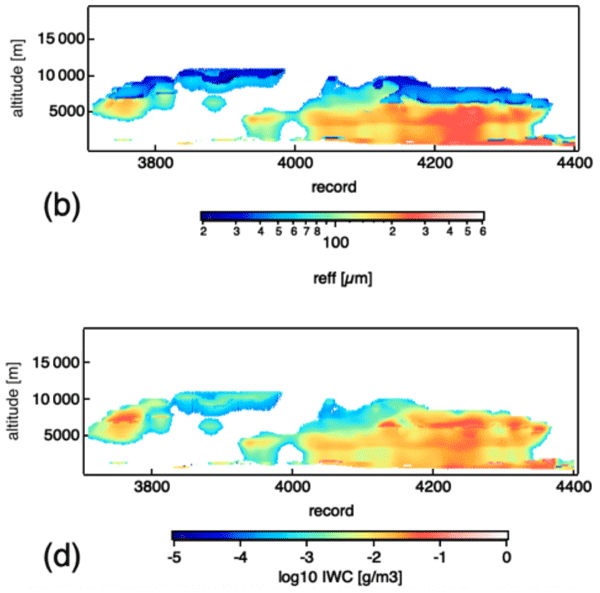
Kaori Sato, Hajime Okamoto, Tomoaki Nishizawa, Yoshitaka Jin, Takashi Y. Nakajima, Minrui Wang, Masaki Satoh, Woosub Roh, Hiroshi Ishimoto, and Rei Kudo
Atmos. Meas. Tech., 18, 1325–1338, https://doi.org/10.5194/amt-18-1325-2025, https://doi.org/10.5194/amt-18-1325-2025, 2025
Short summary
Short summary
This study introduces the JAXA EarthCARE Level 2 (L2) cloud product using satellite observations and simulated EarthCARE data. The outputs from the product feature a 3D global view of the dominant ice habit categories and corresponding microphysics. Habit and size distribution transitions from cloud to precipitation are quantified by the L2 cloud algorithms. With Doppler data, the products can be beneficial for further understanding of the coupling of cloud microphysics, radiation, and dynamics.
Eunjo S. Ha, Rokjin J. Park, Hyeong-Ahn Kwon, Gitaek T. Lee, Sieun D. Lee, Seunga Shin, Dong-Won Lee, Hyunkee Hong, Christophe Lerot, Isabelle De Smedt, Thomas Danckaert, Francois Hendrick, and Hitoshi Irie
Atmos. Meas. Tech., 17, 6369–6384, https://doi.org/10.5194/amt-17-6369-2024, https://doi.org/10.5194/amt-17-6369-2024, 2024
Short summary
Short summary
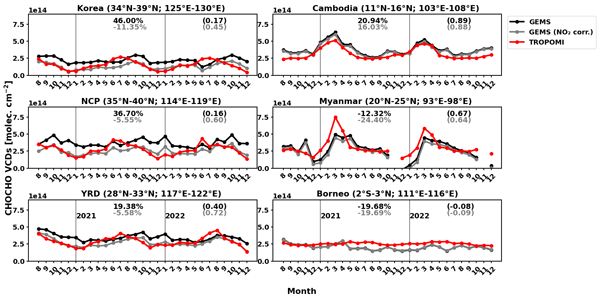
In this study, we evaluated the GEMS glyoxal products by comparing them with TROPOMI and MAX-DOAS measurements. GEMS and TROPOMI VCDs present similar spatial distributions. Monthly variations in GEMS VCDs and TROPOMI and MAX-DOAS VCDs differ in northeastern Asia, which we attributed to a polluted reference spectrum and high NO2 concentrations. GEMS glyoxal products with unparalleled temporal resolution would enrich our understanding of VOC emissions and diurnal variation.
Kavitha Mottungan, Chayan Roychoudhury, Vanessa Brocchi, Benjamin Gaubert, Wenfu Tang, Mohammad Amin Mirrezaei, John McKinnon, Yafang Guo, David W. T. Griffith, Dietrich G. Feist, Isamu Morino, Mahesh K. Sha, Manvendra K. Dubey, Martine De Mazière, Nicholas M. Deutscher, Paul O. Wennberg, Ralf Sussmann, Rigel Kivi, Tae-Young Goo, Voltaire A. Velazco, Wei Wang, and Avelino F. Arellano Jr.
Atmos. Meas. Tech., 17, 5861–5885, https://doi.org/10.5194/amt-17-5861-2024, https://doi.org/10.5194/amt-17-5861-2024, 2024
Short summary
Short summary
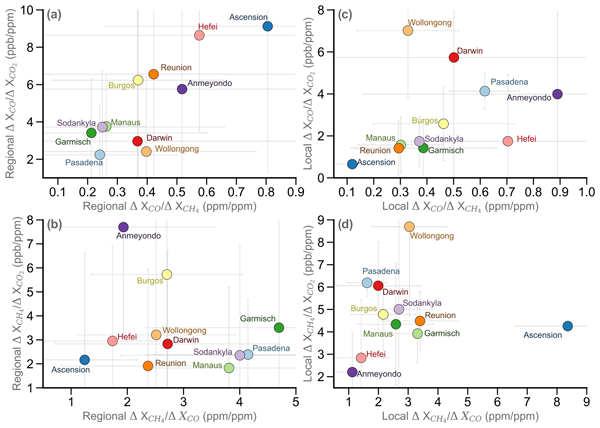
A combination of data analysis techniques is introduced to separate local and regional influences on observed levels of carbon dioxide, carbon monoxide, and methane from an established ground-based remote sensing network. We take advantage of the covariations in these trace gases to identify the dominant type of sources driving these levels. Applying these methods in conjunction with existing approaches to other datasets can better address uncertainties in identifying sources and sinks.
Hajime Okamoto, Kaori Sato, Tomoaki Nishizawa, Yoshitaka Jin, Shota Ogawa, Hiroshi Ishimoto, Yuichiro Hagihara, EIji Oikawa, Maki Kikuchi, Masaki Satoh, and Wooosub Roh
Atmos. Meas. Tech. Discuss., https://doi.org/10.5194/amt-2024-103, https://doi.org/10.5194/amt-2024-103, 2024
Publication in AMT not foreseen
Short summary
Short summary
The article gives the descriptions of the Japan Aerospace Exploration Agency (JAXA) level 2 (L2) cloud mask and cloud particle type algorithms for CPR and ATLID onboard Earth Clouds, Aerosols and Radiation Explorer (EarthCARE) satellite. The 355nm-multiple scattering polarization lidar was used to develop ATLID algorithm. Evaluations show the agreements for CPR-only, ATLID-only and CPR-ATLID synergy algorithms to be about 80%, 85% and 80%, respectively on average for about two EarthCARE orbits.
Hossain Mohammed Syedul Hoque, Kengo Sudo, Hitoshi Irie, Yanfeng He, and Md Firoz Khan
Geosci. Model Dev., 17, 5545–5571, https://doi.org/10.5194/gmd-17-5545-2024, https://doi.org/10.5194/gmd-17-5545-2024, 2024
Short summary
Short summary
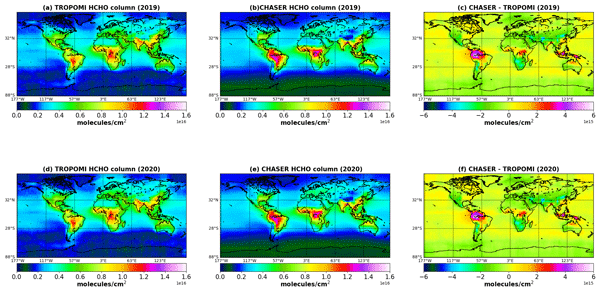
Using multi-platform observations, we validated global formaldehyde (HCHO) simulations from a chemistry transport model. HCHO is a crucial intermediate in the chemical catalytic cycle that governs the ozone formation in the troposphere. The model was capable of replicating the observed spatiotemporal variability in HCHO. In a few cases, the model's capability was limited. This is attributed to the uncertainties in the observations and the model parameters.
Nelson Bègue, Alexandre Baron, Gisèle Krysztofiak, Gwenaël Berthet, Corinna Kloss, Fabrice Jégou, Sergey Khaykin, Marion Ranaivombola, Tristan Millet, Thierry Portafaix, Valentin Duflot, Philippe Keckhut, Hélène Vérèmes, Guillaume Payen, Mahesh Kumar Sha, Pierre-François Coheur, Cathy Clerbaux, Michaël Sicard, Tetsu Sakai, Richard Querel, Ben Liley, Dan Smale, Isamu Morino, Osamu Uchino, Tomohiro Nagai, Penny Smale, John Robinson, and Hassan Bencherif
Atmos. Chem. Phys., 24, 8031–8048, https://doi.org/10.5194/acp-24-8031-2024, https://doi.org/10.5194/acp-24-8031-2024, 2024
Short summary
Short summary
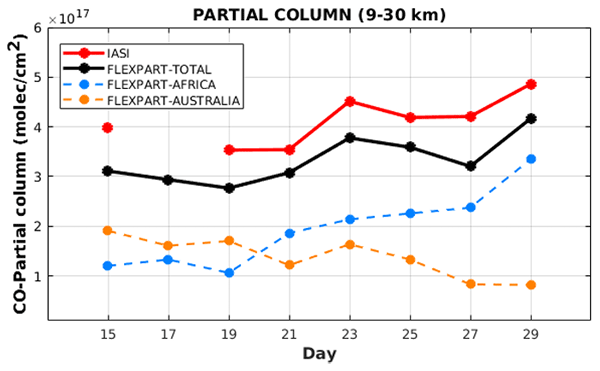
During the 2020 austral summer, the pristine atmosphere of the southwest Indian Ocean basin experienced significant perturbations. Numerical models indicated that the lower-stratospheric aerosol content was influenced by the intense and persistent stratospheric aerosol layer generated during the 2019–2020 extreme Australian bushfire events. Ground-based observations at Réunion confirmed the simultaneous presence of African and Australian aerosol layers.
Fengxin Xie, Tao Ren, Changying Zhao, Yuan Wen, Yilei Gu, Minqiang Zhou, Pucai Wang, Kei Shiomi, and Isamu Morino
Atmos. Meas. Tech., 17, 3949–3967, https://doi.org/10.5194/amt-17-3949-2024, https://doi.org/10.5194/amt-17-3949-2024, 2024
Short summary
Short summary
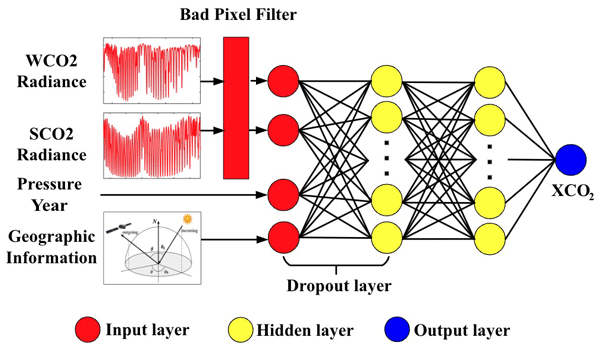
This study demonstrates a new machine learning approach to efficiently and accurately estimate atmospheric carbon dioxide levels from satellite data. Rather than using traditional complex physics-based retrieval methods, neural network models are trained on simulated data to rapidly predict CO2 concentrations directly from satellite spectral measurements.
Hajime Okamoto, Kaori Sato, Tomoaki Nishizawa, Yoshitaka Jin, Takashi Nakajima, Minrui Wang, Masaki Satoh, Kentaroh Suzuki, Woosub Roh, Akira Yamauchi, Hiroaki Horie, Yuichi Ohno, Yuichiro Hagihara, Hiroshi Ishimoto, Rei Kudo, Takuji Kubota, and Toshiyuki Tanaka
Atmos. Meas. Tech. Discuss., https://doi.org/10.5194/amt-2024-101, https://doi.org/10.5194/amt-2024-101, 2024
Publication in AMT not foreseen
Short summary
Short summary
This article gives overviews of the JAXA L2 algorithms and products by Japanese science teams for EarthCARE. The algorithms provide corrected Doppler velocity, cloud particle shape and orientations, microphysics of clouds and aerosols, and radiative fluxes and heating rate. The retrievals by the algorithms are demonstrated and evaluated using NICAM/J-simulator outputs. The JAXA EarthCARE L2 products will bring new scientific knowledge about the clouds, aerosols, radiation and convections.
Benedikt Herkommer, Carlos Alberti, Paolo Castracane, Jia Chen, Angelika Dehn, Florian Dietrich, Nicholas M. Deutscher, Matthias Max Frey, Jochen Groß, Lawson Gillespie, Frank Hase, Isamu Morino, Nasrin Mostafavi Pak, Brittany Walker, and Debra Wunch
Atmos. Meas. Tech., 17, 3467–3494, https://doi.org/10.5194/amt-17-3467-2024, https://doi.org/10.5194/amt-17-3467-2024, 2024
Short summary
Short summary
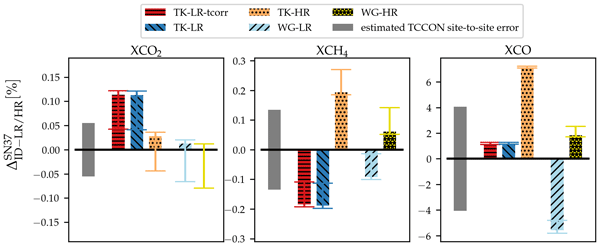
The Total Carbon Column Observing Network is a network of ground-based Fourier transform infrared (FTIR) spectrometers used mainly for satellite validation. To ensure the highest-quality validation data, the network needs to be highly consistent. This is a major challenge, which so far is solved by site comparisons with airborne in situ measurements. In this work, we describe the use of a portable FTIR spectrometer as a travel standard for evaluating the consistency of TCCON sites.
Drew C. Pendergrass, Daniel J. Jacob, Yujin J. Oak, Jeewoo Lee, Minseok Kim, Jhoon Kim, Seoyoung Lee, Shixian Zhai, Hitoshi Irie, and Hong Liao
Earth Syst. Sci. Data Discuss., https://doi.org/10.5194/essd-2024-172, https://doi.org/10.5194/essd-2024-172, 2024
Preprint withdrawn
Short summary
Short summary
Fine particles suspended in the atmosphere are a major form of air pollution and an important public health burden. However, measurements of particulate matter are sparse in space and in places like East Asia monitors are established after regulatory policies to improve pollution have changed. In this paper, we use machine learning to fill in the gaps. We train an algorithm to predict pollution at the surface from the atmosphere’s opacity, then produce high resolution maps of data without gaps.
Joshua L. Laughner, Geoffrey C. Toon, Joseph Mendonca, Christof Petri, Sébastien Roche, Debra Wunch, Jean-Francois Blavier, David W. T. Griffith, Pauli Heikkinen, Ralph F. Keeling, Matthäus Kiel, Rigel Kivi, Coleen M. Roehl, Britton B. Stephens, Bianca C. Baier, Huilin Chen, Yonghoon Choi, Nicholas M. Deutscher, Joshua P. DiGangi, Jochen Gross, Benedikt Herkommer, Pascal Jeseck, Thomas Laemmel, Xin Lan, Erin McGee, Kathryn McKain, John Miller, Isamu Morino, Justus Notholt, Hirofumi Ohyama, David F. Pollard, Markus Rettinger, Haris Riris, Constantina Rousogenous, Mahesh Kumar Sha, Kei Shiomi, Kimberly Strong, Ralf Sussmann, Yao Té, Voltaire A. Velazco, Steven C. Wofsy, Minqiang Zhou, and Paul O. Wennberg
Earth Syst. Sci. Data, 16, 2197–2260, https://doi.org/10.5194/essd-16-2197-2024, https://doi.org/10.5194/essd-16-2197-2024, 2024
Short summary
Short summary
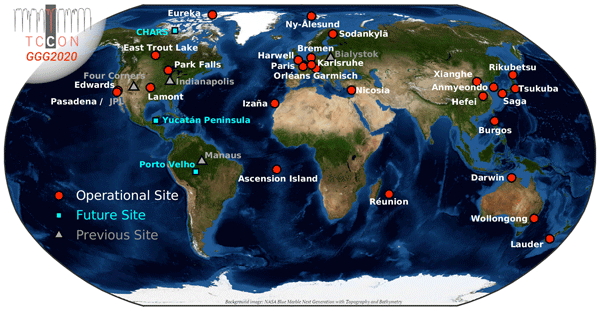
This paper describes a new version, called GGG2020, of a data set containing column-integrated observations of greenhouse and related gases (including CO2, CH4, CO, and N2O) made by ground stations located around the world. Compared to the previous version (GGG2014), improvements have been made toward site-to-site consistency. This data set plays a key role in validating space-based greenhouse gas observations and in understanding the carbon cycle.
Astrid Müller, Hiroshi Tanimoto, Takafumi Sugita, Prabir K. Patra, Shin-ichiro Nakaoka, Toshinobu Machida, Isamu Morino, André Butz, and Kei Shiomi
Atmos. Meas. Tech., 17, 1297–1316, https://doi.org/10.5194/amt-17-1297-2024, https://doi.org/10.5194/amt-17-1297-2024, 2024
Short summary
Short summary
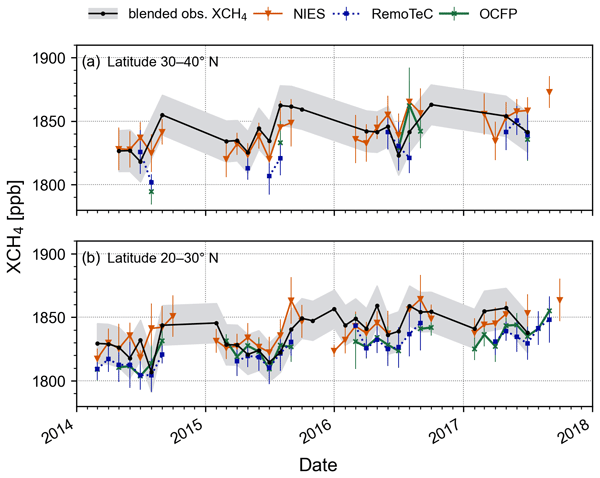
Satellite CH4 observations with high accuracy are needed to understand changes in atmospheric CH4 concentrations. But over oceans, reference data are limited. We combine various ship and aircraft observations with the help of atmospheric chemistry models to derive observation-based column-averaged mixing ratios of CH4 (obs. XCH4). We discuss three different approaches and demonstrate the applicability of the new reference dataset for carbon cycle studies and satellite evaluation.
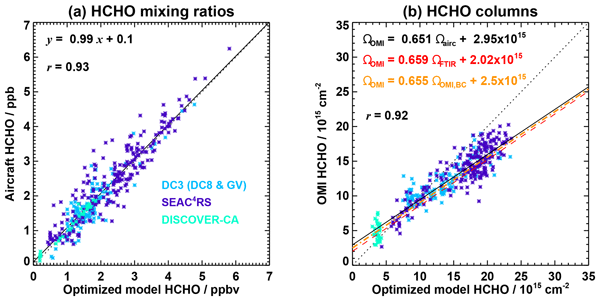
Jean-François Müller, Trissevgeni Stavrakou, Glenn-Michael Oomen, Beata Opacka, Isabelle De Smedt, Alex Guenther, Corinne Vigouroux, Bavo Langerock, Carlos Augusto Bauer Aquino, Michel Grutter, James Hannigan, Frank Hase, Rigel Kivi, Erik Lutsch, Emmanuel Mahieu, Maria Makarova, Jean-Marc Metzger, Isamu Morino, Isao Murata, Tomoo Nagahama, Justus Notholt, Ivan Ortega, Mathias Palm, Amelie Röhling, Wolfgang Stremme, Kimberly Strong, Ralf Sussmann, Yao Té, and Alan Fried
Atmos. Chem. Phys., 24, 2207–2237, https://doi.org/10.5194/acp-24-2207-2024, https://doi.org/10.5194/acp-24-2207-2024, 2024
Short summary
Short summary
Formaldehyde observations from satellites can be used to constrain the emissions of volatile organic compounds, but those observations have biases. Using an atmospheric model, aircraft and ground-based remote sensing data, we quantify these biases, propose a correction to the data, and assess the consequence of this correction for the evaluation of emissions.
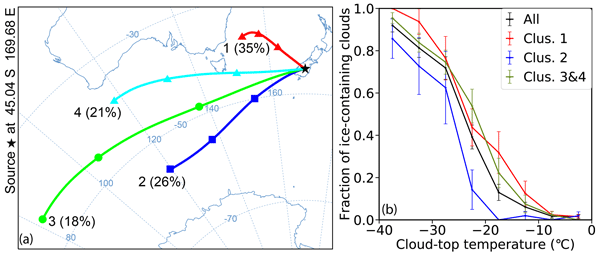
Julian Hofer, Patric Seifert, J. Ben Liley, Martin Radenz, Osamu Uchino, Isamu Morino, Tetsu Sakai, Tomohiro Nagai, and Albert Ansmann
Atmos. Chem. Phys., 24, 1265–1280, https://doi.org/10.5194/acp-24-1265-2024, https://doi.org/10.5194/acp-24-1265-2024, 2024
Short summary
Short summary
An 11-year dataset of polarization lidar observations from Lauder, New Zealand / Aotearoa, was used to distinguish the thermodynamic phase of natural clouds. The cloud dataset was separated to assess the impact of air mass origin on the frequency of heterogeneous ice formation. Ice formation efficiency in clouds above Lauder was found to be lower than in the polluted Northern Hemisphere midlatitudes but higher than in very clean and pristine environments, such as Punta Arenas in southern Chile.
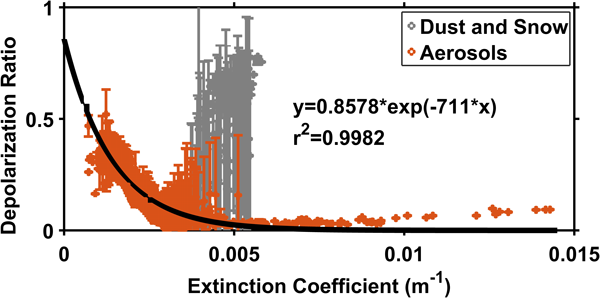
Nofel Lagrosas, Kosuke Okubo, Hitoshi Irie, Yutaka Matsumi, Tomoki Nakayama, Yutaka Sugita, Takashi Okada, and Tatsuo Shiina
Atmos. Meas. Tech., 16, 5937–5951, https://doi.org/10.5194/amt-16-5937-2023, https://doi.org/10.5194/amt-16-5937-2023, 2023
Short summary
Short summary
This work examines the near-ground aerosol–weather relationship from 7-month continuous lidar and weather observations in Chiba, Japan. Optical parameters from lidar data are compared with weather parameters to understand and quantify the aerosol–weather relationship and how these optical parameters are affected by the weather and season. The results provide insights into analyzing optical properties of radioactive aerosols when the lidar system is continuously operated in a radioactive area.
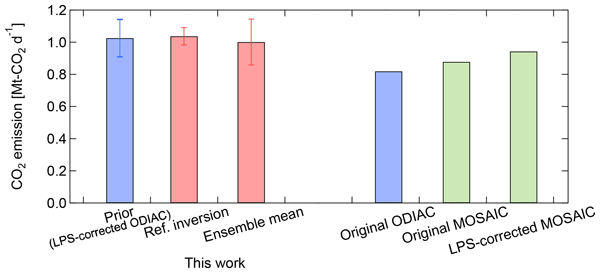
Hirofumi Ohyama, Matthias M. Frey, Isamu Morino, Kei Shiomi, Masahide Nishihashi, Tatsuya Miyauchi, Hiroko Yamada, Makoto Saito, Masanobu Wakasa, Thomas Blumenstock, and Frank Hase
Atmos. Chem. Phys., 23, 15097–15119, https://doi.org/10.5194/acp-23-15097-2023, https://doi.org/10.5194/acp-23-15097-2023, 2023
Short summary
Short summary
We conducted a field campaign for CO2 column measurements in the Tokyo metropolitan area with three ground-based Fourier transform spectrometers. The model simulations using prior CO2 fluxes were generally in good agreement with the observations. We developed an urban-scale inversion system in which spatially resolved CO2 fluxes and a scaling factor of large point source emissions were estimated. The posterior total CO2 emissions agreed with emission inventories within the posterior uncertainty.
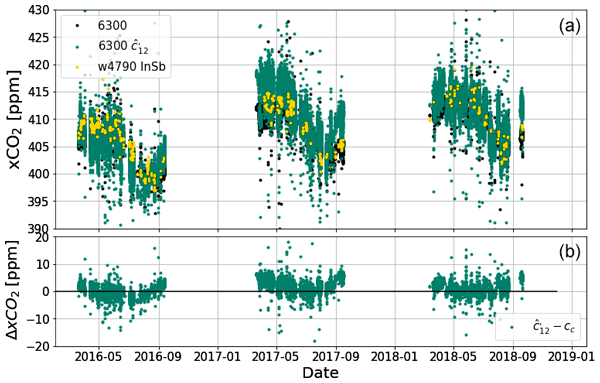
Rafaella Chiarella, Matthias Buschmann, Joshua Laughner, Isamu Morino, Justus Notholt, Christof Petri, Geoffrey Toon, Voltaire A. Velazco, and Thorsten Warneke
Atmos. Meas. Tech., 16, 3987–4007, https://doi.org/10.5194/amt-16-3987-2023, https://doi.org/10.5194/amt-16-3987-2023, 2023
Short summary
Short summary
The goal is to establish a window and strategy for xCO2 retrieval from ground-based Fourier transform spectrometers for NDACC. In the study we describe the spectroscopy of the region, the locations and instruments used, and the methods of calculating the retrieved xCO2. We performed tests to assess the sensitivity to diverse factors and sources of errors while comparing the retrieval to a well-established xCO2 retrieval from TCCON.
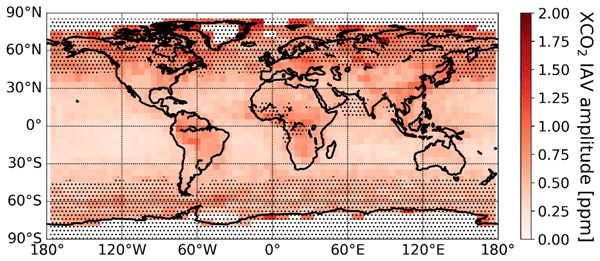
Yifan Guan, Gretchen Keppel-Aleks, Scott C. Doney, Christof Petri, Dave Pollard, Debra Wunch, Frank Hase, Hirofumi Ohyama, Isamu Morino, Justus Notholt, Kei Shiomi, Kim Strong, Rigel Kivi, Matthias Buschmann, Nicholas Deutscher, Paul Wennberg, Ralf Sussmann, Voltaire A. Velazco, and Yao Té
Atmos. Chem. Phys., 23, 5355–5372, https://doi.org/10.5194/acp-23-5355-2023, https://doi.org/10.5194/acp-23-5355-2023, 2023
Short summary
Short summary
We characterize spatial–temporal patterns of interannual variability (IAV) in atmospheric CO2 based on NASA’s Orbiting Carbon Observatory-2 (OCO-2). CO2 variation is strongly impacted by climate events, with higher anomalies during El Nino years. We show high correlation in IAV between space-based and ground-based CO2 from long-term sites. Because OCO-2 has near-global coverage, our paper provides a roadmap to study IAV where in situ observation is sparse, such as open oceans and remote lands.
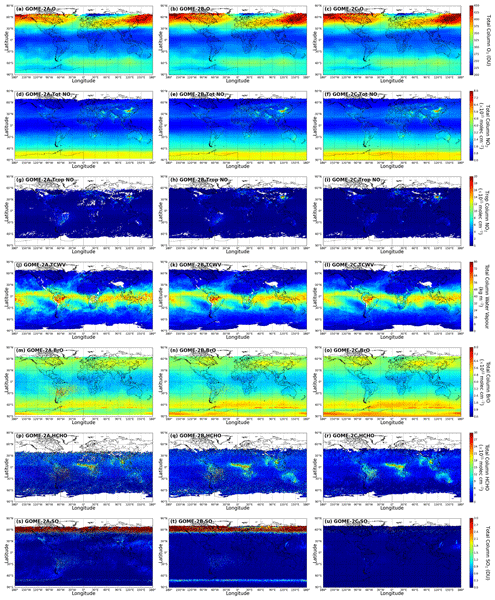
Ka Lok Chan, Pieter Valks, Klaus-Peter Heue, Ronny Lutz, Pascal Hedelt, Diego Loyola, Gaia Pinardi, Michel Van Roozendael, François Hendrick, Thomas Wagner, Vinod Kumar, Alkis Bais, Ankie Piters, Hitoshi Irie, Hisahiro Takashima, Yugo Kanaya, Yongjoo Choi, Kihong Park, Jihyo Chong, Alexander Cede, Udo Frieß, Andreas Richter, Jianzhong Ma, Nuria Benavent, Robert Holla, Oleg Postylyakov, Claudia Rivera Cárdenas, and Mark Wenig
Earth Syst. Sci. Data, 15, 1831–1870, https://doi.org/10.5194/essd-15-1831-2023, https://doi.org/10.5194/essd-15-1831-2023, 2023
Short summary
Short summary
This paper presents the theoretical basis as well as verification and validation of the Global Ozone Monitoring Experiment-2 (GOME-2) daily and monthly level-3 products.

Hong Chen, K. Sebastian Schmidt, Steven T. Massie, Vikas Nataraja, Matthew S. Norgren, Jake J. Gristey, Graham Feingold, Robert E. Holz, and Hironobu Iwabuchi
Atmos. Meas. Tech., 16, 1971–2000, https://doi.org/10.5194/amt-16-1971-2023, https://doi.org/10.5194/amt-16-1971-2023, 2023
Short summary
Short summary
We introduce the Education and Research 3D Radiative Transfer Toolbox (EaR3T) and propose a radiance self-consistency approach for quantifying and mitigating 3D bias in legacy airborne and spaceborne imagery retrievals due to spatially inhomogeneous clouds and surfaces.
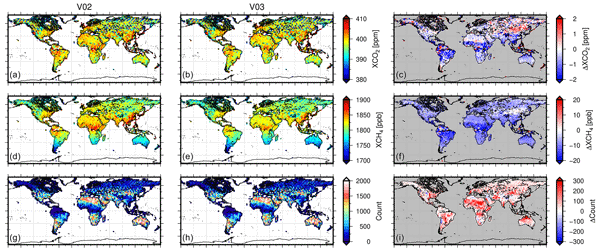
Yu Someya, Yukio Yoshida, Hirofumi Ohyama, Shohei Nomura, Akihide Kamei, Isamu Morino, Hitoshi Mukai, Tsuneo Matsunaga, Joshua L. Laughner, Voltaire A. Velazco, Benedikt Herkommer, Yao Té, Mahesh Kumar Sha, Rigel Kivi, Minqiang Zhou, Young Suk Oh, Nicholas M. Deutscher, and David W. T. Griffith
Atmos. Meas. Tech., 16, 1477–1501, https://doi.org/10.5194/amt-16-1477-2023, https://doi.org/10.5194/amt-16-1477-2023, 2023
Short summary
Short summary
The updated retrieval algorithm for the Greenhouse gases Observing SATellite level 2 product is presented. The main changes in the algorithm from the previous one are the treatment of cirrus clouds, the degradation model of the sensor, solar irradiance, and gas absorption coefficient tables. The retrieval results showed improvements in fitting accuracy and an increase in the data amount over land. On the other hand, there are still large biases of XCO2 which should be corrected over the ocean.
Brendan Byrne, David F. Baker, Sourish Basu, Michael Bertolacci, Kevin W. Bowman, Dustin Carroll, Abhishek Chatterjee, Frédéric Chevallier, Philippe Ciais, Noel Cressie, David Crisp, Sean Crowell, Feng Deng, Zhu Deng, Nicholas M. Deutscher, Manvendra K. Dubey, Sha Feng, Omaira E. García, David W. T. Griffith, Benedikt Herkommer, Lei Hu, Andrew R. Jacobson, Rajesh Janardanan, Sujong Jeong, Matthew S. Johnson, Dylan B. A. Jones, Rigel Kivi, Junjie Liu, Zhiqiang Liu, Shamil Maksyutov, John B. Miller, Scot M. Miller, Isamu Morino, Justus Notholt, Tomohiro Oda, Christopher W. O'Dell, Young-Suk Oh, Hirofumi Ohyama, Prabir K. Patra, Hélène Peiro, Christof Petri, Sajeev Philip, David F. Pollard, Benjamin Poulter, Marine Remaud, Andrew Schuh, Mahesh K. Sha, Kei Shiomi, Kimberly Strong, Colm Sweeney, Yao Té, Hanqin Tian, Voltaire A. Velazco, Mihalis Vrekoussis, Thorsten Warneke, John R. Worden, Debra Wunch, Yuanzhi Yao, Jeongmin Yun, Andrew Zammit-Mangion, and Ning Zeng
Earth Syst. Sci. Data, 15, 963–1004, https://doi.org/10.5194/essd-15-963-2023, https://doi.org/10.5194/essd-15-963-2023, 2023
Short summary
Short summary
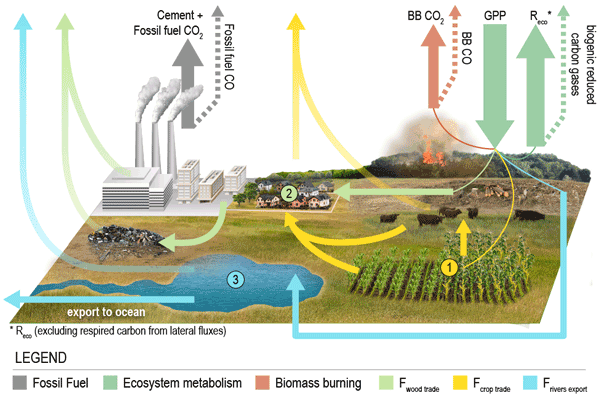
Changes in the carbon stocks of terrestrial ecosystems result in emissions and removals of CO2. These can be driven by anthropogenic activities (e.g., deforestation), natural processes (e.g., fires) or in response to rising CO2 (e.g., CO2 fertilization). This paper describes a dataset of CO2 emissions and removals derived from atmospheric CO2 observations. This pilot dataset informs current capabilities and future developments towards top-down monitoring and verification systems.
Alessandro Damiani, Hitoshi Irie, Dmitry A. Belikov, Shuei Kaizuka, Hossain Mohammed Syedul Hoque, and Raul R. Cordero
Atmos. Chem. Phys., 22, 12705–12726, https://doi.org/10.5194/acp-22-12705-2022, https://doi.org/10.5194/acp-22-12705-2022, 2022
Short summary
Short summary
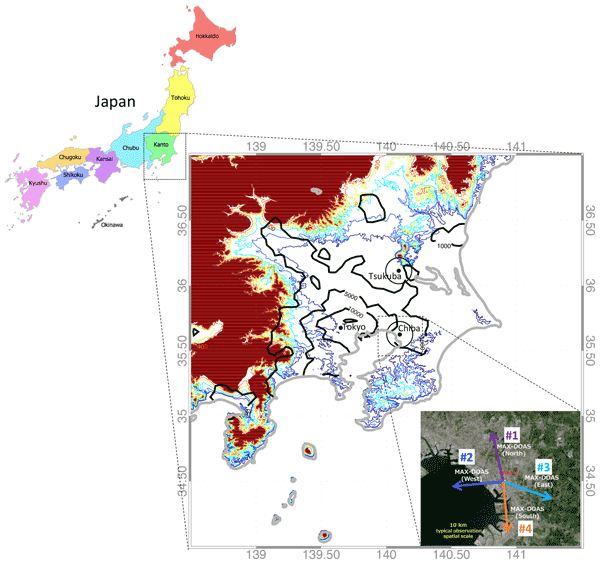
We analyzed the variabilities in tropospheric gases and aerosols within the Greater Tokyo Area, Japan. Beyond highlighting air quality changes caused by the pandemic during the lockdown, we found that the degree of weekly cycling of most gases and aerosols was enhanced during the whole of 2020. The changes were unprecedented in recent years and potentially related to coincident reduced mobility in Japan, which, in contrast to other countries, was anomalously low on weekends in 2020.

Hossain Mohammed Syedul Hoque, Kengo Sudo, Hitoshi Irie, Alessandro Damiani, Manish Naja, and Al Mashroor Fatmi
Atmos. Chem. Phys., 22, 12559–12589, https://doi.org/10.5194/acp-22-12559-2022, https://doi.org/10.5194/acp-22-12559-2022, 2022
Short summary
Short summary
Nitrogen dioxide (NO2) and formaldehyde (HCHO) are essential trace graces regulating tropospheric ozone chemistry. These trace constituents are measured using an optical passive remote sensing technique. In addition, NO2 and HCHO are simulated with a computer model and evaluated against the observations. Such evaluations are essential to assess model uncertainties and improve their predictability. The results yielded good agreement between the two datasets with some discrepancies.

Vikas Nataraja, Sebastian Schmidt, Hong Chen, Takanobu Yamaguchi, Jan Kazil, Graham Feingold, Kevin Wolf, and Hironobu Iwabuchi
Atmos. Meas. Tech., 15, 5181–5205, https://doi.org/10.5194/amt-15-5181-2022, https://doi.org/10.5194/amt-15-5181-2022, 2022
Short summary
Short summary
A convolutional neural network (CNN) is introduced to retrieve cloud optical thickness (COT) from passive cloud imagery. The CNN, trained on large eddy simulations from the Sulu Sea, learns from spatial information at multiple scales to reduce cloud inhomogeneity effects. By considering the spatial context of a pixel, the CNN outperforms the traditional independent pixel approximation (IPA) across several cloud morphology metrics.
Matthias Schneider, Benjamin Ertl, Qiansi Tu, Christopher J. Diekmann, Farahnaz Khosrawi, Amelie N. Röhling, Frank Hase, Darko Dubravica, Omaira E. García, Eliezer Sepúlveda, Tobias Borsdorff, Jochen Landgraf, Alba Lorente, André Butz, Huilin Chen, Rigel Kivi, Thomas Laemmel, Michel Ramonet, Cyril Crevoisier, Jérome Pernin, Martin Steinbacher, Frank Meinhardt, Kimberly Strong, Debra Wunch, Thorsten Warneke, Coleen Roehl, Paul O. Wennberg, Isamu Morino, Laura T. Iraci, Kei Shiomi, Nicholas M. Deutscher, David W. T. Griffith, Voltaire A. Velazco, and David F. Pollard
Atmos. Meas. Tech., 15, 4339–4371, https://doi.org/10.5194/amt-15-4339-2022, https://doi.org/10.5194/amt-15-4339-2022, 2022
Short summary
Short summary
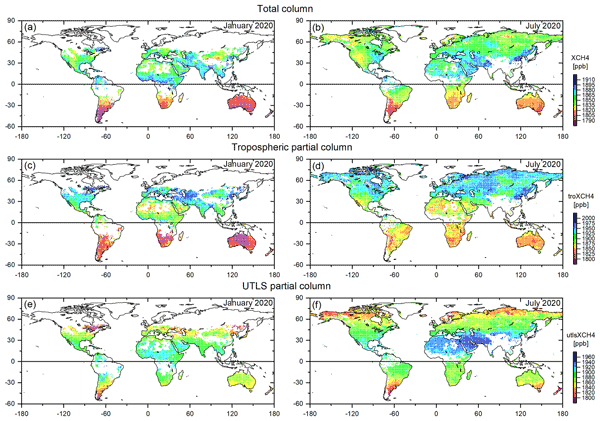
We present a computationally very efficient method for the synergetic use of level 2 remote-sensing data products. We apply the method to IASI vertical profile and TROPOMI total column space-borne methane observations and thus gain sensitivity for the tropospheric methane partial columns, which is not achievable by the individual use of TROPOMI and IASI. These synergetic effects are evaluated theoretically and empirically by inter-comparisons to independent references of TCCON, AirCore, and GAW.
Stefan Noël, Maximilian Reuter, Michael Buchwitz, Jakob Borchardt, Michael Hilker, Oliver Schneising, Heinrich Bovensmann, John P. Burrows, Antonio Di Noia, Robert J. Parker, Hiroshi Suto, Yukio Yoshida, Matthias Buschmann, Nicholas M. Deutscher, Dietrich G. Feist, David W. T. Griffith, Frank Hase, Rigel Kivi, Cheng Liu, Isamu Morino, Justus Notholt, Young-Suk Oh, Hirofumi Ohyama, Christof Petri, David F. Pollard, Markus Rettinger, Coleen Roehl, Constantina Rousogenous, Mahesh Kumar Sha, Kei Shiomi, Kimberly Strong, Ralf Sussmann, Yao Té, Voltaire A. Velazco, Mihalis Vrekoussis, and Thorsten Warneke
Atmos. Meas. Tech., 15, 3401–3437, https://doi.org/10.5194/amt-15-3401-2022, https://doi.org/10.5194/amt-15-3401-2022, 2022
Short summary
Short summary
We present a new version (v3) of the GOSAT and GOSAT-2 FOCAL products.
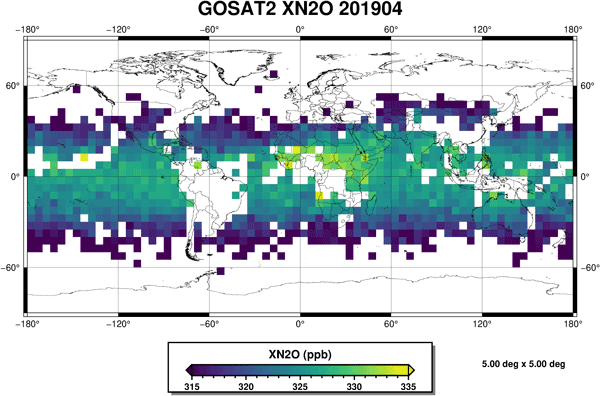
In addition to an increased number of XCO2 data, v3 also includes products for XCH4 (full-physics and proxy), XH2O and the relative ratio of HDO to H2O (δD). For GOSAT-2, we also present first XCO and XN2O results. All FOCAL data products show reasonable spatial distribution and temporal variations and agree well with TCCON. Global XN2O maps show a gradient from the tropics to higher latitudes on the order of 15 ppb.
Carlos Alberti, Frank Hase, Matthias Frey, Darko Dubravica, Thomas Blumenstock, Angelika Dehn, Paolo Castracane, Gregor Surawicz, Roland Harig, Bianca C. Baier, Caroline Bès, Jianrong Bi, Hartmut Boesch, André Butz, Zhaonan Cai, Jia Chen, Sean M. Crowell, Nicholas M. Deutscher, Dragos Ene, Jonathan E. Franklin, Omaira García, David Griffith, Bruno Grouiez, Michel Grutter, Abdelhamid Hamdouni, Sander Houweling, Neil Humpage, Nicole Jacobs, Sujong Jeong, Lilian Joly, Nicholas B. Jones, Denis Jouglet, Rigel Kivi, Ralph Kleinschek, Morgan Lopez, Diogo J. Medeiros, Isamu Morino, Nasrin Mostafavipak, Astrid Müller, Hirofumi Ohyama, Paul I. Palmer, Mahesh Pathakoti, David F. Pollard, Uwe Raffalski, Michel Ramonet, Robbie Ramsay, Mahesh Kumar Sha, Kei Shiomi, William Simpson, Wolfgang Stremme, Youwen Sun, Hiroshi Tanimoto, Yao Té, Gizaw Mengistu Tsidu, Voltaire A. Velazco, Felix Vogel, Masataka Watanabe, Chong Wei, Debra Wunch, Marcia Yamasoe, Lu Zhang, and Johannes Orphal
Atmos. Meas. Tech., 15, 2433–2463, https://doi.org/10.5194/amt-15-2433-2022, https://doi.org/10.5194/amt-15-2433-2022, 2022
Short summary
Short summary
Space-borne greenhouse gas missions require ground-based validation networks capable of providing fiducial reference measurements. Here, considerable refinements of the calibration procedures for the COllaborative Carbon Column Observing Network (COCCON) are presented. Laboratory and solar side-by-side procedures for the characterization of the spectrometers have been refined and extended. Revised calibration factors for XCO2, XCO and XCH4 are provided, incorporating 47 new spectrometers.
Edward Malina, Ben Veihelmann, Matthias Buschmann, Nicholas M. Deutscher, Dietrich G. Feist, and Isamu Morino
Atmos. Meas. Tech., 15, 2377–2406, https://doi.org/10.5194/amt-15-2377-2022, https://doi.org/10.5194/amt-15-2377-2022, 2022
Short summary
Short summary
Methane retrievals from remote sensing instruments are fundamentally based on spectroscopic parameters, which indicate spectral-line positions, and their characteristics. These parameters are stored in several databases that vary in their make-up. Here we assess how concentrations of methane isotopologues measured from the same Total Carbon Column Observing Network (TCCON) instruments vary across a range of spectral windows using different spectroscopic databases and comment on the implications.
Pradeep Khatri, Tadahiro Hayasaka, Hitoshi Irie, Husi Letu, Takashi Y. Nakajima, Hiroshi Ishimoto, and Tamio Takamura
Atmos. Meas. Tech., 15, 1967–1982, https://doi.org/10.5194/amt-15-1967-2022, https://doi.org/10.5194/amt-15-1967-2022, 2022
Short summary
Short summary
Cloud properties observed by the Second-generation Global Imager (SGLI) onboard the Global Change Observation Mission – Climate (GCOM-C) satellite are evaluated using surface observation data. The study finds that SGLI-observed cloud properties are qualitative enough, although water cloud properties are suggested to be more qualitative, and both water and ice cloud properties can reproduce surface irradiance quite satisfactorily. Thus, SGLI cloud products are very useful for different studies.
Kazuhisa Tanada, Hiroshi Murakami, Tadahiro Hayasaka, and Mayumi Yoshida
EGUsphere, https://doi.org/10.5194/egusphere-2022-21, https://doi.org/10.5194/egusphere-2022-21, 2022
Preprint withdrawn
Short summary
Short summary
This study analyzed the optical properties of aerosols emitted from wildfires in the world’s six regions, using the GCOM-C satellite data. We found that their characteristics and the aging behavior differ due to regional differences of relative humidity and vegetation type. The estimated radiative forcing by aerosol direct effect indicated a cooling effect for all regions. Especially over the ocean, due to its low surface reflectance, the large negative values were obtained.
Thomas E. Taylor, Christopher W. O'Dell, David Crisp, Akhiko Kuze, Hannakaisa Lindqvist, Paul O. Wennberg, Abhishek Chatterjee, Michael Gunson, Annmarie Eldering, Brendan Fisher, Matthäus Kiel, Robert R. Nelson, Aronne Merrelli, Greg Osterman, Frédéric Chevallier, Paul I. Palmer, Liang Feng, Nicholas M. Deutscher, Manvendra K. Dubey, Dietrich G. Feist, Omaira E. García, David W. T. Griffith, Frank Hase, Laura T. Iraci, Rigel Kivi, Cheng Liu, Martine De Mazière, Isamu Morino, Justus Notholt, Young-Suk Oh, Hirofumi Ohyama, David F. Pollard, Markus Rettinger, Matthias Schneider, Coleen M. Roehl, Mahesh Kumar Sha, Kei Shiomi, Kimberly Strong, Ralf Sussmann, Yao Té, Voltaire A. Velazco, Mihalis Vrekoussis, Thorsten Warneke, and Debra Wunch
Earth Syst. Sci. Data, 14, 325–360, https://doi.org/10.5194/essd-14-325-2022, https://doi.org/10.5194/essd-14-325-2022, 2022
Short summary
Short summary
We provide an analysis of an 11-year record of atmospheric carbon dioxide (CO2) concentrations derived using an optimal estimation retrieval algorithm on measurements made by the GOSAT satellite. The new product (version 9) shows improvement over the previous version (v7.3) as evaluated against independent estimates of CO2 from ground-based sensors and atmospheric inversion systems. We also compare the new GOSAT CO2 values to collocated estimates from NASA's Orbiting Carbon Observatory-2.
Christophe Lerot, François Hendrick, Michel Van Roozendael, Leonardo M. A. Alvarado, Andreas Richter, Isabelle De Smedt, Nicolas Theys, Jonas Vlietinck, Huan Yu, Jeroen Van Gent, Trissevgeni Stavrakou, Jean-François Müller, Pieter Valks, Diego Loyola, Hitoshi Irie, Vinod Kumar, Thomas Wagner, Stefan F. Schreier, Vinayak Sinha, Ting Wang, Pucai Wang, and Christian Retscher
Atmos. Meas. Tech., 14, 7775–7807, https://doi.org/10.5194/amt-14-7775-2021, https://doi.org/10.5194/amt-14-7775-2021, 2021
Short summary
Short summary
Global measurements of glyoxal tropospheric columns from the satellite instrument TROPOMI are presented. Such measurements can contribute to the estimation of atmospheric emissions of volatile organic compounds. This new glyoxal product has been fully characterized with a comprehensive error budget, with comparison with other satellite data sets as well as with validation based on independent ground-based remote sensing glyoxal observations.
Joseph Mendonca, Ray Nassar, Christopher W. O'Dell, Rigel Kivi, Isamu Morino, Justus Notholt, Christof Petri, Kimberly Strong, and Debra Wunch
Atmos. Meas. Tech., 14, 7511–7524, https://doi.org/10.5194/amt-14-7511-2021, https://doi.org/10.5194/amt-14-7511-2021, 2021
Short summary
Short summary
Machine learning has become an important tool for pattern recognition in many applications. In this study, we used a neural network to improve the data quality of OCO-2 measurements made at northern high latitudes. The neural network was trained and used as a binary classifier to filter out bad OCO-2 measurements in order to increase the accuracy and precision of OCO-2 XCO2 measurements in the Boreal and Arctic regions.
Hossain M. S. Hoque, Kengo Sudo, Hitoshi Irie, Alessandro Damiani, and Al Mashroor Fatmi
Atmos. Chem. Phys. Discuss., https://doi.org/10.5194/acp-2021-815, https://doi.org/10.5194/acp-2021-815, 2021
Revised manuscript not accepted
Short summary
Short summary
Nitrogen dioxide (NO2) and formaldehyde (HCHO) profiles, retrieved from remote sensing observations, are used to evaluate the global chemistry transport model CHASER. Overall, CHASER has demonstrated good skills in reproducing the seasonal climatology of NO2 and HCHO on a local scale at sites in South and East Asia. Around mountainous terrains, the model performs better on a regional scale. The improved spatial resolution of CHASER can likely reduce the observed discrepancies in the datasets.
Cited articles
Ackerman, S. A., Strabala, K. I., Menzel, W. P., Frey, R. A., Moeller, C. C., and Gumley, L. E.: Discriminating clear sky from clouds with MODIS, J. Geophys. Res.-Atmos., 103, 32141–32157, https://doi.org/10.1029/1998JD200032, 1998.
Ackerman, S. et al.: MODIS Atmosphere L2 Cloud Mask Product, NASA MODIS Adaptive Processing System, Goddard Space Flight Center, USA, NASA LAADS DAAC [data set], https://doi.org/10.5067/MODIS/MOD35_L2.061, 2015.
Ackerman, S. et al.: MODIS Atmosphere L2 Cloud Mask Product, NASA MODIS Adaptive Processing System, Goddard Space Flight Center, USA, NASA LAADS DAAC [data set], https://doi.org/10.5067/MODIS/MYD35_L2.061, 2017.
Bagtasa, G., Cayetano, M. G., and Yuan, C.-S.: Seasonal variation and chemical characterization of PM2.5 in northwestern Philippines, Atmos. Chem. Phys., 18, 4965–4980, https://doi.org/10.5194/acp-18-4965-2018, 2018.
Bi, J., Shi, J., Xie, Y., Liu, Y., Takamura, T., and Khatri, P.: Dust aerosol characteristics and shortwave radiative impact at a gobi desert of northwest China during the spring of 2012, J. Meteorol. Soc. JPN, 92A, 33–56, https://doi.org/10.2151/jmsj.2014-A03, 2014.
Bohren, C. F. and Huffman, D. R.: Absorption and Scattering of Light by Small Particles, Wiley, 1–530 pp., https://doi.org/10.1002/9783527618156, 1998.
Campanelli, M., Nakajima, T., and Olivieri, B.: Determination of the solar calibration constant for a sun-sky radiometer: proposal of an in-situ procedure, Appl. Opt., 43, 651–659, https://doi.org/10.1364/AO.43.000651, 2004.
Campanelli, M., Nakajima, T., Khatri, P., Takamura, T., Uchiyama, A., Estelles, V., Liberti, G. L., and Malvestuto, V.: Retrieval of characteristic parameters for water vapour transmittance in the development of ground-based sun–sky radiometric measurements of columnar water vapour, Atmos. Meas. Tech., 7, 1075–1087, https://doi.org/10.5194/amt-7-1075-2014, 2014.
Choi, Y., Ghim, Y. S., Kim, S.-W., and Yeo, H.: Development of a cloud-screening algorithm for direct and diffuse AODs from the Skyradiometer Network, Atmos. Res., 243, 104997, https://doi.org/10.1016/j.atmosres.2020.104997, 2020.
Damiani, A., Irie, H., Takamura, T., Kudo, R., Khatri, P., Iwabuchi, H., Masuda, R., and Nagao, T.: An Intensive Campaign-Based Intercomparison of Cloud Optical Depth from Ground and Satellite Instruments under Overcast Conditions, Sola, 15, 198–204, https://doi.org/10.2151/sola.2019-036, 2019.
Dim, J. R., Takamura, T., Higurashi, A., Kathri, P., Kikuchi, N., and Nakajima, T. Y.: Validation of Two MODIS aerosols algorithms with SKYNET and prospects for future climate satellites such as the GCOM-C/SGLI, Adv. Meteorol., 2013, https://doi.org/10.1155/2013/508064, 2013.
Gueymard, C. A.: The Sun's total and spectral irradiance for solar energy applications and solar radiation models, Sol. Energy, 76, 423–453, https://doi.org/10.1016/j.solener.2003.08.039, 2004.
Hansen, J. E. and Travis, L. D.: Light scattering in planetary atmospheres, Space Sci. Rev., 16, 527–610, 1974.
Hara, K., Osato, K., Yabuki, M., Osada, K., Hirasawa, N., Shiobara, M., and Yamanouchi, T.: Antarctic haze phenomena at Syowa Station, Antarctica: seasonal features and impacts on atmospheric chemistry, NPJ Clim. Atmos. Sci., 8, https://doi.org/10.1038/s41612-025-01176-9, 2025.
Hashimoto, M., Nakajima, T., Dubovik, O., Campanelli, M., Che, H., Khatri, P., Takamura, T., and Pandithurai, G.: Development of a new data-processing method for SKYNET sky radiometer observations, Atmos. Meas. Tech., 5, 2723–2737, https://doi.org/10.5194/amt-5-2723-2012, 2012.
Holben, B. N., Eck, T. F., Slutsker, I., Tanré, D., Buis, J. P., Setzer, A., Vermote, E., Reagan, J. A., Kaufman, Y. J., Nakajima, T., Lavenu, F., Jankowiak, I., and Smirnov, A.: AERONET – A Federated Instrument Network and Data Archive for Aerosol Characterization, Remote Sens. Environ., 66, 1–16, https://doi.org/10.1016/S0034-4257(98)00031-5, 1998.
IPCC: Climate Change 2021: The Physical Science Basis. Contribution of Working Group I to the Sixth Assessment Report of the Intergovernmental Panel on Climate Change, edited by: Masson-Delmotte, V., Zhai, P., Pirani, A., Connors, S. L., Péan, C., Berger, S., Caud, N., Chen, Y., Goldfarb, L., Gomis, M. I., Huang, M., Leitzell, K., Lonnoy, E., Matthews, J. B. R., Maycock, T. K., Waterfield, T., Yelekçi, O., Yu, R., and Zhou, B., Cambridge University Press, Cambridge, United Kingdom and New York, NY, USA, 2391 pp., https://doi.org/10.1017/9781009157896, 2023.
Irie, H., Hoque, H. M. S., Damiani, A., Okamoto, H., Fatmi, A. M., Khatri, P., Takamura, T., and Jarupongsakul, T.: Simultaneous observations by sky radiometer and MAX-DOAS for characterization of biomass burning plumes in central Thailand in January–April 2016, Atmos. Meas. Tech., 12, 599–606, https://doi.org/10.5194/amt-12-599-2019, 2019.
Kaufman, Y. J., Gobbi, G. P., and Koren, I.: Aerosol climatology using a tunable spectral variability cloud screening of AERONET data, Geophys. Res. Lett., 33, L07817, https://doi.org/10.1029/2005GL025478, 2006.
Khatri, P. and Takamura, T.: An algorithm to screen cloud-affected data for sky radiometer data analysis, J. Meteorol. Soc. JPN, 87, 189–204, https://doi.org/10.2151/jmsj.87.189, 2009.
Khatri, P., Takamura, T., Shimizu, A., and Sugimoto, N.: Spectral dependency of aerosol light-absorption over the East China sea region, Sci. Online Lett. Atmos., 6, 1–4, https://doi.org/10.2151/sola.2010-001, 2010.
Khatri, P., Takamura, T., Shimizu, A., and Sugimoto, N.: Observation of low single scattering albedo of aerosols in the downwind of the East Asian desert and urban areas during the inflow of dust aerosols, J. Geophys. Res., 119, 787–802, https://doi.org/10.1002/2013JD019961, 2014a.
Khatri, P., Takamura, T., Yamazaki, A., and Uchiyama, A.: Use of 315 nm channel data of the sky radiometer to estimate the columnar ozone concentration: A preliminary study, J. Meteorol. Soc. JPN, 92A, 185–194, https://doi.org/10.2151/jmsj.2014-A12, 2014b.
Khatri, P., Hayasaka, T., Iwabuchi, H., Takamura, T., Irie, H., and Nakajima, T. Y.: Validation of MODIS and AHI observed water cloud properties using surface radiation data, J. Meteorol. Soc. JPN, 96B, 151, https://doi.org/10.2151/jmsj.2018-036, 2018.
Khatri, P., Iwabuchi, H., Hayasaka, T., Irie, H., Takamura, T., Yamazaki, A., Damiani, A., Letu, H., and Kai, Q.: Retrieval of cloud properties from spectral zenith radiances observed by sky radiometers, Atmos. Meas. Tech., 12, 6037–6047, https://doi.org/10.5194/amt-12-6037-2019, 2019.
Khatri, P., Hayasaka, T., Irie, H., Letu, H., Nakajima, T. Y., Ishimoto, H., and Takamura, T.: Quality assessment of Second-generation Global Imager (SGLI)-observed cloud properties using SKYNET surface observation data, Atmos. Meas. Tech., 15, 1967–1982, https://doi.org/10.5194/amt-15-1967-2022, 2022.
Kudo, R., Diémoz, H., Estellés, V., Campanelli, M., Momoi, M., Marenco, F., Ryder, C. L., Ijima, O., Uchiyama, A., Nakashima, K., Yamazaki, A., Nagasawa, R., Ohkawara, N., and Ishida, H.: Optimal use of the Prede POM sky radiometer for aerosol, water vapor, and ozone retrievals, Atmos. Meas. Tech., 14, 3395–3426, https://doi.org/10.5194/amt-14-3395-2021, 2021.
Nakajima, T. and King, M. D.: Determination of the Optical Thickness and Effective Particle Radius of Clouds from Reflected Solar Radiation Measurements. Part I: Theory, J. Atmos. Sci., 47, 1878–1893, https://doi.org/10.1175/1520-0469(1990)047<1878:DOTOTA>2.0.CO;2, 1990.
Nakajima, T., Tonna, G., Rao, R., Boi, P., Kaufman, Y., and Holben, B.: Use of sky brightness measurements from ground for remote sensing of particulate polydispersions, Appl. Opt., 35, 2672–2686, https://doi.org/10.1364/AO.35.002672, 1996.
Nakajima, T., Campanelli, M., Che, H., Estellés, V., Irie, H., Kim, S.-W., Kim, J., Liu, D., Nishizawa, T., Pandithurai, G., Soni, V. K., Thana, B., Tugjsurn, N.-U., Aoki, K., Go, S., Hashimoto, M., Higurashi, A., Kazadzis, S., Khatri, P., Kouremeti, N., Kudo, R., Marenco, F., Momoi, M., Ningombam, S. S., Ryder, C. L., Uchiyama, A., and Yamazaki, A.: An overview of and issues with sky radiometer technology and SKYNET, Atmos. Meas. Tech., 13, 4195–4218, https://doi.org/10.5194/amt-13-4195-2020, 2020.
Ningombam, S. S., Larson, E. J. L., Indira, G., Madhavan, B. L., and Khatri, P.: Aerosol classification by application of machine learning spectral clustering algorithm, Atmos. Pollut. Res., 15, https://doi.org/10.1016/j.apr.2023.102026, 2024.
Pasquier, J. T., David, R. O., Freitas, G., Gierens, R., Gramlich, Y., Haslett, S., Li, G., Schäfer, B., Siegel, K., Wieder, J., Adachi, K., Belosi, F., Carlsen, T., Decesari, S., Ebell, K., Gilardoni, S., Gysel-Beer, M., Henneberger, J., Inoue, J., Kanji, Z. A., Koike, M., Kondo, Y., Krejci, R., Lohmann, U., Maturilli, M., Mazzolla, M., Modini, R., Mohr, C., Motos, G., Nenes, A., Nicosia, A., Ohata, S., Paglione, M., Park, S., Pileci, R. E., Ramelli, F., Rinaldi, M., Ritter, C., Sato, K., Storelvmo, T., Tobo, Y., Traversi, R., Viola, A., and Zieger, P.: The Ny-Ålesund Aerosol Cloud Experiment (NASCENT) Overview and First Results, Bull. Am. Meteorol. Soc., 103, E2533–E2558, https://doi.org/10.1175/BAMS-D-21-0034.1, 2022.
Platnick, S., Ackerman, S. A., King, M. D., Meyer, W. P., Menzel, R. E., Holz, B. A., and Yang, P.: MODIS Atmosphere L2 Cloud Product (06_L2), NASA MODIS Adaptive Processing System, Goddard Space Flight Center, USA, NASA LAADS DAAC [data set], https://doi.org/10.5067/MODIS/MOD06_L2.061, 2015a.
Platnick, S., Ackerman, S. A., King, M. D., Meyer, W. P., Menzel, R. E., Holz, B. A., and Yang, P.: MODIS Atmosphere L2 Cloud Product (06_L2), NASA MODIS Adaptive Processing System, Goddard Space Flight Center, USA, NASA LAADS DAAC [data set], https://doi.org/10.5067/MODIS/MOD06_L2.061, 2015b.
Platnick, S., Meyer, K., King, M. D., Wind, G., Amarasinge, N., Marchant, B., Arnold, G. T., Zhibo, Z., Hubanks, P. A., Holz, R. E., Yang, P., Ridgway, W. L., and Riedi, J.: The MODIS cloud optical and microphysical products: Collection 6 updates and examples from terra and aqua, IEEE T. Geosci. Remote Sens., 55, 502–525, https://doi.org/10.1109/TGRS.2016.2610522, 2017.
Ricchiazzi, P., Yang, S., Gautier, C., and Sowle, D.: SBDART: A Research and Teaching Software Tool for Plane-Parallel Radiative Transfer in the Earth's Atmosphere, B. Am. Meteorol. Soc., 79, 2101–2114, https://doi.org/10.1175/1520-0477(1998)079<2101:SARATS>2.0.CO;2, 1998.
Shiobara, M., Hayasaka, T., Nakajima, T., and Tanaka, M.: Aerosol Monitoring Using a Scanning Spectral Radiometer in Sendai, Japan, J. Meteorol. Soc. Jpn.- Ser. II, 69, 57–70, https://doi.org/10.2151/jmsj1965.69.1_57, 1991.
Smirnov, A., Holben, B. N., Eck, T. F., Dubovik, O., and Slutsker, I.: Cloud-screening and quality control algorithms for the AERONET database, Remote Sens. Environ., 73, 337–349, https://doi.org/10.1016/S0034-4257(00)00109-7, 2000.
Song, H. J., Sohn, B. J., Chun, H. W., Chun, Y., and Lee, S. S.: Improved cloud screening method for the analysis of sky radiometer measurements and application to asian dust detection, J. Meteorol. Soc. JPA, 92A, 167–183, https://doi.org/10.2151/jmsj.2014-A11, 2014.
Uchiyama, A., Matsunaga, T., and Yamazaki, A.: The instrument constant of sky radiometers (POM-02) – Part 1: Calibration constant, Atmos. Meas. Tech., 11, 5363–5388, https://doi.org/10.5194/amt-11-5363-2018, 2018.
Wang, Z., Liu, D., Wang, Z., Wang, Y., Khatri, P., Zhou, J., Takamura, T., and Shi, G.: Seasonal characteristics of aerosol optical properties at the SKYNET Hefei site (31.90° N, 117.17° E) from 2007 to 2013, J. Geophys. Res.-Atmos., 119, 6128–6139, https://doi.org/10.1002/2014jd021500, 2014.
Xue, Z., Kuze, H., and Irie, H.: Retrieval of aerosol optical thickness with custom aerosol model using SKYNET data over the Chiba area, Atmosphere (Basel), 12, https://doi.org/10.3390/atmos12091144, 2021.
Short summary
This study investigates the spectral characteristics of zenith sky radiances under clear- and cloudy-sky conditions using SKYNET sky radiometer observations. It proposes a simple, physically interpretable method for distinguishing sky states and demonstrates that wavelength-dependent radiance information can support reliable sky-state detection across diverse atmospheric environments.
This study investigates the spectral characteristics of zenith sky radiances under clear- and...


