
Articles | Volume 19, issue 13
https://doi.org/10.5194/amt-19-4393-2026
© Author(s) 2026. This work is distributed under
the Creative Commons Attribution 4.0 License.
the Creative Commons Attribution 4.0 License.
https://doi.org/10.5194/amt-19-4393-2026
© Author(s) 2026. This work is distributed under
the Creative Commons Attribution 4.0 License.
the Creative Commons Attribution 4.0 License.
Research article
| 
03 Jul 2026
Research article |
| 03 Jul 2026
| 03 Jul 2026
UV/Vis stratospheric air mass factors considering photochemistry at two Antarctic stations

Atmospheric Research and Instrumentation Branch, National Institute for Aerospace Technology (INTA), Madrid, 28850, Spain
Cristina Prados-Roman
Atmospheric Research and Instrumentation Branch, National Institute for Aerospace Technology (INTA), Madrid, 28850, Spain
Martyn P. Chipperfield
School of Earth and Environment, University of Leeds, Leeds, UK
National Centre for Earth Observation, University of Leeds, Leeds, UK
Michel Van Roozendael
Royal Belgian Institute for Space Aeronomy, Brussels, Belgium
Olga Puentedura
Atmospheric Research and Instrumentation Branch, National Institute for Aerospace Technology (INTA), Madrid, 28850, Spain
Monica Navarro-Comas
Atmospheric Research and Instrumentation Branch, National Institute for Aerospace Technology (INTA), Madrid, 28850, Spain
Hector Ochoa
National Antarctic Direction (DNA)/Argentinian Antarctic Institute (IAA), 25 de Mayo 1143, San Martín, Provincia de Buenos Aires, Argentina
Margarita Yela
Atmospheric Research and Instrumentation Branch, National Institute for Aerospace Technology (INTA), Madrid, 28850, Spain
Related authors
No articles found.
Florentin Hiault, Emmanuel Mahieu, Pierre-Henri Lefebvre, Martyn P. Chipperfield, Zihao Wang, Martin K. Vollmer, Jeremy J. Harrison, and Diana Roos
EGUsphere, https://doi.org/10.5194/egusphere-2026-5290, https://doi.org/10.5194/egusphere-2026-5290, 2026
This preprint is open for discussion and under review for Atmospheric Chemistry and Physics (ACP).
Short summary
Short summary
We derived a multi-decadal record of a potent greenhouse gas that is unintentionally released during the production of another industrial chemical. Using infrared measurements collected in the Swiss Alps from 1986 to 2024, we found that the amount of this gas in the atmosphere continued to increase despite efforts to reduce emissions. Comparisons with independent measurements confirmed the reliability of the method and the need for continued long-term monitoring.
Lorenzo Fabris, Nicolas Theys, Lieven Clarisse, Bruno Franco, Mike Burton, Benjamin Esse, Jonas Vlietinck, Huan Yu, Hugues Brenot, Thomas Danckaert, and Michel Van Roozendael
EGUsphere, https://doi.org/10.5194/egusphere-2026-5282, https://doi.org/10.5194/egusphere-2026-5282, 2026
This preprint is open for discussion and under review for Atmospheric Chemistry and Physics (ACP).
Short summary
Short summary
In this study, we present the first global SO2 plume-height dataset from the TROPOspheric Monitoring Instrument (TROPOMI), covering 2018–2025. We evaluate the product against independent observations from the Infrared Atmospheric Sounding Interferometer (IASI) and SO2 height estimates from the PlumeTraj toolkit. Overall, the results show good agreement and highlight the complementarity of these approaches for monitoring SO2 emissions and their atmospheric and climatic impacts.
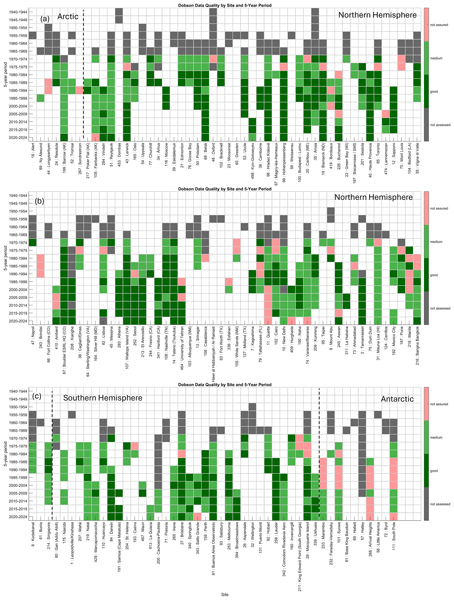
Xiaoyi Zhao, Vitali Fioletov, Irina Petropavlovskikh, Voltaire Velazco, Alberto Redondas, Anna Solomatnikova, Corinne Vigouroux, Kimberly Strong, Michel Van Roozendael, Andrea Pazmino, Thomas F. Hanisco, Alexander Cede, Martin Tiefengraber, Gordon Labow, Masatomo Fujiwara, Ronald van der A, Debora Griffin, Chris McLinden, Tom Kralidis, Wolfgang Steinbrecht, and Sum Chi Lee
Atmos. Chem. Phys., 26, 13693–13720, https://doi.org/10.5194/acp-26-13693-2026, https://doi.org/10.5194/acp-26-13693-2026, 2026
Short summary
Short summary
Total column ozone (TCO) records from six ground-based networks are compiled and evaluated using multiple satellites and reanalysis data. Station performance (1940–2024) is assessed using harmonized metrics. Ground-based annual means agree within ±2 %, while pre-satellite reanalyses show larger biases (up to −5 %). The resulting quality-assessed dataset supports trend analysis and satellite validation.
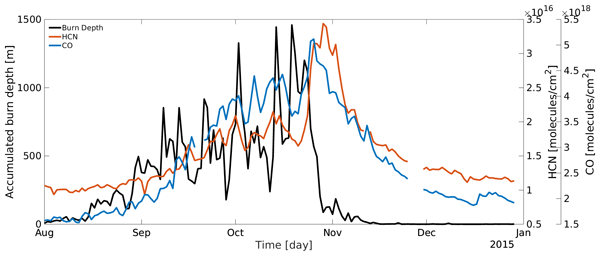
Antonio G. Bruno, David P. Moore, Jeremy J. Harrison, Ailish Graham, Martyn P. Chipperfield, and Corinne Vigouroux
Atmos. Chem. Phys., 26, 12925–12952, https://doi.org/10.5194/acp-26-12925-2026, https://doi.org/10.5194/acp-26-12925-2026, 2026
Short summary
Short summary
Indonesian peatlands store vast carbon reserves, but can release large quantities of greenhouse gases and other species with significant environmental impacts, including hydrogen cyanide (HCN), when fires occur. Analyzing three major El Niño years with satellites and models, we found that emissions depend on local hydrological conditions, not just El Niño strength. Including soil moisture and burn depth can improve emission estimates and climate strategies.
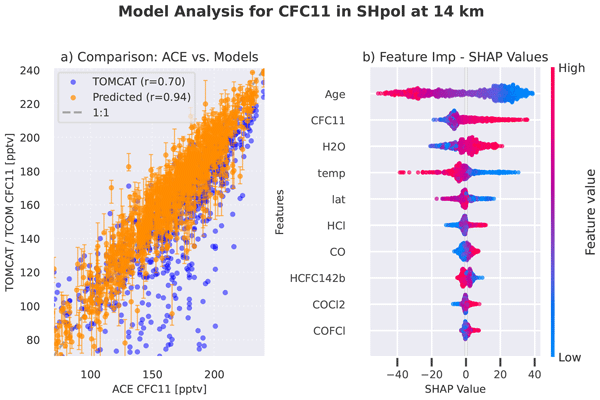
Sandip S. Dhomse and Martyn P. Chipperfield
Earth Syst. Sci. Data, 18, 6171–6189, https://doi.org/10.5194/essd-18-6171-2026, https://doi.org/10.5194/essd-18-6171-2026, 2026
Short summary
Short summary
We have developed an innovative methodology that uses machine learning to
correcterrors in chemical models by using satellite data as a guide. In this latest update, we detail improvements to our process for creating a gap-free data of two major ozone-depleting substances: CFC-11 and CFC-12. By combining the strengths of both chemical models and satellites, we have produced a reliable, global dataset that allows researchers to track long-term trends and better evaluate the chemical models.
Gytha Mettepenningen, Caroline Fayt, Cato Van Doorne, Aurélien Aubry, Sophie Berkenbosch, Martine De Mazière, Filip Desmet, Lars Jacobs, Eddy Neefs, Frederik Tack, Timo Van Laar, Clemens Mensink, and Michel Van Roozendael
EGUsphere, https://doi.org/10.5194/egusphere-2026-3783, https://doi.org/10.5194/egusphere-2026-3783, 2026
This preprint is open for discussion and under review for Atmospheric Measurement Techniques (AMT).
Short summary
Short summary
Pollution from ships impacts air quality in dense coastal regions of the North Sea. SEMPAS (Ship Emission Monitoring with Passive Absorption Spectroscopy) remotely monitors the emissions of ships passing by. Without ships nearby, SEMPAS is used for atmospheric research in a marine environment. This study presents the instrument’s development. Tests in the Belgian port of Zeebrugge show strong variations in ship emissions, while atmospheric measurements agree well with satellite observations.
Alberto Álvaro-Díaz, Sanam N. Vardag, André Butz, Olga Puentedura, and Cristina Prados-Roman
EGUsphere, https://doi.org/10.5194/egusphere-2026-4045, https://doi.org/10.5194/egusphere-2026-4045, 2026
Short summary
Short summary
In August 2025, over 200 fires burned the northwest of the Iberian Peninsula and released over one million tonnes of carbon monoxide. We used satellite measurements over 15 of those wildfires, covering 70 % of the area burned, to estimate emissions of carbon monoxide and smoke composition. Satellite-based estimates were about three times higher than common fire-emission datasets, highlighting the value and complexity of tracking major wildfires from space and the limits of current inventories.
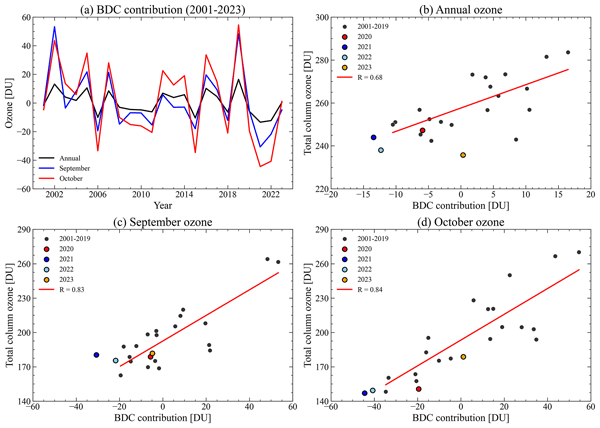
Haotian He, Shujie Chang, Martyn P. Chipperfield, Sandip S. Dhomse, Wuhu Feng, Saffron G. Heddell, Yajuan Li, and Mark Weber
Atmos. Chem. Phys., 26, 9741–9756, https://doi.org/10.5194/acp-26-9741-2026, https://doi.org/10.5194/acp-26-9741-2026, 2026
Short summary
Short summary
Overall, in the long-term, Antarctic ozone evolution reflects the interplay of multiple processes, with dynamical drivers holding a particularly strong influence on recovery patterns. The Brewer-Dobson circulation perturbations play a significant role in the long-term ozone trend, requiring more research and continued attention to the ozone hole and dynamic processes to improve our understanding of long-term ozone variability and predict future changes in the Antarctic ozone hole.
Saffron Genise Heddell, Martyn P. Chipperfield, Graham W. Mann, Sandip S. Dhomse, Wuhu Feng, Xin Zhou, Masaru Yoshioka, and Anthony Jones
EGUsphere, https://doi.org/10.5194/egusphere-2026-3619, https://doi.org/10.5194/egusphere-2026-3619, 2026
Short summary
Short summary
The 2022 Hunga eruption injected extraordinary amounts of water vapour into the stratosphere. Using a global model, we find a 7 % chemical increase in 2023 Antarctic ozone hole area, a modest increase limited by the cold Antarctic temperatures causing efficient removal of the Hunga water by polar stratospheric clouds. The impact on ozone was larger in the warmer, more sunlit vortex edge region. We highlight the value of natural events as test-cases for potential changes in the stratosphere.
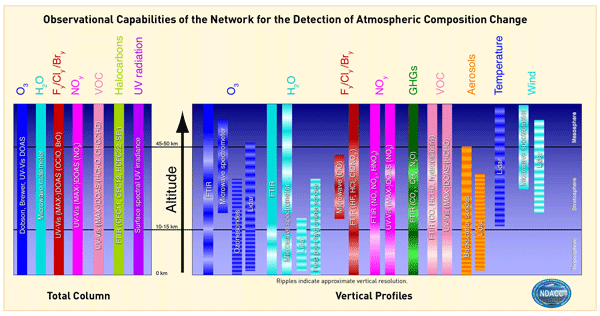
Irina Petropavlovskikh, Martine De Mazière, Anne M. Thompson, Jeannette D. Wild, James W. Hannigan, Henry B. Selkirk, Reem A. Hannun, Wolfgang Steinbrecht, Jean-Christopher Lambert, Roeland Van Malderen, Elizabeth Asher, Raul R. Cordero, Sophie Godin-Beekmann, Daan Hubert, Sergey Khaykin, Karin Kreher, Thierry Leblanc, Emmanuel Mahieu, Eliane Maillard Barras, Glen McConville, Gerald Nedoluha, Ivan Ortega, Alberto Redondas Marrero, Gunther Seckmeyer, Ryan M. Stauffer, Sarah A. Strode, Kim Strong, Takafumi Sugita, Michel Van Roozendael, Voltaire Velazco, Corinne Vigouroux, and Bärbel Vogel
Atmos. Chem. Phys., 26, 8637–8675, https://doi.org/10.5194/acp-26-8637-2026, https://doi.org/10.5194/acp-26-8637-2026, 2026
Short summary
Short summary
This introduction to the special issue "Achievements and perspectives of the Network for the Detection of Atmospheric Composition Change after 35 years of operation” provides an overview of important research findings achieved under the NDACC objectives. The future of NDACC is discussed in the light of the evolution of the scientific questions, evolving collaborations with partners and Cooperating Networks, and the current landscape of gaps in satellite and ground-based observations.
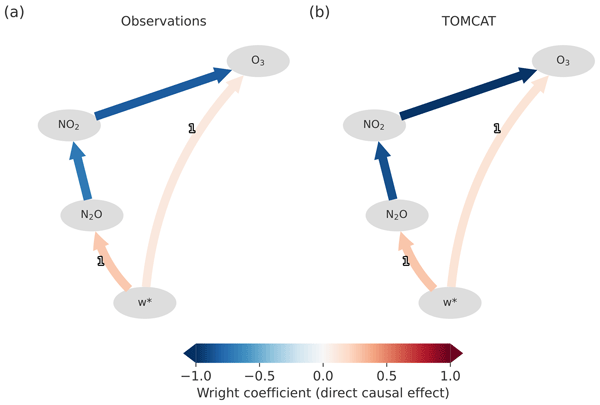
Evgenia Galytska, Birgit Hassler, Carlo Arosio, Martyn P. Chipperfield, Sandip S. Dhomse, Kimberlee Dubé, Wuhu Feng, Fernando Iglesias-Suarez, and Jakob Runge
Atmos. Chem. Phys., 26, 8185–8209, https://doi.org/10.5194/acp-26-8185-2026, https://doi.org/10.5194/acp-26-8185-2026, 2026
Short summary
Short summary
We explore how chemical and dynamical processes shape ozone in the tropical middle stratosphere using satellite data and a chemistry-transport model. We apply a framework to identify cause–effect relationships and estimate their strength. For 2004-2021 monthly data, we detect an indirect pathway controlling ozone variability, with effects increasing after two–three months. We further assess how different wind regimes influence this pathway.
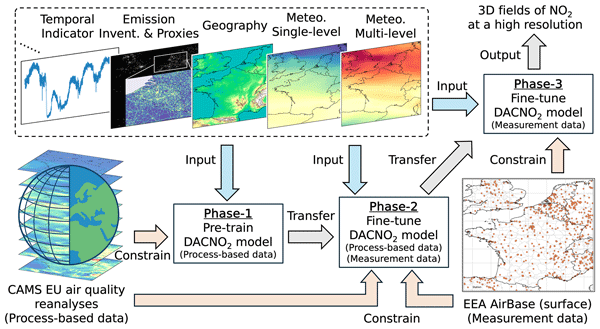
Wenfu Sun, Frederik Tack, Lieven Clarisse, and Michel Van Roozendael
Atmos. Chem. Phys., 26, 7741–7764, https://doi.org/10.5194/acp-26-7741-2026, https://doi.org/10.5194/acp-26-7741-2026, 2026
Short summary
Short summary
Accurate maps of nitrogen dioxide pollution at fine scales are essential for assessing air quality and protecting public health. We developed a machine learning model that produces daily high-resolution 3D nitrogen dioxide fields across Western Europe by combining large-scale atmospheric simulations with ground-based measurements. This approach outperforms traditional methods, especially over cities and complex terrain, and can enhance satellite-based air quality monitoring.
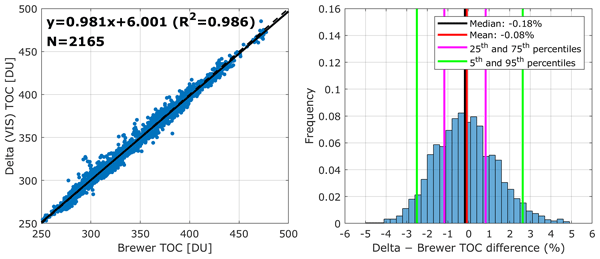
Dimitris Karagkiozidis, Alkiviadis Bais, Katerina Garane, Michel Van Roozendael, Dimitris Nikolis, Manuel Roca, and Dimitris Balis
Atmos. Meas. Tech., 19, 3309–3332, https://doi.org/10.5194/amt-19-3309-2026, https://doi.org/10.5194/amt-19-3309-2026, 2026
Short summary
Short summary
This study presents total ozone column (TOC) measurements over Thessaloniki, Greece, using a ground-based Ultraviolet-Visible (UV-VIS) instrument, by applying the direct sun Differential Optical Absorption Spectroscopy (DOAS) technique. The retrievals in both the UV (Huggins) and VIS (Chappuis) bands show very good agreement with collocated Brewer and Pandora observations. The results highlight the successful exploitation of the Chappuis bands for reliable ozone monitoring, providing a complementary approach to traditional UV-based TOC retrievals.
Herizo Narivelo, Bastien Sauvage, Klaas Folkert Boersma, Isabelle De Smedt, Isidora Anglou, Michel Van Roozendael, Eric Le Flochmoën, and Brice Barret
EGUsphere, https://doi.org/10.5194/egusphere-2026-1652, https://doi.org/10.5194/egusphere-2026-1652, 2026
Short summary
Short summary
Tropospheric ozone is a key component of air pollution; it is produced by the photochemical oxidation of volatile organic compounds in the presence of nitrogen oxides. Using satellite observations, we determine the best combination of emission inventories for biomass-burning and anthropogenic sources, we analyse the impact of the evolution of two surface emissions in tropics on tropospheric ozone and its chemical regime, using numerical simulations over the last few decades.
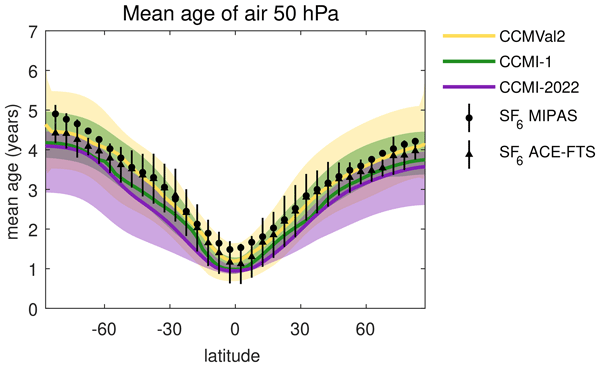
Marta Abalos, Thomas Birner, Andreas Chrysanthou, Sean Davis, Alvaro de la Cámara, Sandip Dhomse, Hella Garny, Michaela I. Hegglin, Daan Hubert, Oksana Ivaniha, James Keeble, Marianna Linz, Daniele Minganti, Jessica Neu, David Plummer, Laura Saunders, Kasturi Shah, Gabriele Stiller, Kleareti Tourpali, Darryn Waugh, Nathan Luke Abraham, Hideharu Akiyoshi, Martyn P. Chipperfield, Patrick Jöckel, Béatrice Josse, Marion Marchand, Patrick Martineau, Olaf Morgenstern, Timofei Sukhodolov, Shingo Watanabe, and Yousuke Yamashita
Atmos. Chem. Phys., 26, 5249–5291, https://doi.org/10.5194/acp-26-5249-2026, https://doi.org/10.5194/acp-26-5249-2026, 2026
Short summary
Short summary
Accurate representation of stratospheric transport in Chemistry-Climate Models is essential for reliable climate projections. This study evaluates three generations of models using observational data and reanalyses, identifying persistent biases and their potential causes. Some biases persist or even worsen in newer models. These findings highlight key limitations and inform efforts to improve models and advance understanding through process-based studies and enhanced observations.
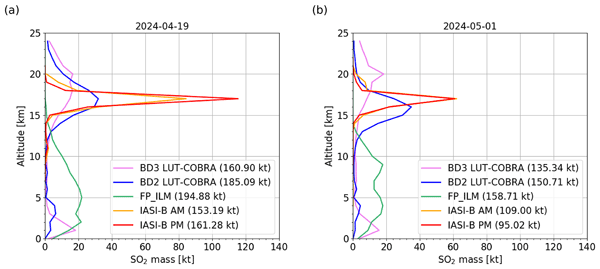
Lorenzo Fabris, Nicolas Theys, Lieven Clarisse, Bruno Franco, Jonas Vlietinck, Huan Yu, Hugues Brenot, Thomas Danckaert, Pascal Hedelt, and Michel Van Roozendael
Atmos. Meas. Tech., 19, 1801–1824, https://doi.org/10.5194/amt-19-1801-2026, https://doi.org/10.5194/amt-19-1801-2026, 2026
Short summary
Short summary
In this study, we developed an improved algorithm to retrieve the sulfur dioxide plume height and column density from the spectral band 2 of the TROPOspheric Monitoring Instrument onboard the Sentinel-5 Precursor satellite. We tested its sensitivity to various conditions and applied it to real volcanic eruptions. Overall, our approach shows high precision, accuracy, and sensitivity, and the results are consistent with other satellite measurements.

Yuwen Li, Wuhu Feng, John M. C. Plane, Tijian Wang, and Martyn P. Chipperfield
Atmos. Chem. Phys., 26, 3621–3635, https://doi.org/10.5194/acp-26-3621-2026, https://doi.org/10.5194/acp-26-3621-2026, 2026
Short summary
Short summary
The space industry is growing rapidly, but its environmental effects remain uncertain. We used a global chemistry-climate model to study how chlorine released by rocket launches could affect the ozone layer and its recovery from past depletion. Even with large growth in launches, global ozone loss remains small but could locally slow the healing of the ozone layer. These findings highlight the need to consider rocket emissions in future environmental policies.
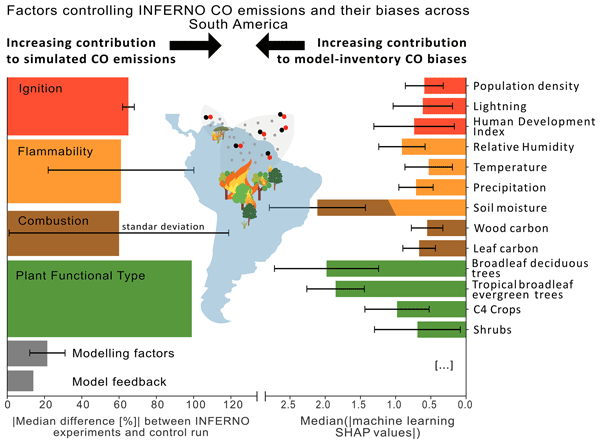
Maria P. Velásquez-García, Richard J. Pope, Steven T. Turnock, Chetan Deva, David P. Moore, Guilherme Mataveli, Steve R. Arnold, Ruth M. Doherty, and Martyn P. Chipperfield
Biogeosciences, 23, 1341–1364, https://doi.org/10.5194/bg-23-1341-2026, https://doi.org/10.5194/bg-23-1341-2026, 2026
Short summary
Short summary
Incorporating fire simulation into climate models is crucial for accurately representing interactions between fires, ecosystems, and climate, thereby enhancing climate projections. In South America, the INFERNO (Interactive Fires and Emissions algorithm for Natural Environments) fire model broadly captures CO emissions in active fire zones, e.g., the Amazon Arc of Deforestation. Still, it tends to overestimate emissions in tree-rich ecosystems, where INFERNO is too sensitive to low soil moisture, and to underestimate emissions in less tree-abundant ecosystems.
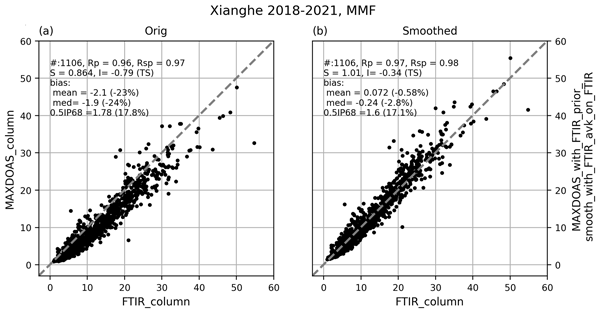
Gaia Pinardi, Martina M. Friedrich, Corinne Vigouroux, Bavo Langerock, Isabelle De Smedt, Caroline Fayt, Christian Hermans, Steffen Beirle, Thomas Wagner, Minqiang Zhou, Ting Wang, Pucai Wang, Martine De Mazière, and Michel Van Roozendael
Atmos. Meas. Tech., 19, 1259–1291, https://doi.org/10.5194/amt-19-1259-2026, https://doi.org/10.5194/amt-19-1259-2026, 2026
Short summary
Short summary
We evaluate ground-based remote-sensing measurements of formaldehyde from three techniques at a suburban site in China. A systematic −20 % bias in Multi-AXis Differential Optical Absorption Spectroscopy compared to direct-sun ultraviolet and infrared data is linked to limited sensitivity above a few kilometers and simplified vertical profiles assumptions. Using model-based priors and accounting for vertical sensitivity removes these differences, improving consistency for satellite validation.
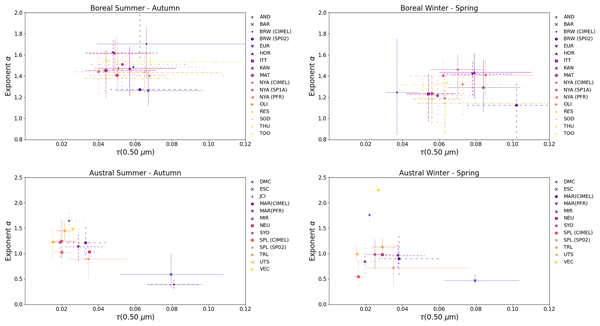
Simone Pulimeno, Angelo Lupi, Vito Vitale, Claudia Frangipani, Carlos Toledano, Stelios Kazadzis, Natalia Kouremeti, Christoph Ritter, Sandra Graßl, Kerstin Stebel, Vitali Fioletov, Ihab Abboud, Sandra Blindheim, Lynn Ma, Norm O'Neill, Piotr Sobolewski, Pawan Gupta, Elena Lind, Thomas F. Eck, Antti Hyvärinen, Veijo Aaltonen, Rigel Kivi, Janae Csavina, Dmitry Kabanov, Sergey M. Sakerin, Olga R. Sidorova, Robert S. Stone, Hagen Telg, Laura Riihimaki, Raul R. Cordero, Martin Radenz, Ronny Engelmann, Michel Van Roozendal, Anatoli Chaikovsky, Philippe Goloub, Junji Hisamitsu, and Mauro Mazzola
Atmos. Chem. Phys., 26, 1809–1846, https://doi.org/10.5194/acp-26-1809-2026, https://doi.org/10.5194/acp-26-1809-2026, 2026
Short summary
Short summary
This study analyzed aerosols optical properties over the Arctic and Antarctic to measure them even during long periods of darkness. It found that pollution in the Arctic is decreasing, likely due to European emission regulations, while wildfires are becoming a more important source of particles. In Antarctica, particle levels are higher near the coast than inland, and vary by season. These results help us better understand how air pollution and climate are changing at the Earth’s poles.
William J. Collins, John S. Daniel, Martyn P. Chipperfield, Martin Cussac, Makoto Deushi, Gregory Faluvegi, Paul Griffiths, Øivind Hodnebrog, Larry W. Horowitz, James Keeble, Douglas Kinnison, Vaishali Naik, Fiona M. O'Connor, Drew Shindell, Simone Tilmes, Kostas Tsigaridis, Zihao Wang, and James Weber
EGUsphere, https://doi.org/10.5194/egusphere-2025-6033, https://doi.org/10.5194/egusphere-2025-6033, 2026
Short summary
Short summary
Ozone depleting substances (ODSs) are also greenhouse gases that cause global warming. However, their destruction of ozone contributes a global cooling. We have used results from climate models that include atmospheric chemistry and found that the cooling effect of the ozone depletion diagnosed in the models was larger than that calculated using a standard method. We find that some ODSs have a net cooling effect whereas for others the warming effect is significantly reduced.
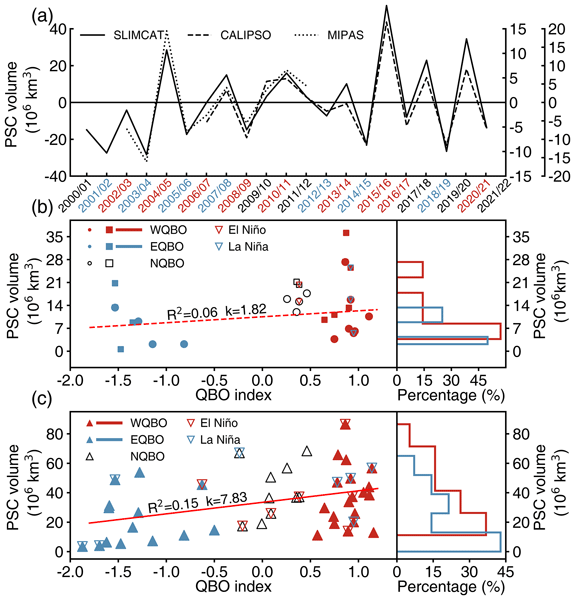
Douwang Li, Zhe Wang, Siyi Zhao, Jiankai Zhang, Wuhu Feng, and Martyn P. Chipperfield
Atmos. Chem. Phys., 26, 77–94, https://doi.org/10.5194/acp-26-77-2026, https://doi.org/10.5194/acp-26-77-2026, 2026
Short summary
Short summary
We find that wind variations at the equator (QBO) modulate the occurrence of Arctic polar stratospheric clouds (PSCs), which are key contributors to ozone depletion. During westerly QBO, the PSC occurrence is significantly greater than during easterly QBO. The QBO affects PSC mainly through temperature, while H2O and HNO3 have less effect. This suggests that future climate change may affect ozone recovery if it alters the QBO pattern. This study provides a new perspective on ozone prediction.
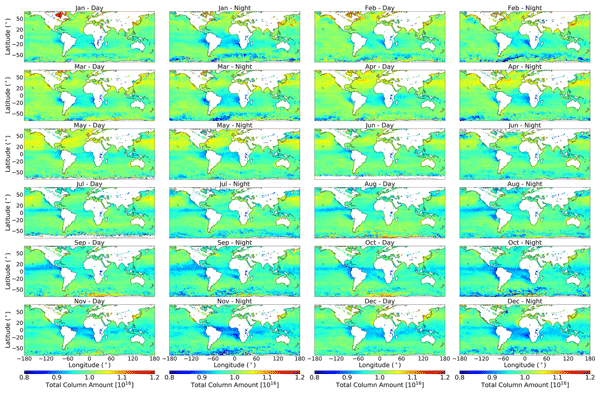
Michael P. Cartwright, Jeremy J. Harrison, David P. Moore, Richard J. Pope, Martyn P. Chipperfield, Chris Wilson, and Wuhu Feng
Atmos. Chem. Phys., 25, 15913–15934, https://doi.org/10.5194/acp-25-15913-2025, https://doi.org/10.5194/acp-25-15913-2025, 2025
Short summary
Short summary
We use satellite measurements to estimate quantities of a gas called carbonyl sulfide (OCS) in the atmosphere. OCS is consumed during photosynthesis, much like carbon dioxide (CO2). Our data is focused mostly over the global oceans for the year 2018, and we find it compares well with past satellite observations, ground-based measurements and modelled OCS. We hope to extend this measurement record and use it in data-driven tools in the future to better understand the carbon cycle globally.
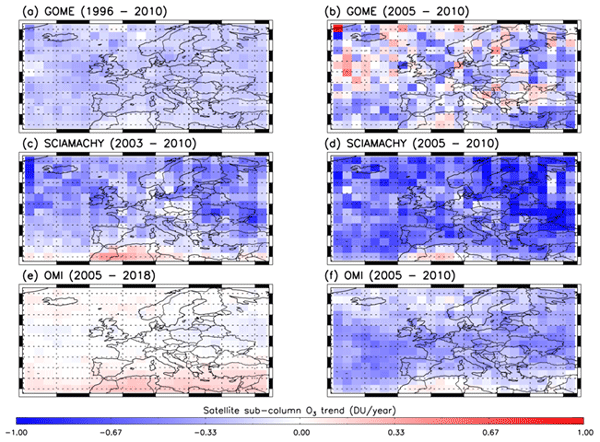
Matilda A. Pimlott, Richard J. Pope, Brian J. Kerridge, Richard Siddans, Barry G. Latter, Wuhu Feng, and Martyn P. Chipperfield
Atmos. Chem. Phys., 25, 15991–16007, https://doi.org/10.5194/acp-25-15991-2025, https://doi.org/10.5194/acp-25-15991-2025, 2025
Short summary
Short summary
Tropospheric ozone (O3) is a harmful secondary atmospheric pollutant and an important greenhouse gas. Here, we present an in-depth analysis of lower-tropospheric sub-column O3 (LTCO3, surface – 6 km) records from three satellite products produced by the Rutherford Appleton Laboratory (RAL) over Europe between 1996 and 2017. Overall, we detect moderate negative trends in the satellite records, but corresponding model simulations and ozonesonde measurements show negligible trends.
Melanie Coldewey-Egbers, Diego G. Loyola R., Barry Latter, Richard Siddans, Brian Kerridge, Daan Hubert, Michel van Roozendael, and Michael Eisinger
Atmos. Meas. Tech., 18, 5485–5505, https://doi.org/10.5194/amt-18-5485-2025, https://doi.org/10.5194/amt-18-5485-2025, 2025
Short summary
Short summary
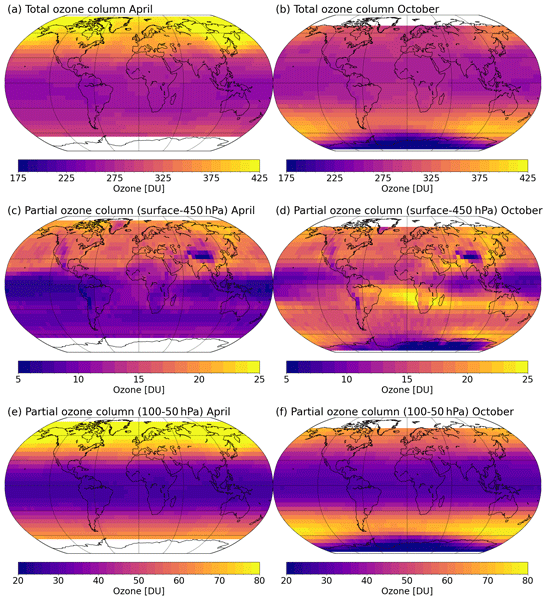
The Global Ozone Monitoring Experiment (GOME)-type Ozone Profile Essential Climate Variable (GOP-ECV) data record provides monthly mean ozone profiles with global coverage from 1995 to 2021 at a spatial resolution of 5° × 5°. Measurements from five nadir-viewing satellite sensors are first harmonized and then merged into a coherent record. The long-term stability of the data record is further improved through scaling the profiles using the GOME-type Total Ozone Essential Climate Variable (GTO-ECV) data record as a reference.
Yugo Kanaya, Roberto Sommariva, Alfonso Saiz-Lopez, Andrea Mazzeo, Theodore K. Koenig, Kaori Kawana, James E. Johnson, Aurélie Colomb, Pierre Tulet, Suzie Molloy, Ian E. Galbally, Rainer Volkamer, Anoop Mahajan, John W. Halfacre, Paul B. Shepson, Julia Schmale, Hélène Angot, Byron Blomquist, Matthew D. Shupe, Detlev Helmig, Junsu Gil, Meehye Lee, Sean C. Coburn, Ivan Ortega, Gao Chen, James Lee, Kenneth C. Aikin, David D. Parrish, John S. Holloway, Thomas B. Ryerson, Ilana B. Pollack, Eric J. Williams, Brian M. Lerner, Andrew J. Weinheimer, Teresa Campos, Frank M. Flocke, J. Ryan Spackman, Ilann Bourgeois, Jeff Peischl, Chelsea R. Thompson, Ralf M. Staebler, Amir A. Aliabadi, Wanmin Gong, Roeland Van Malderen, Anne M. Thompson, Ryan M. Stauffer, Debra E. Kollonige, Juan Carlos Gómez Martin, Masatomo Fujiwara, Katie Read, Matthew Rowlinson, Keiichi Sato, Junichi Kurokawa, Yoko Iwamoto, Fumikazu Taketani, Hisahiro Takashima, Mónica Navarro-Comas, Marios Panagi, and Martin G. Schultz
Earth Syst. Sci. Data, 17, 4901–4932, https://doi.org/10.5194/essd-17-4901-2025, https://doi.org/10.5194/essd-17-4901-2025, 2025
Short summary
Short summary
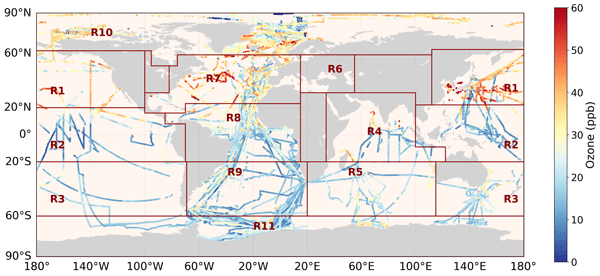
The first comprehensive dataset of tropospheric ozone over oceans/polar regions is presented, including 77 ship/buoy and 48 aircraft campaign observations (1977–2022, 0–5000 m altitude), supplemented by ozonesonde and surface data. Air masses isolated from land for 72+ hours are systematically selected as essentially oceanic. Among the 11 global regions, they show daytime decreases of 11–16 % in the tropics, while near-zero depletions are rare, unlike in the Arctic, implying different mechanisms.
Isolde Glissenaar, Klaas Folkert Boersma, Isidora Anglou, Pieter Rijsdijk, Tijl Verhoelst, Steven Compernolle, Gaia Pinardi, Jean-Christopher Lambert, Michel Van Roozendael, and Henk Eskes
Earth Syst. Sci. Data, 17, 4627–4650, https://doi.org/10.5194/essd-17-4627-2025, https://doi.org/10.5194/essd-17-4627-2025, 2025
Short summary
Short summary
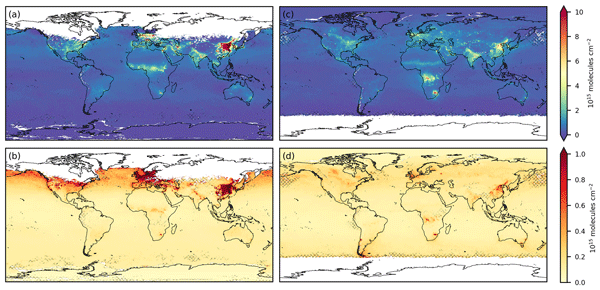
We developed a new global dataset of nitrogen dioxide (NO2) levels in the lower atmosphere, using data from TROPOMI for 2018–2021. This dataset offers improved accuracy and detail compared to earlier versions, meeting high international standards for climate data. By refining how measurement errors are calculated and reduced over time and space, we provide clearer insights into pollution patterns. This work supports better air quality monitoring and informs actions to address pollution globally.
Lara Noppen, Lieven Clarisse, Frederik Tack, Thomas Ruhtz, Martin Van Damme, Michel Van Roozendael, Dirk Schuettemeyer, and Pierre Coheur
Atmos. Meas. Tech., 18, 4183–4205, https://doi.org/10.5194/amt-18-4183-2025, https://doi.org/10.5194/amt-18-4183-2025, 2025
Short summary
Short summary
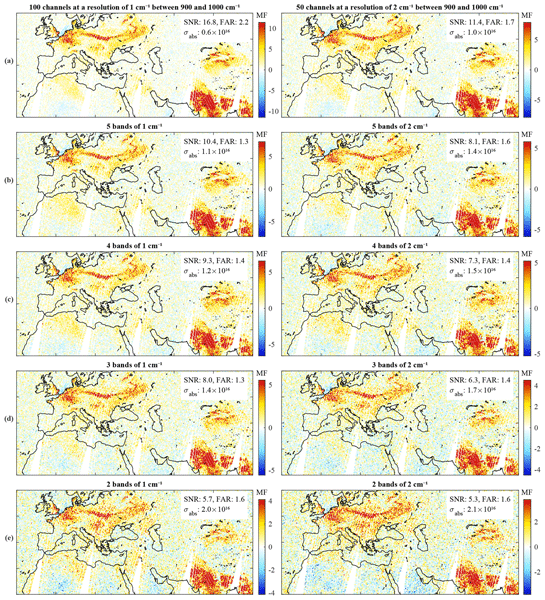
Current infrared satellite sounders offer high spectral but low spatial resolution, limiting their ability to quantify atmospheric ammonia (NH3) at small scales. Through simulations and analysis of real data, we show that NH3 can be measured effectively from spectra with reduced resolution, either in a contiguous spectral range or in select well-chosen bands. This approach opens possibilities for the development of smaller dedicated instruments for observing NH3 at high spatial resolution.
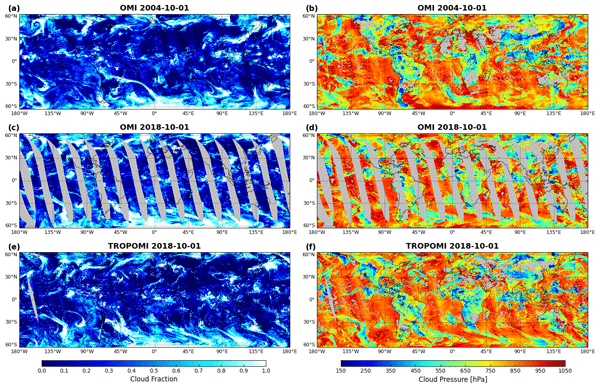
Huan Yu, Isabelle De Smedt, Nicolas Theys, Maarten Sneep, Pepijn Veefkind, and Michel Van Roozendael
Atmos. Meas. Tech., 18, 4131–4163, https://doi.org/10.5194/amt-18-4131-2025, https://doi.org/10.5194/amt-18-4131-2025, 2025
Short summary
Short summary
We introduce a new cloud retrieval algorithm using the O2–O2 absorption band at 477 nm to generate harmonized cloud datasets from OMI and TROPOMI. The algorithm improves upon the OMI O2–O2 operational cloud algorithm in several aspects. The new approach improves consistency in cloud parameters and NO2 retrievals between two sensors.
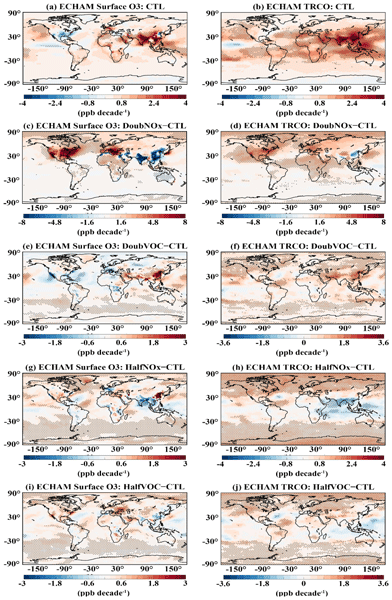
Suvarna Fadnavis, Yasin Elshorbany, Jerald Ziemke, Brice Barret, Alexandru Rap, P. R. Satheesh Chandran, Richard J. Pope, Vijay Sagar, Domenico Taraborrelli, Eric Le Flochmoen, Juan Cuesta, Catherine Wespes, Folkert Boersma, Isolde Glissenaar, Isabelle De Smedt, Michel Van Roozendael, Hervé Petetin, and Isidora Anglou
Atmos. Chem. Phys., 25, 8229–8254, https://doi.org/10.5194/acp-25-8229-2025, https://doi.org/10.5194/acp-25-8229-2025, 2025
Short summary
Short summary
Satellites and model simulations show enhancement in tropospheric ozone, which is highly impacted by human-produced nitrous oxides compared to volatile organic compounds. The increased amount of ozone enhances ozone radiative forcing. The ozone enhancement and associated radiative forcing are the highest over South and East Asia. The emissions of nitrous oxides show a higher influence on shifting ozone photochemical regimes than volatile organic compounds.
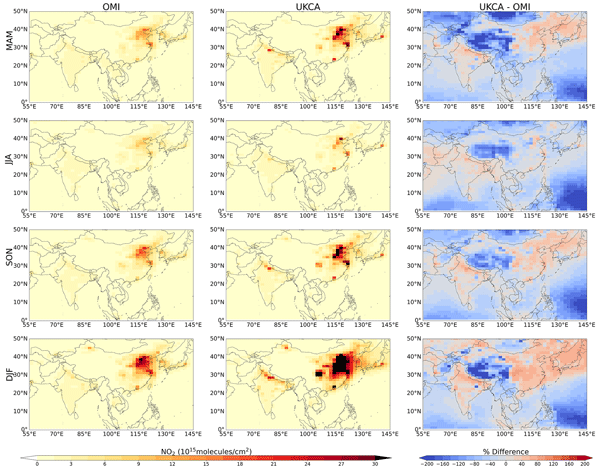
Alok K. Pandey, David S. Stevenson, Alcide Zhao, Richard J. Pope, Ryan Hossaini, Krishan Kumar, and Martyn P. Chipperfield
Atmos. Chem. Phys., 25, 4785–4802, https://doi.org/10.5194/acp-25-4785-2025, https://doi.org/10.5194/acp-25-4785-2025, 2025
Short summary
Short summary
Nitrogen dioxide is an air pollutant largely controlled by human activity that affects ozone, methane, and aerosols. Satellite instruments can quantify column NO2 and, by carefully matching the time and location of measurements, enable evaluation of model simulations. NO2 over south and east Asia is assessed, showing that the model captures not only many features of the measurements, but also important differences that suggest model deficiencies in representing several aspects of the atmospheric chemistry of NO2.
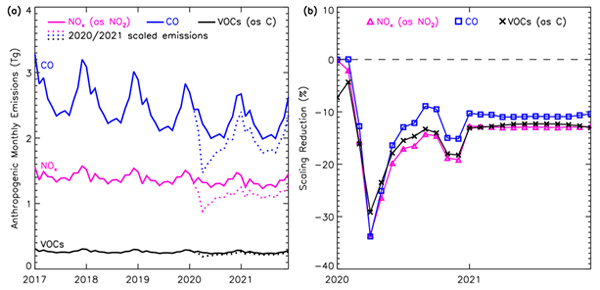
Matilda A. Pimlott, Richard J. Pope, Brian J. Kerridge, Richard Siddans, Barry G. Latter, Lucy J. Ventress, Wuhu Feng, and Martyn P. Chipperfield
Atmos. Chem. Phys., 25, 4391–4401, https://doi.org/10.5194/acp-25-4391-2025, https://doi.org/10.5194/acp-25-4391-2025, 2025
Short summary
Short summary
Globally, lockdowns were implemented to limit the spread of COVID-19, leading to a decrease in emissions of key air pollutants. Here, we use novel satellite data and a chemistry model to investigate the impact of the pandemic on tropospheric ozone (O3), a key pollutant, in 2020. Overall, we found substantial decreases of up to 20 %, two-thirds of which came from emission reductions, while one-third was due to a decrease in the stratospheric O3 flux into the troposphere.
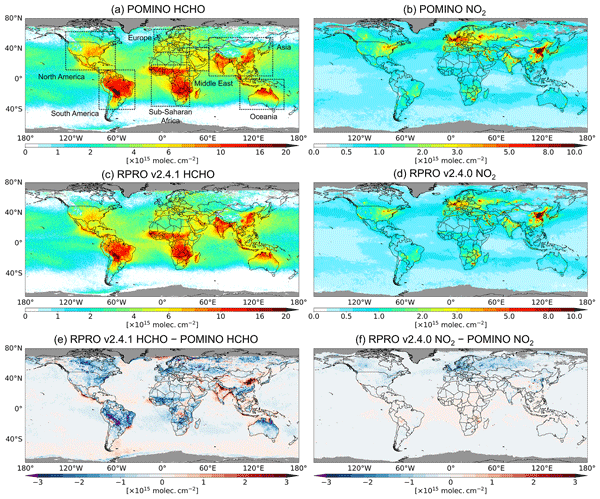
Yuhang Zhang, Huan Yu, Isabelle De Smedt, Jintai Lin, Nicolas Theys, Michel Van Roozendael, Gaia Pinardi, Steven Compernolle, Ruijing Ni, Fangxuan Ren, Sijie Wang, Lulu Chen, Jos Van Geffen, Mengyao Liu, Alexander M. Cede, Martin Tiefengraber, Alexis Merlaud, Martina M. Friedrich, Andreas Richter, Ankie Piters, Vinod Kumar, Vinayak Sinha, Thomas Wagner, Yongjoo Choi, Hisahiro Takashima, Yugo Kanaya, Hitoshi Irie, Robert Spurr, Wenfu Sun, and Lorenzo Fabris
Atmos. Meas. Tech., 18, 1561–1589, https://doi.org/10.5194/amt-18-1561-2025, https://doi.org/10.5194/amt-18-1561-2025, 2025
Short summary
Short summary
We developed an advanced algorithm for global retrieval of TROPOspheric Monitoring Instrument (TROPOMI) HCHO and NO2 vertical column densities with much improved consistency. Sensitivity tests demonstrate the complexity and nonlinear interactions of auxiliary parameters in the air mass factor calculation. An improved agreement is found with measurements from a global ground-based instrument network. The scientific retrieval provides a useful source of information for studies combining HCHO and NO2.
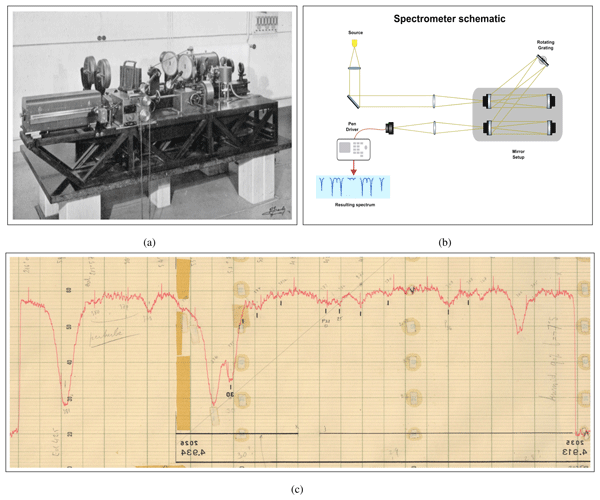
Jamal Makkor, Mathias Palm, Matthias Buschmann, Emmanuel Mahieu, Martyn P. Chipperfield, and Justus Notholt
Atmos. Meas. Tech., 18, 1105–1114, https://doi.org/10.5194/amt-18-1105-2025, https://doi.org/10.5194/amt-18-1105-2025, 2025
Short summary
Short summary
During the years 1950 and 1951, Marcel Migeotte took regular solar measurements in the form of paper rolls at the Jungfraujoch site. These historical spectra proved to be valuable for atmospheric research and needed to be saved for posterity. Therefore, a digitization method which used image-processing techniques was developed to extract them from the historical paper rolls. This allowed them to be saved in a machine-readable format that is easily accessible to the scientific community.
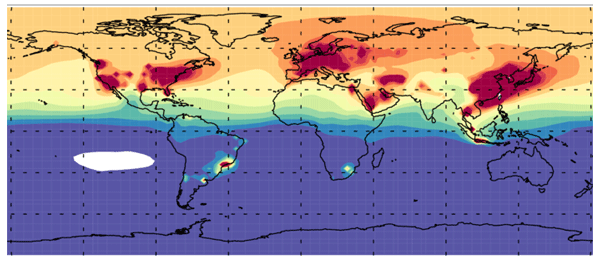
Ryan Hossaini, David Sherry, Zihao Wang, Martyn P. Chipperfield, Wuhu Feng, David E. Oram, Karina E. Adcock, Stephen A. Montzka, Isobel J. Simpson, Andrea Mazzeo, Amber A. Leeson, Elliot Atlas, and Charles C.-K. Chou
Atmos. Chem. Phys., 24, 13457–13475, https://doi.org/10.5194/acp-24-13457-2024, https://doi.org/10.5194/acp-24-13457-2024, 2024
Short summary
Short summary
DCE (1,2-dichloroethane) is an industrial chemical used to produce PVC (polyvinyl chloride). We analysed DCE production data to estimate global DCE emissions (2002–2020). The emissions were included in an atmospheric model and evaluated by comparing simulated DCE to DCE measurements in the troposphere. We show that DCE contributes ozone-depleting Cl to the stratosphere and that this has increased with increasing DCE emissions. DCE’s impact on stratospheric O3 is currently small but non-zero.
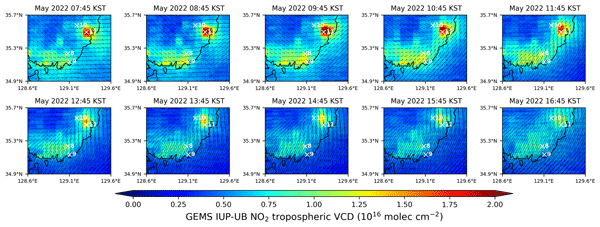
Kezia Lange, Andreas Richter, Tim Bösch, Bianca Zilker, Miriam Latsch, Lisa K. Behrens, Chisom M. Okafor, Hartmut Bösch, John P. Burrows, Alexis Merlaud, Gaia Pinardi, Caroline Fayt, Martina M. Friedrich, Ermioni Dimitropoulou, Michel Van Roozendael, Steffen Ziegler, Simona Ripperger-Lukosiunaite, Leon Kuhn, Bianca Lauster, Thomas Wagner, Hyunkee Hong, Donghee Kim, Lim-Seok Chang, Kangho Bae, Chang-Keun Song, Jong-Uk Park, and Hanlim Lee
Atmos. Meas. Tech., 17, 6315–6344, https://doi.org/10.5194/amt-17-6315-2024, https://doi.org/10.5194/amt-17-6315-2024, 2024
Short summary
Short summary
Instruments for air quality observations on geostationary satellites provide multiple observations per day and allow for the analysis of the diurnal variation of important air pollutants such as nitrogen dioxide (NO2) over large areas. The South Korean instrument GEMS, launched in February 2020, is the first instrument in geostationary orbit and covers a large part of Asia. Our investigations show the observed diurnal evolution of NO2 at different measurement sites.
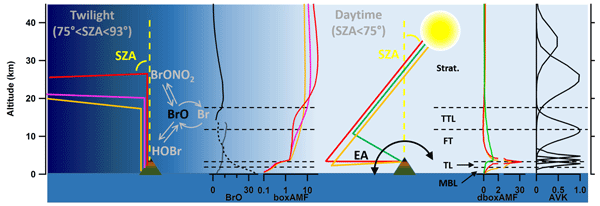
Theodore K. Koenig, François Hendrick, Douglas Kinnison, Christopher F. Lee, Michel Van Roozendael, and Rainer Volkamer
Atmos. Meas. Tech., 17, 5911–5934, https://doi.org/10.5194/amt-17-5911-2024, https://doi.org/10.5194/amt-17-5911-2024, 2024
Short summary
Short summary
Atmospheric bromine destroys ozone, impacts oxidation capacity, and oxidizes mercury into its toxic form. We constrain bromine by remote sensing of BrO from a mountaintop. Previous measurements retrieved two to three pieces of information vertically; we apply new methods to get five and a half vertically and two more in time. We compare with aircraft measurements to validate the methods and look at variations in BrO over the Pacific.
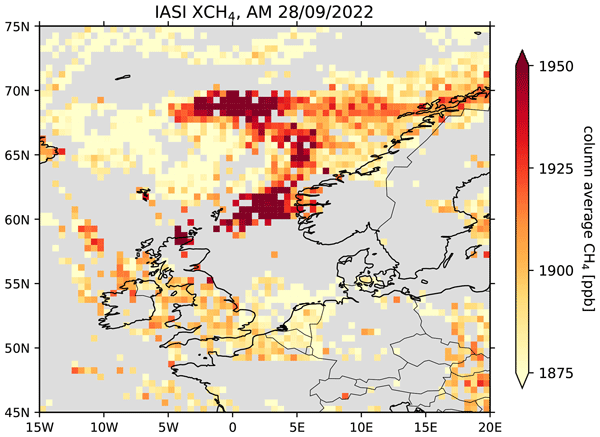
Chris Wilson, Brian J. Kerridge, Richard Siddans, David P. Moore, Lucy J. Ventress, Emily Dowd, Wuhu Feng, Martyn P. Chipperfield, and John J. Remedios
Atmos. Chem. Phys., 24, 10639–10653, https://doi.org/10.5194/acp-24-10639-2024, https://doi.org/10.5194/acp-24-10639-2024, 2024
Short summary
Short summary
The leaks from the Nord Stream gas pipelines in September 2022 released a large amount of methane (CH4) into the atmosphere. We provide observational data from a satellite instrument that shows a large CH4 plume over the North Sea off the coast of Scandinavia. We use this together with atmospheric models to quantify the CH4 leaked into the atmosphere from the pipelines. We find that 219–427 Gg CH4 was emitted, making this the largest individual fossil-fuel-related CH4 leak on record.
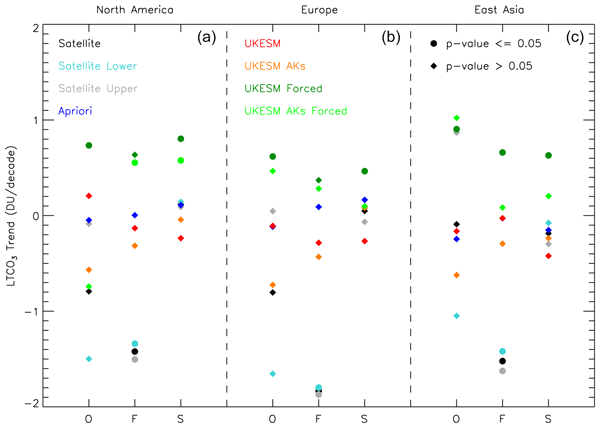
Richard J. Pope, Fiona M. O'Connor, Mohit Dalvi, Brian J. Kerridge, Richard Siddans, Barry G. Latter, Brice Barret, Eric Le Flochmoen, Anne Boynard, Martyn P. Chipperfield, Wuhu Feng, Matilda A. Pimlott, Sandip S. Dhomse, Christian Retscher, Catherine Wespes, and Richard Rigby
Atmos. Chem. Phys., 24, 9177–9195, https://doi.org/10.5194/acp-24-9177-2024, https://doi.org/10.5194/acp-24-9177-2024, 2024
Short summary
Short summary
Ozone is a potent air pollutant in the lower troposphere, with adverse impacts on human health. Satellite records of tropospheric ozone currently show large-scale inconsistencies in long-term trends. Our detailed study of the potential factors (e.g. satellite errors, where the satellite can observe ozone) potentially driving these inconsistencies found that, in North America, Europe, and East Asia, the underlying trends are typically small with large uncertainties.
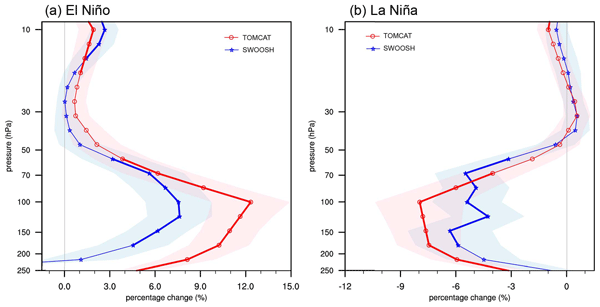
Yang Li, Wuhu Feng, Xin Zhou, Yajuan Li, and Martyn P. Chipperfield
Atmos. Chem. Phys., 24, 8277–8293, https://doi.org/10.5194/acp-24-8277-2024, https://doi.org/10.5194/acp-24-8277-2024, 2024
Short summary
Short summary
The Tibetan Plateau (TP), the highest and largest plateau, experiences strong surface solar UV radiation, whose excess can cause harmful influences on local biota. Hence, it is critical to study TP ozone. We find ENSO, the strongest interannual phenomenon, tends to induce tropospheric temperature change and thus modulate tropopause variability, which in turn favours ozone change over the TP. Our results have implications for a better understanding of the interannual variability of TP ozone.
Gitaek T. Lee, Rokjin J. Park, Hyeong-Ahn Kwon, Eunjo S. Ha, Sieun D. Lee, Seunga Shin, Myoung-Hwan Ahn, Mina Kang, Yong-Sang Choi, Gyuyeon Kim, Dong-Won Lee, Deok-Rae Kim, Hyunkee Hong, Bavo Langerock, Corinne Vigouroux, Christophe Lerot, Francois Hendrick, Gaia Pinardi, Isabelle De Smedt, Michel Van Roozendael, Pucai Wang, Heesung Chong, Yeseul Cho, and Jhoon Kim
Atmos. Chem. Phys., 24, 4733–4749, https://doi.org/10.5194/acp-24-4733-2024, https://doi.org/10.5194/acp-24-4733-2024, 2024
Short summary
Short summary
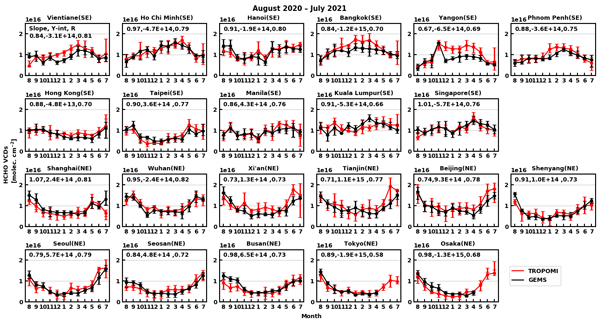
This study evaluates the Geostationary Environment Monitoring Spectrometer (GEMS) HCHO product by comparing its vertical column densities (VCDs) with those of TROPOMI and ground-based observations. Based on some sensitivity tests, obtaining radiance references under clear-sky conditions significantly improves HCHO retrieval quality. GEMS HCHO VCDs captured seasonal and diurnal variations well during the first year of observation, showing consistency with TROPOMI and ground-based observations.
Richard J. Pope, Alexandru Rap, Matilda A. Pimlott, Brice Barret, Eric Le Flochmoen, Brian J. Kerridge, Richard Siddans, Barry G. Latter, Lucy J. Ventress, Anne Boynard, Christian Retscher, Wuhu Feng, Richard Rigby, Sandip S. Dhomse, Catherine Wespes, and Martyn P. Chipperfield
Atmos. Chem. Phys., 24, 3613–3626, https://doi.org/10.5194/acp-24-3613-2024, https://doi.org/10.5194/acp-24-3613-2024, 2024
Short summary
Short summary
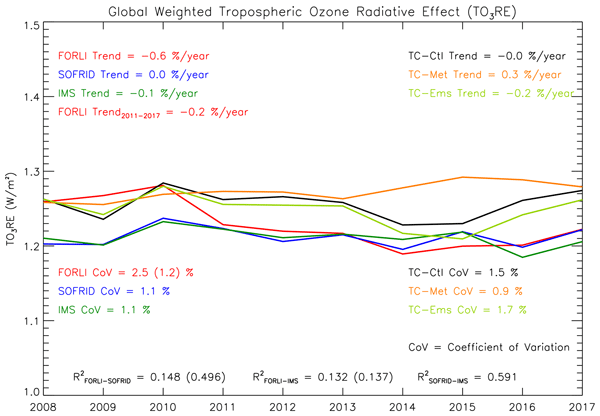
Tropospheric ozone is an important short-lived climate forcer which influences the incoming solar short-wave radiation and the outgoing long-wave radiation in the atmosphere (8–15 km) where the balance between the two yields a net positive (i.e. warming) effect at the surface. Overall, we find that the tropospheric ozone radiative effect ranges between 1.21 and 1.26 W m−2 with a negligible trend (2008–2017), suggesting that tropospheric ozone influences on climate have remained stable with time.
Emily Dowd, Alistair J. Manning, Bryn Orth-Lashley, Marianne Girard, James France, Rebecca E. Fisher, Dave Lowry, Mathias Lanoisellé, Joseph R. Pitt, Kieran M. Stanley, Simon O'Doherty, Dickon Young, Glen Thistlethwaite, Martyn P. Chipperfield, Emanuel Gloor, and Chris Wilson
Atmos. Meas. Tech., 17, 1599–1615, https://doi.org/10.5194/amt-17-1599-2024, https://doi.org/10.5194/amt-17-1599-2024, 2024
Short summary
Short summary
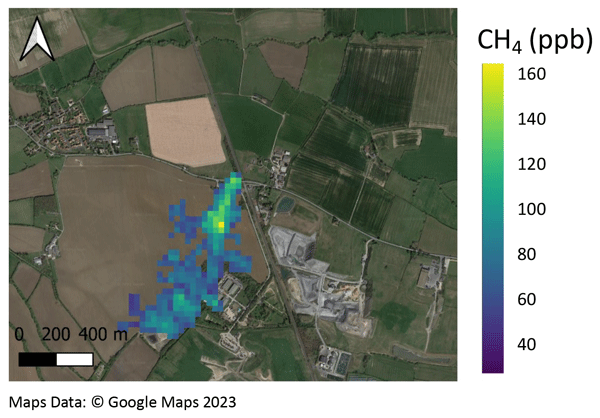
We provide the first validation of the satellite-derived emission estimates using surface-based mobile greenhouse gas surveys of an active gas leak detected near Cheltenham, UK. GHGSat’s emission estimates broadly agree with the surface-based mobile survey and steps were taken to fix the leak, highlighting the importance of satellite data in identifying emissions and helping to reduce our human impact on climate change.
Martyn P. Chipperfield and Slimane Bekki
Atmos. Chem. Phys., 24, 2783–2802, https://doi.org/10.5194/acp-24-2783-2024, https://doi.org/10.5194/acp-24-2783-2024, 2024
Short summary
Short summary
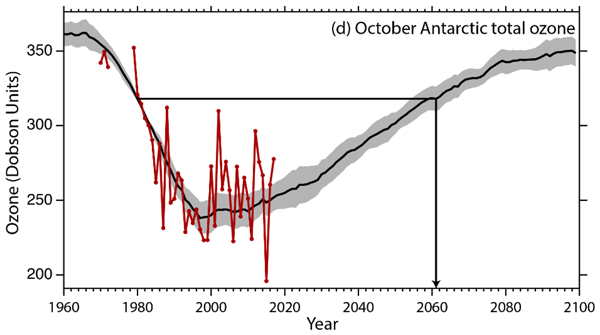
We give a personal perspective on recent issues related to the depletion of stratospheric ozone and some newly emerging challenges. We first provide a brief review of historic work on understanding the ozone layer and review ozone recovery from the effects of halogenated source gases and the Montreal Protocol. We then discuss the recent observations of ozone depletion from Australian fires in early 2020 and the Hunga Tonga–Hunga Ha'apai volcano in January 2022.
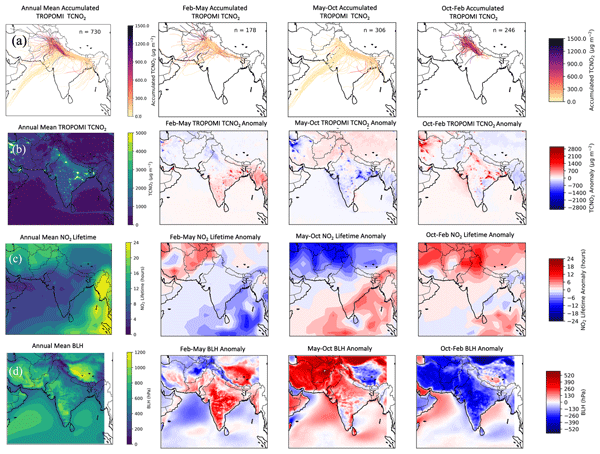
Ailish M. Graham, Richard J. Pope, Martyn P. Chipperfield, Sandip S. Dhomse, Matilda Pimlott, Wuhu Feng, Vikas Singh, Ying Chen, Oliver Wild, Ranjeet Sokhi, and Gufran Beig
Atmos. Chem. Phys., 24, 789–806, https://doi.org/10.5194/acp-24-789-2024, https://doi.org/10.5194/acp-24-789-2024, 2024
Short summary
Short summary
Our paper uses novel satellite datasets and high-resolution emissions datasets alongside a back-trajectory model to investigate the balance of local and external sources influencing NOx air pollution changes in Delhi. We find in the post-monsoon season that NOx from local and non-local transport emissions contributes most to poor air quality in Delhi. Therefore, air quality mitigation strategies in Delhi and surrounding regions are used to control this issue.
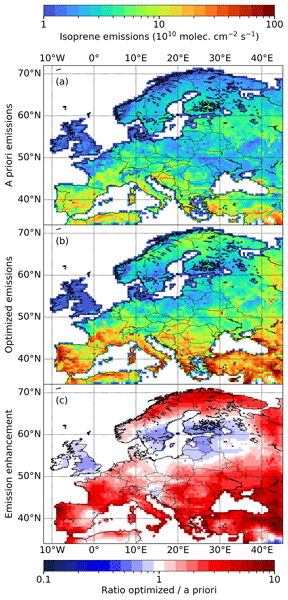
Glenn-Michael Oomen, Jean-François Müller, Trissevgeni Stavrakou, Isabelle De Smedt, Thomas Blumenstock, Rigel Kivi, Maria Makarova, Mathias Palm, Amelie Röhling, Yao Té, Corinne Vigouroux, Martina M. Friedrich, Udo Frieß, François Hendrick, Alexis Merlaud, Ankie Piters, Andreas Richter, Michel Van Roozendael, and Thomas Wagner
Atmos. Chem. Phys., 24, 449–474, https://doi.org/10.5194/acp-24-449-2024, https://doi.org/10.5194/acp-24-449-2024, 2024
Short summary
Short summary
Natural emissions from vegetation have a profound impact on air quality for their role in the formation of harmful tropospheric ozone and organic aerosols, yet these emissions are highly uncertain. In this study, we quantify emissions of organic gases over Europe using high-quality satellite measurements of formaldehyde. These satellite observations suggest that emissions from vegetation are much higher than predicted by models, especially in southern Europe.
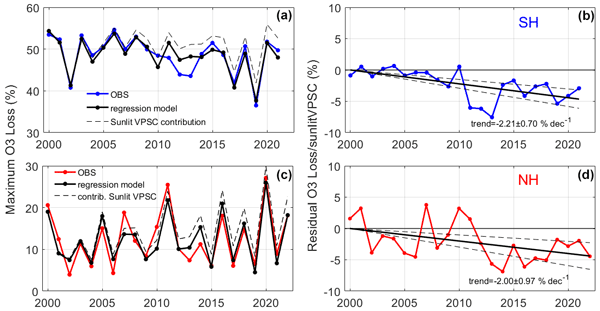
Andrea Pazmiño, Florence Goutail, Sophie Godin-Beekmann, Alain Hauchecorne, Jean-Pierre Pommereau, Martyn P. Chipperfield, Wuhu Feng, Franck Lefèvre, Audrey Lecouffe, Michel Van Roozendael, Nis Jepsen, Georg Hansen, Rigel Kivi, Kimberly Strong, and Kaley A. Walker
Atmos. Chem. Phys., 23, 15655–15670, https://doi.org/10.5194/acp-23-15655-2023, https://doi.org/10.5194/acp-23-15655-2023, 2023
Short summary
Short summary
The vortex-averaged ozone loss over the last 3 decades is evaluated for both polar regions using the passive ozone tracer of the chemical transport model TOMCAT/SLIMCAT and total ozone observations from the SAOZ network and MSR2 reanalysis. Three metrics were developed to compute ozone trends since 2000. The study confirms the ozone recovery in the Antarctic and shows a potential sign of quantitative detection of ozone recovery in the Arctic that needs to be robustly confirmed in the future.
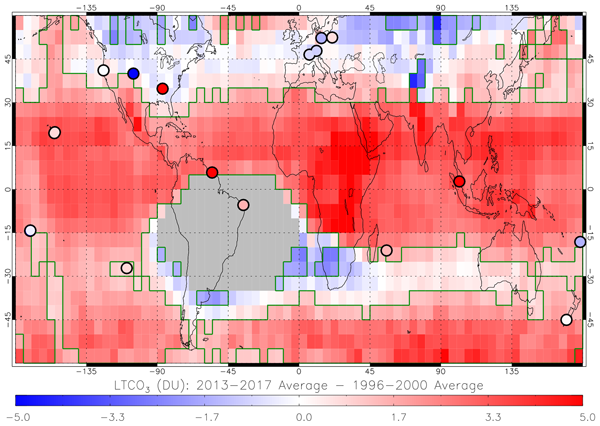
Richard J. Pope, Brian J. Kerridge, Richard Siddans, Barry G. Latter, Martyn P. Chipperfield, Wuhu Feng, Matilda A. Pimlott, Sandip S. Dhomse, Christian Retscher, and Richard Rigby
Atmos. Chem. Phys., 23, 14933–14947, https://doi.org/10.5194/acp-23-14933-2023, https://doi.org/10.5194/acp-23-14933-2023, 2023
Short summary
Short summary
Ozone is a potent air pollutant, and we present the first study to investigate long-term changes in lower tropospheric column ozone (LTCO3) from space. We have constructed a merged LTCO3 dataset from GOME-1, SCIAMACHY and OMI between 1996 and 2017. Comparing LTCO3 between the 1996–2000 and 2013–2017 5-year averages, we find significant positive increases in the tropics/sub-tropics, while in the northern mid-latitudes, we find small-scale differences.
Sandip S. Dhomse and Martyn P. Chipperfield
Earth Syst. Sci. Data, 15, 5105–5120, https://doi.org/10.5194/essd-15-5105-2023, https://doi.org/10.5194/essd-15-5105-2023, 2023
Short summary
Short summary
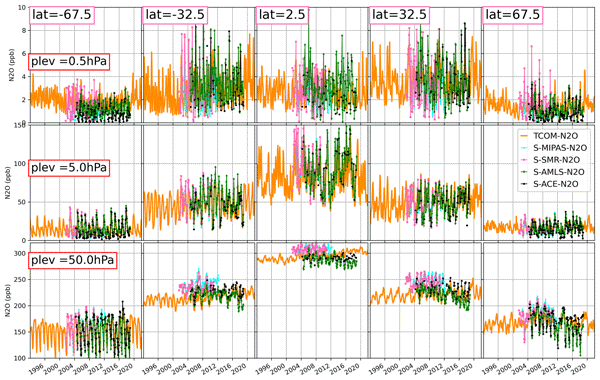
There are no long-term stratospheric profile data sets for two very important greenhouse gases: methane (CH4) and nitrous oxide (N2O). Along with radiative feedback, these species play an important role in controlling ozone loss in the stratosphere. Here, we use machine learning to fuse satellite measurements with a chemical model to construct long-term gap-free profile data sets for CH4 and N2O. We aim to construct similar data sets for other important trace gases (e.g. O3, Cly, NOy species).
Ewa M. Bednarz, Ryan Hossaini, and Martyn P. Chipperfield
Atmos. Chem. Phys., 23, 13701–13711, https://doi.org/10.5194/acp-23-13701-2023, https://doi.org/10.5194/acp-23-13701-2023, 2023
Short summary
Short summary
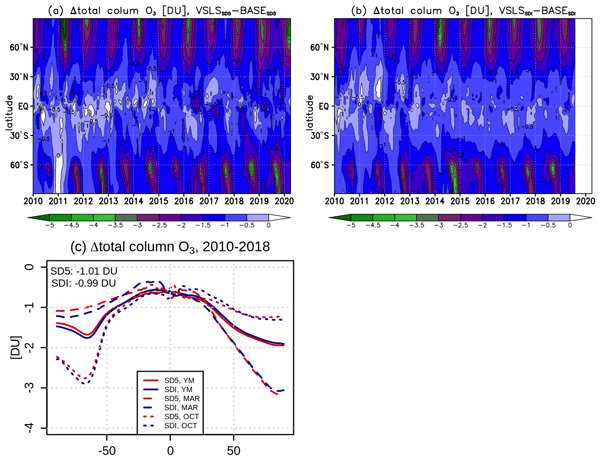
We quantify, for the first time, the time-varying impact of uncontrolled emissions of chlorinated very short-lived substances (Cl-VSLSs) on stratospheric ozone using a state-of-the-art chemistry-climate model. We demonstrate that Cl-VSLSs already have a non-negligible impact on stratospheric ozone, including a local reduction of up to ~7 DU in Arctic ozone in the cold winter of 2019/20, and any so future growth in emissions will continue to offset some of the benefits of the Montreal Protocol.
Ewa M. Bednarz, Ryan Hossaini, N. Luke Abraham, and Martyn P. Chipperfield
Geosci. Model Dev., 16, 6187–6209, https://doi.org/10.5194/gmd-16-6187-2023, https://doi.org/10.5194/gmd-16-6187-2023, 2023
Short summary
Short summary
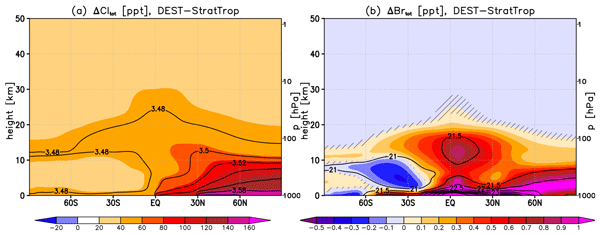
Development and performance of the new DEST chemistry scheme of UM–UKCA is described. The scheme extends the standard StratTrop scheme by including important updates to the halogen chemistry, thus allowing process-oriented studies of stratospheric ozone depletion and recovery, including impacts from both controlled long-lived ozone-depleting substances and emerging issues around uncontrolled, very short-lived substances. It will thus aid studies in support of future ozone assessment reports.
Rodriguez Yombo Phaka, Alexis Merlaud, Gaia Pinardi, Martina M. Friedrich, Michel Van Roozendael, Jean-François Müller, Trissevgeni Stavrakou, Isabelle De Smedt, François Hendrick, Ermioni Dimitropoulou, Richard Bopili Mbotia Lepiba, Edmond Phuku Phuati, Buenimio Lomami Djibi, Lars Jacobs, Caroline Fayt, Jean-Pierre Mbungu Tsumbu, and Emmanuel Mahieu
Atmos. Meas. Tech., 16, 5029–5050, https://doi.org/10.5194/amt-16-5029-2023, https://doi.org/10.5194/amt-16-5029-2023, 2023
Short summary
Short summary
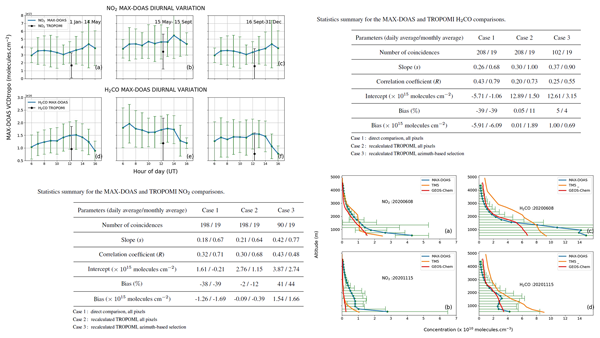
We present air quality measurements in Kinshasa, Democratic Republic of the Congo, performed with a newly developed instrument which was installed on a roof of the University of Kinshasa in November 2019. The instrument records spectra of the scattered sunlight, from which we derive the abundances of nitrogen dioxide and formaldehyde, two important pollutants. We compare our ground-based measurements with those of the TROPOspheric Monitoring Instrument (TROPOMI).
Richard J. Pope, Brian J. Kerridge, Martyn P. Chipperfield, Richard Siddans, Barry G. Latter, Lucy J. Ventress, Matilda A. Pimlott, Wuhu Feng, Edward Comyn-Platt, Garry D. Hayman, Stephen R. Arnold, and Ailish M. Graham
Atmos. Chem. Phys., 23, 13235–13253, https://doi.org/10.5194/acp-23-13235-2023, https://doi.org/10.5194/acp-23-13235-2023, 2023
Short summary
Short summary
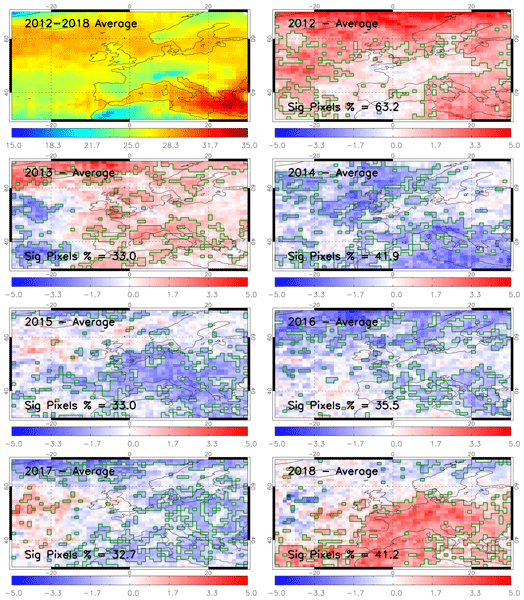
In the summer of 2018, Europe experienced several persistent large-scale ozone (O3) pollution episodes. Satellite tropospheric O3 and surface O3 data recorded substantial enhancements in 2018 relative to other years. Targeted model simulations showed that meteorological processes and emissions controlled the elevated surface O3, while mid-tropospheric O3 enhancements were dominated by stratospheric O3 intrusion and advection of North Atlantic O3-rich air masses into Europe.
Yajuan Li, Sandip S. Dhomse, Martyn P. Chipperfield, Wuhu Feng, Jianchun Bian, Yuan Xia, and Dong Guo
Atmos. Chem. Phys., 23, 13029–13047, https://doi.org/10.5194/acp-23-13029-2023, https://doi.org/10.5194/acp-23-13029-2023, 2023
Short summary
Short summary
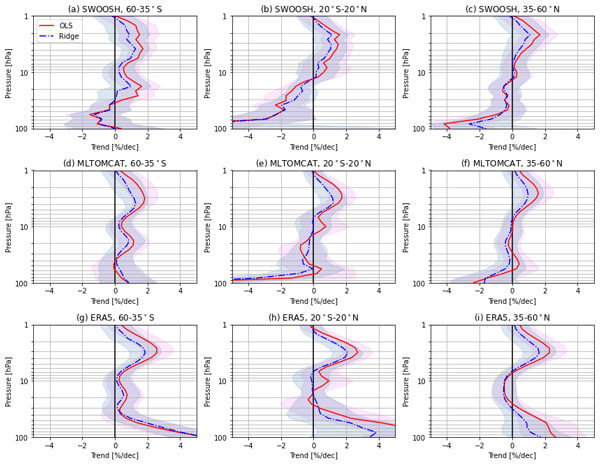
For the first time a regularized multivariate regression model is used to estimate stratospheric ozone trends. Regularized regression avoids the over-fitting issue due to correlation among explanatory variables. We demonstrate that there are considerable differences in satellite-based and chemical-model-based ozone trends, highlighting large uncertainties in our understanding about ozone variability. We argue that caution is needed when interpreting results with different methods and datasets.
Michael P. Cartwright, Richard J. Pope, Jeremy J. Harrison, Martyn P. Chipperfield, Chris Wilson, Wuhu Feng, David P. Moore, and Parvadha Suntharalingam
Atmos. Chem. Phys., 23, 10035–10056, https://doi.org/10.5194/acp-23-10035-2023, https://doi.org/10.5194/acp-23-10035-2023, 2023
Short summary
Short summary
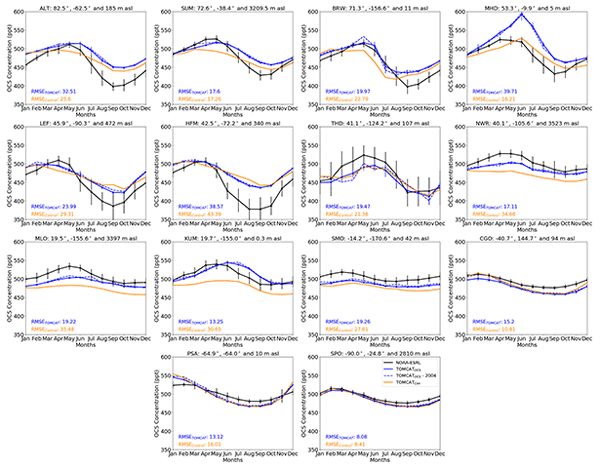
A 3-D chemical transport model, TOMCAT, is used to simulate global atmospheric carbonyl sulfide (OCS) distribution. Modelled OCS compares well with satellite observations of OCS from limb-sounding satellite observations. Model simulations also compare adequately with surface and atmospheric observations and suitably capture the seasonality of OCS and background concentrations.
Luana S. Basso, Chris Wilson, Martyn P. Chipperfield, Graciela Tejada, Henrique L. G. Cassol, Egídio Arai, Mathew Williams, T. Luke Smallman, Wouter Peters, Stijn Naus, John B. Miller, and Manuel Gloor
Atmos. Chem. Phys., 23, 9685–9723, https://doi.org/10.5194/acp-23-9685-2023, https://doi.org/10.5194/acp-23-9685-2023, 2023
Short summary
Short summary
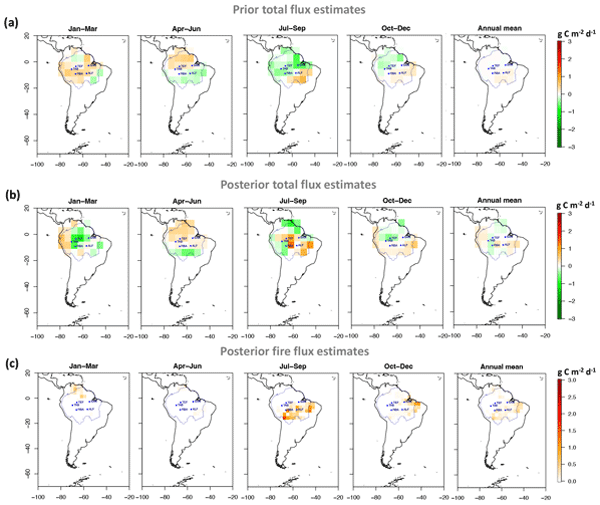
The Amazon’s carbon balance may have changed due to forest degradation, deforestation and warmer climate. We used an atmospheric model and atmospheric CO2 observations to quantify Amazonian carbon emissions (2010–2018). The region was a small carbon source to the atmosphere, mostly due to fire emissions. Forest uptake compensated for ~ 50 % of the fire emissions, meaning that the remaining forest is still a small carbon sink. We found no clear evidence of weakening carbon uptake over the period.
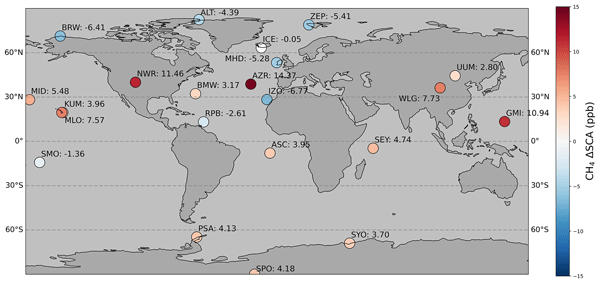
Emily Dowd, Chris Wilson, Martyn P. Chipperfield, Emanuel Gloor, Alistair Manning, and Ruth Doherty
Atmos. Chem. Phys., 23, 7363–7382, https://doi.org/10.5194/acp-23-7363-2023, https://doi.org/10.5194/acp-23-7363-2023, 2023
Short summary
Short summary
Surface observations of methane show that the seasonal cycle amplitude (SCA) of methane is decreasing in the northern high latitudes (NHLs) but increased globally (1995–2020). The NHL decrease is counterintuitive, as we expect the SCA to increase with increasing concentrations. We use a chemical transport model to investigate changes in SCA in the NHLs. We find well-mixed methane and changes in emissions from Canada, the Middle East, and Europe are the largest contributors to the SCA in NHLs.
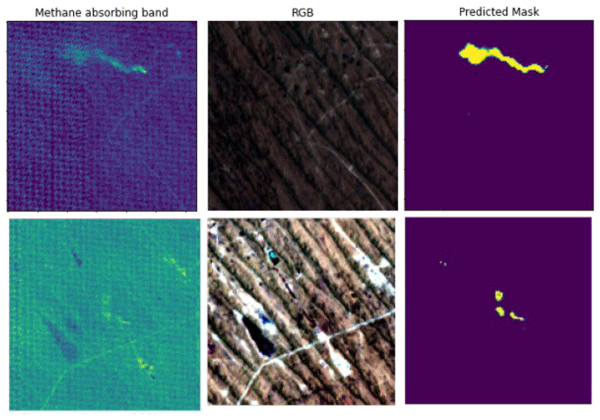
Peter Joyce, Cristina Ruiz Villena, Yahui Huang, Alex Webb, Manuel Gloor, Fabien H. Wagner, Martyn P. Chipperfield, Rocío Barrio Guilló, Chris Wilson, and Hartmut Boesch
Atmos. Meas. Tech., 16, 2627–2640, https://doi.org/10.5194/amt-16-2627-2023, https://doi.org/10.5194/amt-16-2627-2023, 2023
Short summary
Short summary
Methane emissions are responsible for a lot of the warming caused by the greenhouse effect, much of which comes from a small number of point sources. We can identify methane point sources by analysing satellite data, but it requires a lot of time invested by experts and is prone to very high errors. Here, we produce a neural network that can automatically identify methane point sources and estimate the mass of methane that is being released per hour and are able to do so with far smaller errors.
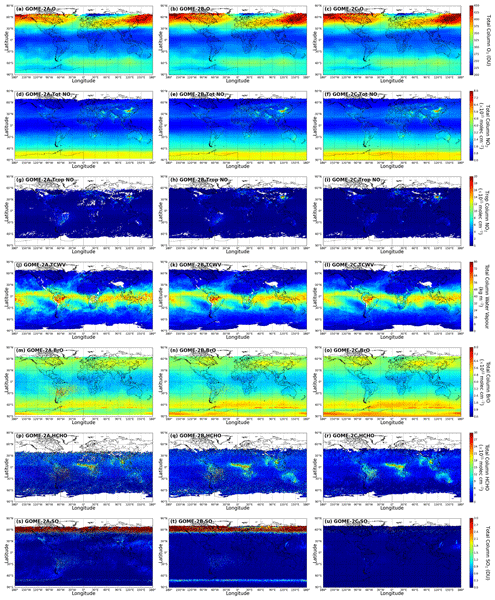
Ka Lok Chan, Pieter Valks, Klaus-Peter Heue, Ronny Lutz, Pascal Hedelt, Diego Loyola, Gaia Pinardi, Michel Van Roozendael, François Hendrick, Thomas Wagner, Vinod Kumar, Alkis Bais, Ankie Piters, Hitoshi Irie, Hisahiro Takashima, Yugo Kanaya, Yongjoo Choi, Kihong Park, Jihyo Chong, Alexander Cede, Udo Frieß, Andreas Richter, Jianzhong Ma, Nuria Benavent, Robert Holla, Oleg Postylyakov, Claudia Rivera Cárdenas, and Mark Wenig
Earth Syst. Sci. Data, 15, 1831–1870, https://doi.org/10.5194/essd-15-1831-2023, https://doi.org/10.5194/essd-15-1831-2023, 2023
Short summary
Short summary
This paper presents the theoretical basis as well as verification and validation of the Global Ozone Monitoring Experiment-2 (GOME-2) daily and monthly level-3 products.
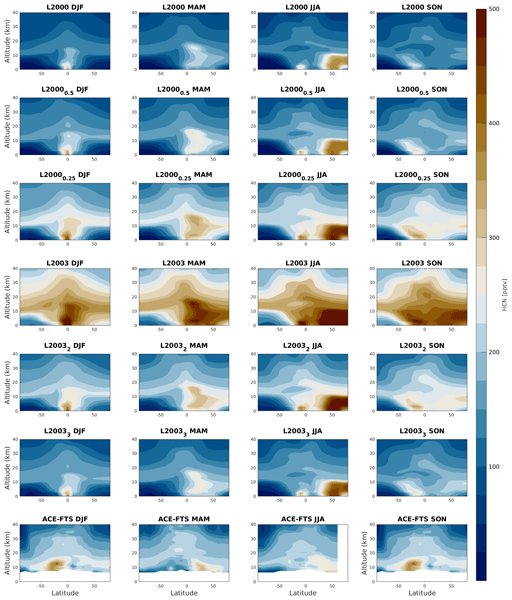
Antonio G. Bruno, Jeremy J. Harrison, Martyn P. Chipperfield, David P. Moore, Richard J. Pope, Christopher Wilson, Emmanuel Mahieu, and Justus Notholt
Atmos. Chem. Phys., 23, 4849–4861, https://doi.org/10.5194/acp-23-4849-2023, https://doi.org/10.5194/acp-23-4849-2023, 2023
Short summary
Short summary
A 3-D chemical transport model, TOMCAT; satellite data; and ground-based observations have been used to investigate hydrogen cyanide (HCN) variability. We found that the oxidation by O(1D) drives the HCN loss in the middle stratosphere and the currently JPL-recommended OH reaction rate overestimates HCN atmospheric loss. We also evaluated two different ocean uptake schemes. We found them to be unrealistic, and we need to scale these schemes to obtain good agreement with HCN observations.
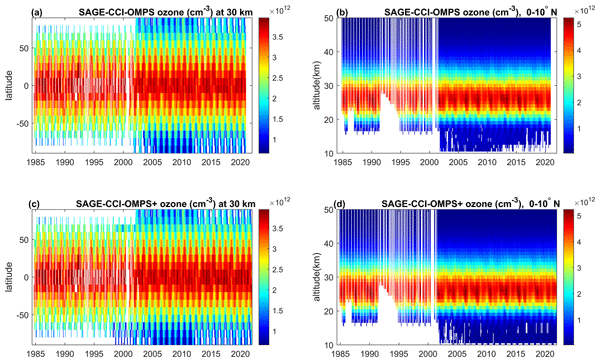
Viktoria F. Sofieva, Monika Szelag, Johanna Tamminen, Carlo Arosio, Alexei Rozanov, Mark Weber, Doug Degenstein, Adam Bourassa, Daniel Zawada, Michael Kiefer, Alexandra Laeng, Kaley A. Walker, Patrick Sheese, Daan Hubert, Michel van Roozendael, Christian Retscher, Robert Damadeo, and Jerry D. Lumpe
Atmos. Meas. Tech., 16, 1881–1899, https://doi.org/10.5194/amt-16-1881-2023, https://doi.org/10.5194/amt-16-1881-2023, 2023
Short summary
Short summary
The paper presents the updated SAGE-CCI-OMPS+ climate data record of monthly zonal mean ozone profiles. This dataset covers the stratosphere and combines measurements by nine limb and occultation satellite instruments (SAGE II, OSIRIS, MIPAS, SCIAMACHY, GOMOS, ACE-FTS, OMPS-LP, POAM III, and SAGE III/ISS). The update includes new versions of MIPAS, ACE-FTS, and OSIRIS datasets and introduces data from additional sensors (POAM III and SAGE III/ISS) and retrieval processors (OMPS-LP).
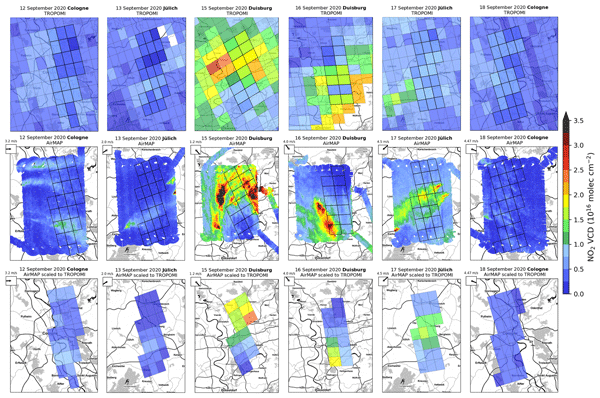
Kezia Lange, Andreas Richter, Anja Schönhardt, Andreas C. Meier, Tim Bösch, André Seyler, Kai Krause, Lisa K. Behrens, Folkard Wittrock, Alexis Merlaud, Frederik Tack, Caroline Fayt, Martina M. Friedrich, Ermioni Dimitropoulou, Michel Van Roozendael, Vinod Kumar, Sebastian Donner, Steffen Dörner, Bianca Lauster, Maria Razi, Christian Borger, Katharina Uhlmannsiek, Thomas Wagner, Thomas Ruhtz, Henk Eskes, Birger Bohn, Daniel Santana Diaz, Nader Abuhassan, Dirk Schüttemeyer, and John P. Burrows
Atmos. Meas. Tech., 16, 1357–1389, https://doi.org/10.5194/amt-16-1357-2023, https://doi.org/10.5194/amt-16-1357-2023, 2023
Short summary
Short summary
We present airborne imaging DOAS and ground-based stationary and car DOAS measurements conducted during the S5P-VAL-DE-Ruhr campaign in the Rhine-Ruhr region. The measurements are used to validate spaceborne NO2 data products from the Sentinel-5 Precursor TROPOspheric Monitoring Instrument (TROPOMI). Auxiliary data of the TROPOMI NO2 retrieval, such as spatially higher resolved a priori NO2 vertical profiles, surface reflectivity, and cloud treatment are investigated to evaluate their impact.
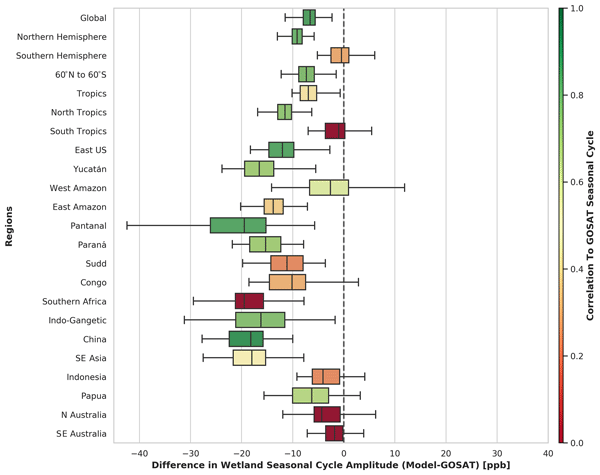
Robert J. Parker, Chris Wilson, Edward Comyn-Platt, Garry Hayman, Toby R. Marthews, A. Anthony Bloom, Mark F. Lunt, Nicola Gedney, Simon J. Dadson, Joe McNorton, Neil Humpage, Hartmut Boesch, Martyn P. Chipperfield, Paul I. Palmer, and Dai Yamazaki
Biogeosciences, 19, 5779–5805, https://doi.org/10.5194/bg-19-5779-2022, https://doi.org/10.5194/bg-19-5779-2022, 2022
Short summary
Short summary
Wetlands are the largest natural source of methane, one of the most important climate gases. The JULES land surface model simulates these emissions. We use satellite data to evaluate how well JULES reproduces the methane seasonal cycle over different tropical wetlands. It performs well for most regions; however, it struggles for some African wetlands influenced heavily by river flooding. We explain the reasons for these deficiencies and highlight how future development will improve these areas.
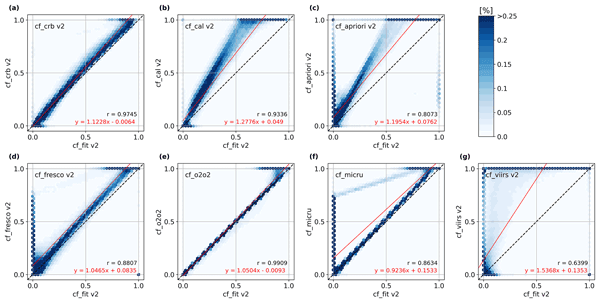
Miriam Latsch, Andreas Richter, Henk Eskes, Maarten Sneep, Ping Wang, Pepijn Veefkind, Ronny Lutz, Diego Loyola, Athina Argyrouli, Pieter Valks, Thomas Wagner, Holger Sihler, Michel van Roozendael, Nicolas Theys, Huan Yu, Richard Siddans, and John P. Burrows
Atmos. Meas. Tech., 15, 6257–6283, https://doi.org/10.5194/amt-15-6257-2022, https://doi.org/10.5194/amt-15-6257-2022, 2022
Short summary
Short summary
The article investigates different S5P TROPOMI cloud retrieval algorithms for tropospheric trace gas retrievals. The cloud products show differences primarily over snow and ice and for scenes under sun glint. Some issues regarding across-track dependence are found for the cloud fractions as well as for the cloud heights.
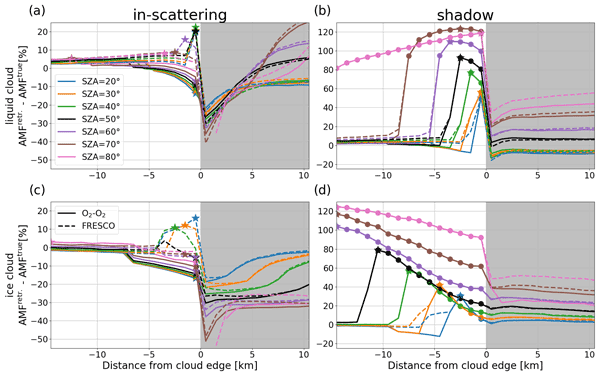
Huan Yu, Claudia Emde, Arve Kylling, Ben Veihelmann, Bernhard Mayer, Kerstin Stebel, and Michel Van Roozendael
Atmos. Meas. Tech., 15, 5743–5768, https://doi.org/10.5194/amt-15-5743-2022, https://doi.org/10.5194/amt-15-5743-2022, 2022
Short summary
Short summary
In this study, we have investigated the impact of 3D clouds on the tropospheric NO2 retrieval from UV–visible sensors. We applied standard NO2 retrieval methods including cloud corrections to synthetic data generated by the 3D radiative transfer model. A sensitivity study was done for synthetic data, and dependencies on various parameters were investigated. Possible mitigation strategies were investigated and compared based on 3D simulations and observed data.
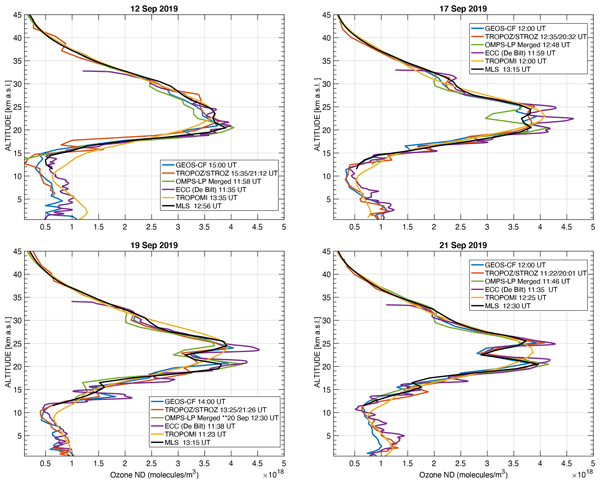
John T. Sullivan, Arnoud Apituley, Nora Mettig, Karin Kreher, K. Emma Knowland, Marc Allaart, Ankie Piters, Michel Van Roozendael, Pepijn Veefkind, Jerry R. Ziemke, Natalya Kramarova, Mark Weber, Alexei Rozanov, Laurence Twigg, Grant Sumnicht, and Thomas J. McGee
Atmos. Chem. Phys., 22, 11137–11153, https://doi.org/10.5194/acp-22-11137-2022, https://doi.org/10.5194/acp-22-11137-2022, 2022
Short summary
Short summary
A TROPOspheric Monitoring Instrument (TROPOMI) validation campaign (TROLIX-19) was held in the Netherlands in September 2019. The research presented here focuses on using ozone lidars from NASA’s Goddard Space Flight Center to better evaluate the characterization of ozone throughout TROLIX-19 as compared to balloon-borne, space-borne and ground-based passive measurements, as well as a global coupled chemistry meteorology model.

Nicolas Theys, Christophe Lerot, Hugues Brenot, Jeroen van Gent, Isabelle De Smedt, Lieven Clarisse, Mike Burton, Matthew Varnam, Catherine Hayer, Benjamin Esse, and Michel Van Roozendael
Atmos. Meas. Tech., 15, 4801–4817, https://doi.org/10.5194/amt-15-4801-2022, https://doi.org/10.5194/amt-15-4801-2022, 2022
Short summary
Short summary
Sulfur dioxide plume height after a volcanic eruption is an important piece of information for many different scientific studies and applications. Satellite UV retrievals are useful in this respect, but available algorithms have shown so far limited sensitivity to SO2 height. Here we present a new technique to improve the retrieval of SO2 plume height for SO2 columns as low as 5 DU. We demonstrate the algorithm using TROPOMI measurements and compare with other height estimates.
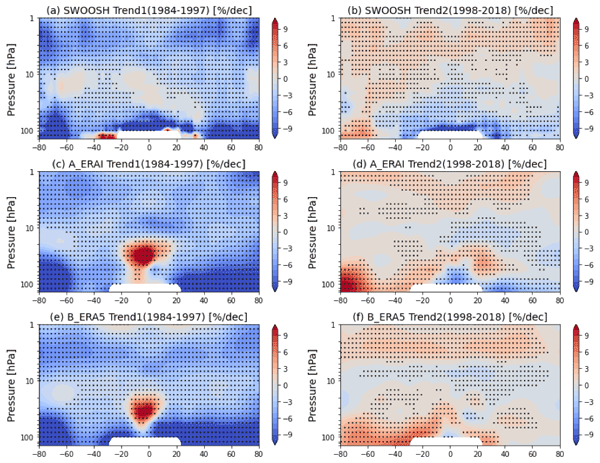
Yajuan Li, Sandip S. Dhomse, Martyn P. Chipperfield, Wuhu Feng, Andreas Chrysanthou, Yuan Xia, and Dong Guo
Atmos. Chem. Phys., 22, 10635–10656, https://doi.org/10.5194/acp-22-10635-2022, https://doi.org/10.5194/acp-22-10635-2022, 2022
Short summary
Short summary
Chemical transport models forced with (re)analysis meteorological fields are ideally suited for interpreting the influence of important physical processes on the ozone variability. We use TOMCAT forced by ECMWF ERA-Interim and ERA5 reanalysis data sets to investigate the effects of reanalysis forcing fields on ozone changes. Our results show that models forced by ERA5 reanalyses may not yet be capable of reproducing observed changes in stratospheric ozone, particularly in the lower stratosphere.
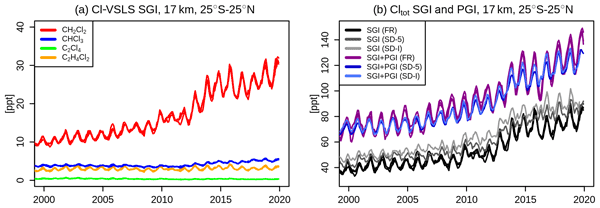
Ewa M. Bednarz, Ryan Hossaini, Martyn P. Chipperfield, N. Luke Abraham, and Peter Braesicke
Atmos. Chem. Phys., 22, 10657–10676, https://doi.org/10.5194/acp-22-10657-2022, https://doi.org/10.5194/acp-22-10657-2022, 2022
Short summary
Short summary
Atmospheric impacts of chlorinated very short-lived substances (Cl-VSLS) over the first two decades of the 21st century are assessed using the UM-UKCA chemistry–climate model. Stratospheric input of Cl from Cl-VSLS is estimated at ~130 ppt in 2019. The use of model set-up with constrained meteorology significantly increases the abundance of Cl-VSLS in the lower stratosphere relative to the free-running set-up. The growth in Cl-VSLS emissions significantly impacted recent HCl and COCl2 trends.
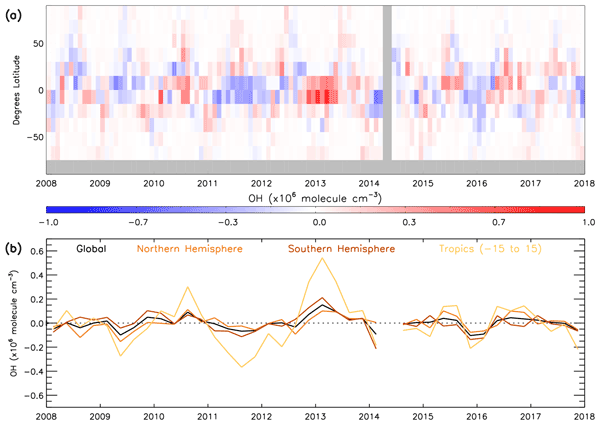
Matilda A. Pimlott, Richard J. Pope, Brian J. Kerridge, Barry G. Latter, Diane S. Knappett, Dwayne E. Heard, Lucy J. Ventress, Richard Siddans, Wuhu Feng, and Martyn P. Chipperfield
Atmos. Chem. Phys., 22, 10467–10488, https://doi.org/10.5194/acp-22-10467-2022, https://doi.org/10.5194/acp-22-10467-2022, 2022
Short summary
Short summary
We present a new method to derive global information of the hydroxyl radical (OH), an important atmospheric oxidant. OH controls the lifetime of trace gases important to air quality and climate. We use satellite observations of ozone, carbon monoxide, methane and water vapour in a simple expression to derive OH around 3–4 km altitude. The derived OH compares well to model and aircraft OH data. We then apply the method to 10 years of satellite data to study the inter-annual variability of OH.
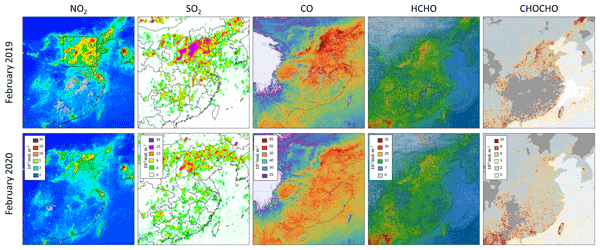
Pieternel F. Levelt, Deborah C. Stein Zweers, Ilse Aben, Maite Bauwens, Tobias Borsdorff, Isabelle De Smedt, Henk J. Eskes, Christophe Lerot, Diego G. Loyola, Fabian Romahn, Trissevgeni Stavrakou, Nicolas Theys, Michel Van Roozendael, J. Pepijn Veefkind, and Tijl Verhoelst
Atmos. Chem. Phys., 22, 10319–10351, https://doi.org/10.5194/acp-22-10319-2022, https://doi.org/10.5194/acp-22-10319-2022, 2022
Short summary
Short summary
Using the COVID-19 lockdown periods as an example, we show how Sentinel-5P/TROPOMI trace gas data (NO2, SO2, CO, HCHO and CHOCHO) can be used to understand impacts on air quality for regions and cities around the globe. We also provide information for both experienced and inexperienced users about how we created the data using state-of-the-art algorithms, where to get the data, methods taking meteorological and seasonal variability into consideration, and insights for future studies.
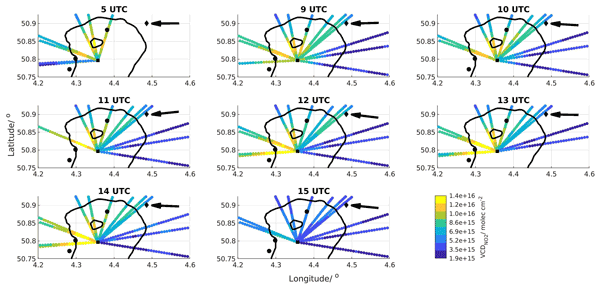
Ermioni Dimitropoulou, François Hendrick, Martina Michaela Friedrich, Frederik Tack, Gaia Pinardi, Alexis Merlaud, Caroline Fayt, Christian Hermans, Frans Fierens, and Michel Van Roozendael
Atmos. Meas. Tech., 15, 4503–4529, https://doi.org/10.5194/amt-15-4503-2022, https://doi.org/10.5194/amt-15-4503-2022, 2022
Short summary
Short summary
A total of 2 years of dual-scan ground-based MAX-DOAS measurements of tropospheric NO2 and aerosols in Uccle (Belgium) have been used to develop a new optimal-estimation-based inversion approach to retrieve horizontal profiles of surface NO2 concentration and aerosol extinction profiles. We show that the combination of an appropriate sampling of TROPOMI pixels by ground-based measurements and an adequate a priori NO2 profile shape in TROPOMI retrievals improves the agreement between datasets.

Arve Kylling, Claudia Emde, Huan Yu, Michel van Roozendael, Kerstin Stebel, Ben Veihelmann, and Bernhard Mayer
Atmos. Meas. Tech., 15, 3481–3495, https://doi.org/10.5194/amt-15-3481-2022, https://doi.org/10.5194/amt-15-3481-2022, 2022
Short summary
Short summary
Atmospheric trace gases such as nitrogen dioxide (NO2) may be measured by satellite instruments sensitive to solar ultraviolet–visible radiation reflected from Earth and its atmosphere. For a single pixel, clouds in neighbouring pixels may affect the radiation and hence the retrieved trace gas amount. We found that for a solar zenith angle less than about 40° this cloud-related NO2 bias is typically below 10 %, while for larger solar zenith angles the NO2 bias is on the order of tens of percent.
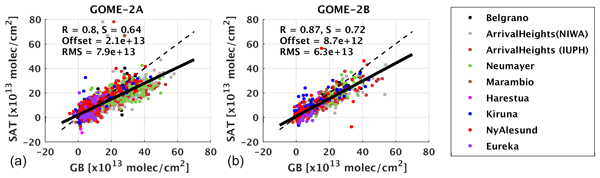
Gaia Pinardi, Michel Van Roozendael, François Hendrick, Andreas Richter, Pieter Valks, Ramina Alwarda, Kristof Bognar, Udo Frieß, José Granville, Myojeong Gu, Paul Johnston, Cristina Prados-Roman, Richard Querel, Kimberly Strong, Thomas Wagner, Folkard Wittrock, and Margarita Yela Gonzalez
Atmos. Meas. Tech., 15, 3439–3463, https://doi.org/10.5194/amt-15-3439-2022, https://doi.org/10.5194/amt-15-3439-2022, 2022
Short summary
Short summary
We report on the GOME-2A and GOME-2B OClO dataset (2007 to 2016, from the EUMETSAT's AC SAF) validation using data from nine NDACC zenith-scattered-light DOAS (ZSL-DOAS) instruments distributed in both the Arctic and Antarctic. Specific sensitivity tests are performed on the ground-based data to estimate the impact of the different OClO DOAS analysis settings and their typical errors. Good agreement is found for both the inter-annual variability and the overall OClO seasonal behavior.
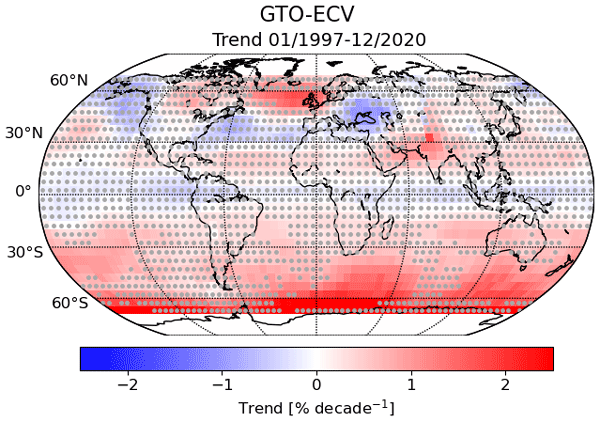
Melanie Coldewey-Egbers, Diego G. Loyola, Christophe Lerot, and Michel Van Roozendael
Atmos. Chem. Phys., 22, 6861–6878, https://doi.org/10.5194/acp-22-6861-2022, https://doi.org/10.5194/acp-22-6861-2022, 2022
Short summary
Short summary
Monitoring the long-term evolution of ozone and the evaluation of trends is essential to assess the efficacy of the Montreal Protocol and its amendments. The first signs of recovery as a consequence of decreasing amounts of ozone-depleting substances have been reported, but the impact needs to be investigated in more detail. In the Southern Hemisphere significant positive trends were found, but in the Northern Hemisphere the expected increase is still not yet visible.

Beatriz M. Monge-Sanz, Alessio Bozzo, Nicholas Byrne, Martyn P. Chipperfield, Michail Diamantakis, Johannes Flemming, Lesley J. Gray, Robin J. Hogan, Luke Jones, Linus Magnusson, Inna Polichtchouk, Theodore G. Shepherd, Nils Wedi, and Antje Weisheimer
Atmos. Chem. Phys., 22, 4277–4302, https://doi.org/10.5194/acp-22-4277-2022, https://doi.org/10.5194/acp-22-4277-2022, 2022
Short summary
Short summary
The stratosphere is emerging as one of the keys to improve tropospheric weather and climate predictions. This study provides evidence of the role the stratospheric ozone layer plays in improving weather predictions at different timescales. Using a new ozone modelling approach suitable for high-resolution global models that provide operational forecasts from days to seasons, we find significant improvements in stratospheric meteorological fields and stratosphere–troposphere coupling.
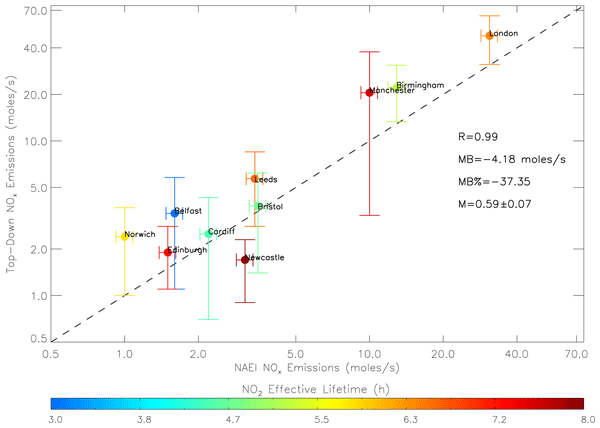
Richard J. Pope, Rebecca Kelly, Eloise A. Marais, Ailish M. Graham, Chris Wilson, Jeremy J. Harrison, Savio J. A. Moniz, Mohamed Ghalaieny, Steve R. Arnold, and Martyn P. Chipperfield
Atmos. Chem. Phys., 22, 4323–4338, https://doi.org/10.5194/acp-22-4323-2022, https://doi.org/10.5194/acp-22-4323-2022, 2022
Short summary
Short summary
Nitrogen oxides (NOx) are potent air pollutants which directly impact on human health. In this study, we use satellite nitrogen dioxide (NO2) data to evaluate the spatial distribution and temporal evolution of the UK official NOx emissions inventory, with reasonable agreement. We also derived satellite-based NOx emissions for several UK cities. In the case of London and Birmingham, the NAEI NOx emissions are potentially too low by >50%.

Hisahiro Takashima, Yugo Kanaya, Saki Kato, Martina M. Friedrich, Michel Van Roozendael, Fumikazu Taketani, Takuma Miyakawa, Yuichi Komazaki, Carlos A. Cuevas, Alfonso Saiz-Lopez, and Takashi Sekiya
Atmos. Chem. Phys., 22, 4005–4018, https://doi.org/10.5194/acp-22-4005-2022, https://doi.org/10.5194/acp-22-4005-2022, 2022
Short summary
Short summary
We have undertaken atmospheric iodine monoxide (IO) observations in the global marine boundary layer with a wide latitudinal coverage and sea surface temperature (SST) range. We conclude that atmospheric iodine is abundant over the Western Pacific warm pool, appearing as an iodine fountain, where ozone (O3) minima occur. Our study also found negative correlations between IO and O3 concentrations over IO maxima, which requires reconsideration of the initiation process of halogen activation.
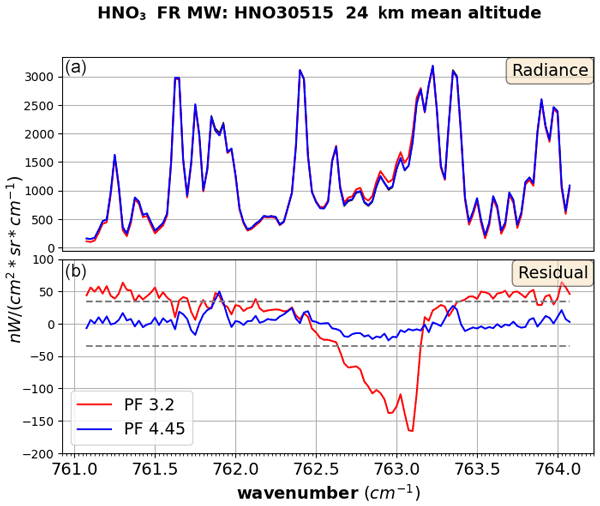
Piera Raspollini, Enrico Arnone, Flavio Barbara, Massimo Bianchini, Bruno Carli, Simone Ceccherini, Martyn P. Chipperfield, Angelika Dehn, Stefano Della Fera, Bianca Maria Dinelli, Anu Dudhia, Jean-Marie Flaud, Marco Gai, Michael Kiefer, Manuel López-Puertas, David P. Moore, Alessandro Piro, John J. Remedios, Marco Ridolfi, Harjinder Sembhi, Luca Sgheri, and Nicola Zoppetti
Atmos. Meas. Tech., 15, 1871–1901, https://doi.org/10.5194/amt-15-1871-2022, https://doi.org/10.5194/amt-15-1871-2022, 2022
Short summary
Short summary
The MIPAS instrument onboard the ENVISAT satellite provided 10 years of measurements of the atmospheric emission al limb that allow for the retrieval of latitude- and altitude-resolved atmospheric composition. We describe the improvements implemented in the retrieval algorithm used for the full mission reanalysis, which allows for the generation of the global distributions of 21 atmospheric constituents plus temperature with increased accuracy with respect to previously generated data.
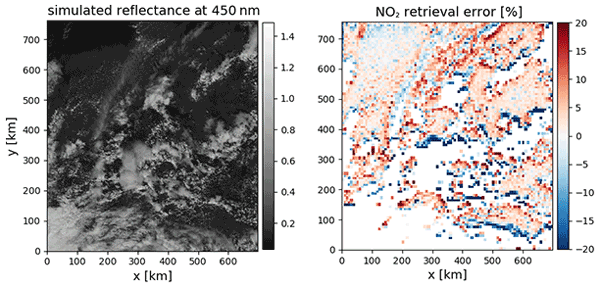
Claudia Emde, Huan Yu, Arve Kylling, Michel van Roozendael, Kerstin Stebel, Ben Veihelmann, and Bernhard Mayer
Atmos. Meas. Tech., 15, 1587–1608, https://doi.org/10.5194/amt-15-1587-2022, https://doi.org/10.5194/amt-15-1587-2022, 2022
Short summary
Short summary
Retrievals of trace gas concentrations from satellite observations can be affected by clouds in the vicinity, either by shadowing or by scattering of radiation from clouds in the clear region. We used a Monte Carlo radiative transfer model to generate synthetic satellite observations, which we used to test retrieval algorithms and to quantify the error of retrieved NO2 vertical column density due to cloud scattering.
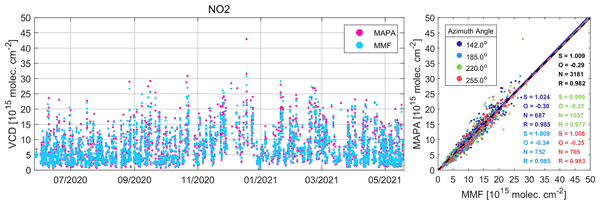
Dimitris Karagkiozidis, Martina Michaela Friedrich, Steffen Beirle, Alkiviadis Bais, François Hendrick, Kalliopi Artemis Voudouri, Ilias Fountoulakis, Angelos Karanikolas, Paraskevi Tzoumaka, Michel Van Roozendael, Dimitris Balis, and Thomas Wagner
Atmos. Meas. Tech., 15, 1269–1301, https://doi.org/10.5194/amt-15-1269-2022, https://doi.org/10.5194/amt-15-1269-2022, 2022
Short summary
Short summary
In this study we focus on the retrieval of aerosol, NO2, and HCHO vertical profiles from multi-axis differential optical absorption spectroscopy (MAX-DOAS) observations for the first time over Thessaloniki, Greece. We use two independent inversion algorithms for the profile retrievals. We evaluate their performance, we intercompare their results, and we validate their products with ancillary data, measured by other co-located reference instruments.
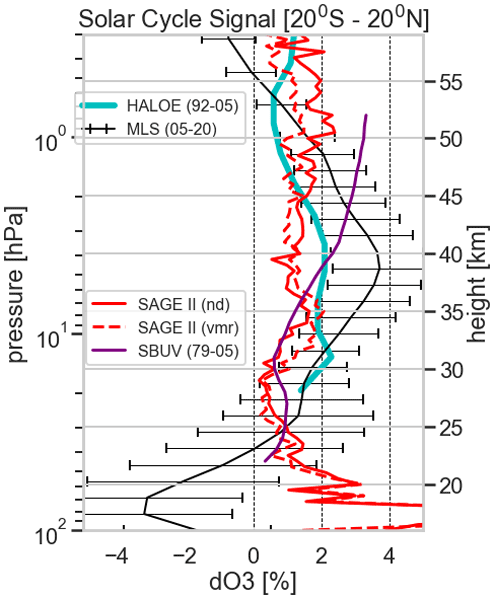
Sandip S. Dhomse, Martyn P. Chipperfield, Wuhu Feng, Ryan Hossaini, Graham W. Mann, Michelle L. Santee, and Mark Weber
Atmos. Chem. Phys., 22, 903–916, https://doi.org/10.5194/acp-22-903-2022, https://doi.org/10.5194/acp-22-903-2022, 2022
Short summary
Short summary
Solar flux variations associated with 11-year sunspot cycle is believed to exert important external climate forcing. As largest variations occur at shorter wavelengths such as ultra-violet part of the solar spectrum, associated changes in stratospheric ozone are thought to provide direct evidence for solar climate interaction. Until now, most of the studies reported double-peak structured solar cycle signal (SCS), but relatively new satellite data suggest only single-peak-structured SCS.
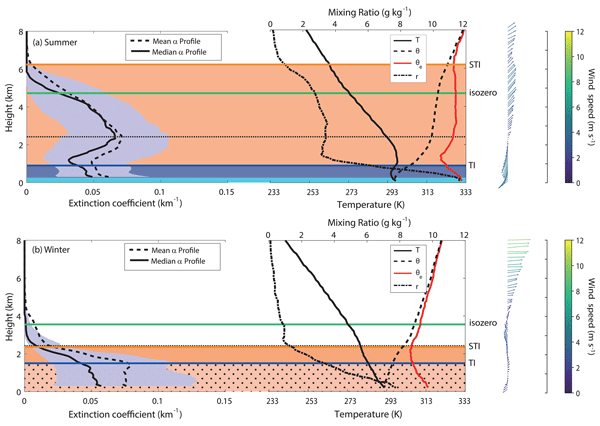
África Barreto, Emilio Cuevas, Rosa D. García, Judit Carrillo, Joseph M. Prospero, Luka Ilić, Sara Basart, Alberto J. Berjón, Carlos L. Marrero, Yballa Hernández, Juan José Bustos, Slobodan Ničković, and Margarita Yela
Atmos. Chem. Phys., 22, 739–763, https://doi.org/10.5194/acp-22-739-2022, https://doi.org/10.5194/acp-22-739-2022, 2022
Short summary
Short summary
In this study, we categorise the different patterns of dust transport over the subtropical North Atlantic and for the first time robustly describe the dust vertical distribution in the Saharan Air Layer (SAL) over this region. Our results revealed the important role that both dust and water vapour play in the radiative balance in summer and winter and confirm the role of the SAL in the formation of mid-level clouds as a result of the activation of heterogeneous ice nucleation processes.
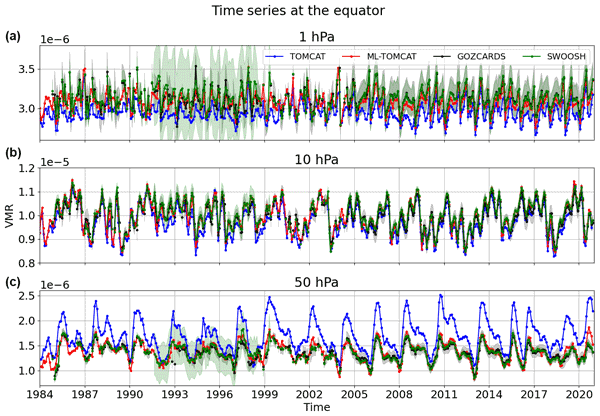
Sandip S. Dhomse, Carlo Arosio, Wuhu Feng, Alexei Rozanov, Mark Weber, and Martyn P. Chipperfield
Earth Syst. Sci. Data, 13, 5711–5729, https://doi.org/10.5194/essd-13-5711-2021, https://doi.org/10.5194/essd-13-5711-2021, 2021
Short summary
Short summary
High-quality long-term ozone profile data sets are key to estimating short- and long-term ozone variability. Almost all the satellite (and chemical model) data sets show some kind of bias with respect to each other. This is because of differences in measurement methodologies as well as simplified processes in the models. We use satellite data sets and chemical model output to generate 42 years of ozone profile data sets using a random-forest machine-learning algorithm that is named ML-TOMCAT.
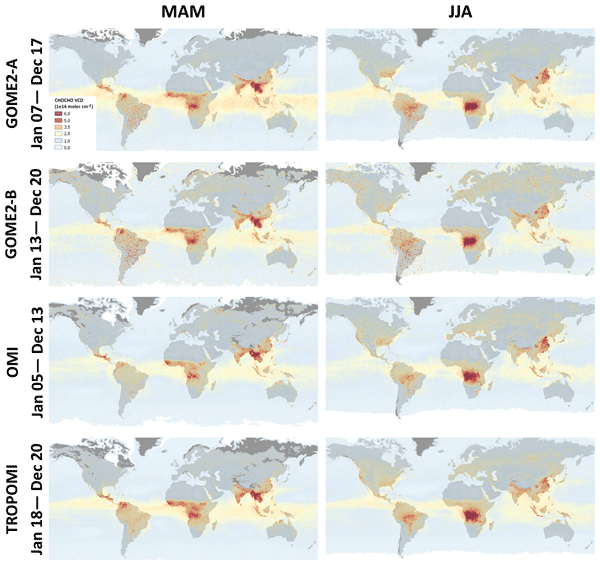
Christophe Lerot, François Hendrick, Michel Van Roozendael, Leonardo M. A. Alvarado, Andreas Richter, Isabelle De Smedt, Nicolas Theys, Jonas Vlietinck, Huan Yu, Jeroen Van Gent, Trissevgeni Stavrakou, Jean-François Müller, Pieter Valks, Diego Loyola, Hitoshi Irie, Vinod Kumar, Thomas Wagner, Stefan F. Schreier, Vinayak Sinha, Ting Wang, Pucai Wang, and Christian Retscher
Atmos. Meas. Tech., 14, 7775–7807, https://doi.org/10.5194/amt-14-7775-2021, https://doi.org/10.5194/amt-14-7775-2021, 2021
Short summary
Short summary
Global measurements of glyoxal tropospheric columns from the satellite instrument TROPOMI are presented. Such measurements can contribute to the estimation of atmospheric emissions of volatile organic compounds. This new glyoxal product has been fully characterized with a comprehensive error budget, with comparison with other satellite data sets as well as with validation based on independent ground-based remote sensing glyoxal observations.
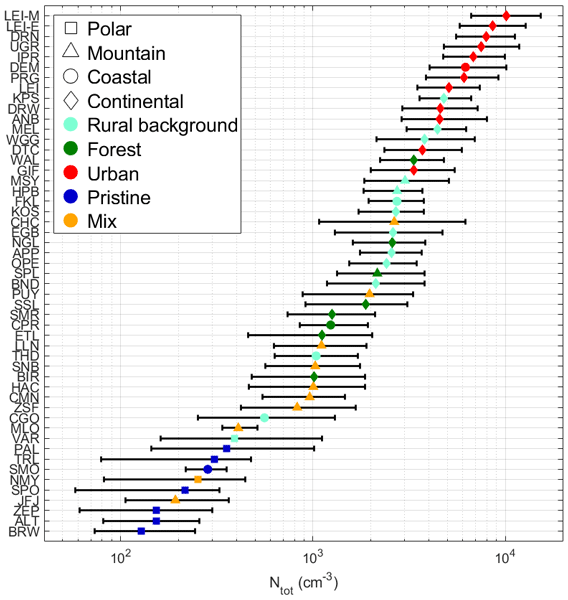
Clémence Rose, Martine Collaud Coen, Elisabeth Andrews, Yong Lin, Isaline Bossert, Cathrine Lund Myhre, Thomas Tuch, Alfred Wiedensohler, Markus Fiebig, Pasi Aalto, Andrés Alastuey, Elisabeth Alonso-Blanco, Marcos Andrade, Begoña Artíñano, Todor Arsov, Urs Baltensperger, Susanne Bastian, Olaf Bath, Johan Paul Beukes, Benjamin T. Brem, Nicolas Bukowiecki, Juan Andrés Casquero-Vera, Sébastien Conil, Konstantinos Eleftheriadis, Olivier Favez, Harald Flentje, Maria I. Gini, Francisco Javier Gómez-Moreno, Martin Gysel-Beer, Anna Gannet Hallar, Ivo Kalapov, Nikos Kalivitis, Anne Kasper-Giebl, Melita Keywood, Jeong Eun Kim, Sang-Woo Kim, Adam Kristensson, Markku Kulmala, Heikki Lihavainen, Neng-Huei Lin, Hassan Lyamani, Angela Marinoni, Sebastiao Martins Dos Santos, Olga L. Mayol-Bracero, Frank Meinhardt, Maik Merkel, Jean-Marc Metzger, Nikolaos Mihalopoulos, Jakub Ondracek, Marco Pandolfi, Noemi Pérez, Tuukka Petäjä, Jean-Eudes Petit, David Picard, Jean-Marc Pichon, Veronique Pont, Jean-Philippe Putaud, Fabienne Reisen, Karine Sellegri, Sangeeta Sharma, Gerhard Schauer, Patrick Sheridan, James Patrick Sherman, Andreas Schwerin, Ralf Sohmer, Mar Sorribas, Junying Sun, Pierre Tulet, Ville Vakkari, Pieter Gideon van Zyl, Fernando Velarde, Paolo Villani, Stergios Vratolis, Zdenek Wagner, Sheng-Hsiang Wang, Kay Weinhold, Rolf Weller, Margarita Yela, Vladimir Zdimal, and Paolo Laj
Atmos. Chem. Phys., 21, 17185–17223, https://doi.org/10.5194/acp-21-17185-2021, https://doi.org/10.5194/acp-21-17185-2021, 2021
Short summary
Short summary
Aerosol particles are a complex component of the atmospheric system the effects of which are among the most uncertain in climate change projections. Using data collected at 62 stations, this study provides the most up-to-date picture of the spatial distribution of particle number concentration and size distribution worldwide, with the aim of contributing to better representation of aerosols and their interactions with clouds in models and, therefore, better evaluation of their impact on climate.
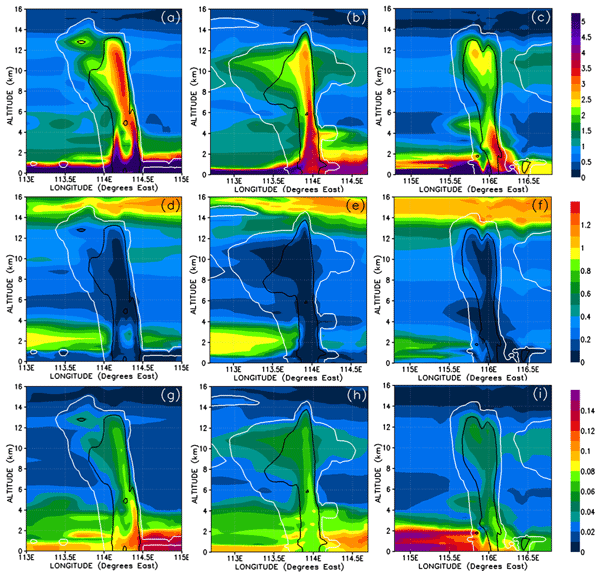
Paul D. Hamer, Virginie Marécal, Ryan Hossaini, Michel Pirre, Gisèle Krysztofiak, Franziska Ziska, Andreas Engel, Stephan Sala, Timo Keber, Harald Bönisch, Elliot Atlas, Kirstin Krüger, Martyn Chipperfield, Valery Catoire, Azizan A. Samah, Marcel Dorf, Phang Siew Moi, Hans Schlager, and Klaus Pfeilsticker
Atmos. Chem. Phys., 21, 16955–16984, https://doi.org/10.5194/acp-21-16955-2021, https://doi.org/10.5194/acp-21-16955-2021, 2021
Short summary
Short summary
Bromoform is a stratospheric ozone-depleting gas released by seaweed and plankton transported to the stratosphere via convection in the tropics. We study the chemical interactions of bromoform and its derivatives within convective clouds using a cloud-scale model and observations. Our findings are that soluble bromine gases are efficiently washed out and removed within the convective clouds and that most bromine is transported vertically to the upper troposphere in the form of bromoform.
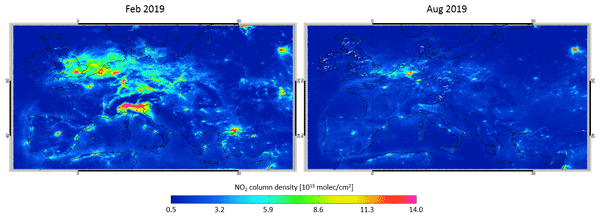
Song Liu, Pieter Valks, Gaia Pinardi, Jian Xu, Ka Lok Chan, Athina Argyrouli, Ronny Lutz, Steffen Beirle, Ehsan Khorsandi, Frank Baier, Vincent Huijnen, Alkiviadis Bais, Sebastian Donner, Steffen Dörner, Myrto Gratsea, François Hendrick, Dimitris Karagkiozidis, Kezia Lange, Ankie J. M. Piters, Julia Remmers, Andreas Richter, Michel Van Roozendael, Thomas Wagner, Mark Wenig, and Diego G. Loyola
Atmos. Meas. Tech., 14, 7297–7327, https://doi.org/10.5194/amt-14-7297-2021, https://doi.org/10.5194/amt-14-7297-2021, 2021
Short summary
Short summary
In this work, an improved tropospheric NO2 retrieval algorithm from TROPOMI measurements over Europe is presented. The stratospheric estimation is implemented with correction for the dependency of the stratospheric NO2 on the viewing geometry. The AMF calculation is implemented using improved surface albedo, a priori NO2 profiles, and cloud correction. The improved tropospheric NO2 data show good correlations with ground-based MAX-DOAS measurements.
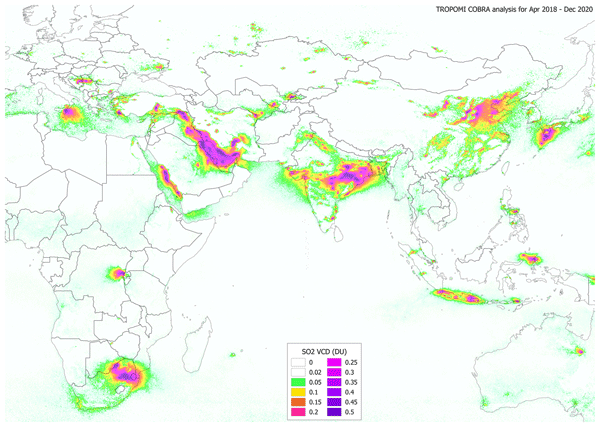
Nicolas Theys, Vitali Fioletov, Can Li, Isabelle De Smedt, Christophe Lerot, Chris McLinden, Nickolay Krotkov, Debora Griffin, Lieven Clarisse, Pascal Hedelt, Diego Loyola, Thomas Wagner, Vinod Kumar, Antje Innes, Roberto Ribas, François Hendrick, Jonas Vlietinck, Hugues Brenot, and Michel Van Roozendael
Atmos. Chem. Phys., 21, 16727–16744, https://doi.org/10.5194/acp-21-16727-2021, https://doi.org/10.5194/acp-21-16727-2021, 2021
Short summary
Short summary
We present a new algorithm to retrieve sulfur dioxide from space UV measurements. We apply the technique to high-resolution TROPOMI measurements and demonstrate the high sensitivity of the approach to weak SO2 emissions worldwide with an unprecedented limit of detection of 8 kt yr−1. This result has broad implications for atmospheric science studies dealing with improving emission inventories and identifying and quantifying missing sources, in the context of air quality and climate.
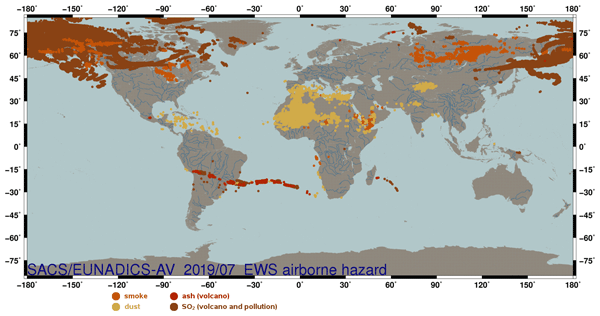
Hugues Brenot, Nicolas Theys, Lieven Clarisse, Jeroen van Gent, Daniel R. Hurtmans, Sophie Vandenbussche, Nikolaos Papagiannopoulos, Lucia Mona, Timo Virtanen, Andreas Uppstu, Mikhail Sofiev, Luca Bugliaro, Margarita Vázquez-Navarro, Pascal Hedelt, Michelle Maree Parks, Sara Barsotti, Mauro Coltelli, William Moreland, Simona Scollo, Giuseppe Salerno, Delia Arnold-Arias, Marcus Hirtl, Tuomas Peltonen, Juhani Lahtinen, Klaus Sievers, Florian Lipok, Rolf Rüfenacht, Alexander Haefele, Maxime Hervo, Saskia Wagenaar, Wim Som de Cerff, Jos de Laat, Arnoud Apituley, Piet Stammes, Quentin Laffineur, Andy Delcloo, Robertson Lennart, Carl-Herbert Rokitansky, Arturo Vargas, Markus Kerschbaum, Christian Resch, Raimund Zopp, Matthieu Plu, Vincent-Henri Peuch, Michel Van Roozendael, and Gerhard Wotawa
Nat. Hazards Earth Syst. Sci., 21, 3367–3405, https://doi.org/10.5194/nhess-21-3367-2021, https://doi.org/10.5194/nhess-21-3367-2021, 2021
Short summary
Short summary
The purpose of the EUNADICS-AV (European Natural Airborne Disaster Information and Coordination System for Aviation) prototype early warning system (EWS) is to develop the combined use of harmonised data products from satellite, ground-based and in situ instruments to produce alerts of airborne hazards (volcanic, dust, smoke and radionuclide clouds), satisfying the requirement of aviation air traffic management (ATM) stakeholders (https://cordis.europa.eu/project/id/723986).
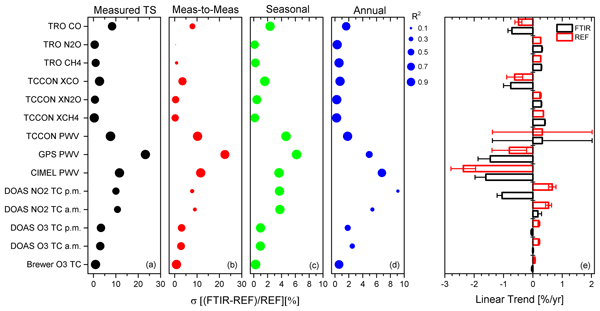
Omaira E. García, Matthias Schneider, Eliezer Sepúlveda, Frank Hase, Thomas Blumenstock, Emilio Cuevas, Ramón Ramos, Jochen Gross, Sabine Barthlott, Amelie N. Röhling, Esther Sanromá, Yenny González, Ángel J. Gómez-Peláez, Mónica Navarro-Comas, Olga Puentedura, Margarita Yela, Alberto Redondas, Virgilio Carreño, Sergio F. León-Luis, Enrique Reyes, Rosa D. García, Pedro P. Rivas, Pedro M. Romero-Campos, Carlos Torres, Natalia Prats, Miguel Hernández, and César López
Atmos. Chem. Phys., 21, 15519–15554, https://doi.org/10.5194/acp-21-15519-2021, https://doi.org/10.5194/acp-21-15519-2021, 2021
Short summary
Short summary
This paper analyses the potential of ground-based Fourier transform infrared (FTIR) solar observations to monitor atmospheric gaseous composition and investigate multiple climate processes. To this end, this work reviews the FTIR programme of one of most relevant ground-based FTIR stations at a global scale, the subtropical Izaña Observatory (IZO, Spain), going over its history during its first 20 years of operation (1999–2018) and exploring its great value for long-term climate research.
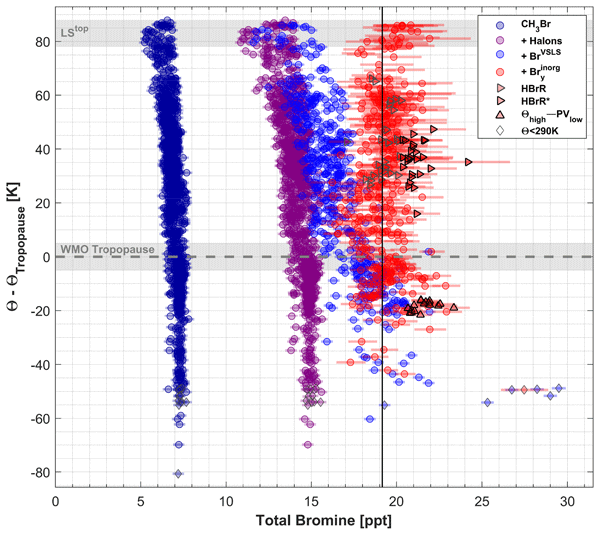
Meike K. Rotermund, Vera Bense, Martyn P. Chipperfield, Andreas Engel, Jens-Uwe Grooß, Peter Hoor, Tilman Hüneke, Timo Keber, Flora Kluge, Benjamin Schreiner, Tanja Schuck, Bärbel Vogel, Andreas Zahn, and Klaus Pfeilsticker
Atmos. Chem. Phys., 21, 15375–15407, https://doi.org/10.5194/acp-21-15375-2021, https://doi.org/10.5194/acp-21-15375-2021, 2021
Short summary
Short summary
Airborne total bromine (Brtot) and tracer measurements suggest Brtot-rich air masses persistently protruded into the lower stratosphere (LS), creating a high Brtot region over the North Atlantic in fall 2017. The main source is via isentropic transport by the Asian monsoon and to a lesser extent transport across the extratropical tropopause as quantified by a Lagrange model. The transport of Brtot via Central American hurricanes is also observed. Lastly, the impact of Brtot on LS O3 is assessed.
Cited articles
Adams, C., Strong, K., Batchelor, R. L., Bernath, P. F., Brohede, S., Boone, C., Degenstein, D., Daffer, W. H., Drummond, J. R., Fogal, P. F., Farahani, E., Fayt, C., Fraser, A., Goutail, F., Hendrick, F., Kolonjari, F., Lindenmaier, R., Manney, G., McElroy, C. T., McLinden, C. A., Mendonca, J., Park, J.-H., Pavlovic, B., Pazmino, A., Roth, C., Savastiouk, V., Walker, K. A., Weaver, D., and Zhao, X.: Validation of ACE and OSIRIS ozone and NO2 measurements using ground-based instruments at 80° N, Atmos. Meas. Tech., 5, 927–953, https://doi.org/10.5194/amt-5-927-2012, 2012.
Aliwell, S. R., Van Roozendael, M., Johnston, P. V., Richter, A., Wagner, T., Arlander, D. W., Burrows, J. P., Fish, D. J., Jones, R. L., Tørnkvist, K.K., Lambert, J. C., Pfeilsticker, K., and Pundt, I.: Analysis for BrO in zenith-sky spectra: An intercomparison exercise for analysis improvement, J. Geophys. Res., 107, ACH 10-1–ACH 10-20, https://doi.org/10.1029/2001JD000329 , 2002.
Barthia, P. K., Wellemeyer, C. G., Taylor, S. L., Nath, N., and Gopolan, A.: Solar Backscatter (SBUV) Version 8 profile algorithm, Proceedings of the Quadrennial Ozone Symposium 2004, edited by: Zerefos, C., Athens, Greece, 295–296, ISBN 960-630-103-6, 2004.
Burkholder, J. B., Sander, S. P., Abbatt, J., Barker, J. R., Cappa, C., Crounse, J. D., Dibble, T. S., Huie, R. E., Kolb, C. E., Kurylo, M. J., Orkin, V. L., Percival, C. J., Wilmouth, D. M., and Wine, P. H.: Chemical Kinetics and Photochemical Data for Use in Atmospheric Studies, Evaluation No. 19, JPL Publication 19-5, Jet Propulsion Laboratory, Pasadena, http://jpldataeval.jpl.nasa.gov (last access: 2 July 2026), 2019.
Chipperfield, M. P.: Multiannual simulations with a three-dimensional chemical transport model, J. Geophys. Res., 104, 1781–1805, https://doi.org/10.1029/98JD02597, 1999.
Chipperfield, M. P.: New version of the TOMCAT/SLIMCAT offline chemical transport model: intercomparison of stratospheric tracer experiments, Q. J. Roy. Meteor. Soc., 132, 1179–1203, https://doi.org/10.1256/qj.05.51, 2006.
Chong, H., González Abad, G., Nowlan, C. R., Chan Miller, C., Saiz-Lopez, A., Fernandez, R. P., Kwon, H.-A., Ayazpour, Z., Wang, H., Souri, A. H., Liu, X., Chance, K., O'Sullivan, E., Kim, J., Koo, J.-H., Simpson, W. R., Hendrick, F., Querel, R., Jaross, G., Seftor, C., and Suleiman, R. M.: Global retrieval of stratospheric and tropospheric BrO columns from the Ozone Mapping and Profiler Suite Nadir Mapper (OMPS-NM) on board the Suomi-NPP satellite, Atmos. Meas. Tech., 17, 2873–2916, https://doi.org/10.5194/amt-17-2873-2024, 2024.
Crutzen, P. J.: The role of NO and NO2 in the chemistry of the troposphere and stratosphere, Ann. Rev. Earth Pl. Sc., 7, 443–472, 1979.
Denis, L., Roscoe, H. K., Chipperfield, M. P., Van Roozendael, M., and Goutail, F.: A new software suite for NO2 vertical profile retrieval from ground-based zenith-sky spectrometers, J. Quant. Spectrosc. Ra., 92, 321–333, https://doi.org/10.1016/j.jqsrt.2004.07.030, 2005.
Deutschmann, T.: On Modeling Elastic and Inelastic Polarized Radiation Transport in the Earth Atmosphere with Monte Carlo Methods, PhD thesis, University of Leipzig, Leipzig, Germany, urn:nbn:de:bsz:15-qucosa-161475, 2014.
Deutschmann, T., Beirle, S., Frieß, U., Grzegorski, M., Kern, C., Kritten, L., Platt, U., Pukıte, J., Wagner, T., Werner, B., and Pfeilsticker, K.: The Monte Carlo Atmospheric Radiative Transfer Model McArtim: Introduction and Validation of Jacobians and 3D Features, J. Quant. Spectrosc. Ra., 112, 1119–1137, 2011.
Dhomse, S. S., Chipperfield, M. P., Feng, W., Hossaini, R., Mann, G. W., Santee, M. L., and Weber, M.: A single-peak-structured solar cycle signal in stratospheric ozone based on Microwave Limb Sounder observations and model simulations, Atmos. Chem. Phys., 22, 903–916, https://doi.org/10.5194/acp-22-903-2022, 2022.
Emde, C., Buras, R., Mayer, B., and Blumthaler, M.: The impact of aerosols on polarized sky radiance: model development, validation, and applications, Atmos. Chem. Phys., 10, 383–396, https://doi.org/10.5194/acp-10-383-2010, 2010.
Emde, C., Buras-Schnell, R., Kylling, A., Mayer, B., Gasteiger, J., Hamann, U., Kylling, J., Richter, B., Pause, C., Dowling, T., and Bugliaro, L.: The libRadtran software package for radiative transfer calculations (version 2.0.1), Geosci. Model Dev., 9, 1647–1672, https://doi.org/10.5194/gmd-9-1647-2016, 2016.
Errera, Q. and Fonteyn, D.: Four-dimensional variational chemical assimilation of CRISTA stratospheric measurements, J. Geophys. Res.-Atmos., 106, 12253–12265, https://doi.org/10.1029/2001JD900010, 2001.
Fernandez, R. P., Carmona-Balea, A., Cuevas, C. A., Barrera, J. A., Kinnison, D. E., Lamarque, J.-F., Blaszczak-Boxe, C., Kim, K., Choi, W., Hay, T., Blechschmidt, A.-M., Schönhardt, A. Burrows, J. P., and Saiz-Lopez, A.: Modeling the sources and chemistry of polar tropospheric halogens (Cl, Br, and I) using the CAM-Chem global chemistry-climate model, J. Adv. Model. Earth Sy., 11, 2259–2289, https://doi.org/10.1029/2019MS001655, 2019.
Finkenzeller, H. and Volkamer, R.: O2–O2 CIA in the gas phase: Cross-section of weak bands, and continuum absorption between 297–500 nm, J. Quant. Spectrosc. Ra., 279, 108063, https://doi.org/10.1016/j.jqsrt.2021.108063, 2022.
Flynn, L., Long, C., Wu, X., Evans, R., Beck, C. T., Petropavlovskikh, I., McConville, G., Yu, W., Zhang, Z., Niu, J., Beach, E., Hao, Y., Pan, C., Sen, B., Novicki, M., Zhou, S., and Seftor, C.: Performance of the Ozone Mapping and Profiler Suite(OMPS) products, J. Geophys. Res.-Atmos., 119, 6181–6195, https://doi.org/10.1002/2013JD020467, 2014.
Gil, M., Puentedura, O., Yela, M., Parrondo, C., Jadhav, D. B., and Thorkelsson, B.: OClO, NO2 and O3 total column observations over Iceland during the winter 1993/94, Geophys. Res. Lett., 23, 3337–3340, https://doi.org/10.1029/96GL03102, 1996.
Gil, M., Yela, M., Gunn, L. N., Richter, A., Alonso, I., Chipperfield, M. P., Cuevas, E., Iglesias, J., Navarro, M., Puentedura, O., and Rodríguez, S.: NO2 climatology in the northern subtropical region: diurnal, seasonal and interannual variability, Atmos. Chem. Phys., 8, 1635–1648, https://doi.org/10.5194/acp-8-1635-2008, 2008.
Gomez-Martin, L., Toledo, D., Prados-Roman, C., Adame, J. A., Ochoa, H., and Yela, M.: Polar Stratospheric Clouds Detection at Belgrano II Antarctic Station with Visible Ground-Based Spectroscopic Measurements, Remote Sens., 13, 1412, https://doi.org/10.3390/rs13081412, 2021.
Hendrick, F., Barret, B., Van Roozendael, M., Boesch, H., Butz, A., De Mazière, M., Goutail, F., Hermans, C., Lambert, J.-C., Pfeilsticker, K., and Pommereau, J.-P.: Retrieval of nitrogen dioxide stratospheric profiles from ground-based zenith-sky UV-visible observations: validation of the technique through correlative comparisons, Atmos. Chem. Phys., 4, 2091–2106, https://doi.org/10.5194/acp-4-2091-2004, 2004.
Hendrick, F., Van Roozendael, M., Kylling, A., Petritoli, A., Rozanov, A., Sanghavi, S., Schofield, R., von Friedeburg, C., Wagner, T., Wittrock, F., Fonteyn, D., and De Mazière, M.: Intercomparison exercise between different radiative transfer models used for the interpretation of ground-based zenith-sky and multi-axis DOAS observations, Atmos. Chem. Phys., 6, 93–108, https://doi.org/10.5194/acp-6-93-2006, 2006.
Hendrick, F., Van Roozendael, M., Chipperfield, M. P., Dorf, M., Goutail, F., Yang, X., Fayt, C., Hermans, C., Pfeilsticker, K., Pommereau, J.-P., Pyle, J. A., Theys, N., and De Mazière, M.: Retrieval of stratospheric and tropospheric BrO profiles and columns using ground-based zenith-sky DOAS observations at Harestua, 60° N, Atmos. Chem. Phys., 7, 4869–4885, https://doi.org/10.5194/acp-7-4869-2007, 2007.
Hendrick, F., Pommereau, J.-P., Goutail, F., Evans, R. D., Ionov, D., Pazmino, A., Kyrö, E., Held, G., Eriksen, P., Dorokhov, V., Gil, M., and Van Roozendael, M.: NDACC/SAOZ UV-visible total ozone measurements: improved retrieval and comparison with correlative ground-based and satellite observations, Atmos. Chem. Phys., 11, 5975–5995, https://doi.org/10.5194/acp-11-5975-2011, 2011.
Hersbach, H., Bell, B., Berrisford, P., Hirahara, S., Horányi, A., Muñoz-Sabater, J., Nicolas, J., Peubey, C., Radu, R., Schepers, D., Simmons, A., Soci, C., Abdalla, S., Abellan, X., Balsamo, G., Bechtold, P., Biavati, G., Bidlot, J., Bonavita, M., De Chiara, G., Dahlgren, P., Dee, D., Diamantakis, M., Dragani, R., Flemming, J., Forbes, R., Fuentes, M., Geer, A., Haimberger, L., Healy, S., Hogan, R. J., Hólm, E., Janisková, M., Keeley, S., Laloyaux, P., Lopez, P., Lupu, C., Radnoti, G., de Rosnay, P., Rozum, I., Vamborg, F., Villaume, S., and Thépaut, J. N.: The ERA5 global reanalysis, Q. J. Roy. Meteor. Soc., 146, 1999–2049, https://doi.org/10.1002/qj.3803, 2020.
Koenig, T. K., Hendrick, F., Kinnison, D., Lee, C. F., Van Roozendael, M., and Volkamer, R.: Troposphere–stratosphere-integrated bromine monoxide (BrO) profile retrieval over the central Pacific Ocean, Atmos. Meas. Tech., 17, 5911–5934, https://doi.org/10.5194/amt-17-5911-2024, 2024.
Kreher, K., Van Roozendael, M., Hendrick, F., Apituley, A., Dimitropoulou, E., Frieß, U., Richter, A., Wagner, T., Lampel, J., Abuhassan, N., Ang, L., Anguas, M., Bais, A., Benavent, N., Bösch, T., Bognar, K., Borovski, A., Bruchkouski, I., Cede, A., Chan, K. L., Donner, S., Drosoglou, T., Fayt, C., Finkenzeller, H., Garcia-Nieto, D., Gielen, C., Gómez-Martín, L., Hao, N., Henzing, B., Herman, J. R., Hermans, C., Hoque, S., Irie, H., Jin, J., Johnston, P., Khayyam Butt, J., Khokhar, F., Koenig, T. K., Kuhn, J., Kumar, V., Liu, C., Ma, J., Merlaud, A., Mishra, A. K., Müller, M., Navarro-Comas, M., Ostendorf, M., Pazmino, A., Peters, E., Pinardi, G., Pinharanda, M., Piters, A., Platt, U., Postylyakov, O., Prados-Roman, C., Puentedura, O., Querel, R., Saiz-Lopez, A., Schönhardt, A., Schreier, S. F., Seyler, A., Sinha, V., Spinei, E., Strong, K., Tack, F., Tian, X., Tiefengraber, M., Tirpitz, J.-L., van Gent, J., Volkamer, R., Vrekoussis, M., Wang, S., Wang, Z., Wenig, M., Wittrock, F., Xie, P. H., Xu, J., Yela, M., Zhang, C., and Zhao, X.: Intercomparison of NO2, O4, O3 and HCHO slant column measurements by MAX-DOAS and zenith-sky UV–visible spectrometers during CINDI-2, Atmos. Meas. Tech., 13, 2169–2208, https://doi.org/10.5194/amt-13-2169-2020, 2020.
Kromminga, H., Orphal, J., Spietz, P., Voigt, S., and Burrows, J.P.: New measurements of OClO absorption cross-sections in the 325–435 nm region and their temperature dependence between 213 and 293 K, J. Photochem. Photobio. A, 157, 149–160, https://doi.org/10.1016/S1010-6030(03)00071-6 , 2003.
Kühl, S., Dörnbrack, A., Wilms-Grabe, W., Sinnhuber, B.-M., Platt, U., and Wagner, T.: Observational evidence of rapid chlorine activation by mountain waves above northern Scandinavia, J. Geophys. Res., 109, D22309, https://doi.org/10.1029/2004JD004797, 2004.
Kurucz, R. L.: Synthetic infrared spectra in Infrared Solar Physics, IAU Symp. 154, edited by: Rabin, D. M. and Jefferies, J. T., Kluwer, Acad., Norwell, MA, https://doi.org/10.1007/978-94-011-1146-0, 1992.
Kylling, A. and Mayer, B.: LibRadTran: A package for UV and visible radiative transfer calculations in the Earth's atmosphere, http://www.libradtran.org (last access: 15 December 2025), 2003.
Lamarque, J.-F., Emmons, L. K., Hess, P. G., Kinnison, D. E., Tilmes, S., Vitt, F., Heald, C. L., Holland, E. A., Lauritzen, P. H., Neu, J., Orlando, J. J., Rasch, P. J., and Tyndall, G. K.: CAM-chem: description and evaluation of interactive atmospheric chemistry in the Community Earth System Model, Geosci. Model Dev., 5, 369–411, https://doi.org/10.5194/gmd-5-369-2012, 2012.
Lambert, J.-C., Granville, J., Van Roozendael, M., Sarkissian, A., Goutail, F., Müller, J.-F., Pommereau, J.-P., and Russell III, J. M.: A climatology of NO2 profile for improved Air Mass Factors for ground-based vertical column measurements, in: Stratospheric Ozone 1999, edited by: Harris, N. R. P., Guirlet, M., and Amanatidis, G. T., Air Pollution Research Report 73 (CEC DG XII), 703–706, ISBN: 978-92-828-8501-7, 1999.
Lambert, J.-C., Granville, J., Van Roozendael, M., Müller, J.-F., Goutail, F., Pommereau, J.-P., Sarkissian, A., Johnston, P. V., and Russell III, J. M.: Global Behaviour of Atmospheric NO2 as Derived from the Integrated Use of Satellite, Ground-based Network and Balloon Observations, in Atmospheric Ozone – 19th Quadrennial Ozone Symposium, Sapporo, Japan, July 3–8, 2000, NASDA, 201–202, 2000.
Marquard, L. C., Wagner, T., and Platt, U.: Improved air mass factorconcepts for scattered radiation differential optical absorption spectroscopy of atmospheric species, J. Geophys. Res., 105, 1315–1327, https://doi.org/10.1029/1999JD900340, 2000.
Mayer, B. and Kylling, A.: Technical note: The libRadtran software package for radiative transfer calculations - description and examples of use, Atmos. Chem. Phys., 5, 1855–1877, https://doi.org/10.5194/acp-5-1855-2005, 2005.
Mayer, B.: Radiative transfer in the cloudy atmosphere, in: EPJWeb of Conferences, EDP Sciences, Les Ulis, France, 1, 75–99, https://doi.org/10.1140/epjconf/e2009-00912-1, 2009.
Mayer, B., Hoch, S. W., and Whiteman, C. D.: Validating the MYSTIC three-dimensional radiative transfer model with observations from the complex topography of Arizona's Meteor Crater, Atmos. Chem. Phys., 10, 8685–8696, https://doi.org/10.5194/acp-10-8685-2010, 2010.
McElroy, M. B., Salawitch, R. J., Wofsy, S. C., and Logan, J. A.: Reductions of Antarctic ozone due to synergistic interactions of chlorine and bromine, Nature, 321, 759–762, 1986.
Perliski, L. M. and Solomon, S.: On the Evaluation of Air Mass Factors for Atmospheric Near-Ultraviolet and Visible Absorption Spectroscopy, J. Geophys. Res., 98, 10363–10374, 1993.
Peters, E., Pinardi, G., Seyler, A., Richter, A., Wittrock, F., Bösch, T., Van Roozendael, M., Hendrick, F., Drosoglou, T., Bais, A. F., Kanaya, Y., Zhao, X., Strong, K., Lampel, J., Volkamer, R., Koenig, T., Ortega, I., Puentedura, O., Navarro-Comas, M., Gómez, L., Yela González, M., Piters, A., Remmers, J., Wang, Y., Wagner, T., Wang, S., Saiz-Lopez, A., García-Nieto, D., Cuevas, C. A., Benavent, N., Querel, R., Johnston, P., Postylyakov, O., Borovski, A., Elokhov, A., Bruchkouski, I., Liu, H., Liu, C., Hong, Q., Rivera, C., Grutter, M., Stremme, W., Khokhar, M. F., Khayyam, J., and Burrows, J. P.: Investigating differences in DOAS retrieval codes using MAD-CAT campaign data, Atmos. Meas. Tech., 10, 955–978, https://doi.org/10.5194/amt-10-955-2017, 2017.
Pinardi, G., Van Roozendael, M., Hendrick, F., Richter, A., Valks, P., Alwarda, R., Bognar, K., Frieß, U., Granville, J., Gu, M., Johnston, P., Prados-Roman, C., Querel, R., Strong, K., Wagner, T., Wittrock, F., and Yela Gonzalez, M.: Ground-based validation of the MetOp-A and MetOp-B GOME-2 OClO measurements, Atmos. Meas. Tech., 15, 3439–3463, https://doi.org/10.5194/amt-15-3439-2022, 2022.
Platt, U. and Stutz, J.: Differential Optical Absorption Spectroscopy (DOAS), Principle and Applications, Springer Verlag, Heidelberg, ISBN 3-340-21193-4, 2008.
Prados-Roman, C., Gómez-Martín, L., Puentedura, O., Navarro-Comas, M., Iglesias, J., de Mingo, J. R., Pérez, M., Ochoa, H., Barlasina, M. E., Carbajal, G., and Yela, M.: Reactive bromine in the low troposphere of Antarctica: estimations at two research sites, Atmos. Chem. Phys., 18, 8549–8570, https://doi.org/10.5194/acp-18-8549-2018, 2018.
Prados-Roman, C., Gomez-Martin, L., Adame, J. A., Puentedura, O., Navarro-Comas, M., Ochoa, H., and Yela, M.: Tropospheric BrO in Western Antarctica: Distribution, Seasonality and Link to Sea Ice State of Development, Atmos. Environ., 363, 121588, https://doi.org/10.1016/j.atmosenv.2025.121588, 2025.
Puķīte, J., Borger, C., Dörner, S., Gu, M., and Wagner, T.: OClO as observed by TROPOMI: a comparison with meteorological parameters and polar stratospheric cloud observations, Atmos. Chem. Phys., 22, 245–272, https://doi.org/10.5194/acp-22-245-2022, 2022.
Rozanov, V. V. and Rozanov, A. V.: Differential optical absorption spectroscopy (DOAS) and air mass factor concept for a multiply scattering vertically inhomogeneous medium: theoretical consideration, Atmos. Meas. Tech., 3, 751–780, https://doi.org/10.5194/amt-3-751-2010, 2010.
Sander, S. P. and Friedl, R. R.: Kinetics and Product Studies of the Reaction ClO + BrO Using Flash Photolysis-Ultraviolet Absorption, J. Phys. Chem., 93, 4764–4771, 1989.
Schwaerzel, M., Emde, C., Brunner, D., Morales, R., Wagner, T., Berne, A., Buchmann, B., and Kuhlmann, G.: Three-dimensional radiative transfer effects on airborne and ground-based trace gas remote sensing, Atmos. Meas. Tech., 13, 4277–4293, https://doi.org/10.5194/amt-13-4277-2020, 2020.
Serdyuchenko, A., Gorshelev, V., Weber, M., Chehade, W., and Burrows, J. P.: High spectral resolution ozone absorption cross-sections – Part 2: Temperature dependence, Atmos. Meas. Tech., 7, 625–636, https://doi.org/10.5194/amt-7-625-2014, 2014.
Solomon, S., Schmeltekopf, A., and Sanders R. W.: On the Interpretation of the Zenith Sky Absorption Measurements, J. Geophys. Res., 92, 8311–8319, https://doi.org/10.1029/JD092iD07p08311, 1987.
Solomon, S., Sanders, R. W., and Miller, H. L.: Visible and Near Ultraviolet Spectroscopy at McMurdo Station, Antarctica 7. OClO Photochemistry and Ozone destruction, J. Geophys. Res., 95, 13807–13817, 1990.
Solomon, S., Haskins, J., Ivy, D. J., and Min, F.: Fundamental differences between Arctic and Antarctic ozone depletion, P. Natl. Acad. Sci. USA, 111, 6220–6225, https://doi.org/10.1073/pnas.1319307111, 2014.
Spurr, R.: VLIDORT: A linearized pseudo-spherical vector discrete ordinate radiative transfer code for forward model and retrieval studies in multilayer multiple scattering media, J. Quant. Spectrosc. Ra., 102, 316–342, 2006.
Spurr, R.: LIDORT and VLIDORT: Linearized pseudo-spherical scalar and vector discrete ordinate radiative transfer models for use in remote sensing retrieval problems, Springer Berlin, Heidelberg, https://doi.org/10.1007/978-3-540-48546-9_7, 2008.
Spurr, R. and Christi, M.: The LIDORT and VLIDORT linearized scalar and vector discrete ordinate radiative transfer models: Updates in the last 10 years, Springer, Cham, https://doi.org/10.1007/978-3-030-03445-0_1, 2019.
Theys, N., Van Roozendael, M., Hendrick, F., Fayt, C., Hermans, C., Baray, J.-L., Goutail, F., Pommereau, J.-P., and De Mazière, M.: Retrieval of stratospheric and tropospheric BrO columns from multi-axis DOAS measurements at Reunion Island (21° S, 56° E), Atmos. Chem. Phys., 7, 4733–4749, https://doi.org/10.5194/acp-7-4733-2007, 2007.
Wagner, T., Burrows, J. P., Deutschmann, T., Dix, B., von Friedeburg, C., Frieß, U., Hendrick, F., Heue, K.-P., Irie, H., Iwabuchi, H., Kanaya, Y., Keller, J., McLinden, C. A., Oetjen, H., Palazzi, E., Petritoli, A., Platt, U., Postylyakov, O., Pukite, J., Richter, A., van Roozendael, M., Rozanov, A., Rozanov, V., Sinreich, R., Sanghavi, S., and Wittrock, F.: Comparison of box-air-mass-factors and radiances for Multiple-Axis Differential Optical Absorption Spectroscopy (MAX-DOAS) geometries calculated from different UV/visible radiative transfer models, Atmos. Chem. Phys., 7, 1809–1833, https://doi.org/10.5194/acp-7-1809-2007, 2007.
WMO/UNEP: Scientific Assessment of the Ozone Layer Depletion: 2022, United Nations Environment Programme, https://www.unep.org/resources/publication/scientific-assessment-ozone-layer-depletion-2022 (last access: 29 June 2026), 2022.
World Meteorological Organization (WMO): WMO Ozone and UV Bulletin No. 3 – September 2025, WMO, https://library.wmo.int/idurl/4/69628 (last access: 29 June 2026), 2025.
Yela, M., Gil-Ojeda, M., Navarro-Comas, M., Gonzalez-Bartolomé, D., Puentedura, O., Funke, B., Iglesias, J., Rodríguez, S., García, O., Ochoa, H., and Deferrari, G.: Hemispheric asymmetry in stratospheric NO2 trends, Atmos. Chem. Phys., 17, 13373–13389, https://doi.org/10.5194/acp-17-13373-2017, 2017.
Yela, M., Parrondo, C., Gil, M., Rodríguez, S., Araujo, J., Ochoa, H., Deferrari, G., and Díaz, S.: The September 2002 Antarctic vortex major warming as observed by visible spectroscopy and ozone soundings, Int. J. Remote Sens., 26, 3361–3376, https://doi.org/10.1080/01431160500076285, 2005.
Zawada, D., Franssens, G., Loughman, R., Mikkonen, A., Rozanov, A., Emde, C., Bourassa, A., Dueck, S., Lindqvist, H., Ramon, D., Rozanov, V., Dekemper, E., Kyrölä, E., Burrows, J. P., Fussen, D., and Degenstein, D.: Systematic comparison of vectorial spherical radiative transfer models in limb scattering geometry, Atmos. Meas. Tech., 14, 3953–3972, https://doi.org/10.5194/amt-14-3953-2021, 2021.
Short summary
The Antarctic ozone hole remains a critical global challenge. Accurately measuring the gases that cause it during twilights is difficult due to rapid chemical changes. We used advanced computer simulations to reproduce observations at 2 Antarctic stations to account for these fluctuations and the Earth's curvature. Our results improve the accuracy of atmospheric monitoring, helping scientists better track the recovery of the ozone layer and understand the complex chemistry driving its depletion.
The Antarctic ozone hole remains a critical global challenge. Accurately measuring the gases...


