
Articles | Volume 19, issue 3
https://doi.org/10.5194/amt-19-993-2026
© Author(s) 2026. This work is distributed under
the Creative Commons Attribution 4.0 License.
the Creative Commons Attribution 4.0 License.
https://doi.org/10.5194/amt-19-993-2026
© Author(s) 2026. This work is distributed under
the Creative Commons Attribution 4.0 License.
the Creative Commons Attribution 4.0 License.
Research article
| 
12 Feb 2026
Research article |
| 12 Feb 2026
| 12 Feb 2026
Solar Backscatter Ultraviolet (BUV) retrievals of mid-stratospheric aerosols from the 2022 Hunga Eruption
Robert J. D. Spurr
RT Solutions, Inc., Cambridge, MA 02138, USA
Matt Christi
independent researcher: Fort Collins, CO 80524, USA
Nickolay A. Krotkov
CORRESPONDING AUTHOR

NASA Goddard Space Flight Center, Greenbelt, MD 20771, USA
Won-Ei Choi
NASA Postdoctoral Program, Oak Ridge Associated Universities, Oak Ridge, TN 37830, USA
Simon Carn
Michigan Technological University, Houghton, MI 49931, USA
NASA Goddard Space Flight Center, Greenbelt, MD 20771, USA
Natalya Kramarova
NASA Goddard Space Flight Center, Greenbelt, MD 20771, USA
David Haffner
independent researcher: Glen Ellen, CA 95442, USA
Eun-Su Yang
NASA Goddard Space Flight Center, Greenbelt, MD 20771, USA
Science and Technology Corporation, Columbia, MD 21046, USA
Nick Gorkavyi
NASA Goddard Space Flight Center, Greenbelt, MD 20771, USA
Science Systems and Applications, Inc., Lanham, MD 20706, USA
Alexander Vasilkov
NASA Goddard Space Flight Center, Greenbelt, MD 20771, USA
ADNET Systems, Inc., Lanham, MD 20706, USA
Krzysztof Wargan
NASA Goddard Space Flight Center, Greenbelt, MD 20771, USA
Science Systems and Applications, Inc., Lanham, MD 20706, USA
Omar Torres
NASA Goddard Space Flight Center, Greenbelt, MD 20771, USA
Diego Loyola
German Aerospace Centre (DLR), Oberpfaffenhofen, 82234 Wessling, Germany
Serena Di Pede
Royal Netherlands Meteorological Institute (KNMI), 3730 AE De Bilt, the Netherlands
J. Pepijn Veefkind
Royal Netherlands Meteorological Institute (KNMI), 3730 AE De Bilt, the Netherlands
Delft University of Technology, 2628 CN Delft, the Netherlands
Parker Case
Earth System Science Interdisciplinary Center (ESSIC), University of Maryland, College Park, MD 20740, USA
Thomas Schroeder
Commonwealth Scientific and Industrial Research Organization (CSIRO), Environment, Brisbane, QLD 4001, Australia
Pawan K. Bhartia
Goddard Earth Sciences Technology and Research (GESTAR) II, University of Maryland Baltimore County, Baltimore, MD 21228, USA
Related authors
Ayesha Riaz, Kang Sun, Brian D. Baker, Brian Buma, Karen E. Cady-Pereira, Christopher Chan Miller, William C. Eddy III, Betsy M. Farris, Thomas U. Kampe, Eric A. Kort, Nathan P. Leisso, Robert Spurr, Emily R. Stuchiner, and Wendy H. Yang
Atmos. Meas. Tech., 19, 5169–5191, https://doi.org/10.5194/amt-19-5169-2026, https://doi.org/10.5194/amt-19-5169-2026, 2026
Short summary
Short summary
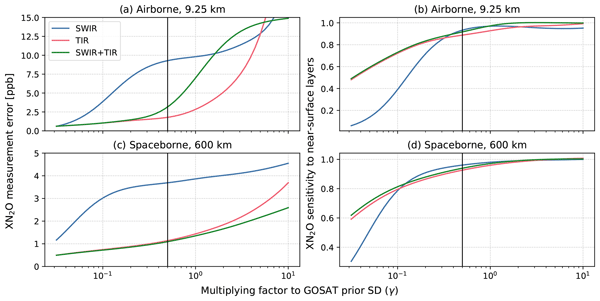
N2O is a powerful greenhouse gas mainly released from agricultural soils, but its emissions are difficult to track as they vary strongly in space and time. We tested whether combining two kind of infrared measurements in one instrument could improve ability of airborne and satellite instruments to observe these emissions. We found that this combined approach improves sensitivity to near-surface emissions with low measurement error and could guide the design of future N2O dedicated missions.
Jan-Lukas Tirpitz, Nathaniel Brockway, Santo Fedele Colosimo, Robert Spurr, Matt Christi, Samuel Hall, Kirk Ullmann, Vijay Natraj, Nicolas Theys, Johnathan Hair, Taylor Shingler, Rodney Weber, Ruchen Zhu, Jack Dibb, Richard Moore, Elizabeth Wiggins, and Jochen Stutz
EGUsphere, https://doi.org/10.5194/egusphere-2025-5541, https://doi.org/10.5194/egusphere-2025-5541, 2026
Short summary
Short summary
This study applies a novel remote sensing algorithm to airborne radiation measurements performed in wildfire plumes, to retrieve the absorptive properties of biomass burning aerosols. The results provide new insights on the magnitude, wavelength dependence, and atmospheric aging of the imaginary refractive index, volume absorption cross-section, and single scattering albedo of the smoke particles. Furthermore, potential and limitations of the applied method are discussed.
Jianglong Zhang, Jeffrey S. Reid, Blake T. Sorenson, Steven D. Miller, Miguel O. Román, Zhuosen Wang, Robert J. D. Spurr, Shawn Jaker, Thomas F. Eck, and Juli I. Rubin
Atmos. Meas. Tech., 18, 1787–1810, https://doi.org/10.5194/amt-18-1787-2025, https://doi.org/10.5194/amt-18-1787-2025, 2025
Short summary
Short summary
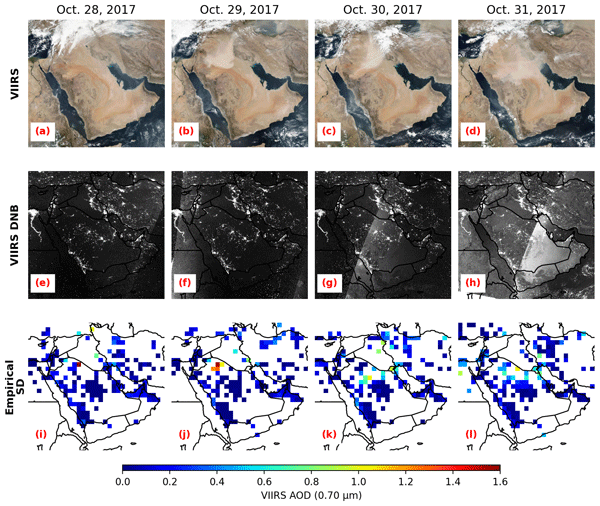
Using observations from the Visible Infrared Imaging Radiometer Suite day–night band, we developed a method for constructing gridded nighttime aerosol optical thickness (AOT) data based on the spatial derivative of measured top-of-atmosphere attenuated upwelling artificial lights at night. The gridded nighttime AOT retrievals, compared against Aerosol Robotic Network data, show reasonable skill levels for potential data assimilation, air quality, and climate studies of significant events.
Yuhang Zhang, Huan Yu, Isabelle De Smedt, Jintai Lin, Nicolas Theys, Michel Van Roozendael, Gaia Pinardi, Steven Compernolle, Ruijing Ni, Fangxuan Ren, Sijie Wang, Lulu Chen, Jos Van Geffen, Mengyao Liu, Alexander M. Cede, Martin Tiefengraber, Alexis Merlaud, Martina M. Friedrich, Andreas Richter, Ankie Piters, Vinod Kumar, Vinayak Sinha, Thomas Wagner, Yongjoo Choi, Hisahiro Takashima, Yugo Kanaya, Hitoshi Irie, Robert Spurr, Wenfu Sun, and Lorenzo Fabris
Atmos. Meas. Tech., 18, 1561–1589, https://doi.org/10.5194/amt-18-1561-2025, https://doi.org/10.5194/amt-18-1561-2025, 2025
Short summary
Short summary
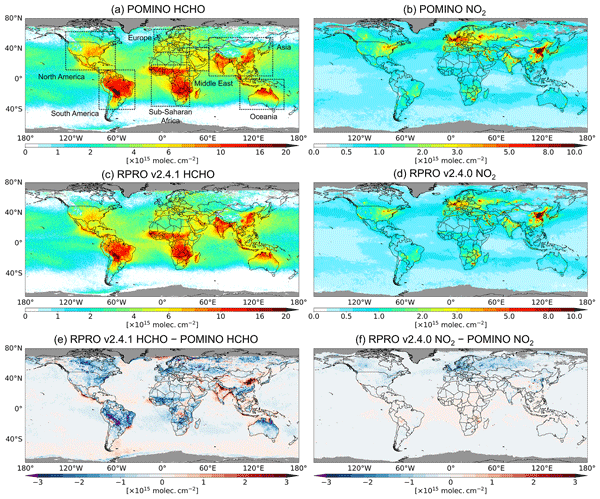
We developed an advanced algorithm for global retrieval of TROPOspheric Monitoring Instrument (TROPOMI) HCHO and NO2 vertical column densities with much improved consistency. Sensitivity tests demonstrate the complexity and nonlinear interactions of auxiliary parameters in the air mass factor calculation. An improved agreement is found with measurements from a global ground-based instrument network. The scientific retrieval provides a useful source of information for studies combining HCHO and NO2.
Jan-Lukas Tirpitz, Santo Fedele Colosimo, Nathaniel Brockway, Robert Spurr, Matt Christi, Samuel Hall, Kirk Ullmann, Johnathan Hair, Taylor Shingler, Rodney Weber, Jack Dibb, Richard Moore, Elizabeth Wiggins, Vijay Natraj, Nicolas Theys, and Jochen Stutz
Atmos. Chem. Phys., 25, 1989–2015, https://doi.org/10.5194/acp-25-1989-2025, https://doi.org/10.5194/acp-25-1989-2025, 2025
Short summary
Short summary
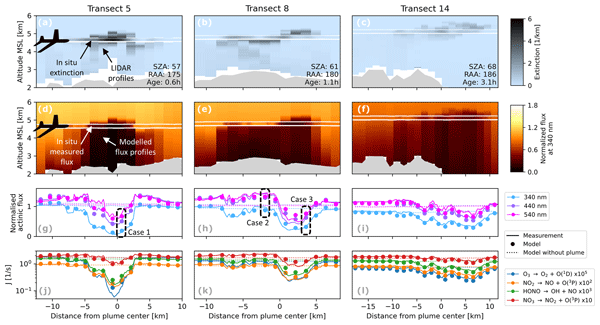
We combine plume composition data from the 2019 NASA FIREX-AQ campaign with state-of-the-art radiative transfer modeling techniques to calculate distributions of actinic flux and photolysis frequencies in a wildfire plume. Excellent agreement of the model and observations demonstrates the applicability of this approach to constrain photochemistry in such plumes. We identify limiting factors for the modeling accuracy and discuss spatial and spectral features of the distributions.
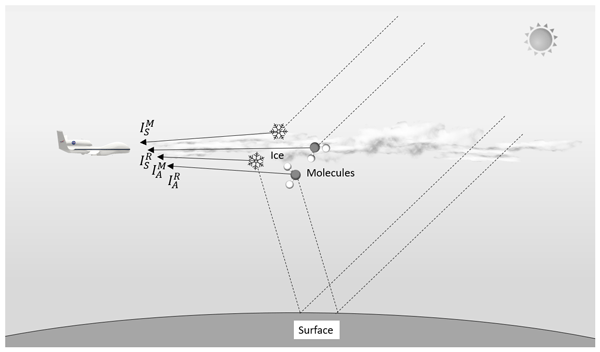
Santo Fedele Colosimo, Nathaniel Brockway, Vijay Natraj, Robert Spurr, Klaus Pfeilsticker, Lisa Scalone, Max Spolaor, Sarah Woods, and Jochen Stutz
Atmos. Meas. Tech., 17, 2367–2385, https://doi.org/10.5194/amt-17-2367-2024, https://doi.org/10.5194/amt-17-2367-2024, 2024
Short summary
Short summary
Cirrus clouds are poorly understood components of the climate system, in part due to the challenge of observing thin, sub-visible ice clouds. We address this issue with a new observational approach that uses the remote sensing of near-infrared ice water absorption features from a high-altitude aircraft. We describe the underlying principle of this approach and present a new procedure to retrieve ice concentration in cirrus clouds. Our retrievals compare well with in situ observations.
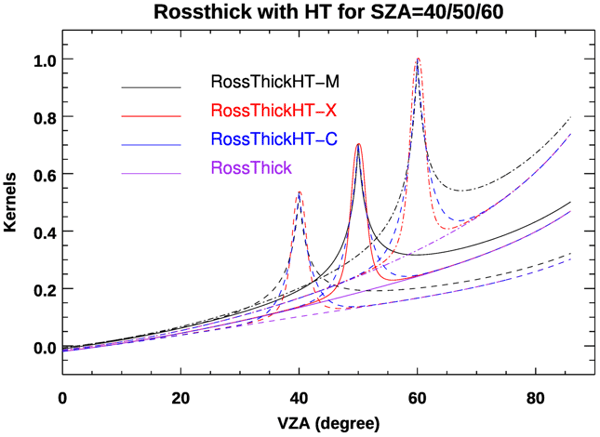
Xiaozhen Xiong, Xu Liu, Robert Spurr, Ming Zhao, Qiguang Yang, Wan Wu, and Liqiao Lei
Atmos. Meas. Tech., 17, 1965–1978, https://doi.org/10.5194/amt-17-1965-2024, https://doi.org/10.5194/amt-17-1965-2024, 2024
Short summary
Short summary
The term “hotspot” refers to the sharp increase in reflectance occurring when incident (solar) and reflected (viewing) directions coincide in the backscatter direction. The accurate simulation of hotspot directional signatures is important for many remote sensing applications, but current models typically require large values of computations to represent the hotspot accurately. This paper provides a numerically improved hotspot BRDF model that converges much faster and is used in VLIDORT.
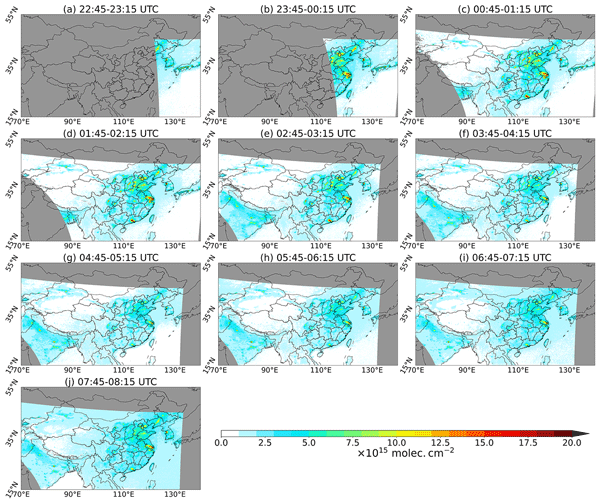
Yuhang Zhang, Jintai Lin, Jhoon Kim, Hanlim Lee, Junsung Park, Hyunkee Hong, Michel Van Roozendael, Francois Hendrick, Ting Wang, Pucai Wang, Qin He, Kai Qin, Yongjoo Choi, Yugo Kanaya, Jin Xu, Pinhua Xie, Xin Tian, Sanbao Zhang, Shanshan Wang, Siyang Cheng, Xinghong Cheng, Jianzhong Ma, Thomas Wagner, Robert Spurr, Lulu Chen, Hao Kong, and Mengyao Liu
Atmos. Meas. Tech., 16, 4643–4665, https://doi.org/10.5194/amt-16-4643-2023, https://doi.org/10.5194/amt-16-4643-2023, 2023
Short summary
Short summary
Our tropospheric NO2 vertical column density product with high spatiotemporal resolution is based on the Geostationary Environment Monitoring Spectrometer (GEMS) and named POMINO–GEMS. Strong hotspot signals and NO2 diurnal variations are clearly seen. Validations with multiple satellite products and ground-based, mobile car and surface measurements exhibit the overall great performance of the POMINO–GEMS product, indicating its capability for application in environmental studies.
Huiqun Wang, Gonzalo González Abad, Chris Chan Miller, Hyeong-Ahn Kwon, Caroline R. Nowlan, Zolal Ayazpour, Heesung Chong, Xiong Liu, Kelly Chance, Ewan O'Sullivan, Kang Sun, Robert Spurr, and Robert J. Hargreaves
Atmos. Meas. Tech. Discuss., https://doi.org/10.5194/amt-2023-66, https://doi.org/10.5194/amt-2023-66, 2023
Preprint withdrawn
Short summary
Short summary
A pipeline for retrieving Total Column Water Vapor from satellite blue spectra is developed. New constraints are considered. Water-leaving radiance is important over the oceans. Results agree with reference datasets well under clear conditions. Due to high sensitivity to clouds, strict data filtering criteria are required. All-sky retrievals can be corrected using machine learning. GPS stations’ representation errors follow a power law relationship with grid resolutions.
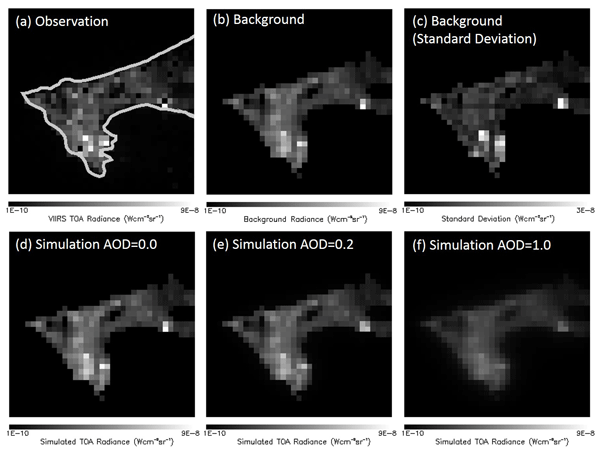
Jianglong Zhang, Jeffrey S. Reid, Steven D. Miller, Miguel Román, Zhuosen Wang, Robert J. D. Spurr, and Shawn Jaker
Atmos. Meas. Tech., 16, 2531–2546, https://doi.org/10.5194/amt-16-2531-2023, https://doi.org/10.5194/amt-16-2531-2023, 2023
Short summary
Short summary
We adapted the spherical harmonics discrete ordinate method 3-dimentional radiative transfer model (3-D RTM) and developed a nighttime 3-D RTM capability for simulating top-of-atmosphere radiances from artificial light sources for aerosol retrievals. Our study suggests that both aerosol optical depth and aerosol plume height can be effectively retrieved using nighttime observations over artificial light sources, through the newly developed radiative transfer modeling capability.
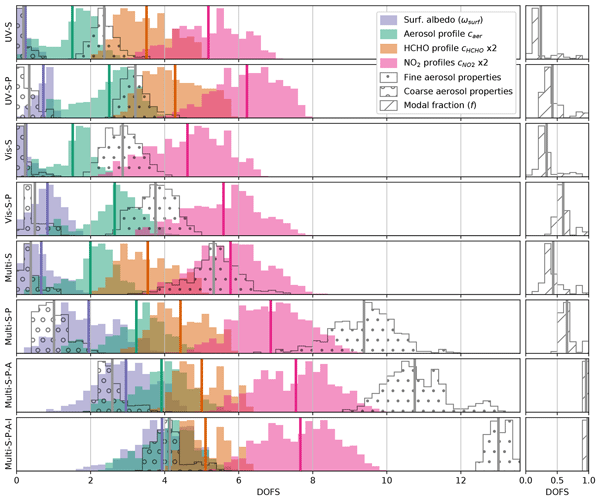
Jan-Lukas Tirpitz, Udo Frieß, Robert Spurr, and Ulrich Platt
Atmos. Meas. Tech., 15, 2077–2098, https://doi.org/10.5194/amt-15-2077-2022, https://doi.org/10.5194/amt-15-2077-2022, 2022
Short summary
Short summary
MAX-DOAS is a widely used measurement technique for the remote detection of atmospheric aerosol and trace gases. It relies on the analysis of ultra-violet and visible radiation spectra of skylight. To date, information contained in the skylight's polarisation state has not been utilised. On the basis of synthetic data, we carried out sensitivity analyses to assess the potential of polarimetry for MAX-DOAS applications.
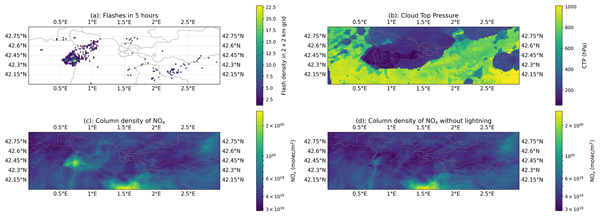
Francisco J. Pérez-Invernón, Francisco J. Gordillo-Vázquez, Oscar van der Velde, Joan Montanyà, Jesús Alberto López Trujillo, Nicolau Pineda, Diego Loyola, Sora Seo, Christoph Knote, Alexandre O. Fierro, and Heidi Huntrieser
Atmos. Chem. Phys., 26, 14277–14301, https://doi.org/10.5194/acp-26-14277-2026, https://doi.org/10.5194/acp-26-14277-2026, 2026
Short summary
Short summary
Lightning is a major source of atmospheric pollutants. This study uses advanced satellite and ground-based data to show how lightning characteristics, such as length, brightness, and duration, affect the production of these pollutants in storms over Spain’s Ebro Valley.
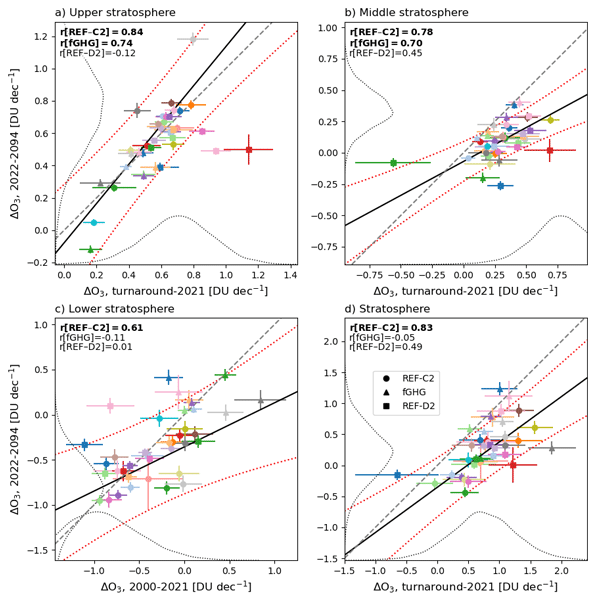
Sean M. Davis, William T. Ball, Yue Jia, Gabriel Chiodo, Justin A. Alsing, James Keeble, Hideharu Akiyoshi, Carlo Arosio, Ewa M. Bednarz, Andreas Chrysanthou, Melanie Coldewey-Egbers, Robert Damadeo, Sandip Dhomse, Mohamadou A. Diallo, Simone Dietmuller, Roland Eichinger, Stacey Frith, Birgit Hassler, Michaela I. Hegglin, Daan Hubert, Patrick Jöckel, Béatrice Josse, Natalya Kramarova, Diego Loyola, Eliane Maillard Barras, Marion Marchand, Olaf Morgenstern, David Plummer, Robert W. Portmann, Karen H. Rosenlof, Alexei Rozanov, Viktoria F. Sofieva, Johannes Staehelin, Timofei Sukhodolov, Kleareti Tourpali, Ronald J. Van der A, H. J. Ray Wang, Krzysztof Wargan, Shingo Watanabe, Mark Weber, Jeannette D. Wild, Yousuke Yamashita, and Jerry Ziemke
Atmos. Chem. Phys., 26, 13817–13843, https://doi.org/10.5194/acp-26-13817-2026, https://doi.org/10.5194/acp-26-13817-2026, 2026
Short summary
Short summary
This study investigates tropical ozone changes in models and satellite observations to determine how well they agree and whether observations can constrain model projections. At some levels, satellite records disagree significantly on the magnitude of ozone changes. While early and late 21st century trends are correlated across models, suggesting a potential emergent constraint, the spread in observations means they are unable to provide guidance on the credibility of model projections.
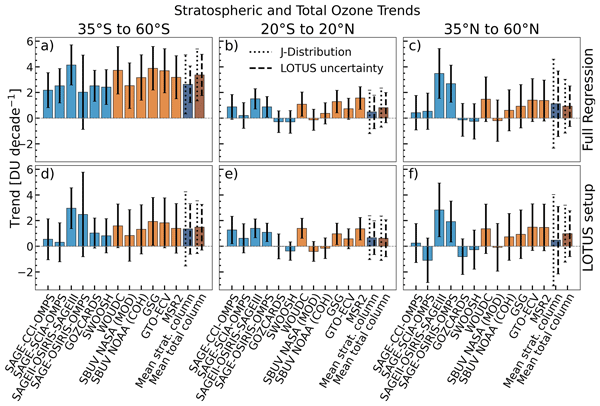
Brian Auffarth, Mark Weber, Alexei Rozanov, Carlo Arosio, John P. Burrows, Melanie Coldewey-Egbers, Sean M. Davis, Doug Degenstein, Kimberlee Dubé, Stacey M. Frith, Lucien Froidevaux, Diego Loyola, Vitali E. Fioletov, Viktoria Sofieva, Ronald van der A, and Jeannette D. Wild
Atmos. Chem. Phys., 26, 13359–13386, https://doi.org/10.5194/acp-26-13359-2026, https://doi.org/10.5194/acp-26-13359-2026, 2026
Short summary
Short summary
This study examines the trends of stratospheric and total ozone between 2000 and 2024, using long-term satellite datasets. Our results show positive trends in the upper stratosphere and a strong ozone recovery in the Southern Hemisphere, while changes in lower altitudes remain mostly small. The total and stratospheric trends show very similar results, indicating that tropospheric ozone contributes little to total column changes, while the stratospheric column is the dominant driver.
Barbara Dix, Lindsey D. Anderson, J. Pepijn Veefkind, and Joost de Gouw
EGUsphere, https://doi.org/10.5194/egusphere-2026-5052, https://doi.org/10.5194/egusphere-2026-5052, 2026
This preprint is open for discussion and under review for Atmospheric Chemistry and Physics (ACP).
Short summary
Short summary
Wildfire smoke affects climate, but its properties depend on how fires burn and how smoke changes after emission. Using satellite observations of Australian wildfires, we found that flaming fires produce more light-absorbing smoke, while smoldering fires produce more aerosol that scatters light. Smoke becomes more optically uniform away from fire cores, showing that both combustion and early plume processing shape its climate effects.
Leonardo M. A. Alvarado, Sora Seo, Adrian Doicu, Andreas Richter, and Diego Loyola
EGUsphere, https://doi.org/10.5194/egusphere-2026-4360, https://doi.org/10.5194/egusphere-2026-4360, 2026
This preprint is open for discussion and under review for Atmospheric Measurement Techniques (AMT).
Short summary
Short summary
Chlorine dioxide reveals the chemistry that destroys ozone in the upper atmosphere, but it is hard to measure from space, especially in the dim light of polar winter. We built a new method to analyse satellite measurements that separates the true signal from instrument noise and gives a trustworthy uncertainty for every observation, without extra corrections. It matches an existing product while being more reliable, supporting operational European monitoring and future missions for other gases.
Lorraine A. Remer, Hiren Jethva, Shana Mattoo, Omar Torres, Yingxi Rona Shi, Vinay Kayetha, Woogyung Vincent Kim, Jaehwa Lee, Robert C. Levy, and N. Christina Hsu
EGUsphere, https://doi.org/10.5194/egusphere-2026-3731, https://doi.org/10.5194/egusphere-2026-3731, 2026
Short summary
Short summary
Here we demonstrate a new method to characterize aerosols from data measured by the Ocean Color Instrument (OCI) aboard NASA's Plankton, Aerosol, Clouds, ocean Ecosystem (PACE) observatory. OCI's broad spectrum that ranges from the ultraviolet through the shortwave infrared provides more information about the aerosols than previous satellite sensors commonly used to characterize aerosol. Novel parameters include aerosol light absorption, aerosol above clouds and the height of the aerosol layer.
Salem Ibrahim Salem, Andre Valente, Shubha Sathyendranath, Andrei Chuprin, Théo Renard, Jaime Pitarch, Ruth Airs, Moreno Ana, Maria-Manuel Angelico, David Antoine, Robert Arnone, Florinda Artuso, Paulo O. Oliveira, William Balch, Kathryn Barker, Ray Barlow, Simon Bélanger, Marco Bellacicco, Jean-François Berthon, Şükrü Beşiktepe, Francesco Bignami, Yngve Borsheim, Astrid Bracher, Federica Braga, Vittorio Brando, Robert J. W. Brewin, Vanda Brotas, Elisabetta Canuti, Francisco P. Chavez, Andrés Cianca, Hervé Claustre, Lesley Clementson, Simone Colella, Raul Costa, Cristina Nunes, Richard Crout, Emmanuel Devred, Annalisa Di Cicco, Federico Falcini, Ivan Farace, Afonso Ferreira, Scott Freeman, Robert Frouin, Carlos García-Soto, Isabella Giardina, Stuart W. Gibb, Arthur Gleason, Ralf Goericke, Richard Gould, Michael Grant, Nathalie Guillocheau, Hiroto Higa, Stanford B. Hooker, Chuamin Hu, Joji Ishizaka, Thomas Jackson, Mati Kahru, Milton Kampel, Bokyung Kim, Holger Klein, Piotr Kowalczuk, Susanne Kratzer, Raphael Kudela, Antonia Lai, Rosario Lavezza, Jesus Ledesma, Huiwon Lee, Steven Lohrenz, Hubert Loisel, Vivian Lutz, Antonio Mannino, Francesca Margiotta, Victor Martinez-Vicente, Salvatore Marullo, Luca Massi, Patricia Matrai, Atsushi Matsuoka, David McKee, Chiara Melillo, Carlos B. Mendes, Brian G. Mitchell, Tiffany Moisan, Enrique Montes, Frank Muller-Karger, Aimee Neeley, Michael Novak, Leonie O'Dowd, Michael Ondrusek, Emanuele Organelli, Heeyoon Park, Trevor Platt, Francesca Polonelli, Alex Poulton, Mariella Ragni, Michel Repecaud, Maurizio Ribera d’Alcalà, Tamara Rodriguez-Ramos, Rüdiger Röttgers, Manuel Ruiz-Villarreal, Michela Sammartino, Rosalia Santoleri, Gian Marco Scarpa, Thomas Schroeder, Valeria Segura, Timothy Smyth, Denise Smythe-Wright, Heidi M. Sosik, Joanna Stoń-Egiert, Malcolm Taberner, Jing Tan, Rob Thomas, Crystal Thomas, Gavin Tilstone, Andreia Tracana, Michael Twardowski, Vincenzo Vellucci, Gianluca Volpe, Kenneth Voss, Jeremy Werdell, Marcel Wernand, Bozena Wojtasiewicz, Simon Wright, Sunmi Yang, Giuseppe Zibordi, Maria Laura Zoffoli, and Steve Groom
Earth Syst. Sci. Data Discuss., https://doi.org/10.5194/essd-2026-539, https://doi.org/10.5194/essd-2026-539, 2026
Preprint under review for ESSD
Short summary
Short summary
This paper presents the fourth version of the ESA Ocean Colour Climate Change Initiative global in situ bio-optical database. The updated compilation combines observations from many international data sources collected between 1996 and 2025 and includes major expansions in coverage and variables. The dataset provides a consistent reference for validating satellite ocean-colour products and supports algorithm development and long-term climate studies.
Ayesha Riaz, Kang Sun, Brian D. Baker, Brian Buma, Karen E. Cady-Pereira, Christopher Chan Miller, William C. Eddy III, Betsy M. Farris, Thomas U. Kampe, Eric A. Kort, Nathan P. Leisso, Robert Spurr, Emily R. Stuchiner, and Wendy H. Yang
Atmos. Meas. Tech., 19, 5169–5191, https://doi.org/10.5194/amt-19-5169-2026, https://doi.org/10.5194/amt-19-5169-2026, 2026
Short summary
Short summary
N2O is a powerful greenhouse gas mainly released from agricultural soils, but its emissions are difficult to track as they vary strongly in space and time. We tested whether combining two kind of infrared measurements in one instrument could improve ability of airborne and satellite instruments to observe these emissions. We found that this combined approach improves sensitivity to near-surface emissions with low measurement error and could guide the design of future N2O dedicated missions.
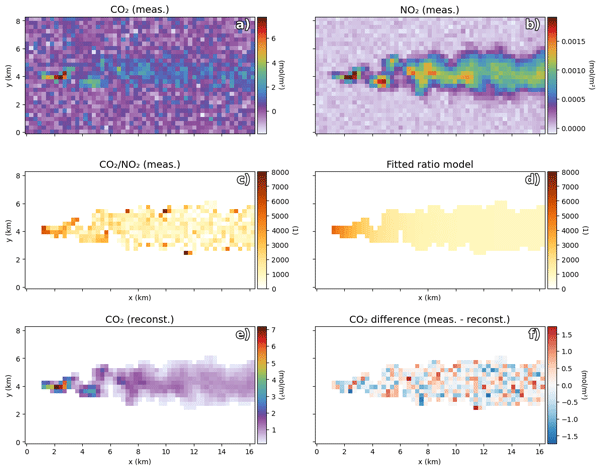
Tobias Borsdorff, Maarten Krol, Pepijn Veefkind, and Jochen Landgraf
Atmos. Meas. Tech., 19, 4617–4636, https://doi.org/10.5194/amt-19-4617-2026, https://doi.org/10.5194/amt-19-4617-2026, 2026
Short summary
Short summary
Industrial facilities release carbon dioxide and nitrogen dioxide. The Twin Anthropogenic Greenhouse Gas Observers (TANGO) mission, launching in 2028, will monitor both gases from ten thousand facilities per year using two satellites. We studied whether combining both improves carbon dioxide emission estimates and reveals plume chemistry. While this produces cleaner carbon dioxide images, precision does not improve as noise is redistributed not eliminated. Their ratio captures how nitrogen oxide converts to nitrogen dioxide within plumes.
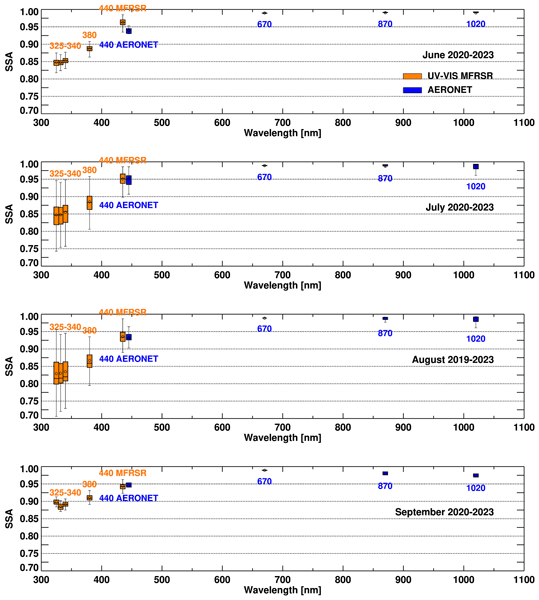
Hiren Jethva, Nickolay Krotkov, Omar Torres, Jungbin Mok, Gordon Labow, Elena Lind, Tom Eck, Wei Gao, George Janson, Scott Simpson, Darrin Sharp, Kathy Lantz, Charles Wilson, Africa Barreto, Rosa García, Sergey Korkin, and David Flittner
Atmos. Meas. Tech., 19, 4335–4365, https://doi.org/10.5194/amt-19-4335-2026, https://doi.org/10.5194/amt-19-4335-2026, 2026
Short summary
Short summary
A synergistic ground-based remote sensing algorithm applied to Aerosol Robotic Network and Multifilter Rotating Shadowband Radiometer allowed retrievals of UV (ultraviolet)-Vis (visible) spectral aerosol absorption of Saharan dust at the Izaña Atmospheric Observatory. The retrieved dataset provides a valuable reference for evaluating satellite ultraviolet dust absorption inversions and further helps infer dust mineralogy to improve dust representation in Earth System Models.
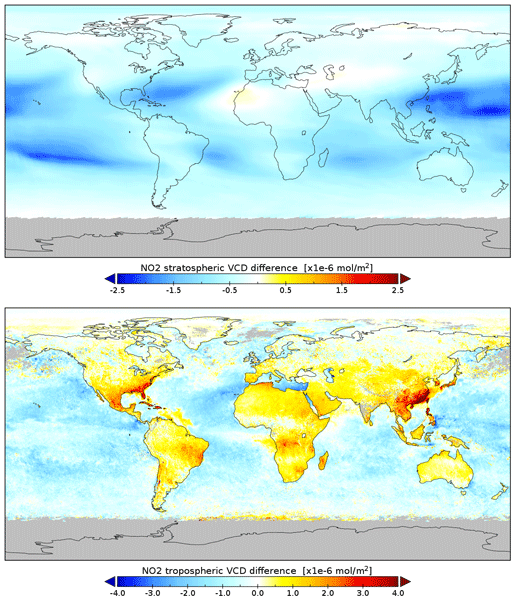
Jos van Geffen, Henk Eskes, Maarten Sneep, Mark ter Linden, and J. Pepijn Veefkind
Atmos. Meas. Tech., 19, 4233–4254, https://doi.org/10.5194/amt-19-4233-2026, https://doi.org/10.5194/amt-19-4233-2026, 2026
Short summary
Short summary
The Fraunhofer absorption feature at 430 nm, which varies in strength with the solar activity cycle influences the retrieval of nitrogen dioxide (NO2) from from Tropospheric Monitoring Instrument (TROPOMI) and Ozone Monitoring Instrument (OMI) measurements. This study describes the benefits of removing the wavelength range 428–433 nm from the retrieval, which is implemented for TROPOMI retrievals as of v2.9.1.
Daniele Minganti, Simon Chabrillat, Sean Davis, Quentin Errera, Marc Op de beeck, Eric Ray, Sarah Vervalcke, Krzysztof Wargan, and Catherine Wespes
EGUsphere, https://doi.org/10.5194/egusphere-2026-3449, https://doi.org/10.5194/egusphere-2026-3449, 2026
Short summary
Short summary
In early 2019, an unusual increase of nitrous oxide concentrations occurred in the northern lower stratosphere (around 20 km). We show that unprecedented circulation pattern rapidly moved nitrous oxide from the tropical region to the northern mid-latitudes. This work reveals how stratospheric mid-latitudes can respond to special wind conditions in the Tropics and subtropics. Such extreme event helps improving our understanding of future changes of stratospheric transport in a warming climate.
Hongrui Gao, Qin He, Kai Qin, Jhoon Kim, Diego Loyola, Pravash Tiwari, Lingxiao Lu, and Jason Blake Cohen
Earth Syst. Sci. Data Discuss., https://doi.org/10.5194/essd-2026-443, https://doi.org/10.5194/essd-2026-443, 2026
Revised manuscript accepted for ESSD
Short summary
Short summary
There are always gaps in satellite records of air pollution because of factors such as clouds and operating conditions. We used a physics-aware deep learning method, producing a gapless 0.05° hourly dataset of tropospheric nitrogen dioxide over Asian pollution hotspots from 2019 to 2024. The dataset can capture sub-daily changes, revealing how traffic, industry, and clean-air policies shaped pollution, supporting health and environment studies.
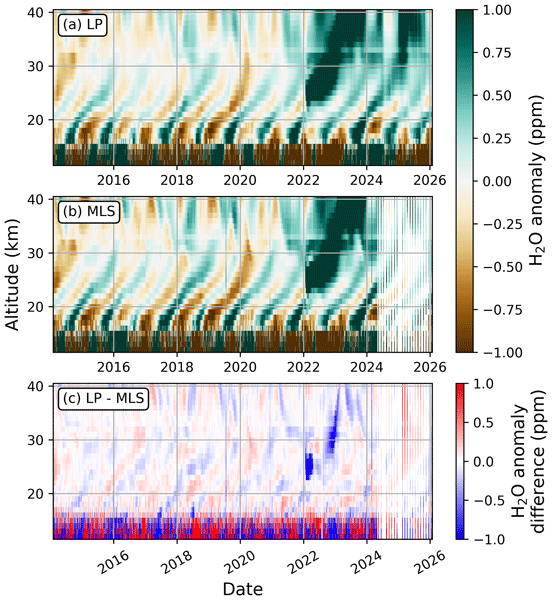
Michael D. Himes, Natalya A. Kramarova, Krzysztof Wargan, Sean M. Davis, and Glen Jaross
Atmos. Meas. Tech., 19, 3601–3624, https://doi.org/10.5194/amt-19-3601-2026, https://doi.org/10.5194/amt-19-3601-2026, 2026
Short summary
Short summary
Stratospheric water vapor (SWV) influences various atmospheric processes. While the Ozone Mapping and Profiler Suite Limb Profiler (OMPS LP) was not designed to measure SWV, we utilized near-coincident measurements by the Aura Microwave Limb Sounder (MLS) and OMPS LP to develop a machine learning method to measure SWV between 11.5–40.5 km. The LP-derived SWV closely agrees with MLS. Our results suggest OMPS LP can continue the global water vapor record following the MLS mission.
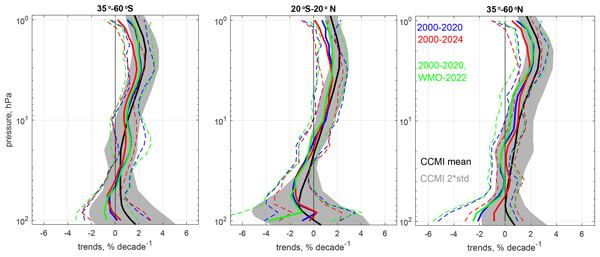
Viktoria F. Sofieva, Monika E. Szelag, Natalya A. Kramarova, Robert Damadeo, Wolfgang Steinbrecht, Irina Petropavlovskikh, Corinne Vigouroux, Eliane Maillard Barras, Daniel Zawada, Kleareti Tourpali, Stacey M. Frith, Jeannette D. Wild, Sean M. Davis, Carlo Arosio, Mark Weber, Alexei Rozanov, Brian Auffarth, Lucien Froidevaux, Ryan Fuller, Doug Degenstein, Kimberlee Dube, Peter Effertz, Thierry Leblanc, Gérard Ancellet, Sophie Godin-Beekmann, Glen McConville, Richard Querel, Dan Smale, Marie-Renee DeBacker, Emmanuel Mahieu, and Ralf Sussmann
Atmos. Chem. Phys., 26, 7387–7405, https://doi.org/10.5194/acp-26-7387-2026, https://doi.org/10.5194/acp-26-7387-2026, 2026
Short summary
Short summary
We present an updated evaluation of stratospheric ozone profile trends in the 60°S–60°N latitude range using long-term ground-based and satellite climate data records, as well as simulations by chemistry-climate models. Analyses confirm the statistically significant positive ozone trends in the upper stratosphere of ~1–3 % decade-1. The trends are close to zero in the middle stratosphere, and mostly negative in the lower stratosphere, but they are not statistically significant.
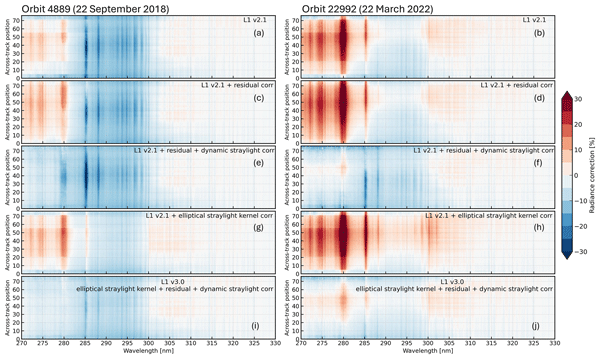
Serena Di Pede, Erwin Loots, Antje Ludewig, Emiel van der Plas, Edward van Amelrooy, Mirna van Hoek, Maarten Sneep, Mark ter Linden, Arno Keppens, and J. Pepijn Veefkind
Atmos. Meas. Tech., 19, 1875–1899, https://doi.org/10.5194/amt-19-1875-2026, https://doi.org/10.5194/amt-19-1875-2026, 2026
Short summary
Short summary
TROPOMI (TROPOspheric Monitoring Instrument) provides daily ozone profile data from ultraviolet bands 1–2. Accurate radiometric calibration is critical below 300 nm where signals are low. A Level-2 soft calibration complements L1 calibration and reveals spectral, temporal, and across-track biases. Re-analysis of calibration data enabled improved L1 corrections to address remaining straylight and residual signal effects, reducing soft calibration magnitude by ~15–20 % and associated biases in L1b v3.0 and ozone processor v2.9.0.
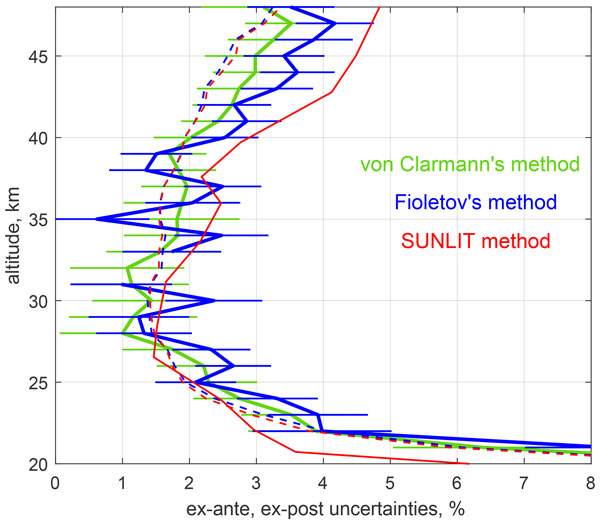
Viktoria F. Sofieva, Alexandra Laeng, Thomas von Clarmann, Gabriele Stiller, Michael Kiefer, Johanna Tamminen, Alexey Rozanov, Carlo Arosio, Nathaniel Livesey, Robert Damadeo, Patrick Sheese, Kaley A. Walker, Doug Degenstein, Daniel Zawada, Natalya A. Kramarova, and Arno Keppens
Atmos. Meas. Tech., 19, 1837–1852, https://doi.org/10.5194/amt-19-1837-2026, https://doi.org/10.5194/amt-19-1837-2026, 2026
Short summary
Short summary
For satellite measurements of atmospheric composition, the random uncertainty estimates provided by retrieval algorithms might be imperfect due to various approximations used in the retrievals or presence of unknown error sources. This paper presents an overview of the methods used for validation of random uncertainty estimates. All methods discussed in this study are categorized, and assumptions and limitations of each method are discussed.
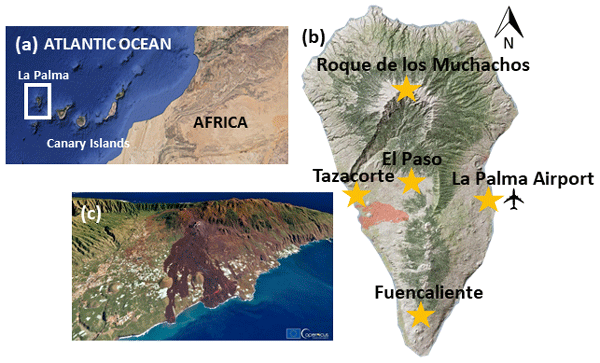
África Barreto, Francisco Quirós, Omaira E. García, Jorge Pereda-de-Pablo, Daniel González-Fernández, Andrés Bedoya-Velásquez, Michael Sicard, Carmen Córdoba-Jabonero, Marco Iarlori, Vincenzo Rizi, Nickolay Krotkov, Simon Carn, Reijo Roininen, Antonio J. Molina-Arias, A. Fernando Almansa, Óscar Álvarez-Losada, Carla Aramo, Juan José Bustos, Romain Ceolato, Adolfo Comerón, Alicia Felpeto, Rosa D. García, Pablo González-Sicilia, Yenny González, Pascal Hedelt, Miguel Hernández, María-Ángeles López-Cayuela, Diego Loyola, Stavros Meletlidis, Constantino Muñoz-Porcar, Ermanno Pietropaolo, Ramón Ramos, Alejandro Rodríguez-Gómez, Roberto Román, Pedro M. Romero-Campos, Martin Stuefer, Carlos Toledano, and Ellsworth J. Welton
Atmos. Meas. Tech., 19, 1385–1406, https://doi.org/10.5194/amt-19-1385-2026, https://doi.org/10.5194/amt-19-1385-2026, 2026
Short summary
Short summary
This manuscript describes the instrumental coverage deployed during the Tajogaite eruption (19 September–25 December 2021) by the Instituto Geográfico Nacional (IGN), the Spanish State Meteorological Agency (AEMET), and other Spanish members of ACTRIS (Aerosol, Clouds and Trace Gases Research Infrastructure) to monitor its atmospheric impact. Two complementary methods provide consistent plume height data for future operational surveillance.
Thomas J. Aubry, Michael Sigl, Matthew Toohey, Man Mei Chim, Magali Verkerk, Anja Schmidt, and Simon A. Carn
EGUsphere, https://doi.org/10.5194/egusphere-2026-546, https://doi.org/10.5194/egusphere-2026-546, 2026
Short summary
Short summary
We document the historical (1750–2023) volcanic sulfur dioxide emission dataset created for phase 7 of the Coupled Model Intercomparison Project, which is a set of coordinated climate model experiments run by modelling center worldwide. Our dataset underpins the stratospheric aerosol optical property dataset which will be used as input by most climate models. However, models with interactive stratospheric aerosol capability can directly input our emission dataset to run CMIP7 experiments.
Jan-Lukas Tirpitz, Nathaniel Brockway, Santo Fedele Colosimo, Robert Spurr, Matt Christi, Samuel Hall, Kirk Ullmann, Vijay Natraj, Nicolas Theys, Johnathan Hair, Taylor Shingler, Rodney Weber, Ruchen Zhu, Jack Dibb, Richard Moore, Elizabeth Wiggins, and Jochen Stutz
EGUsphere, https://doi.org/10.5194/egusphere-2025-5541, https://doi.org/10.5194/egusphere-2025-5541, 2026
Short summary
Short summary
This study applies a novel remote sensing algorithm to airborne radiation measurements performed in wildfire plumes, to retrieve the absorptive properties of biomass burning aerosols. The results provide new insights on the magnitude, wavelength dependence, and atmospheric aging of the imaginary refractive index, volume absorption cross-section, and single scattering albedo of the smoke particles. Furthermore, potential and limitations of the applied method are discussed.
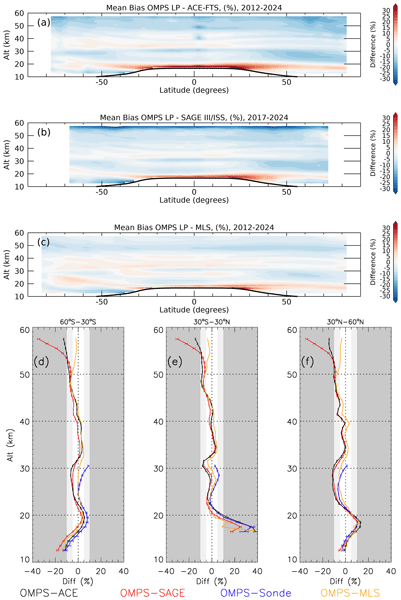
Nigel A. D. Richards, Natalya A. Kramarova, Stacey M. Frith, Sean M. Davis, and Yue Jia
Atmos. Meas. Tech., 19, 529–547, https://doi.org/10.5194/amt-19-529-2026, https://doi.org/10.5194/amt-19-529-2026, 2026
Short summary
Short summary
The Montreal Protocol has led to a slow recovery in the Earth's ozone layer. To detect such changes, and to monitor the health of the ozone layer, long term global observations are needed. The OMPS Limb Profiler (LP) series of satellite sensors are designed to meet this need. We validate the latest version OMPS LP ozone profiles against other satellite and ground based measurements. We find that OMPS LP ozone is consistent with other data sources and is suitable for use in ozone trend studies.
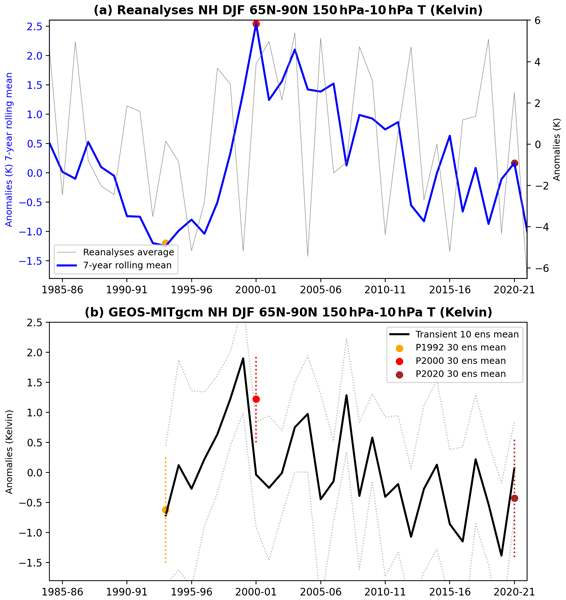
Abdullah A. Fahad, Andrea Molod, Krzysztof Wargan, Dimitris Menemenlis, Patrick Heimbach, Atanas Trayanov, Ehud Strobach, and Lawrence Coy
Atmos. Chem. Phys., 26, 647–663, https://doi.org/10.5194/acp-26-647-2026, https://doi.org/10.5194/acp-26-647-2026, 2026
Short summary
Short summary
This study used reanalysis datasets and a 1-degree coupled General Circulation Model to analyze the Northern Hemisphere stratospheric temperature response in a decadal simulation. Results show that the polar stratospheric temperature increased from 1992 to 2000, contrary to the expectation of stratospheric cooling due to rising CO2. The study concluded that changes in ozone and CO2 drive the meridional eddy heat transport, dictating polar stratospheric temperature behavior.
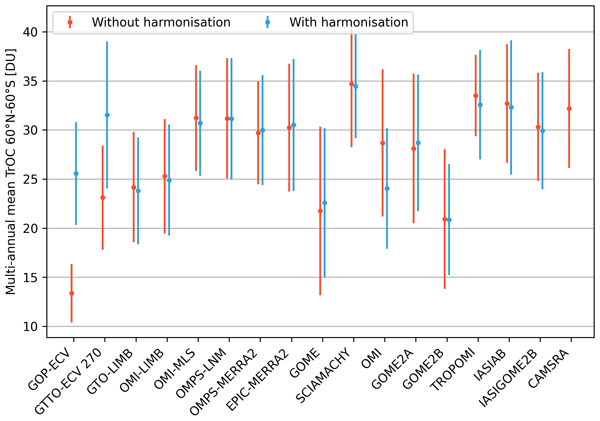
Arno Keppens, Daan Hubert, José Granville, Oindrila Nath, Jean-Christopher Lambert, Catherine Wespes, Pierre-François Coheur, Cathy Clerbaux, Anne Boynard, Richard Siddans, Barry Latter, Brian Kerridge, Serena Di Pede, Pepijn Veefkind, Juan Cuesta, Gaelle Dufour, Klaus-Peter Heue, Melanie Coldewey-Egbers, Diego Loyola, Andrea Orfanoz-Cheuquelaf, Swathi Maratt Satheesan, Kai-Uwe Eichmann, Alexei Rozanov, Viktoria F. Sofieva, Jerald R. Ziemke, Antje Inness, Roeland Van Malderen, and Lars Hoffmann
Atmos. Meas. Tech., 18, 6893–6916, https://doi.org/10.5194/amt-18-6893-2025, https://doi.org/10.5194/amt-18-6893-2025, 2025
Short summary
Short summary
The first Tropospheric Ozone Assessment Report (TOAR) encountered discrepancies between several satellite sensors’ estimates of the distribution and change of ozone in the free troposphere. Therefore, contributing to the second TOAR, we harmonise as much as possible the observational perspective of sixteen tropospheric ozone products from satellites. This only partially accounts for the observed discrepancies, with a reduction of 10–40 % of the inter-product dispersion upon harmonisation.
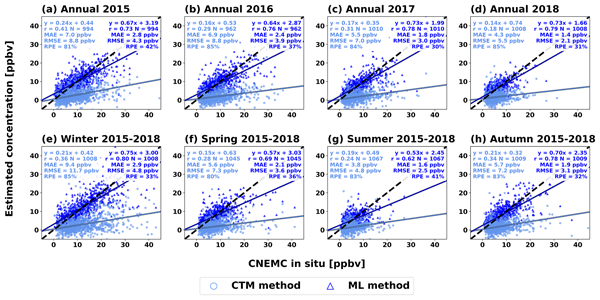
Zachary Watson, Can Li, Fei Liu, Sean W. Freeman, Huanxin Zhang, Jun Wang, and Shan-Hu Lee
Atmos. Chem. Phys., 25, 13527–13545, https://doi.org/10.5194/acp-25-13527-2025, https://doi.org/10.5194/acp-25-13527-2025, 2025
Short summary
Short summary
Air pollutants like sulfur dioxide impact human health and the environment. Our work estimated surface sulfur dioxide concentrations from satellite data over eastern China. One method used atmospheric models, and another method used machine learning. We found that compared to measurements from an air quality monitoring network, both methods accurately captured the locations of sulfur dioxide, but the machine learning method was generally much more accurate in the estimated concentrations.
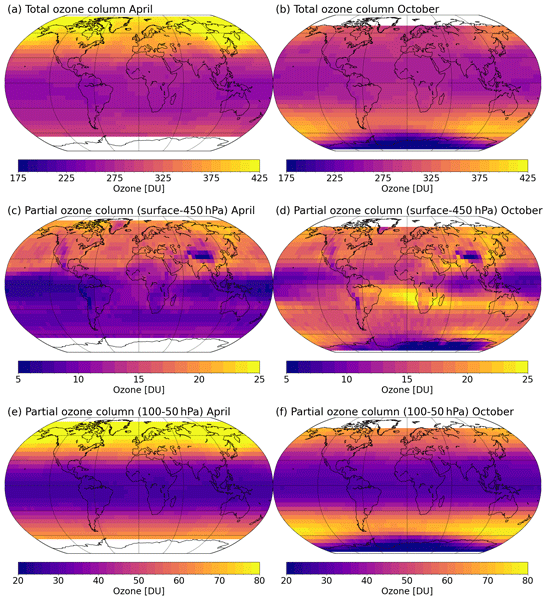
Melanie Coldewey-Egbers, Diego G. Loyola R., Barry Latter, Richard Siddans, Brian Kerridge, Daan Hubert, Michel van Roozendael, and Michael Eisinger
Atmos. Meas. Tech., 18, 5485–5505, https://doi.org/10.5194/amt-18-5485-2025, https://doi.org/10.5194/amt-18-5485-2025, 2025
Short summary
Short summary
The Global Ozone Monitoring Experiment (GOME)-type Ozone Profile Essential Climate Variable (GOP-ECV) data record provides monthly mean ozone profiles with global coverage from 1995 to 2021 at a spatial resolution of 5° × 5°. Measurements from five nadir-viewing satellite sensors are first harmonized and then merged into a coherent record. The long-term stability of the data record is further improved through scaling the profiles using the GOME-type Total Ozone Essential Climate Variable (GTO-ECV) data record as a reference.

Harikrishnan Charuvil Asokan, Jochen Landgraf, Pepijn Veefkind, Stijn Dellaert, and André Butz
Atmos. Meas. Tech., 18, 5247–5264, https://doi.org/10.5194/amt-18-5247-2025, https://doi.org/10.5194/amt-18-5247-2025, 2025
Short summary
Short summary
Greenhouse gases like CO2 and CH4 drive climate change. Satellites enable monitoring of these emissions from space. Our simulations show that the upcoming Twin ANthropogenic Greenhouse gas Observers (TANGO) mission can detect about 500 targets per 4 d cycle under clear skies, but cloud cover reduces detection. Integrating cloud forecasts into TANGO’s manoeuvering boosts detection, highlighting its potential for improving global emission monitoring.
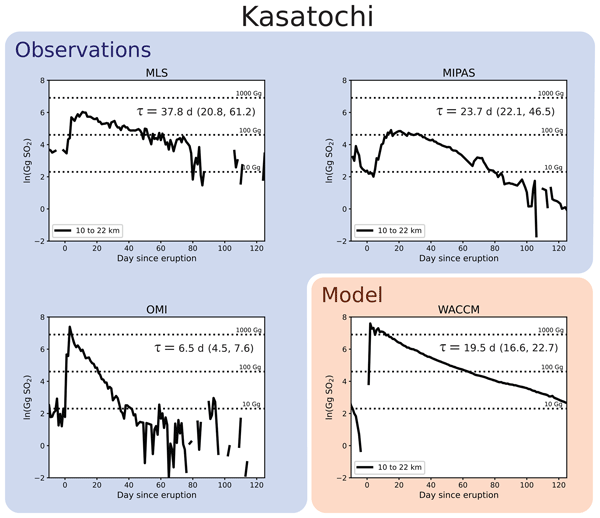
Paul A. Nicknish, Kane Stone, Susan Solomon, and Simon A. Carn
Atmos. Chem. Phys., 25, 11535–11555, https://doi.org/10.5194/acp-25-11535-2025, https://doi.org/10.5194/acp-25-11535-2025, 2025
Short summary
Short summary
Large volcanic eruptions can inject teragrams of sulfur dioxide (SO2) into the stratosphere, influencing stratospheric chemistry and Earth's climate. This work calculates decay timescales of volcanic gas-phase SO2 in the stratosphere using data from three satellite products. SO2 decay timescales vary significantly between the different products, and this uncertainty limits our ability to attribute an observed SO2 decay following an eruption to a specific chemical process.
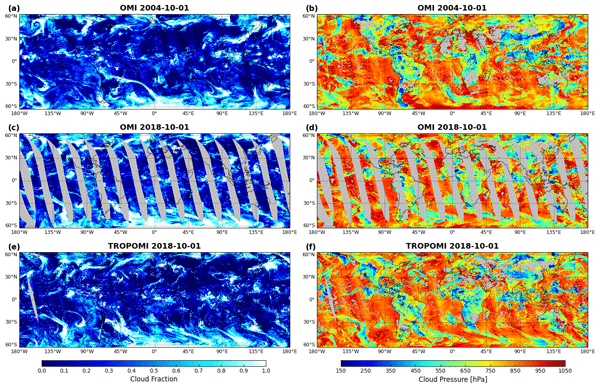
Huan Yu, Isabelle De Smedt, Nicolas Theys, Maarten Sneep, Pepijn Veefkind, and Michel Van Roozendael
Atmos. Meas. Tech., 18, 4131–4163, https://doi.org/10.5194/amt-18-4131-2025, https://doi.org/10.5194/amt-18-4131-2025, 2025
Short summary
Short summary
We introduce a new cloud retrieval algorithm using the O2–O2 absorption band at 477 nm to generate harmonized cloud datasets from OMI and TROPOMI. The algorithm improves upon the OMI O2–O2 operational cloud algorithm in several aspects. The new approach improves consistency in cloud parameters and NO2 retrievals between two sensors.
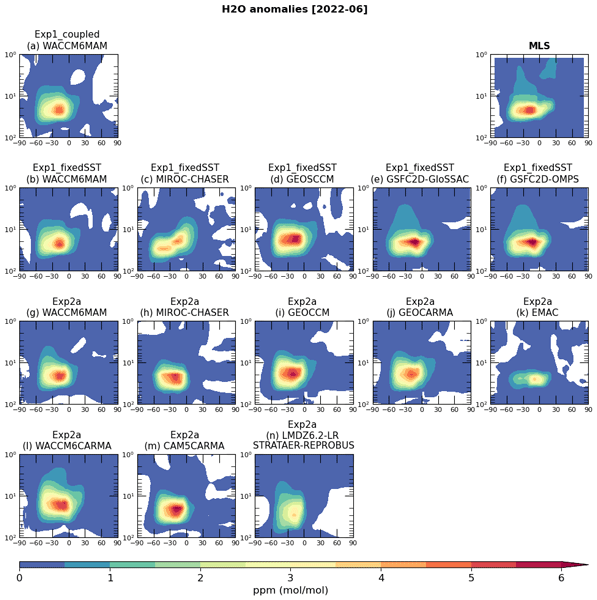
Yunqian Zhu, Hideharu Akiyoshi, Valentina Aquila, Elizabeth Asher, Ewa M. Bednarz, Slimane Bekki, Christoph Brühl, Amy H. Butler, Parker Case, Simon Chabrillat, Gabriel Chiodo, Margot Clyne, Peter R. Colarco, Sandip Dhomse, Lola Falletti, Eric Fleming, Ben Johnson, Andrin Jörimann, Mahesh Kovilakam, Gerbrand Koren, Ales Kuchar, Nicolas Lebas, Qing Liang, Cheng-Cheng Liu, Graham Mann, Michael Manyin, Marion Marchand, Olaf Morgenstern, Paul Newman, Luke D. Oman, Freja F. Østerstrøm, Yifeng Peng, David Plummer, Ilaria Quaglia, William Randel, Samuel Rémy, Takashi Sekiya, Stephen Steenrod, Timofei Sukhodolov, Simone Tilmes, Kostas Tsigaridis, Rei Ueyama, Daniele Visioni, Xinyue Wang, Shingo Watanabe, Yousuke Yamashita, Pengfei Yu, Wandi Yu, Jun Zhang, and Zhihong Zhuo
Geosci. Model Dev., 18, 5487–5512, https://doi.org/10.5194/gmd-18-5487-2025, https://doi.org/10.5194/gmd-18-5487-2025, 2025
Short summary
Short summary
To understand the climate impact of the 2022 Hunga volcanic eruption, we developed a climate model–observation comparison project. The paper describes the protocols and models that participate in the experiments. We designed several experiments to achieve our goals of this activity: (1) to evaluate the climate model performance and (2) to understand the Earth system responses to this eruption.
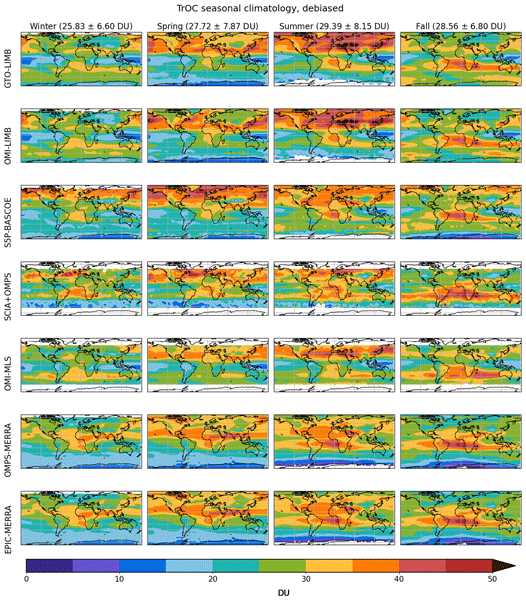
Carlo Arosio, Viktoria Sofieva, Andrea Orfanoz-Cheuquelaf, Alexei Rozanov, Klaus-Peter Heue, Diego Loyola, Edward Malina, Ryan M. Stauffer, David Tarasick, Roeland Van Malderen, Jerry R. Ziemke, and Mark Weber
Atmos. Meas. Tech., 18, 3247–3265, https://doi.org/10.5194/amt-18-3247-2025, https://doi.org/10.5194/amt-18-3247-2025, 2025
Short summary
Short summary
Tropospheric ozone affects air quality and climate, being a pollutant and a greenhouse gas. We analyze satellite data of tropospheric ozone columns obtained by combining two types of observations: one providing stratospheric and the other total ozone. We compare common climatological features and study the influence of the tropopause (troposphere to stratosphere boundary) on the results. We also examine trends over the last 20 years and compare satellite data with ozonesondes to identify drifts.
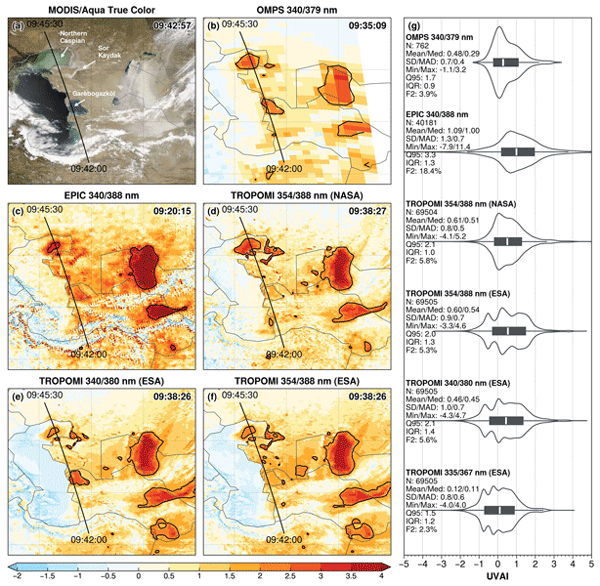
Xin Xi, Jun Wang, Zhendong Lu, Andrew M. Sayer, Jaehwa Lee, Robert C. Levy, Yujie Wang, Alexei Lyapustin, Hongqing Liu, Istvan Laszlo, Changwoo Ahn, Omar Torres, Sabur Abdullaev, James Limbacher, and Ralph A. Kahn
Atmos. Chem. Phys., 25, 7403–7429, https://doi.org/10.5194/acp-25-7403-2025, https://doi.org/10.5194/acp-25-7403-2025, 2025
Short summary
Short summary
The Aralkum Desert is challenging for aerosol retrieval due to its bright, heterogeneous, and dynamic surfaces and the lack of in situ constraints on aerosol properties. The performance and consistency of satellite algorithms in observing Aralkum-generated saline dust remain unknown. This study compares multisensor UVAI (ultraviolet aerosol index), AOD (aerosol optical depth), and ALH (aerosol layer height) products and reveals inconsistencies and potential biases over the Aral Sea basin.
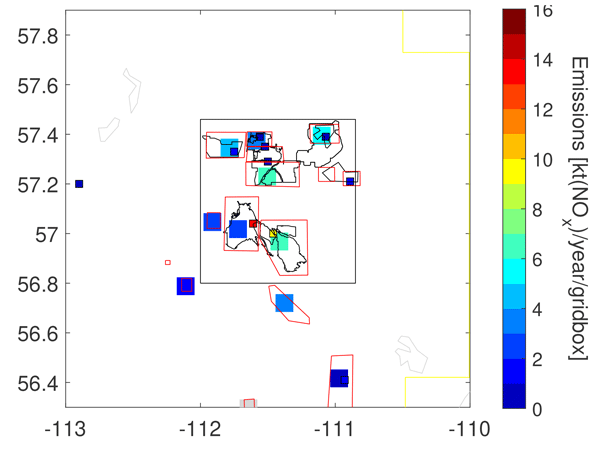
Chris A. McLinden, Debora Griffin, Vitali Fioletov, Junhua Zhang, Enrico Dammers, Cristen Adams, Mallory Loria, Nickolay Krotkov, and Lok N. Lamsal
Atmos. Chem. Phys., 25, 6093–6120, https://doi.org/10.5194/acp-25-6093-2025, https://doi.org/10.5194/acp-25-6093-2025, 2025
Short summary
Short summary
The Ozone Monitoring Instrument (OMI) was used to understand the evolution of NOx emissions from the Canadian oil sands. OMI NO2 combined with winds and reported stack emissions found emissions from the heavy-hauler mine fleet have remained flat since 2005, whereas the total oil sands mined have more than doubled. This difference is a result of emissions standards that limit NOx emissions becoming more stringent over this period, confirming the efficacy of the policy enacting these standards.
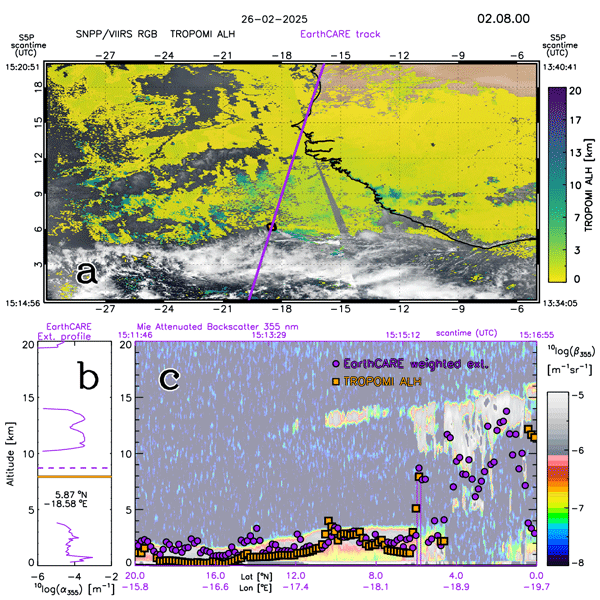
Martin de Graaf, Maarten Sneep, Mark ter Linden, L. Gijsbert Tilstra, David P. Donovan, Gerd-Jan van Zadelhoff, and J. Pepijn Veefkind
Atmos. Meas. Tech., 18, 2553–2571, https://doi.org/10.5194/amt-18-2553-2025, https://doi.org/10.5194/amt-18-2553-2025, 2025
Short summary
Short summary
The aerosol layer height (ALH) from the TROPOspheric Monitoring Instrument (TROPOMI) has been constantly improved since its release in 2019. Over bright surfaces, fitting the albedo improved the retrieval, as shown for a set of situations, ranging from multiple layers of smoke to thick desert dust plumes and low-altitude industrial pollution. The latest results of the operational ALH are compared to profiles from the ATmospheric LIDar (ATLID) on board the recently launched EarthCARE mission.
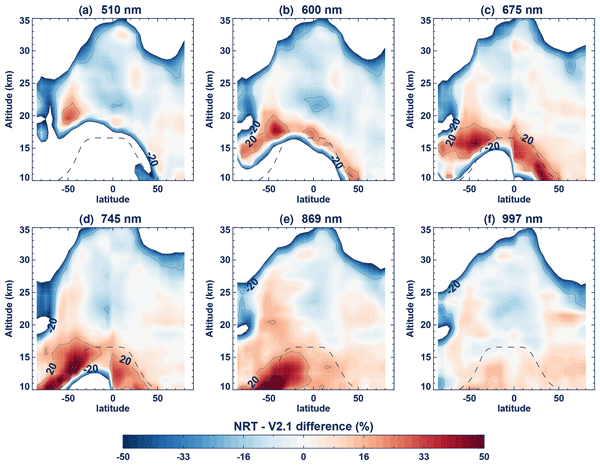
Michael D. Himes, Ghassan Taha, Daniel Kahn, Tong Zhu, and Natalya A. Kramarova
Atmos. Meas. Tech., 18, 2523–2536, https://doi.org/10.5194/amt-18-2523-2025, https://doi.org/10.5194/amt-18-2523-2025, 2025
Short summary
Short summary
The Ozone Mapping and Profiler Suite's Limb Profiler (OMPS LP) yields near-global coverage and information about how aerosols from volcanic eruptions and major wildfires is vertically distributed through the atmosphere. We developed a machine learning method to characterize aerosols using OMPS LP measurements about 60 times faster than the current approach.
Jianglong Zhang, Jeffrey S. Reid, Blake T. Sorenson, Steven D. Miller, Miguel O. Román, Zhuosen Wang, Robert J. D. Spurr, Shawn Jaker, Thomas F. Eck, and Juli I. Rubin
Atmos. Meas. Tech., 18, 1787–1810, https://doi.org/10.5194/amt-18-1787-2025, https://doi.org/10.5194/amt-18-1787-2025, 2025
Short summary
Short summary
Using observations from the Visible Infrared Imaging Radiometer Suite day–night band, we developed a method for constructing gridded nighttime aerosol optical thickness (AOT) data based on the spatial derivative of measured top-of-atmosphere attenuated upwelling artificial lights at night. The gridded nighttime AOT retrievals, compared against Aerosol Robotic Network data, show reasonable skill levels for potential data assimilation, air quality, and climate studies of significant events.
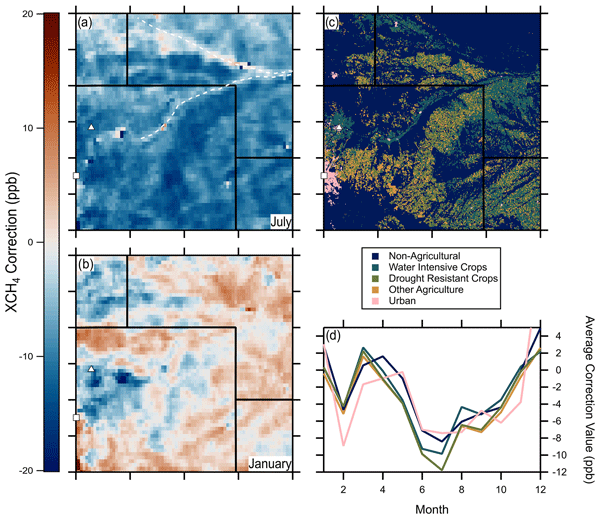
Alexander C. Bradley, Barbara Dix, Fergus Mackenzie, J. Pepijn Veefkind, and Joost A. de Gouw
Atmos. Meas. Tech., 18, 1675–1687, https://doi.org/10.5194/amt-18-1675-2025, https://doi.org/10.5194/amt-18-1675-2025, 2025
Short summary
Short summary
Currently, measurement of methane from the TROPOMI satellite is biased with respect to surface reflectance. This study demonstrates a new method of correcting for this bias on a seasonal timescale to allow for differences in surface reflectance in areas of intense agriculture where growing seasons may introduce a reflectance bias. We have successfully implemented this technique in the Denver–Julesburg basin, where agriculture and methane extraction infrastructure is often co-located.
Yuhang Zhang, Huan Yu, Isabelle De Smedt, Jintai Lin, Nicolas Theys, Michel Van Roozendael, Gaia Pinardi, Steven Compernolle, Ruijing Ni, Fangxuan Ren, Sijie Wang, Lulu Chen, Jos Van Geffen, Mengyao Liu, Alexander M. Cede, Martin Tiefengraber, Alexis Merlaud, Martina M. Friedrich, Andreas Richter, Ankie Piters, Vinod Kumar, Vinayak Sinha, Thomas Wagner, Yongjoo Choi, Hisahiro Takashima, Yugo Kanaya, Hitoshi Irie, Robert Spurr, Wenfu Sun, and Lorenzo Fabris
Atmos. Meas. Tech., 18, 1561–1589, https://doi.org/10.5194/amt-18-1561-2025, https://doi.org/10.5194/amt-18-1561-2025, 2025
Short summary
Short summary
We developed an advanced algorithm for global retrieval of TROPOspheric Monitoring Instrument (TROPOMI) HCHO and NO2 vertical column densities with much improved consistency. Sensitivity tests demonstrate the complexity and nonlinear interactions of auxiliary parameters in the air mass factor calculation. An improved agreement is found with measurements from a global ground-based instrument network. The scientific retrieval provides a useful source of information for studies combining HCHO and NO2.
Jan-Lukas Tirpitz, Santo Fedele Colosimo, Nathaniel Brockway, Robert Spurr, Matt Christi, Samuel Hall, Kirk Ullmann, Johnathan Hair, Taylor Shingler, Rodney Weber, Jack Dibb, Richard Moore, Elizabeth Wiggins, Vijay Natraj, Nicolas Theys, and Jochen Stutz
Atmos. Chem. Phys., 25, 1989–2015, https://doi.org/10.5194/acp-25-1989-2025, https://doi.org/10.5194/acp-25-1989-2025, 2025
Short summary
Short summary
We combine plume composition data from the 2019 NASA FIREX-AQ campaign with state-of-the-art radiative transfer modeling techniques to calculate distributions of actinic flux and photolysis frequencies in a wildfire plume. Excellent agreement of the model and observations demonstrates the applicability of this approach to constrain photochemistry in such plumes. We identify limiting factors for the modeling accuracy and discuss spatial and spectral features of the distributions.
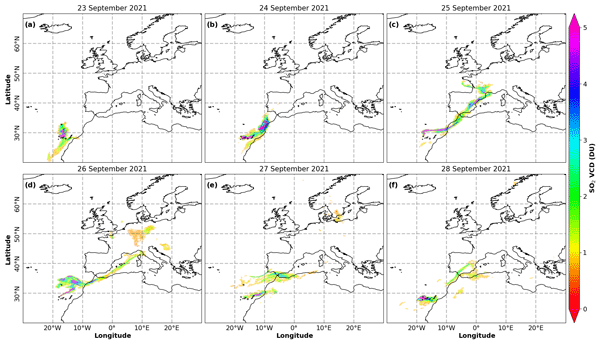
Pascal Hedelt, Jens Reichardt, Felix Lauermann, Benjamin Weiß, Nicolas Theys, Alberto Redondas, Africa Barreto, Omaira Garcia, and Diego Loyola
Atmos. Chem. Phys., 25, 1253–1272, https://doi.org/10.5194/acp-25-1253-2025, https://doi.org/10.5194/acp-25-1253-2025, 2025
Short summary
Short summary
The 2021 volcanic eruption of Tajogaite on La Palma is investigated using ground-based and satellite measurements. In addition, the atmospheric transport of the volcanic cloud towards Europe is studied in detail. The amount of SO2 released during the eruption and the height of the volcanic plume are in excellent agreement among the different measurements. Furthermore, volcanic aerosol microphysical properties could be retrieved using a new retrieval approach based on lidar measurements.
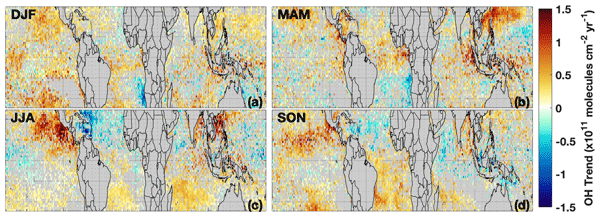
Bryan N. Duncan, Daniel C. Anderson, Arlene M. Fiore, Joanna Joiner, Nickolay A. Krotkov, Can Li, Dylan B. Millet, Julie M. Nicely, Luke D. Oman, Jason M. St. Clair, Joshua D. Shutter, Amir H. Souri, Sarah A. Strode, Brad Weir, Glenn M. Wolfe, Helen M. Worden, and Qindan Zhu
Atmos. Chem. Phys., 24, 13001–13023, https://doi.org/10.5194/acp-24-13001-2024, https://doi.org/10.5194/acp-24-13001-2024, 2024
Short summary
Short summary
Trace gases emitted to or formed within the atmosphere may be chemically or physically removed from the atmosphere. One trace gas, the hydroxyl radical (OH), is responsible for initiating the chemical removal of many trace gases, including some greenhouse gases. Despite its importance, scientists have not been able to adequately measure OH. In this opinion piece, we discuss promising new methods to indirectly constrain OH using satellite data of trace gases that control the abundance of OH.
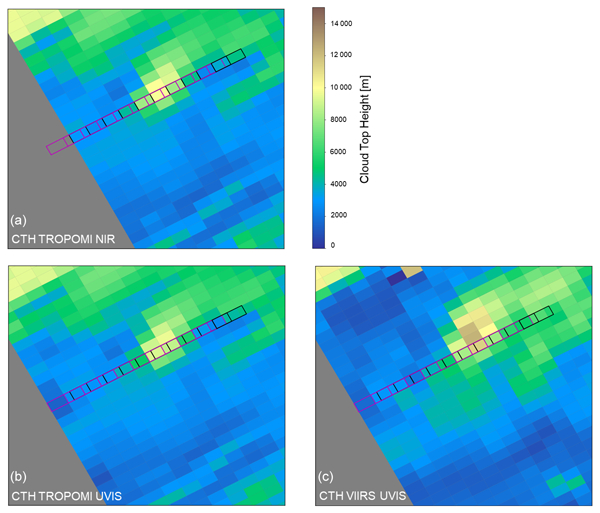
Athina Argyrouli, Diego Loyola, Fabian Romahn, Ronny Lutz, Víctor Molina García, Pascal Hedelt, Klaus-Peter Heue, and Richard Siddans
Atmos. Meas. Tech., 17, 6345–6367, https://doi.org/10.5194/amt-17-6345-2024, https://doi.org/10.5194/amt-17-6345-2024, 2024
Short summary
Short summary
This paper describes a new treatment of the spatial misregistration of cloud properties for Sentinel-5 Precursor, when the footprints of different spectral bands are not perfectly aligned. The methodology exploits synergies between spectrometers and imagers, like TROPOMI and VIIRS. The largest improvements have been identified for heterogeneous scenes at cloud edges. This approach is generic and can also be applied to future Sentinel-4 and Sentinel-5 instruments.
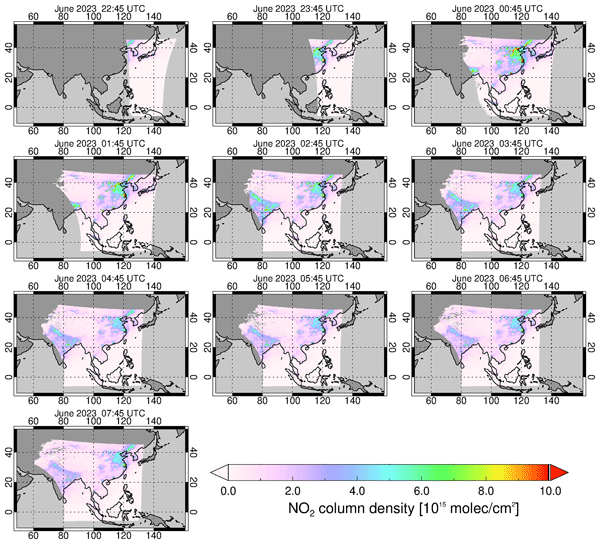
Sora Seo, Pieter Valks, Ronny Lutz, Klaus-Peter Heue, Pascal Hedelt, Víctor Molina García, Diego Loyola, Hanlim Lee, and Jhoon Kim
Atmos. Meas. Tech., 17, 6163–6191, https://doi.org/10.5194/amt-17-6163-2024, https://doi.org/10.5194/amt-17-6163-2024, 2024
Short summary
Short summary
In this study, we developed an advanced retrieval algorithm for tropospheric NO2 columns from geostationary satellite spectrometers and applied it to GEMS measurements. The DLR GEMS NO2 retrieval algorithm follows the heritage from previous and existing algorithms, but improved approaches are applied to reflect the specific features of geostationary satellites. The DLR GEMS NO2 retrievals demonstrate a good capability for monitoring diurnal variability with a high spatial resolution.
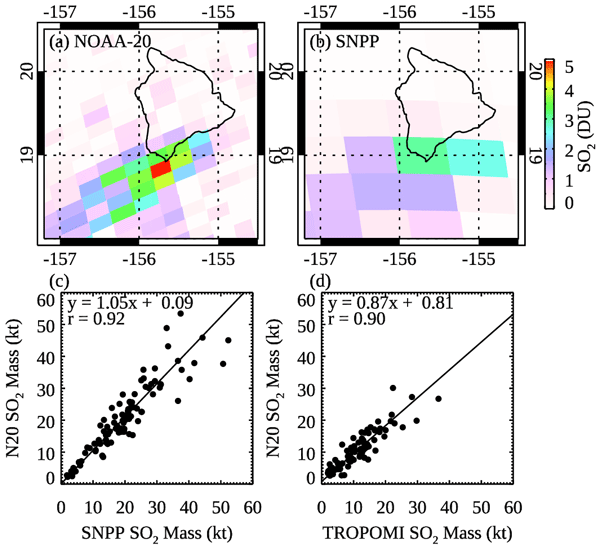
Can Li, Nickolay A. Krotkov, Joanna Joiner, Vitali Fioletov, Chris McLinden, Debora Griffin, Peter J. T. Leonard, Simon Carn, Colin Seftor, and Alexander Vasilkov
Earth Syst. Sci. Data, 16, 4291–4309, https://doi.org/10.5194/essd-16-4291-2024, https://doi.org/10.5194/essd-16-4291-2024, 2024
Short summary
Short summary
Sulfur dioxide (SO2), a poisonous gas from human activities and volcanoes, causes air pollution, acid rain, and changes to climate and the ozone layer. Satellites have been used to monitor SO2 globally, including remote areas. Here we describe a new satellite SO2 dataset from the OMPS instrument that flies on the N20 satellite. Results show that the new dataset agrees well with the existing ones from other satellites and can help to continue the global monitoring of SO2 from space.
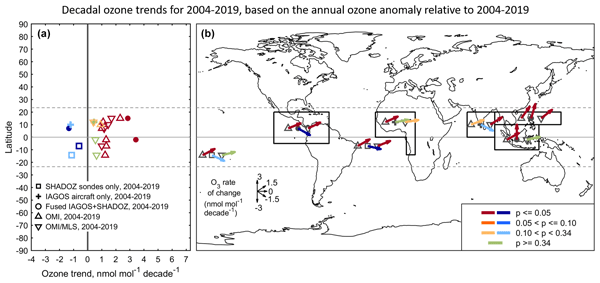
Audrey Gaudel, Ilann Bourgeois, Meng Li, Kai-Lan Chang, Jerald Ziemke, Bastien Sauvage, Ryan M. Stauffer, Anne M. Thompson, Debra E. Kollonige, Nadia Smith, Daan Hubert, Arno Keppens, Juan Cuesta, Klaus-Peter Heue, Pepijn Veefkind, Kenneth Aikin, Jeff Peischl, Chelsea R. Thompson, Thomas B. Ryerson, Gregory J. Frost, Brian C. McDonald, and Owen R. Cooper
Atmos. Chem. Phys., 24, 9975–10000, https://doi.org/10.5194/acp-24-9975-2024, https://doi.org/10.5194/acp-24-9975-2024, 2024
Short summary
Short summary
The study examines tropical tropospheric ozone changes. In situ data from 1994–2019 display increased ozone, notably over India, Southeast Asia, and Malaysia and Indonesia. Sparse in situ data limit trend detection for the 15-year period. In situ and satellite data, with limited sampling, struggle to consistently detect trends. Continuous observations are vital over the tropical Pacific Ocean, Indian Ocean, western Africa, and South Asia for accurate ozone trend estimation in these regions.
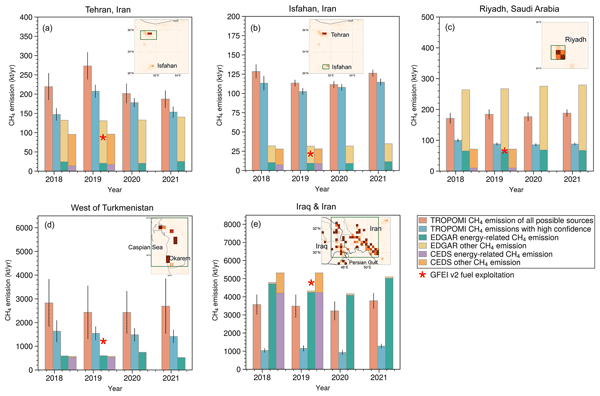
Mengyao Liu, Ronald van der A, Michiel van Weele, Lotte Bryan, Henk Eskes, Pepijn Veefkind, Yongxue Liu, Xiaojuan Lin, Jos de Laat, and Jieying Ding
Atmos. Meas. Tech., 17, 5261–5277, https://doi.org/10.5194/amt-17-5261-2024, https://doi.org/10.5194/amt-17-5261-2024, 2024
Short summary
Short summary
A new divergence method was developed and applied to estimate methane emissions from TROPOMI observations over the Middle East, where it is typically challenging for a satellite to measure methane due to its complicated orography and surface albedo. Our results show the potential of TROPOMI to quantify methane emissions from various sources rather than big emitters from space after objectively excluding the artifacts in the retrieval.
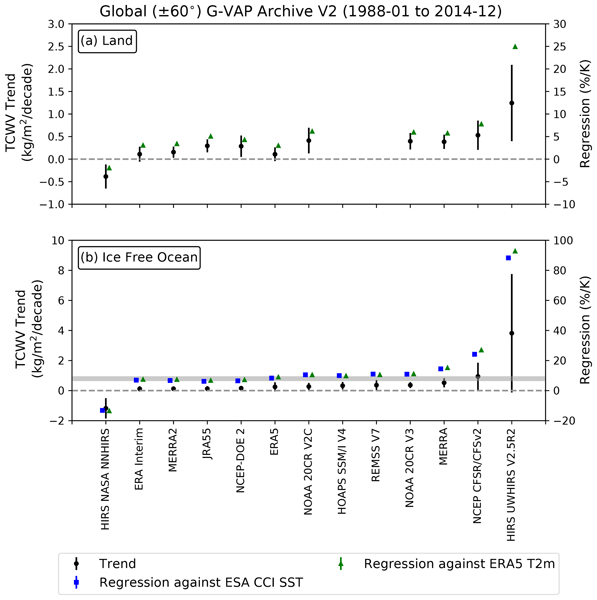
Tim Trent, Marc Schröder, Shu-Peng Ho, Steffen Beirle, Ralf Bennartz, Eva Borbas, Christian Borger, Helene Brogniez, Xavier Calbet, Elisa Castelli, Gilbert P. Compo, Wesley Ebisuzaki, Ulrike Falk, Frank Fell, John Forsythe, Hans Hersbach, Misako Kachi, Shinya Kobayashi, Robert E. Kursinski, Diego Loyola, Zhengzao Luo, Johannes K. Nielsen, Enzo Papandrea, Laurence Picon, Rene Preusker, Anthony Reale, Lei Shi, Laura Slivinski, Joao Teixeira, Tom Vonder Haar, and Thomas Wagner
Atmos. Chem. Phys., 24, 9667–9695, https://doi.org/10.5194/acp-24-9667-2024, https://doi.org/10.5194/acp-24-9667-2024, 2024
Short summary
Short summary
In a warmer future, water vapour will spend more time in the atmosphere, changing global rainfall patterns. In this study, we analysed the performance of 28 water vapour records between 1988 and 2014. We find sensitivity to surface warming generally outside expected ranges, attributed to breakpoints in individual record trends and differing representations of climate variability. The implication is that longer records are required for high confidence in assessing climate trends.
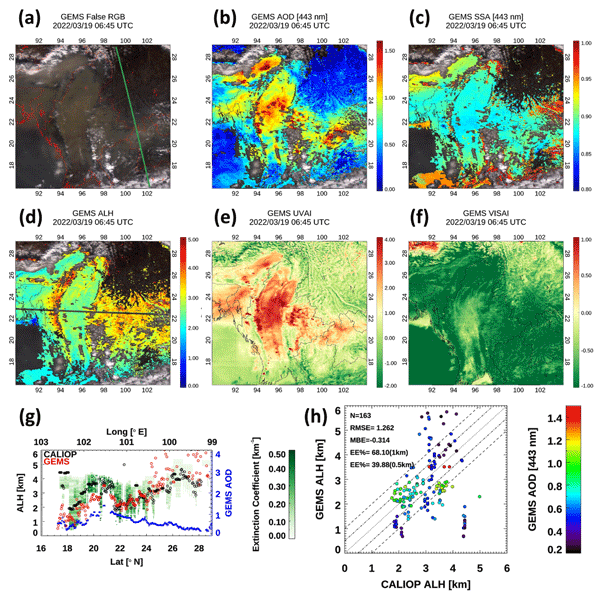
Yeseul Cho, Jhoon Kim, Sujung Go, Mijin Kim, Seoyoung Lee, Minseok Kim, Heesung Chong, Won-Jin Lee, Dong-Won Lee, Omar Torres, and Sang Seo Park
Atmos. Meas. Tech., 17, 4369–4390, https://doi.org/10.5194/amt-17-4369-2024, https://doi.org/10.5194/amt-17-4369-2024, 2024
Short summary
Short summary
Aerosol optical properties have been provided by the Geostationary Environment Monitoring Spectrometer (GEMS), the world’s first geostationary-Earth-orbit (GEO) satellite instrument designed for atmospheric environmental monitoring. This study describes improvements made to the GEMS aerosol retrieval algorithm (AERAOD) and presents its validation results. These enhancements aim to provide more accurate and reliable aerosol-monitoring results for Asia.
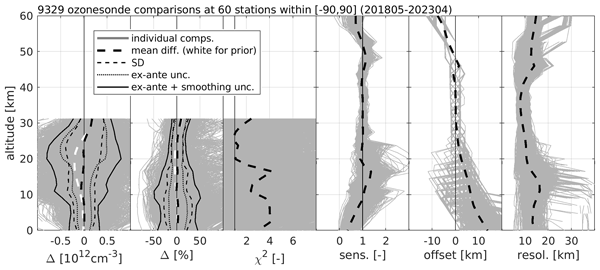
Arno Keppens, Serena Di Pede, Daan Hubert, Jean-Christopher Lambert, Pepijn Veefkind, Maarten Sneep, Johan De Haan, Mark ter Linden, Thierry Leblanc, Steven Compernolle, Tijl Verhoelst, José Granville, Oindrila Nath, Ann Mari Fjæraa, Ian Boyd, Sander Niemeijer, Roeland Van Malderen, Herman G. J. Smit, Valentin Duflot, Sophie Godin-Beekmann, Bryan J. Johnson, Wolfgang Steinbrecht, David W. Tarasick, Debra E. Kollonige, Ryan M. Stauffer, Anne M. Thompson, Angelika Dehn, and Claus Zehner
Atmos. Meas. Tech., 17, 3969–3993, https://doi.org/10.5194/amt-17-3969-2024, https://doi.org/10.5194/amt-17-3969-2024, 2024
Short summary
Short summary
The Sentinel-5P satellite operated by the European Space Agency has carried the TROPOspheric Monitoring Instrument (TROPOMI) around the Earth since October 2017. This mission also produces atmospheric ozone profile data which are described in detail for May 2018 to April 2023. Independent validation using ground-based reference measurements demonstrates that the operational ozone profile product mostly fully and at least partially complies with all mission requirements.
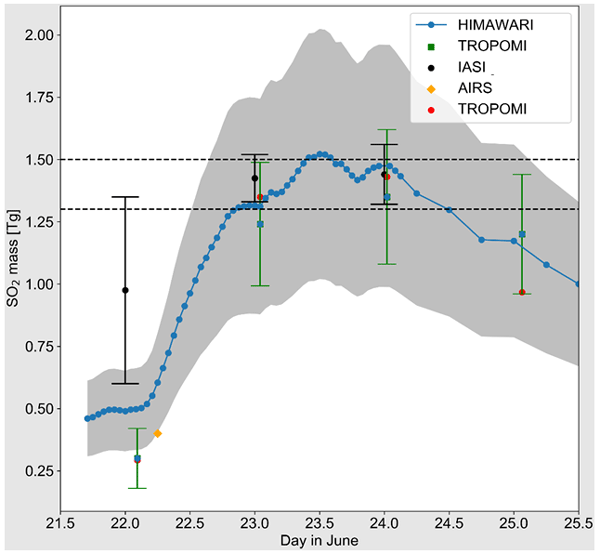
Jean-Paul Vernier, Thomas J. Aubry, Claudia Timmreck, Anja Schmidt, Lieven Clarisse, Fred Prata, Nicolas Theys, Andrew T. Prata, Graham Mann, Hyundeok Choi, Simon Carn, Richard Rigby, Susan C. Loughlin, and John A. Stevenson
Atmos. Chem. Phys., 24, 5765–5782, https://doi.org/10.5194/acp-24-5765-2024, https://doi.org/10.5194/acp-24-5765-2024, 2024
Short summary
Short summary
The 2019 Raikoke eruption (Kamchatka, Russia) generated one of the largest emissions of particles and gases into the stratosphere since the 1991 Mt. Pinatubo eruption. The Volcano Response (VolRes) initiative, an international effort, provided a platform for the community to share information about this eruption and assess its climate impact. The eruption led to a minor global surface cooling of 0.02 °C in 2020 which is negligible relative to warming induced by human greenhouse gas emissions.
Santo Fedele Colosimo, Nathaniel Brockway, Vijay Natraj, Robert Spurr, Klaus Pfeilsticker, Lisa Scalone, Max Spolaor, Sarah Woods, and Jochen Stutz
Atmos. Meas. Tech., 17, 2367–2385, https://doi.org/10.5194/amt-17-2367-2024, https://doi.org/10.5194/amt-17-2367-2024, 2024
Short summary
Short summary
Cirrus clouds are poorly understood components of the climate system, in part due to the challenge of observing thin, sub-visible ice clouds. We address this issue with a new observational approach that uses the remote sensing of near-infrared ice water absorption features from a high-altitude aircraft. We describe the underlying principle of this approach and present a new procedure to retrieve ice concentration in cirrus clouds. Our retrievals compare well with in situ observations.
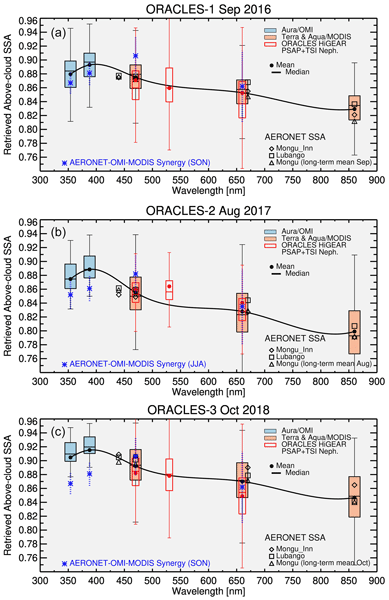
Hiren T. Jethva, Omar Torres, Richard A. Ferrare, Sharon P. Burton, Anthony L. Cook, David B. Harper, Chris A. Hostetler, Jens Redemann, Vinay Kayetha, Samuel LeBlanc, Kristina Pistone, Logan Mitchell, and Connor J. Flynn
Atmos. Meas. Tech., 17, 2335–2366, https://doi.org/10.5194/amt-17-2335-2024, https://doi.org/10.5194/amt-17-2335-2024, 2024
Short summary
Short summary
We introduce a novel synergy algorithm applied to ORALCES airborne measurements of above-cloud aerosol optical depth and UV–Vis satellite observations from OMI and MODIS to retrieve spectral aerosol single-scattering albedo of lofted layers of carbonaceous smoke aerosols over clouds. The development of the proposed aerosol–cloud algorithm implies a possible synergy of CALIOP and OMI–MODIS passive sensors to deduce a global product of AOD and SSA of absorbing aerosols above clouds.
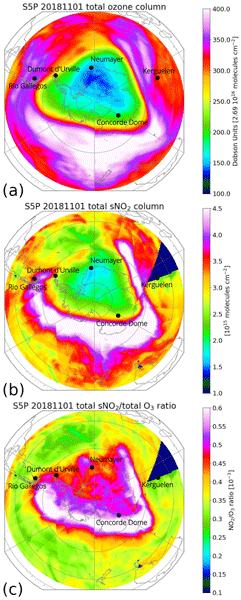
Adrianus de Laat, Jos van Geffen, Piet Stammes, Ronald van der A, Henk Eskes, and J. Pepijn Veefkind
Atmos. Chem. Phys., 24, 4511–4535, https://doi.org/10.5194/acp-24-4511-2024, https://doi.org/10.5194/acp-24-4511-2024, 2024
Short summary
Short summary
Removal of stratospheric nitrogen oxides is crucial for the formation of the ozone hole. TROPOMI satellite measurements of nitrogen dioxide reveal the presence of a not dissimilar "nitrogen hole" that largely coincides with the ozone hole. Three very distinct regimes were identified: inside and outside the ozone hole and the transition zone in between. Our results introduce a valuable and innovative application highly relevant for Antarctic ozone hole and ozone layer recovery.
Xiaozhen Xiong, Xu Liu, Robert Spurr, Ming Zhao, Qiguang Yang, Wan Wu, and Liqiao Lei
Atmos. Meas. Tech., 17, 1965–1978, https://doi.org/10.5194/amt-17-1965-2024, https://doi.org/10.5194/amt-17-1965-2024, 2024
Short summary
Short summary
The term “hotspot” refers to the sharp increase in reflectance occurring when incident (solar) and reflected (viewing) directions coincide in the backscatter direction. The accurate simulation of hotspot directional signatures is important for many remote sensing applications, but current models typically require large values of computations to represent the hotspot accurately. This paper provides a numerically improved hotspot BRDF model that converges much faster and is used in VLIDORT.
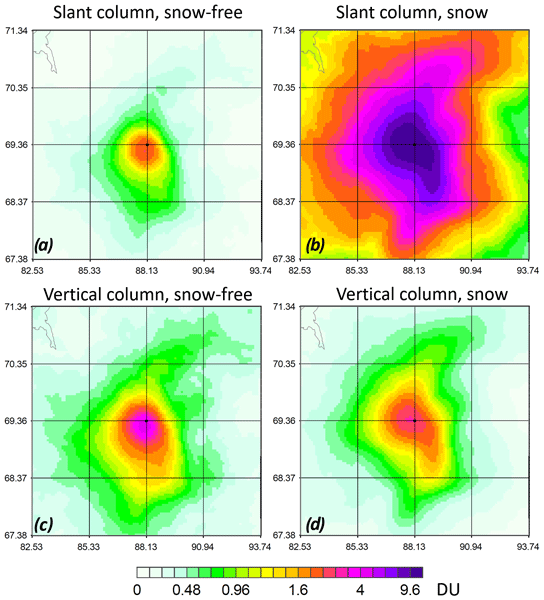
Vitali E. Fioletov, Chris A. McLinden, Debora Griffin, Nickolay A. Krotkov, Can Li, Joanna Joiner, Nicolas Theys, and Simon Carn
Atmos. Meas. Tech., 16, 5575–5592, https://doi.org/10.5194/amt-16-5575-2023, https://doi.org/10.5194/amt-16-5575-2023, 2023
Short summary
Short summary
Snow-covered terrain, with its high reflectance in the UV, typically enhances satellite sensitivity to boundary layer pollution. However, a significant fraction of high-quality cloud-free measurements over snow is currently excluded from analyses. In this study, we investigated how satellite SO2 measurements over snow-covered surfaces can be used to improve estimations of annual SO2 emissions.
Yuhang Zhang, Jintai Lin, Jhoon Kim, Hanlim Lee, Junsung Park, Hyunkee Hong, Michel Van Roozendael, Francois Hendrick, Ting Wang, Pucai Wang, Qin He, Kai Qin, Yongjoo Choi, Yugo Kanaya, Jin Xu, Pinhua Xie, Xin Tian, Sanbao Zhang, Shanshan Wang, Siyang Cheng, Xinghong Cheng, Jianzhong Ma, Thomas Wagner, Robert Spurr, Lulu Chen, Hao Kong, and Mengyao Liu
Atmos. Meas. Tech., 16, 4643–4665, https://doi.org/10.5194/amt-16-4643-2023, https://doi.org/10.5194/amt-16-4643-2023, 2023
Short summary
Short summary
Our tropospheric NO2 vertical column density product with high spatiotemporal resolution is based on the Geostationary Environment Monitoring Spectrometer (GEMS) and named POMINO–GEMS. Strong hotspot signals and NO2 diurnal variations are clearly seen. Validations with multiple satellite products and ground-based, mobile car and surface measurements exhibit the overall great performance of the POMINO–GEMS product, indicating its capability for application in environmental studies.
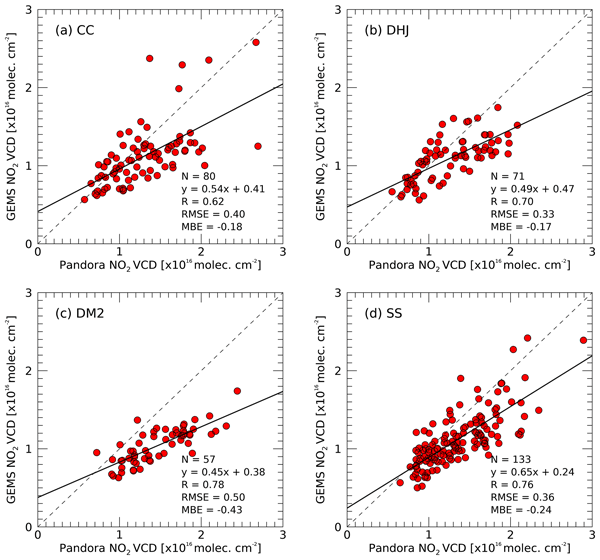
Serin Kim, Daewon Kim, Hyunkee Hong, Lim-Seok Chang, Hanlim Lee, Deok-Rae Kim, Donghee Kim, Jeong-Ah Yu, Dongwon Lee, Ukkyo Jeong, Chang-Kuen Song, Sang-Woo Kim, Sang Seo Park, Jhoon Kim, Thomas F. Hanisco, Junsung Park, Wonei Choi, and Kwangyul Lee
Atmos. Meas. Tech., 16, 3959–3972, https://doi.org/10.5194/amt-16-3959-2023, https://doi.org/10.5194/amt-16-3959-2023, 2023
Short summary
Short summary
A first evaluation of the Geostationary Environmental Monitoring Spectrometer (GEMS) NO2 was carried out via comparison with the NO2 data obtained from the ground-based Pandora direct-sun measurements at four sites in Seosan, Republic of Korea. Comparisons between GEMS NO2 and Pandora NO2 were performed according to GEMS cloud fraction. GEMS NO2 showed good agreement with that of Pandora NO2 under less cloudy conditions.
Huiqun Wang, Gonzalo González Abad, Chris Chan Miller, Hyeong-Ahn Kwon, Caroline R. Nowlan, Zolal Ayazpour, Heesung Chong, Xiong Liu, Kelly Chance, Ewan O'Sullivan, Kang Sun, Robert Spurr, and Robert J. Hargreaves
Atmos. Meas. Tech. Discuss., https://doi.org/10.5194/amt-2023-66, https://doi.org/10.5194/amt-2023-66, 2023
Preprint withdrawn
Short summary
Short summary
A pipeline for retrieving Total Column Water Vapor from satellite blue spectra is developed. New constraints are considered. Water-leaving radiance is important over the oceans. Results agree with reference datasets well under clear conditions. Due to high sensitivity to clouds, strict data filtering criteria are required. All-sky retrievals can be corrected using machine learning. GPS stations’ representation errors follow a power law relationship with grid resolutions.
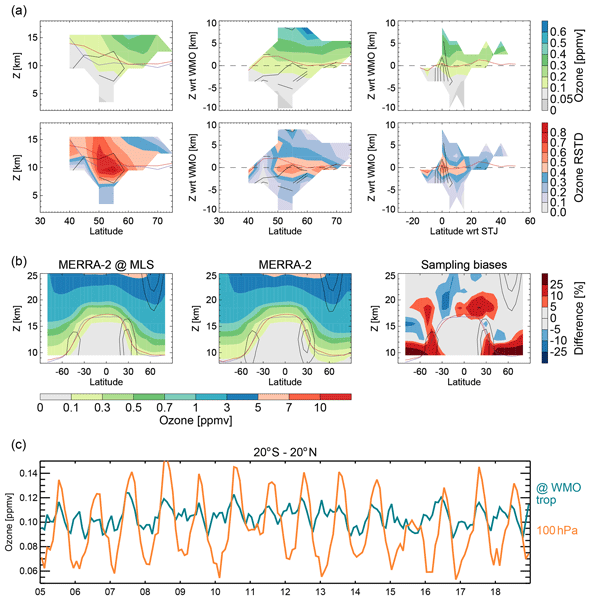
Luis F. Millán, Gloria L. Manney, Harald Boenisch, Michaela I. Hegglin, Peter Hoor, Daniel Kunkel, Thierry Leblanc, Irina Petropavlovskikh, Kaley Walker, Krzysztof Wargan, and Andreas Zahn
Atmos. Meas. Tech., 16, 2957–2988, https://doi.org/10.5194/amt-16-2957-2023, https://doi.org/10.5194/amt-16-2957-2023, 2023
Short summary
Short summary
The determination of atmospheric composition trends in the upper troposphere and lower stratosphere (UTLS) is still highly uncertain. We present the creation of dynamical diagnostics to map several ozone datasets (ozonesondes, lidars, aircraft, and satellite measurements) in geophysically based coordinate systems. The diagnostics can also be used to analyze other greenhouse gases relevant to surface climate and UTLS chemistry.
Jianglong Zhang, Jeffrey S. Reid, Steven D. Miller, Miguel Román, Zhuosen Wang, Robert J. D. Spurr, and Shawn Jaker
Atmos. Meas. Tech., 16, 2531–2546, https://doi.org/10.5194/amt-16-2531-2023, https://doi.org/10.5194/amt-16-2531-2023, 2023
Short summary
Short summary
We adapted the spherical harmonics discrete ordinate method 3-dimentional radiative transfer model (3-D RTM) and developed a nighttime 3-D RTM capability for simulating top-of-atmosphere radiances from artificial light sources for aerosol retrievals. Our study suggests that both aerosol optical depth and aerosol plume height can be effectively retrieved using nighttime observations over artificial light sources, through the newly developed radiative transfer modeling capability.
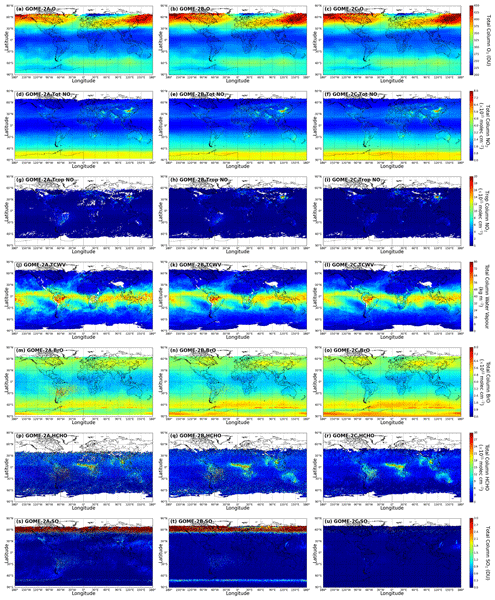
Ka Lok Chan, Pieter Valks, Klaus-Peter Heue, Ronny Lutz, Pascal Hedelt, Diego Loyola, Gaia Pinardi, Michel Van Roozendael, François Hendrick, Thomas Wagner, Vinod Kumar, Alkis Bais, Ankie Piters, Hitoshi Irie, Hisahiro Takashima, Yugo Kanaya, Yongjoo Choi, Kihong Park, Jihyo Chong, Alexander Cede, Udo Frieß, Andreas Richter, Jianzhong Ma, Nuria Benavent, Robert Holla, Oleg Postylyakov, Claudia Rivera Cárdenas, and Mark Wenig
Earth Syst. Sci. Data, 15, 1831–1870, https://doi.org/10.5194/essd-15-1831-2023, https://doi.org/10.5194/essd-15-1831-2023, 2023
Short summary
Short summary
This paper presents the theoretical basis as well as verification and validation of the Global Ozone Monitoring Experiment-2 (GOME-2) daily and monthly level-3 products.
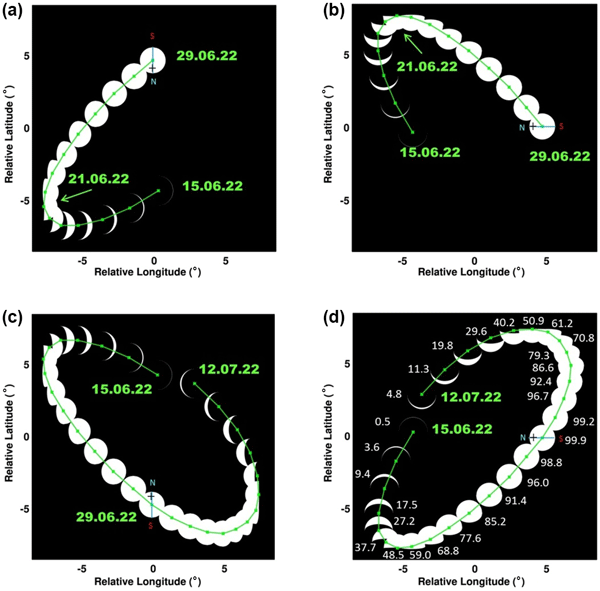
Nick Gorkavyi, Nickolay Krotkov, and Alexander Marshak
Atmos. Meas. Tech., 16, 1527–1537, https://doi.org/10.5194/amt-16-1527-2023, https://doi.org/10.5194/amt-16-1527-2023, 2023
Short summary
Short summary
The article discusses topical issues of the visible (libration) motion of the Earth in the sky of the Moon in a rectangle measuring 13.4° × 15.8°. On the one hand, the librations of the Moon make these observations difficult. On the other hand, they can be used as a natural scanning mechanism for cameras and spectroscopes mounted on a fixed platform on the surface of the Moon.
Konstantinos Michailidis, Maria-Elissavet Koukouli, Dimitris Balis, J. Pepijn Veefkind, Martin de Graaf, Lucia Mona, Nikolaos Papagianopoulos, Gesolmina Pappalardo, Ioanna Tsikoudi, Vassilis Amiridis, Eleni Marinou, Anna Gialitaki, Rodanthi-Elisavet Mamouri, Argyro Nisantzi, Daniele Bortoli, Maria João Costa, Vanda Salgueiro, Alexandros Papayannis, Maria Mylonaki, Lucas Alados-Arboledas, Salvatore Romano, Maria Rita Perrone, and Holger Baars
Atmos. Chem. Phys., 23, 1919–1940, https://doi.org/10.5194/acp-23-1919-2023, https://doi.org/10.5194/acp-23-1919-2023, 2023
Short summary
Short summary
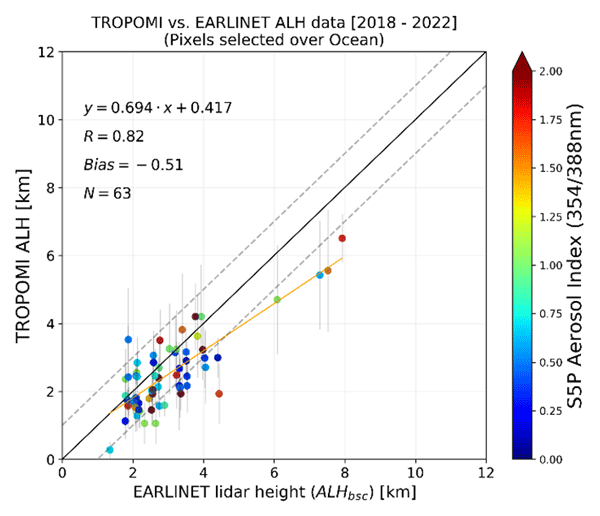
Comparisons with ground-based correlative lidar measurements constitute a key component in the validation of satellite aerosol products. This paper presents the validation of the TROPOMI aerosol layer height (ALH) product, using archived quality assured ground-based data from lidar stations that belong to the EARLINET network. Comparisons between the TROPOMI ALH and co-located EARLINET measurements show good agreement over the ocean.
Gyo-Hwang Choo, Kyunghwa Lee, Hyunkee Hong, Ukkyo Jeong, Wonei Choi, and Scott J. Janz
Atmos. Meas. Tech., 16, 625–644, https://doi.org/10.5194/amt-16-625-2023, https://doi.org/10.5194/amt-16-625-2023, 2023
Short summary
Short summary
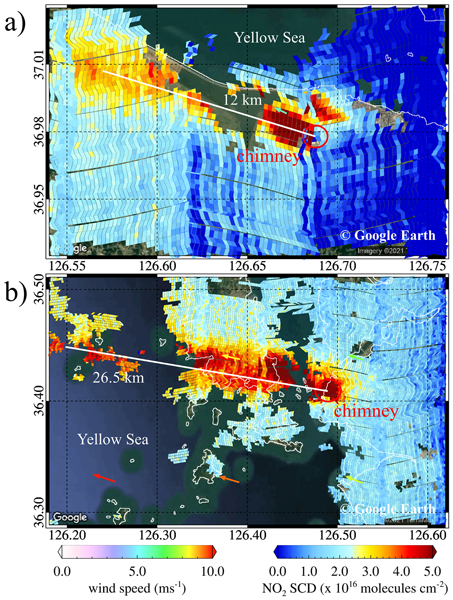
This study discusses the morning and afternoon distribution of NO2 emissions in large cities and industrial areas in South Korea, one of the largest NO2 emitters around the world, using GeoTASO, an airborne remote sensing instrument developed to support geostationary satellite missions. NO2 measurements from GeoTASO were compared with those from ground-based remote sensing instruments including Pandora and in situ sensors.

Jing Wei, Zhanqing Li, Jun Wang, Can Li, Pawan Gupta, and Maureen Cribb
Atmos. Chem. Phys., 23, 1511–1532, https://doi.org/10.5194/acp-23-1511-2023, https://doi.org/10.5194/acp-23-1511-2023, 2023
Short summary
Short summary
This study estimated the daily seamless 10 km ambient gaseous pollutants (NO2, SO2, and CO) across China using machine learning with extensive input variables measured on monitors, satellites, and models. Our dataset yields a high data quality via cross-validation at varying spatiotemporal scales and outperforms most previous related studies, making it most helpful to future (especially short-term) air pollution and environmental health-related studies.
Joanna Joiner, Sergey Marchenko, Zachary Fasnacht, Lok Lamsal, Can Li, Alexander Vasilkov, and Nickolay Krotkov
Atmos. Meas. Tech., 16, 481–500, https://doi.org/10.5194/amt-16-481-2023, https://doi.org/10.5194/amt-16-481-2023, 2023
Short summary
Short summary
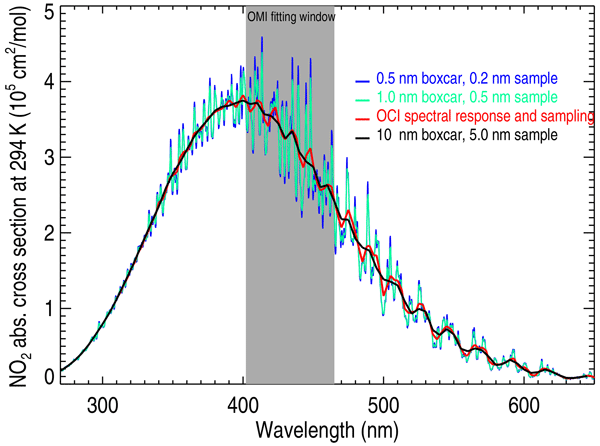
Nitrogen dioxide (NO2) is an important trace gas for both air quality and climate. NO2 affects satellite ocean color products. A new ocean color instrument – OCI (Ocean Color Instrument) – will be launched in 2024 on a NASA satellite. We show that it will be possible to measure NO2 from OCI even though it was not designed for this. The techniques developed here, based on machine learning, can also be applied to instruments already in space to speed up algorithms and reduce the effects of noise.
John Douros, Henk Eskes, Jos van Geffen, K. Folkert Boersma, Steven Compernolle, Gaia Pinardi, Anne-Marlene Blechschmidt, Vincent-Henri Peuch, Augustin Colette, and Pepijn Veefkind
Geosci. Model Dev., 16, 509–534, https://doi.org/10.5194/gmd-16-509-2023, https://doi.org/10.5194/gmd-16-509-2023, 2023
Short summary
Short summary
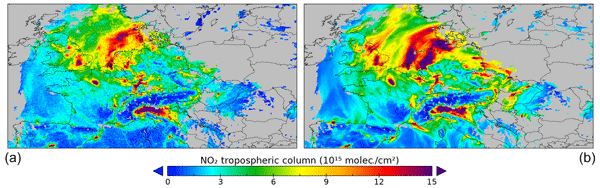
We focus on the challenges associated with comparing atmospheric composition models with satellite products such as tropospheric NO2 columns. The aim is to highlight the methodological difficulties and propose sound ways of doing such comparisons. Building on the comparisons, a new satellite product is proposed and made available, which takes advantage of higher-resolution, regional atmospheric modelling to improve estimates of troposheric NO2 columns over Europe.

Katerina Garane, Ka Lok Chan, Maria-Elissavet Koukouli, Diego Loyola, and Dimitris Balis
Atmos. Meas. Tech., 16, 57–74, https://doi.org/10.5194/amt-16-57-2023, https://doi.org/10.5194/amt-16-57-2023, 2023
Short summary
Short summary
In this work, 2.5 years of TROPOMI/S5P Total Column Water Vapor (TCWV) observations retrieved from the blue wavelength band are validated against co-located precipitable water measurements from NASA AERONET, which uses Cimel Sun photometers globally. Overall, the TCWV product agrees well on a global scale with the ground-based dataset (Pearson correl. coefficient 0.909) and has a mean relative bias of −2.7 ± 4.9 % with respect to the AERONET observations for moderate albedo and cloudiness.
Vitali E. Fioletov, Chris A. McLinden, Debora Griffin, Ihab Abboud, Nickolay Krotkov, Peter J. T. Leonard, Can Li, Joanna Joiner, Nicolas Theys, and Simon Carn
Earth Syst. Sci. Data, 15, 75–93, https://doi.org/10.5194/essd-15-75-2023, https://doi.org/10.5194/essd-15-75-2023, 2023
Short summary
Short summary
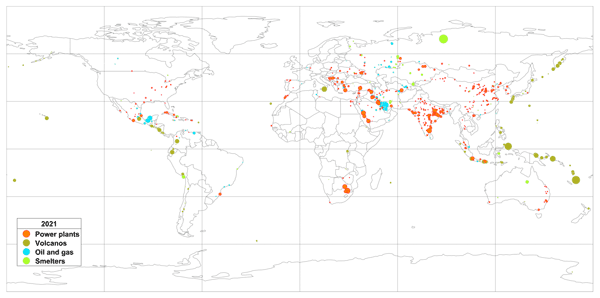
Sulfur dioxide (SO2) measurements from three satellite instruments were used to update and extend the previously developed global catalogue of large SO2 emission sources. This version 2 of the global catalogue covers the period of 2005–2021 and includes a total of 759 continuously emitting point sources. The catalogue data show an approximate 50 % decline in global SO2 emissions between 2005 and 2021, although emissions were relatively stable during the last 3 years.
André Valente, Shubha Sathyendranath, Vanda Brotas, Steve Groom, Michael Grant, Thomas Jackson, Andrei Chuprin, Malcolm Taberner, Ruth Airs, David Antoine, Robert Arnone, William M. Balch, Kathryn Barker, Ray Barlow, Simon Bélanger, Jean-François Berthon, Şükrü Beşiktepe, Yngve Borsheim, Astrid Bracher, Vittorio Brando, Robert J. W. Brewin, Elisabetta Canuti, Francisco P. Chavez, Andrés Cianca, Hervé Claustre, Lesley Clementson, Richard Crout, Afonso Ferreira, Scott Freeman, Robert Frouin, Carlos García-Soto, Stuart W. Gibb, Ralf Goericke, Richard Gould, Nathalie Guillocheau, Stanford B. Hooker, Chuamin Hu, Mati Kahru, Milton Kampel, Holger Klein, Susanne Kratzer, Raphael Kudela, Jesus Ledesma, Steven Lohrenz, Hubert Loisel, Antonio Mannino, Victor Martinez-Vicente, Patricia Matrai, David McKee, Brian G. Mitchell, Tiffany Moisan, Enrique Montes, Frank Muller-Karger, Aimee Neeley, Michael Novak, Leonie O'Dowd, Michael Ondrusek, Trevor Platt, Alex J. Poulton, Michel Repecaud, Rüdiger Röttgers, Thomas Schroeder, Timothy Smyth, Denise Smythe-Wright, Heidi M. Sosik, Crystal Thomas, Rob Thomas, Gavin Tilstone, Andreia Tracana, Michael Twardowski, Vincenzo Vellucci, Kenneth Voss, Jeremy Werdell, Marcel Wernand, Bozena Wojtasiewicz, Simon Wright, and Giuseppe Zibordi
Earth Syst. Sci. Data, 14, 5737–5770, https://doi.org/10.5194/essd-14-5737-2022, https://doi.org/10.5194/essd-14-5737-2022, 2022
Short summary
Short summary
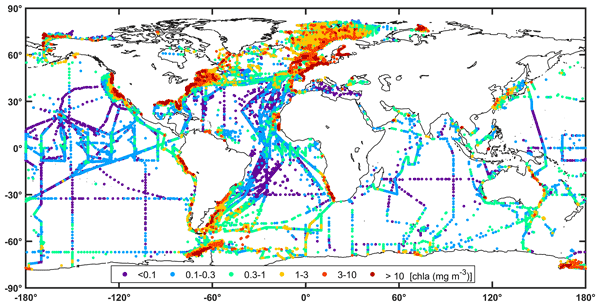
A compiled set of in situ data is vital to evaluate the quality of ocean-colour satellite data records. Here we describe the global compilation of bio-optical in situ data (spanning from 1997 to 2021) used for the validation of the ocean-colour products from the ESA Ocean Colour Climate Change Initiative (OC-CCI). The compilation merges and harmonizes several in situ data sources into a simple format that could be used directly for the evaluation of satellite-derived ocean-colour data.
Miriam Latsch, Andreas Richter, Henk Eskes, Maarten Sneep, Ping Wang, Pepijn Veefkind, Ronny Lutz, Diego Loyola, Athina Argyrouli, Pieter Valks, Thomas Wagner, Holger Sihler, Michel van Roozendael, Nicolas Theys, Huan Yu, Richard Siddans, and John P. Burrows
Atmos. Meas. Tech., 15, 6257–6283, https://doi.org/10.5194/amt-15-6257-2022, https://doi.org/10.5194/amt-15-6257-2022, 2022
Short summary
Short summary
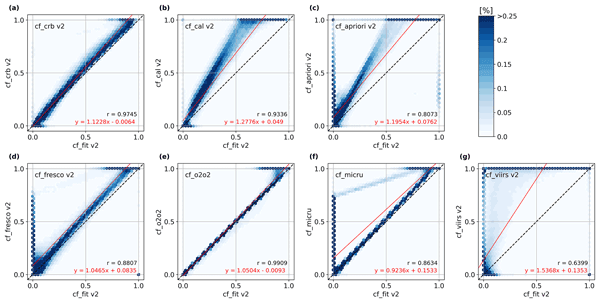
The article investigates different S5P TROPOMI cloud retrieval algorithms for tropospheric trace gas retrievals. The cloud products show differences primarily over snow and ice and for scenes under sun glint. Some issues regarding across-track dependence are found for the cloud fractions as well as for the cloud heights.
Klaus-Peter Heue, Diego Loyola, Fabian Romahn, Walter Zimmer, Simon Chabrillat, Quentin Errera, Jerry Ziemke, and Natalya Kramarova
Atmos. Meas. Tech., 15, 5563–5579, https://doi.org/10.5194/amt-15-5563-2022, https://doi.org/10.5194/amt-15-5563-2022, 2022
Short summary
Short summary
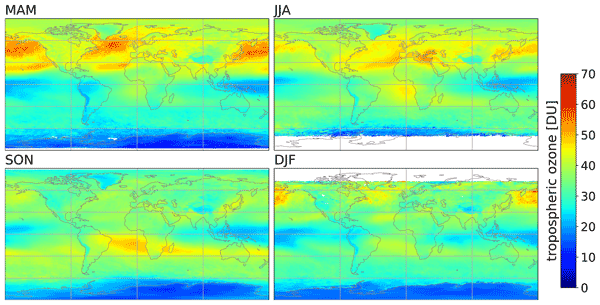
To retrieve tropospheric ozone column information, we subtract stratospheric column data of BASCOE from TROPOMI/S5P total ozone columns.
The new S5P-BASCOE data agree well with existing tropospheric data like OMPS-MERRA-2. The data are also compared to ozone soundings.
The tropospheric ozone columns show the expected temporal and spatial patterns. We will also apply the algorithm to future UV nadir missions like Sentinel 4 or 5 or to recent and ongoing missions like GOME_2 or OMI.
Can Li, Joanna Joiner, Fei Liu, Nickolay A. Krotkov, Vitali Fioletov, and Chris McLinden
Atmos. Meas. Tech., 15, 5497–5514, https://doi.org/10.5194/amt-15-5497-2022, https://doi.org/10.5194/amt-15-5497-2022, 2022
Short summary
Short summary
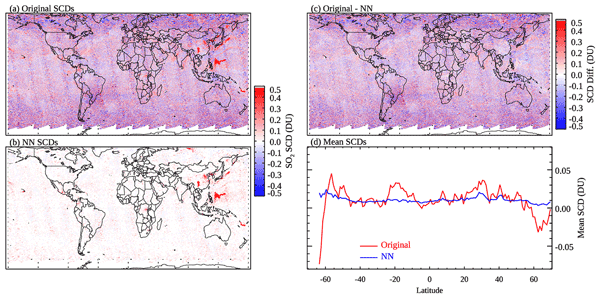
Satellite observations provide information on the sources of SO2, an important pollutant that affects both air quality and climate. However, these observations suffer from relatively poor data quality due to weak signals of SO2. Here, we use a machine learning technique to analyze satellite SO2 observations in order to reduce the noise and artifacts over relatively clean areas while keeping the signals near pollution sources. This leads to significant improvement in satellite SO2 data.
Johan F. de Haan, Ping Wang, Maarten Sneep, J. Pepijn Veefkind, and Piet Stammes
Geosci. Model Dev., 15, 7031–7050, https://doi.org/10.5194/gmd-15-7031-2022, https://doi.org/10.5194/gmd-15-7031-2022, 2022
Short summary
Short summary
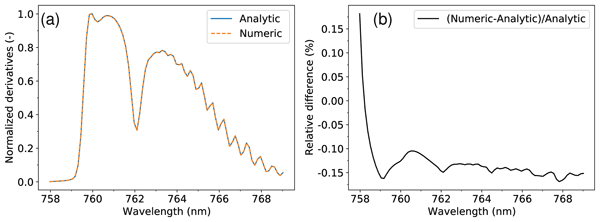
We present an overview of the DISAMAR radiative transfer code, highlighting the novel semi-analytical derivatives for the doubling–adding formulae and the new DISMAS technique for weak absorbers. DISAMAR includes forward simulations and retrievals for satellite spectral measurements from 270 to 2400 nm to determine instrument specifications for passive remote sensing. It has been used in various Sentinel-4/5P/5 projects and in the TROPOMI aerosol layer height and ozone profile products.
John T. Sullivan, Arnoud Apituley, Nora Mettig, Karin Kreher, K. Emma Knowland, Marc Allaart, Ankie Piters, Michel Van Roozendael, Pepijn Veefkind, Jerry R. Ziemke, Natalya Kramarova, Mark Weber, Alexei Rozanov, Laurence Twigg, Grant Sumnicht, and Thomas J. McGee
Atmos. Chem. Phys., 22, 11137–11153, https://doi.org/10.5194/acp-22-11137-2022, https://doi.org/10.5194/acp-22-11137-2022, 2022
Short summary
Short summary
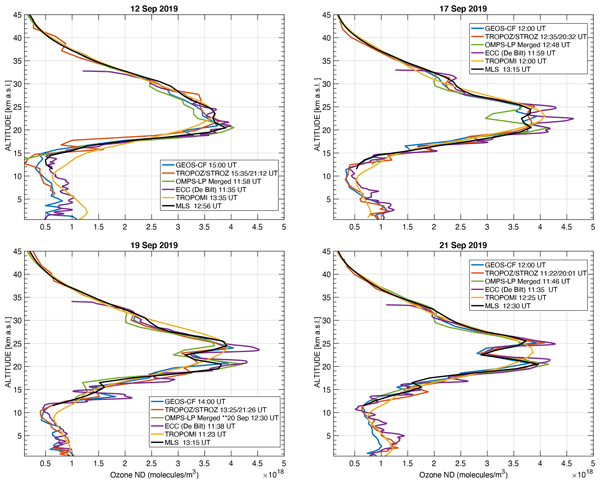
A TROPOspheric Monitoring Instrument (TROPOMI) validation campaign (TROLIX-19) was held in the Netherlands in September 2019. The research presented here focuses on using ozone lidars from NASA’s Goddard Space Flight Center to better evaluate the characterization of ozone throughout TROLIX-19 as compared to balloon-borne, space-borne and ground-based passive measurements, as well as a global coupled chemistry meteorology model.
Pieternel F. Levelt, Deborah C. Stein Zweers, Ilse Aben, Maite Bauwens, Tobias Borsdorff, Isabelle De Smedt, Henk J. Eskes, Christophe Lerot, Diego G. Loyola, Fabian Romahn, Trissevgeni Stavrakou, Nicolas Theys, Michel Van Roozendael, J. Pepijn Veefkind, and Tijl Verhoelst
Atmos. Chem. Phys., 22, 10319–10351, https://doi.org/10.5194/acp-22-10319-2022, https://doi.org/10.5194/acp-22-10319-2022, 2022
Short summary
Short summary
Using the COVID-19 lockdown periods as an example, we show how Sentinel-5P/TROPOMI trace gas data (NO2, SO2, CO, HCHO and CHOCHO) can be used to understand impacts on air quality for regions and cities around the globe. We also provide information for both experienced and inexperienced users about how we created the data using state-of-the-art algorithms, where to get the data, methods taking meteorological and seasonal variability into consideration, and insights for future studies.

Quintus Kleipool, Nico Rozemeijer, Mirna van Hoek, Jonatan Leloux, Erwin Loots, Antje Ludewig, Emiel van der Plas, Daley Adrichem, Raoul Harel, Simon Spronk, Mark ter Linden, Glen Jaross, David Haffner, Pepijn Veefkind, and Pieternel F. Levelt
Atmos. Meas. Tech., 15, 3527–3553, https://doi.org/10.5194/amt-15-3527-2022, https://doi.org/10.5194/amt-15-3527-2022, 2022
Short summary
Short summary
A new collection-4 dataset for the Ozone Monitoring Instrument (OMI) mission has been established to supersede the current collection-3 level-1b (L1b) data, produced with a newly developed L01b data processor based on the TROPOspheric Monitoring Instrument (TROPOMI) L01b processor. The collection-4 L1b data have a similar output format to the TROPOMI L1b data for easy connection of the data series. Many insights from the TROPOMI algorithms, as well as from OMI collection-3 usage, were included.
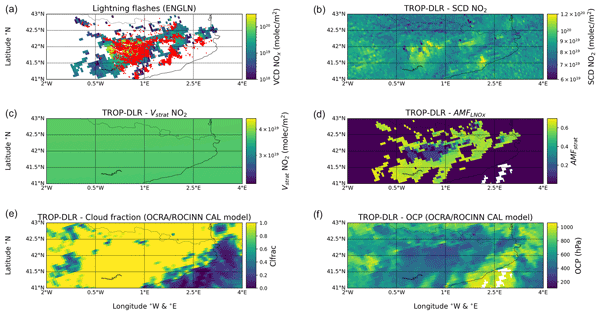
Francisco J. Pérez-Invernón, Heidi Huntrieser, Thilo Erbertseder, Diego Loyola, Pieter Valks, Song Liu, Dale J. Allen, Kenneth E. Pickering, Eric J. Bucsela, Patrick Jöckel, Jos van Geffen, Henk Eskes, Sergio Soler, Francisco J. Gordillo-Vázquez, and Jeff Lapierre
Atmos. Meas. Tech., 15, 3329–3351, https://doi.org/10.5194/amt-15-3329-2022, https://doi.org/10.5194/amt-15-3329-2022, 2022
Short summary
Short summary
Lightning, one of the major sources of nitrogen oxides in the atmosphere, contributes to the tropospheric concentration of ozone and to the oxidizing capacity of the atmosphere. In this work, we contribute to improving the estimation of lightning-produced nitrogen oxides in the Ebro Valley and the Pyrenees by using two different TROPOMI products and comparing the results.
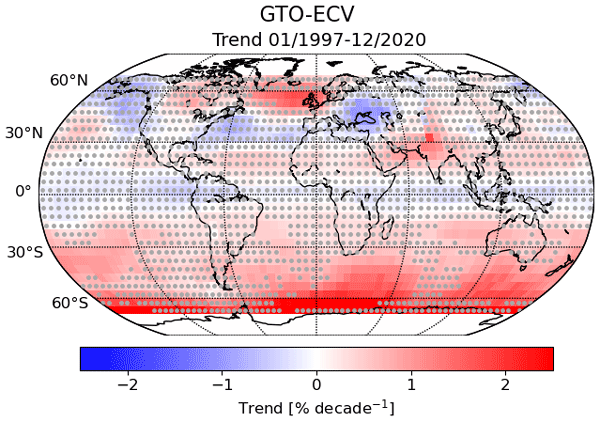
Melanie Coldewey-Egbers, Diego G. Loyola, Christophe Lerot, and Michel Van Roozendael
Atmos. Chem. Phys., 22, 6861–6878, https://doi.org/10.5194/acp-22-6861-2022, https://doi.org/10.5194/acp-22-6861-2022, 2022
Short summary
Short summary
Monitoring the long-term evolution of ozone and the evaluation of trends is essential to assess the efficacy of the Montreal Protocol and its amendments. The first signs of recovery as a consequence of decreasing amounts of ozone-depleting substances have been reported, but the impact needs to be investigated in more detail. In the Southern Hemisphere significant positive trends were found, but in the Northern Hemisphere the expected increase is still not yet visible.

Mark Weber, Carlo Arosio, Melanie Coldewey-Egbers, Vitali E. Fioletov, Stacey M. Frith, Jeannette D. Wild, Kleareti Tourpali, John P. Burrows, and Diego Loyola
Atmos. Chem. Phys., 22, 6843–6859, https://doi.org/10.5194/acp-22-6843-2022, https://doi.org/10.5194/acp-22-6843-2022, 2022
Short summary
Short summary
Long-term trends in column ozone have been determined from five merged total ozone datasets spanning the period 1978–2020. We show that ozone recovery due to the decline in stratospheric halogens after the 1990s (as regulated by the Montreal Protocol) is evident outside the tropical region and amounts to half a percent per decade. The ozone recovery in the Northern Hemisphere is however compensated for by the negative long-term trend contribution from atmospheric dynamics since the year 2000.

Nora Mettig, Mark Weber, Alexei Rozanov, John P. Burrows, Pepijn Veefkind, Anne M. Thompson, Ryan M. Stauffer, Thierry Leblanc, Gerard Ancellet, Michael J. Newchurch, Shi Kuang, Rigel Kivi, Matthew B. Tully, Roeland Van Malderen, Ankie Piters, Bogumil Kois, René Stübi, and Pavla Skrivankova
Atmos. Meas. Tech., 15, 2955–2978, https://doi.org/10.5194/amt-15-2955-2022, https://doi.org/10.5194/amt-15-2955-2022, 2022
Short summary
Short summary
Vertical ozone profiles from combined spectral measurements in the UV and IR spectral ranges were retrieved by using data from TROPOMI/S5P and CrIS/Suomi-NPP. The vertical resolution and accuracy of the ozone profiles are improved by combining both wavelength ranges compared to retrievals limited to UV or IR spectral data only. The advancement of our TOPAS algorithm for combined measurements is required because in the UV-only retrieval the vertical resolution in the troposphere is very limited.
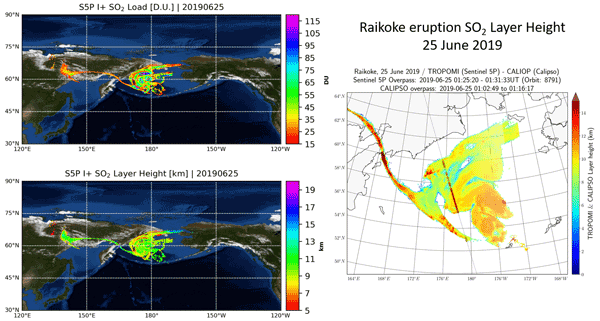
Maria-Elissavet Koukouli, Konstantinos Michailidis, Pascal Hedelt, Isabelle A. Taylor, Antje Inness, Lieven Clarisse, Dimitris Balis, Dmitry Efremenko, Diego Loyola, Roy G. Grainger, and Christian Retscher
Atmos. Chem. Phys., 22, 5665–5683, https://doi.org/10.5194/acp-22-5665-2022, https://doi.org/10.5194/acp-22-5665-2022, 2022
Short summary
Short summary
Volcanic eruptions eject large amounts of ash and trace gases into the atmosphere. The use of space-borne instruments enables the global monitoring of volcanic SO2 emissions in an economical and risk-free manner. The main aim of this paper is to present its extensive verification, accomplished within the ESA S5P+I: SO2LH project, over major recent volcanic eruptions, against collocated space-borne measurements, as well as assess its impact on the forecasts provided by CAMS.
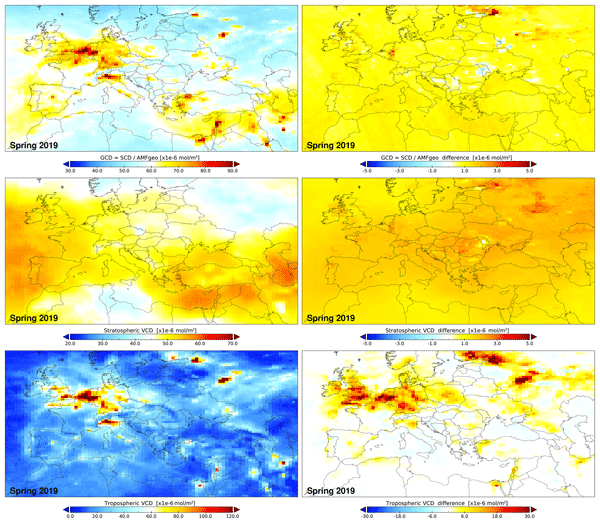
Jos van Geffen, Henk Eskes, Steven Compernolle, Gaia Pinardi, Tijl Verhoelst, Jean-Christopher Lambert, Maarten Sneep, Mark ter Linden, Antje Ludewig, K. Folkert Boersma, and J. Pepijn Veefkind
Atmos. Meas. Tech., 15, 2037–2060, https://doi.org/10.5194/amt-15-2037-2022, https://doi.org/10.5194/amt-15-2037-2022, 2022
Short summary
Short summary
Nitrogen dioxide (NO2) is one of the main data products measured by the Tropospheric Monitoring Instrument (TROPOMI) on the Sentinel-5 Precursor (S5P) satellite. This study describes improvements in the TROPOMI NO2 retrieval leading to version v2.2, operational since 1 July 2021. It compares results with previous versions v1.2–v1.4 and with Ozone Monitoring Instrument (OMI) and ground-based measurements.
Jan-Lukas Tirpitz, Udo Frieß, Robert Spurr, and Ulrich Platt
Atmos. Meas. Tech., 15, 2077–2098, https://doi.org/10.5194/amt-15-2077-2022, https://doi.org/10.5194/amt-15-2077-2022, 2022
Short summary
Short summary
MAX-DOAS is a widely used measurement technique for the remote detection of atmospheric aerosol and trace gases. It relies on the analysis of ultra-violet and visible radiation spectra of skylight. To date, information contained in the skylight's polarisation state has not been utilised. On the basis of synthetic data, we carried out sensitivity analyses to assess the potential of polarimetry for MAX-DOAS applications.
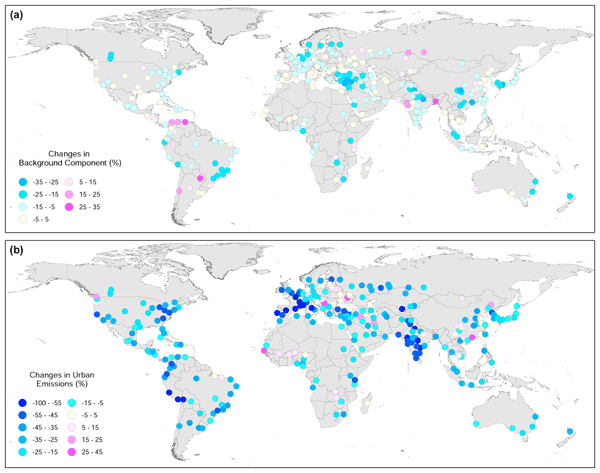
Vitali Fioletov, Chris A. McLinden, Debora Griffin, Nickolay Krotkov, Fei Liu, and Henk Eskes
Atmos. Chem. Phys., 22, 4201–4236, https://doi.org/10.5194/acp-22-4201-2022, https://doi.org/10.5194/acp-22-4201-2022, 2022
Short summary
Short summary
The COVID-19 lockdown had a large impact on anthropogenic emissions and particularly on nitrogen dioxide (NO2). A new method of isolation of background, urban, and industrial components in NO2 is applied to estimate the lockdown impact on each of them. From 16 March to 15 June 2020, urban NO2 declined by −18 % to −28 % in most regions of the world, while background NO2 typically declined by less than −10 %.
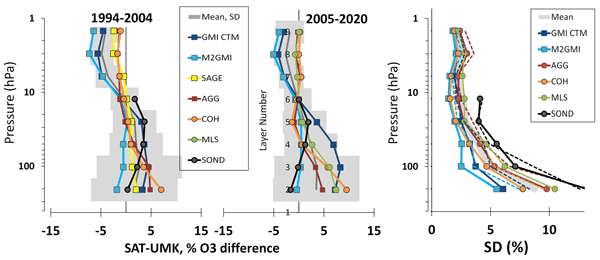
Irina Petropavlovskikh, Koji Miyagawa, Audra McClure-Beegle, Bryan Johnson, Jeannette Wild, Susan Strahan, Krzysztof Wargan, Richard Querel, Lawrence Flynn, Eric Beach, Gerard Ancellet, and Sophie Godin-Beekmann
Atmos. Meas. Tech., 15, 1849–1870, https://doi.org/10.5194/amt-15-1849-2022, https://doi.org/10.5194/amt-15-1849-2022, 2022
Short summary
Short summary
The Montreal Protocol and its amendments assure the recovery of the stratospheric ozone layer that protects the Earth from harmful ultraviolet radiation. To monitor ozone recovery, multiple satellites and ground-based observational platforms collect ozone data. The changes in instruments can influence the continuation of the ozone data. We discuss a method to remove instrumental artifacts from ozone records to improve the internal consistency among multiple observational records.
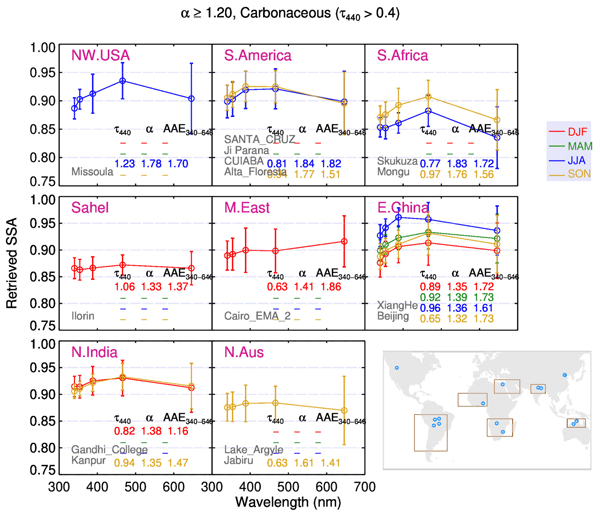
Vinay Kayetha, Omar Torres, and Hiren Jethva
Atmos. Meas. Tech., 15, 845–877, https://doi.org/10.5194/amt-15-845-2022, https://doi.org/10.5194/amt-15-845-2022, 2022
Short summary
Short summary
Existing measurements of spectral aerosol absorption are limited, particularly in the UV region. We use the synergy of satellite and ground measurements to derive spectral single scattering albedo of aerosols from the UV–visible spectrum. The resulting spectral SSAs are used to investigate seasonality in absorption for carbonaceous, dust, and urban aerosols. Regional aerosol absorption models that could be used to make reliable assumptions in satellite remote sensing of aerosols are derived.
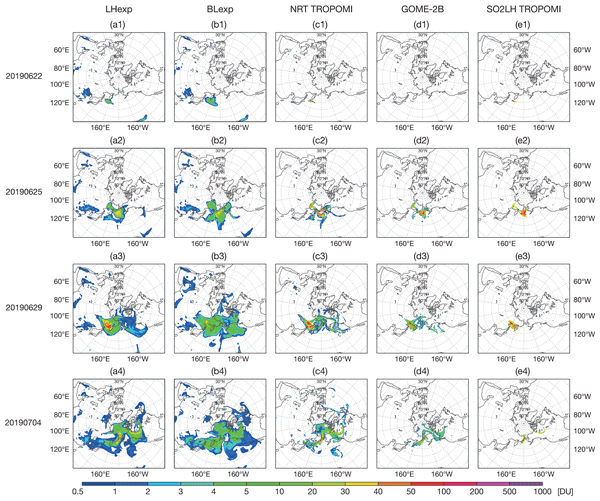
Antje Inness, Melanie Ades, Dimitris Balis, Dmitry Efremenko, Johannes Flemming, Pascal Hedelt, Maria-Elissavet Koukouli, Diego Loyola, and Roberto Ribas
Geosci. Model Dev., 15, 971–994, https://doi.org/10.5194/gmd-15-971-2022, https://doi.org/10.5194/gmd-15-971-2022, 2022
Short summary
Short summary
This paper describes the way that the Copernicus Atmosphere Monitoring Service (CAMS) produces forecasts of volcanic SO2. These forecasts are provided routinely every day. They are created by blending SO2 data from satellite instruments (TROPOMI and GOME-2) with the CAMS model. We show that the quality of the CAMS SO2 forecasts can be improved if additional information about the height of volcanic plumes is provided in the satellite data.
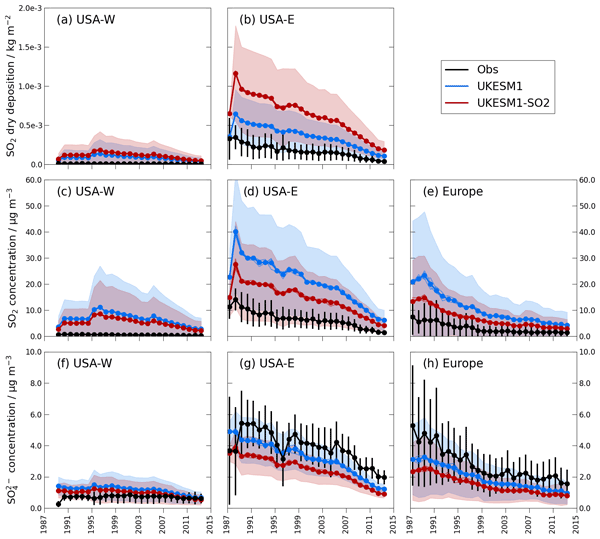
Catherine Hardacre, Jane P. Mulcahy, Richard J. Pope, Colin G. Jones, Steven T. Rumbold, Can Li, Colin Johnson, and Steven T. Turnock
Atmos. Chem. Phys., 21, 18465–18497, https://doi.org/10.5194/acp-21-18465-2021, https://doi.org/10.5194/acp-21-18465-2021, 2021
Short summary
Short summary
We investigate UKESM1's ability to represent the sulfur (S) cycle in the recent historical period. The S cycle is a key driver of historical radiative forcing. Earth system models such as UKESM1 should represent the S cycle well so that we can have confidence in their projections of future climate. We compare UKESM1 to observations of sulfur compounds, finding that the model generally performs well. We also identify areas for UKESM1’s development, focussing on how SO2 is removed from the air.
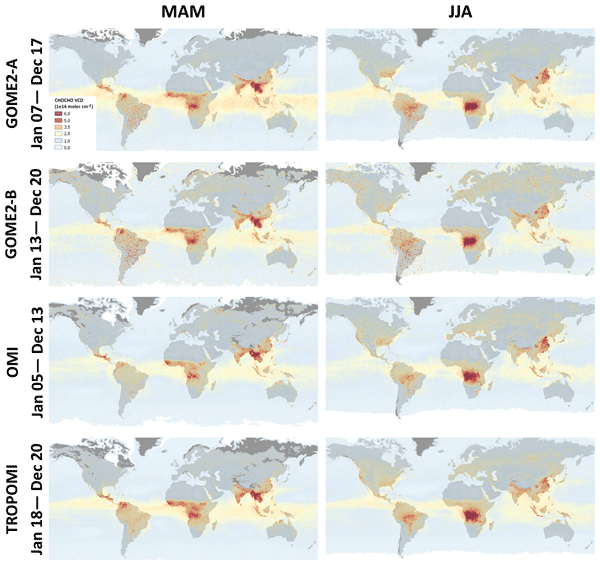
Christophe Lerot, François Hendrick, Michel Van Roozendael, Leonardo M. A. Alvarado, Andreas Richter, Isabelle De Smedt, Nicolas Theys, Jonas Vlietinck, Huan Yu, Jeroen Van Gent, Trissevgeni Stavrakou, Jean-François Müller, Pieter Valks, Diego Loyola, Hitoshi Irie, Vinod Kumar, Thomas Wagner, Stefan F. Schreier, Vinayak Sinha, Ting Wang, Pucai Wang, and Christian Retscher
Atmos. Meas. Tech., 14, 7775–7807, https://doi.org/10.5194/amt-14-7775-2021, https://doi.org/10.5194/amt-14-7775-2021, 2021
Short summary
Short summary
Global measurements of glyoxal tropospheric columns from the satellite instrument TROPOMI are presented. Such measurements can contribute to the estimation of atmospheric emissions of volatile organic compounds. This new glyoxal product has been fully characterized with a comprehensive error budget, with comparison with other satellite data sets as well as with validation based on independent ground-based remote sensing glyoxal observations.
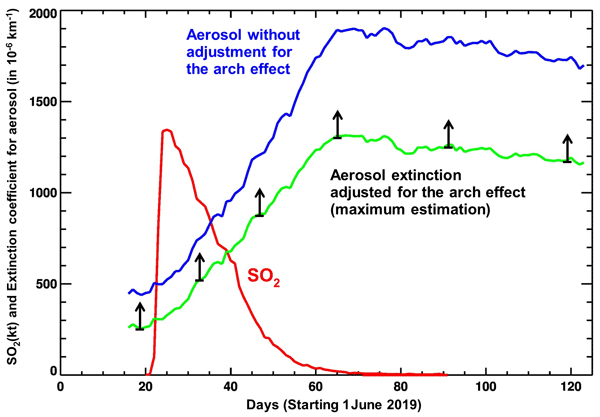
Nick Gorkavyi, Nickolay Krotkov, Can Li, Leslie Lait, Peter Colarco, Simon Carn, Matthew DeLand, Paul Newman, Mark Schoeberl, Ghassan Taha, Omar Torres, Alexander Vasilkov, and Joanna Joiner
Atmos. Meas. Tech., 14, 7545–7563, https://doi.org/10.5194/amt-14-7545-2021, https://doi.org/10.5194/amt-14-7545-2021, 2021
Short summary
Short summary
The 21 June 2019 eruption of the Raikoke volcano produced significant amounts of volcanic aerosols (sulfate and ash) and sulfur dioxide (SO2) gas that penetrated into the lower stratosphere. We showed that the amount of SO2 decreases with a characteristic period of 8–18 d and the peak of sulfate aerosol lags the initial peak of SO2 by 1.5 months. We also examined the dynamics of an unusual stratospheric coherent circular cloud of SO2 and aerosol observed from 18 July to 22 September 2019.
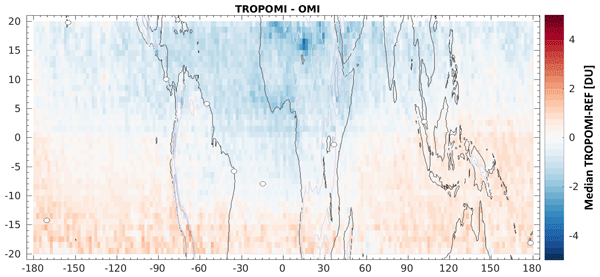
Daan Hubert, Klaus-Peter Heue, Jean-Christopher Lambert, Tijl Verhoelst, Marc Allaart, Steven Compernolle, Patrick D. Cullis, Angelika Dehn, Christian Félix, Bryan J. Johnson, Arno Keppens, Debra E. Kollonige, Christophe Lerot, Diego Loyola, Matakite Maata, Sukarni Mitro, Maznorizan Mohamad, Ankie Piters, Fabian Romahn, Henry B. Selkirk, Francisco R. da Silva, Ryan M. Stauffer, Anne M. Thompson, J. Pepijn Veefkind, Holger Vömel, Jacquelyn C. Witte, and Claus Zehner
Atmos. Meas. Tech., 14, 7405–7433, https://doi.org/10.5194/amt-14-7405-2021, https://doi.org/10.5194/amt-14-7405-2021, 2021
Short summary
Short summary
We assess the first 2 years of TROPOMI tropical tropospheric ozone column data. Comparisons to reference measurements by ozonesonde and satellite sensors show that TROPOMI bias (−0.1 to +2.3 DU) and precision (1.5 to 2.5 DU) meet mission requirements. Potential causes of bias and its spatio-temporal structure are discussed, as well as ways to identify sampling errors. Our analysis of known geophysical patterns demonstrates the improved performance of TROPOMI with respect to its predecessors.
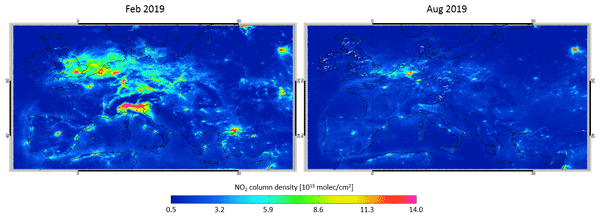
Song Liu, Pieter Valks, Gaia Pinardi, Jian Xu, Ka Lok Chan, Athina Argyrouli, Ronny Lutz, Steffen Beirle, Ehsan Khorsandi, Frank Baier, Vincent Huijnen, Alkiviadis Bais, Sebastian Donner, Steffen Dörner, Myrto Gratsea, François Hendrick, Dimitris Karagkiozidis, Kezia Lange, Ankie J. M. Piters, Julia Remmers, Andreas Richter, Michel Van Roozendael, Thomas Wagner, Mark Wenig, and Diego G. Loyola
Atmos. Meas. Tech., 14, 7297–7327, https://doi.org/10.5194/amt-14-7297-2021, https://doi.org/10.5194/amt-14-7297-2021, 2021
Short summary
Short summary
In this work, an improved tropospheric NO2 retrieval algorithm from TROPOMI measurements over Europe is presented. The stratospheric estimation is implemented with correction for the dependency of the stratospheric NO2 on the viewing geometry. The AMF calculation is implemented using improved surface albedo, a priori NO2 profiles, and cloud correction. The improved tropospheric NO2 data show good correlations with ground-based MAX-DOAS measurements.
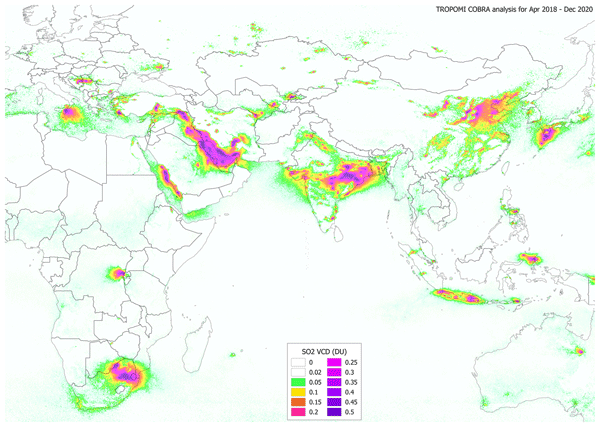
Nicolas Theys, Vitali Fioletov, Can Li, Isabelle De Smedt, Christophe Lerot, Chris McLinden, Nickolay Krotkov, Debora Griffin, Lieven Clarisse, Pascal Hedelt, Diego Loyola, Thomas Wagner, Vinod Kumar, Antje Innes, Roberto Ribas, François Hendrick, Jonas Vlietinck, Hugues Brenot, and Michel Van Roozendael
Atmos. Chem. Phys., 21, 16727–16744, https://doi.org/10.5194/acp-21-16727-2021, https://doi.org/10.5194/acp-21-16727-2021, 2021
Short summary
Short summary
We present a new algorithm to retrieve sulfur dioxide from space UV measurements. We apply the technique to high-resolution TROPOMI measurements and demonstrate the high sensitivity of the approach to weak SO2 emissions worldwide with an unprecedented limit of detection of 8 kt yr−1. This result has broad implications for atmospheric science studies dealing with improving emission inventories and identifying and quantifying missing sources, in the context of air quality and climate.
Cited articles
APARC: The Hunga Volcanic Eruption Atmospheric Impacts Report, edited by: Zhu, Y., Mann, G., Newman, P. A., and Randel, W., APARC Report No. 11, WCRP-10/2025, https://doi.org/10.34734/FZJ-2025-05237, 2025.
Asher, E., Todt, M., Rosenlof, K., Thornberry, T., Gao, R.-S., Taha, G., Walter, P., Alvarez, S., Flynn, J., Davis, S. M., Evan, S., Brioude, J., Metzger, J.-M., Hurst, D. F., Hall, E., and Xiong, K.: Unexpectedly rapid aerosol formation in the Hunga Tonga plume, Proc. Nat. Acad. Sci., 120, https://doi.org/10.1073/pnas.2219547120, 2023.
Baron, A., Chazette, P., Khaykin, S., Payen, G., Marquestaut, N., Bègue, N., and Duflot, V.: Early Evolution of the Stratospheric Aerosol Plume Following the 2022 Hunga Tonga-Hunga Ha'apai Eruption: Lidar Observations From Reunion (21° S, 55° E), Geophys. Res. Lett., 50, https://doi.org/10.1029/2022GL101751, 2023.
Bernath, P., Boone, C., Pastorek, A., Cameron, D., and Lecours, M.: Satellite characterization of global stratospheric sulfate aerosols released by Tonga volcano, J. Quant. Spectrosc. Radiat. Transf., 299, 108520. https://doi.org/10.1016/j.jqsrt.2023.108520, 2023.
Beyer, K. D., Ravishankara, A. R., and Lovejoy, E. R.: Measurements of UV refractive indices and densities of H2SO4/H2O and H2SO4/HNO3/H2O solutions, J. Geophys. Res., 101, 14519–14524, https://doi.org/10.1029/96JD00937, 1996.
Bhartia, P. K., Herman, J., McPeters, R. D., and Torres, O.: Effect of Mount Pinatubo aerosols on total ozone measurements from backscatter ultraviolet (BUV) experiments, J. Geophys. Res. Atmos., 98, 18547–18554, https://doi.org/10.1029/93JD01739, 1993.
Bian, J., Li, D., Bai, Z., Xu, J., Li, Q., Wang, H., Vömel, H., Wienhold, F. G., and Peter, T.: First detection of aerosols of the Hunga Tonga eruption in the Northern Hemisphere stratospheric westerlies, Sci. Bull., 68, 574–577, https://doi.org/10.1016/j.scib.2023.03.002, 2023.
Bodhaine, B., Wood, N., Dutton, E., and Slusser, J.: On Rayleigh optical depth calculations, J. Atmos. Ocean. Tech., 20, 1854–1861, https://doi.org/10.1175/1520-0426(1999)016<1854:ORODC>2.0.CO;2, 1999.
Bogumil, K., Orphal, J., Homann, T., Voigt, S., Spietz, P., Fleischmann, O.C., Vogel, A., Hartmann, M., Kromminga, H., Bovensmann, H., and Frerick, J.: Measurements of molecular absorption spectra with the SCIAMACHY pre-flight model: Instrument characterization and reference data for atmospheric remote-sensing in the 230–2380 nm region, in Atmospheric Photochemistry, edited by: Burrows, J. P. and Moortgat, G. K., J. Photochem. Photobiol., A, 157, 167–184, https://doi.org/10.1016/S1010-6030(03)00062-5, 2003.
Boichu, M., Grandin, R., Blarel, L., Torres, B., Derimian, Y., Goloub, P., Brogniez, C., Chiapello, I., Dubovik, O., Mathurin, T., Pascal, N., Patou, M., and Riedi, J.: Growth and Global Persistence of Stratospheric Sulfate Aerosols From the 2022 Hunga Tonga–Hunga Ha'apai Volcanic Eruption, J. Geophys. Res. Atmos., 128, https://doi.org/10.1029/2023JD039010, 2023.
Bourassa, A. E., Zawada, D. J., Rieger, L. A., Warnock, T. W., Toohey, M., and Degenstein, D. A.: Tomographic Retrievals of Hunga Tonga-Hunga Ha'apai Volcanic Aerosol, Geophys. Res. Lett., 50, https://doi.org/10.1029/2022GL101978, 2023.
Brion, J., Charbonnier, J., Daumont, D., Parisse, C., and Malicet, J.: High-resolution laboratory absorption cross section of O3. Temperature effect, Chem. Phys. Lett., 213, 610–612, https://doi.org/10.1016/0009-2614(93)89169-I, 1993.
Bruckert, J., Chopra, S., Siddans, R., Wedler, C., and Hoshyaripour, G. A.: Aerosol dynamic processes in the Hunga plume in January 2022: does water vapor accelerate aerosol aging?, Atmos. Chem. Phys., 25, 9859–9884, https://doi.org/10.5194/acp-25-9859-2025, 2025.
Carn, S. A., Krotkov, N. A., Fisher, B. L., and Li, C.: Out of the blue: Volcanic SO2 emissions during the 2021–2022 eruptions of Hunga Tonga–Hunga Ha'apai (Tonga), Front. Earth Sci., 10, https://doi.org/10.3389/feart.2022.976962, 2022.
Carr, J. L., Horváth, Á., Wu, D. L., and Friberg, M. D.: Stereo Plume Height and Motion Retrievals for the Record-Setting Hunga Tonga-Hunga Ha'apai Eruption of 15 January 2022, Geophys. Res. Lett., 49, https://doi.org/10.1029/2022GL098131, 2022.
Case, P., Colarco, P. R., Toon, B., Aquila, V., and Keller, C. A.: Interactive stratospheric aerosol microphysics-chemistry simulations of the 1991 Pinatubo volcanic aerosols with newly coupled sectional aerosol and stratosphere-troposphere chemistry modules in the NASA GEOS Chemistry-Climate Model (CCM), J. Adv. Model. Earth Syst., 15, https://doi.org/10.1029/2022MS003147, 2023.
Case, P. A., Colarco, P. R., Toon, O. B., and Newman, P. A.: Simulating the volcanic sulfate aerosols from the 1991 eruption of Cerro Hudson and their impact on the 1991 ozone hole, Geophys. Res. Lett., 51, https://doi.org/10.1029/2023GL106619, 2024.
Choi, W.-E.: Spectral Solar Backscattered Ultraviolet (BUV) Radiance Ratios Showing Mid-Stratospheric Aerosols from the January 15 2022 Hunga Eruption, as Observed by the Copernicus Sentinel 5 Precursor TROPOspheric Monitoring Instrument (TROPOMI) on January 17, 2022, TIB AV-Portal [video], https://doi.org/10.5446/70186, 2022.
Chong, E. K. P. and Zak, S. H.: An Introduction to Optimization, 2nd Ed. Wiley-Interscience, NY, 476 pp., ISBN 0-471-39126-3, 2001.
Coy, L., Newman, P. A., Wargan, K., Partyka, G., Strahan, S. E., and Pawson, S.: Stratospheric circulation changes associated with the Hunga Tonga-Hunga Ha'apai eruption, Geophys. Res. Lett., 49, https://doi.org/10.1029/2022GL100982, 2022.
Dubovik, O. and King, M. D.: A flexible inversion algorithm for retrieval of aerosol optical properties from Sun and sky radiance measurements, J. Geophys. Res., 105, 20673–20696, https://doi.org/10.1029/2000JD900282, 2000.
Duchamp, C., Wrana, F., Legras, B., Sellitto, P., Belhadji, R., and Von Savigny, C.: Observation of the Aerosol Plume From the 2022 Hunga Tonga – Hunga Ha'apai Eruption With SAGE III/ISS, Geophys. Res. Lett., 50, https://doi.org/10.1029/2023GL105076, 2023.
Duchamp, C., Legras, B., Podglajen, A., Sellitto, P., Bourassa, A. E., Rozanov, A., Taha, G., and Zawada, D. J.: Aerosol Composition and Extinction of the 2022 Hunga Plume Using CALIOP, EGUsphere [preprint], https://doi.org/10.5194/egusphere-2025-3355, 2025.
Evan, S., Brioude, J., Rosenlof, K. H., Gao, R.-S., Portmann, R. W., Zhu, Y., Volkamer, R., Lee, C. F., Metzger, J.-M., Lamy, K., Walter, P., Alvarez, S. L., Flynn, J. H., Asher, E., Todt, M., Davis, S. M., Thornberry, T., Vömel, H., Wienhold, F. G., Stauffer, R. M., Millán, L., Santee, M. L., Froidevaux, L., and Read, W. G.: Rapid ozone depletion after humidification of the stratosphere by the Hunga Tonga Eruption, Sci., 382, https://doi.org/10.1126/science.adg2551, 2023.
Franz, B. A., Cetinić, I., Ibrahim, A., and Sayer, A. M.: Anomalous trends in global ocean carbon concentrations following the 2022 eruptions of Hunga Tonga-Hunga Ha'apai, Commun. Earth Environ., 5, 247, https://doi.org/10.1038/s43247-024-01421-8, 2024.
Gelaro, R., McCarty, W., Suárez, M.J., Todling, R., Molod, A., Takacs, L., Randles, C. A., Darmenov, A., Bosilovich, M. G., Reichle, R., and Wargan, K.: The Modern-Era Retrospective analysis for research and applications, version 2 (MERRA-2), J. Clim., 30, 5419–5454, https://doi.org/10.1175/JCLI-D-16-0758.1, 2017.
Guo, X. and Lu, D.: Feasibility study for joint retrieval of air density and ozone in the stratosphere and mesosphere with the limb-scan technique, Appl. Opt., 45, 9021–9030, https://doi.org/10.1364/AO.45.009021 , 2006.
Holben, B. N., Eck, T. F., Slutsker, I. A., Tanre, D., Buis, J. P., Setzer, A., Vermote, E., Reagan, J. A., Kaufman, Y. J., Nakajima, T., and Lavenu, F.: AERONET – A federated instrument network and data archive for aerosol characterization, Remote Sens. Environ., 66, 1–16, https://doi.org/10.1016/S0034-4257(98)00031-5, 1998.
Hyman, D. M. and Pavolonis, M. J.: Probabilistic retrieval of volcanic SO2 layer height and partial column density using the Cross-track Infrared Sounder (CrIS), Atmos. Meas. Tech., 13, 5891–5921, https://doi.org/10.5194/amt-13-5891-2020, 2020.
Jaross, G.: OMPS-NPP L3 NM Ozone (O3) Total Column 1.0 deg grid daily V2, Greenbelt, MD, USA, Goddard Earth Sciences Data and Information Services Center (GES DISC), https://doi.org/10.5067/7Y7KSA1QNQP8, 2017.
Kahn, R. A., Limbacher, J. A., Junghenn Noyes, K. T., Flower, V. J., Zamora, L. M., and McKee, K. F.: Evolving particles in the 2022 Hunga Tonga – Hunga Ha'apai volcano eruption plume, J. Geophys. Res. Atmos., 129, https://doi.org/10.1029/2023JD039963, 2024.
Kelly, L. J., Fauria, K. E., Manga, M., Cronin, S. J., Latu'ila, F. H., Paredes-Mariño, J., Mittal, T., and Bennartz, R.: Airfall volume of the 15 January 2022 eruption of Hunga volcano estimated from ocean color changes, Bull. Volcanol., 86, 59, https://doi.org/10.1007/s00445-024-01744-6, 2024.
Khaykin, S., Podglajen, A., Ploeger, F., Grooß, J.-U., Tence, F., Bekki, S., Khlopenkov, K., Bedka, K., Rieger, L., Baron, A., Godin-Beekmann, S., Legras, B., Sellitto, P., Sakai, T., Barnes, J., Uchino, O., Morino, I., Nagai, T., Wing, R., Baumgarten, G., Gerding, M., Duflot,V., Payen,G., Jumelet, J., Querel, R., Liley, B., Bourassa, A., Clouser, B., Feofilov, A., Hauchecorne, A., and Ravetta, F.: Global perturbation of stratospheric water and aerosol burden by Hunga eruption, Commun. Earth Environ., 3, 316, https://doi.org/10.1038/s43247-022-00652-x, 2022.
Kramarova, N. A.: Analysis of anomalies in SNPP OMPS ozone retrievals following the 2022 Hunga eruption, Quadrennial Ozone Symposium, Boulder, Colorado, US, July 2024, https://qos2024.colorado.edu/sites/default/files/2024-07/Group6B_Submissions_780707_2024-06-28.pdf (last access: 3 February 2026), 2024.
Krotkov, N. A., Torres, O., Seftor, C., Krueger, A. J., Kostinski, A., Rose, W. I., Bluth, G. J. S., Schneider, D., and Schaefer, S. J.: Comparison of TOMS and AVHRR volcanic ash retrievals from the August 1992 eruption of Mt. Spurr, Geophys. Res. Lett., 26, 455–458, https://doi.org/10.1029/1998GL900278, 1999a.
Krotkov, N. A., Flittner, D. E., Krueger, A. J., Kostinski, A., Riley, C., Rose, W., and Torres, O.: Effect of particle non-sphericity on satellite monitoring of drifting volcanic ash clouds, JQSRT, 63, 613–630, https://doi.org/10.1016/S0022-4073(99)00041-2, 1999b.
Kubota, T., Saito, T., and Nishida, K.: Global fast-traveling tsunamis driven by atmospheric Lamb waves on the 2022 Tonga eruption, Sci., 377, 91–94, https://doi.org/10.1126/science.abo4364, 2022.
Legras, B., Duchamp, C., Sellitto, P., Podglajen, A., Carboni, E., Siddans, R., Grooß, J.-U., Khaykin, S., and Ploeger, F.: The evolution and dynamics of the Hunga Tonga–Hunga Ha'apai sulfate aerosol plume in the stratosphere, Atmos. Chem. Phys., 22, 14957–14970, https://doi.org/10.5194/acp-22-14957-2022, 2022.
Ludewig, A.: S5P Mission Performance Centre Level 1b Readme Report S5P-MPC-KNMI-PRF-L1B, issue 5.0.0, 1 March 2023, KNMI, De Bilt, the Netherlands, available at: https://sentinel.esa.int/documents/247904/3541451/Sentinel-5P-Level-1b-Product-Readme-File (last access: 7 December 2025), 2023.
Ludewig, A., Kleipool, Q., Bartstra, R., Landzaat, R., Leloux, J., Loots, E., Meijering, P., van der Plas, E., Rozemeijer, N., Vonk, F., and Veefkind, P.: In-flight calibration results of the TROPOMI payload on board the Sentinel-5 Precursor satellite, Atmos. Meas. Tech., 13, 3561–3580, https://doi.org/10.5194/amt-13-3561-2020, 2020.
Lynett, P., McCann, M., Zhou, Z., Renteria, W., Borrero, J., Greer, D., Fa'anunu, O., Bosserelle, C., Jaffe, B., La Selle, S. P., Ritchie, A., Snyder, A., Nasr, B., Bott, J., Synolakis, C., Ebrahimi, B., and Cinar, G. E.: Diverse tsunamigenesis triggered by the Hunga Tonga-Hunga Ha'apai eruption, Nature, 609, 728–733, https://doi.org/10.1038/s41586-022-05170-6, 2022.
Manney, G. L., Santee, M. L., Lambert, A., Millán, L. F., Minschwaner, K., Werner, F., Lawrence, Z. D., Read, W. G., Livesey, N. J., and Wang, T.: Siege in the Southern Stratosphere: Hunga Tonga-Hunga Ha'apai Water Vapor Excluded From the 2022 Antarctic Polar Vortex, Geophys. Res. Lett., 50, https://doi.org/10.1029/2023GL103855, 2023.
Marquardt, D.: An Algorithm for Least-Squares Estimation of Nonlinear Parameters, J. Soc. Ind. Appl. Math., 11, 431–441, https://doi.org/10.1137/0111030, 1963.
Matoza, R. S., Fee, D., Assink, J. D., Iezzi, A. M., Green, D. N., Kim, K., Toney, L., Lecocq, T., Krishnamoorthy, S., Lalande, J.-M., Nishida, K., Gee, K. L., Haney, M. M., Ortiz, H. D., Brissaud, Q., Martire, L., Rolland, L., Vergados, P., Nippress, A., Park J., Shani-Kadmiel, S., Witsil, A., Arrowsmith, S., Caudron, C., Watada, S., Perttu, A. B., Taisne, B., Mialle, P., Le Pichon, A., Vergoz, J., Hupe, P., Blom, P. S., Waxler, R., De Angelis, S., Snively, J. B., Ringler, A. T., Anthony, R. E., Jolly, A. D., Kilgour, G., Averbuch, G., Ripepe, M., Ichihara, M., Arciniega-Ceballos, A., Astafyeva, E., Ceranna, L., Cevuard, S., Che, I.-Y., De Negri, R., Ebeling, C. W., Evers, L. G., Franco-Marin, L. E., Gabrielson, T. B., Hafner, K., Harrison, R. G., Komjathy, A., Lacanna, G., Lyons, J., Macpherson, K. A., Marchetti, E., McKee, K. F., Mellors, R. J., Mendo-Pérez, G., Mikesell, T. D., Munaibari, E., Oyola-Merced, M., Park, I., Pilger, C., Ramos, C., Ruiz, M. C., Sabatini, R., Schwaiger, H. F., Tailpied, D., Talmadge, C., Vidot, J., Webster, J., and Wilson, D. C.: Atmospheric waves and global seismoacoustic observations of the January 2022 Hunga eruption, Tonga, Science, 377, 95–100, https://doi.org/10.1126/science.abo7063, 2022.
Mettig, N., Weber, M., Rozanov, A., Arosio, C., Burrows, J. P., Veefkind, P., Thompson, A. M., Querel, R., Leblanc, T., Godin-Beekmann, S., Kivi, R., and Tully, M. B.: Ozone profile retrieval from nadir TROPOMI measurements in the UV range, Atmos. Meas. Tech., 14, 6057–6082, https://doi.org/10.5194/amt-14-6057-2021, 2021.
Millán, L., Santee, M. L., Lambert, A., Livesey, N. J., Werner, F., Schwartz, M. J., Pumphrey, H. C., Manney, G. L., Wang, Y., Su, H., Wu, L., Read, W. G., and Froidevaux, L.: The Hunga Tonga-Hunga Ha'apai Hydration of the Stratosphere, Geophys. Res. Lett., 49, https://doi.org/10.1029/2022GL099381, 2022.
Myhre, C. E., Nielsen, C. J., and Saastad, O. W.: Density and surface tension of aqueous H2SO4 at low temperature, J. Chem. Eng. Data, 43, 617–622, https://doi.org/10.1021/je980013g, 1998.
Palmer, K. and Williams, D.: Optical Constants of Sulfuric Acid; Application to the Clouds of Venus?, Appl. Opt., 14, 209–219, https://doi.org/10.1364/AO.14.000208, 1975.
Randel, W. J., Johnston, B. R., Braun, J. J., Sokolovskiy, S., Vömel, H., Podglajen, A., and Legras, B.: Stratospheric Water Vapor from the Hunga Tonga–Hunga Ha'apai Volcanic Eruption Deduced from COSMIC-2 Radio Occultation, Remote Sens., 15, 2167, https://doi.org/10.3390/rs15082167, 2023.
Rodgers, C. D.: Inverse Methods for Atmospheric Sounding: Theory and Practice, Series on Atmospheric, Oceanic and Planetary Physics, Vol. 2, World scientific, 238 pp., ISBN 981022740X, 2000.
Sadeghi, B., Crawford, A., Chai, T., Cohen, M., Sieglaff, J., Pavolonis, M., Kim, H. C., and Morris, G.: Improving volcanic SO2 cloud modeling through data fusion and trajectory analysis: A case study of the 2022 Hunga Tonga eruption, J. Geophys. Res.: Atmos., 130, https://doi.org/10.1029/2024JD042421, 2025.
Schoeberl, M. R. and Sparling, L. C.: Trajectory modelling. In Diagnostic tools in atmospheric physics, pp. 289–305, IOS Press, https://doi.org/10.3254/978-1-61499-210-3-289, 1995.
Schoeberl, M. R., Wang, Y., Ueyama, R., Dessler, A., Taha, G., and Yu, W.: The Estimated Climate Impact of the Hunga Tonga-Hunga Ha'apai Eruption Plume, Geophys. Res. Lett., 50, https://doi.org/10.1029/2023GL104634, 2023.
Sellitto, P., Podglajen, A., Belhadji, R., Boichu, M., Carboni, E., Cuesta, J., Duchamp, C., Kloss, C., Siddans, R., Bègue, N., Blarel, L., Jegou, F., Khaykin, S., Renard, J.-B., and Legras, B.: The unexpected radiative impact of the Hunga Tonga eruption of 15th January 2022, Commun. Earth Environ., 3, 288, https://doi.org/10.1038/s43247-022-00618-z, 2022.
Sellitto, P., Siddans, R., Belhadji, R., Carboni, E., Legras, B., Podglajen, A., Duchamp, C., and Kerridge, B.: Observing the SO2 and sulfate aerosol plumes from the 2022 Hunga eruption with the Infrared Atmospheric Sounding Interferometer (IASI), Geophys. Res. Lett., 51, https://doi.org/10.1029/2023GL105565, 2024.
Shrivastava, M. N., Sunil, A. S., Maurya, A. K., Aguilera, F., Orrego, S., Sunil, P. S., Cienfuegos, R., and Moreno, M.: Tracking tsunami propagation and Island's collapse after the Hunga Tonga Hunga Ha'apai 2022 volcanic eruption from multi-space observations, Sci. Rep., 13, 20109, https://doi.org/10.1038/s41598-023-46397-1, 2023.
Sicard, M., Baron, A., Ranaivombola, M., Gantois, D., Millet, T., Sellitto, P., Bègue, N., Bencherif, H., Payen, G., Marquestaut, N., and Duflot, V.: Radiative impact of the Hunga stratospheric volcanic plume: role of aerosols and water vapor over Réunion Island (21° S, 55° E), Atmos. Chem. Phys., 25, 367–381, https://doi.org/10.5194/acp-25-367-2025, 2025.
Spurr, R. and Christi, M.: On the generation of atmospheric property Jacobians from the (V) LIDORT linearized radiative transfer models, J. Quant. Spectr. Radiat. Transf., 142, 109–115, 2014.
Spurr, R. and Christi, M.: The LIDORT and VLIDORT linearized scalar and vector discrete ordinate radiative transfer models: Updates in the last 10 years, in: Radiative transfer and light scattering (Springer series in light scattering, Volume 3), Springer, Berlin, Heidelberg, Germany, 1–62, https://doi.org/10.1007/978-3-030-03445-0_1, 2019.
Spurr, R., Wang, J., Zeng, J., and Mishchenko, M.: Linearized T-Matrix and Mie scattering computations, J. Quant. Spectr. Radiat. Transfer, 113, 425–439, https://doi.org/10.1016/j.jqsrt.2011.11.014, 2012.
Spurr, R. J. D.: VLIDORT: A linearized pseudo-spherical vector discrete ordinate radiative transfer code for forward model and retrieval studies in multilayer multiple scattering media, J. Quant. Spectr. Radiat. Transfer, 102, 316–342, https://doi.org/10.1016/j/jqsrt.2006.05.005, 2006.
Spurr, R. J. D. and Christi, M.: cwyh3338/Hunga-Tool-Software: Hunga Tool v2024.10.28 (AMT; Spurr et al., 2026), in: Atmospheric Measurement and Techniques (v2024.10.28), Zenodo [code], https://doi.org/10.5281/zenodo.17355074, 2025.
Stenchikov, G., Ukhov, A., and Osipov, S.: Modeling the radiative forcing and atmospheric temperature perturbations caused by the 2022 Hunga volcano explosion, J. Geophys. Res. Atmos., 130, https://doi.org/10.1029/2024JD041940, 2025.
Stocker, M., Steiner, A. K., Ladstädter, F., Foelsche, U., and Randel, W. J.: Strong persistent cooling of the stratosphere after the Hunga eruption, Commun. Earth Environ., 5, 450, https://doi.org/10.1038/s43247-024-01620-3, 2024.
Tabazadeh, A., Toon, O. B., Clegg, S. L., and Hamill, P.: A new parameterization of H2SO4/H2O aerosol composition: Atmospheric implications, Geophys. Res. Lett., 24, 1931–1934, https://doi.org/10.1029/97GL01879, 1997.
Taha, G., Loughman, R., Colarco, P. R., Zhu, T., Thomason, L. W., and Jaross, G.: Tracking the 2022 Hunga Tonga-Hunga Ha'apai Aerosol Cloud in the Upper and Middle Stratosphere Using Space-Based Observations, Geophys. Res. Lett., 49, https://doi.org/10.1029/2022GL100091, 2022.
Theys, N., De Smedt, I., Yu, H., Danckaert, T., van Gent, J., Hörmann, C., Wagner, T., Hedelt, P., Bauer, H., Romahn, F., Pedergnana, M., Loyola, D., and Van Roozendael, M.: Sulfur dioxide retrievals from TROPOMI onboard Sentinel-5 Precursor: algorithm theoretical basis, Atmos. Meas. Tech., 10, 119–153, https://doi.org/10.5194/amt-10-119-2017, 2017.
Torres, O. and Bhartia, P. K.: Effect of stratospheric aerosol on ozone profile from BUV measurements, Geophys. Res. Lett., 22, https://doi.org/10.1029/94GL02994, 1995.
Toon, O. B. and Pollack, J. B.: Physical properties of the stratospheric aerosols, J. Geophysical Res., 78, 7051–7056, https://doi.org/10.1029/JC078i030p07051, 1973.
Veefkind, J. P., Aben, I., McMullan, K., Förster, H., de Vries, J., Otter, G., Claas, J., Eskes, H. J., de Haan, J. F., Kleipool, Q., van Weele, M., Hasekamp, O., Hoogeveen, R., Landgraf, J., Snel, R., Tol, P., Ingmann, P., Voors, R., Kruizinga, B., Vink, R., Visser, H., and Levelt, P. F.: TROPOMI on the ESA Sentinel-5 Precursor: A GMES mission for global observations of the atmospheric composition for climate, air quality and ozone layer applications, Remote Sens. Environ, 120, 70–83, https://doi.org/10.1016/j.rse.2011.09.027, 2012.
Vömel, H., Evan, S., and Tully, M.: Water vapor injection into the stratosphere by Hunga Tonga-Hunga Ha'apai, Sci., 377, 1444–1447, https://doi.org/10.1126/science.abq2299, 2022.
Wargan, K., Weir, B., Manney, G. L., Cohn, S. E., Knowland, K. E., Wales, P. A., and Livesey, N. J.: M2-SCREAM: A stratospheric composition reanalysis of Aura MLS data with MERRA-2 transport, Earth Space Sci., 10, https://doi.org/10.1029/2022EA002632, 2023.
Zhu, Y., Bardeen, C. G., Tilmes, S., Mills, M. J., Wang, X., Harvey, V. L., Taha, G., Kinnison, D., Portmann, R. W., Yu, P., Rosenlof, K. H., Avery, M., Kloss, C., Li, C., Glanville, A. S., Millán, L., Deshler, T., Krotkov, N., and Toon, O. B.: Perturbations in stratospheric aerosol evolution due to the water-rich plume of the 2022 Hunga-Tonga eruption, Commun. Earth Environ., 3, 248, https://doi.org/10.1038/s43247-022-00580-w, 2022.
Zhu, Y., Portmann, R. W., Kinnison, D., Toon, O. B., Millán, L., Zhang, J., Vömel, H., Tilmes, S., Bardeen, C. G., Wang, X., Evan, S., Randel, W. J., and Rosenlof, K. H.: Stratospheric ozone depletion inside the volcanic plume shortly after the 2022 Hunga Tonga eruption, Atmos. Chem. Phys., 23, 13355–13367, https://doi.org/10.5194/acp-23-13355-2023, 2023.
Zhu, Y., Akiyoshi, H., Aquila, V., Asher, E., Bednarz, E. M., Bekki, S., Brühl, C., Butler, A. H., Case, P., Chabrillat, S., Chiodo, G., Clyne, M., Colarco, P. R., Dhomse, S., Falletti, L., Fleming, E., Johnson, B., Jörimann, A., Kovilakam, M., Koren, G., Kuchar, A., Lebas, N., Liang, Q., Liu, C.-C., Mann, G., Manyin, M., Marchand, M., Morgenstern, O., Newman, P., Oman, L. D., Østerstrøm, F. F., Peng, Y., Plummer, D., Quaglia, I., Randel, W., Rémy, S., Sekiya, T., Steenrod, S., Sukhodolov, T., Tilmes, S., Tsigaridis, K., Ueyama, R., Visioni, D., Wang, X., Watanabe, S., Yamashita, Y., Yu, P., Yu, W., Zhang, J., and Zhuo, Z.: Hunga Tonga–Hunga Ha′apai Volcano Impact Model Observation Comparison (HTHH-MOC) project: experiment protocol and model descriptions, Geosci. Model Dev., 18, 5487–5512, https://doi.org/10.5194/gmd-18-5487-2025, 2025.
Short summary
The submarine eruption of the Hunga volcano released water vapor and sulfur dioxide directly into the stratosphere. The sulfur dioxide formed sulfuric acid aerosols leading to increased scattering of solar ultraviolet radiation (UV), interfering with satellite ozone retrievals. We present a new satellite technique for deriving the amount and height of Hunga aerosols from UV measurements, revealing an unusually low sulfuric acid concentration due to the water-rich conditions in the fresh plume.
The submarine eruption of the Hunga volcano released water vapor and sulfur dioxide directly...


