Articles | Volume 18, issue 5
https://doi.org/10.5194/amt-18-1301-2025
© Author(s) 2025. This work is distributed under
the Creative Commons Attribution 4.0 License.
https://doi.org/10.5194/amt-18-1301-2025
© Author(s) 2025. This work is distributed under
the Creative Commons Attribution 4.0 License.
Quantitative estimate of several sources of uncertainty in drone-based methane emission measurements

Tannaz H. Mohammadloo
Shell Global Solutions International B.V., Amsterdam, the Netherlands
Matthew Jones
Shell Global Solutions International B.V., Amsterdam, the Netherlands
Bas van de Kerkhof
Shell Global Solutions International B.V., Amsterdam, the Netherlands
Kyle Dawson
SeekOps Inc., Austin, Texas, United States of America
Brendan J. Smith
SeekOps Inc., Austin, Texas, United States of America
Stephen Conley
Scientific Aviation, a Division of ChampionX, Boulder, Colorado, United States of America
Abigail Corbett
SeekOps Inc., Austin, Texas, United States of America
current address: GTI Energy, Chicago, Illinois, United States of America
Rutger IJzermans
CORRESPONDING AUTHOR
Shell Global Solutions International B.V., Amsterdam, the Netherlands
Related authors
No articles found.
Hossein Maazallahi, Foteini Stavropoulou, Samuel Jonson Sutanto, Michael Steiner, Dominik Brunner, Mariano Mertens, Patrick Jöckel, Antoon Visschedijk, Hugo Denier van der Gon, Stijn Dellaert, Nataly Velandia Salinas, Stefan Schwietzke, Daniel Zavala-Araiza, Sorin Ghemulet, Alexandru Pana, Magdalena Ardelean, Marius Corbu, Andreea Calcan, Stephen A. Conley, Mackenzie L. Smith, and Thomas Röckmann
Atmos. Chem. Phys., 25, 1497–1511, https://doi.org/10.5194/acp-25-1497-2025, https://doi.org/10.5194/acp-25-1497-2025, 2025
Short summary
Short summary
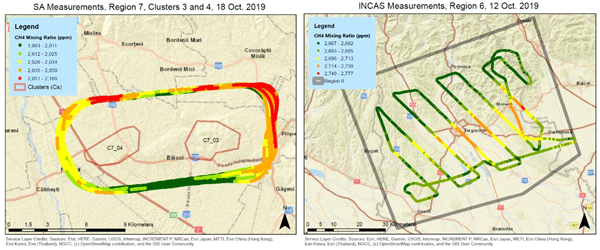
This article presents insights from airborne in situ measurements collected during the ROmanian Methane Emissions from Oil and gas (ROMEO) campaign supported by two models. Results reveal Romania's oil and gas methane emissions were significantly under-reported to the United Nations Framework Convention on Climate Change (UNFCCC) in 2019. A large underestimation was also found in the Emissions Database for Global Atmospheric Research (EDGAR) v7.0 for the study domain in the same year.
Broghan M. Erland, Cristen Adams, Andrea Darlington, Mackenzie L. Smith, Andrew K. Thorpe, Gregory R. Wentworth, Steve Conley, John Liggio, Shao-Meng Li, Charles E. Miller, and John A. Gamon
Atmos. Meas. Tech., 15, 5841–5859, https://doi.org/10.5194/amt-15-5841-2022, https://doi.org/10.5194/amt-15-5841-2022, 2022
Short summary
Short summary
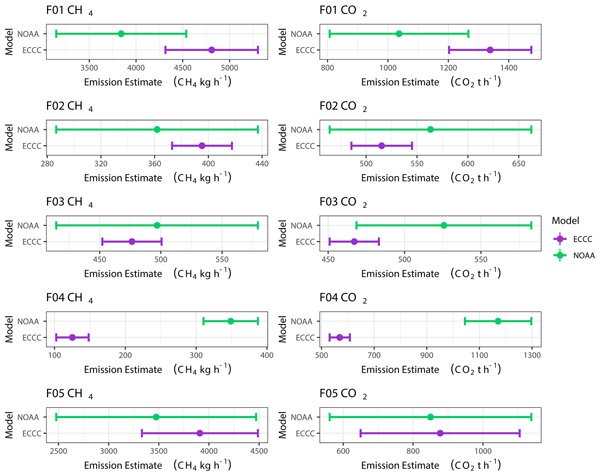
Accurately estimating greenhouse gas (GHG) emissions is essential to reaching net-zero goals to combat the climate crisis. Airborne box-flights are ideal for assessing regional GHG emissions, as they can attain small error. We compare two box-flight algorithms and found they produce similar results, but daily variability must be considered when deriving emissions inventories. Increasing the consistency and agreement between airborne methods moves us closer to achieving more accurate estimates.
Colm Sweeney, Abhishek Chatterjee, Sonja Wolter, Kathryn McKain, Robert Bogue, Stephen Conley, Tim Newberger, Lei Hu, Lesley Ott, Benjamin Poulter, Luke Schiferl, Brad Weir, Zhen Zhang, and Charles E. Miller
Atmos. Chem. Phys., 22, 6347–6364, https://doi.org/10.5194/acp-22-6347-2022, https://doi.org/10.5194/acp-22-6347-2022, 2022
Short summary
Short summary
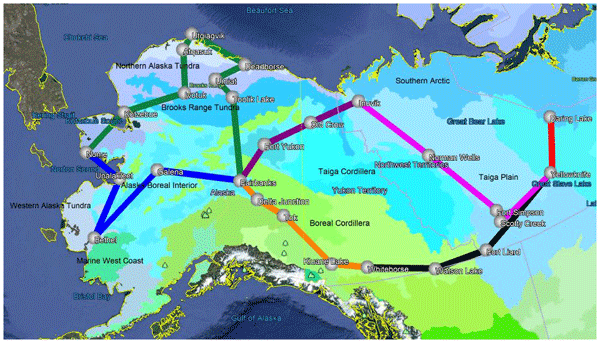
The Arctic Carbon Atmospheric Profiles (Arctic-CAP) project demonstrates the utility of aircraft profiles for independent evaluation of model-derived emissions and uptake of atmospheric CO2, CH4, and CO from land and ocean. Comparison with the Goddard Earth Observing System (GEOS) modeling system suggests that fluxes of CO2 are very consistent with observations, while those of CH4 have some regional and seasonal biases, and that CO comparison is complicated by transport errors.
Amy Foulds, Grant Allen, Jacob T. Shaw, Prudence Bateson, Patrick A. Barker, Langwen Huang, Joseph R. Pitt, James D. Lee, Shona E. Wilde, Pamela Dominutti, Ruth M. Purvis, David Lowry, James L. France, Rebecca E. Fisher, Alina Fiehn, Magdalena Pühl, Stéphane J. B. Bauguitte, Stephen A. Conley, Mackenzie L. Smith, Tom Lachlan-Cope, Ignacio Pisso, and Stefan Schwietzke
Atmos. Chem. Phys., 22, 4303–4322, https://doi.org/10.5194/acp-22-4303-2022, https://doi.org/10.5194/acp-22-4303-2022, 2022
Short summary
Short summary
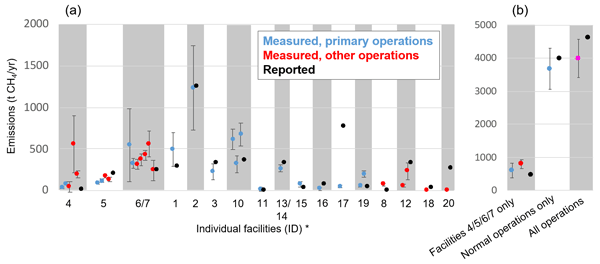
We measured CH4 emissions from 21 offshore oil and gas facilities in the Norwegian Sea in 2019. Measurements compared well with operator-reported emissions but were greatly underestimated when compared with a 2016 global fossil fuel inventory. This study demonstrates the need for up-to-date and accurate inventories for use in research and policy and the important benefits of best-practice reporting methods by operators. Airborne measurements are an effective tool to validate such inventories.
Andrew O. Langford, Christoph J. Senff, Raul J. Alvarez II, Ken C. Aikin, Sunil Baidar, Timothy A. Bonin, W. Alan Brewer, Jerome Brioude, Steven S. Brown, Joel D. Burley, Dani J. Caputi, Stephen A. Conley, Patrick D. Cullis, Zachary C. J. Decker, Stéphanie Evan, Guillaume Kirgis, Meiyun Lin, Mariusz Pagowski, Jeff Peischl, Irina Petropavlovskikh, R. Bradley Pierce, Thomas B. Ryerson, Scott P. Sandberg, Chance W. Sterling, Ann M. Weickmann, and Li Zhang
Atmos. Chem. Phys., 22, 1707–1737, https://doi.org/10.5194/acp-22-1707-2022, https://doi.org/10.5194/acp-22-1707-2022, 2022
Short summary
Short summary
The Fires, Asian, and Stratospheric Transport–Las Vegas Ozone Study (FAST-LVOS) combined lidar, aircraft, and in situ measurements with global models to investigate the contributions of stratospheric intrusions, regional and Asian pollution, and wildfires to background ozone in the southwestern US during May and June 2017 and demonstrated that these processes contributed to background ozone levels that exceeded 70 % of the US National Ambient Air Quality Standard during the 6-week campaign.
Cited articles
Conley, S., Faloona, I., Mehrotra, S., Suard, M., Lenschow, D. H., Sweeney, C., Herndon, S., Schwietzke, S., Pétron, G., Pifer, J., Kort, E. A., and Schnell, R.: Application of Gauss's theorem to quantify localized surface emissions from airborne measurements of wind and trace gases, Atmos. Meas. Tech., 10, 3345–3358, https://doi.org/10.5194/amt-10-3345-2017, 2017. a, b, c
Gorchov Negron, A. M., Kort, E. A., Conley, S. A., and Smith, M. L.: Airborne assessment of methane emissions from offshore platforms in the U.S. Gulf of Mexico, Environ. Sci. Technol., 54, 5112–5120, https://doi.org/10.1021/acs.est.0c00179, 2020. a
Hanson, R. K., Spearrin, R. M., and Goldenstein, C. S.: Spectroscopy and optical diagnostics for gases, Springer International Publishing, 1st edn., https://doi.org/10.1007/978-3-319-23252-2, 279 pp., 2016. a
IPCC: Climate Change 2014: Synthesis Report, Contribution of Working Groups I, II and III to the Fifth Assessment Report of the Intergovernmental Panel on Climate Change, Tech. rep., IPCC, Geneva, Switzerland, https://www.ipcc.ch/site/assets/uploads/2018/02/SYR_AR5_FINAL_full.pdf (last access: 14 February 2025), 2014. a
Katz, V. J.: The history of Stokes’ theorem, Math. Mag., 52, 146–156, https://doi.org/10.1080/0025570x.1979.11976770, 1979. a
Liu, Y., Paris, J.-D., Broquet, G., Bescós Roy, V., Meixus Fernandez, T., Andersen, R., Russu Berlanga, A., Christensen, E., Courtois, Y., Dominok, S., Dussenne, C., Eckert, T., Finlayson, A., Fernández de la Fuente, A., Gunn, C., Hashmonay, R., Grigoleto Hayashi, J., Helmore, J., Honsel, S., Innocenti, F., Irjala, M., Log, T., Lopez, C., Cortés Martínez, F., Martinez, J., Massardier, A., Nygaard, H. G., Agregan Reboredo, P., Rousset, E., Scherello, A., Ulbricht, M., Weidmann, D., Williams, O., Yarrow, N., Zarea, M., Ziegler, R., Sciare, J., Vrekoussis, M., and Bousquet, P.: Assessment of current methane emission quantification techniques for natural gas midstream applications, Atmos. Meas. Tech., 17, 1633–1649, https://doi.org/10.5194/amt-17-1633-2024, 2024. a, b
Mays, K. L., Shepson, P. B., Stirm, B. H., Karion, A., Sweeney, C., and Gurney, K. R.: Aircraft-based measurements of the carbon footprint of Indianapolis, Environ. Sci. Technol., 43, 7816–7823, https://doi.org/10.1021/es901326b, 2009. a
McKain, K., Down, A., Raciti, S. M., Budney, J., Hutyra, L. R., Floerchinger, C., Herndon, S. C., Nehrkorn, T., Zahniser, M. S., Jackson, R. B., Phillips, N., and Wofsy, S. C.: Methane emissions from natural gas infrastructure and use in the urban region of Boston, Massachusetts, P. Natl Acad. Sci. USA, 112, 1941–1946, https://doi.org/10.1073/pnas.1416261112, 2015. a
NASA: Methane detector sniffs out leaks, https://spinoff.nasa.gov/Spinoff2019/ps_7.html (last access: 6 January 2025), 2019. a
Nisbet, E. G., Manning, M. R., Dlugokencky, E. J., Fisher, R. E., Lowry, D., Michel, S. E., Myhre, C. L., Platt, S. M., Allen, G., Bousquet, P., Brownlow, R., Cain, M., France, J. L., Hermansen, O., Hossaini, R., Jones, A. E., Levin, I., Manning, A. C., Myhre, G., Pyle, J. A., Vaughn, B. H., Warwick, N. J., and White, J. W. C.: Very strong atmospheric methane growth in the 4 years 2014–2017: implications for the Paris agreement, Glob. Biogeochem. Cy., 33, 318–342, https://doi.org/10.1029/2018gb006009, 2019. a
Plant, G., Kort, E. A., Murray, L. T., Maasakkers, J. D., and Aben, I.: Evaluating urban methane emissions from space using TROPOMI methane and carbon monoxide observations, Remote Sens. Environ., 268, 112756, https://doi.org/10.1016/j.rse.2021.112756, 2022. a
Price, D. J.: Smoothed particle hydrodynamics and magnetohydrodynamics, J. Comput. Phys., 231, 759–794, https://doi.org/10.1016/j.jcp.2010.12.011, 2012. a, b
Rasmussen, C. E. and Williams, C. K. I.: Gaussian processes for machine learning, The MIT Press, ISBN 9780262256834, https://doi.org/10.7551/mitpress/3206.001.0001, 266 pp., 2005. a
Ravikumar, A. P., Sreedhara, S., Wang, J., Englander, J., Roda-Stuart, D., Bell, C., Zimmerle, D., Lyon, D., Mogstad, I., Ratner, B., and Brandt, A. R.: Single-blind inter-comparison of methane detection technologies – results from the Stanford/EDF mobile monitoring challenge, Elem. Sci. Anth., 37, 1–16, https://doi.org/10.1525/elementa.373, 2019. a
Saunois, M., Stavert, A. R., Poulter, B., Bousquet, P., Canadell, J. G., Jackson, R. B., Raymond, P. A., Dlugokencky, E. J., Houweling, S., Patra, P. K., Ciais, P., Arora, V. K., Bastviken, D., Bergamaschi, P., Blake, D. R., Brailsford, G., Bruhwiler, L., Carlson, K. M., Carrol, M., Castaldi, S., Chandra, N., Crevoisier, C., Crill, P. M., Covey, K., Curry, C. L., Etiope, G., Frankenberg, C., Gedney, N., Hegglin, M. I., Höglund-Isaksson, L., Hugelius, G., Ishizawa, M., Ito, A., Janssens-Maenhout, G., Jensen, K. M., Joos, F., Kleinen, T., Krummel, P. B., Langenfelds, R. L., Laruelle, G. G., Liu, L., Machida, T., Maksyutov, S., McDonald, K. C., McNorton, J., Miller, P. A., Melton, J. R., Morino, I., Müller, J., Murguia-Flores, F., Naik, V., Niwa, Y., Noce, S., O'Doherty, S., Parker, R. J., Peng, C., Peng, S., Peters, G. P., Prigent, C., Prinn, R., Ramonet, M., Regnier, P., Riley, W. J., Rosentreter, J. A., Segers, A., Simpson, I. J., Shi, H., Smith, S. J., Steele, L. P., Thornton, B. F., Tian, H., Tohjima, Y., Tubiello, F. N., Tsuruta, A., Viovy, N., Voulgarakis, A., Weber, T. S., van Weele, M., van der Werf, G. R., Weiss, R. F., Worthy, D., Wunch, D., Yin, Y., Yoshida, Y., Zhang, W., Zhang, Z., Zhao, Y., Zheng, B., Zhu, Q., Zhu, Q., and Zhuang, Q.: The Global Methane Budget 2000–2017, Earth Syst. Sci. Data, 12, 1561–1623, https://doi.org/10.5194/essd-12-1561-2020, 2020. a
Sibson, R.: A brief description of natural neighbor interpolation, in: Interpreting multivariate data, edited by: Barnett, V., 21–36 pp., Wiley, New York, New York, USA, ISBN 9780471280392, 1981. a
Stockie, J. M.: The mathematics of atmospheric dispersion modeling, SIAM Rev., 53, 349–372, https://doi.org/10.1137/10080991x, 2011. a, b, c
United Nations Environment Programme: United Nations Environment Programme (UNEP) Oil and gas methane partnership (OGMP) 2.0 framework, https://ogmpartnership.com/ (last access: 6 January 2025), 2020. a
van Kampen, N. G.: Chapter IV – Markov process, in: Stochastic processes in physics and chemistry, North-Holland Personal Library, 73–95 pp., Elsevier, Amsterdam, 3rd edn., ISBN 9780444529657, https://doi.org/10.1016/b978-044452965-7/50007-6, 2007. a, b
Webster, C. R.: Measuring methane and its isotopes 12CH4, 13CH4, and CH3D on the surface of Mars with in situ laser spectroscopy, Appl. Opt., 44, 1226, https://doi.org/10.1364/ao.44.001226, 2005. a
Short summary
Methane is a potent greenhouse gas. Trustable detection and quantification of methane emissions at facility level are critical for identifying the largest sources and prioritizing them for repair. We provide a systematic analysis of several sources of uncertainty in drone-based methane emission surveys based on theoretical considerations and historical data sets. We provide guidelines for industry on how to avoid or minimize errors in drone-based methane emission quantification surveys.
Methane is a potent greenhouse gas. Trustable detection and quantification of methane emissions...
Altmetrics
Final-revised paper
Preprint