
Articles | Volume 18, issue 22
https://doi.org/10.5194/amt-18-6893-2025
© Author(s) 2025. This work is distributed under
the Creative Commons Attribution 4.0 License.
the Creative Commons Attribution 4.0 License.
https://doi.org/10.5194/amt-18-6893-2025
© Author(s) 2025. This work is distributed under
the Creative Commons Attribution 4.0 License.
the Creative Commons Attribution 4.0 License.
Research article
| 
21 Nov 2025
Research article |
| 21 Nov 2025
| 21 Nov 2025
Harmonisation of sixteen tropospheric ozone satellite data records

Royal Belgian Institute for Space Aeronomy (BIRA-IASB), Uccle, Belgium
Daan Hubert
Royal Belgian Institute for Space Aeronomy (BIRA-IASB), Uccle, Belgium
José Granville
Royal Belgian Institute for Space Aeronomy (BIRA-IASB), Uccle, Belgium
Oindrila Nath
Royal Belgian Institute for Space Aeronomy (BIRA-IASB), Uccle, Belgium
Jean-Christopher Lambert
Royal Belgian Institute for Space Aeronomy (BIRA-IASB), Uccle, Belgium
Catherine Wespes
Royal Belgian Institute for Space Aeronomy (BIRA-IASB), Uccle, Belgium
Spectroscopy, Quantum Chemistry and Atmospheric Remote Sensing (SQUARES), Université Libre de Bruxelles (ULB), Brussels, Belgium
Pierre-François Coheur
Spectroscopy, Quantum Chemistry and Atmospheric Remote Sensing (SQUARES), Université Libre de Bruxelles (ULB), Brussels, Belgium
Cathy Clerbaux
Spectroscopy, Quantum Chemistry and Atmospheric Remote Sensing (SQUARES), Université Libre de Bruxelles (ULB), Brussels, Belgium
LATMOS/IPSL, Sorbonne Université, UVSQ, CNRS, Paris, France
Anne Boynard
LATMOS/IPSL, Sorbonne Université, UVSQ, CNRS, Paris, France
SPASCIA, Ramonville-Saint-Agne, France
Richard Siddans
Rutherford Appleton Laboratory, Chilton, UK
Barry Latter
Rutherford Appleton Laboratory, Chilton, UK
Brian Kerridge
Rutherford Appleton Laboratory, Chilton, UK
Serena Di Pede
Koninklijk Nederlands Meteorologisch Instituut (KNMI), De Bilt, the Netherlands
Pepijn Veefkind
Koninklijk Nederlands Meteorologisch Instituut (KNMI), De Bilt, the Netherlands
Juan Cuesta
Univ Paris Est Créteil and Université de Paris Cité, CNRS, LISA, Créteil, France
Gaelle Dufour
Université de Paris Cité and Univ Paris Est Créteil, CNRS, LISA, Paris, France
Klaus-Peter Heue
Deutsches Zentrum für Luft- und Raumfahrt (DLR), Oberpfaffenhofen, Germany
Melanie Coldewey-Egbers
Deutsches Zentrum für Luft- und Raumfahrt (DLR), Oberpfaffenhofen, Germany
Diego Loyola
Deutsches Zentrum für Luft- und Raumfahrt (DLR), Oberpfaffenhofen, Germany
Andrea Orfanoz-Cheuquelaf
Institute of Environmental Physics (IUP), Bremen, Germany
Swathi Maratt Satheesan
Institute of Environmental Physics (IUP), Bremen, Germany
Kai-Uwe Eichmann
Institute of Environmental Physics (IUP), Bremen, Germany
Alexei Rozanov
Institute of Environmental Physics (IUP), Bremen, Germany
Viktoria F. Sofieva
Finish Meteorological Institute (FMI), Helsinki, Finland
Jerald R. Ziemke
NASA Goddard Space Flight Center (GSFC), Greenbelt, Maryland, USA
Antje Inness
European Centre for Medium-Range Weather Forecasts (ECMWF), Shinfield Park, Reading, UK
Roeland Van Malderen
Royal Meteorological Institute of Belgium (RMIB), Uccle, Belgium
Lars Hoffmann
Jülich Supercomputing Centre, Forschungszentrum Jülich, Jülich, Germany
Related authors
Caroline Jonas, Corinne Vigouroux, Bavo Langerock, Robin Björklund, Anne Boynard, Thomas Carlund, Martine De Mazière, Peter Effertz, Quentin Errera, Matthias M. Frey, José Granville, James W. Hannigan, Arno Keppens, Nis Jepsen, Rigel Kivi, Norrie Lyall, Mathias Palm, Maxime Prignon, Viktoria F. Sofieva, Kimberly Strong, Tove Svendby, David Tarasick, Laura Thölix, Roeland Van Malderen, Yana Virolainen, Sibylle von Löwis, and Xiaoyi Zhao
Atmos. Chem. Phys., 26, 8089–8124, https://doi.org/10.5194/acp-26-8089-2026, https://doi.org/10.5194/acp-26-8089-2026, 2026
Short summary
Short summary
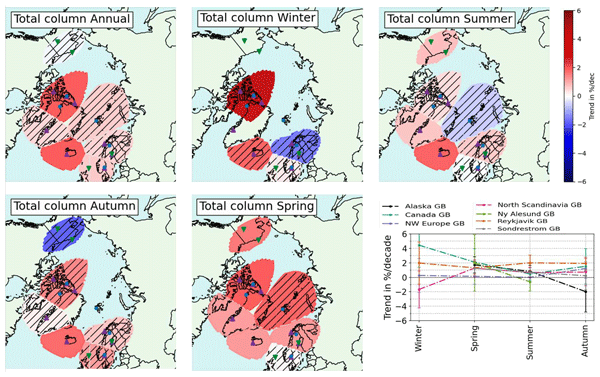
We study the evolution of ozone in the Arctic over the 2000–2024 period in the stratosphere (about 10 to 50 km) to assess the expected recovery of the ozone layer following the diminution of ozone-depleting substances. We merge ground-based data sets within spatially coherent regions to reduce uncertainties and we obtain positive trends for the total column everywhere in the Arctic and for the middle and upper stratosphere over Canada, but no significant trends in the lower stratosphere.
Serena Di Pede, Erwin Loots, Antje Ludewig, Emiel van der Plas, Edward van Amelrooy, Mirna van Hoek, Maarten Sneep, Mark ter Linden, Arno Keppens, and J. Pepijn Veefkind
Atmos. Meas. Tech., 19, 1875–1899, https://doi.org/10.5194/amt-19-1875-2026, https://doi.org/10.5194/amt-19-1875-2026, 2026
Short summary
Short summary
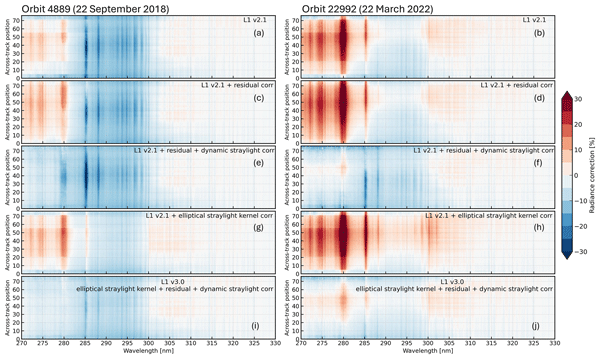
TROPOMI (TROPOspheric Monitoring Instrument) provides daily ozone profile data from ultraviolet bands 1–2. Accurate radiometric calibration is critical below 300 nm where signals are low. A Level-2 soft calibration complements L1 calibration and reveals spectral, temporal, and across-track biases. Re-analysis of calibration data enabled improved L1 corrections to address remaining straylight and residual signal effects, reducing soft calibration magnitude by ~15–20 % and associated biases in L1b v3.0 and ozone processor v2.9.0.
Viktoria F. Sofieva, Alexandra Laeng, Thomas von Clarmann, Gabriele Stiller, Michael Kiefer, Johanna Tamminen, Alexey Rozanov, Carlo Arosio, Nathaniel Livesey, Robert Damadeo, Patrick Sheese, Kaley A. Walker, Doug Degenstein, Daniel Zawada, Natalya A. Kramarova, and Arno Keppens
Atmos. Meas. Tech., 19, 1837–1852, https://doi.org/10.5194/amt-19-1837-2026, https://doi.org/10.5194/amt-19-1837-2026, 2026
Short summary
Short summary
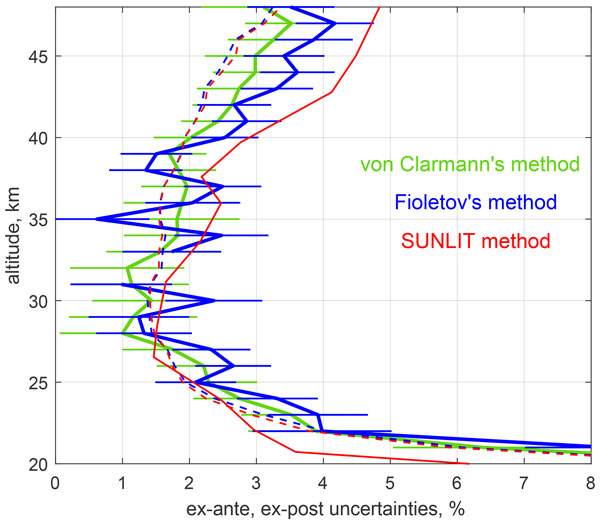
For satellite measurements of atmospheric composition, the random uncertainty estimates provided by retrieval algorithms might be imperfect due to various approximations used in the retrievals or presence of unknown error sources. This paper presents an overview of the methods used for validation of random uncertainty estimates. All methods discussed in this study are categorized, and assumptions and limitations of each method are discussed.
Juseon Bak, Arno Keppens, Daesung Choi, Sungjae Hong, Jae-Hwan Kim, Cheol-Hee Kim, Hyo-Jung Lee, Wonbae Jeon, Jhoon Kim, Ja-Ho Koo, Joowan Kim, Kanghyun Baek, Kai Yang, Xiong Liu, Gonzalo González Abad, Klaus-Peter Heue, Jean-Christopher Lambert, Yeonjin Jung, Hyunkee Hong, and Won-Jin Lee
Atmos. Meas. Tech., 19, 119–134, https://doi.org/10.5194/amt-19-119-2026, https://doi.org/10.5194/amt-19-119-2026, 2026
Short summary
Short summary
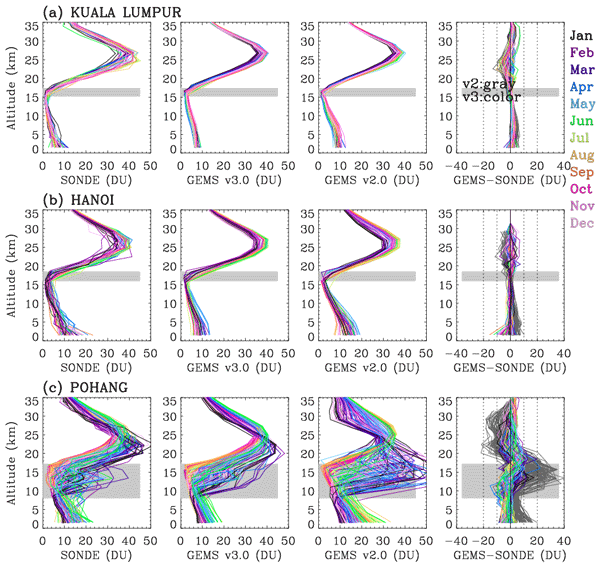
This study presents the first complete description of the operational version 3 ozone profile retrieval algorithm for the Geostationary Environment Monitoring Spectrometer (GEMS) and its performance characteristics. Improvements in radiometric and wavelength calibration reduce spectral fitting uncertainties and enhance agreement with ozonesonde profiles and Pandora total ozone measurements.
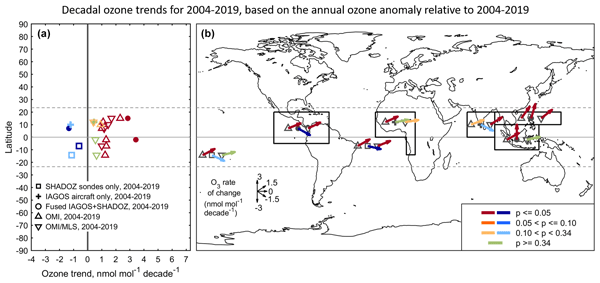
Audrey Gaudel, Ilann Bourgeois, Meng Li, Kai-Lan Chang, Jerald Ziemke, Bastien Sauvage, Ryan M. Stauffer, Anne M. Thompson, Debra E. Kollonige, Nadia Smith, Daan Hubert, Arno Keppens, Juan Cuesta, Klaus-Peter Heue, Pepijn Veefkind, Kenneth Aikin, Jeff Peischl, Chelsea R. Thompson, Thomas B. Ryerson, Gregory J. Frost, Brian C. McDonald, and Owen R. Cooper
Atmos. Chem. Phys., 24, 9975–10000, https://doi.org/10.5194/acp-24-9975-2024, https://doi.org/10.5194/acp-24-9975-2024, 2024
Short summary
Short summary
The study examines tropical tropospheric ozone changes. In situ data from 1994–2019 display increased ozone, notably over India, Southeast Asia, and Malaysia and Indonesia. Sparse in situ data limit trend detection for the 15-year period. In situ and satellite data, with limited sampling, struggle to consistently detect trends. Continuous observations are vital over the tropical Pacific Ocean, Indian Ocean, western Africa, and South Asia for accurate ozone trend estimation in these regions.
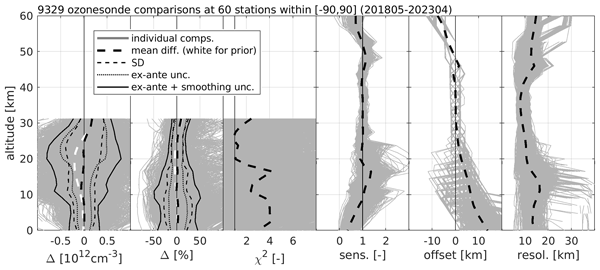
Arno Keppens, Serena Di Pede, Daan Hubert, Jean-Christopher Lambert, Pepijn Veefkind, Maarten Sneep, Johan De Haan, Mark ter Linden, Thierry Leblanc, Steven Compernolle, Tijl Verhoelst, José Granville, Oindrila Nath, Ann Mari Fjæraa, Ian Boyd, Sander Niemeijer, Roeland Van Malderen, Herman G. J. Smit, Valentin Duflot, Sophie Godin-Beekmann, Bryan J. Johnson, Wolfgang Steinbrecht, David W. Tarasick, Debra E. Kollonige, Ryan M. Stauffer, Anne M. Thompson, Angelika Dehn, and Claus Zehner
Atmos. Meas. Tech., 17, 3969–3993, https://doi.org/10.5194/amt-17-3969-2024, https://doi.org/10.5194/amt-17-3969-2024, 2024
Short summary
Short summary
The Sentinel-5P satellite operated by the European Space Agency has carried the TROPOspheric Monitoring Instrument (TROPOMI) around the Earth since October 2017. This mission also produces atmospheric ozone profile data which are described in detail for May 2018 to April 2023. Independent validation using ground-based reference measurements demonstrates that the operational ozone profile product mostly fully and at least partially complies with all mission requirements.
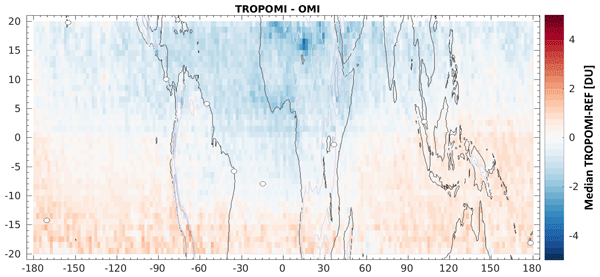
Daan Hubert, Klaus-Peter Heue, Jean-Christopher Lambert, Tijl Verhoelst, Marc Allaart, Steven Compernolle, Patrick D. Cullis, Angelika Dehn, Christian Félix, Bryan J. Johnson, Arno Keppens, Debra E. Kollonige, Christophe Lerot, Diego Loyola, Matakite Maata, Sukarni Mitro, Maznorizan Mohamad, Ankie Piters, Fabian Romahn, Henry B. Selkirk, Francisco R. da Silva, Ryan M. Stauffer, Anne M. Thompson, J. Pepijn Veefkind, Holger Vömel, Jacquelyn C. Witte, and Claus Zehner
Atmos. Meas. Tech., 14, 7405–7433, https://doi.org/10.5194/amt-14-7405-2021, https://doi.org/10.5194/amt-14-7405-2021, 2021
Short summary
Short summary
We assess the first 2 years of TROPOMI tropical tropospheric ozone column data. Comparisons to reference measurements by ozonesonde and satellite sensors show that TROPOMI bias (−0.1 to +2.3 DU) and precision (1.5 to 2.5 DU) meet mission requirements. Potential causes of bias and its spatio-temporal structure are discussed, as well as ways to identify sampling errors. Our analysis of known geophysical patterns demonstrates the improved performance of TROPOMI with respect to its predecessors.
Manon Hermans, Lieven Clarisse, Cathy Clerbaux, and Pierre Coheur
EGUsphere, https://doi.org/10.5194/egusphere-2026-4784, https://doi.org/10.5194/egusphere-2026-4784, 2026
This preprint is open for discussion and under review for Atmospheric Measurement Techniques (AMT).
Short summary
Short summary
As a component of polar stratospheric clouds, nitric acid trihydrate (NAT) particles play an important role in the formation of the ozone hole. This paper presents a method to quantitatively retrieve NAT from the infrared measurements of the IASI sounder. We derive an 18-year record of daily Antarctic NAT distributions, expressed in terms of optical depths, providing valuable insights into the chemistry of the polar night. The applicability of the method over the North Pole is also shown.
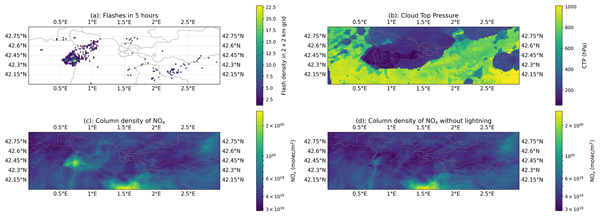
Francisco J. Pérez-Invernón, Francisco J. Gordillo-Vázquez, Oscar van der Velde, Joan Montanyà, Jesús Alberto López Trujillo, Nicolau Pineda, Diego Loyola, Sora Seo, Christoph Knote, Alexandre O. Fierro, and Heidi Huntrieser
Atmos. Chem. Phys., 26, 14277–14301, https://doi.org/10.5194/acp-26-14277-2026, https://doi.org/10.5194/acp-26-14277-2026, 2026
Short summary
Short summary
Lightning is a major source of atmospheric pollutants. This study uses advanced satellite and ground-based data to show how lightning characteristics, such as length, brightness, and duration, affect the production of these pollutants in storms over Spain’s Ebro Valley.
Sean M. Davis, William T. Ball, Yue Jia, Gabriel Chiodo, Justin A. Alsing, James Keeble, Hideharu Akiyoshi, Carlo Arosio, Ewa M. Bednarz, Andreas Chrysanthou, Melanie Coldewey-Egbers, Robert Damadeo, Sandip Dhomse, Mohamadou A. Diallo, Simone Dietmuller, Roland Eichinger, Stacey Frith, Birgit Hassler, Michaela I. Hegglin, Daan Hubert, Patrick Jöckel, Béatrice Josse, Natalya Kramarova, Diego Loyola, Eliane Maillard Barras, Marion Marchand, Olaf Morgenstern, David Plummer, Robert W. Portmann, Karen H. Rosenlof, Alexei Rozanov, Viktoria F. Sofieva, Johannes Staehelin, Timofei Sukhodolov, Kleareti Tourpali, Ronald J. Van der A, H. J. Ray Wang, Krzysztof Wargan, Shingo Watanabe, Mark Weber, Jeannette D. Wild, Yousuke Yamashita, and Jerry Ziemke
Atmos. Chem. Phys., 26, 13817–13843, https://doi.org/10.5194/acp-26-13817-2026, https://doi.org/10.5194/acp-26-13817-2026, 2026
Short summary
Short summary
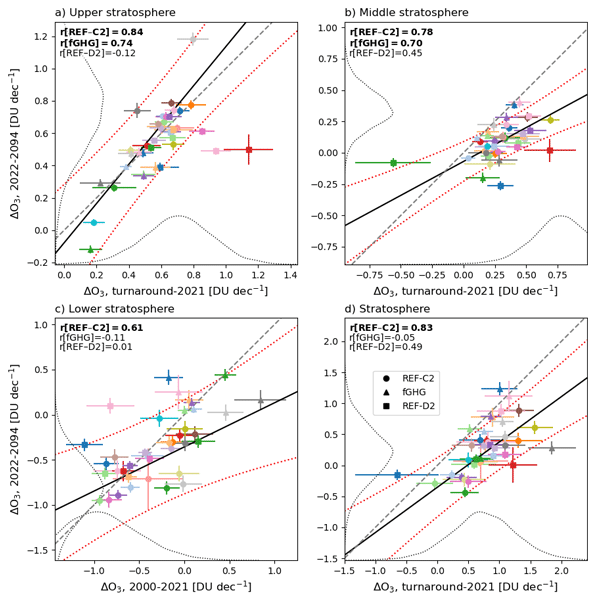
This study investigates tropical ozone changes in models and satellite observations to determine how well they agree and whether observations can constrain model projections. At some levels, satellite records disagree significantly on the magnitude of ozone changes. While early and late 21st century trends are correlated across models, suggesting a potential emergent constraint, the spread in observations means they are unable to provide guidance on the credibility of model projections.
Brian Auffarth, Mark Weber, Alexei Rozanov, Carlo Arosio, John P. Burrows, Melanie Coldewey-Egbers, Sean M. Davis, Doug Degenstein, Kimberlee Dubé, Stacey M. Frith, Lucien Froidevaux, Diego Loyola, Vitali E. Fioletov, Viktoria Sofieva, Ronald van der A, and Jeannette D. Wild
Atmos. Chem. Phys., 26, 13359–13386, https://doi.org/10.5194/acp-26-13359-2026, https://doi.org/10.5194/acp-26-13359-2026, 2026
Short summary
Short summary
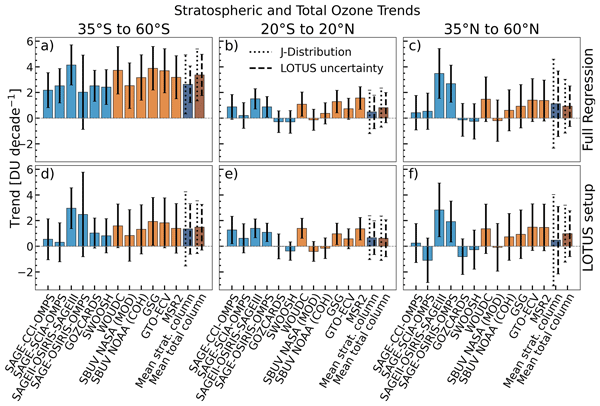
This study examines the trends of stratospheric and total ozone between 2000 and 2024, using long-term satellite datasets. Our results show positive trends in the upper stratosphere and a strong ozone recovery in the Southern Hemisphere, while changes in lower altitudes remain mostly small. The total and stratospheric trends show very similar results, indicating that tropospheric ozone contributes little to total column changes, while the stratospheric column is the dominant driver.
Shangyi Liu, Cathy Clerbaux, Anne Boynard, Mingjian Gu, Chengli Qi, Bruno Franco, Lieven Clarisse, Shan Han, Mengya Sheng, Nicolas Theys, and Zhao-Cheng Zeng
EGUsphere, https://doi.org/10.5194/egusphere-2026-5017, https://doi.org/10.5194/egusphere-2026-5017, 2026
This preprint is open for discussion and under review for Atmospheric Chemistry and Physics (ACP).
Short summary
Short summary
The March 2026 Tehran refinery explosions released massive amounts of toxic sulfur dioxide gas. We used multiple satellites to track this plume, discovering that intense fires pushed the pollution high into the atmosphere, causing it to travel across continents for days. Current air quality forecast models completely missed this major event. This highlights the urgent need to use advanced satellites to monitor pollution from armed conflicts to assess global climate risks.
Glenn-Michael Oomen, Jean-François Müller, Trissevgeni Stavrakou, Isabelle De Smedt, Vincent Huijnen, Flora Kluge, Antje Inness, and Johannes Flemming
Geosci. Model Dev., 19, 8959–8975, https://doi.org/10.5194/gmd-19-8959-2026, https://doi.org/10.5194/gmd-19-8959-2026, 2026
Short summary
Short summary
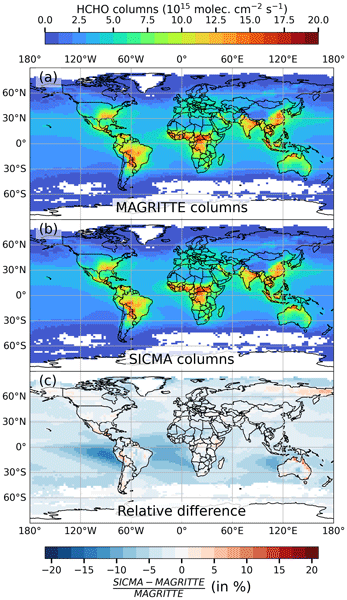
We developed a strongly simplified mechanism for isoprene oxidation that reduces the computational cost of atmospheric chemistry while retaining the key processes controlling formaldehyde formation. Its parameters were optimized using box-model simulations, and the mechanism reproduces the full chemistry well in global simulations. It also gives similar isoprene emissions when constrained by satellite formaldehyde observations, enabling faster large-scale simulations and emission inversions.
Linlu Mei, Vladimir Rozanov, Alexei Rozanov, and John P. Burrows
Geosci. Model Dev., 19, 8779–8800, https://doi.org/10.5194/gmd-19-8779-2026, https://doi.org/10.5194/gmd-19-8779-2026, 2026
Short summary
Short summary
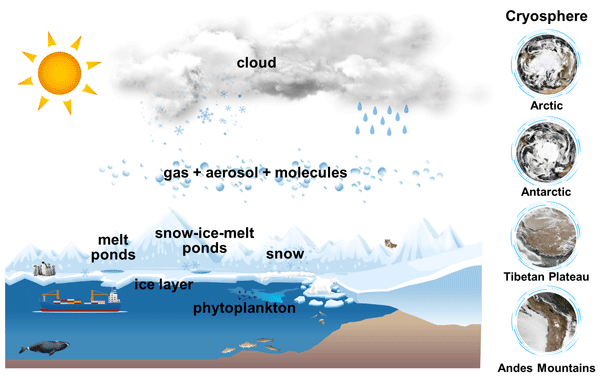
The cryosphere, including snow, ice, and melt ponds, strongly influences how sunlight is reflected and absorbed, affecting climate change. We developed a new version of radiative transfer model SCIATRAN, to better represent these complex surfaces and their interaction with the atmosphere. The model was validated using real measurements and showed good accuracy. These advances help scientists better understand climate processes in polar regions and improve satellite observations.
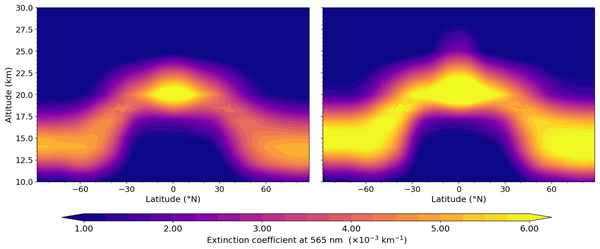
Anna Lange, John Andrew Dykema, Sandro Vattioni, Ulrike Niemeier, Alexei Rozanov, and Christian von Savigny
Atmos. Chem. Phys., 26, 13055–13067, https://doi.org/10.5194/acp-26-13055-2026, https://doi.org/10.5194/acp-26-13055-2026, 2026
Short summary
Short summary
This study addresses the question of whether it is possible to detect the continuous injection of 5 Tg yr-1 of alumina or calcite into the stratosphere using satellite solar occultation instruments. The research shows that it is possible to detect these injections of solid particles into the stratosphere and that they can also be distinguished from natural variability, considering the assumptions made.

Lieven Clarisse, Bruno Franco, Lorenzo Fabris, Nicolas Theys, Juliette Hadji-Lazaro, Daniel Hurtmans, Cathy Clerbaux, and Pierre Coheur
Earth Syst. Sci. Data, 18, 6667–6706, https://doi.org/10.5194/essd-18-6667-2026, https://doi.org/10.5194/essd-18-6667-2026, 2026
Short summary
Short summary
We present a 19-year (2007–2026) global record of atmospheric sulphur dioxide (SO2) abundances and plume altitudes measured twice a day from space by the Infrared Atmospheric Sounding Interferometers (IASI). The first part of the paper covers the retrieval methodology and detailed comparisons with other satellite measurements. The second part presents an overview of the dataset, offering in particular an analysis of the temporal evolution and vertical distribution of volcanic SO2.
Barbara Dix, Lindsey D. Anderson, J. Pepijn Veefkind, and Joost de Gouw
EGUsphere, https://doi.org/10.5194/egusphere-2026-5052, https://doi.org/10.5194/egusphere-2026-5052, 2026
This preprint is open for discussion and under review for Atmospheric Chemistry and Physics (ACP).
Short summary
Short summary
Wildfire smoke affects climate, but its properties depend on how fires burn and how smoke changes after emission. Using satellite observations of Australian wildfires, we found that flaming fires produce more light-absorbing smoke, while smoldering fires produce more aerosol that scatters light. Smoke becomes more optically uniform away from fire cores, showing that both combustion and early plume processing shape its climate effects.
Carlo Arosio, Alexei Rozanov, Vladimir Rozanov, Andrea Orfanoz-Cheuquelaf, John P. Burrows, Edward Malina, and Hartmut Boesch
EGUsphere, https://doi.org/10.5194/egusphere-2026-5113, https://doi.org/10.5194/egusphere-2026-5113, 2026
Short summary
Short summary
We present an improved method for retrieving ozone profiles from OMPS satellite limb observations. The aim is to mitigate an artifact related to the variation of surface reflectivity along the satellite line of sight. We prescribe surface reflectivity from VIIRS to mitigate the artifact, particularly in regions with sharp changes in reflectivity, such as coastlines and transitions between clouds and ocean. Updated stratospheric ozone profiles and tropospheric ozone column products are presented.
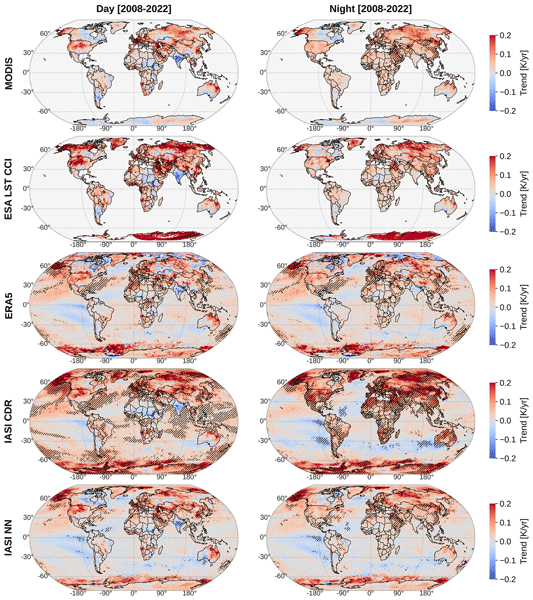
Sarah Safieddine, Selviga Sinnathamby, Juliette Hadji-Lazaro, Marie Doutriaux-Boucher, Darren Ghent, Simon Whitburn, Lieven Clarisse, and Cathy Clerbaux
Earth Obs., 1, 59–75, https://doi.org/10.5194/eo-1-59-2026, https://doi.org/10.5194/eo-1-59-2026, 2026
Short summary
Short summary
Land and sea surface temperatures, collectively called skin temperature (Tskin), are available from satellite measurements since few decades now and provide a holistic view of the Earth's climate system. Here we review 6 different datasets of Tskin to show that climate change signature is clear from the different datasets with notable exception, such as a significant cooling in India, parts of Africa and the Pacific.
Joshua Singleton, Hantao Wang, Jerry R. Ziemke, Marc L. Serre, and J. Jason West
EGUsphere, https://doi.org/10.5194/egusphere-2026-4798, https://doi.org/10.5194/egusphere-2026-4798, 2026
Short summary
Short summary
Satellite ozone observations have been considered poor predictors of ozone at ground level. Here we evaluate the ability of one satellite product to estimate ground-level ozone globally over 18 years. The satellite product shows a modest correlation with ground-level ozone that does not vary strongly with year, season, world region, or ozone level. Using a linear regression, we translate the satellite product into a global monthly ground-level ozone dataset for use in future data fusion studies.
Leonardo M. A. Alvarado, Sora Seo, Adrian Doicu, Andreas Richter, and Diego Loyola
EGUsphere, https://doi.org/10.5194/egusphere-2026-4360, https://doi.org/10.5194/egusphere-2026-4360, 2026
This preprint is open for discussion and under review for Atmospheric Measurement Techniques (AMT).
Short summary
Short summary
Chlorine dioxide reveals the chemistry that destroys ozone in the upper atmosphere, but it is hard to measure from space, especially in the dim light of polar winter. We built a new method to analyse satellite measurements that separates the true signal from instrument noise and gives a trustworthy uncertainty for every observation, without extra corrections. It matches an existing product while being more reliable, supporting operational European monitoring and future missions for other gases.
Selviga Sinnathamby, Sarah Safieddine, Anne Boynard, Juliette Hadji-Lazaro, Solène Turquety, Simon Whitburn, Lieven Clarisse, Marie Doutriaux-Boucher, Pierre Coheur, and Cathy Clerbaux
EGUsphere, https://doi.org/10.5194/egusphere-2026-4393, https://doi.org/10.5194/egusphere-2026-4393, 2026
This preprint is open for discussion and under review for Atmospheric Chemistry and Physics (ACP).
Short summary
Short summary
South and East Asia have experienced contrasting air pollution changes over recent decades, with implications for regional surface temperature. Using satellite observations and CMIP6 simulations, we assess how pollutant trends relate to temperature changes and whether models reproduce these contrasts. While CMIP6 models capture some air pollution changes under certain scenarios, they fail to reproduce the regional temperature contrast, highlighting the need for extended historical simulations.
Anna Lange, Ilaria Quaglia, Daniele Visioni, Alexei Rozanov, and Christian von Savigny
EGUsphere, https://doi.org/10.5194/egusphere-2026-3347, https://doi.org/10.5194/egusphere-2026-3347, 2026
This preprint is open for discussion and under review for Atmospheric Chemistry and Physics (ACP).
Short summary
Short summary
What happens to the colours of the sky when a volcano erupts during an ongoing stratospheric aerosol injection deployment? This study is the first to tackle this question, combining climate model simulations, radiative transfer calculations, and colour modelling. The results show several optical phenomena, including Bishop's Rings, unusual greenish twilight colours, and purple light.
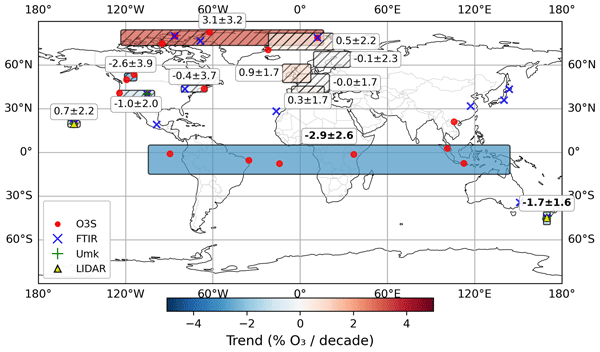
Louis Mirallie, Eliane Maillard Barras, Caroline Jonas, Corinne Vigouroux, Roeland Van Malderen, Irina Petropavlovskikh, Sophie Godin-Beekmann, Thierry Leblanc, Wolfgang Steinbrecht, Antoine Vadès, Rolf Ruefenacht, Alexander Haefele, Gunter Stober, Peter Effertz, Julian Gröbner, Gerard Ancellet, María Cazorla, Petra Duff, Matthias M. Frey, Michael Gill, James W. Hannigan, Nicholas Jones, Rigel Kivi, Raphael Köhler, Bogumil Kois, Debra E. Kollonige, Emmanuel Mahieu, Glen McConville, Johan Mellqvist, Gary Morris, Isao Murata, Tomoo Nagahama, Gerald E. Nedoluha, Shin-Ya Ogino, Richard Querel, Ryan M. Stauffer, Wolfgang Stremme, Kimberly Strong, Ralf Sussmann, Anne M. Thompson, and Yana Virolainen
Atmos. Chem. Phys., 26, 10303–10330, https://doi.org/10.5194/acp-26-10303-2026, https://doi.org/10.5194/acp-26-10303-2026, 2026
Short summary
Short summary
We present regional Bayesian composites of ground-based ozone partial column records. Defining coherent regions using a CAMS (Copernicus Atmosphere Monitoring Service) representativeness study, we merge five instrument types using the BASIC (Ball et al., 2017) algorithm, reducing trend uncertainties by 9.4 % compared to a weighted mean. Results confirm upper stratospheric recovery, predominantly negative middle stratospheric trends, while lower stratospheric trends remain mostly non-significant.
Man Mei Chim, Dominik Stiller, Elisa Ziegler, Thomas J. Aubry, Lucas Boissel, Sébastien Guillet, Brennan Rodgers, Matthew Toohey, Christine Pohl, and Alexei Rozanov
EGUsphere, https://doi.org/10.5194/egusphere-2026-4193, https://doi.org/10.5194/egusphere-2026-4193, 2026
Short summary
Short summary
Stratospheric aerosols from explosive volcanic eruptions are a major climate forcer. We compare the stratospheric aerosol forcing for the next phase of coordinated climate model experiments (CMIP7) against complementary datasets, such as observations of lunar eclipses, stellar extinction, and from satellites. We highlight the potential value of combining observational constraints from complementary datasets with the extensive CMIP7 volcanic emission inventory to refine future forcing data.
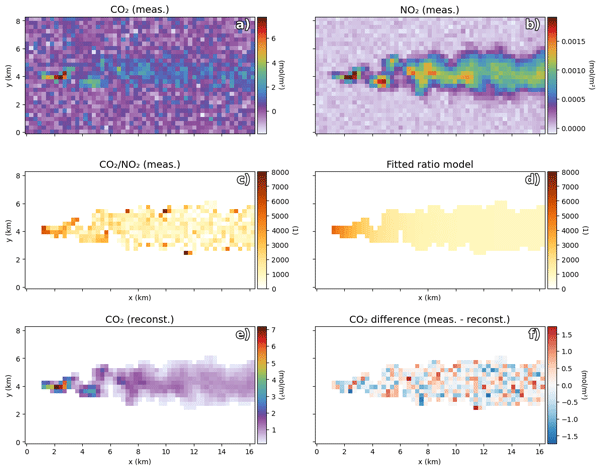
Tobias Borsdorff, Maarten Krol, Pepijn Veefkind, and Jochen Landgraf
Atmos. Meas. Tech., 19, 4617–4636, https://doi.org/10.5194/amt-19-4617-2026, https://doi.org/10.5194/amt-19-4617-2026, 2026
Short summary
Short summary
Industrial facilities release carbon dioxide and nitrogen dioxide. The Twin Anthropogenic Greenhouse Gas Observers (TANGO) mission, launching in 2028, will monitor both gases from ten thousand facilities per year using two satellites. We studied whether combining both improves carbon dioxide emission estimates and reveals plume chemistry. While this produces cleaner carbon dioxide images, precision does not improve as noise is redistributed not eliminated. Their ratio captures how nitrogen oxide converts to nitrogen dioxide within plumes.
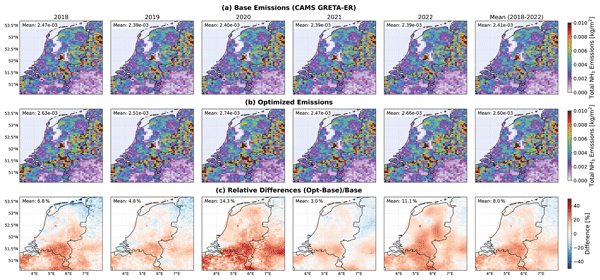
Tyler Wizenberg, Enrico Dammers, Arjo Segers, Mark W. Shephard, Pierre Coheur, Lieven Clarisse, Martin Van Damme, Henk Eskes, Roy Wichink Kruit, Shelley van der Graaf, and Martijn Schaap
Atmos. Chem. Phys., 26, 9589–9623, https://doi.org/10.5194/acp-26-9589-2026, https://doi.org/10.5194/acp-26-9589-2026, 2026
Short summary
Short summary
We combined five years of satellite data on ammonia and nitrogen dioxide concentrations with a regional model to better estimate nitrogen emissions and deposition in the Netherlands. This improved the accuracy of pollution maps and trends, especially in agricultural regions. Our approach helps identify when and where emissions are highest, supporting better air quality management and environmental protection by showing the benefits of using multiple complimentary satellite datasets together.
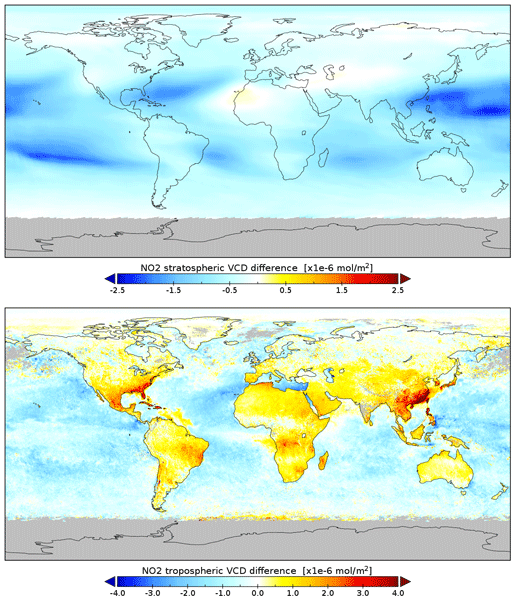
Jos van Geffen, Henk Eskes, Maarten Sneep, Mark ter Linden, and J. Pepijn Veefkind
Atmos. Meas. Tech., 19, 4233–4254, https://doi.org/10.5194/amt-19-4233-2026, https://doi.org/10.5194/amt-19-4233-2026, 2026
Short summary
Short summary
The Fraunhofer absorption feature at 430 nm, which varies in strength with the solar activity cycle influences the retrieval of nitrogen dioxide (NO2) from from Tropospheric Monitoring Instrument (TROPOMI) and Ozone Monitoring Instrument (OMI) measurements. This study describes the benefits of removing the wavelength range 428–433 nm from the retrieval, which is implemented for TROPOMI retrievals as of v2.9.1.
Daniele Minganti, Simon Chabrillat, Sean Davis, Quentin Errera, Marc Op de beeck, Eric Ray, Sarah Vervalcke, Krzysztof Wargan, and Catherine Wespes
EGUsphere, https://doi.org/10.5194/egusphere-2026-3449, https://doi.org/10.5194/egusphere-2026-3449, 2026
Short summary
Short summary
In early 2019, an unusual increase of nitrous oxide concentrations occurred in the northern lower stratosphere (around 20 km). We show that unprecedented circulation pattern rapidly moved nitrous oxide from the tropical region to the northern mid-latitudes. This work reveals how stratospheric mid-latitudes can respond to special wind conditions in the Tropics and subtropics. Such extreme event helps improving our understanding of future changes of stratospheric transport in a warming climate.
Hongrui Gao, Qin He, Kai Qin, Jhoon Kim, Diego Loyola, Pravash Tiwari, Lingxiao Lu, and Jason Blake Cohen
Earth Syst. Sci. Data Discuss., https://doi.org/10.5194/essd-2026-443, https://doi.org/10.5194/essd-2026-443, 2026
Revised manuscript accepted for ESSD
Short summary
Short summary
There are always gaps in satellite records of air pollution because of factors such as clouds and operating conditions. We used a physics-aware deep learning method, producing a gapless 0.05° hourly dataset of tropospheric nitrogen dioxide over Asian pollution hotspots from 2019 to 2024. The dataset can capture sub-daily changes, revealing how traffic, industry, and clean-air policies shaped pollution, supporting health and environment studies.
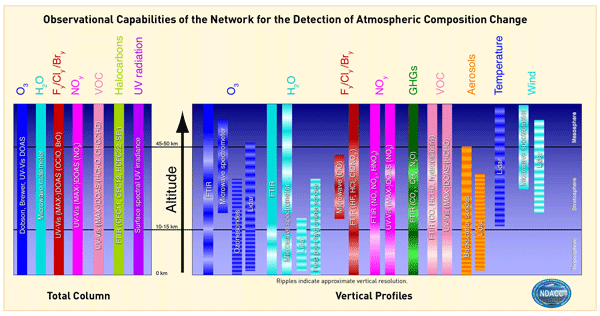
Irina Petropavlovskikh, Martine De Mazière, Anne M. Thompson, Jeannette D. Wild, James W. Hannigan, Henry B. Selkirk, Reem A. Hannun, Wolfgang Steinbrecht, Jean-Christopher Lambert, Roeland Van Malderen, Elizabeth Asher, Raul R. Cordero, Sophie Godin-Beekmann, Daan Hubert, Sergey Khaykin, Karin Kreher, Thierry Leblanc, Emmanuel Mahieu, Eliane Maillard Barras, Glen McConville, Gerald Nedoluha, Ivan Ortega, Alberto Redondas Marrero, Gunther Seckmeyer, Ryan M. Stauffer, Sarah A. Strode, Kim Strong, Takafumi Sugita, Michel Van Roozendael, Voltaire Velazco, Corinne Vigouroux, and Bärbel Vogel
Atmos. Chem. Phys., 26, 8637–8675, https://doi.org/10.5194/acp-26-8637-2026, https://doi.org/10.5194/acp-26-8637-2026, 2026
Short summary
Short summary
This introduction to the special issue "Achievements and perspectives of the Network for the Detection of Atmospheric Composition Change after 35 years of operation” provides an overview of important research findings achieved under the NDACC objectives. The future of NDACC is discussed in the light of the evolution of the scientific questions, evolving collaborations with partners and Cooperating Networks, and the current landscape of gaps in satellite and ground-based observations.
Hantao Wang, Marc L. Serre, Kazuyuki Miyazaki, Juan Cuesta, Jerry R. Ziemke, and J. Jason West
EGUsphere, https://doi.org/10.5194/egusphere-2026-2812, https://doi.org/10.5194/egusphere-2026-2812, 2026
This preprint is open for discussion and under review for Atmospheric Chemistry and Physics (ACP).
Short summary
Short summary
Ground-level ozone poses a significant health risk, yet ground monitors are sparse and satellites lack surface sensitivity. Here we develop a framework to infer surface ozone directly from satellite observations. By leveraging vertical profiles from balloons and aircraft and using chemical reanalysis vertical ratios, we significantly improved the accuracy of ozone estimates. Our 2005–2022 global dataset provides a valuable ground-level ozone background field for regions lacking ground networks.
Caroline Jonas, Corinne Vigouroux, Bavo Langerock, Robin Björklund, Anne Boynard, Thomas Carlund, Martine De Mazière, Peter Effertz, Quentin Errera, Matthias M. Frey, José Granville, James W. Hannigan, Arno Keppens, Nis Jepsen, Rigel Kivi, Norrie Lyall, Mathias Palm, Maxime Prignon, Viktoria F. Sofieva, Kimberly Strong, Tove Svendby, David Tarasick, Laura Thölix, Roeland Van Malderen, Yana Virolainen, Sibylle von Löwis, and Xiaoyi Zhao
Atmos. Chem. Phys., 26, 8089–8124, https://doi.org/10.5194/acp-26-8089-2026, https://doi.org/10.5194/acp-26-8089-2026, 2026
Short summary
Short summary
We study the evolution of ozone in the Arctic over the 2000–2024 period in the stratosphere (about 10 to 50 km) to assess the expected recovery of the ozone layer following the diminution of ozone-depleting substances. We merge ground-based data sets within spatially coherent regions to reduce uncertainties and we obtain positive trends for the total column everywhere in the Arctic and for the middle and upper stratosphere over Canada, but no significant trends in the lower stratosphere.
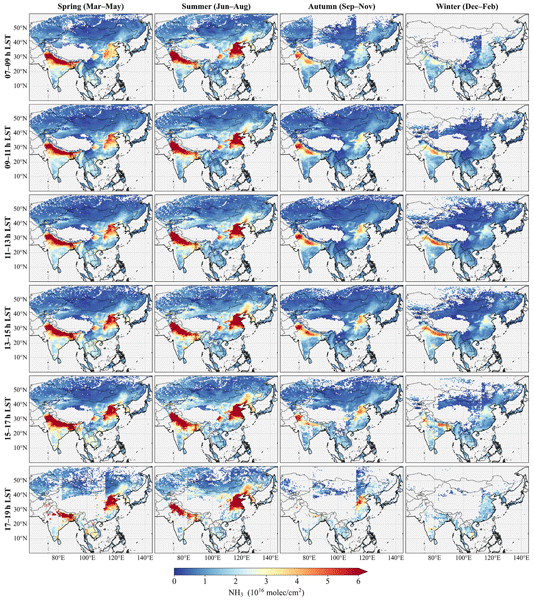
Mengya Sheng, Runyi Zhou, Jiancong Hua, Shan Han, Shangyi Liu, Lin Zhang, Wei Wang, Ruijun Dang, Hansen Cao, Zichong Chen, Yixuan Gu, Mingxu Liu, Lu Lee, Chengli Qi, Feng Lu, Changpei Han, Mark W. Shephard, Nadir Guendouz, Camille Viatte, Lieven Clarisse, Martin Van Damme, Cathy Clerbaux, and Zhao-Cheng Zeng
Atmos. Chem. Phys., 26, 7803–7826, https://doi.org/10.5194/acp-26-7803-2026, https://doi.org/10.5194/acp-26-7803-2026, 2026
Short summary
Short summary
Geostationary observations of NH3 provide an unprecedented opportunity to monitor spatial and temporal variations in emissions and their evolution throughout the day. Using 3 years of observations from FY-4B/GIIRS over East Asia, we demonstrated the enhanced capability of geostationary observations to identify emission sources and capture daytime variations associated with agricultural activities. This shows the potential of future geostationary satellites for monitoring air quality globally.
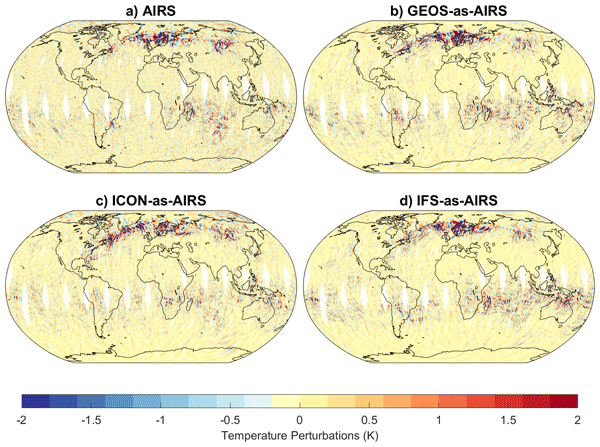
Phoebe Noble, Haruka Okui, Joan Alexander, Manfred Ern, Neil P. Hindley, Lars Hoffmann, Laura Holt, Annelize van Niekerk, Riwal Plougonven, Inna Polichtchouk, Claudia C. Stephan, Martina Bramberger, Milena Corcos, William Putnam, Christopher Kruse, and Corwin J. Wright
Atmos. Chem. Phys., 26, 7607–7630, https://doi.org/10.5194/acp-26-7607-2026, https://doi.org/10.5194/acp-26-7607-2026, 2026
Short summary
Short summary
Gravity waves are small-scale processes that drive the circulation in the middle and upper atmosphere. In this work, we assess 3 new high-resolution (3-5km horizontal resolution) models against satellite data. Generally, models capture the spatial patterns and represent stratospheric northern hemisphere mountain generated waves well. However, they still underestimate amplitudes globally and struggle with the representation of southern hemispheric convective waves.
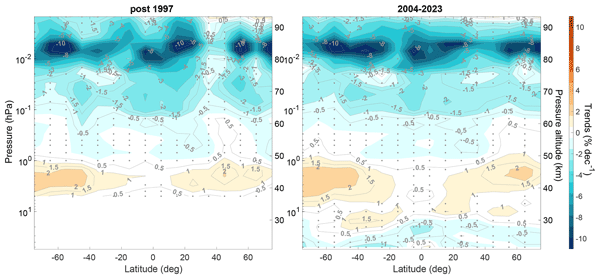
Monika E. Szelag, Viktoria F. Sofieva, Edward Malina, Pekka T. Verronen, Michelle L. Santee, Manuel López-Puertas, Bernd Funke, Gabriele Stiller, Alexandra Laeng, Kaley A. Walker, Patrick E. Sheese, Mark E. Hervig, and Benjamin T. Marshall
Atmos. Chem. Phys., 26, 7503–7522, https://doi.org/10.5194/acp-26-7503-2026, https://doi.org/10.5194/acp-26-7503-2026, 2026
Short summary
Short summary
We present a new global dataset of ozone profiles in the mesosphere and lower thermosphere, created by combining several satellite measurements covering more than three decades. Our results show that ozone is recovering in the stratosphere but decreasing in the mesosphere, with the strongest declines near the mesopause. This dataset provides a valuable resource for investigating long-term changes, improving model performance, and addressing an observational gap in the upper atmosphere.
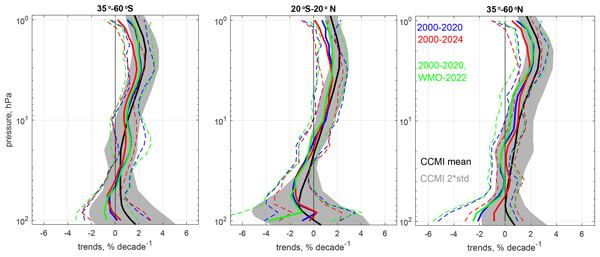
Viktoria F. Sofieva, Monika E. Szelag, Natalya A. Kramarova, Robert Damadeo, Wolfgang Steinbrecht, Irina Petropavlovskikh, Corinne Vigouroux, Eliane Maillard Barras, Daniel Zawada, Kleareti Tourpali, Stacey M. Frith, Jeannette D. Wild, Sean M. Davis, Carlo Arosio, Mark Weber, Alexei Rozanov, Brian Auffarth, Lucien Froidevaux, Ryan Fuller, Doug Degenstein, Kimberlee Dube, Peter Effertz, Thierry Leblanc, Gérard Ancellet, Sophie Godin-Beekmann, Glen McConville, Richard Querel, Dan Smale, Marie-Renee DeBacker, Emmanuel Mahieu, and Ralf Sussmann
Atmos. Chem. Phys., 26, 7387–7405, https://doi.org/10.5194/acp-26-7387-2026, https://doi.org/10.5194/acp-26-7387-2026, 2026
Short summary
Short summary
We present an updated evaluation of stratospheric ozone profile trends in the 60°S–60°N latitude range using long-term ground-based and satellite climate data records, as well as simulations by chemistry-climate models. Analyses confirm the statistically significant positive ozone trends in the upper stratosphere of ~1–3 % decade-1. The trends are close to zero in the middle stratosphere, and mostly negative in the lower stratosphere, but they are not statistically significant.
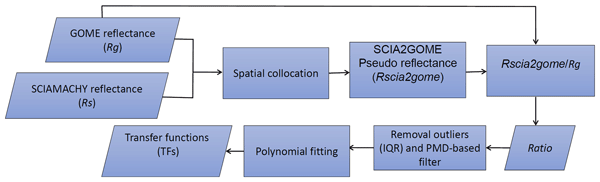
Abdalmenem Owda, Melanie Coldewey-Egbers, Sander Slijkhuis, Günter Lichtenberg, and Bernd Aberle
Atmos. Meas. Tech., 19, 3213–3229, https://doi.org/10.5194/amt-19-3213-2026, https://doi.org/10.5194/amt-19-3213-2026, 2026
Short summary
Short summary
This paper presents, for the first time, a method for cross-calibration of spectrometers using data from the Global Ozone Monitoring Experiment (GOME) and the Scanning Imaging Absorption Spectrometer for Atmospheric Chartography (SCIAMACHY), which operated concurrently for 10 years. The method addresses key challenges compared with optical imagery calibration and integrates Polarization Monitoring Device data to enhance the accuracy and reliability of the cross-calibration process.
Jay R. Herman and Jerald Ziemke
EGUsphere, https://doi.org/10.5194/egusphere-2026-1631, https://doi.org/10.5194/egusphere-2026-1631, 2026
Short summary
Short summary
The amount of reflected sunlight has been estimated by two independent satellite observations, EPIC (Earth Polychromatic Imaging Camera) and CERES (Clouds and the Earth's Radiant Energy System). Both measurements show that the amount of reflected light from the Earth has decreased since 2016 and with a faster rate of decrease since 2020. The decreased reflectivity enhances the effect of global warming from increased amounts of carbon dioxide and methane in the atmosphere.
Dylan B. A. Jones, Lucas Prates, Zhen Qu, William Y. Y. Cheng, Kazuyuki Miyazaki, Takashi Sekiya, Antje Inness, Rajesh Kumar, Xiao Tang, Helen Worden, Gerbrand Koren, and Vincent Huijnen
Atmos. Chem. Phys., 26, 6655–6682, https://doi.org/10.5194/acp-26-6655-2026, https://doi.org/10.5194/acp-26-6655-2026, 2026
Short summary
Short summary
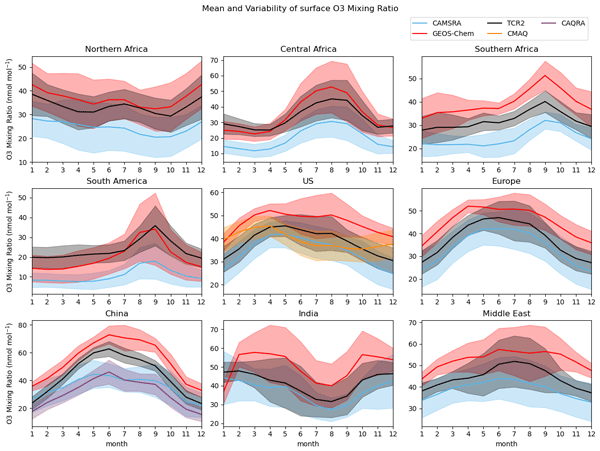
We evaluate five chemical reanalysis products to assess their potential to provide useful information on tropospheric ozone variability. We find that the reanalyses produce consistent information on ozone variations in the free troposphere, but have large discrepancies at the surface. The results suggests that improvements in the reanalyses are needed to better exploit the assimilated observations to enhance the utility of the reanalysis products at the surface.
Mian Chin, Jonathon S. Wright, Huisheng Bian, Qian Tan, Xiaohua Pan, Toshihiko Takemura, Hitoshi Matsui, Kostas Tsigaridis, Susanne Bauer, Paul Ginoux, Yiran Peng, Zengyuan Guo, Suvarna Fadnavis, Anton Laakso, John P. Burrows, Ghassan Taha, Jayanta Kar, Alexei Rozanov, Carlo Arosio, Landon Rieger, and Adam Bourassa
Atmos. Chem. Phys., 26, 6035–6059, https://doi.org/10.5194/acp-26-6035-2026, https://doi.org/10.5194/acp-26-6035-2026, 2026
Short summary
Short summary
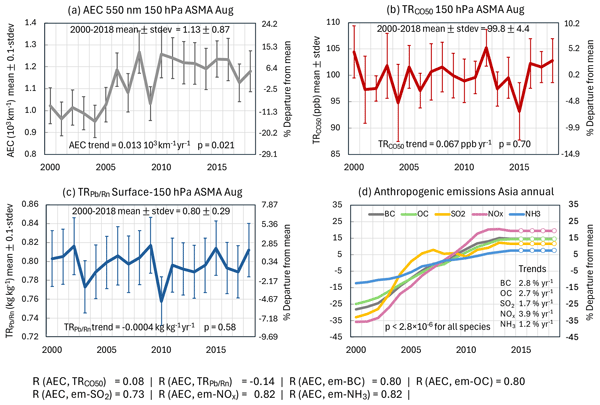
Aerosols in the upper troposphere influence weather and climate. The Asian summer monsoon efficiently transports surface pollutants upward, shaping aerosol amounts and variability in the upper troposphere. Using multiple global models, this study finds a summertime increase in upper-tropospheric aerosols at 1.2 % per year from 2000 to 2018 over Asia, consistent with rising pollutant emissions in Asia, while year-to-year changes are mainly driven by climate variability affecting monsoon dynamics.
Yen-Sen Lu, Lars Hoffmann, Xue Wu, Corwin J. Wright, and Neil P. Hindley
EGUsphere, https://doi.org/10.5194/egusphere-2026-1469, https://doi.org/10.5194/egusphere-2026-1469, 2026
Preprint archived
Short summary
Short summary
We studied how computer models represent atmospheric waves triggered by intense tropical cyclones. We used a real typhoon as a case study to test how different mathematical descriptions of the atmospheric model affect these wave patterns. We found that small changes in model settings significantly impact the predicted waves in the upper atmosphere. This research helps scientists choose better model configurations to improve weather forecasts and our understanding of atmospheric science.
Marta Abalos, Thomas Birner, Andreas Chrysanthou, Sean Davis, Alvaro de la Cámara, Sandip Dhomse, Hella Garny, Michaela I. Hegglin, Daan Hubert, Oksana Ivaniha, James Keeble, Marianna Linz, Daniele Minganti, Jessica Neu, David Plummer, Laura Saunders, Kasturi Shah, Gabriele Stiller, Kleareti Tourpali, Darryn Waugh, Nathan Luke Abraham, Hideharu Akiyoshi, Martyn P. Chipperfield, Patrick Jöckel, Béatrice Josse, Marion Marchand, Patrick Martineau, Olaf Morgenstern, Timofei Sukhodolov, Shingo Watanabe, and Yousuke Yamashita
Atmos. Chem. Phys., 26, 5249–5291, https://doi.org/10.5194/acp-26-5249-2026, https://doi.org/10.5194/acp-26-5249-2026, 2026
Short summary
Short summary
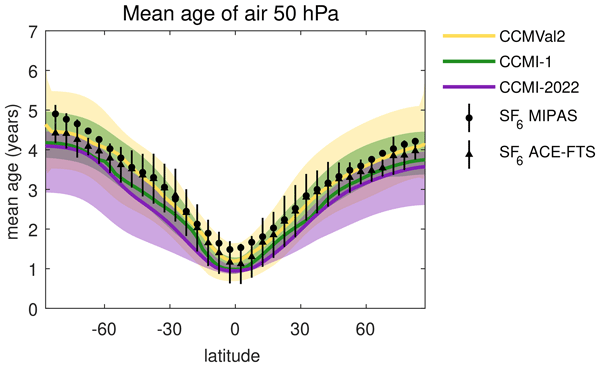
Accurate representation of stratospheric transport in Chemistry-Climate Models is essential for reliable climate projections. This study evaluates three generations of models using observational data and reanalyses, identifying persistent biases and their potential causes. Some biases persist or even worsen in newer models. These findings highlight key limitations and inform efforts to improve models and advance understanding through process-based studies and enhanced observations.
Shangyi Liu, Yingjun Zheng, Mengya Sheng, Lu Lee, Chengli Qi, Feng Lu, Bruno Franco, Lieven Clarisse, Cathy Clerbaux, Nicolas Theys, Jhoon Kim, and Zhao-Cheng Zeng
EGUsphere, https://doi.org/10.5194/egusphere-2026-1745, https://doi.org/10.5194/egusphere-2026-1745, 2026
Short summary
Short summary
Volcanic sulfur dioxide evolves rapidly after an eruption, which makes it challenging to monitor. Taking the 2024 Kanlaon eruption as a case study, we propose using a constellation of GEO and LEO satellites to track SO2 mass and layer height at high frequency. In particular, we present the first quantitative SO2 retrieval from a GEO hyperspectral infrared sounder (FY-4B/GIIRS). This research provides a vital blueprint for the future global monitoring of volcanic events.
Zhen Yang, Bärbel Vogel, Felix Plöger, Zhixuan Bai, Dan Li, Sabine Griessbach, Lars Hoffmann, Frank G. Wienhold, Elizabeth Asher, Alexandre A. Baron, Katie R. Smith, Troy Thornberry, Jianchun Bian, and Michaela I. Hegglin
Atmos. Chem. Phys., 26, 4749–4769, https://doi.org/10.5194/acp-26-4749-2026, https://doi.org/10.5194/acp-26-4749-2026, 2026
Short summary
Short summary
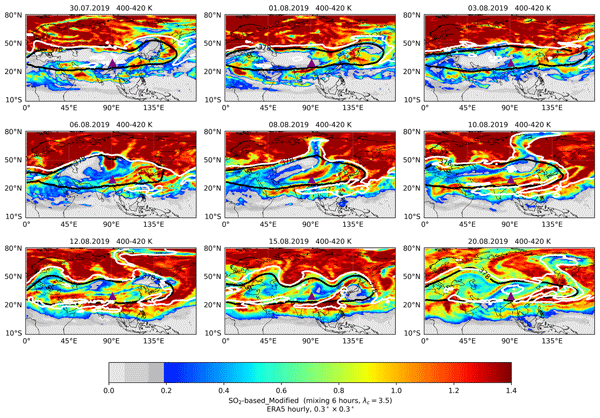
Balloon measurements over Lhasa, China, combined with satellite guided modelling, tracked aerosol from the 2019 Raikoke eruption through the Asian summer monsoon anticyclone. We find two altitude dependent routes into the anticyclone. It partly blocks transport but also allows entry and mixing, explaining the gradual weakening of the layers. Balloon measurements over Boulder, United States, outside the anticyclone, provide an independent check outside the region.
Sachiko Okamoto, Juan Cuesta, Gaëlle Dufour, Maxim Eremenko, Kazuyuki Miyazaki, Cathy Boonne, Hiroshi Tanimoto, Jeff Peischl, and Chelsea Thompson
Atmos. Chem. Phys., 26, 4685–4709, https://doi.org/10.5194/acp-26-4685-2026, https://doi.org/10.5194/acp-26-4685-2026, 2026
Short summary
Short summary
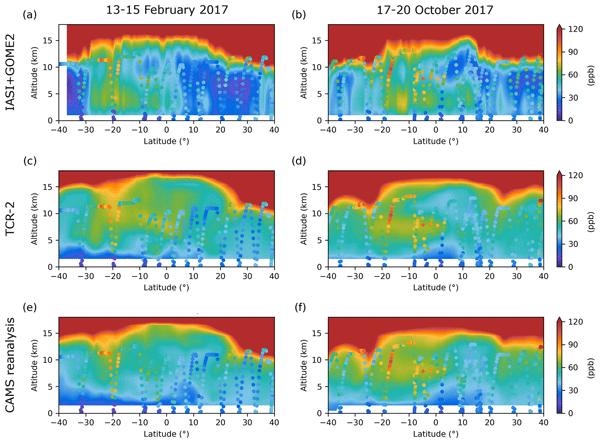
We analyse the distribution of tropospheric ozone over the Atlantic during February and October 2017 using a multispectral satellite synergism called IASI+GOME2, two chemistry reanalysis products and in situ airborne measurements. It reveals that a significant overestimation of two chemistry reanalysis products of lowermost troposphere ozone over the Atlantic in the Northern Hemisphere due to the overestimations of ozone precursors from anthropogenic sources from North America.
Anna Lange, Ulrike Niemeier, Alexei Rozanov, and Christian von Savigny
Atmos. Meas. Tech., 19, 1973–1989, https://doi.org/10.5194/amt-19-1973-2026, https://doi.org/10.5194/amt-19-1973-2026, 2026
Short summary
Short summary
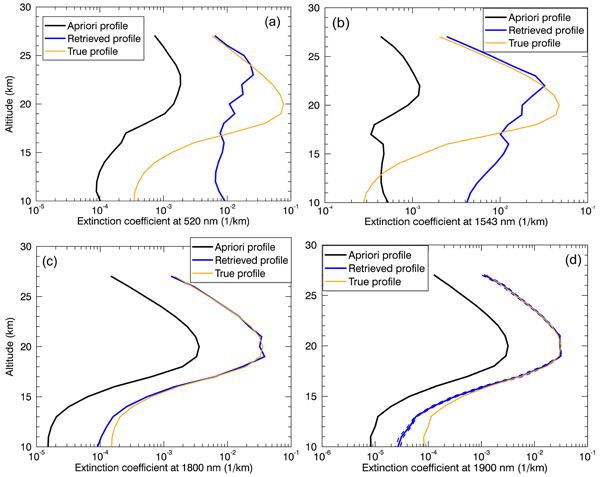
We investigate which wavelengths, depending on the latitude, are required for aerosol measurements after continuous sulphur injections of 30 Tg S yr-1 into the stratosphere, here at 19 km, in order to obtain physically meaningful stratospheric aerosol extinction profile retrieval results from the perspective of a typical satellite instrument with the so-called solar occultation geometry. Consistent with expectations, a longer wavelength is required for the latitude range of and near the injection.
Serena Di Pede, Erwin Loots, Antje Ludewig, Emiel van der Plas, Edward van Amelrooy, Mirna van Hoek, Maarten Sneep, Mark ter Linden, Arno Keppens, and J. Pepijn Veefkind
Atmos. Meas. Tech., 19, 1875–1899, https://doi.org/10.5194/amt-19-1875-2026, https://doi.org/10.5194/amt-19-1875-2026, 2026
Short summary
Short summary
TROPOMI (TROPOspheric Monitoring Instrument) provides daily ozone profile data from ultraviolet bands 1–2. Accurate radiometric calibration is critical below 300 nm where signals are low. A Level-2 soft calibration complements L1 calibration and reveals spectral, temporal, and across-track biases. Re-analysis of calibration data enabled improved L1 corrections to address remaining straylight and residual signal effects, reducing soft calibration magnitude by ~15–20 % and associated biases in L1b v3.0 and ozone processor v2.9.0.
Viktoria F. Sofieva, Alexandra Laeng, Thomas von Clarmann, Gabriele Stiller, Michael Kiefer, Johanna Tamminen, Alexey Rozanov, Carlo Arosio, Nathaniel Livesey, Robert Damadeo, Patrick Sheese, Kaley A. Walker, Doug Degenstein, Daniel Zawada, Natalya A. Kramarova, and Arno Keppens
Atmos. Meas. Tech., 19, 1837–1852, https://doi.org/10.5194/amt-19-1837-2026, https://doi.org/10.5194/amt-19-1837-2026, 2026
Short summary
Short summary
For satellite measurements of atmospheric composition, the random uncertainty estimates provided by retrieval algorithms might be imperfect due to various approximations used in the retrievals or presence of unknown error sources. This paper presents an overview of the methods used for validation of random uncertainty estimates. All methods discussed in this study are categorized, and assumptions and limitations of each method are discussed.

Clair Duchamp, Bernard Legras, Aurélien Podglajen, Pasquale Sellitto, Adam E. Bourassa, Alexei Rozanov, Ghassan Taha, and Daniel J. Zawada
Atmos. Meas. Tech., 19, 1675–1696, https://doi.org/10.5194/amt-19-1675-2026, https://doi.org/10.5194/amt-19-1675-2026, 2026
Short summary
Short summary
We analyzed the stratospheric aerosol plume from the 2022 Hunga eruption using satellite lidar data. We implemented a method to retrieve some aerosol properties, as standard products failed in this case. We found very high optical depth values in the days following the eruption, which decreased rapidly but remained elevated for months. Our results are broadly validated, though some satellite products underestimate the values due, in part, to the unusual aerosol size distribution in the plume.
África Barreto, Francisco Quirós, Omaira E. García, Jorge Pereda-de-Pablo, Daniel González-Fernández, Andrés Bedoya-Velásquez, Michael Sicard, Carmen Córdoba-Jabonero, Marco Iarlori, Vincenzo Rizi, Nickolay Krotkov, Simon Carn, Reijo Roininen, Antonio J. Molina-Arias, A. Fernando Almansa, Óscar Álvarez-Losada, Carla Aramo, Juan José Bustos, Romain Ceolato, Adolfo Comerón, Alicia Felpeto, Rosa D. García, Pablo González-Sicilia, Yenny González, Pascal Hedelt, Miguel Hernández, María-Ángeles López-Cayuela, Diego Loyola, Stavros Meletlidis, Constantino Muñoz-Porcar, Ermanno Pietropaolo, Ramón Ramos, Alejandro Rodríguez-Gómez, Roberto Román, Pedro M. Romero-Campos, Martin Stuefer, Carlos Toledano, and Ellsworth J. Welton
Atmos. Meas. Tech., 19, 1385–1406, https://doi.org/10.5194/amt-19-1385-2026, https://doi.org/10.5194/amt-19-1385-2026, 2026
Short summary
Short summary
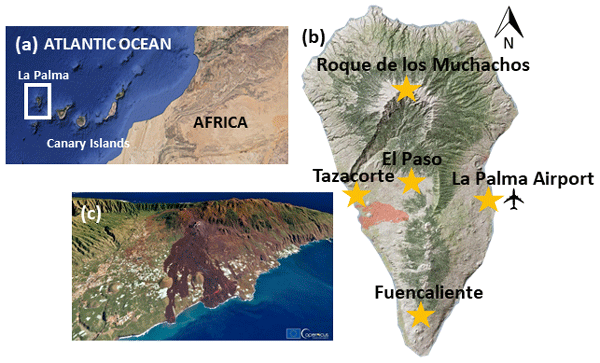
This manuscript describes the instrumental coverage deployed during the Tajogaite eruption (19 September–25 December 2021) by the Instituto Geográfico Nacional (IGN), the Spanish State Meteorological Agency (AEMET), and other Spanish members of ACTRIS (Aerosol, Clouds and Trace Gases Research Infrastructure) to monitor its atmospheric impact. Two complementary methods provide consistent plume height data for future operational surveillance.

Robert J. D. Spurr, Matt Christi, Nickolay A. Krotkov, Won-Ei Choi, Simon Carn, Can Li, Natalya Kramarova, David Haffner, Eun-Su Yang, Nick Gorkavyi, Alexander Vasilkov, Krzysztof Wargan, Omar Torres, Diego Loyola, Serena Di Pede, J. Pepijn Veefkind, Parker Case, Thomas Schroeder, and Pawan K. Bhartia
Atmos. Meas. Tech., 19, 993–1021, https://doi.org/10.5194/amt-19-993-2026, https://doi.org/10.5194/amt-19-993-2026, 2026
Short summary
Short summary
The submarine eruption of the Hunga volcano released water vapor and sulfur dioxide directly into the stratosphere. The sulfur dioxide formed sulfuric acid aerosols leading to increased scattering of solar ultraviolet radiation (UV), interfering with satellite ozone retrievals. We present a new satellite technique for deriving the amount and height of Hunga aerosols from UV measurements, revealing an unusually low sulfuric acid concentration due to the water-rich conditions in the fresh plume.
Christine Pohl, Ulrike Niemeier, Alexei Rozanov, Felix Wrana, and Christian von Savigny
EGUsphere, https://doi.org/10.5194/egusphere-2026-578, https://doi.org/10.5194/egusphere-2026-578, 2026
Short summary
Short summary
Satellite aerosol retrievals and models are crucial for studying volcanic impacts on the stratosphere but remain uncertain in perturbed situations due to assumed aerosol properties. SCIAMACHY retrievals are compared with ECHAM simulations following the Manam and Sarychev eruptions to evaluate both approaches. Agreement is found for Sarychev, while Manam shows differences. Comparisons with SAGE II support the SCIAMACHY retrievals. The importance of model setup details is highlighted.
Zitong Li, Kang Sun, Kaiyu Guan, Sheng Wang, Bin Peng, Lieven Clarisse, Martin Van Damme, Pierre-François Coheur, Karen Cady-Pereira, Mark W. Shephard, Mark Zondlo, and Daniel Moore
Atmos. Chem. Phys., 26, 703–721, https://doi.org/10.5194/acp-26-703-2026, https://doi.org/10.5194/acp-26-703-2026, 2026
Short summary
Short summary
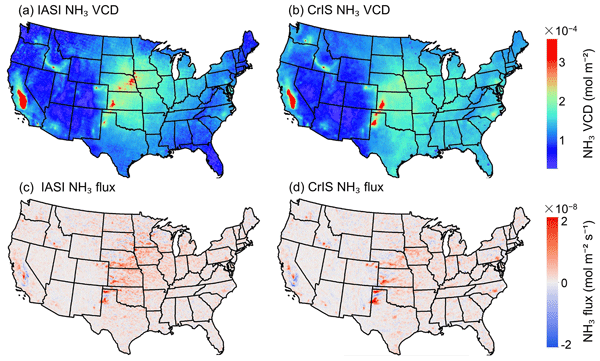
We estimate ammonia fluxes over the contiguous U.S. from 2008 to 2022 using a directional derivative approach applied to satellite observations from the Infrared Atmospheric Sounding Interferometer (IASI) and Cross-track Infrared Sounder (CrIS). The resulting flux estimates reveal pronounced seasonal and spatial patterns driven by agricultural activities and indicate substantial local deposition to surrounding vegetation, underscoring the need for improved monitoring and management strategies.
Juseon Bak, Arno Keppens, Daesung Choi, Sungjae Hong, Jae-Hwan Kim, Cheol-Hee Kim, Hyo-Jung Lee, Wonbae Jeon, Jhoon Kim, Ja-Ho Koo, Joowan Kim, Kanghyun Baek, Kai Yang, Xiong Liu, Gonzalo González Abad, Klaus-Peter Heue, Jean-Christopher Lambert, Yeonjin Jung, Hyunkee Hong, and Won-Jin Lee
Atmos. Meas. Tech., 19, 119–134, https://doi.org/10.5194/amt-19-119-2026, https://doi.org/10.5194/amt-19-119-2026, 2026
Short summary
Short summary
This study presents the first complete description of the operational version 3 ozone profile retrieval algorithm for the Geostationary Environment Monitoring Spectrometer (GEMS) and its performance characteristics. Improvements in radiometric and wavelength calibration reduce spectral fitting uncertainties and enhance agreement with ozonesonde profiles and Pandora total ozone measurements.
Anne M. Thompson, Ryan M. Stauffer, Debra E. Kollonige, Jerald R. Ziemke, Bryan J. Johnson, Gary A. Morris, Patrick Cullis, María Cazorla, Jorge Andres Diaz, Ankie Piters, Igor Nedeljkovic, Truus Warsodikromo, Francisco Raimundo Silva, E. Thomas Northam, Patrick Benjamin, Thumeka Mkololo, Tshidi Machinini, Christian Félix, Gonzague Romanens, Syprose Nyadida, Jérôme Brioude, Stéphanie Evan, Jean-Marc Metzger, Ambun Dindang, Yuzaimi B. Mahat, Mohan Kumar Sammathuria, Norazura Binti Zakaria, Ninong Komala, Shin-Ya Ogino, Nguyen Thi Quyen, Francis S. Mani, Miriama Vuiyasawa, David Nardini, Matthew Martinsen, Darryl T. Kuniyuki, Katrin Müller, Pawel Wolff, and Bastien Sauvage
Atmos. Chem. Phys., 25, 18475–18507, https://doi.org/10.5194/acp-25-18475-2025, https://doi.org/10.5194/acp-25-18475-2025, 2025
Short summary
Short summary
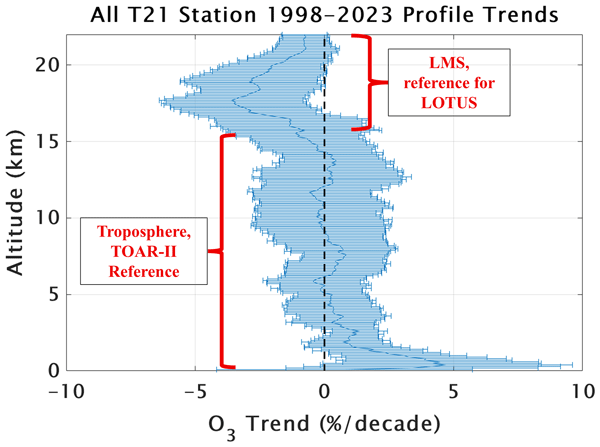
Ozone profile trends from SHADOZ sondes and IAGOS aircraft show that ozone in the tropical free troposphere (FT) is not growing fast except over equatorial SE Asia. This agrees with HEGIFTOM (Van Malderen et al., 2025), Stauffer et al. (2024) and Gaudel et al. (2024) TOAR-II papers. Other findings are as follows: (1) our trends are independent of method (QR, MLR) and (2) sample number (SN) (i.e., SHADOZ sampling is sufficient), and (3) all ground-based trends constitute the gold standard for satellite-derived trends.
Christian Löns, Ronald Eixmann, Christine Pohl, Alexei Rozanov, and Christian von Savigny
Atmos. Chem. Phys., 25, 18209–18225, https://doi.org/10.5194/acp-25-18209-2025, https://doi.org/10.5194/acp-25-18209-2025, 2025
Short summary
Short summary
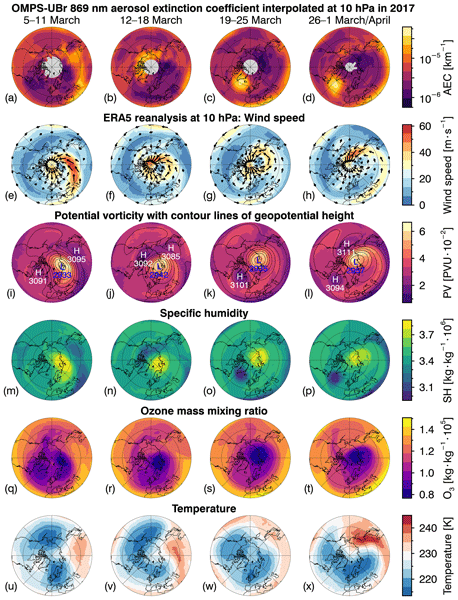
During the polar vortex season, so-called streamers can transport tropical air towards the pole in the middle stratosphere. This tropical air can get trapped in high-pressure areas at high latitudes after the polar vortex breaks down. In this study, remote sensing instruments are used to observe the course of such streamers by measuring the scattered solar radiation. Aerosols get transported to high latitudes at an altitude of about 25–35 km, increasing the aerosol mass there significantly.
Peter G. Berthelemy, Corwin J. Wright, Neil P. Hindley, Phoebe E. Noble, and Lars Hoffmann
Atmos. Chem. Phys., 25, 17595–17611, https://doi.org/10.5194/acp-25-17595-2025, https://doi.org/10.5194/acp-25-17595-2025, 2025
Short summary
Short summary
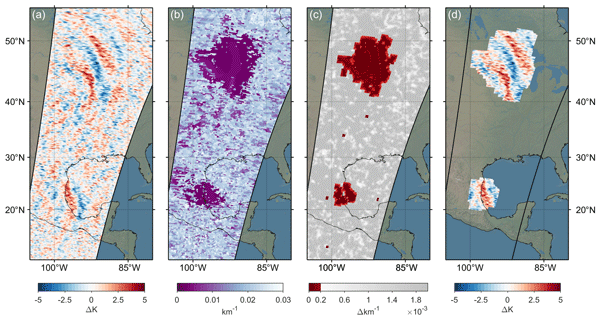
Atmospheric gravity waves are one of the key mechanisms for moving energy upwards through the atmosphere. We use temperature data to see them from a satellite, and here have made a new method to automatically detect them. This works by seeing if points next to each other are from the same wave. This is useful for creating larger gravity wave datasets without noise, which can then be used by climate forecasters to improve their understanding of the atmosphere.
Vinícius Ludwig-Barbosa, Johannes Kristoffer Nielsen, Kent Bækgaard Lauritsen, Brian Kerridge, Richard Siddans, and Tim Trent
EGUsphere, https://doi.org/10.5194/egusphere-2025-5578, https://doi.org/10.5194/egusphere-2025-5578, 2025
Short summary
Short summary
Water vapour data from microwave, infrared (RAL IMS), and radio occultation (GRAS-RO) instruments onboard Metop-A are compared during 9.5 years under a set of cloud scenarios, land and water coverage, and time of day, while accounting for differences in resolutions. RAL IMS is wetter and GRAS-RO is drier than ERA-Interim analysis and GRUAN (references) in the lower troposphere. Mid-troposphere statistics are similar, suggesting a potential synergy could be exploited in climate data records.
Shihan Sun, Paul I. Palmer, Richard Siddans, Brian J. Kerridge, Lucy Ventress, Achim Edtbauer, Akima Ringsdorf, Eva Y. Pfannerstill, and Jonathan Williams
Atmos. Chem. Phys., 25, 15801–15818, https://doi.org/10.5194/acp-25-15801-2025, https://doi.org/10.5194/acp-25-15801-2025, 2025
Short summary
Short summary
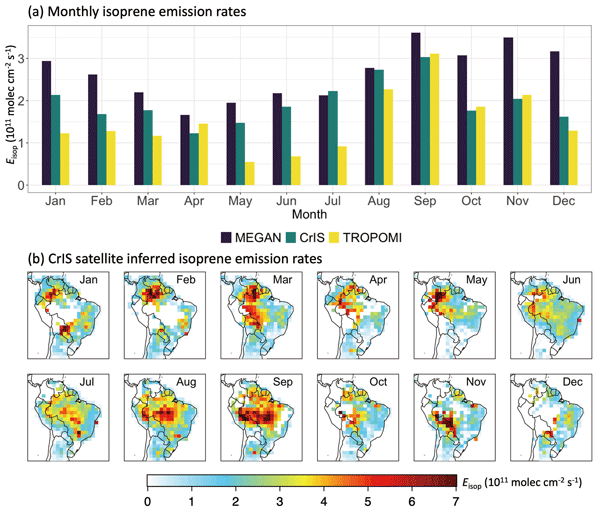
Isoprene released by plants can impact atmospheric chemistry and climate. The Amazon rainforest is a major source of isoprene. We derived isoprene emissions using satellite retrievals of isoprene columns and a chemical transport model. We evaluated our isoprene emission estimates using ground-based isoprene observations and satellite retrievals of formaldehyde. We found that using satellite retrievals of isoprene can help us better understand isoprene emissions over the Amazon.
Matilda A. Pimlott, Richard J. Pope, Brian J. Kerridge, Richard Siddans, Barry G. Latter, Wuhu Feng, and Martyn P. Chipperfield
Atmos. Chem. Phys., 25, 15991–16007, https://doi.org/10.5194/acp-25-15991-2025, https://doi.org/10.5194/acp-25-15991-2025, 2025
Short summary
Short summary
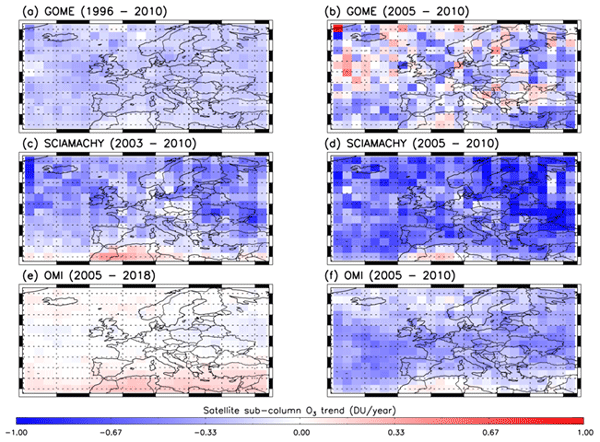
Tropospheric ozone (O3) is a harmful secondary atmospheric pollutant and an important greenhouse gas. Here, we present an in-depth analysis of lower-tropospheric sub-column O3 (LTCO3, surface – 6 km) records from three satellite products produced by the Rutherford Appleton Laboratory (RAL) over Europe between 1996 and 2017. Overall, we detect moderate negative trends in the satellite records, but corresponding model simulations and ozonesonde measurements show negligible trends.
Hantao Wang, Kazuyuki Miyazaki, Haitong Zhe Sun, Zhen Qu, Xiang Liu, Antje Inness, Martin Schultz, Sabine Schröder, Marc Serre, and J. Jason West
Atmos. Chem. Phys., 25, 15969–15990, https://doi.org/10.5194/acp-25-15969-2025, https://doi.org/10.5194/acp-25-15969-2025, 2025
Short summary
Short summary
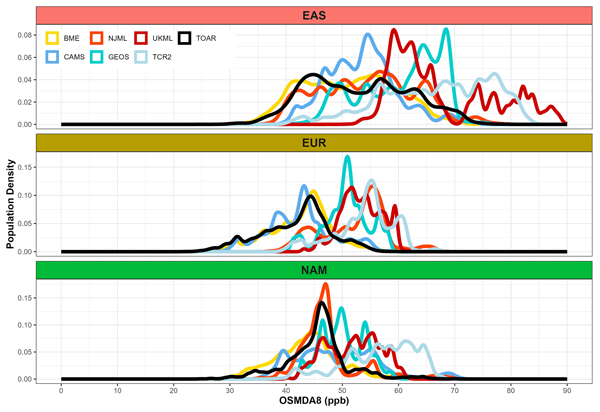
We compare six datasets of global ground-level ozone, developed using geostatistical, machine learning, or reanalysis methods. The datasets show important differences from one another in ozone magnitude, greater than 5 ppb, and trends, globally and regionally. Compared with measurements, performance varies among datasets, and most overestimate ozone, particularly at lower concentrations. These differences among datasets highlight uncertainties for applications to health and other impacts.
Melanie Coldewey-Egbers, Diego G. Loyola R., Barry Latter, Richard Siddans, Brian Kerridge, Daan Hubert, Michel van Roozendael, and Michael Eisinger
Atmos. Meas. Tech., 18, 5485–5505, https://doi.org/10.5194/amt-18-5485-2025, https://doi.org/10.5194/amt-18-5485-2025, 2025
Short summary
Short summary
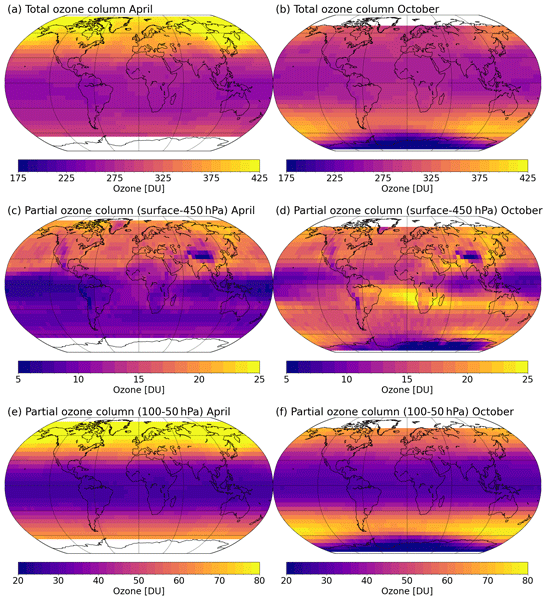
The Global Ozone Monitoring Experiment (GOME)-type Ozone Profile Essential Climate Variable (GOP-ECV) data record provides monthly mean ozone profiles with global coverage from 1995 to 2021 at a spatial resolution of 5° × 5°. Measurements from five nadir-viewing satellite sensors are first harmonized and then merged into a coherent record. The long-term stability of the data record is further improved through scaling the profiles using the GOME-type Total Ozone Essential Climate Variable (GTO-ECV) data record as a reference.

Harikrishnan Charuvil Asokan, Jochen Landgraf, Pepijn Veefkind, Stijn Dellaert, and André Butz
Atmos. Meas. Tech., 18, 5247–5264, https://doi.org/10.5194/amt-18-5247-2025, https://doi.org/10.5194/amt-18-5247-2025, 2025
Short summary
Short summary
Greenhouse gases like CO2 and CH4 drive climate change. Satellites enable monitoring of these emissions from space. Our simulations show that the upcoming Twin ANthropogenic Greenhouse gas Observers (TANGO) mission can detect about 500 targets per 4 d cycle under clear skies, but cloud cover reduces detection. Integrating cloud forecasts into TANGO’s manoeuvering boosts detection, highlighting its potential for improving global emission monitoring.
Pramod Kumar, Grégoire Broquet, Didier Hauglustaine, Maureen Beaudor, Lieven Clarisse, Martin Van Damme, Pierre Coheur, Anne Cozic, Bo Zheng, Beatriz Revilla Romero, Antony Delavois, and Philippe Ciais
Atmos. Chem. Phys., 25, 12379–12407, https://doi.org/10.5194/acp-25-12379-2025, https://doi.org/10.5194/acp-25-12379-2025, 2025
Short summary
Short summary
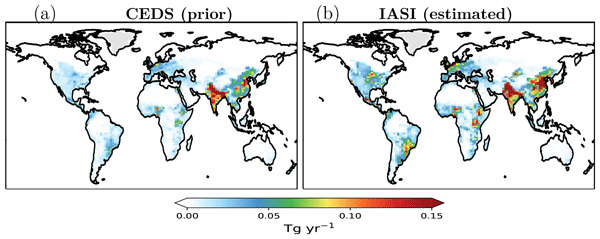
Global maps of the NH3 emissions over 2019–2022 are derived using IASI NH3 spaceborne observations, the LMDZ-INCA chemistry transport model at 1.27°×2.5° resolution, and the mass-balance approach. The average global NH3 emissions over the period are ~97 Tg NH3 yr-1, which is significantly higher than three reference inventories. The analysis provides confidence in the seasonal variability and regional budgets and provides new insights into NH3 emissions at global and regional scales.
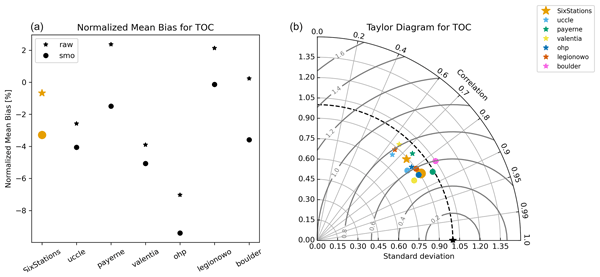
Gaëlle Dufour, Maxim Eremenko, Juan Cuesta, Gérard Ancellet, Michael Gill, Eliane Maillard Barras, and Roeland Van Malderen
Atmos. Meas. Tech., 18, 5049–5070, https://doi.org/10.5194/amt-18-5049-2025, https://doi.org/10.5194/amt-18-5049-2025, 2025
Short summary
Short summary
Tropospheric ozone from the three Infrared Atmospheric Sounding Interferometer (IASI) instruments is very consistent (<1 %). The validation against homogenized ozone sondes reveals an overall good agreement with slight biases (3 %–6 %) in tropospheric ozone and a possible temporal drift, but this is difficult to assess due to the limited number of sites. No specific trends are estimated for the tropospheric ozone column for the period 2008–2022, but persistent negative trends are observed in the lower troposphere.
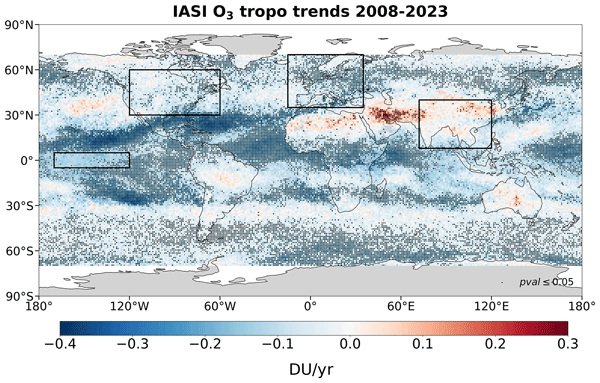
Anne Boynard, Catherine Wespes, Juliette Hadji-Lazaro, Selviga Sinnathamby, Daniel Hurtmans, Pierre-François Coheur, Marie Doutriaux-Boucher, Jacobus Onderwaater, Wolfgang Steinbrecht, Elyse A. Pennington, Kevin Bowman, and Cathy Clerbaux
Atmos. Chem. Phys., 25, 11719–11755, https://doi.org/10.5194/acp-25-11719-2025, https://doi.org/10.5194/acp-25-11719-2025, 2025
Short summary
Short summary
This study analyzes 16 years of global ozone data to assess its impact on air quality and climate. Using satellite measurements, we observed a global decrease in tropospheric ozone, particularly in tropical and European regions. The drop became more noticeable around 2020, partly due to reduced emissions during the pandemic. The study highlights the need for better data processing and integration to more accurately monitor ozone changes over time.
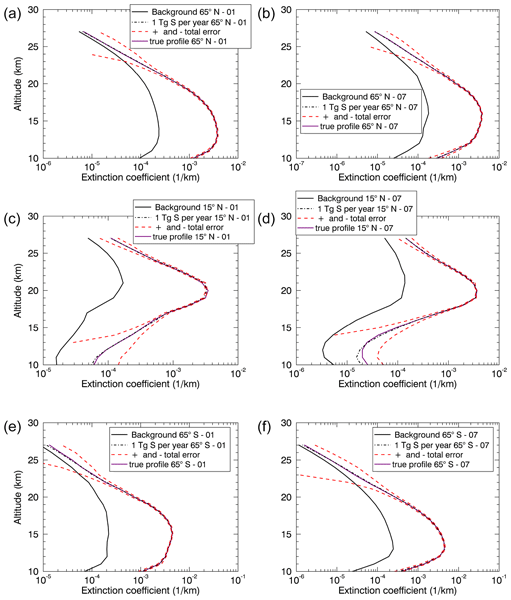
Anna Lange, Ulrike Niemeier, Alexei Rozanov, and Christian von Savigny
Atmos. Chem. Phys., 25, 11673–11688, https://doi.org/10.5194/acp-25-11673-2025, https://doi.org/10.5194/acp-25-11673-2025, 2025
Short summary
Short summary
Our paper investigates whether it is possible to observe continuous injections of 1 and 2 Tg S y-1 (sulfur per year) into the stratosphere with the currently active satellite occultation instruments. The calculations show that, considering the natural variability and the assumptions made here, the stratospheric aerosols formed from continuous emissions of 1 and 2 Tg S y-1 in the quasi-steady-state phase can be detected, which is not the case in the first month of the 2-year initial phase.
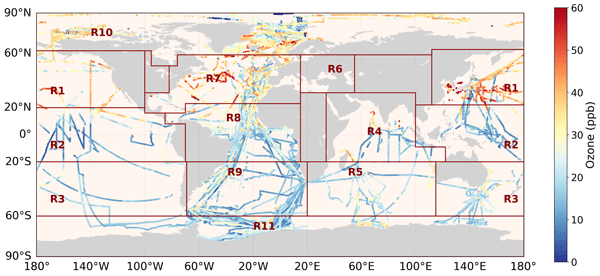
Yugo Kanaya, Roberto Sommariva, Alfonso Saiz-Lopez, Andrea Mazzeo, Theodore K. Koenig, Kaori Kawana, James E. Johnson, Aurélie Colomb, Pierre Tulet, Suzie Molloy, Ian E. Galbally, Rainer Volkamer, Anoop Mahajan, John W. Halfacre, Paul B. Shepson, Julia Schmale, Hélène Angot, Byron Blomquist, Matthew D. Shupe, Detlev Helmig, Junsu Gil, Meehye Lee, Sean C. Coburn, Ivan Ortega, Gao Chen, James Lee, Kenneth C. Aikin, David D. Parrish, John S. Holloway, Thomas B. Ryerson, Ilana B. Pollack, Eric J. Williams, Brian M. Lerner, Andrew J. Weinheimer, Teresa Campos, Frank M. Flocke, J. Ryan Spackman, Ilann Bourgeois, Jeff Peischl, Chelsea R. Thompson, Ralf M. Staebler, Amir A. Aliabadi, Wanmin Gong, Roeland Van Malderen, Anne M. Thompson, Ryan M. Stauffer, Debra E. Kollonige, Juan Carlos Gómez Martin, Masatomo Fujiwara, Katie Read, Matthew Rowlinson, Keiichi Sato, Junichi Kurokawa, Yoko Iwamoto, Fumikazu Taketani, Hisahiro Takashima, Mónica Navarro-Comas, Marios Panagi, and Martin G. Schultz
Earth Syst. Sci. Data, 17, 4901–4932, https://doi.org/10.5194/essd-17-4901-2025, https://doi.org/10.5194/essd-17-4901-2025, 2025
Short summary
Short summary
The first comprehensive dataset of tropospheric ozone over oceans/polar regions is presented, including 77 ship/buoy and 48 aircraft campaign observations (1977–2022, 0–5000 m altitude), supplemented by ozonesonde and surface data. Air masses isolated from land for 72+ hours are systematically selected as essentially oceanic. Among the 11 global regions, they show daytime decreases of 11–16 % in the tropics, while near-zero depletions are rare, unlike in the Arctic, implying different mechanisms.
Tristan Millet, Hassan Bencherif, Thierry Portafaix, Nelson Bègue, Alexandre Baron, Valentin Duflot, Cathy Clerbaux, Pierre-François Coheur, Andrea Pazmiño, Michaël Sicard, Anne Boynard, Jean-Marc Metzger, Guillaume Payen, Nicolas Marquestaut, and Sophie Godin-Beekmann
Atmos. Chem. Phys., 25, 10887–10905, https://doi.org/10.5194/acp-25-10887-2025, https://doi.org/10.5194/acp-25-10887-2025, 2025
Short summary
Short summary
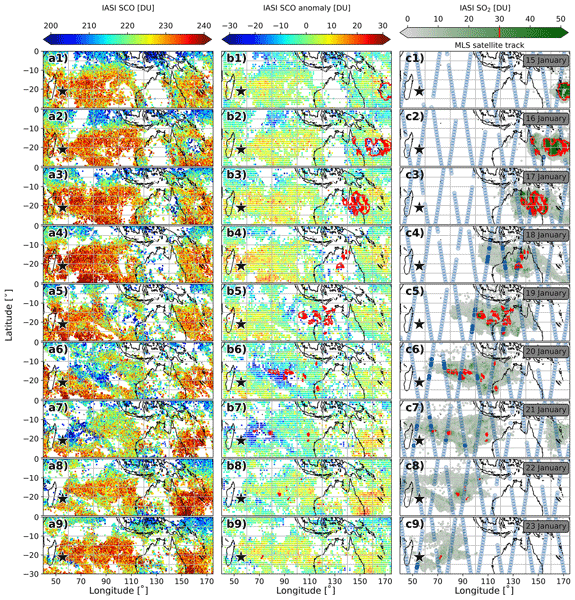
On 15 January 2022, the Hunga volcano erupted, releasing sulfur dioxide and water vapor into the stratosphere, impacting ozone levels over the Indian Ocean. Satellite data show the presence of a transient ozone depletion event related to the water vapor anomalies and sulfate aerosol clouds. Ozone reduction was confined to two distinct layers. On 21 January, the fifth percentile of total and stratospheric column ozone anomalies reached −18.6 and −14.5 DU, respectively.
Lara Noppen, Lieven Clarisse, Frederik Tack, Thomas Ruhtz, Martin Van Damme, Michel Van Roozendael, Dirk Schuettemeyer, and Pierre Coheur
Atmos. Meas. Tech., 18, 4183–4205, https://doi.org/10.5194/amt-18-4183-2025, https://doi.org/10.5194/amt-18-4183-2025, 2025
Short summary
Short summary
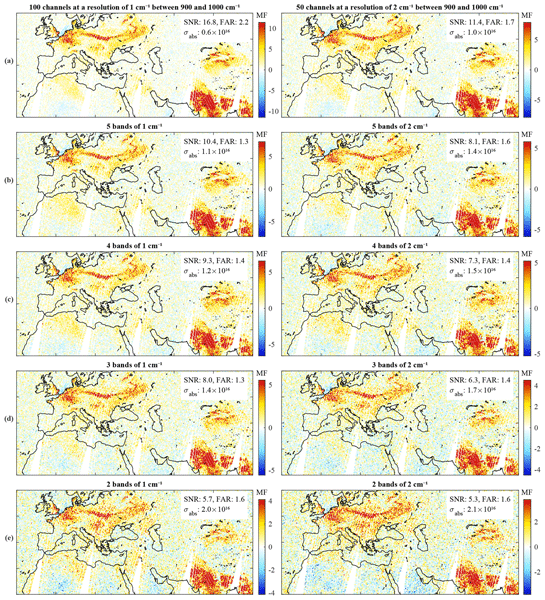
Current infrared satellite sounders offer high spectral but low spatial resolution, limiting their ability to quantify atmospheric ammonia (NH3) at small scales. Through simulations and analysis of real data, we show that NH3 can be measured effectively from spectra with reduced resolution, either in a contiguous spectral range or in select well-chosen bands. This approach opens possibilities for the development of smaller dedicated instruments for observing NH3 at high spatial resolution.
Sanjeevani Panditharatne, Caroline Cox, Rui Song, Richard Siddans, Richard Bantges, Jonathan Murray, Stuart Fox, Cathryn Fox, and Helen Brindley
Atmos. Chem. Phys., 25, 9981–9998, https://doi.org/10.5194/acp-25-9981-2025, https://doi.org/10.5194/acp-25-9981-2025, 2025
Short summary
Short summary
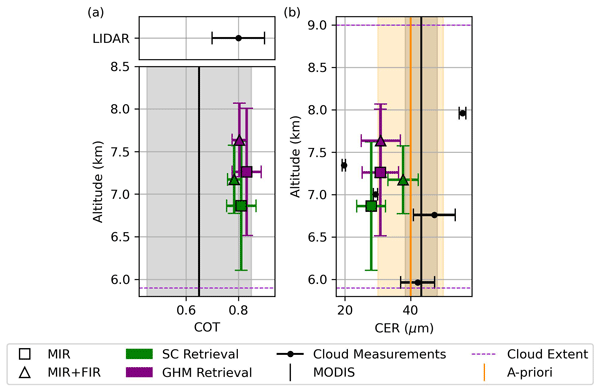
Upwelling radiation with wavelengths between 15 and 100 µm is theorised to be highly sensitive to the properties of ice clouds, particularly the shape of the ice crystals. We exploit this sensitivity and perform the first retrieval of ice cloud properties using these wavelengths from an observation taken on an aircraft and evaluate it against measurements of the cloud’s properties.
Julia Bruckert, Simran Chopra, Richard Siddans, Charlotte Wedler, and Gholam Ali Hoshyaripour
Atmos. Chem. Phys., 25, 9859–9884, https://doi.org/10.5194/acp-25-9859-2025, https://doi.org/10.5194/acp-25-9859-2025, 2025
Short summary
Short summary
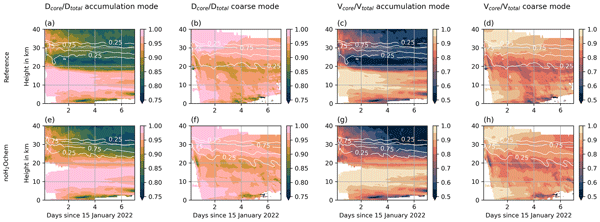
The 2022 Hunga eruption emitted about 150 Tg of water vapor into the stratosphere. Here, we show that the water vapor injection not only accelerates SO2 oxidation and sulfate production but also increases the aging of ash (coating of ash by sulfate). Our study shows that aerosol aging alone does not explain the rapid loss of ash after the Hunga eruption as observed by satellite instruments. However, some ash might be masked in the observation due to the strong coating.
Roeland Van Malderen, Zhou Zang, Kai-Lan Chang, Robin Björklund, Owen R. Cooper, Jane Liu, Eliane Maillard Barras, Corinne Vigouroux, Irina Petropavlovskikh, Thierry Leblanc, Valérie Thouret, Pawel Wolff, Peter Effertz, Audrey Gaudel, David W. Tarasick, Herman G. J. Smit, Anne M. Thompson, Ryan M. Stauffer, Debra E. Kollonige, Deniz Poyraz, Gérard Ancellet, Marie-Renée De Backer, Matthias M. Frey, James W. Hannigan, José L. Hernandez, Bryan J. Johnson, Nicholas Jones, Rigel Kivi, Emmanuel Mahieu, Isamu Morino, Glen McConville, Katrin Müller, Isao Murata, Justus Notholt, Ankie Piters, Maxime Prignon, Richard Querel, Vincenzo Rizi, Dan Smale, Wolfgang Steinbrecht, Kimberly Strong, and Ralf Sussmann
Atmos. Chem. Phys., 25, 9905–9935, https://doi.org/10.5194/acp-25-9905-2025, https://doi.org/10.5194/acp-25-9905-2025, 2025
Short summary
Short summary
Tropospheric ozone is an important greenhouse gas and an air pollutant whose distribution and time variability are mainly governed by anthropogenic emissions and dynamics. In this paper, we assess regional trends of tropospheric ozone column amounts, based on two different approaches of merging or synthesizing ground-based observations and their trends within specific regions. Our findings clearly demonstrate regional trend differences but also consistently higher pre-COVID than post-COVID trends.
Huan Yu, Isabelle De Smedt, Nicolas Theys, Maarten Sneep, Pepijn Veefkind, and Michel Van Roozendael
Atmos. Meas. Tech., 18, 4131–4163, https://doi.org/10.5194/amt-18-4131-2025, https://doi.org/10.5194/amt-18-4131-2025, 2025
Short summary
Short summary
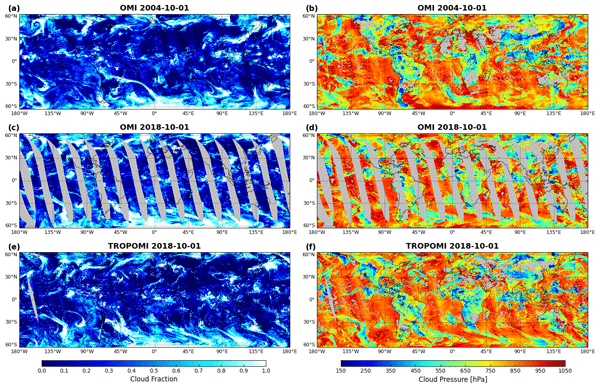
We introduce a new cloud retrieval algorithm using the O2–O2 absorption band at 477 nm to generate harmonized cloud datasets from OMI and TROPOMI. The algorithm improves upon the OMI O2–O2 operational cloud algorithm in several aspects. The new approach improves consistency in cloud parameters and NO2 retrievals between two sensors.
Wanmin Gong, Stephen R. Beagley, Kenjiro Toyota, Henrik Skov, Jesper Heile Christensen, Alex Lupu, Diane Pendlebury, Junhua Zhang, Ulas Im, Yugo Kanaya, Alfonso Saiz-Lopez, Roberto Sommariva, Peter Effertz, John W. Halfacre, Nis Jepsen, Rigel Kivi, Theodore K. Koenig, Katrin Müller, Claus Nordstrøm, Irina Petropavlovskikh, Paul B. Shepson, William R. Simpson, Sverre Solberg, Ralf M. Staebler, David W. Tarasick, Roeland Van Malderen, and Mika Vestenius
Atmos. Chem. Phys., 25, 8355–8405, https://doi.org/10.5194/acp-25-8355-2025, https://doi.org/10.5194/acp-25-8355-2025, 2025
Short summary
Short summary
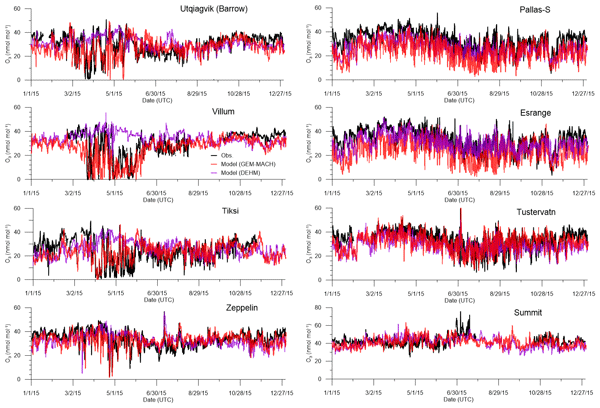
This study showed that the springtime O3 depletion plays a critical role in driving the surface O3 seasonal cycle in the central Arctic. The O3 depletion events, while occurring most notably within the lowest few hundred metres above the Arctic Ocean, can induce a 5–7 % loss in the pan-Arctic tropospheric O3 burden during springtime. The study also found enhancements in O3 and NOy (mostly peroxyacetyl nitrate) concentrations in the Arctic due to northern boreal wildfires, particularly at higher altitudes.
Suvarna Fadnavis, Yasin Elshorbany, Jerald Ziemke, Brice Barret, Alexandru Rap, P. R. Satheesh Chandran, Richard J. Pope, Vijay Sagar, Domenico Taraborrelli, Eric Le Flochmoen, Juan Cuesta, Catherine Wespes, Folkert Boersma, Isolde Glissenaar, Isabelle De Smedt, Michel Van Roozendael, Hervé Petetin, and Isidora Anglou
Atmos. Chem. Phys., 25, 8229–8254, https://doi.org/10.5194/acp-25-8229-2025, https://doi.org/10.5194/acp-25-8229-2025, 2025
Short summary
Short summary
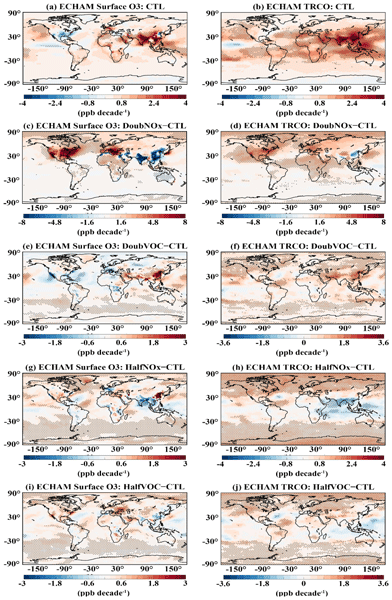
Satellites and model simulations show enhancement in tropospheric ozone, which is highly impacted by human-produced nitrous oxides compared to volatile organic compounds. The increased amount of ozone enhances ozone radiative forcing. The ozone enhancement and associated radiative forcing are the highest over South and East Asia. The emissions of nitrous oxides show a higher influence on shifting ozone photochemical regimes than volatile organic compounds.
Farahnaz Khosrawi and Lars Hoffmann
EGUsphere, https://doi.org/10.5194/egusphere-2025-3147, https://doi.org/10.5194/egusphere-2025-3147, 2025
Preprint archived
Short summary
Short summary
Computer performance has increased immensely in recent years, but the ability to store data has only increased slightly. This presents scientists with major challenges. Many compression methods have been developed in recent years with which data can be stored either lossless or lossy. Here we test three of these methods: two lossy compression methods and one lossless compressor. Our study shows that compression is a valuable tool to cope with the high demand of disk space from these data sets.
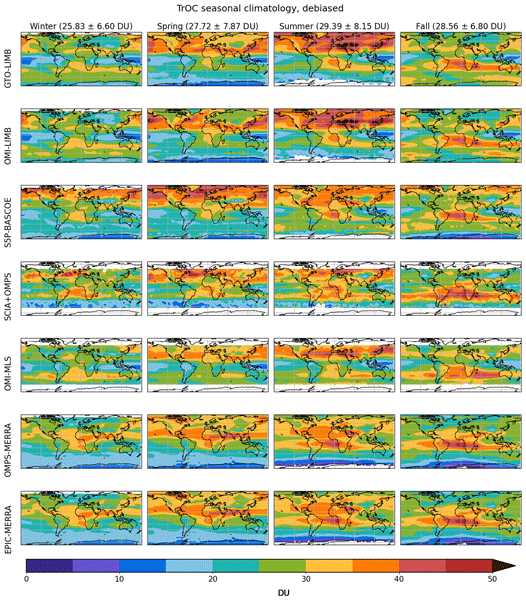
Carlo Arosio, Viktoria Sofieva, Andrea Orfanoz-Cheuquelaf, Alexei Rozanov, Klaus-Peter Heue, Diego Loyola, Edward Malina, Ryan M. Stauffer, David Tarasick, Roeland Van Malderen, Jerry R. Ziemke, and Mark Weber
Atmos. Meas. Tech., 18, 3247–3265, https://doi.org/10.5194/amt-18-3247-2025, https://doi.org/10.5194/amt-18-3247-2025, 2025
Short summary
Short summary
Tropospheric ozone affects air quality and climate, being a pollutant and a greenhouse gas. We analyze satellite data of tropospheric ozone columns obtained by combining two types of observations: one providing stratospheric and the other total ozone. We compare common climatological features and study the influence of the tropopause (troposphere to stratosphere boundary) on the results. We also examine trends over the last 20 years and compare satellite data with ozonesondes to identify drifts.
Rimal Abeed, Audrey Fortems-Cheiney, Grégoire Broquet, Robin Plauchu, Isabelle Pison, Antoine Berchet, Elise Potier, Bo Zheng, Gaëlle Dufour, Adriana Coman, Dilek Savas, Guillaume Siour, Henk Eskes, Beatriz Revilla-Romero, Antony Delavois, and Philippe Ciais
EGUsphere, https://doi.org/10.5194/egusphere-2025-3329, https://doi.org/10.5194/egusphere-2025-3329, 2025
Preprint archived
Short summary
Short summary
We investigate changes in air pollution from nitrogen oxides NOx (=NO+NO2) across Eastern China from 2019 to 2021, using a satellite-based modelling approach. Our results show a drop in pollution in 2020 in most provinces, and along the China-Mongolia-Russia Economic Corridor. The analysis also captures emission variations during the Lunar New Year. By estimating emissions at the provincial level, the study provides insights into how major events and policy measures influence local air quality.
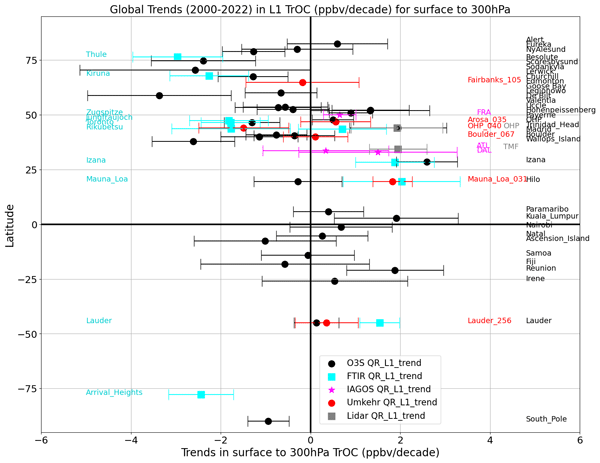
Roeland Van Malderen, Anne M. Thompson, Debra E. Kollonige, Ryan M. Stauffer, Herman G. J. Smit, Eliane Maillard Barras, Corinne Vigouroux, Irina Petropavlovskikh, Thierry Leblanc, Valérie Thouret, Pawel Wolff, Peter Effertz, David W. Tarasick, Deniz Poyraz, Gérard Ancellet, Marie-Renée De Backer, Stéphanie Evan, Victoria Flood, Matthias M. Frey, James W. Hannigan, José L. Hernandez, Marco Iarlori, Bryan J. Johnson, Nicholas Jones, Rigel Kivi, Emmanuel Mahieu, Glen McConville, Katrin Müller, Tomoo Nagahama, Justus Notholt, Ankie Piters, Natalia Prats, Richard Querel, Dan Smale, Wolfgang Steinbrecht, Kimberly Strong, and Ralf Sussmann
Atmos. Chem. Phys., 25, 7187–7225, https://doi.org/10.5194/acp-25-7187-2025, https://doi.org/10.5194/acp-25-7187-2025, 2025
Short summary
Short summary
Tropospheric ozone is an important greenhouse gas and is an air pollutant. The time variability of tropospheric ozone is mainly driven by anthropogenic emissions. In this paper, we study the distribution and time variability of ozone from harmonized ground-based observations from five different measurement techniques. Our findings provide clear standard references for atmospheric models and evolving tropospheric ozone satellite data for the 2000–2022 period.
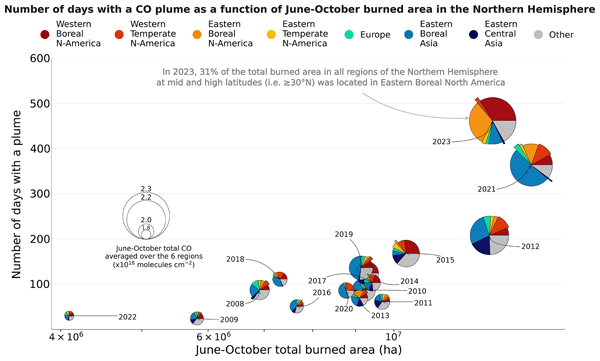
Antoine Ehret, Solène Turquety, Maya George, Juliette Hadji-Lazaro, and Cathy Clerbaux
Atmos. Chem. Phys., 25, 6365–6394, https://doi.org/10.5194/acp-25-6365-2025, https://doi.org/10.5194/acp-25-6365-2025, 2025
Short summary
Short summary
Biomass burning has a considerable effect on the chemical composition of the atmosphere and climate, due to the emission of trace gases and aerosols. We examine the relationship between fire variability and the values of carbon monoxide and aerosol optical depth observed by satellites. The observed increase in wildfires has led to a corresponding rise in the mean and extreme values of carbon monoxide and aerosol optical depth during the summer and early autumn across the Northern Hemisphere.
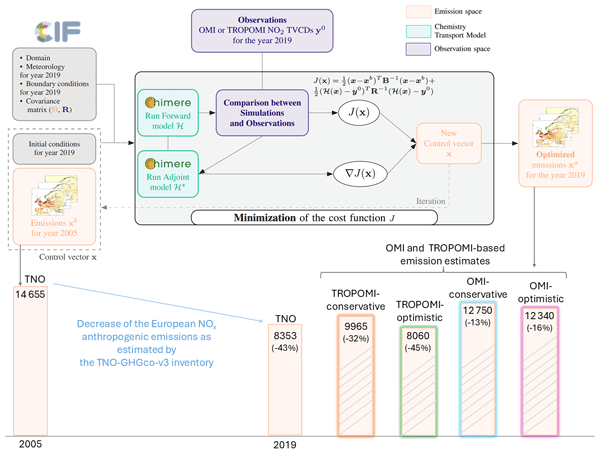
Audrey Fortems-Cheiney, Grégoire Broquet, Elise Potier, Antoine Berchet, Isabelle Pison, Adrien Martinez, Robin Plauchu, Rimal Abeed, Aurélien Sicsik-Paré, Gaelle Dufour, Adriana Coman, Dilek Savas, Guillaume Siour, Henk Eskes, Hugo A. C. Denier van der Gon, and Stijn N. C. Dellaert
Atmos. Chem. Phys., 25, 6047–6068, https://doi.org/10.5194/acp-25-6047-2025, https://doi.org/10.5194/acp-25-6047-2025, 2025
Short summary
Short summary
This study assesses the potential of the Ozone Monitoring Instrument (OMI) and the TROPOspheric Monitoring Instrument (TROPOMI) satellite observations to inform about the decrease in anthropogenic emissions of nitrogen oxides (NOx) in 2019 compared with 2005 at regional to national scales in Europe. Both the OMI and TROPOMI inversions show decreases in European NOx anthropogenic emission budgets in 2019 compared to 2005 but with different magnitudes.
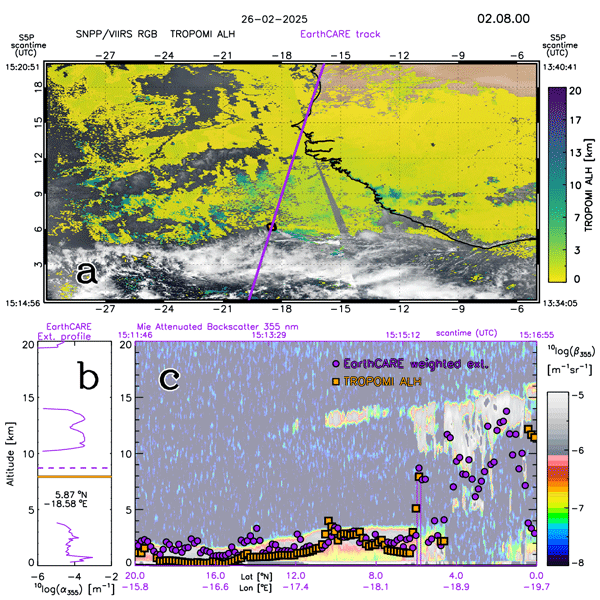
Martin de Graaf, Maarten Sneep, Mark ter Linden, L. Gijsbert Tilstra, David P. Donovan, Gerd-Jan van Zadelhoff, and J. Pepijn Veefkind
Atmos. Meas. Tech., 18, 2553–2571, https://doi.org/10.5194/amt-18-2553-2025, https://doi.org/10.5194/amt-18-2553-2025, 2025
Short summary
Short summary
The aerosol layer height (ALH) from the TROPOspheric Monitoring Instrument (TROPOMI) has been constantly improved since its release in 2019. Over bright surfaces, fitting the albedo improved the retrieval, as shown for a set of situations, ranging from multiple layers of smoke to thick desert dust plumes and low-altitude industrial pollution. The latest results of the operational ALH are compared to profiles from the ATmospheric LIDar (ATLID) on board the recently launched EarthCARE mission.
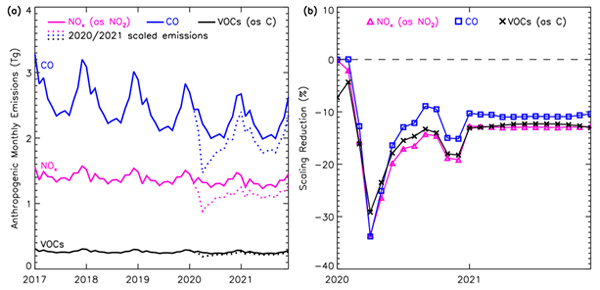
Matilda A. Pimlott, Richard J. Pope, Brian J. Kerridge, Richard Siddans, Barry G. Latter, Lucy J. Ventress, Wuhu Feng, and Martyn P. Chipperfield
Atmos. Chem. Phys., 25, 4391–4401, https://doi.org/10.5194/acp-25-4391-2025, https://doi.org/10.5194/acp-25-4391-2025, 2025
Short summary
Short summary
Globally, lockdowns were implemented to limit the spread of COVID-19, leading to a decrease in emissions of key air pollutants. Here, we use novel satellite data and a chemistry model to investigate the impact of the pandemic on tropospheric ozone (O3), a key pollutant, in 2020. Overall, we found substantial decreases of up to 20 %, two-thirds of which came from emission reductions, while one-third was due to a decrease in the stratospheric O3 flux into the troposphere.
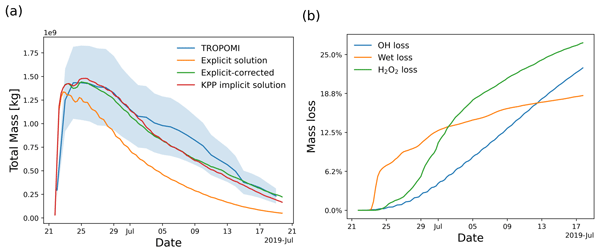
Mingzhao Liu, Lars Hoffmann, Jens-Uwe Grooß, Zhongyin Cai, Sabine Grießbach, and Yi Heng
Atmos. Chem. Phys., 25, 4403–4418, https://doi.org/10.5194/acp-25-4403-2025, https://doi.org/10.5194/acp-25-4403-2025, 2025
Short summary
Short summary
We studied the transport and chemical decomposition of volcanic SO2, focusing on the 2019 Raikoke event. By comparing two different chemistry modeling schemes, we found that including complex chemical reactions leads to a more accurate prediction of how long SO2 stays in the atmosphere. This research helps improve our understanding of volcanic pollution and its impact on air quality and climate, providing better tools for scientists to track and predict the movement of these pollutants.
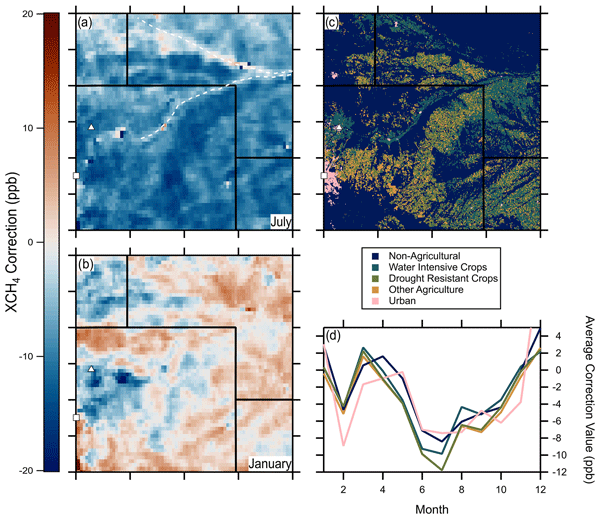
Alexander C. Bradley, Barbara Dix, Fergus Mackenzie, J. Pepijn Veefkind, and Joost A. de Gouw
Atmos. Meas. Tech., 18, 1675–1687, https://doi.org/10.5194/amt-18-1675-2025, https://doi.org/10.5194/amt-18-1675-2025, 2025
Short summary
Short summary
Currently, measurement of methane from the TROPOMI satellite is biased with respect to surface reflectance. This study demonstrates a new method of correcting for this bias on a seasonal timescale to allow for differences in surface reflectance in areas of intense agriculture where growing seasons may introduce a reflectance bias. We have successfully implemented this technique in the Denver–Julesburg basin, where agriculture and methane extraction infrastructure is often co-located.
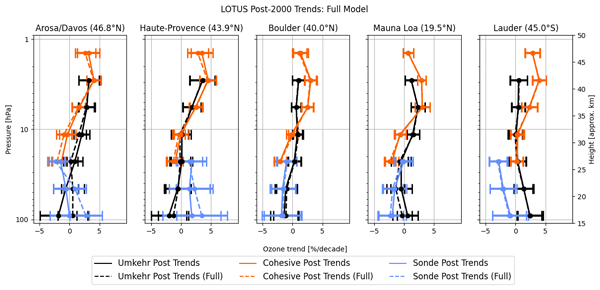
Irina Petropavlovskikh, Jeannette D. Wild, Kari Abromitis, Peter Effertz, Koji Miyagawa, Lawrence E. Flynn, Eliane Maillard Barras, Robert Damadeo, Glen McConville, Bryan Johnson, Patrick Cullis, Sophie Godin-Beekmann, Gerard Ancellet, Richard Querel, Roeland Van Malderen, and Daniel Zawada
Atmos. Chem. Phys., 25, 2895–2936, https://doi.org/10.5194/acp-25-2895-2025, https://doi.org/10.5194/acp-25-2895-2025, 2025
Short summary
Short summary
Observational records show that stratospheric ozone is recovering in accordance with the implementation of the Montreal Protocol and its amendments. Natural ozone variability complicates the detection of small trends. This study optimizes a statistical model fit in ground-station-based observational records by adding parameters that interpret seasonal and long-term changes in atmospheric circulation and airmass mixing, which reduces uncertainties in detecting the stratospheric ozone recovery.
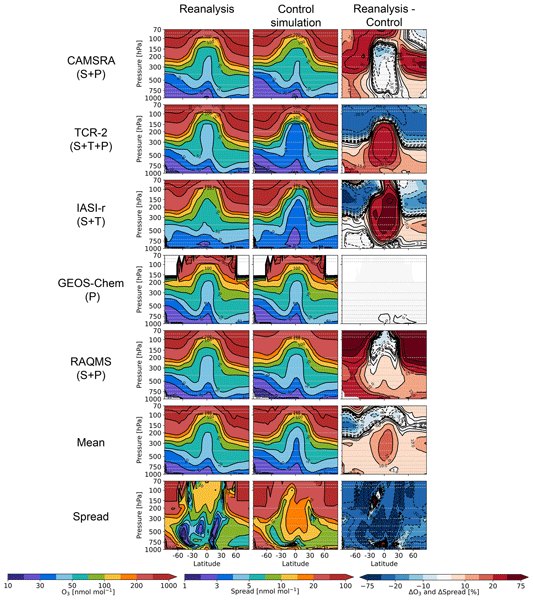
Takashi Sekiya, Emanuele Emili, Kazuyuki Miyazaki, Antje Inness, Zhen Qu, R. Bradley Pierce, Dylan Jones, Helen Worden, William Y. Y. Cheng, Vincent Huijnen, and Gerbrand Koren
Atmos. Chem. Phys., 25, 2243–2268, https://doi.org/10.5194/acp-25-2243-2025, https://doi.org/10.5194/acp-25-2243-2025, 2025
Short summary
Short summary
Five global chemical reanalysis datasets were used to assess the relative impacts of assimilating satellite ozone and its precursor measurements on tropospheric ozone analyses for 2010. The multiple reanalysis system comparison allows an evaluation of the dependency of the impacts on different reanalysis systems. The results suggested the importance of satellite ozone and its precursor measurements for improving ozone analysis in the whole troposphere, with varying magnitudes among the systems.
Swathi Maratt Satheesan, Kai-Uwe Eichmann, Mark Weber, Roeland Van Malderen, Ryan Stauffer, and David Tarasick
EGUsphere, https://doi.org/10.5194/egusphere-2025-306, https://doi.org/10.5194/egusphere-2025-306, 2025
Short summary
Short summary
This study presents the CLCD (CHORA Local Cloud Decision) algorithm for retrieving near-global tropospheric ozone using TROPOMI data. The approach refines the Convective Cloud Differential method by using a local cloud reference sector to minimize errors from stratospheric ozone variability, particularly in mid-latitudes. Validation against ground-based data shows good accuracy, highlighting its potential for improving air quality monitoring and supporting current and future satellite missions.
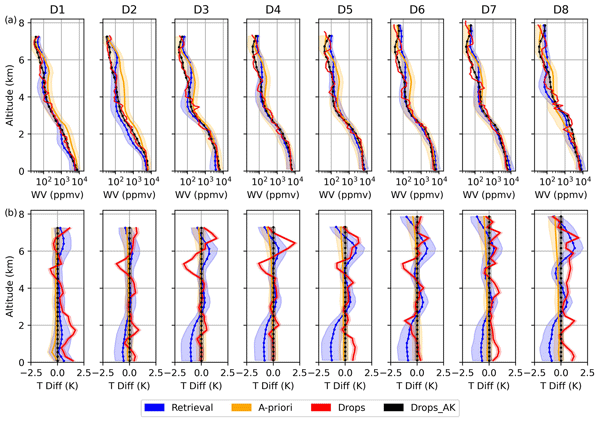
Sanjeevani Panditharatne, Helen Brindley, Caroline Cox, Richard Siddans, Jonathan Murray, Laura Warwick, and Stuart Fox
Atmos. Meas. Tech., 18, 717–735, https://doi.org/10.5194/amt-18-717-2025, https://doi.org/10.5194/amt-18-717-2025, 2025
Short summary
Short summary
Observations from the upcoming European Space Agency’s Far-Infrared Outgoing Radiation Understanding and Monitoring (FORUM) satellite are theorised to be highly sensitive to distributions of water vapour within Earth’s atmosphere. We exploit this sensitivity and extend the Infrared Microwave Sounding retrieval scheme for use on observations from FORUM. This scheme is evaluated on both simulated and observed measurements and shows good agreement with references of the atmospheric state.
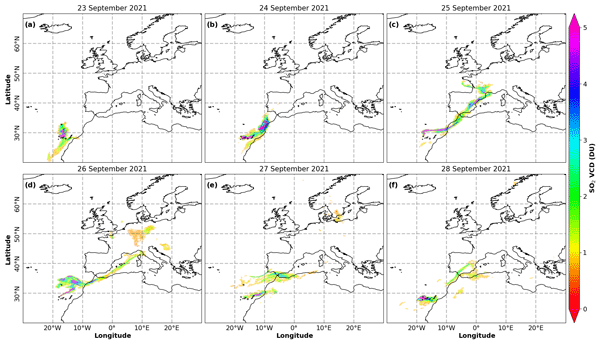
Pascal Hedelt, Jens Reichardt, Felix Lauermann, Benjamin Weiß, Nicolas Theys, Alberto Redondas, Africa Barreto, Omaira Garcia, and Diego Loyola
Atmos. Chem. Phys., 25, 1253–1272, https://doi.org/10.5194/acp-25-1253-2025, https://doi.org/10.5194/acp-25-1253-2025, 2025
Short summary
Short summary
The 2021 volcanic eruption of Tajogaite on La Palma is investigated using ground-based and satellite measurements. In addition, the atmospheric transport of the volcanic cloud towards Europe is studied in detail. The amount of SO2 released during the eruption and the height of the volcanic plume are in excellent agreement among the different measurements. Furthermore, volcanic aerosol microphysical properties could be retrieved using a new retrieval approach based on lidar measurements.
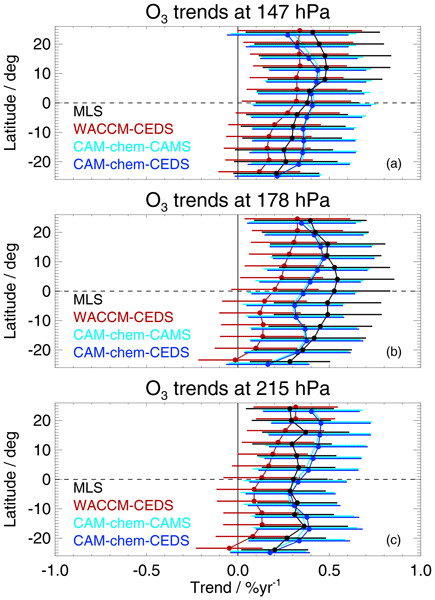
Lucien Froidevaux, Douglas E. Kinnison, Benjamin Gaubert, Michael J. Schwartz, Nathaniel J. Livesey, William G. Read, Charles G. Bardeen, Jerry R. Ziemke, and Ryan A. Fuller
Atmos. Chem. Phys., 25, 597–624, https://doi.org/10.5194/acp-25-597-2025, https://doi.org/10.5194/acp-25-597-2025, 2025
Short summary
Short summary
We compare observed changes in ozone (O3) and carbon monoxide (CO) in the tropical upper troposphere (10–15 km altitude) for 2005–2020 to predictions from model simulations that track the evolution of natural and industrial emissions transported to this region. An increasing trend in measured upper-tropospheric O3 is well matched by model trends. We find that changes in modeled industrial CO surface emissions lead to better model agreement with observed slight decreases in upper-tropospheric CO.
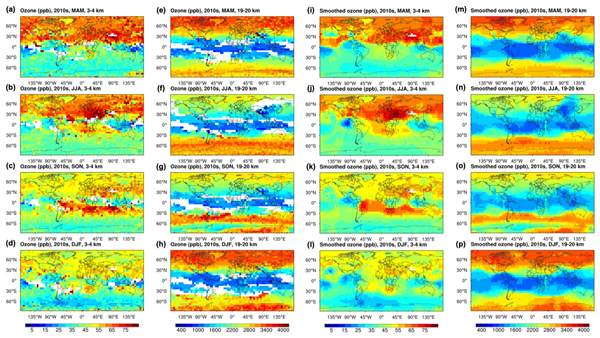
Zhou Zang, Jane Liu, David Tarasick, Omid Moeini, Jianchun Bian, Jinqiang Zhang, Anne M. Thompson, Roeland Van Malderen, Herman G. J. Smit, Ryan M. Stauffer, Bryan J. Johnson, and Debra E. Kollonige
Atmos. Chem. Phys., 24, 13889–13912, https://doi.org/10.5194/acp-24-13889-2024, https://doi.org/10.5194/acp-24-13889-2024, 2024
Short summary
Short summary
The Trajectory-mapped Ozonesonde dataset for the Stratosphere and Troposphere (TOST) provides a global-scale, long-term ozone climatology that is horizontally and vertically resolved. In this study, we improved, updated and validated TOST from 1970 to 2021. Based on this TOST dataset, we characterized global ozone variations spatially in both the troposphere and stratosphere and temporally by season and decade. We also showed a stagnant lower stratospheric ozone variation since the late 1990s.
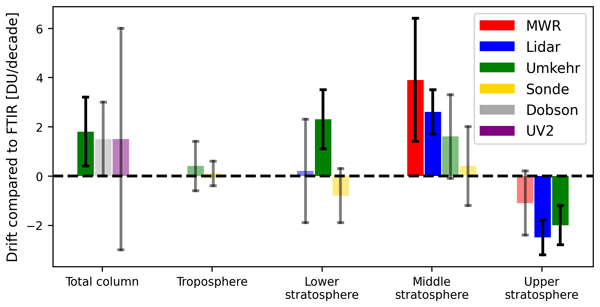
Robin Björklund, Corinne Vigouroux, Peter Effertz, Omaira E. García, Alex Geddes, James Hannigan, Koji Miyagawa, Michael Kotkamp, Bavo Langerock, Gerald Nedoluha, Ivan Ortega, Irina Petropavlovskikh, Deniz Poyraz, Richard Querel, John Robinson, Hisako Shiona, Dan Smale, Penny Smale, Roeland Van Malderen, and Martine De Mazière
Atmos. Meas. Tech., 17, 6819–6849, https://doi.org/10.5194/amt-17-6819-2024, https://doi.org/10.5194/amt-17-6819-2024, 2024
Short summary
Short summary
Different ground-based ozone measurements from the last 2 decades at Lauder are compared to each other. We want to know why different trends have been observed in the stratosphere. Also, the quality and relevance of tropospheric datasets need to be evaluated. While remaining drifts are still present, our study explains roughly half of the differences in observed trends in previous studies and shows the necessity for continuous review and improvement of the measurements.
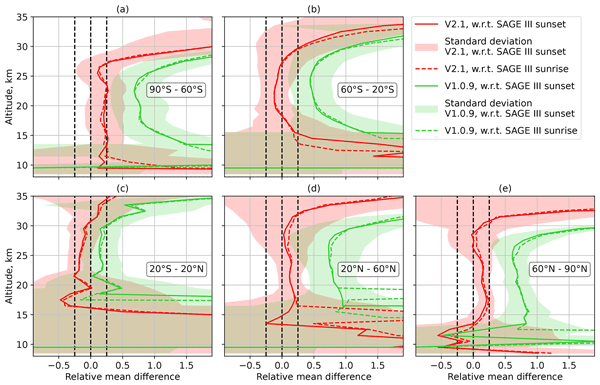
Alexei Rozanov, Christine Pohl, Carlo Arosio, Adam Bourassa, Klaus Bramstedt, Elizaveta Malinina, Landon Rieger, and John P. Burrows
Atmos. Meas. Tech., 17, 6677–6695, https://doi.org/10.5194/amt-17-6677-2024, https://doi.org/10.5194/amt-17-6677-2024, 2024
Short summary
Short summary
We developed a new algorithm to retrieve vertical distributions of aerosol extinction coefficients in the stratosphere. The algorithm is applied to measurements of scattered solar light from the spaceborne OMPS-LP (Ozone Mapper and Profiler Suite Limb Profiler) instrument. The retrieval results are compared to data from other spaceborne instruments and used to investigate the evolution of the aerosol plume following the eruption of the Hunga Tonga–Hunga Ha'apai volcano in January 2022.
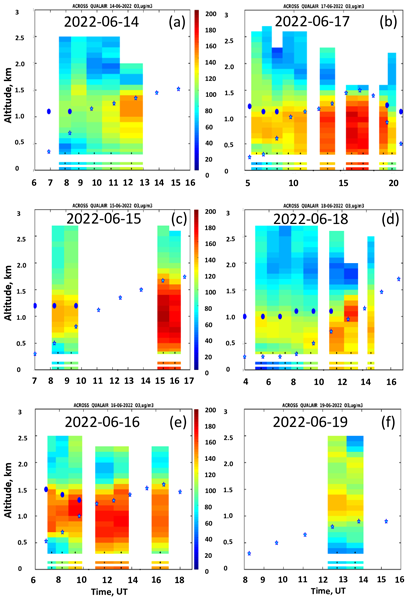
Gérard Ancellet, Camille Viatte, Anne Boynard, François Ravetta, Jacques Pelon, Cristelle Cailteau-Fischbach, Pascal Genau, Julie Capo, Axel Roy, and Philippe Nédélec
Atmos. Chem. Phys., 24, 12963–12983, https://doi.org/10.5194/acp-24-12963-2024, https://doi.org/10.5194/acp-24-12963-2024, 2024
Short summary
Short summary
Characterization of ozone pollution in urban areas benefited from a measurement campaign in summer 2022 in the Paris region. The analysis is based on 21 d of lidar and aircraft observations. The main objective is an analysis of the sensitivity of ozone pollution to the micrometeorological processes in the urban atmospheric boundary layer and the transport of regional pollution. The paper also discusses to what extent satellite observations can track observed ozone plumes.
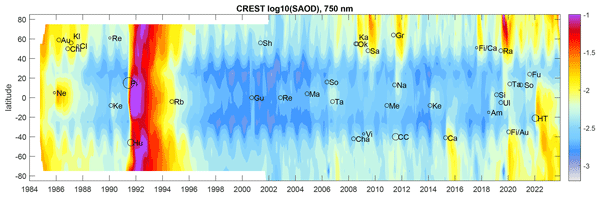
Viktoria F. Sofieva, Alexei Rozanov, Monika Szelag, John P. Burrows, Christian Retscher, Robert Damadeo, Doug Degenstein, Landon A. Rieger, and Adam Bourassa
Earth Syst. Sci. Data, 16, 5227–5241, https://doi.org/10.5194/essd-16-5227-2024, https://doi.org/10.5194/essd-16-5227-2024, 2024
Short summary
Short summary
Climate-related studies need information about the distribution of stratospheric aerosols, which influence the energy balance of the Earth’s atmosphere. In this work, we present a merged dataset of vertically resolved stratospheric aerosol extinction coefficients, which is derived from data of six limb and occultation satellite instruments. The created aerosol climate record covers the period from October 1984 to December 2023. It can be used in various climate-related studies.
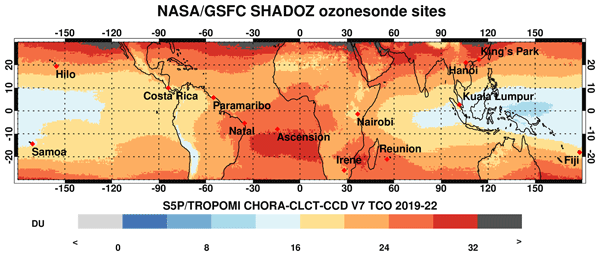
Swathi Maratt Satheesan, Kai-Uwe Eichmann, John P. Burrows, Mark Weber, Ryan Stauffer, Anne M. Thompson, and Debra Kollonige
Atmos. Meas. Tech., 17, 6459–6484, https://doi.org/10.5194/amt-17-6459-2024, https://doi.org/10.5194/amt-17-6459-2024, 2024
Short summary
Short summary
CHORA, an advanced cloud convective differential technique, enhances the accuracy of tropospheric-ozone retrievals. Unlike the traditional Pacific cloud reference sector scheme, CHORA introduces a local-cloud reference sector and an alternative approach (CLCT) for precision. Analysing monthly averaged TROPOMI data from 2018 to 2022 and validating with SHADOZ ozonesonde data, CLCT outperforms other methods and so is the preferred choice, especially in future geostationary satellite missions.
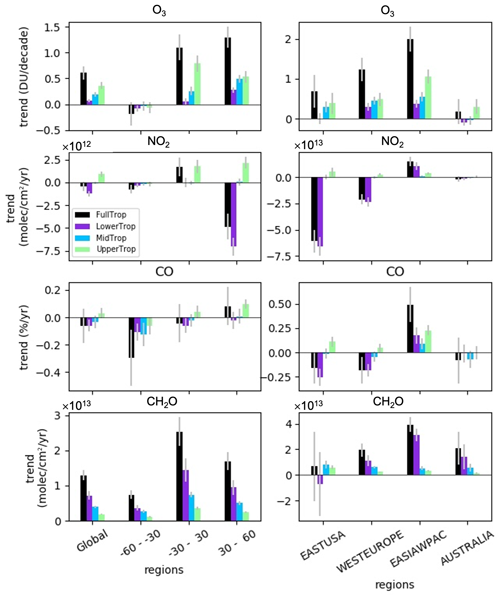
Yasin Elshorbany, Jerald R. Ziemke, Sarah Strode, Hervé Petetin, Kazuyuki Miyazaki, Isabelle De Smedt, Kenneth Pickering, Rodrigo J. Seguel, Helen Worden, Tamara Emmerichs, Domenico Taraborrelli, Maria Cazorla, Suvarna Fadnavis, Rebecca R. Buchholz, Benjamin Gaubert, Néstor Y. Rojas, Thiago Nogueira, Thérèse Salameh, and Min Huang
Atmos. Chem. Phys., 24, 12225–12257, https://doi.org/10.5194/acp-24-12225-2024, https://doi.org/10.5194/acp-24-12225-2024, 2024
Short summary
Short summary
We investigated tropospheric ozone spatial variability and trends from 2005 to 2019 and related those to ozone precursors on global and regional scales. We also investigate the spatiotemporal characteristics of the ozone formation regime in relation to ozone chemical sources and sinks. Our analysis is based on remote sensing products of the tropospheric column of ozone and its precursors, nitrogen dioxide, formaldehyde, and total column CO, as well as ozonesonde data and model simulations.
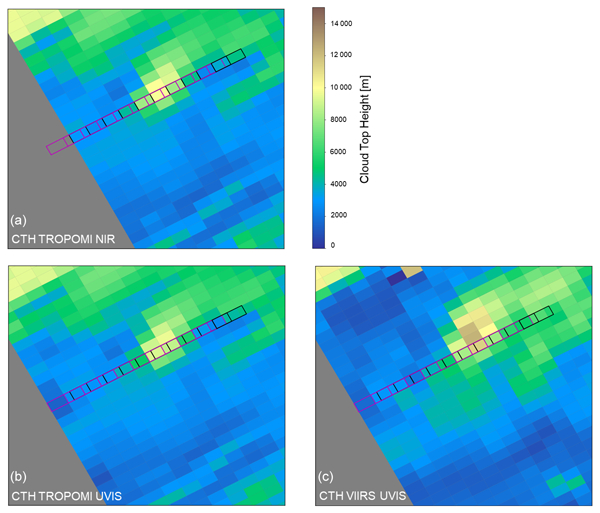
Athina Argyrouli, Diego Loyola, Fabian Romahn, Ronny Lutz, Víctor Molina García, Pascal Hedelt, Klaus-Peter Heue, and Richard Siddans
Atmos. Meas. Tech., 17, 6345–6367, https://doi.org/10.5194/amt-17-6345-2024, https://doi.org/10.5194/amt-17-6345-2024, 2024
Short summary
Short summary
This paper describes a new treatment of the spatial misregistration of cloud properties for Sentinel-5 Precursor, when the footprints of different spectral bands are not perfectly aligned. The methodology exploits synergies between spectrometers and imagers, like TROPOMI and VIIRS. The largest improvements have been identified for heterogeneous scenes at cloud edges. This approach is generic and can also be applied to future Sentinel-4 and Sentinel-5 instruments.
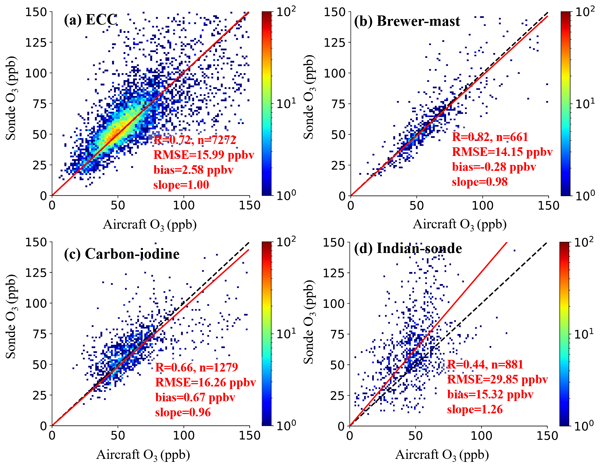
Honglei Wang, David W. Tarasick, Jane Liu, Herman G. J. Smit, Roeland Van Malderen, Lijuan Shen, Romain Blot, and Tianliang Zhao
Atmos. Chem. Phys., 24, 11927–11942, https://doi.org/10.5194/acp-24-11927-2024, https://doi.org/10.5194/acp-24-11927-2024, 2024
Short summary
Short summary
In this study, we identify 23 suitable pairs of sites from World Ozone and Ultraviolet Radiation Data Centre (WOUDC) and In-service Aircraft for a Global Observing System (IAGOS) datasets (1995 to 2021), compare the average vertical distributions of tropospheric O3 from ozonesonde and aircraft measurements, and analyze the differences based on ozonesonde type and station–airport distance.
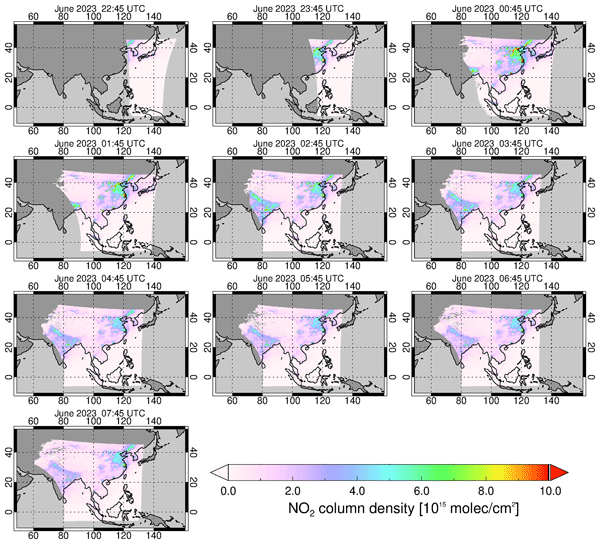
Sora Seo, Pieter Valks, Ronny Lutz, Klaus-Peter Heue, Pascal Hedelt, Víctor Molina García, Diego Loyola, Hanlim Lee, and Jhoon Kim
Atmos. Meas. Tech., 17, 6163–6191, https://doi.org/10.5194/amt-17-6163-2024, https://doi.org/10.5194/amt-17-6163-2024, 2024
Short summary
Short summary
In this study, we developed an advanced retrieval algorithm for tropospheric NO2 columns from geostationary satellite spectrometers and applied it to GEMS measurements. The DLR GEMS NO2 retrieval algorithm follows the heritage from previous and existing algorithms, but improved approaches are applied to reflect the specific features of geostationary satellites. The DLR GEMS NO2 retrievals demonstrate a good capability for monitoring diurnal variability with a high spatial resolution.
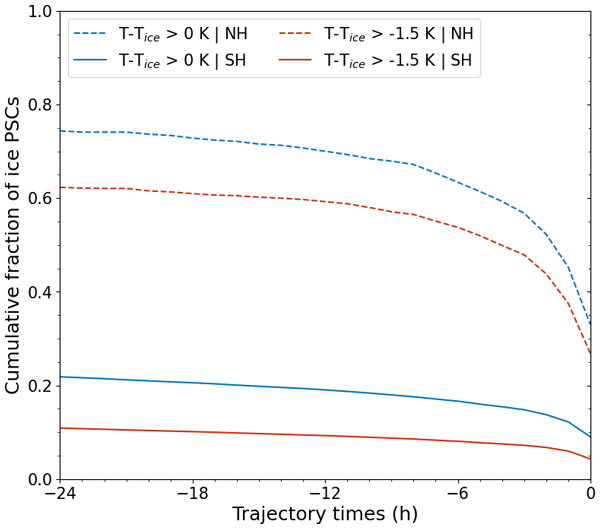
Ling Zou, Reinhold Spang, Sabine Griessbach, Lars Hoffmann, Farahnaz Khosrawi, Rolf Müller, and Ines Tritscher
Atmos. Chem. Phys., 24, 11759–11774, https://doi.org/10.5194/acp-24-11759-2024, https://doi.org/10.5194/acp-24-11759-2024, 2024
Short summary
Short summary
This study provided estimates of the occurrence of ice polar stratospheric clouds (PSCs) observed by the Michelson Interferometer for Passive Atmospheric Sounding (MIPAS) and their connection with temperatures above the frost point (Tice) using a Lagrangian model derived from ERA5. We found that ice PSCs above Tice with temperature fluctuations along the backward trajectory are 33 % in the Arctic and 9 % in the Antarctic. This quantitative assessment enhances our understanding of ice PSCs.
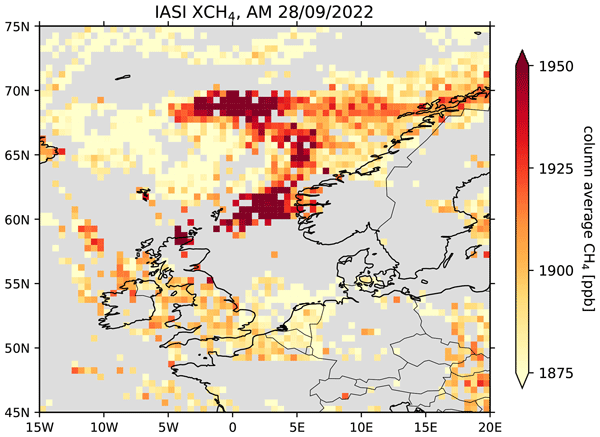
Chris Wilson, Brian J. Kerridge, Richard Siddans, David P. Moore, Lucy J. Ventress, Emily Dowd, Wuhu Feng, Martyn P. Chipperfield, and John J. Remedios
Atmos. Chem. Phys., 24, 10639–10653, https://doi.org/10.5194/acp-24-10639-2024, https://doi.org/10.5194/acp-24-10639-2024, 2024
Short summary
Short summary
The leaks from the Nord Stream gas pipelines in September 2022 released a large amount of methane (CH4) into the atmosphere. We provide observational data from a satellite instrument that shows a large CH4 plume over the North Sea off the coast of Scandinavia. We use this together with atmospheric models to quantify the CH4 leaked into the atmosphere from the pipelines. We find that 219–427 Gg CH4 was emitted, making this the largest individual fossil-fuel-related CH4 leak on record.
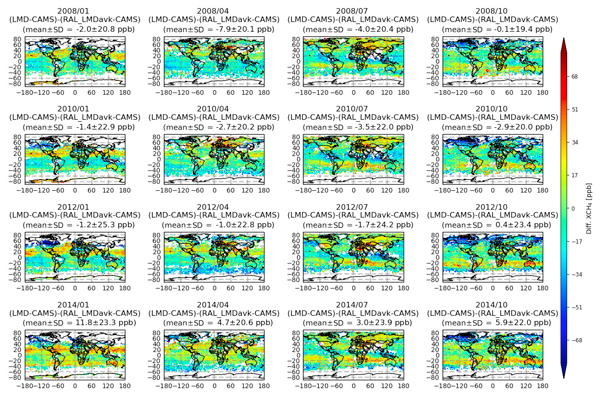
Bart Dils, Minqiang Zhou, Claude Camy-Peyret, Martine De Mazière, Yannick Kangah, Bavo Langerock, Pascal Prunet, Carmine Serio, Richard Siddans, and Brian Kerridge
Atmos. Meas. Tech., 17, 5491–5524, https://doi.org/10.5194/amt-17-5491-2024, https://doi.org/10.5194/amt-17-5491-2024, 2024
Short summary
Short summary
The paper discusses two very distinct methane products from the IASI instrument aboard the MetOp-A satellite. One (referred to as LMD NLISv8.3) uses a machine-learning approach, while the other (RALv2.0) uses a more conventional optimal estimation approach. We used a variety of model and independent reference measurement data to assess both products' overall quality, their differences, and specific aspects of each product that would benefit from further analysis by the product development teams.
Audrey Gaudel, Ilann Bourgeois, Meng Li, Kai-Lan Chang, Jerald Ziemke, Bastien Sauvage, Ryan M. Stauffer, Anne M. Thompson, Debra E. Kollonige, Nadia Smith, Daan Hubert, Arno Keppens, Juan Cuesta, Klaus-Peter Heue, Pepijn Veefkind, Kenneth Aikin, Jeff Peischl, Chelsea R. Thompson, Thomas B. Ryerson, Gregory J. Frost, Brian C. McDonald, and Owen R. Cooper
Atmos. Chem. Phys., 24, 9975–10000, https://doi.org/10.5194/acp-24-9975-2024, https://doi.org/10.5194/acp-24-9975-2024, 2024
Short summary
Short summary
The study examines tropical tropospheric ozone changes. In situ data from 1994–2019 display increased ozone, notably over India, Southeast Asia, and Malaysia and Indonesia. Sparse in situ data limit trend detection for the 15-year period. In situ and satellite data, with limited sampling, struggle to consistently detect trends. Continuous observations are vital over the tropical Pacific Ocean, Indian Ocean, western Africa, and South Asia for accurate ozone trend estimation in these regions.
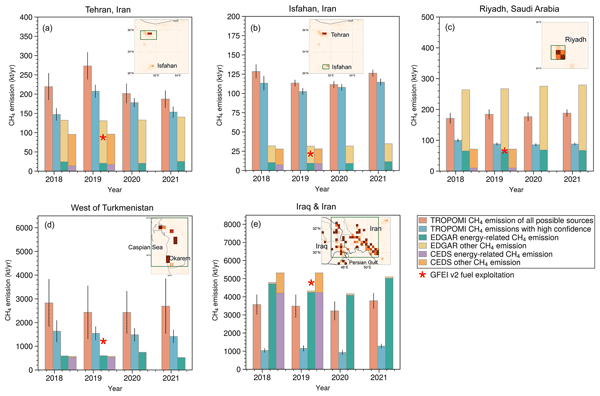
Mengyao Liu, Ronald van der A, Michiel van Weele, Lotte Bryan, Henk Eskes, Pepijn Veefkind, Yongxue Liu, Xiaojuan Lin, Jos de Laat, and Jieying Ding
Atmos. Meas. Tech., 17, 5261–5277, https://doi.org/10.5194/amt-17-5261-2024, https://doi.org/10.5194/amt-17-5261-2024, 2024
Short summary
Short summary
A new divergence method was developed and applied to estimate methane emissions from TROPOMI observations over the Middle East, where it is typically challenging for a satellite to measure methane due to its complicated orography and surface albedo. Our results show the potential of TROPOMI to quantify methane emissions from various sources rather than big emitters from space after objectively excluding the artifacts in the retrieval.
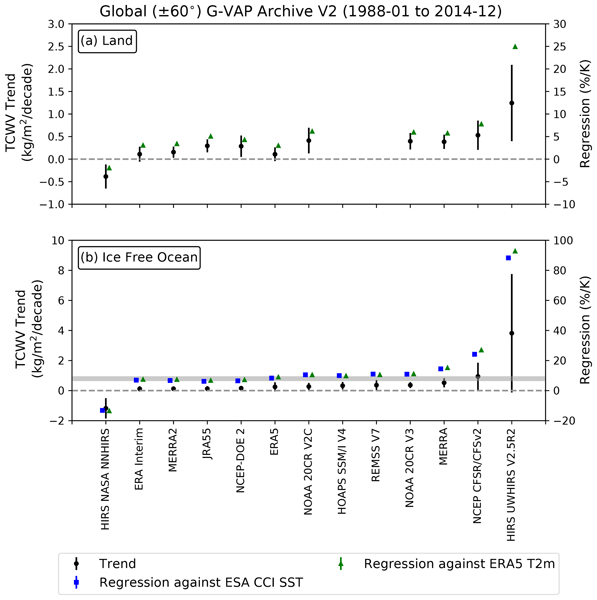
Tim Trent, Marc Schröder, Shu-Peng Ho, Steffen Beirle, Ralf Bennartz, Eva Borbas, Christian Borger, Helene Brogniez, Xavier Calbet, Elisa Castelli, Gilbert P. Compo, Wesley Ebisuzaki, Ulrike Falk, Frank Fell, John Forsythe, Hans Hersbach, Misako Kachi, Shinya Kobayashi, Robert E. Kursinski, Diego Loyola, Zhengzao Luo, Johannes K. Nielsen, Enzo Papandrea, Laurence Picon, Rene Preusker, Anthony Reale, Lei Shi, Laura Slivinski, Joao Teixeira, Tom Vonder Haar, and Thomas Wagner
Atmos. Chem. Phys., 24, 9667–9695, https://doi.org/10.5194/acp-24-9667-2024, https://doi.org/10.5194/acp-24-9667-2024, 2024
Short summary
Short summary
In a warmer future, water vapour will spend more time in the atmosphere, changing global rainfall patterns. In this study, we analysed the performance of 28 water vapour records between 1988 and 2014. We find sensitivity to surface warming generally outside expected ranges, attributed to breakpoints in individual record trends and differing representations of climate variability. The implication is that longer records are required for high confidence in assessing climate trends.
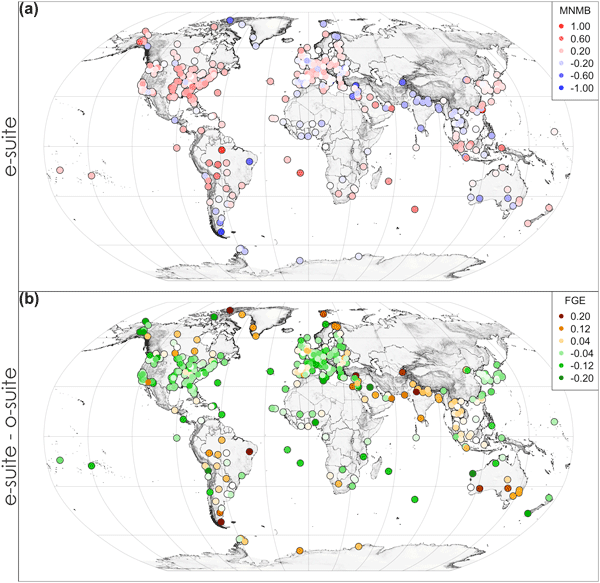
Henk Eskes, Athanasios Tsikerdekis, Melanie Ades, Mihai Alexe, Anna Carlin Benedictow, Yasmine Bennouna, Lewis Blake, Idir Bouarar, Simon Chabrillat, Richard Engelen, Quentin Errera, Johannes Flemming, Sebastien Garrigues, Jan Griesfeller, Vincent Huijnen, Luka Ilić, Antje Inness, John Kapsomenakis, Zak Kipling, Bavo Langerock, Augustin Mortier, Mark Parrington, Isabelle Pison, Mikko Pitkänen, Samuel Remy, Andreas Richter, Anja Schoenhardt, Michael Schulz, Valerie Thouret, Thorsten Warneke, Christos Zerefos, and Vincent-Henri Peuch
Atmos. Chem. Phys., 24, 9475–9514, https://doi.org/10.5194/acp-24-9475-2024, https://doi.org/10.5194/acp-24-9475-2024, 2024
Short summary
Short summary
The Copernicus Atmosphere Monitoring Service (CAMS) provides global analyses and forecasts of aerosols and trace gases in the atmosphere. On 27 June 2023 a major upgrade, Cy48R1, became operational. Comparisons with in situ, surface remote sensing, aircraft, and balloon and satellite observations show that the new CAMS system is a significant improvement. The results quantify the skill of CAMS to forecast impactful events, such as wildfires, dust storms and air pollution peaks.
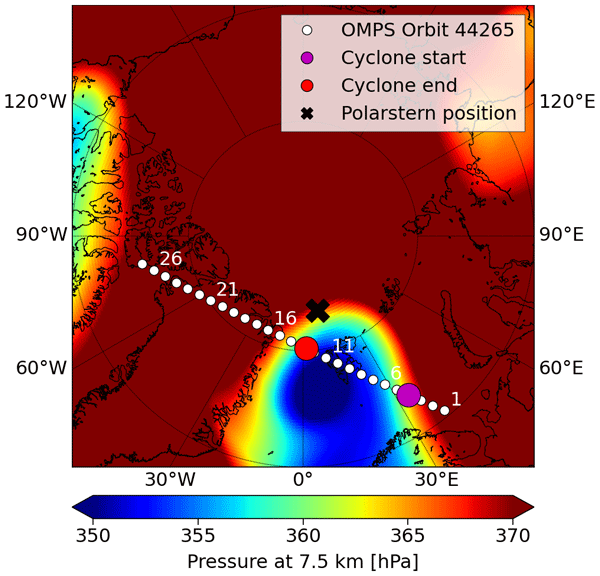
Falco Monsees, Alexei Rozanov, John P. Burrows, Mark Weber, Annette Rinke, Ralf Jaiser, and Peter von der Gathen
Atmos. Chem. Phys., 24, 9085–9099, https://doi.org/10.5194/acp-24-9085-2024, https://doi.org/10.5194/acp-24-9085-2024, 2024
Short summary
Short summary
Cyclones strongly influence weather predictability but still cannot be fully characterised in the Arctic because of the sparse coverage of meteorological measurements. A potential approach to compensate for this is the use of satellite measurements of ozone, because cyclones impact the tropopause and therefore also ozone. In this study we used this connection to investigate the correlation between ozone and the tropopause in the Arctic and to identify cyclones with satellite ozone observations.
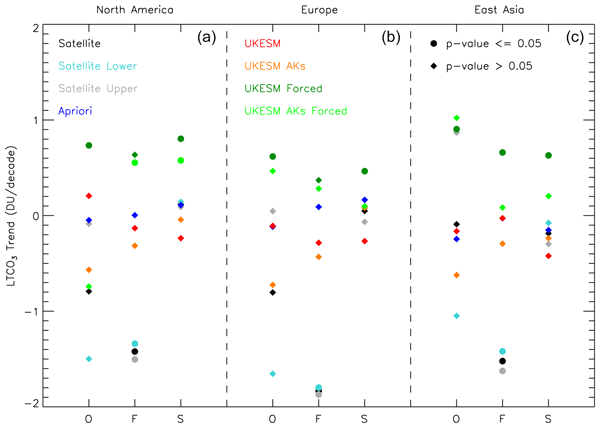
Richard J. Pope, Fiona M. O'Connor, Mohit Dalvi, Brian J. Kerridge, Richard Siddans, Barry G. Latter, Brice Barret, Eric Le Flochmoen, Anne Boynard, Martyn P. Chipperfield, Wuhu Feng, Matilda A. Pimlott, Sandip S. Dhomse, Christian Retscher, Catherine Wespes, and Richard Rigby
Atmos. Chem. Phys., 24, 9177–9195, https://doi.org/10.5194/acp-24-9177-2024, https://doi.org/10.5194/acp-24-9177-2024, 2024
Short summary
Short summary
Ozone is a potent air pollutant in the lower troposphere, with adverse impacts on human health. Satellite records of tropospheric ozone currently show large-scale inconsistencies in long-term trends. Our detailed study of the potential factors (e.g. satellite errors, where the satellite can observe ozone) potentially driving these inconsistencies found that, in North America, Europe, and East Asia, the underlying trends are typically small with large uncertainties.
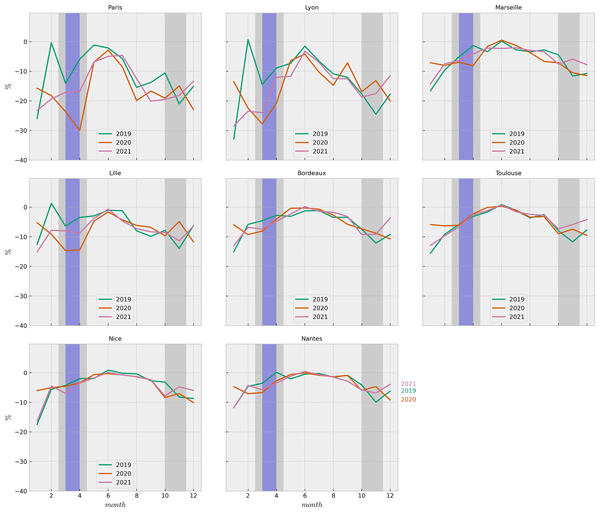
Robin Plauchu, Audrey Fortems-Cheiney, Grégoire Broquet, Isabelle Pison, Antoine Berchet, Elise Potier, Gaëlle Dufour, Adriana Coman, Dilek Savas, Guillaume Siour, and Henk Eskes
Atmos. Chem. Phys., 24, 8139–8163, https://doi.org/10.5194/acp-24-8139-2024, https://doi.org/10.5194/acp-24-8139-2024, 2024
Short summary
Short summary
This study uses the Community Inversion Framework and CHIMERE model to assess the potential of TROPOMI-S5P PAL NO2 tropospheric column data to estimate NOx emissions in France (2019–2021). Results show a 3 % decrease in average emissions compared to the 2016 CAMS-REG/INS, lower than the 14 % decrease from CITEPA. The study highlights challenges in capturing emission anomalies due to limited data coverage and error levels but shows promise for local inventory improvements.
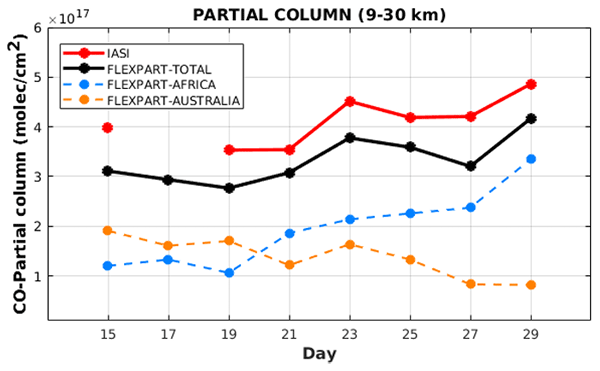
Nelson Bègue, Alexandre Baron, Gisèle Krysztofiak, Gwenaël Berthet, Corinna Kloss, Fabrice Jégou, Sergey Khaykin, Marion Ranaivombola, Tristan Millet, Thierry Portafaix, Valentin Duflot, Philippe Keckhut, Hélène Vérèmes, Guillaume Payen, Mahesh Kumar Sha, Pierre-François Coheur, Cathy Clerbaux, Michaël Sicard, Tetsu Sakai, Richard Querel, Ben Liley, Dan Smale, Isamu Morino, Osamu Uchino, Tomohiro Nagai, Penny Smale, John Robinson, and Hassan Bencherif
Atmos. Chem. Phys., 24, 8031–8048, https://doi.org/10.5194/acp-24-8031-2024, https://doi.org/10.5194/acp-24-8031-2024, 2024
Short summary
Short summary
During the 2020 austral summer, the pristine atmosphere of the southwest Indian Ocean basin experienced significant perturbations. Numerical models indicated that the lower-stratospheric aerosol content was influenced by the intense and persistent stratospheric aerosol layer generated during the 2019–2020 extreme Australian bushfire events. Ground-based observations at Réunion confirmed the simultaneous presence of African and Australian aerosol layers.
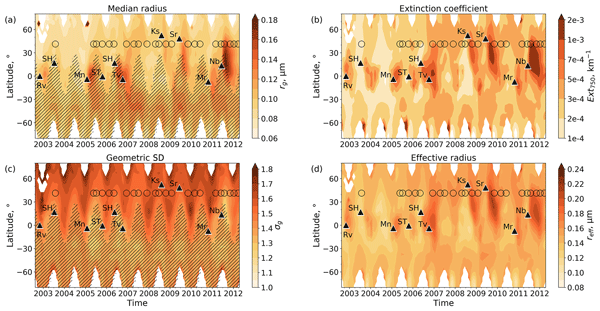
Christine Pohl, Felix Wrana, Alexei Rozanov, Terry Deshler, Elizaveta Malinina, Christian von Savigny, Landon A. Rieger, Adam E. Bourassa, and John P. Burrows
Atmos. Meas. Tech., 17, 4153–4181, https://doi.org/10.5194/amt-17-4153-2024, https://doi.org/10.5194/amt-17-4153-2024, 2024
Short summary
Short summary
Knowledge of stratospheric aerosol characteristics is important for understanding chemical and climate aerosol feedbacks. Two particle size distribution parameters, the aerosol extinction coefficient and the effective radius, are obtained from SCIAMACHY limb observations. The aerosol characteristics show good agreement with independent data sets from balloon-borne and satellite observations. This data set expands the limited knowledge of stratospheric aerosol characteristics.
Arno Keppens, Serena Di Pede, Daan Hubert, Jean-Christopher Lambert, Pepijn Veefkind, Maarten Sneep, Johan De Haan, Mark ter Linden, Thierry Leblanc, Steven Compernolle, Tijl Verhoelst, José Granville, Oindrila Nath, Ann Mari Fjæraa, Ian Boyd, Sander Niemeijer, Roeland Van Malderen, Herman G. J. Smit, Valentin Duflot, Sophie Godin-Beekmann, Bryan J. Johnson, Wolfgang Steinbrecht, David W. Tarasick, Debra E. Kollonige, Ryan M. Stauffer, Anne M. Thompson, Angelika Dehn, and Claus Zehner
Atmos. Meas. Tech., 17, 3969–3993, https://doi.org/10.5194/amt-17-3969-2024, https://doi.org/10.5194/amt-17-3969-2024, 2024
Short summary
Short summary
The Sentinel-5P satellite operated by the European Space Agency has carried the TROPOspheric Monitoring Instrument (TROPOMI) around the Earth since October 2017. This mission also produces atmospheric ozone profile data which are described in detail for May 2018 to April 2023. Independent validation using ground-based reference measurements demonstrates that the operational ozone profile product mostly fully and at least partially complies with all mission requirements.
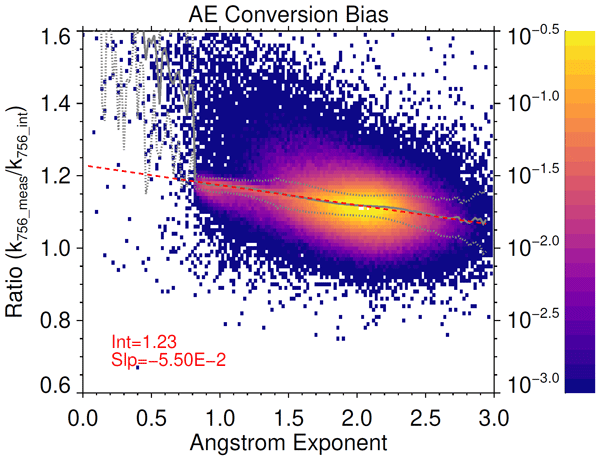
Robert P. Damadeo, Viktoria F. Sofieva, Alexei Rozanov, and Larry W. Thomason
Atmos. Meas. Tech., 17, 3669–3678, https://doi.org/10.5194/amt-17-3669-2024, https://doi.org/10.5194/amt-17-3669-2024, 2024
Short summary
Short summary
Comparing different aerosol data sets for scientific studies often requires converting aerosol extinction data between different wavelengths. A common approximation for the spectral behavior of aerosol is the Ångström formula; however, this introduces biases. Using measurements across many different wavelengths from a single instrument, we derive an empirical relationship to both characterize this bias and offer a correction for other studies that may employ this analysis approach.
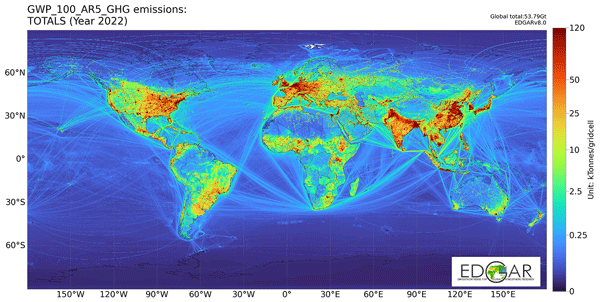
Monica Crippa, Diego Guizzardi, Federico Pagani, Marcello Schiavina, Michele Melchiorri, Enrico Pisoni, Francesco Graziosi, Marilena Muntean, Joachim Maes, Lewis Dijkstra, Martin Van Damme, Lieven Clarisse, and Pierre Coheur
Earth Syst. Sci. Data, 16, 2811–2830, https://doi.org/10.5194/essd-16-2811-2024, https://doi.org/10.5194/essd-16-2811-2024, 2024
Short summary
Short summary
Knowing where emissions occur is essential for planning effective emission reduction measures and atmospheric modelling. Disaggregating national emissions over high-resolution grids requires spatial proxies that contain information on the location of different emission sources. This work incorporates state-of-the-art spatial information to improve the spatial representation of global emissions with the Emissions Database for Global Atmospheric Research (EDGAR).
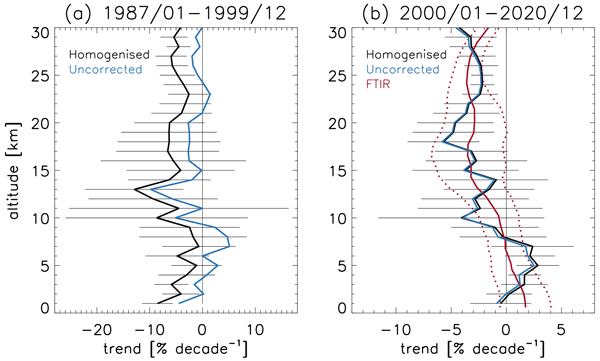
Guang Zeng, Richard Querel, Hisako Shiona, Deniz Poyraz, Roeland Van Malderen, Alex Geddes, Penny Smale, Dan Smale, John Robinson, and Olaf Morgenstern
Atmos. Chem. Phys., 24, 6413–6432, https://doi.org/10.5194/acp-24-6413-2024, https://doi.org/10.5194/acp-24-6413-2024, 2024
Short summary
Short summary
We present a homogenised ozonesonde record (1987–2020) for Lauder, a Southern Hemisphere mid-latitude site; identify factors driving ozone trends; and attribute them to anthropogenic forcings using statistical analysis and model simulations. We find that significant negative lower-stratospheric ozone trends identified at Lauder are associated with an increase in tropopause height and that CO2-driven dynamical changes have played an increasingly important role in driving ozone trends.
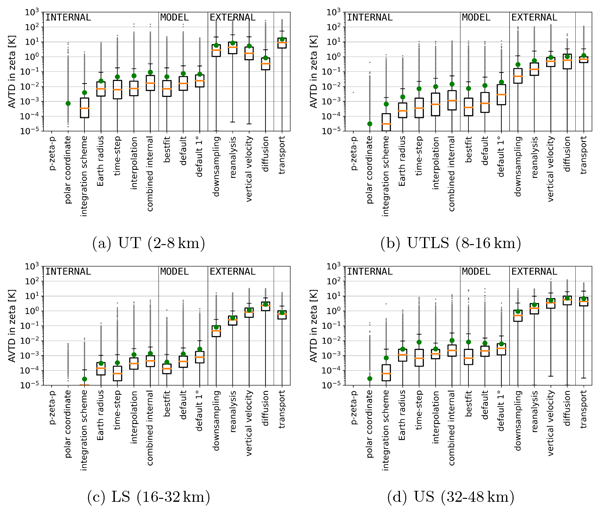
Jan Clemens, Lars Hoffmann, Bärbel Vogel, Sabine Grießbach, and Nicole Thomas
Geosci. Model Dev., 17, 4467–4493, https://doi.org/10.5194/gmd-17-4467-2024, https://doi.org/10.5194/gmd-17-4467-2024, 2024
Short summary
Short summary
Lagrangian transport models simulate the transport of air masses in the atmosphere. For example, one model (CLaMS) is well suited to calculating transport as it uses a special coordinate system and special vertical wind. However, it only runs inefficiently on modern supercomputers. Hence, we have implemented the benefits of CLaMS into a new model (MPTRAC), which is already highly efficient on modern supercomputers. Finally, in extensive tests, we showed that CLaMS and MPTRAC agree very well.
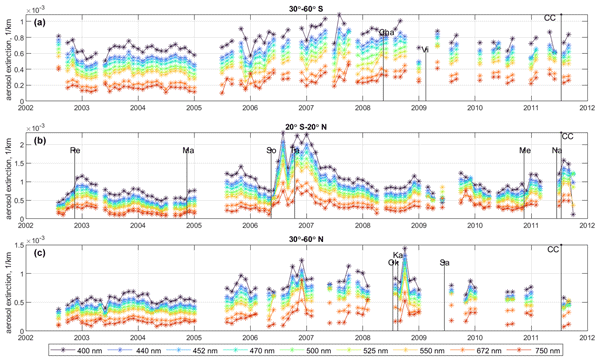
Viktoria F. Sofieva, Monika Szelag, Johanna Tamminen, Didier Fussen, Christine Bingen, Filip Vanhellemont, Nina Mateshvili, Alexei Rozanov, and Christine Pohl
Atmos. Meas. Tech., 17, 3085–3101, https://doi.org/10.5194/amt-17-3085-2024, https://doi.org/10.5194/amt-17-3085-2024, 2024
Short summary
Short summary
We have developed the new multi-wavelength dataset of aerosol extinction profiles, which are retrieved from the averaged transmittance spectra by the Global Ozone Monitoring by Occultation of Stars instrument aboard Envisat. The retrieved aerosol extinction profiles are provided in the altitude range 10–40 km at 400, 440, 452, 470, 500, 525, 550, 672 and 750 nm for the period 2002–2012. FMI-GOMOSaero aerosol profiles have improved quality; they are in good agreement with other datasets.
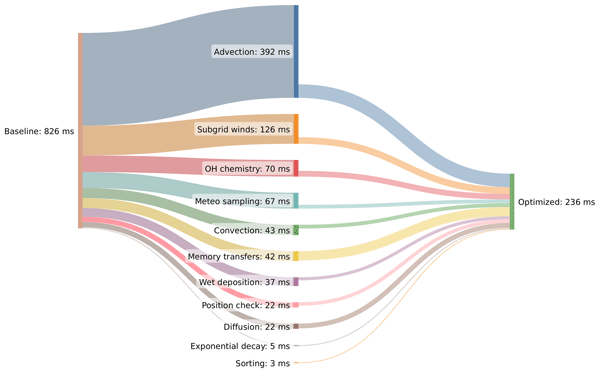
Lars Hoffmann, Kaveh Haghighi Mood, Andreas Herten, Markus Hrywniak, Jiri Kraus, Jan Clemens, and Mingzhao Liu
Geosci. Model Dev., 17, 4077–4094, https://doi.org/10.5194/gmd-17-4077-2024, https://doi.org/10.5194/gmd-17-4077-2024, 2024
Short summary
Short summary
Lagrangian particle dispersion models are key for studying atmospheric transport but can be computationally intensive. To speed up simulations, the MPTRAC model was ported to graphics processing units (GPUs). Performance optimization of data structures and memory alignment resulted in runtime improvements of up to 75 % on NVIDIA A100 GPUs for ERA5-based simulations with 100 million particles. These optimizations make the MPTRAC model well suited for future high-performance computing systems.

Matthew S. Johnson, Alexei Rozanov, Mark Weber, Nora Mettig, John Sullivan, Michael J. Newchurch, Shi Kuang, Thierry Leblanc, Fernando Chouza, Timothy A. Berkoff, Guillaume Gronoff, Kevin B. Strawbridge, Raul J. Alvarez, Andrew O. Langford, Christoph J. Senff, Guillaume Kirgis, Brandi McCarty, and Larry Twigg
Atmos. Meas. Tech., 17, 2559–2582, https://doi.org/10.5194/amt-17-2559-2024, https://doi.org/10.5194/amt-17-2559-2024, 2024
Short summary
Short summary
Monitoring tropospheric ozone (O3), a harmful pollutant negatively impacting human health, is primarily done using ground-based measurements and ozonesondes. However, these observation types lack the coverage to fully understand tropospheric O3. Satellites can retrieve tropospheric ozone with near-daily global coverage; however, they are known to have biases and errors. This study uses ground-based lidars to validate multiple satellites' ability to observe tropospheric O3.
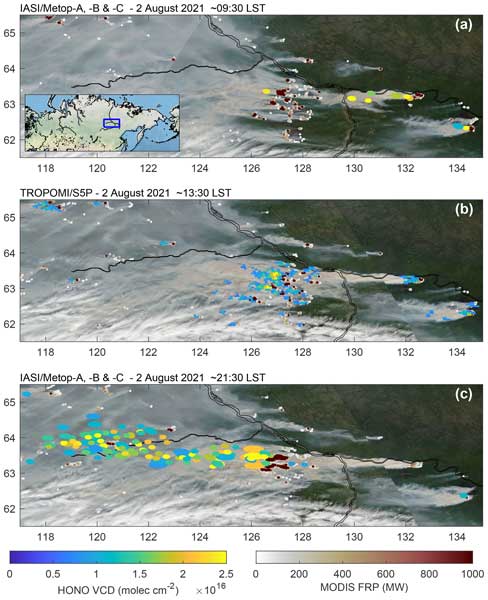
Bruno Franco, Lieven Clarisse, Nicolas Theys, Juliette Hadji-Lazaro, Cathy Clerbaux, and Pierre Coheur
Atmos. Chem. Phys., 24, 4973–5007, https://doi.org/10.5194/acp-24-4973-2024, https://doi.org/10.5194/acp-24-4973-2024, 2024
Short summary
Short summary
Using IASI global infrared measurements, we retrieve nitrous acid (HONO) in fire plumes from space. We detect large enhancements of pyrogenic HONO worldwide, especially from intense wildfires at Northern Hemisphere mid- and high latitudes. Predominance of IASI nighttime over daytime measurements sheds light on HONO's extended lifetime and secondary formation during long-range transport in smoke plumes. Our findings deepen the understanding of atmospheric HONO, crucial for air quality assessment.
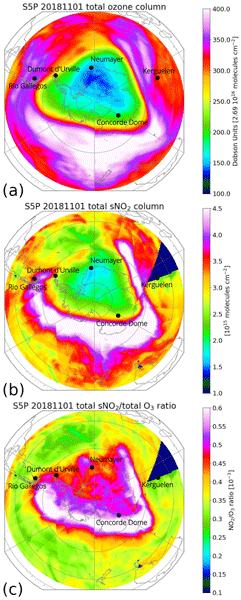
Adrianus de Laat, Jos van Geffen, Piet Stammes, Ronald van der A, Henk Eskes, and J. Pepijn Veefkind
Atmos. Chem. Phys., 24, 4511–4535, https://doi.org/10.5194/acp-24-4511-2024, https://doi.org/10.5194/acp-24-4511-2024, 2024
Short summary
Short summary
Removal of stratospheric nitrogen oxides is crucial for the formation of the ozone hole. TROPOMI satellite measurements of nitrogen dioxide reveal the presence of a not dissimilar "nitrogen hole" that largely coincides with the ozone hole. Three very distinct regimes were identified: inside and outside the ozone hole and the transition zone in between. Our results introduce a valuable and innovative application highly relevant for Antarctic ozone hole and ozone layer recovery.
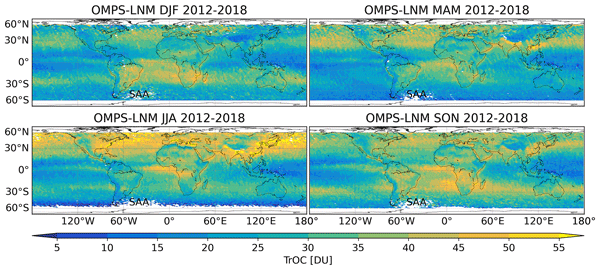
Andrea Orfanoz-Cheuquelaf, Carlo Arosio, Alexei Rozanov, Mark Weber, Annette Ladstätter-Weißenmayer, John P. Burrows, Anne M. Thompson, Ryan M. Stauffer, and Debra E. Kollonige
Atmos. Meas. Tech., 17, 1791–1809, https://doi.org/10.5194/amt-17-1791-2024, https://doi.org/10.5194/amt-17-1791-2024, 2024
Short summary
Short summary
Valuable information on the tropospheric ozone column (TrOC) can be obtained globally by combining space-borne limb and nadir measurements (limb–nadir matching, LNM). This study describes the retrieval of TrOC from the OMPS instrument (since 2012) using the LNM technique. The OMPS-LNM TrOC was compared with ozonesondes and other satellite measurements, showing a good agreement with a negative bias within 1 to 4 DU. This new dataset is suitable for pollution studies.
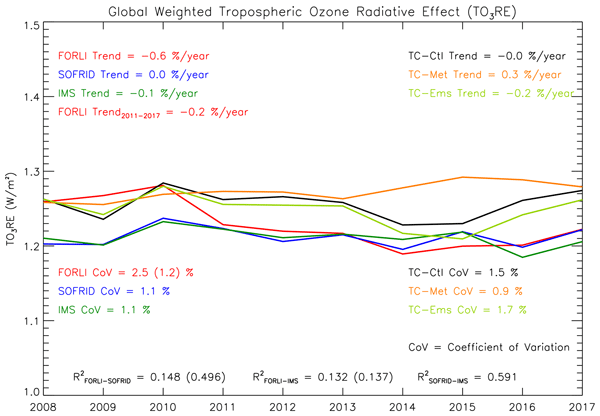
Richard J. Pope, Alexandru Rap, Matilda A. Pimlott, Brice Barret, Eric Le Flochmoen, Brian J. Kerridge, Richard Siddans, Barry G. Latter, Lucy J. Ventress, Anne Boynard, Christian Retscher, Wuhu Feng, Richard Rigby, Sandip S. Dhomse, Catherine Wespes, and Martyn P. Chipperfield
Atmos. Chem. Phys., 24, 3613–3626, https://doi.org/10.5194/acp-24-3613-2024, https://doi.org/10.5194/acp-24-3613-2024, 2024
Short summary
Short summary
Tropospheric ozone is an important short-lived climate forcer which influences the incoming solar short-wave radiation and the outgoing long-wave radiation in the atmosphere (8–15 km) where the balance between the two yields a net positive (i.e. warming) effect at the surface. Overall, we find that the tropospheric ozone radiative effect ranges between 1.21 and 1.26 W m−2 with a negligible trend (2008–2017), suggesting that tropospheric ozone influences on climate have remained stable with time.
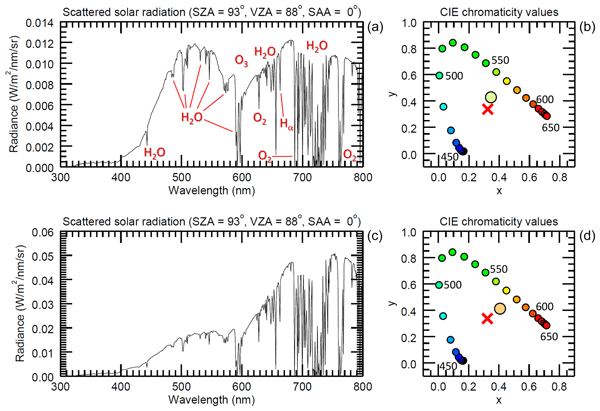
Christian von Savigny, Anna Lange, Christoph G. Hoffmann, and Alexei Rozanov
Atmos. Chem. Phys., 24, 2415–2422, https://doi.org/10.5194/acp-24-2415-2024, https://doi.org/10.5194/acp-24-2415-2024, 2024
Short summary
Short summary
It is well known that volcanic eruptions strongly affect the colours of the twilight sky. Typically, volcanic eruptions lead to enhanced reddish and violet twilight colours. In rare cases, however, volcanic eruptions can also lead to green sunsets. This study provides an explanation for the occurrence of these unusual green sunsets based on simulations with a radiative transfer model. Green volcanic sunsets require a sufficient stratospheric aerosol optical depth and specific aerosol sizes.
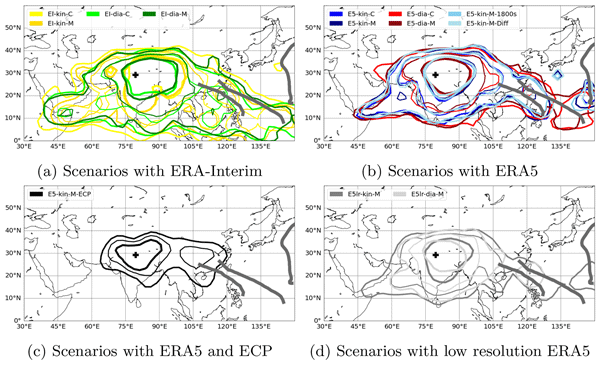
Jan Clemens, Bärbel Vogel, Lars Hoffmann, Sabine Griessbach, Nicole Thomas, Suvarna Fadnavis, Rolf Müller, Thomas Peter, and Felix Ploeger
Atmos. Chem. Phys., 24, 763–787, https://doi.org/10.5194/acp-24-763-2024, https://doi.org/10.5194/acp-24-763-2024, 2024
Short summary
Short summary
The source regions of the Asian tropopause aerosol layer (ATAL) are debated. We use balloon-borne measurements of the layer above Nainital (India) in August 2016 and atmospheric transport models to find ATAL source regions. Most air originated from the Tibetan plateau. However, the measured ATAL was stronger when more air originated from the Indo-Gangetic Plain and weaker when more air originated from the Pacific. Hence, the results indicate important anthropogenic contributions to the ATAL.
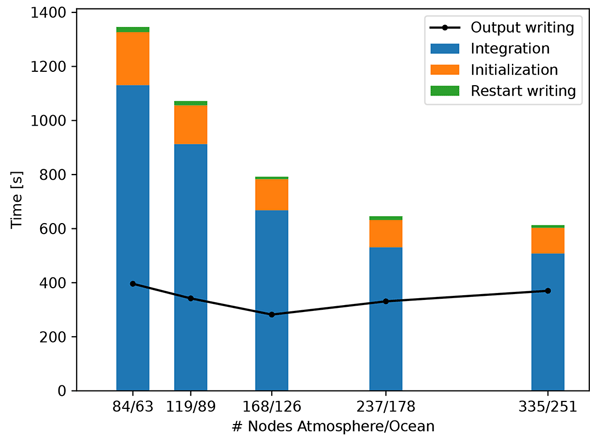
Abhiraj Bishnoi, Olaf Stein, Catrin I. Meyer, René Redler, Norbert Eicker, Helmuth Haak, Lars Hoffmann, Daniel Klocke, Luis Kornblueh, and Estela Suarez
Geosci. Model Dev., 17, 261–273, https://doi.org/10.5194/gmd-17-261-2024, https://doi.org/10.5194/gmd-17-261-2024, 2024
Short summary
Short summary
We enabled the weather and climate model ICON to run in a high-resolution coupled atmosphere–ocean setup on the JUWELS supercomputer, where the ocean and the model I/O runs on the CPU Cluster, while the atmosphere is running simultaneously on GPUs. Compared to a simulation performed on CPUs only, our approach reduces energy consumption by 45 % with comparable runtimes. The experiments serve as preparation for efficient computing of kilometer-scale climate models on future supercomputing systems.
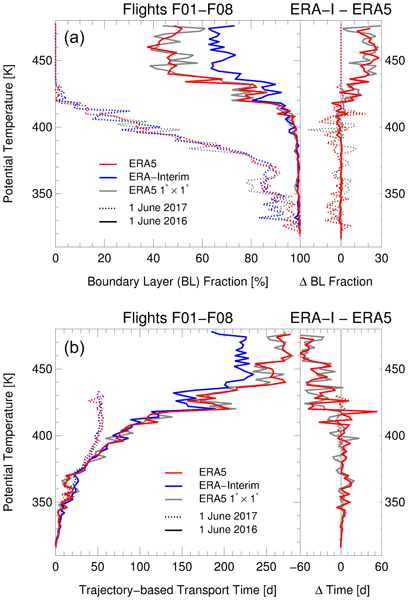
Bärbel Vogel, C. Michael Volk, Johannes Wintel, Valentin Lauther, Jan Clemens, Jens-Uwe Grooß, Gebhard Günther, Lars Hoffmann, Johannes C. Laube, Rolf Müller, Felix Ploeger, and Fred Stroh
Atmos. Chem. Phys., 24, 317–343, https://doi.org/10.5194/acp-24-317-2024, https://doi.org/10.5194/acp-24-317-2024, 2024
Short summary
Short summary
Over the Indian subcontinent, polluted air is rapidly uplifted to higher altitudes during the Asian monsoon season. We present an assessment of vertical transport in this region using different wind data provided by the European Centre for Medium-Range Weather Forecasts (ECMWF), as well as high-resolution aircraft measurements. In general, our findings confirm that the newest ECMWF reanalysis product, ERA5, yields a better representation of transport compared to the predecessor, ERA-Interim.
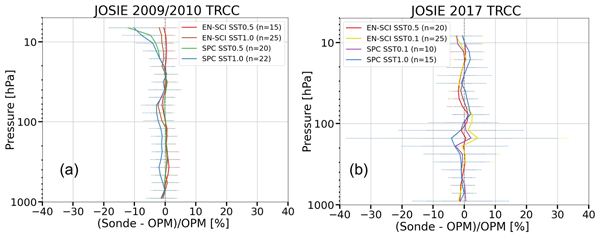
Herman G. J. Smit, Deniz Poyraz, Roeland Van Malderen, Anne M. Thompson, David W. Tarasick, Ryan M. Stauffer, Bryan J. Johnson, and Debra E. Kollonige
Atmos. Meas. Tech., 17, 73–112, https://doi.org/10.5194/amt-17-73-2024, https://doi.org/10.5194/amt-17-73-2024, 2024
Short summary
Short summary
This paper revisits fundamentals of ECC ozonesonde measurements to develop and characterize a methodology to correct for the fast and slow time responses using the JOSIE (Jülich Ozone Sonde Intercomparison Experiment) simulation chamber data. Comparing the new corrected ozonesonde profiles to an accurate ozone UV photometer (OPM) as reference allows us to evaluate the time response correction (TRC) method and to determine calibration functions traceable to one reference with 5 % uncertainty.
Xue Wu, Lars Hoffmann, Corwin J. Wright, Neil P. Hindley, M. Joan Alexander, Silvio Kalisch, Xin Wang, Bing Chen, Yinan Wang, and Daren Lyu
EGUsphere, https://doi.org/10.5194/egusphere-2023-3008, https://doi.org/10.5194/egusphere-2023-3008, 2024
Preprint archived
Short summary
Short summary
This study identified a noteworthy time-lagged correlation between hurricane intensity and stratospheric gravity wave intensities during hurricane intensification. Meanwhile, the study reveals distinct frequencies, horizontal wavelengths, and vertical wavelengths in the inner core region during hurricane intensification, offering essential insights for monitoring hurricane intensity via satellite observations of stratospheric gravity waves.
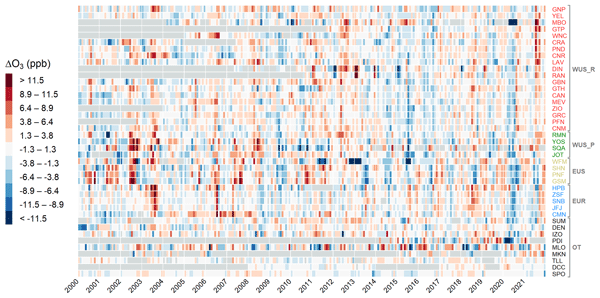
Davide Putero, Paolo Cristofanelli, Kai-Lan Chang, Gaëlle Dufour, Gregory Beachley, Cédric Couret, Peter Effertz, Daniel A. Jaffe, Dagmar Kubistin, Jason Lynch, Irina Petropavlovskikh, Melissa Puchalski, Timothy Sharac, Barkley C. Sive, Martin Steinbacher, Carlos Torres, and Owen R. Cooper
Atmos. Chem. Phys., 23, 15693–15709, https://doi.org/10.5194/acp-23-15693-2023, https://doi.org/10.5194/acp-23-15693-2023, 2023
Short summary
Short summary
We investigated the impact of societal restriction measures during the COVID-19 pandemic on surface ozone at 41 high-elevation sites worldwide. Negative ozone anomalies were observed for spring and summer 2020 for all of the regions considered. In 2021, negative anomalies continued for Europe and partially for the eastern US, while western US sites showed positive anomalies due to wildfires. IASI satellite data and the Carbon Monitor supported emission reductions as a cause of the anomalies.
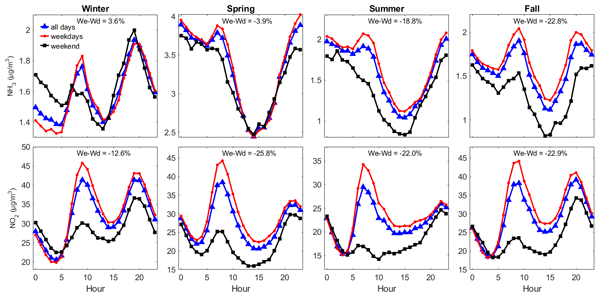
Camille Viatte, Nadir Guendouz, Clarisse Dufaux, Arjan Hensen, Daan Swart, Martin Van Damme, Lieven Clarisse, Pierre Coheur, and Cathy Clerbaux
Atmos. Chem. Phys., 23, 15253–15267, https://doi.org/10.5194/acp-23-15253-2023, https://doi.org/10.5194/acp-23-15253-2023, 2023
Short summary
Short summary
Ammonia (NH3) is an important air pollutant which, as a precursor of fine particulate matter, raises public health concerns. Models have difficulty predicting events of pollution associated with NH3 since ground-based observations of this gas are still relatively sparse and difficult to implement. We present the first relatively long (2.5 years) and continuous record of hourly NH3 concentrations in Paris to determine its temporal variabilities at different scales to unravel emission sources.
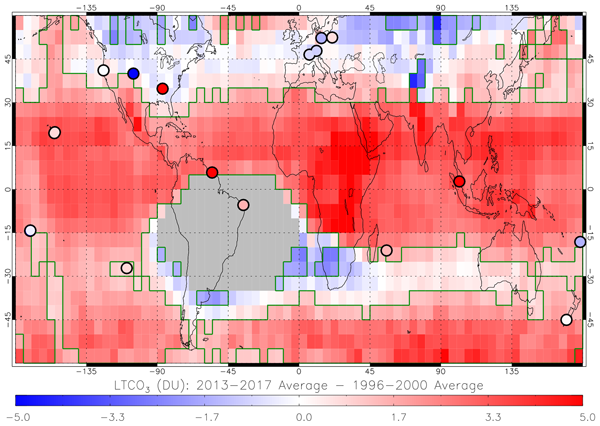
Richard J. Pope, Brian J. Kerridge, Richard Siddans, Barry G. Latter, Martyn P. Chipperfield, Wuhu Feng, Matilda A. Pimlott, Sandip S. Dhomse, Christian Retscher, and Richard Rigby
Atmos. Chem. Phys., 23, 14933–14947, https://doi.org/10.5194/acp-23-14933-2023, https://doi.org/10.5194/acp-23-14933-2023, 2023
Short summary
Short summary
Ozone is a potent air pollutant, and we present the first study to investigate long-term changes in lower tropospheric column ozone (LTCO3) from space. We have constructed a merged LTCO3 dataset from GOME-1, SCIAMACHY and OMI between 1996 and 2017. Comparing LTCO3 between the 1996–2000 and 2013–2017 5-year averages, we find significant positive increases in the tropics/sub-tropics, while in the northern mid-latitudes, we find small-scale differences.
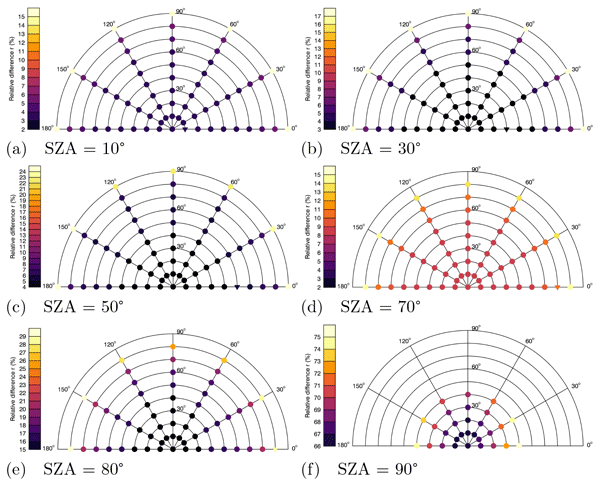
Anna Lange, Alexei Rozanov, and Christian von Savigny
Atmos. Chem. Phys., 23, 14829–14839, https://doi.org/10.5194/acp-23-14829-2023, https://doi.org/10.5194/acp-23-14829-2023, 2023
Short summary
Short summary
We were able to demonstrate quantitatively that the blue colour of the sky cannot be solely attributed to Rayleigh scattering. The influence of ozone on the blue colour of the sky is calculated for different viewing geometries, total ozone columns and an enhanced stratospheric aerosol scenario. Furthermore, the effects of polarisation, surface albedo and observer height are investigated.
Elisa Carboni, Gareth E. Thomas, Richard Siddans, and Brian Kerridge
Atmos. Meas. Tech. Discuss., https://doi.org/10.5194/amt-2023-232, https://doi.org/10.5194/amt-2023-232, 2023
Revised manuscript not accepted
Short summary
Short summary
We analyzed different satellite datasets of cloud properties with a new approach to quantify and interpret their interannual variability based on singular vector decomposition (SVD). The spatial pattern and its temporal evolution are strikingly similar for all the satellite datasets and follow the El Nino Southern Oscillation. The SVD approach reported here has potential for application to satellite data sets and to evaluate consistency between models and observations.
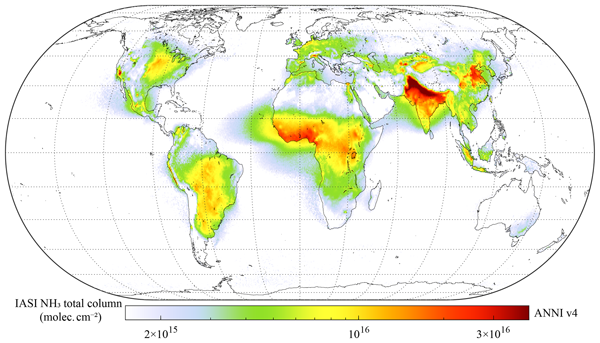
Lieven Clarisse, Bruno Franco, Martin Van Damme, Tommaso Di Gioacchino, Juliette Hadji-Lazaro, Simon Whitburn, Lara Noppen, Daniel Hurtmans, Cathy Clerbaux, and Pierre Coheur
Atmos. Meas. Tech., 16, 5009–5028, https://doi.org/10.5194/amt-16-5009-2023, https://doi.org/10.5194/amt-16-5009-2023, 2023
Short summary
Short summary
Ammonia is an important atmospheric pollutant. This article presents version 4 of the algorithm which retrieves ammonia abundances from the infrared measurements of the satellite sounder IASI. A measurement operator is introduced that can emulate the measurements (so-called averaging kernels) and measurement uncertainty is better characterized. Several other changes to the product itself are also documented, most of which improve the temporal consistency of the 2007–2022 IASI NH3 dataset.
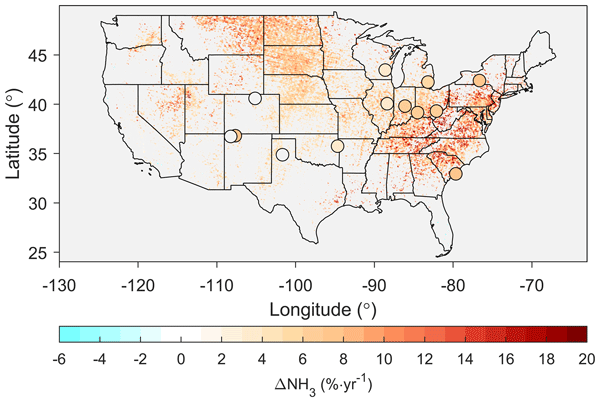
Rui Wang, Da Pan, Xuehui Guo, Kang Sun, Lieven Clarisse, Martin Van Damme, Pierre-François Coheur, Cathy Clerbaux, Melissa Puchalski, and Mark A. Zondlo
Atmos. Chem. Phys., 23, 13217–13234, https://doi.org/10.5194/acp-23-13217-2023, https://doi.org/10.5194/acp-23-13217-2023, 2023
Short summary
Short summary
Ammonia (NH3) is a key precursor for fine particulate matter (PM2.5) and a primary form of reactive nitrogen, yet it has sparse ground measurements. We perform the first comprehensive comparison between ground observations and satellite retrievals in the US, demonstrating that satellite NH3 data can help fill spatial gaps in the current ground monitoring networks. Trend analyses using both datasets highlight increasing NH3 trends across the US, including the NH3 hotspots and urban areas.
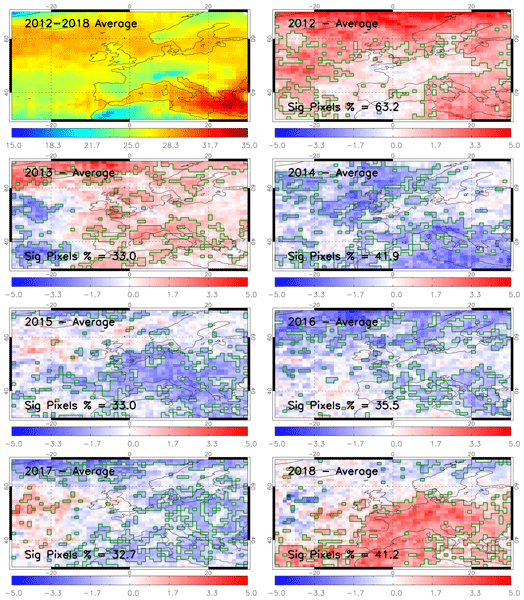
Richard J. Pope, Brian J. Kerridge, Martyn P. Chipperfield, Richard Siddans, Barry G. Latter, Lucy J. Ventress, Matilda A. Pimlott, Wuhu Feng, Edward Comyn-Platt, Garry D. Hayman, Stephen R. Arnold, and Ailish M. Graham
Atmos. Chem. Phys., 23, 13235–13253, https://doi.org/10.5194/acp-23-13235-2023, https://doi.org/10.5194/acp-23-13235-2023, 2023
Short summary
Short summary
In the summer of 2018, Europe experienced several persistent large-scale ozone (O3) pollution episodes. Satellite tropospheric O3 and surface O3 data recorded substantial enhancements in 2018 relative to other years. Targeted model simulations showed that meteorological processes and emissions controlled the elevated surface O3, while mid-tropospheric O3 enhancements were dominated by stratospheric O3 intrusion and advection of North Atlantic O3-rich air masses into Europe.
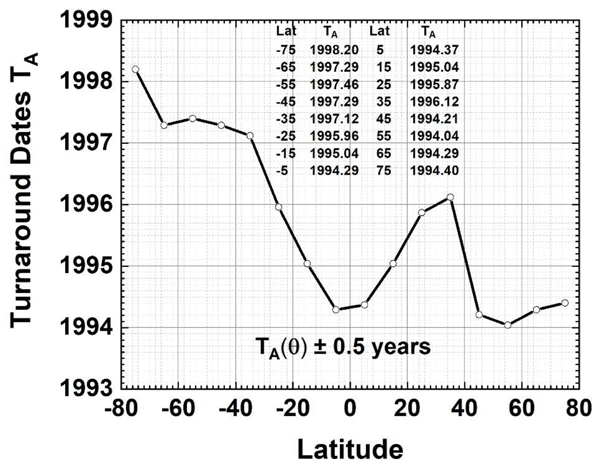
Jay Herman, Jerald Ziemke, and Richard McPeters
Atmos. Meas. Tech., 16, 4693–4707, https://doi.org/10.5194/amt-16-4693-2023, https://doi.org/10.5194/amt-16-4693-2023, 2023
Short summary
Short summary
Fourier series multivariate linear regression trends (% per decade) in ozone were estimated from the Merged Ozone Data Set (MOD) from 1979 to 2021 in two different regimes, from 1979 to TA (the date when ozone stopped decreasing) and TA to 2021. The derived TA is a latitude-dependent date, ranging from 1994 to 1998. TA(θ) is a marker for photochemistry dynamics models attempting to represent ozone change over the past 42 years.
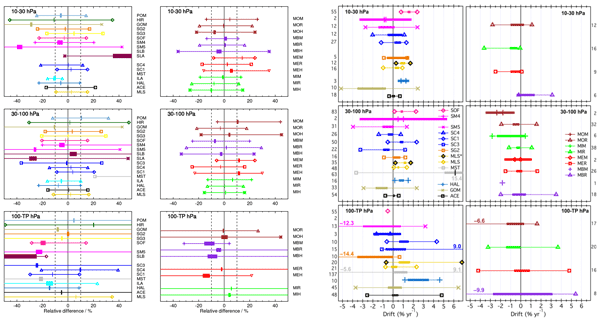
Michael Kiefer, Dale F. Hurst, Gabriele P. Stiller, Stefan Lossow, Holger Vömel, John Anderson, Faiza Azam, Jean-Loup Bertaux, Laurent Blanot, Klaus Bramstedt, John P. Burrows, Robert Damadeo, Bianca Maria Dinelli, Patrick Eriksson, Maya García-Comas, John C. Gille, Mark Hervig, Yasuko Kasai, Farahnaz Khosrawi, Donal Murtagh, Gerald E. Nedoluha, Stefan Noël, Piera Raspollini, William G. Read, Karen H. Rosenlof, Alexei Rozanov, Christopher E. Sioris, Takafumi Sugita, Thomas von Clarmann, Kaley A. Walker, and Katja Weigel
Atmos. Meas. Tech., 16, 4589–4642, https://doi.org/10.5194/amt-16-4589-2023, https://doi.org/10.5194/amt-16-4589-2023, 2023
Short summary
Short summary
We quantify biases and drifts (and their uncertainties) between the stratospheric water vapor measurement records of 15 satellite-based instruments (SATs, with 31 different retrievals) and balloon-borne frost point hygrometers (FPs) launched at 27 globally distributed stations. These comparisons of measurements during the period 2000–2016 are made using robust, consistent statistical methods. With some exceptions, the biases and drifts determined for most SAT–FP pairs are < 10 % and < 1 % yr−1.
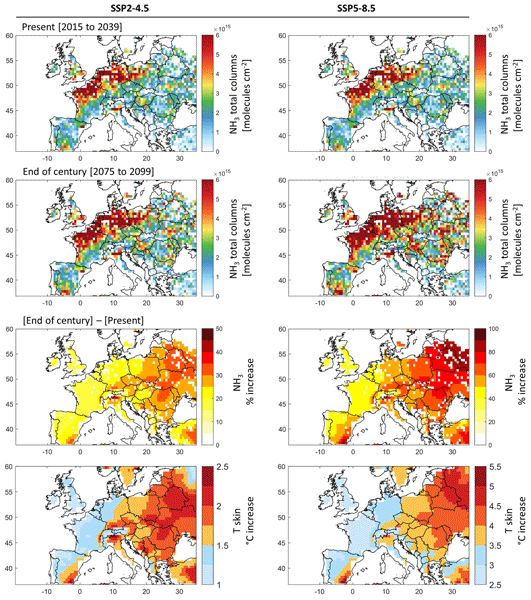
Rimal Abeed, Camille Viatte, William C. Porter, Nikolaos Evangeliou, Cathy Clerbaux, Lieven Clarisse, Martin Van Damme, Pierre-François Coheur, and Sarah Safieddine
Atmos. Chem. Phys., 23, 12505–12523, https://doi.org/10.5194/acp-23-12505-2023, https://doi.org/10.5194/acp-23-12505-2023, 2023
Short summary
Short summary
Ammonia emissions from agricultural activities will inevitably increase with the rise in population. We use a variety of datasets (satellite, reanalysis, and model simulation) to calculate the first regional map of ammonia emission potential during the start of the growing season in Europe. We then apply our developed method using a climate model to show the effect of the temperature increase on future ammonia columns under two possible climate scenarios.
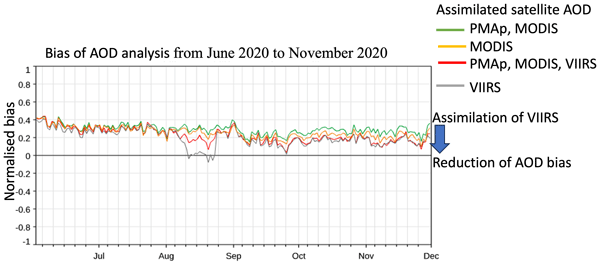
Sebastien Garrigues, Melanie Ades, Samuel Remy, Johannes Flemming, Zak Kipling, Istvan Laszlo, Mark Parrington, Antje Inness, Roberto Ribas, Luke Jones, Richard Engelen, and Vincent-Henri Peuch
Atmos. Chem. Phys., 23, 10473–10487, https://doi.org/10.5194/acp-23-10473-2023, https://doi.org/10.5194/acp-23-10473-2023, 2023
Short summary
Short summary
The Copernicus Atmosphere Monitoring Service (CAMS) provides global monitoring of aerosols using the ECMWF forecast model constrained by the assimilation of satellite aerosol optical depth (AOD). This work aims at evaluating the assimilation of the NOAA VIIRS AOD product in the ECMWF model. It shows that the introduction of VIIRS in the CAMS data assimilation system enhances the accuracy of the aerosol analysis, particularly over Europe and desert and maritime sites.
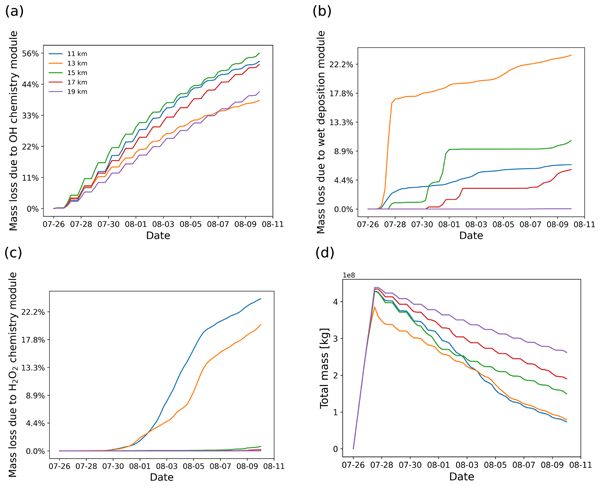
Mingzhao Liu, Lars Hoffmann, Sabine Griessbach, Zhongyin Cai, Yi Heng, and Xue Wu
Geosci. Model Dev., 16, 5197–5217, https://doi.org/10.5194/gmd-16-5197-2023, https://doi.org/10.5194/gmd-16-5197-2023, 2023
Short summary
Short summary
We introduce new and revised chemistry and physics modules in the Massive-Parallel Trajectory Calculations (MPTRAC) Lagrangian transport model aiming to improve the representation of volcanic SO2 transport and depletion. We test these modules in a case study of the Ambae eruption in July 2018 in which the SO2 plume underwent wet removal and convection. The lifetime of SO2 shows highly variable and complex dependencies on the atmospheric conditions at different release heights.
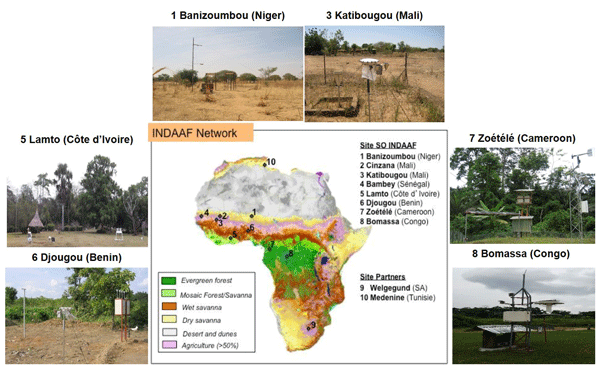
Money Ossohou, Jonathan Edward Hickman, Lieven Clarisse, Pierre-François Coheur, Martin Van Damme, Marcellin Adon, Véronique Yoboué, Eric Gardrat, Maria Dias Alvès, and Corinne Galy-Lacaux
Atmos. Chem. Phys., 23, 9473–9494, https://doi.org/10.5194/acp-23-9473-2023, https://doi.org/10.5194/acp-23-9473-2023, 2023
Short summary
Short summary
The updated analyses of ground-based concentrations and satellite total vertical columns of atmospheric ammonia help us to better understand 21st century ammonia dynamics in sub-Saharan Africa. We conclude that the drivers of trends are agriculture in the dry savanna of Katibougou, Mali; air temperature and agriculture in the wet savanna of Djougou, Benin, and Lamto, Côte d'Ivoire; and leaf area index, air temperature, residential, and agriculture in forests of Bomassa, Republic of Congo.
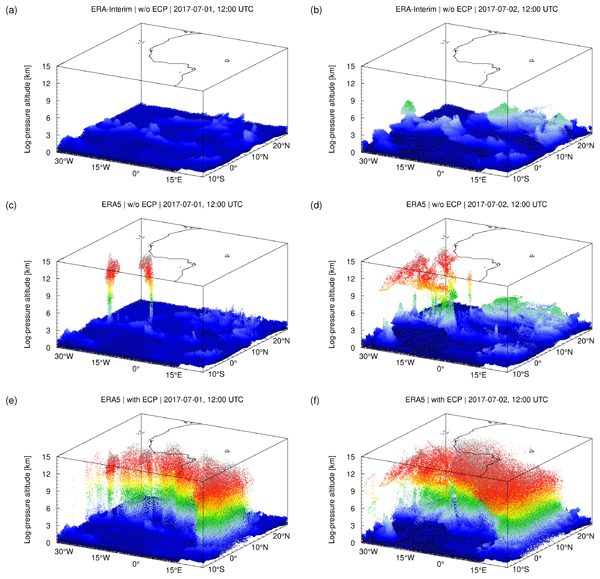
Lars Hoffmann, Paul Konopka, Jan Clemens, and Bärbel Vogel
Atmos. Chem. Phys., 23, 7589–7609, https://doi.org/10.5194/acp-23-7589-2023, https://doi.org/10.5194/acp-23-7589-2023, 2023
Short summary
Short summary
Atmospheric convection plays a key role in tracer transport in the troposphere. Global meteorological forecasts and reanalyses typically have a coarse spatiotemporal resolution that does not adequately resolve the dynamics, transport, and mixing of air associated with storm systems or deep convection. We discuss the application of the extreme convection parameterization in a Lagrangian transport model to improve simulations of tracer transport from the boundary layer into the free troposphere.
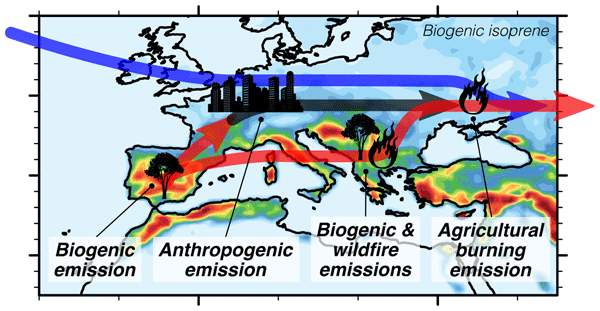
Sachiko Okamoto, Juan Cuesta, Matthias Beekmann, Gaëlle Dufour, Maxim Eremenko, Kazuyuki Miyazaki, Cathy Boonne, Hiroshi Tanimoto, and Hajime Akimoto
Atmos. Chem. Phys., 23, 7399–7423, https://doi.org/10.5194/acp-23-7399-2023, https://doi.org/10.5194/acp-23-7399-2023, 2023
Short summary
Short summary
We present a detailed analysis of the daily evolution of the lowermost tropospheric ozone documented by IASI+GOME2 multispectral satellite observations and that of its precursors from TCR-2 tropospheric chemistry reanalysis. It reveals that the ozone outbreak across Europe in July 2017 was produced during favorable condition for photochemical production of ozone and was associated with multiple sources of ozone precursors: biogenic, anthropogenic, and biomass burning emissions.

Maria Rosa Russo, Brian John Kerridge, Nathan Luke Abraham, James Keeble, Barry Graham Latter, Richard Siddans, James Weber, Paul Thomas Griffiths, John Adrian Pyle, and Alexander Thomas Archibald
Atmos. Chem. Phys., 23, 6169–6196, https://doi.org/10.5194/acp-23-6169-2023, https://doi.org/10.5194/acp-23-6169-2023, 2023
Short summary
Short summary
Tropospheric ozone is an important component of the Earth system as it can affect both climate and air quality. In this work we use observed tropospheric ozone derived from satellite observations and compare it to tropospheric ozone from model simulations. Our aim is to investigate recent changes (2005–2018) in tropospheric ozone in the North Atlantic region and to understand what factors are driving such changes.
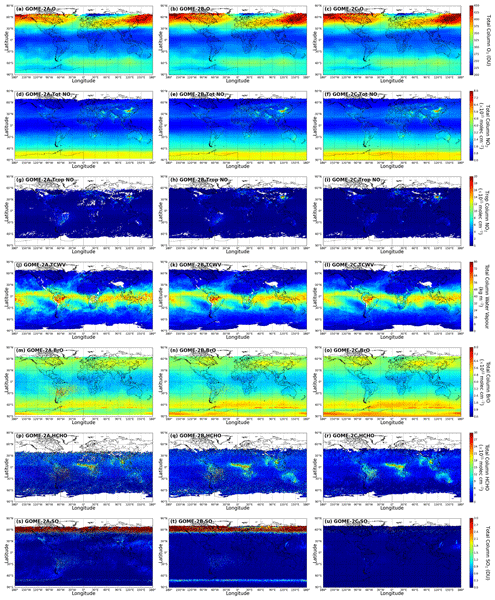
Ka Lok Chan, Pieter Valks, Klaus-Peter Heue, Ronny Lutz, Pascal Hedelt, Diego Loyola, Gaia Pinardi, Michel Van Roozendael, François Hendrick, Thomas Wagner, Vinod Kumar, Alkis Bais, Ankie Piters, Hitoshi Irie, Hisahiro Takashima, Yugo Kanaya, Yongjoo Choi, Kihong Park, Jihyo Chong, Alexander Cede, Udo Frieß, Andreas Richter, Jianzhong Ma, Nuria Benavent, Robert Holla, Oleg Postylyakov, Claudia Rivera Cárdenas, and Mark Wenig
Earth Syst. Sci. Data, 15, 1831–1870, https://doi.org/10.5194/essd-15-1831-2023, https://doi.org/10.5194/essd-15-1831-2023, 2023
Short summary
Short summary
This paper presents the theoretical basis as well as verification and validation of the Global Ozone Monitoring Experiment-2 (GOME-2) daily and monthly level-3 products.

Adrien Vu Van, Anne Boynard, Pascal Prunet, Dominique Jolivet, Olivier Lezeaux, Patrice Henry, Claude Camy-Peyret, Lieven Clarisse, Bruno Franco, Pierre-François Coheur, and Cathy Clerbaux
Atmos. Meas. Tech., 16, 2107–2127, https://doi.org/10.5194/amt-16-2107-2023, https://doi.org/10.5194/amt-16-2107-2023, 2023
Short summary
Short summary
With its near-real-time observations and good horizontal coverage, the Infrared Atmospheric Sounding Interferometer (IASI) instrument can contribute to the monitoring systems for a systematic and continuous detection of exceptional atmospheric events such as fires, anthropogenic pollution episodes, volcanic eruptions, or industrial releases. In this paper, a new approach is described for the detection and characterization of unexpected events in terms of trace gases using IASI radiance spectra.
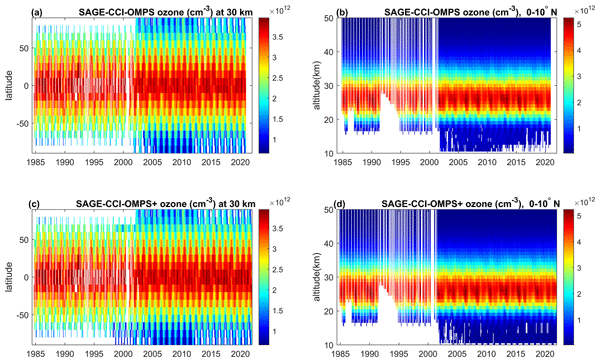
Viktoria F. Sofieva, Monika Szelag, Johanna Tamminen, Carlo Arosio, Alexei Rozanov, Mark Weber, Doug Degenstein, Adam Bourassa, Daniel Zawada, Michael Kiefer, Alexandra Laeng, Kaley A. Walker, Patrick Sheese, Daan Hubert, Michel van Roozendael, Christian Retscher, Robert Damadeo, and Jerry D. Lumpe
Atmos. Meas. Tech., 16, 1881–1899, https://doi.org/10.5194/amt-16-1881-2023, https://doi.org/10.5194/amt-16-1881-2023, 2023
Short summary
Short summary
The paper presents the updated SAGE-CCI-OMPS+ climate data record of monthly zonal mean ozone profiles. This dataset covers the stratosphere and combines measurements by nine limb and occultation satellite instruments (SAGE II, OSIRIS, MIPAS, SCIAMACHY, GOMOS, ACE-FTS, OMPS-LP, POAM III, and SAGE III/ISS). The update includes new versions of MIPAS, ACE-FTS, and OSIRIS datasets and introduces data from additional sensors (POAM III and SAGE III/ISS) and retrieval processors (OMPS-LP).
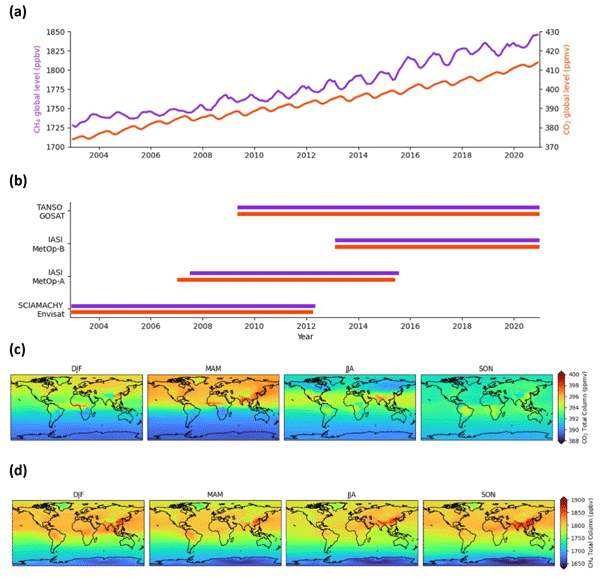
Anna Agustí-Panareda, Jérôme Barré, Sébastien Massart, Antje Inness, Ilse Aben, Melanie Ades, Bianca C. Baier, Gianpaolo Balsamo, Tobias Borsdorff, Nicolas Bousserez, Souhail Boussetta, Michael Buchwitz, Luca Cantarello, Cyril Crevoisier, Richard Engelen, Henk Eskes, Johannes Flemming, Sébastien Garrigues, Otto Hasekamp, Vincent Huijnen, Luke Jones, Zak Kipling, Bavo Langerock, Joe McNorton, Nicolas Meilhac, Stefan Noël, Mark Parrington, Vincent-Henri Peuch, Michel Ramonet, Miha Razinger, Maximilian Reuter, Roberto Ribas, Martin Suttie, Colm Sweeney, Jérôme Tarniewicz, and Lianghai Wu
Atmos. Chem. Phys., 23, 3829–3859, https://doi.org/10.5194/acp-23-3829-2023, https://doi.org/10.5194/acp-23-3829-2023, 2023
Short summary
Short summary
We present a global dataset of atmospheric CO2 and CH4, the two most important human-made greenhouse gases, which covers almost 2 decades (2003–2020). It is produced by combining satellite data of CO2 and CH4 with a weather and air composition prediction model, and it has been carefully evaluated against independent observations to ensure validity and point out deficiencies to the user. This dataset can be used for scientific studies in the field of climate change and the global carbon cycle.
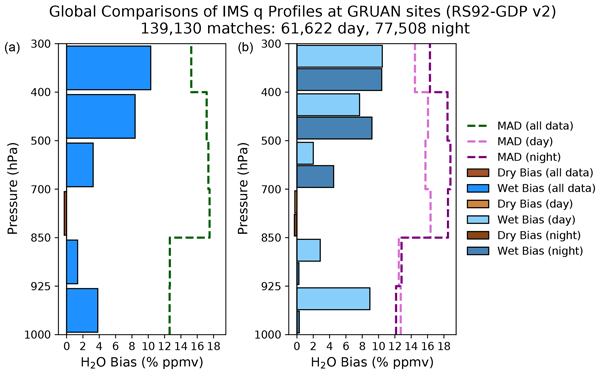
Tim Trent, Richard Siddans, Brian Kerridge, Marc Schröder, Noëlle A. Scott, and John Remedios
Atmos. Meas. Tech., 16, 1503–1526, https://doi.org/10.5194/amt-16-1503-2023, https://doi.org/10.5194/amt-16-1503-2023, 2023
Short summary
Short summary
Modern weather satellites provide essential information on our lower atmosphere's moisture content and temperature structure. This measurement record will span over 40 years, making it a valuable resource for climate studies. This study characterizes atmospheric temperature and humidity profiles from a European Space Agency climate project. Using weather balloon measurements, we demonstrated the performance of this dataset was within the tolerances required for future climate studies.
Peng Yuan, Roeland Van Malderen, Xungang Yin, Hannes Vogelmann, Weiping Jiang, Joseph Awange, Bernhard Heck, and Hansjörg Kutterer
Atmos. Chem. Phys., 23, 3517–3541, https://doi.org/10.5194/acp-23-3517-2023, https://doi.org/10.5194/acp-23-3517-2023, 2023
Short summary
Short summary
Water vapour plays an important role in various weather and climate processes. However, due to its large spatiotemporal variability, its high-accuracy quantification remains a challenge. In this study, 20+ years of GPS-derived integrated water vapour (IWV) retrievals in Europe were obtained. They were then used to characterise the temporal features of Europe's IWV and assess six atmospheric reanalyses. Results show that ERA5 outperforms the other reanalyses at most temporal scales.
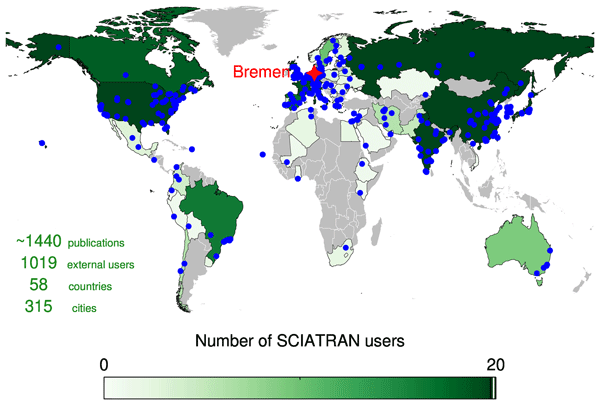
Linlu Mei, Vladimir Rozanov, Alexei Rozanov, and John P. Burrows
Geosci. Model Dev., 16, 1511–1536, https://doi.org/10.5194/gmd-16-1511-2023, https://doi.org/10.5194/gmd-16-1511-2023, 2023
Short summary
Short summary
This paper summarizes recent developments of aerosol, cloud and surface reflectance databases and models in the framework of the software package SCIATRAN. These updates and developments extend the capabilities of the radiative transfer modeling, especially by accounting for different kinds of vertical inhomogeneties. Vertically inhomogeneous clouds and different aerosol types can be easily accounted for within SCIATRAN (V4.6). The widely used surface models and databases are now available.
Peng Yuan, Geoffrey Blewitt, Corné Kreemer, William C. Hammond, Donald Argus, Xungang Yin, Roeland Van Malderen, Michael Mayer, Weiping Jiang, Joseph Awange, and Hansjörg Kutterer
Earth Syst. Sci. Data, 15, 723–743, https://doi.org/10.5194/essd-15-723-2023, https://doi.org/10.5194/essd-15-723-2023, 2023
Short summary
Short summary
We developed a 5 min global integrated water vapour (IWV) product from 12 552 ground-based GPS stations in 2020. It contains more than 1 billion IWV estimates. The dataset is an enhanced version of the existing operational GPS IWV dataset from the Nevada Geodetic Laboratory. The enhancement is reached by using accurate meteorological information from ERA5 for the GPS IWV retrieval with a significantly higher spatiotemporal resolution. The dataset is recommended for high-accuracy applications.
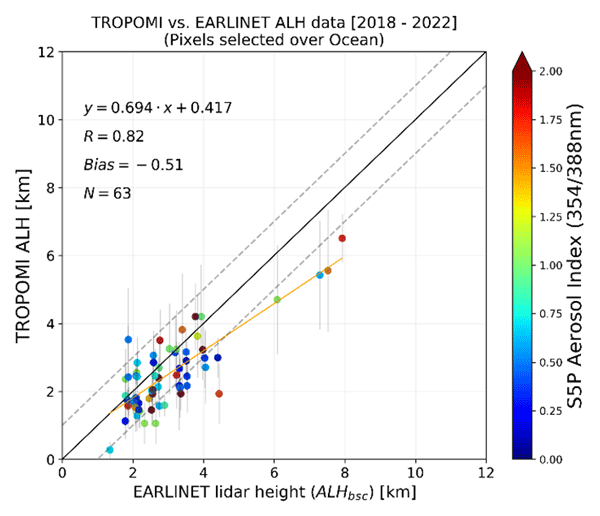
Konstantinos Michailidis, Maria-Elissavet Koukouli, Dimitris Balis, J. Pepijn Veefkind, Martin de Graaf, Lucia Mona, Nikolaos Papagianopoulos, Gesolmina Pappalardo, Ioanna Tsikoudi, Vassilis Amiridis, Eleni Marinou, Anna Gialitaki, Rodanthi-Elisavet Mamouri, Argyro Nisantzi, Daniele Bortoli, Maria João Costa, Vanda Salgueiro, Alexandros Papayannis, Maria Mylonaki, Lucas Alados-Arboledas, Salvatore Romano, Maria Rita Perrone, and Holger Baars
Atmos. Chem. Phys., 23, 1919–1940, https://doi.org/10.5194/acp-23-1919-2023, https://doi.org/10.5194/acp-23-1919-2023, 2023
Short summary
Short summary
Comparisons with ground-based correlative lidar measurements constitute a key component in the validation of satellite aerosol products. This paper presents the validation of the TROPOMI aerosol layer height (ALH) product, using archived quality assured ground-based data from lidar stations that belong to the EARLINET network. Comparisons between the TROPOMI ALH and co-located EARLINET measurements show good agreement over the ocean.
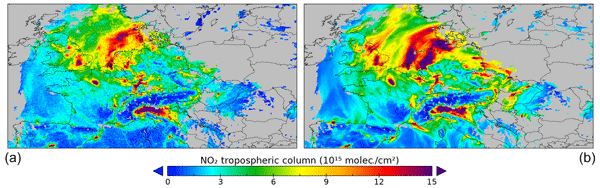
John Douros, Henk Eskes, Jos van Geffen, K. Folkert Boersma, Steven Compernolle, Gaia Pinardi, Anne-Marlene Blechschmidt, Vincent-Henri Peuch, Augustin Colette, and Pepijn Veefkind
Geosci. Model Dev., 16, 509–534, https://doi.org/10.5194/gmd-16-509-2023, https://doi.org/10.5194/gmd-16-509-2023, 2023
Short summary
Short summary
We focus on the challenges associated with comparing atmospheric composition models with satellite products such as tropospheric NO2 columns. The aim is to highlight the methodological difficulties and propose sound ways of doing such comparisons. Building on the comparisons, a new satellite product is proposed and made available, which takes advantage of higher-resolution, regional atmospheric modelling to improve estimates of troposheric NO2 columns over Europe.
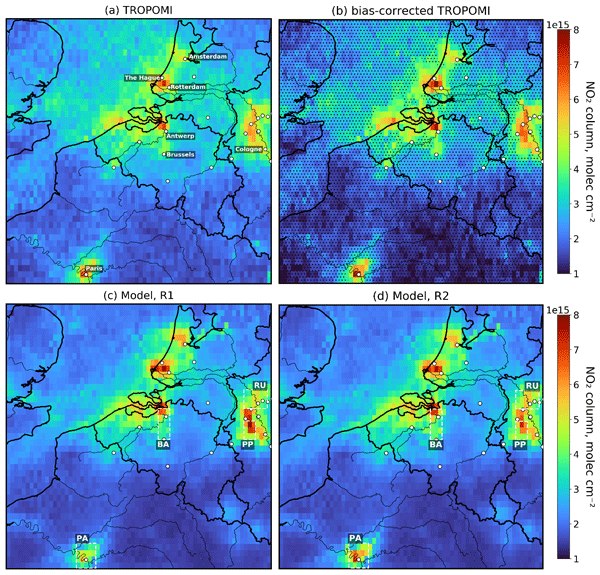
Catalina Poraicu, Jean-François Müller, Trissevgeni Stavrakou, Dominique Fonteyn, Frederik Tack, Felix Deutsch, Quentin Laffineur, Roeland Van Malderen, and Nele Veldeman
Geosci. Model Dev., 16, 479–508, https://doi.org/10.5194/gmd-16-479-2023, https://doi.org/10.5194/gmd-16-479-2023, 2023
Short summary
Short summary
High-resolution WRF-Chem simulations are conducted over Antwerp, Belgium, in June 2019 and evaluated using meteorological data and in situ, airborne, and spaceborne NO2 measurements. An intercomparison of model, aircraft, and TROPOMI NO2 columns is conducted to characterize biases in versions 1.3.1 and 2.3.1 of the satellite product. A mass balance method is implemented to provide improved emissions for simulating NO2 distribution over the study area.

Katerina Garane, Ka Lok Chan, Maria-Elissavet Koukouli, Diego Loyola, and Dimitris Balis
Atmos. Meas. Tech., 16, 57–74, https://doi.org/10.5194/amt-16-57-2023, https://doi.org/10.5194/amt-16-57-2023, 2023
Short summary
Short summary
In this work, 2.5 years of TROPOMI/S5P Total Column Water Vapor (TCWV) observations retrieved from the blue wavelength band are validated against co-located precipitable water measurements from NASA AERONET, which uses Cimel Sun photometers globally. Overall, the TCWV product agrees well on a global scale with the ground-based dataset (Pearson correl. coefficient 0.909) and has a mean relative bias of −2.7 ± 4.9 % with respect to the AERONET observations for moderate albedo and cloudiness.
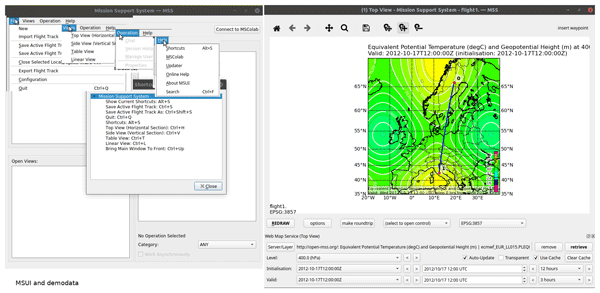
Reimar Bauer, Jens-Uwe Grooß, Jörn Ungermann, May Bär, Markus Geldenhuys, and Lars Hoffmann
Geosci. Model Dev., 15, 8983–8997, https://doi.org/10.5194/gmd-15-8983-2022, https://doi.org/10.5194/gmd-15-8983-2022, 2022
Short summary
Short summary
The Mission Support System (MSS) is an open source software package that has been used for planning flight tracks of scientific aircraft in multiple measurement campaigns during the last decade. Here, we describe the MSS software and its use during the SouthTRAC measurement campaign in 2019. As an example for how the MSS software is used in conjunction with many datasets, we describe the planning of a single flight probing orographic gravity waves propagating up into the lower mesosphere.
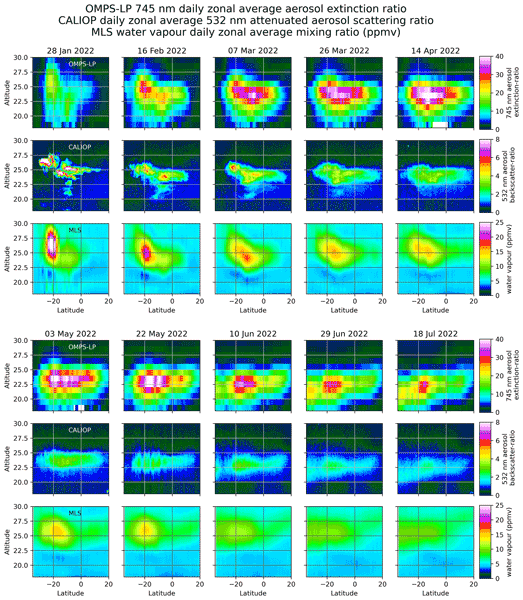
Bernard Legras, Clair Duchamp, Pasquale Sellitto, Aurélien Podglajen, Elisa Carboni, Richard Siddans, Jens-Uwe Grooß, Sergey Khaykin, and Felix Ploeger
Atmos. Chem. Phys., 22, 14957–14970, https://doi.org/10.5194/acp-22-14957-2022, https://doi.org/10.5194/acp-22-14957-2022, 2022
Short summary
Short summary
The long-duration atmospheric impact of the Tonga eruption in January 2022 is a plume of water and sulfate aerosols in the stratosphere that persisted for more than 6 months. We study this evolution using several satellite instruments and analyse the unusual behaviour of this plume as sulfates and water first moved down rapidly and then separated into two layers. We also report the self-organization in compact and long-lived patches.
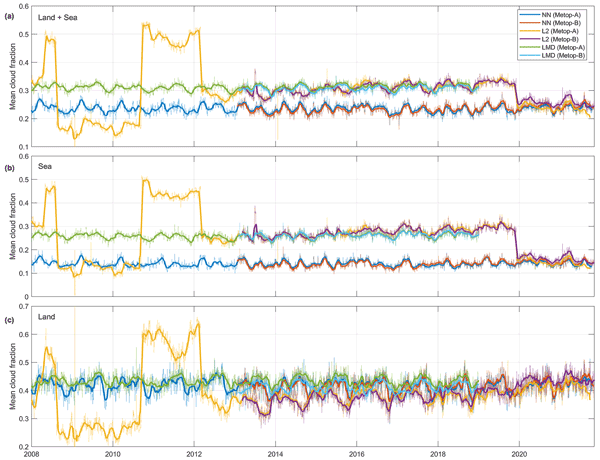
Simon Whitburn, Lieven Clarisse, Marc Crapeau, Thomas August, Tim Hultberg, Pierre François Coheur, and Cathy Clerbaux
Atmos. Meas. Tech., 15, 6653–6668, https://doi.org/10.5194/amt-15-6653-2022, https://doi.org/10.5194/amt-15-6653-2022, 2022
Short summary
Short summary
With more than 15 years of measurements, the IASI radiance dataset is becoming a reference climate data record. Its exploitation for satellite applications requires an accurate and unbiased detection of cloud scenes. Here, we present a new cloud detection algorithm for IASI that is both sensitive and consistent over time. It is based on the use of a neural network, relying on IASI radiance information only and taking as a reference the last version of the operational IASI L2 cloud product.
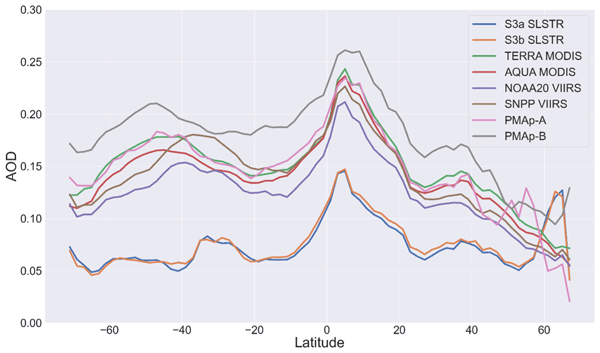
Sebastien Garrigues, Samuel Remy, Julien Chimot, Melanie Ades, Antje Inness, Johannes Flemming, Zak Kipling, Istvan Laszlo, Angela Benedetti, Roberto Ribas, Soheila Jafariserajehlou, Bertrand Fougnie, Shobha Kondragunta, Richard Engelen, Vincent-Henri Peuch, Mark Parrington, Nicolas Bousserez, Margarita Vazquez Navarro, and Anna Agusti-Panareda
Atmos. Chem. Phys., 22, 14657–14692, https://doi.org/10.5194/acp-22-14657-2022, https://doi.org/10.5194/acp-22-14657-2022, 2022
Short summary
Short summary
The Copernicus Atmosphere Monitoring Service (CAMS) provides global monitoring of aerosols using the ECMWF forecast model constrained by the assimilation of satellite aerosol optical depth (AOD). This work aims at evaluating two new satellite AODs to enhance the CAMS aerosol global forecast. It highlights the spatial and temporal differences between the satellite AOD products at the model spatial resolution, which is essential information to design multi-satellite AOD data assimilation schemes.

Antje Inness, Ilse Aben, Melanie Ades, Tobias Borsdorff, Johannes Flemming, Luke Jones, Jochen Landgraf, Bavo Langerock, Philippe Nedelec, Mark Parrington, and Roberto Ribas
Atmos. Chem. Phys., 22, 14355–14376, https://doi.org/10.5194/acp-22-14355-2022, https://doi.org/10.5194/acp-22-14355-2022, 2022
Short summary
Short summary
The Copernicus Atmosphere Monitoring Service (CAMS) provides daily global air quality forecasts to users worldwide. One of the species of interest is carbon monoxide (CO), an important trace gas in the atmosphere with anthropogenic and natural sources, produced by incomplete combustion, for example, by wildfires. This paper looks at how well CAMS can model CO in the atmosphere and shows that the fields can be improved when blending CO data from the TROPOMI instrument with the CAMS model.
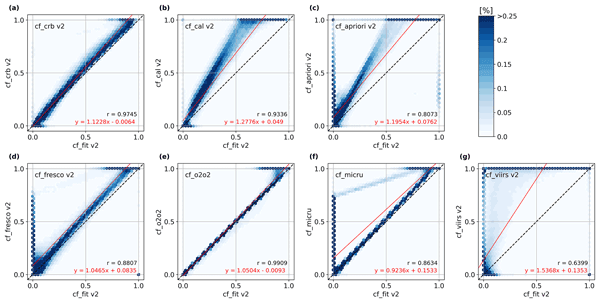
Miriam Latsch, Andreas Richter, Henk Eskes, Maarten Sneep, Ping Wang, Pepijn Veefkind, Ronny Lutz, Diego Loyola, Athina Argyrouli, Pieter Valks, Thomas Wagner, Holger Sihler, Michel van Roozendael, Nicolas Theys, Huan Yu, Richard Siddans, and John P. Burrows
Atmos. Meas. Tech., 15, 6257–6283, https://doi.org/10.5194/amt-15-6257-2022, https://doi.org/10.5194/amt-15-6257-2022, 2022
Short summary
Short summary
The article investigates different S5P TROPOMI cloud retrieval algorithms for tropospheric trace gas retrievals. The cloud products show differences primarily over snow and ice and for scenes under sun glint. Some issues regarding across-track dependence are found for the cloud fractions as well as for the cloud heights.
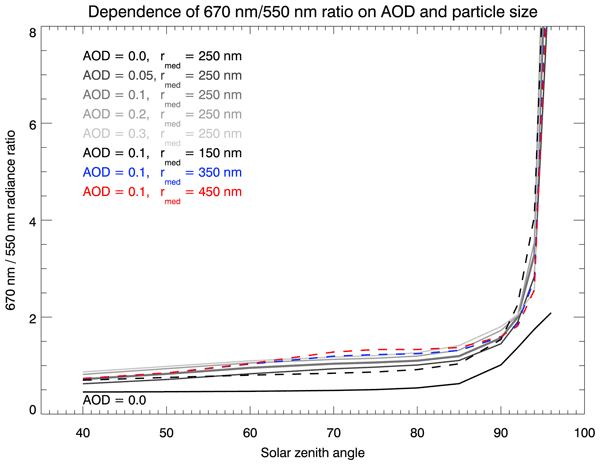
Christian von Savigny, Anna Lange, Anne Hemkendreis, Christoph G. Hoffmann, and Alexei Rozanov
Clim. Past, 18, 2345–2356, https://doi.org/10.5194/cp-18-2345-2022, https://doi.org/10.5194/cp-18-2345-2022, 2022
Short summary
Short summary
This study investigates the possibility of inferring information on aerosol optical depth from photographs of historic paintings. The idea – which has been applied in previous studies – is very interesting because it would provide an archive of the atmospheric aerosol loading covering many centuries. We show that twilight colours depend not only on the aerosol optical thickness, but also on several other parameters, making a quantitative estimate of aerosol optical depth very difficult.
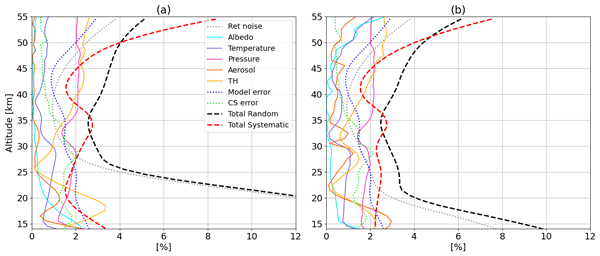
Carlo Arosio, Alexei Rozanov, Victor Gorshelev, Alexandra Laeng, and John P. Burrows
Atmos. Meas. Tech., 15, 5949–5967, https://doi.org/10.5194/amt-15-5949-2022, https://doi.org/10.5194/amt-15-5949-2022, 2022
Short summary
Short summary
This paper characterizes the uncertainties affecting the ozone profiles retrieved at the University of Bremen through OMPS limb satellite observations. An accurate knowledge of the uncertainties is relevant for the validation of the product and to correctly interpret the retrieval results. We investigate several sources of uncertainties, estimate a total random and systematic component, and verify the consistency of the combined OMPS-MLS total uncertainty.
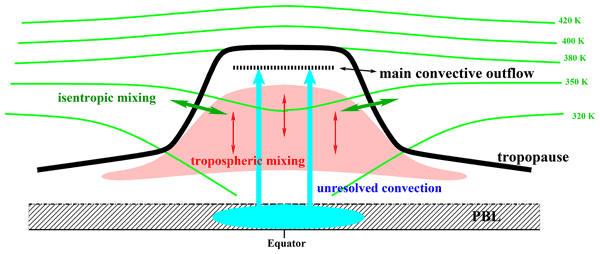
Paul Konopka, Mengchu Tao, Marc von Hobe, Lars Hoffmann, Corinna Kloss, Fabrizio Ravegnani, C. Michael Volk, Valentin Lauther, Andreas Zahn, Peter Hoor, and Felix Ploeger
Geosci. Model Dev., 15, 7471–7487, https://doi.org/10.5194/gmd-15-7471-2022, https://doi.org/10.5194/gmd-15-7471-2022, 2022
Short summary
Short summary
Pure trajectory-based transport models driven by meteorology derived from reanalysis products (ERA5) take into account only the resolved, advective part of transport. That means neither mixing processes nor unresolved subgrid-scale advective processes like convection are included. The Chemical Lagrangian Model of the Stratosphere (CLaMS) includes these processes. We show that isentropic mixing dominates unresolved transport. The second most important transport process is unresolved convection.
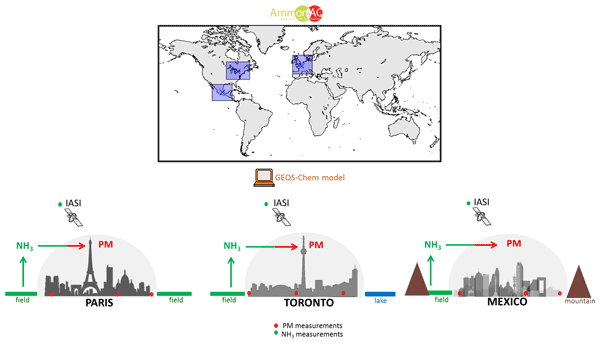
Camille Viatte, Rimal Abeed, Shoma Yamanouchi, William C. Porter, Sarah Safieddine, Martin Van Damme, Lieven Clarisse, Beatriz Herrera, Michel Grutter, Pierre-Francois Coheur, Kimberly Strong, and Cathy Clerbaux
Atmos. Chem. Phys., 22, 12907–12922, https://doi.org/10.5194/acp-22-12907-2022, https://doi.org/10.5194/acp-22-12907-2022, 2022
Short summary
Short summary
Large cities can experience high levels of fine particulate matter (PM2.5) pollution linked to ammonia (NH3) mainly emitted from agricultural activities. Using a combination of PM2.5 and NH3 measurements from in situ instruments, satellite infrared spectrometers, and atmospheric model simulations, we have demonstrated the role of NH3 and meteorological conditions on pollution events occurring over Paris, Toronto, and Mexico City.
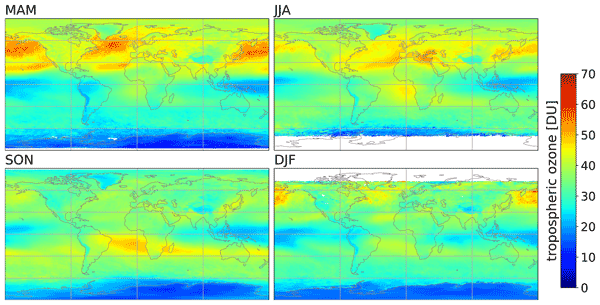
Klaus-Peter Heue, Diego Loyola, Fabian Romahn, Walter Zimmer, Simon Chabrillat, Quentin Errera, Jerry Ziemke, and Natalya Kramarova
Atmos. Meas. Tech., 15, 5563–5579, https://doi.org/10.5194/amt-15-5563-2022, https://doi.org/10.5194/amt-15-5563-2022, 2022
Short summary
Short summary
To retrieve tropospheric ozone column information, we subtract stratospheric column data of BASCOE from TROPOMI/S5P total ozone columns.
The new S5P-BASCOE data agree well with existing tropospheric data like OMPS-MERRA-2. The data are also compared to ozone soundings.
The tropospheric ozone columns show the expected temporal and spatial patterns. We will also apply the algorithm to future UV nadir missions like Sentinel 4 or 5 or to recent and ongoing missions like GOME_2 or OMI.
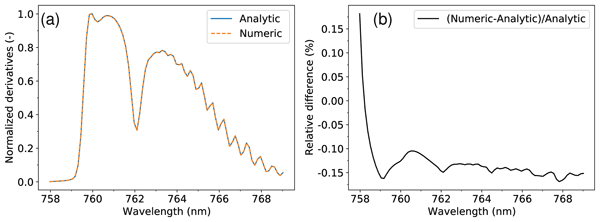
Johan F. de Haan, Ping Wang, Maarten Sneep, J. Pepijn Veefkind, and Piet Stammes
Geosci. Model Dev., 15, 7031–7050, https://doi.org/10.5194/gmd-15-7031-2022, https://doi.org/10.5194/gmd-15-7031-2022, 2022
Short summary
Short summary
We present an overview of the DISAMAR radiative transfer code, highlighting the novel semi-analytical derivatives for the doubling–adding formulae and the new DISMAS technique for weak absorbers. DISAMAR includes forward simulations and retrievals for satellite spectral measurements from 270 to 2400 nm to determine instrument specifications for passive remote sensing. It has been used in various Sentinel-4/5P/5 projects and in the TROPOMI aerosol layer height and ozone profile products.
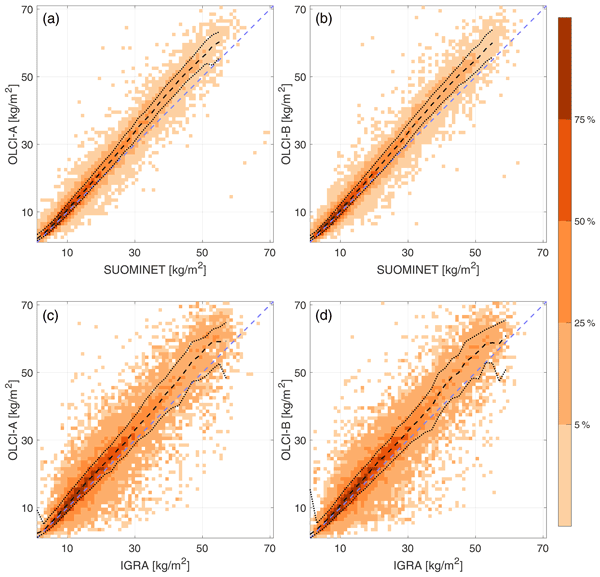
Niilo Kalakoski, Viktoria F. Sofieva, René Preusker, Claire Henocq, Matthieu Denisselle, Steffen Dransfeld, and Silvia Scifoni
Atmos. Meas. Tech., 15, 5129–5140, https://doi.org/10.5194/amt-15-5129-2022, https://doi.org/10.5194/amt-15-5129-2022, 2022
Short summary
Short summary
Geophysical validation of the Integrated Water Vapour (IWV) product from the Sentinel-3 Ocean and Land Colour Instrument (OLCI) was performed against reference observations from SUOMINET and IGRA databases. Results for cloud-free matchups over land show a wet bias of 7 %–10 % for OLCI, with a high correlation against the reference observations (0.98 against SUOMINET and 0.90 against IGRA). Special attention is given to validation of uncertainty estimates and cloud flagging.
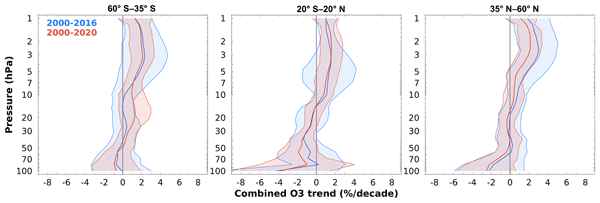
Sophie Godin-Beekmann, Niramson Azouz, Viktoria F. Sofieva, Daan Hubert, Irina Petropavlovskikh, Peter Effertz, Gérard Ancellet, Doug A. Degenstein, Daniel Zawada, Lucien Froidevaux, Stacey Frith, Jeannette Wild, Sean Davis, Wolfgang Steinbrecht, Thierry Leblanc, Richard Querel, Kleareti Tourpali, Robert Damadeo, Eliane Maillard Barras, René Stübi, Corinne Vigouroux, Carlo Arosio, Gerald Nedoluha, Ian Boyd, Roeland Van Malderen, Emmanuel Mahieu, Dan Smale, and Ralf Sussmann
Atmos. Chem. Phys., 22, 11657–11673, https://doi.org/10.5194/acp-22-11657-2022, https://doi.org/10.5194/acp-22-11657-2022, 2022
Short summary
Short summary
An updated evaluation up to 2020 of stratospheric ozone profile long-term trends at extrapolar latitudes based on satellite and ground-based records is presented. Ozone increase in the upper stratosphere is confirmed, with significant trends at most latitudes. In this altitude region, a very good agreement is found with trends derived from chemistry–climate model simulations. Observed and modelled trends diverge in the lower stratosphere, but the differences are non-significant.
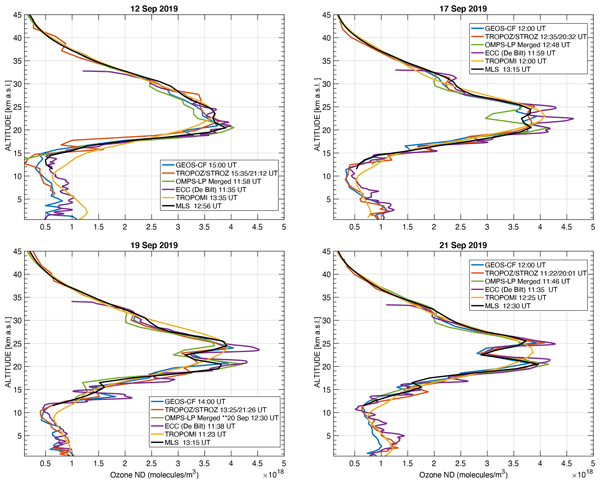
John T. Sullivan, Arnoud Apituley, Nora Mettig, Karin Kreher, K. Emma Knowland, Marc Allaart, Ankie Piters, Michel Van Roozendael, Pepijn Veefkind, Jerry R. Ziemke, Natalya Kramarova, Mark Weber, Alexei Rozanov, Laurence Twigg, Grant Sumnicht, and Thomas J. McGee
Atmos. Chem. Phys., 22, 11137–11153, https://doi.org/10.5194/acp-22-11137-2022, https://doi.org/10.5194/acp-22-11137-2022, 2022
Short summary
Short summary
A TROPOspheric Monitoring Instrument (TROPOMI) validation campaign (TROLIX-19) was held in the Netherlands in September 2019. The research presented here focuses on using ozone lidars from NASA’s Goddard Space Flight Center to better evaluate the characterization of ozone throughout TROLIX-19 as compared to balloon-borne, space-borne and ground-based passive measurements, as well as a global coupled chemistry meteorology model.
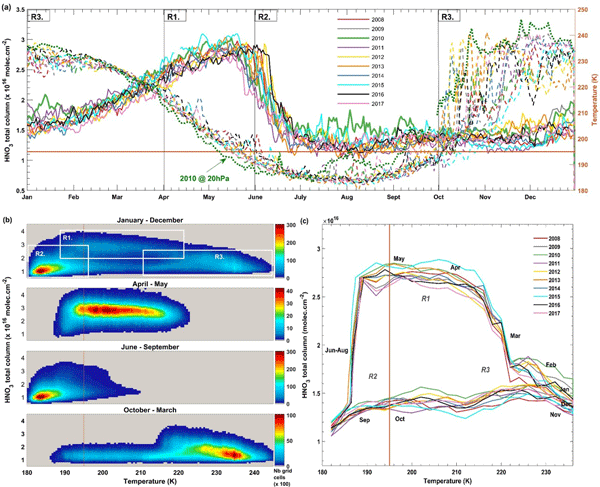
Catherine Wespes, Gaetane Ronsmans, Lieven Clarisse, Susan Solomon, Daniel Hurtmans, Cathy Clerbaux, and Pierre-François Coheur
Atmos. Chem. Phys., 22, 10993–11007, https://doi.org/10.5194/acp-22-10993-2022, https://doi.org/10.5194/acp-22-10993-2022, 2022
Short summary
Short summary
The first 10-year data record (2008–2017) of HNO3 total columns measured by the IASI-A/MetOp infrared sounder is exploited to monitor the relationship between the temperature decrease and the HNO3 loss observed each year in the Antarctic stratosphere during the polar night. We verify the recurrence of specific regimes in the cycle of IASI HNO3 and identify the day and the 50 hPa temperature (
drop temperature) corresponding to the onset of denitrification in Antarctic winter for each year.
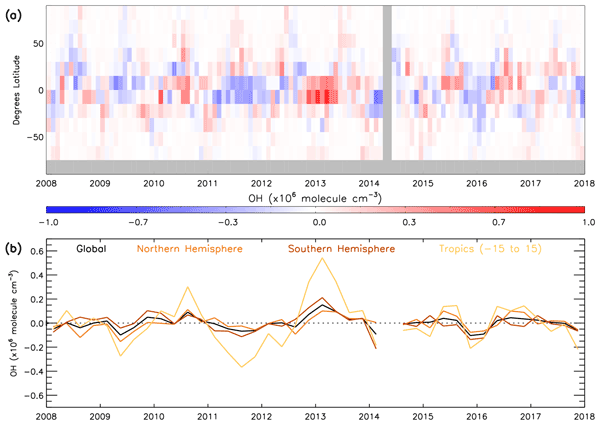
Matilda A. Pimlott, Richard J. Pope, Brian J. Kerridge, Barry G. Latter, Diane S. Knappett, Dwayne E. Heard, Lucy J. Ventress, Richard Siddans, Wuhu Feng, and Martyn P. Chipperfield
Atmos. Chem. Phys., 22, 10467–10488, https://doi.org/10.5194/acp-22-10467-2022, https://doi.org/10.5194/acp-22-10467-2022, 2022
Short summary
Short summary
We present a new method to derive global information of the hydroxyl radical (OH), an important atmospheric oxidant. OH controls the lifetime of trace gases important to air quality and climate. We use satellite observations of ozone, carbon monoxide, methane and water vapour in a simple expression to derive OH around 3–4 km altitude. The derived OH compares well to model and aircraft OH data. We then apply the method to 10 years of satellite data to study the inter-annual variability of OH.
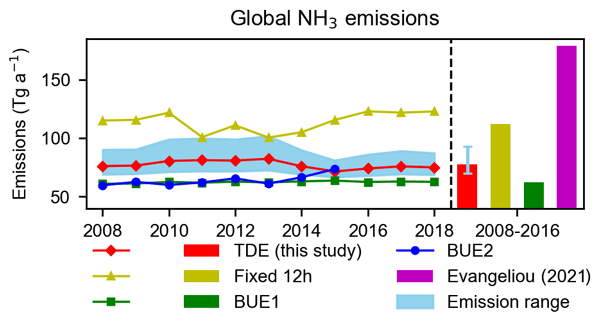
Zhenqi Luo, Yuzhong Zhang, Wei Chen, Martin Van Damme, Pierre-François Coheur, and Lieven Clarisse
Atmos. Chem. Phys., 22, 10375–10388, https://doi.org/10.5194/acp-22-10375-2022, https://doi.org/10.5194/acp-22-10375-2022, 2022
Short summary
Short summary
We quantify global ammonia (NH3) emissions over the period from 2008 to 2018 using an improved fast top-down method that incorporates Infrared Atmospheric
Sounding Interferometer (IASI) satellite observations and GEOS-Chem atmospheric chemical simulations. The top-down analysis finds a global total NH3 emission that is 30 % higher than the bottom-up estimate, largely reconciling a large discrepancy of more than a factor of 2 found in previous top-down studies using the same satellite data.
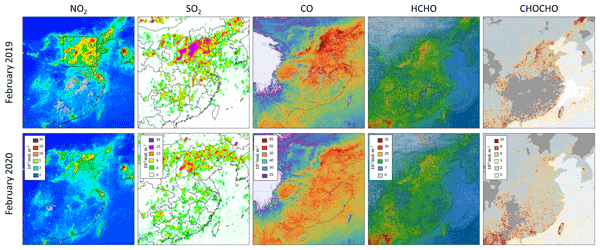
Pieternel F. Levelt, Deborah C. Stein Zweers, Ilse Aben, Maite Bauwens, Tobias Borsdorff, Isabelle De Smedt, Henk J. Eskes, Christophe Lerot, Diego G. Loyola, Fabian Romahn, Trissevgeni Stavrakou, Nicolas Theys, Michel Van Roozendael, J. Pepijn Veefkind, and Tijl Verhoelst
Atmos. Chem. Phys., 22, 10319–10351, https://doi.org/10.5194/acp-22-10319-2022, https://doi.org/10.5194/acp-22-10319-2022, 2022
Short summary
Short summary
Using the COVID-19 lockdown periods as an example, we show how Sentinel-5P/TROPOMI trace gas data (NO2, SO2, CO, HCHO and CHOCHO) can be used to understand impacts on air quality for regions and cities around the globe. We also provide information for both experienced and inexperienced users about how we created the data using state-of-the-art algorithms, where to get the data, methods taking meteorological and seasonal variability into consideration, and insights for future studies.
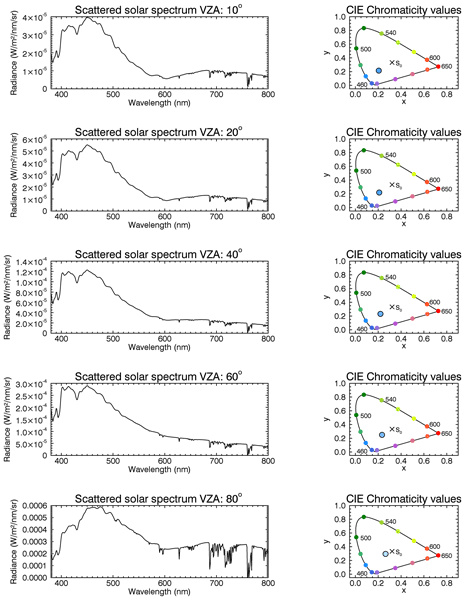
Anna Lange, Gerd Baumgarten, Alexei Rozanov, and Christian von Savigny
Ann. Geophys., 40, 407–419, https://doi.org/10.5194/angeo-40-407-2022, https://doi.org/10.5194/angeo-40-407-2022, 2022
Short summary
Short summary
We investigate the influence of different parameters on the colour of noctilucent clouds (highest clouds in the atmosphere), using radiative transfer calculations. We determined the effect of the particle size, optical depth, single scattering/multiple scattering and ozone. For sufficiently large optical depth and for specific viewing geometries, ozone plays only a minor role in the blueish colour of noctilucent clouds (new result).

Quintus Kleipool, Nico Rozemeijer, Mirna van Hoek, Jonatan Leloux, Erwin Loots, Antje Ludewig, Emiel van der Plas, Daley Adrichem, Raoul Harel, Simon Spronk, Mark ter Linden, Glen Jaross, David Haffner, Pepijn Veefkind, and Pieternel F. Levelt
Atmos. Meas. Tech., 15, 3527–3553, https://doi.org/10.5194/amt-15-3527-2022, https://doi.org/10.5194/amt-15-3527-2022, 2022
Short summary
Short summary
A new collection-4 dataset for the Ozone Monitoring Instrument (OMI) mission has been established to supersede the current collection-3 level-1b (L1b) data, produced with a newly developed L01b data processor based on the TROPOspheric Monitoring Instrument (TROPOMI) L01b processor. The collection-4 L1b data have a similar output format to the TROPOMI L1b data for easy connection of the data series. Many insights from the TROPOMI algorithms, as well as from OMI collection-3 usage, were included.
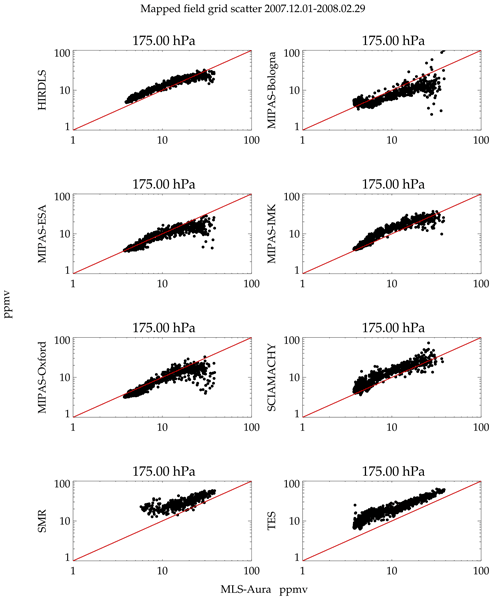
William G. Read, Gabriele Stiller, Stefan Lossow, Michael Kiefer, Farahnaz Khosrawi, Dale Hurst, Holger Vömel, Karen Rosenlof, Bianca M. Dinelli, Piera Raspollini, Gerald E. Nedoluha, John C. Gille, Yasuko Kasai, Patrick Eriksson, Christopher E. Sioris, Kaley A. Walker, Katja Weigel, John P. Burrows, and Alexei Rozanov
Atmos. Meas. Tech., 15, 3377–3400, https://doi.org/10.5194/amt-15-3377-2022, https://doi.org/10.5194/amt-15-3377-2022, 2022
Short summary
Short summary
This paper attempts to provide an assessment of the accuracy of 21 satellite-based instruments that remotely measure atmospheric humidity in the upper troposphere of the Earth's atmosphere. The instruments made their measurements from 1984 to the present time; however, most of these instruments began operations after 2000, and only a few are still operational. The objective of this study is to quantify the accuracy of each satellite humidity data set.
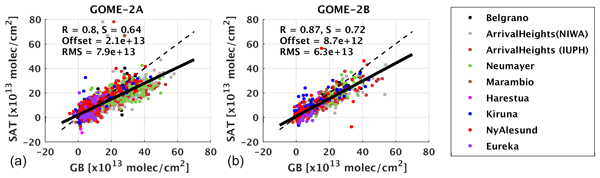
Gaia Pinardi, Michel Van Roozendael, François Hendrick, Andreas Richter, Pieter Valks, Ramina Alwarda, Kristof Bognar, Udo Frieß, José Granville, Myojeong Gu, Paul Johnston, Cristina Prados-Roman, Richard Querel, Kimberly Strong, Thomas Wagner, Folkard Wittrock, and Margarita Yela Gonzalez
Atmos. Meas. Tech., 15, 3439–3463, https://doi.org/10.5194/amt-15-3439-2022, https://doi.org/10.5194/amt-15-3439-2022, 2022
Short summary
Short summary
We report on the GOME-2A and GOME-2B OClO dataset (2007 to 2016, from the EUMETSAT's AC SAF) validation using data from nine NDACC zenith-scattered-light DOAS (ZSL-DOAS) instruments distributed in both the Arctic and Antarctic. Specific sensitivity tests are performed on the ground-based data to estimate the impact of the different OClO DOAS analysis settings and their typical errors. Good agreement is found for both the inter-annual variability and the overall OClO seasonal behavior.
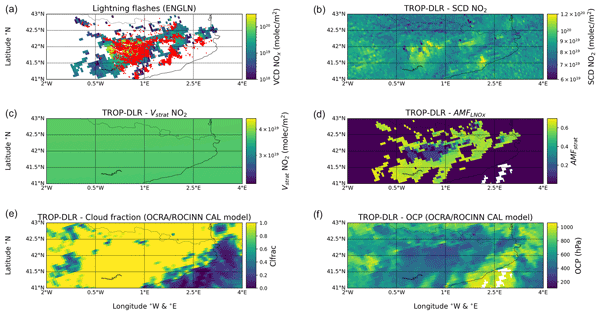
Francisco J. Pérez-Invernón, Heidi Huntrieser, Thilo Erbertseder, Diego Loyola, Pieter Valks, Song Liu, Dale J. Allen, Kenneth E. Pickering, Eric J. Bucsela, Patrick Jöckel, Jos van Geffen, Henk Eskes, Sergio Soler, Francisco J. Gordillo-Vázquez, and Jeff Lapierre
Atmos. Meas. Tech., 15, 3329–3351, https://doi.org/10.5194/amt-15-3329-2022, https://doi.org/10.5194/amt-15-3329-2022, 2022
Short summary
Short summary
Lightning, one of the major sources of nitrogen oxides in the atmosphere, contributes to the tropospheric concentration of ozone and to the oxidizing capacity of the atmosphere. In this work, we contribute to improving the estimation of lightning-produced nitrogen oxides in the Ebro Valley and the Pyrenees by using two different TROPOMI products and comparing the results.
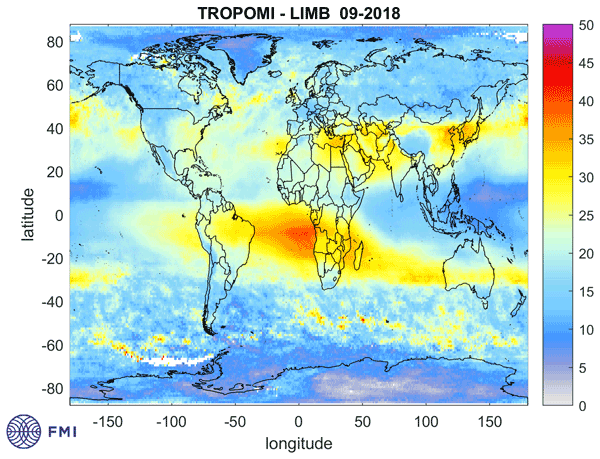
Viktoria F. Sofieva, Risto Hänninen, Mikhail Sofiev, Monika Szeląg, Hei Shing Lee, Johanna Tamminen, and Christian Retscher
Atmos. Meas. Tech., 15, 3193–3212, https://doi.org/10.5194/amt-15-3193-2022, https://doi.org/10.5194/amt-15-3193-2022, 2022
Short summary
Short summary
We present tropospheric ozone column datasets that have been created using combinations of total ozone column from OMI and TROPOMI with stratospheric ozone column datasets from several available limb-viewing instruments (MLS, OSIRIS, MIPAS, SCIAMACHY, OMPS-LP, GOMOS). The main results are (i) several methodological developments, (ii) new tropospheric ozone column datasets from OMI and TROPOMI, and (iii) a new high-resolution dataset of ozone profiles from limb satellite instruments.
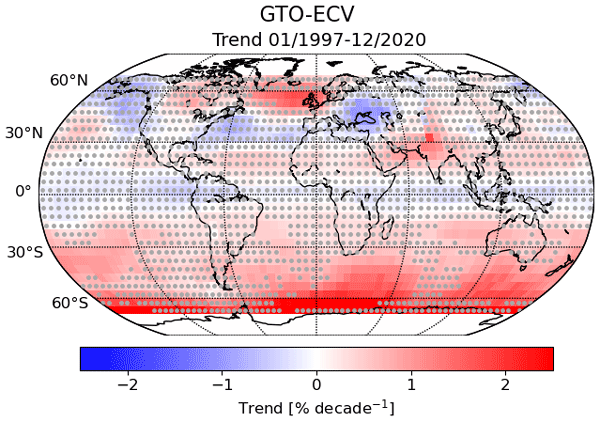
Melanie Coldewey-Egbers, Diego G. Loyola, Christophe Lerot, and Michel Van Roozendael
Atmos. Chem. Phys., 22, 6861–6878, https://doi.org/10.5194/acp-22-6861-2022, https://doi.org/10.5194/acp-22-6861-2022, 2022
Short summary
Short summary
Monitoring the long-term evolution of ozone and the evaluation of trends is essential to assess the efficacy of the Montreal Protocol and its amendments. The first signs of recovery as a consequence of decreasing amounts of ozone-depleting substances have been reported, but the impact needs to be investigated in more detail. In the Southern Hemisphere significant positive trends were found, but in the Northern Hemisphere the expected increase is still not yet visible.
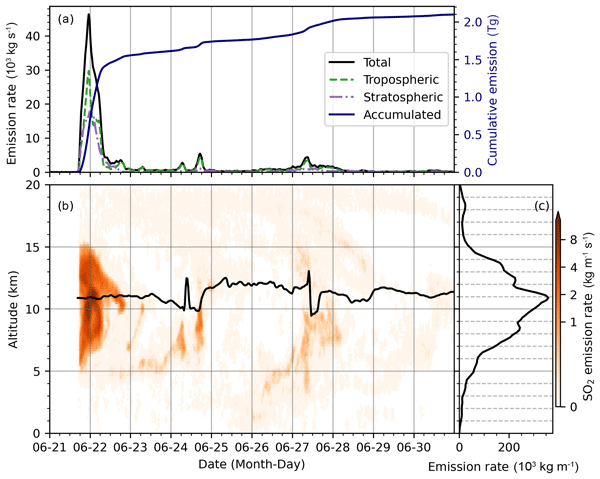
Zhongyin Cai, Sabine Griessbach, and Lars Hoffmann
Atmos. Chem. Phys., 22, 6787–6809, https://doi.org/10.5194/acp-22-6787-2022, https://doi.org/10.5194/acp-22-6787-2022, 2022
Short summary
Short summary
Using AIRS and TROPOMI sulfur dioxide retrievals and the Lagrangian transport model MPTRAC, we present an improved reconstruction of injection parameters of the 2019 Raikoke eruption. Reconstructions agree well between using AIRS nighttime and TROPOMI daytime retrievals, showing the potential of our approach to create a long-term volcanic sulfur dioxide inventory from nearly 20 years of AIRS retrievals.

Mark Weber, Carlo Arosio, Melanie Coldewey-Egbers, Vitali E. Fioletov, Stacey M. Frith, Jeannette D. Wild, Kleareti Tourpali, John P. Burrows, and Diego Loyola
Atmos. Chem. Phys., 22, 6843–6859, https://doi.org/10.5194/acp-22-6843-2022, https://doi.org/10.5194/acp-22-6843-2022, 2022
Short summary
Short summary
Long-term trends in column ozone have been determined from five merged total ozone datasets spanning the period 1978–2020. We show that ozone recovery due to the decline in stratospheric halogens after the 1990s (as regulated by the Montreal Protocol) is evident outside the tropical region and amounts to half a percent per decade. The ozone recovery in the Northern Hemisphere is however compensated for by the negative long-term trend contribution from atmospheric dynamics since the year 2000.
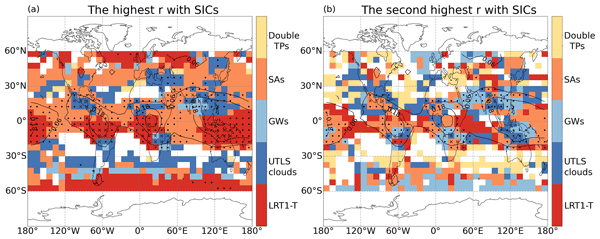
Ling Zou, Sabine Griessbach, Lars Hoffmann, and Reinhold Spang
Atmos. Chem. Phys., 22, 6677–6702, https://doi.org/10.5194/acp-22-6677-2022, https://doi.org/10.5194/acp-22-6677-2022, 2022
Short summary
Short summary
Ice clouds in the stratosphere (SICs) greatly affect the water vapor balance and radiation budget in the upper troposphere and lower stratosphere (UTLS). We quantified the global SICs and analyzed their relationships with tropopause temperature, double tropopauses, UTLS clouds, gravity waves, and stratospheric aerosols. The correlations between SICs and all abovementioned processes indicate that the occurrence of and variability in SICs are spatiotemporally dependent on different processes.
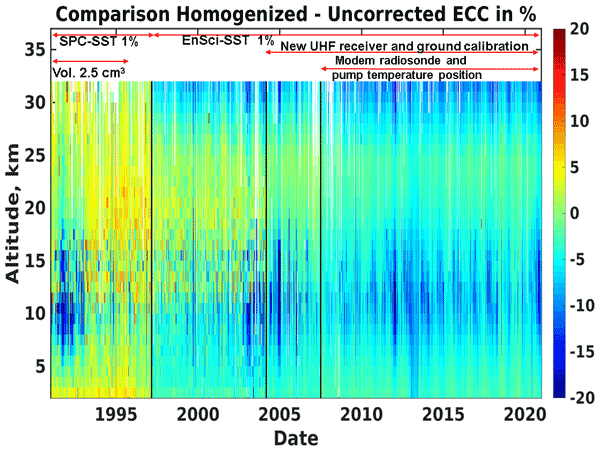
Gérard Ancellet, Sophie Godin-Beekmann, Herman G. J. Smit, Ryan M. Stauffer, Roeland Van Malderen, Renaud Bodichon, and Andrea Pazmiño
Atmos. Meas. Tech., 15, 3105–3120, https://doi.org/10.5194/amt-15-3105-2022, https://doi.org/10.5194/amt-15-3105-2022, 2022
Short summary
Short summary
The 1991–2021 Observatoire de Haute Provence electrochemical concentration cell (ECC) ozonesonde data have been homogenized according to the recommendations of the Ozonesonde Data Quality Assessment panel. Comparisons with ground-based instruments also measuring ozone at the same station (lidar, surface measurements) and with colocated satellite observations show the benefits of this homogenization. Remaining differences between ECC and other observations in the stratosphere are also discussed.
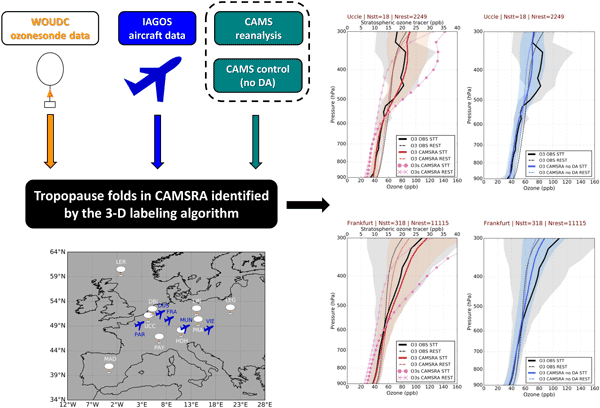
Dimitris Akritidis, Andrea Pozzer, Johannes Flemming, Antje Inness, Philippe Nédélec, and Prodromos Zanis
Atmos. Chem. Phys., 22, 6275–6289, https://doi.org/10.5194/acp-22-6275-2022, https://doi.org/10.5194/acp-22-6275-2022, 2022
Short summary
Short summary
We perform a process-oriented evaluation of Copernicus Atmosphere Monitoring Service (CAMS) reanalysis (CAMSRA) O3 over Europe using WOUDC (World Ozone and Ultraviolet Radiation Data Centre) ozonesondes and IAGOS (In-service Aircraft for a Global Observing System) aircraft measurements. Chemical data assimilation assists CAMSRA to reproduce the observed O3 increases in the troposphere during the examined folding events, but it mostly results in O3 overestimation in the upper troposphere.

Nora Mettig, Mark Weber, Alexei Rozanov, John P. Burrows, Pepijn Veefkind, Anne M. Thompson, Ryan M. Stauffer, Thierry Leblanc, Gerard Ancellet, Michael J. Newchurch, Shi Kuang, Rigel Kivi, Matthew B. Tully, Roeland Van Malderen, Ankie Piters, Bogumil Kois, René Stübi, and Pavla Skrivankova
Atmos. Meas. Tech., 15, 2955–2978, https://doi.org/10.5194/amt-15-2955-2022, https://doi.org/10.5194/amt-15-2955-2022, 2022
Short summary
Short summary
Vertical ozone profiles from combined spectral measurements in the UV and IR spectral ranges were retrieved by using data from TROPOMI/S5P and CrIS/Suomi-NPP. The vertical resolution and accuracy of the ozone profiles are improved by combining both wavelength ranges compared to retrievals limited to UV or IR spectral data only. The advancement of our TOPAS algorithm for combined measurements is required because in the UV-only retrieval the vertical resolution in the troposphere is very limited.

Joe McNorton, Nicolas Bousserez, Anna Agustí-Panareda, Gianpaolo Balsamo, Luca Cantarello, Richard Engelen, Vincent Huijnen, Antje Inness, Zak Kipling, Mark Parrington, and Roberto Ribas
Atmos. Chem. Phys., 22, 5961–5981, https://doi.org/10.5194/acp-22-5961-2022, https://doi.org/10.5194/acp-22-5961-2022, 2022
Short summary
Short summary
Concentrations of atmospheric methane continue to grow, in recent years at an increasing rate, for unknown reasons. Using newly available satellite observations and a state-of-the-art weather prediction model we perform global estimates of emissions from hotspots at high resolution. Results show that the system can accurately report on biases in national inventories and is used to conclude that the early COVID-19 slowdown period (March–June 2020) had little impact on global methane emissions.
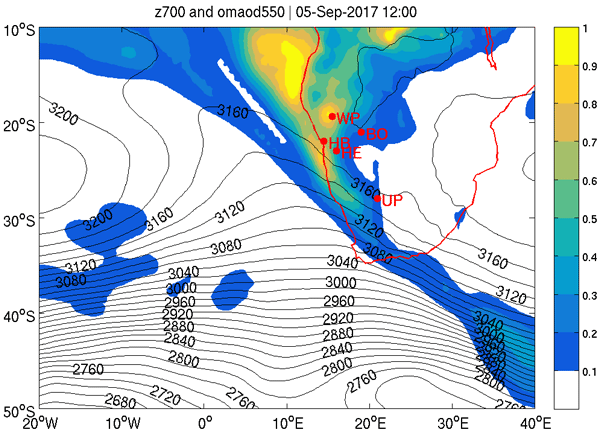
Cyrille Flamant, Marco Gaetani, Jean-Pierre Chaboureau, Patrick Chazette, Juan Cuesta, Stuart John Piketh, and Paola Formenti
Atmos. Chem. Phys., 22, 5701–5724, https://doi.org/10.5194/acp-22-5701-2022, https://doi.org/10.5194/acp-22-5701-2022, 2022
Short summary
Short summary
Rivers of smoke extend from tropical southern Africa towards the Indian Ocean during the winter fire season, controlled by the interaction of tropical easterly waves, and westerly waves at mid latitudes. During the AEROCLO-sA field campaign in 2017, a river of smoke was directly observed over Namibia. In this paper, the evolution and atmospheric drivers of the river of smoke are described, and the role of a mid-latitude cut-off low in lifting the smoke to the upper troposphere is highlighted.
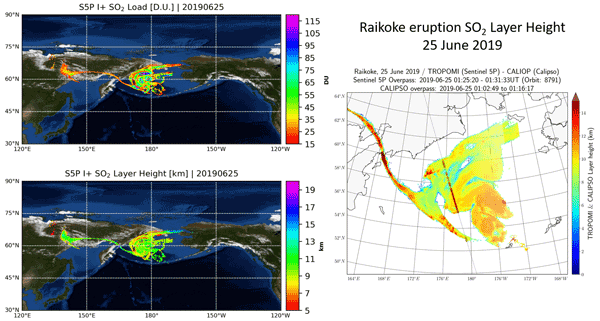
Maria-Elissavet Koukouli, Konstantinos Michailidis, Pascal Hedelt, Isabelle A. Taylor, Antje Inness, Lieven Clarisse, Dimitris Balis, Dmitry Efremenko, Diego Loyola, Roy G. Grainger, and Christian Retscher
Atmos. Chem. Phys., 22, 5665–5683, https://doi.org/10.5194/acp-22-5665-2022, https://doi.org/10.5194/acp-22-5665-2022, 2022
Short summary
Short summary
Volcanic eruptions eject large amounts of ash and trace gases into the atmosphere. The use of space-borne instruments enables the global monitoring of volcanic SO2 emissions in an economical and risk-free manner. The main aim of this paper is to present its extensive verification, accomplished within the ESA S5P+I: SO2LH project, over major recent volcanic eruptions, against collocated space-borne measurements, as well as assess its impact on the forecasts provided by CAMS.
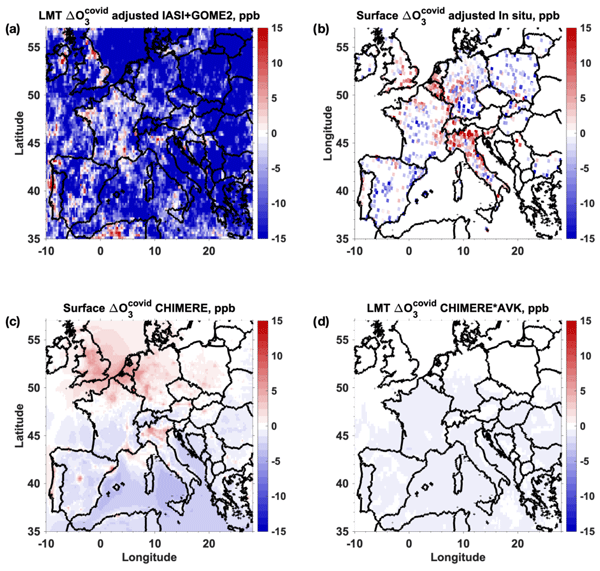
Juan Cuesta, Lorenzo Costantino, Matthias Beekmann, Guillaume Siour, Laurent Menut, Bertrand Bessagnet, Tony C. Landi, Gaëlle Dufour, and Maxim Eremenko
Atmos. Chem. Phys., 22, 4471–4489, https://doi.org/10.5194/acp-22-4471-2022, https://doi.org/10.5194/acp-22-4471-2022, 2022
Short summary
Short summary
We present the first comprehensive study integrating satellite observations of near-surface ozone pollution, surface in situ measurements, and a chemistry-transport model for quantifying the role of anthropogenic emission reductions during the COVID-19 lockdown in spring 2020. It confirms the occurrence of a net enhancement of ozone in central Europe and a reduction elsewhere, except for some hotspots, linked with the reduction of precursor emissions from Europe and the Northern Hemisphere.
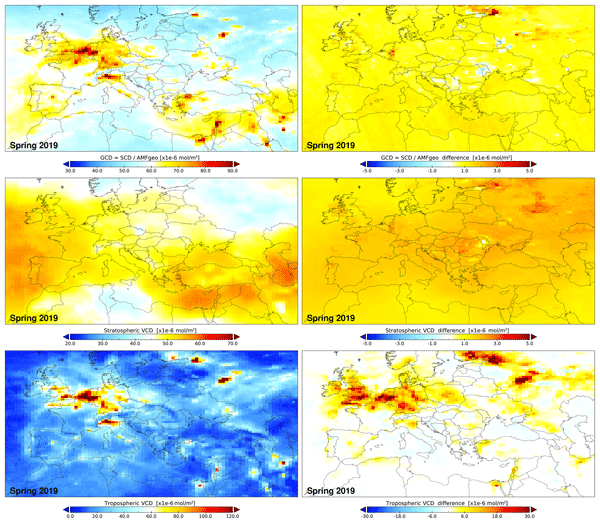
Jos van Geffen, Henk Eskes, Steven Compernolle, Gaia Pinardi, Tijl Verhoelst, Jean-Christopher Lambert, Maarten Sneep, Mark ter Linden, Antje Ludewig, K. Folkert Boersma, and J. Pepijn Veefkind
Atmos. Meas. Tech., 15, 2037–2060, https://doi.org/10.5194/amt-15-2037-2022, https://doi.org/10.5194/amt-15-2037-2022, 2022
Short summary
Short summary
Nitrogen dioxide (NO2) is one of the main data products measured by the Tropospheric Monitoring Instrument (TROPOMI) on the Sentinel-5 Precursor (S5P) satellite. This study describes improvements in the TROPOMI NO2 retrieval leading to version v2.2, operational since 1 July 2021. It compares results with previous versions v1.2–v1.4 and with Ozone Monitoring Instrument (OMI) and ground-based measurements.
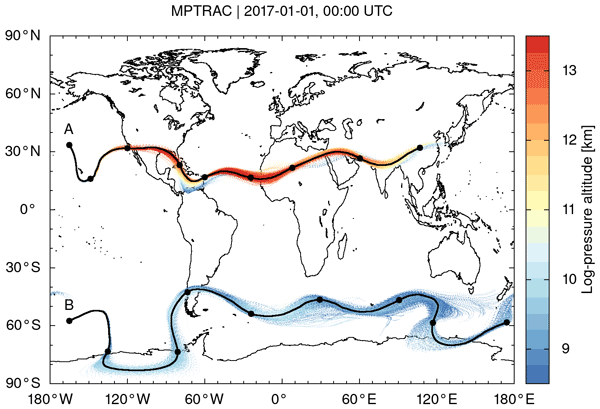
Lars Hoffmann, Paul F. Baumeister, Zhongyin Cai, Jan Clemens, Sabine Griessbach, Gebhard Günther, Yi Heng, Mingzhao Liu, Kaveh Haghighi Mood, Olaf Stein, Nicole Thomas, Bärbel Vogel, Xue Wu, and Ling Zou
Geosci. Model Dev., 15, 2731–2762, https://doi.org/10.5194/gmd-15-2731-2022, https://doi.org/10.5194/gmd-15-2731-2022, 2022
Short summary
Short summary
We describe the new version (2.2) of the Lagrangian transport model MPTRAC, which has been ported for application on GPUs. The model was verified by comparing kinematic trajectories and synthetic tracer simulations for the free troposphere and stratosphere from GPUs and CPUs. Benchmarking showed a speed-up of a factor of 16 of GPU-enabled simulations compared to CPU-only runs, indicating the great potential of applying GPUs for Lagrangian transport simulations on upcoming HPC systems.
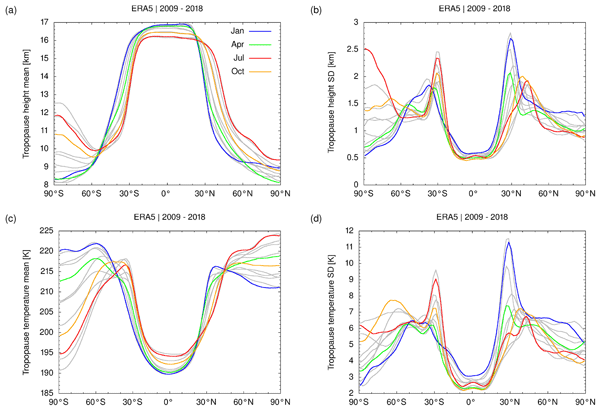
Lars Hoffmann and Reinhold Spang
Atmos. Chem. Phys., 22, 4019–4046, https://doi.org/10.5194/acp-22-4019-2022, https://doi.org/10.5194/acp-22-4019-2022, 2022
Short summary
Short summary
We present an intercomparison of 2009–2018 lapse rate tropopause characteristics as derived from ECMWF's ERA5 and ERA-Interim reanalyses. Large-scale features are similar, but ERA5 shows notably larger variability, which we mainly attribute to UTLS temperature fluctuations due to gravity waves being better resolved by ECMWF's IFS forecast model. Following evaluation with radiosondes and GPS data, we conclude ERA5 will be a more suitable asset for tropopause-related studies in future work.
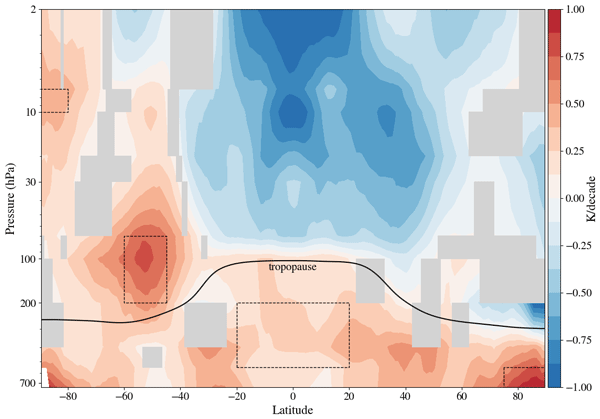
Marie Bouillon, Sarah Safieddine, Simon Whitburn, Lieven Clarisse, Filipe Aires, Victor Pellet, Olivier Lezeaux, Noëlle A. Scott, Marie Doutriaux-Boucher, and Cathy Clerbaux
Atmos. Meas. Tech., 15, 1779–1793, https://doi.org/10.5194/amt-15-1779-2022, https://doi.org/10.5194/amt-15-1779-2022, 2022
Short summary
Short summary
The IASI instruments have been observing Earth since 2007. We use a neural network to retrieve atmospheric temperatures. This new temperature data record is validated against other datasets and shows good agreement. We use this new dataset to compute trends over the 2008–2020 period. We found a warming of the troposphere, more important at the poles. In the stratosphere, we found that temperatures decrease everywhere except at the South Pole. The cooling is more pronounced at the South pole.

Paul F. Baumeister and Lars Hoffmann
Geosci. Model Dev., 15, 1855–1874, https://doi.org/10.5194/gmd-15-1855-2022, https://doi.org/10.5194/gmd-15-1855-2022, 2022
Short summary
Short summary
The efficiency of the numerical simulation of radiative transport is shown on modern server-class graphics cards (GPUs). The low-cost prefactor on GPUs compared to general-purpose processors (CPUs) enables future large retrieval campaigns for multi-channel data from infrared sounders aboard low-orbit satellites. The validated research software JURASSIC is available in the public domain.
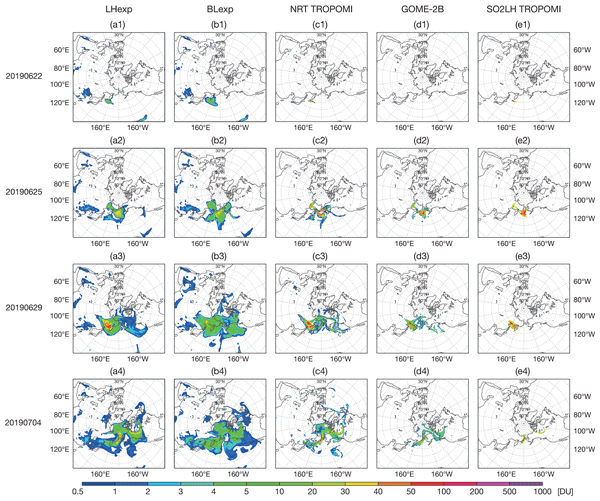
Antje Inness, Melanie Ades, Dimitris Balis, Dmitry Efremenko, Johannes Flemming, Pascal Hedelt, Maria-Elissavet Koukouli, Diego Loyola, and Roberto Ribas
Geosci. Model Dev., 15, 971–994, https://doi.org/10.5194/gmd-15-971-2022, https://doi.org/10.5194/gmd-15-971-2022, 2022
Short summary
Short summary
This paper describes the way that the Copernicus Atmosphere Monitoring Service (CAMS) produces forecasts of volcanic SO2. These forecasts are provided routinely every day. They are created by blending SO2 data from satellite instruments (TROPOMI and GOME-2) with the CAMS model. We show that the quality of the CAMS SO2 forecasts can be improved if additional information about the height of volcanic plumes is provided in the satellite data.
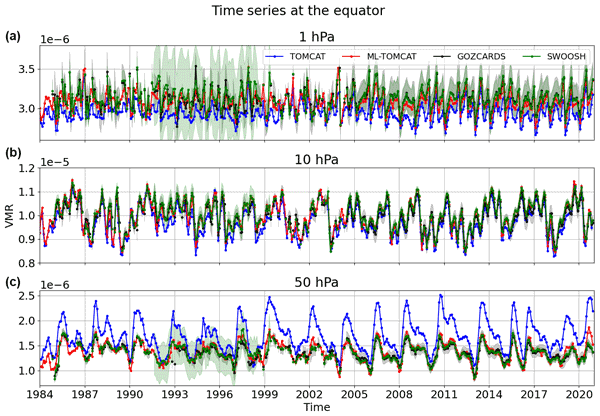
Sandip S. Dhomse, Carlo Arosio, Wuhu Feng, Alexei Rozanov, Mark Weber, and Martyn P. Chipperfield
Earth Syst. Sci. Data, 13, 5711–5729, https://doi.org/10.5194/essd-13-5711-2021, https://doi.org/10.5194/essd-13-5711-2021, 2021
Short summary
Short summary
High-quality long-term ozone profile data sets are key to estimating short- and long-term ozone variability. Almost all the satellite (and chemical model) data sets show some kind of bias with respect to each other. This is because of differences in measurement methodologies as well as simplified processes in the models. We use satellite data sets and chemical model output to generate 42 years of ozone profile data sets using a random-forest machine-learning algorithm that is named ML-TOMCAT.
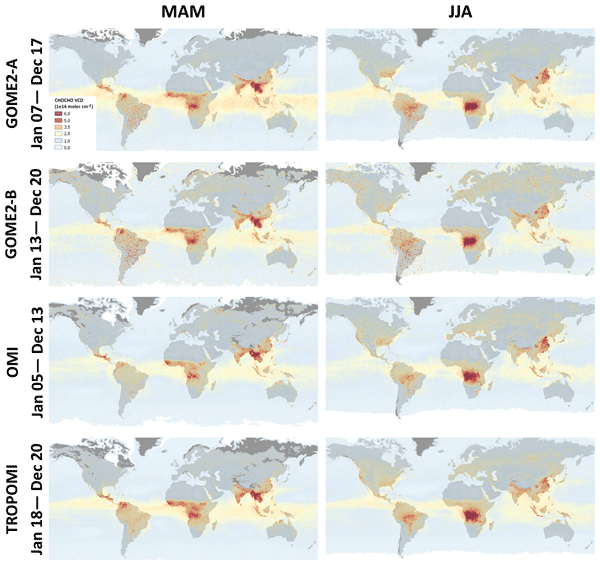
Christophe Lerot, François Hendrick, Michel Van Roozendael, Leonardo M. A. Alvarado, Andreas Richter, Isabelle De Smedt, Nicolas Theys, Jonas Vlietinck, Huan Yu, Jeroen Van Gent, Trissevgeni Stavrakou, Jean-François Müller, Pieter Valks, Diego Loyola, Hitoshi Irie, Vinod Kumar, Thomas Wagner, Stefan F. Schreier, Vinayak Sinha, Ting Wang, Pucai Wang, and Christian Retscher
Atmos. Meas. Tech., 14, 7775–7807, https://doi.org/10.5194/amt-14-7775-2021, https://doi.org/10.5194/amt-14-7775-2021, 2021
Short summary
Short summary
Global measurements of glyoxal tropospheric columns from the satellite instrument TROPOMI are presented. Such measurements can contribute to the estimation of atmospheric emissions of volatile organic compounds. This new glyoxal product has been fully characterized with a comprehensive error budget, with comparison with other satellite data sets as well as with validation based on independent ground-based remote sensing glyoxal observations.
Daan Hubert, Klaus-Peter Heue, Jean-Christopher Lambert, Tijl Verhoelst, Marc Allaart, Steven Compernolle, Patrick D. Cullis, Angelika Dehn, Christian Félix, Bryan J. Johnson, Arno Keppens, Debra E. Kollonige, Christophe Lerot, Diego Loyola, Matakite Maata, Sukarni Mitro, Maznorizan Mohamad, Ankie Piters, Fabian Romahn, Henry B. Selkirk, Francisco R. da Silva, Ryan M. Stauffer, Anne M. Thompson, J. Pepijn Veefkind, Holger Vömel, Jacquelyn C. Witte, and Claus Zehner
Atmos. Meas. Tech., 14, 7405–7433, https://doi.org/10.5194/amt-14-7405-2021, https://doi.org/10.5194/amt-14-7405-2021, 2021
Short summary
Short summary
We assess the first 2 years of TROPOMI tropical tropospheric ozone column data. Comparisons to reference measurements by ozonesonde and satellite sensors show that TROPOMI bias (−0.1 to +2.3 DU) and precision (1.5 to 2.5 DU) meet mission requirements. Potential causes of bias and its spatio-temporal structure are discussed, as well as ways to identify sampling errors. Our analysis of known geophysical patterns demonstrates the improved performance of TROPOMI with respect to its predecessors.
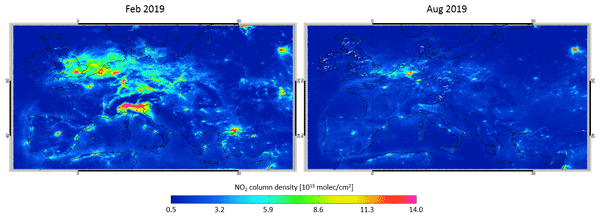
Song Liu, Pieter Valks, Gaia Pinardi, Jian Xu, Ka Lok Chan, Athina Argyrouli, Ronny Lutz, Steffen Beirle, Ehsan Khorsandi, Frank Baier, Vincent Huijnen, Alkiviadis Bais, Sebastian Donner, Steffen Dörner, Myrto Gratsea, François Hendrick, Dimitris Karagkiozidis, Kezia Lange, Ankie J. M. Piters, Julia Remmers, Andreas Richter, Michel Van Roozendael, Thomas Wagner, Mark Wenig, and Diego G. Loyola
Atmos. Meas. Tech., 14, 7297–7327, https://doi.org/10.5194/amt-14-7297-2021, https://doi.org/10.5194/amt-14-7297-2021, 2021
Short summary
Short summary
In this work, an improved tropospheric NO2 retrieval algorithm from TROPOMI measurements over Europe is presented. The stratospheric estimation is implemented with correction for the dependency of the stratospheric NO2 on the viewing geometry. The AMF calculation is implemented using improved surface albedo, a priori NO2 profiles, and cloud correction. The improved tropospheric NO2 data show good correlations with ground-based MAX-DOAS measurements.
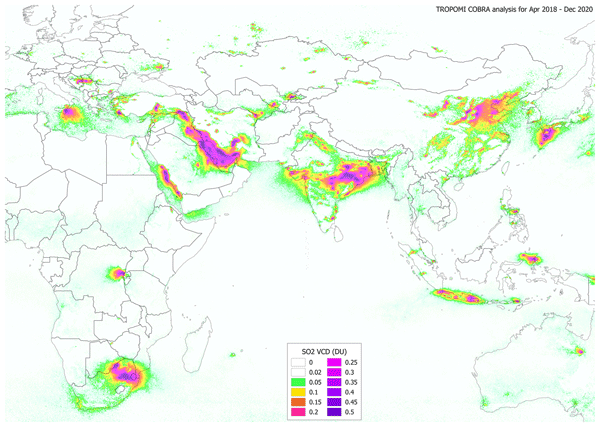
Nicolas Theys, Vitali Fioletov, Can Li, Isabelle De Smedt, Christophe Lerot, Chris McLinden, Nickolay Krotkov, Debora Griffin, Lieven Clarisse, Pascal Hedelt, Diego Loyola, Thomas Wagner, Vinod Kumar, Antje Innes, Roberto Ribas, François Hendrick, Jonas Vlietinck, Hugues Brenot, and Michel Van Roozendael
Atmos. Chem. Phys., 21, 16727–16744, https://doi.org/10.5194/acp-21-16727-2021, https://doi.org/10.5194/acp-21-16727-2021, 2021
Short summary
Short summary
We present a new algorithm to retrieve sulfur dioxide from space UV measurements. We apply the technique to high-resolution TROPOMI measurements and demonstrate the high sensitivity of the approach to weak SO2 emissions worldwide with an unprecedented limit of detection of 8 kt yr−1. This result has broad implications for atmospheric science studies dealing with improving emission inventories and identifying and quantifying missing sources, in the context of air quality and climate.

Gaëlle Dufour, Didier Hauglustaine, Yunjiang Zhang, Maxim Eremenko, Yann Cohen, Audrey Gaudel, Guillaume Siour, Mathieu Lachatre, Axel Bense, Bertrand Bessagnet, Juan Cuesta, Jerry Ziemke, Valérie Thouret, and Bo Zheng
Atmos. Chem. Phys., 21, 16001–16025, https://doi.org/10.5194/acp-21-16001-2021, https://doi.org/10.5194/acp-21-16001-2021, 2021
Short summary
Short summary
The IASI observations and the LMDZ-OR-INCA model simulations show negative ozone trends in the Central East China region in the lower free (3–6 km column) and the upper free (6–9 km column) troposphere. Sensitivity studies from the model show that the Chinese anthropogenic emissions contribute to more than 50 % in the trend. The reduction in NOx emissions that has occurred since 2013 in China seems to lead to a decrease in ozone in the free troposphere, contrary to the increase at the surface.
Cited articles
AC SAF: IASI Ozone (O3) Climate Data Record (CDR) Release 1 – Metop-A and -B, EUMETSAT SAF on Atmospheric Composition Monitoring [data set], https://doi.org/10.15770/EUM_SAF_AC_0051, 2025. a
Boynard, A., Wespes, C., Hadji-Lazaro, J., Sinnathamby, S., Hurtmans, D., Coheur, P.-F., Doutriaux-Boucher, M., Onderwaater, J., Steinbrecht, W., Pennington, E. A., Bowman, K., and Clerbaux, C.: Assessment of 16-year tropospheric ozone trends from the IASI Climate Data Record, Atmos. Chem. Phys., 25, 11719–11755, https://doi.org/10.5194/acp-25-11719-2025, 2025. a
Ceccherini, S.: Equivalence of measurement space solution data fusion and complete fusion, J. Quant. Spectrosc. Ra., 182, 71–74, https://doi.org/10.1016/j.jqsrt.2016.05.019, 2016. a
Ceccherini, S., Carli, B., and Raspollini, P.: The average of atmospheric vertical profiles, Opt. Express, 22, 24808–24816, https://doi.org/10.1364/OE.22.024808, 2014. a
Ceccherini, S., Carli, B., and Raspollini, P.: Equivalence of data fusion and simultaneous retrieval, Opt. Express, 23, 8476–8488, https://doi.org/10.1364/OE.23.008476, 2015. a
Ceccherini, S., Carli, B., Tirelli, C., Zoppetti, N., Del Bianco, S., Cortesi, U., Kujanpää, J., and Dragani, R.: Importance of interpolation and coincidence errors in data fusion, Atmos. Meas. Tech., 11, 1009–1017, https://doi.org/10.5194/amt-11-1009-2018, 2018. a
Ceccherini, S., Zoppetti, N., and Carli, B.: An improved formula for the complete data fusion, Atmos. Meas. Tech., 15, 7039–7048, https://doi.org/10.5194/amt-15-7039-2022, 2022. a, b, c, d
Clerbaux, C. and Coheur, P.-F.: Daily IASI/Metop-A ULB-LATMOS ozone (O3) L2 product (vertical profile and columns – EUMETSAT processing), AERIS [data set], https://doi.org/10.25326/806, 2025a. a
Clerbaux, C. and Coheur, P.-F.: Daily IASI/Metop-B ULB-LATMOS ozone (O3) L2 product (vertical profile and columns – EUMETSAT processing), AERIS [data set], https://doi.org/10.25326/807, 2025b. a
Coldewey-Egbers, M., Loyola, D. G., Lerot, C., and Van Roozendael, M.: Global, regional and seasonal analysis of total ozone trends derived from the 1995–2020 GTO-ECV climate data record, Atmos. Chem. Phys., 22, 6861–6878, https://doi.org/10.5194/acp-22-6861-2022, 2022. a, b
Coldewey-Egbers, M., Loyola R., D. G., Latter, B., Siddans, R., Kerridge, B., Hubert, D., van Roozendael, M., and Eisinger, M.: The novel GOME-type Ozone Profile Essential Climate Variable (GOP-ECV) data record covering the past 26 years, Atmos. Meas. Tech., 18, 5485–5505, https://doi.org/10.5194/amt-18-5485-2025, 2025. a
Cuesta, J., Eremenko, M., Liu, X., Dufour, G., Cai, Z., Höpfner, M., von Clarmann, T., Sellitto, P., Foret, G., Gaubert, B., Beekmann, M., Orphal, J., Chance, K., Spurr, R., and Flaud, J.-M.: Satellite observation of lowermost tropospheric ozone by multispectral synergism of IASI thermal infrared and GOME-2 ultraviolet measurements over Europe, Atmos. Chem. Phys., 13, 9675–9693, https://doi.org/10.5194/acp-13-9675-2013, 2013. a, b
Finlay, C. C., Kloss, C., Olsen, N., Hammer, M. D., Tøffner-Clausen, L., Grayver, A., and Kuvshinov, A.: The CHAOS-7 geomagnetic field model and observed changes in the South Atlantic Anomaly, Earth Planets Space, 72, https://doi.org/10.1186/s40623-020-01252-9, 2020. a
Garane, K., Lerot, C., Coldewey-Egbers, M., Verhoelst, T., Koukouli, M. E., Zyrichidou, I., Balis, D. S., Danckaert, T., Goutail, F., Granville, J., Hubert, D., Keppens, A., Lambert, J.-C., Loyola, D., Pommereau, J.-P., Van Roozendael, M., and Zehner, C.: Quality assessment of the Ozone_cci Climate Research Data Package (release 2017) – Part 1: Ground-based validation of total ozone column data products, Atmos. Meas. Tech., 11, 1385–1402, https://doi.org/10.5194/amt-11-1385-2018, 2018. a
Gaudel, A., Cooper, O. R., Ancellet, G., Barret, B., Boynard, A., Burrows, J. P., Clerbaux, C., Coheur, P.-F., Cuesta, J., Cuevas, E., Doniki, S., Dufour, G., Ebojie, F., Foret, G., Garcia, O., Granados-Muñoz, M. J., Hannigan, J. W., Hase, F., Hassler, B., Huang, G., Hurtmans, D., Jaffe, D., Jones, N., Kalabokas, P., Kerridge, B., Kulawik, S., Latter, B., Leblanc, T., Flochmoën, E. L., Lin, W., Liu, J., Liu, X., Mahieu, E., McClure-Begley, A., Neu, J. L., Osman, M., Palm, M., Petetin, H., Petropavlovskikh, I., Querel, R., Rahpoe, N., Rozanov, A., Schultz, M. G., Schwab, J., Siddans, R., Smale, D., Steinbacher, M., Tanimoto, H., Tarasick, D. W., Thouret, V., Thompson, A. M., Trickl, T., Weatherhead, E., Wespes, C., Worden, H. M., Vigouroux, C., Xu, X., Zeng, G., and Ziemke, J.: Tropospheric Ozone Assessment Report: Present-day distribution and trends of tropospheric ozone relevant to climate and global atmospheric chemistry model evaluation, Elem. Sci. Anth., 6, https://doi.org/10.1525/elementa.291, 2018. a, b, c, d, e
Gaudel, A., Bourgeois, I., Li, M., Chang, K.-L., Ziemke, J., Sauvage, B., Stauffer, R. M., Thompson, A. M., Kollonige, D. E., Smith, N., Hubert, D., Keppens, A., Cuesta, J., Heue, K.-P., Veefkind, P., Aikin, K., Peischl, J., Thompson, C. R., Ryerson, T. B., Frost, G. J., McDonald, B. C., and Cooper, O. R.: Tropical tropospheric ozone distribution and trends from in situ and satellite data, Atmos. Chem. Phys., 24, 9975–10000, https://doi.org/10.5194/acp-24-9975-2024, 2024. a, b
Hassler, B., Petropavlovskikh, I., Staehelin, J., August, T., Bhartia, P. K., Clerbaux, C., Degenstein, D., Mazière, M. D., Dinelli, B. M., Dudhia, A., Dufour, G., Frith, S. M., Froidevaux, L., Godin-Beekmann, S., Granville, J., Harris, N. R. P., Hoppel, K., Hubert, D., Kasai, Y., Kurylo, M. J., Kyrölä, E., Lambert, J.-C., Levelt, P. F., McElroy, C. T., McPeters, R. D., Munro, R., Nakajima, H., Parrish, A., Raspollini, P., Remsberg, E. E., Rosenlof, K. H., Rozanov, A., Sano, T., Sasano, Y., Shiotani, M., Smit, H. G. J., Stiller, G., Tamminen, J., Tarasick, D. W., Urban, J., van der A, R. J., Veefkind, J. P., Vigouroux, C., von Clarmann, T., von Savigny, C., Walker, K. A., Weber, M., Wild, J., and Zawodny, J. M.: Past changes in the vertical distribution of ozone – Part 1: Measurement techniques, uncertainties and availability, Atmos. Meas. Tech., 7, 1395–1427, https://doi.org/10.5194/amt-7-1395-2014, 2014. a
Heue, K.-P., Coldewey-Egbers, M., Delcloo, A., Lerot, C., Loyola, D., Valks, P., and van Roozendael, M.: Trends of tropical tropospheric ozone from 20 years of European satellite measurements and perspectives for the Sentinel-5 Precursor, Atmos. Meas. Tech., 9, 5037–5051, https://doi.org/10.5194/amt-9-5037-2016, 2016. a, b
Hoffmann, L. and Spang, R.: An assessment of tropopause characteristics of the ERA5 and ERA-Interim meteorological reanalyses, Atmos. Chem. Phys., 22, 4019–4046, https://doi.org/10.5194/acp-22-4019-2022, 2022. a
Hurtmans, D., Coheur, P.-F., Wespes, C., Clarisse, L., Scharf, O., Clerbaux, C., Hadji-Lazaro, J., George, M., and Turquety, S.: FORLI radiative transfer and retrieval code for IASI, J. Quant. Spectrosc. Ra., 113, 1391–1408, https://doi.org/10.1016/j.jqsrt.2012.02.036, 2012. a, b
Ingmann, P., Veihelmann, B., Langen, J., Lamarre, D., Stark, H., and Courrèges-Lacoste, G. B.: Requirements for the GMES Atmosphere Service and ESA's implementation concept: Sentinels-4/-5 and -5p, Remote Sens. Environ., 120, 58–69, https://doi.org/10.1016/j.rse.2012.01.023, 2012. a
Inness, A., Ades, M., Agustí-Panareda, A., Barré, J., Benedictow, A., Blechschmidt, A.-M., Dominguez, J. J., Engelen, R., Eskes, H., Flemming, J., Huijnen, V., Jones, L., Kipling, Z., Massart, S., Parrington, M., Peuch, V.-H., Razinger, M., Remy, S., Schulz, M., and Suttie, M.: The CAMS reanalysis of atmospheric composition, Atmos. Chem. Phys., 19, 3515–3556, https://doi.org/10.5194/acp-19-3515-2019, 2019. a, b, c, d, e
Keppens, A., Lambert, J.-C., Granville, J., Hubert, D., Verhoelst, T., Compernolle, S., Latter, B., Kerridge, B., Siddans, R., Boynard, A., Hadji-Lazaro, J., Clerbaux, C., Wespes, C., Hurtmans, D. R., Coheur, P.-F., van Peet, J. C. A., van der A, R. J., Garane, K., Koukouli, M. E., Balis, D. S., Delcloo, A., Kivi, R., Stübi, R., Godin-Beekmann, S., Van Roozendael, M., and Zehner, C.: Quality assessment of the Ozone_cci Climate Research Data Package (release 2017) – Part 2: Ground-based validation of nadir ozone profile data products, Atmos. Meas. Tech., 11, 3769–3800, https://doi.org/10.5194/amt-11-3769-2018, 2018. a
Keppens, A., Compernolle, S., Verhoelst, T., Hubert, D., and Lambert, J.-C.: Harmonization and comparison of vertically resolved atmospheric state observations: methods, effects, and uncertainty budget, Atmos. Meas. Tech., 12, 4379–4391, https://doi.org/10.5194/amt-12-4379-2019, 2019. a, b, c, d, e, f, g, h
Keppens, A., Compernolle, S., Hubert, D., Verhoelst, T., Granville, J., and Lambert, J.-C.: Removing prior information from remotely sensed atmospheric profiles by Wiener deconvolution based on the complete data fusion framework, Remote Sens.-Basel, 14, https://doi.org/10.3390/rs14092197, 2022. a, b, c, d, e
Keppens, A., Di Pede, S., Hubert, D., Lambert, J.-C., Veefkind, P., Sneep, M., De Haan, J., ter Linden, M., Leblanc, T., Compernolle, S., Verhoelst, T., Granville, J., Nath, O., Fjæraa, A. M., Boyd, I., Niemeijer, S., Van Malderen, R., Smit, H. G. J., Duflot, V., Godin-Beekmann, S., Johnson, B. J., Steinbrecht, W., Tarasick, D. W., Kollonige, D. E., Stauffer, R. M., Thompson, A. M., Dehn, A., and Zehner, C.: 5 years of Sentinel-5P TROPOMI operational ozone profiling and geophysical validation using ozonesonde and lidar ground-based networks, Atmos. Meas. Tech., 17, 3969–3993, https://doi.org/10.5194/amt-17-3969-2024, 2024. a, b
Keppens, A., Hubert, D., Granville, J., and Lambert, J.-C.: Harmonised satellite tropospheric ozone Climate Data Records (TAPIOWCA) (Version 1), Royal Belgian Institute for Space Aeronomy [data set], https://doi.org/10.18758/r7u4z0he, 2025. a
Kleipool, Q., Rozemeijer, N., van Hoek, M., Leloux, J., Loots, E., Ludewig, A., van der Plas, E., Adrichem, D., Harel, R., Spronk, S., ter Linden, M., Jaross, G., Haffner, D., Veefkind, P., and Levelt, P. F.: Ozone Monitoring Instrument (OMI) collection 4: establishing a 17-year-long series of detrended level-1b data, Atmos. Meas. Tech., 15, 3527–3553, https://doi.org/10.5194/amt-15-3527-2022, 2022. a
Lerot, C., Van Roozendael, M., Spurr, R., Loyola, D., Coldewey-Egbers, M., Kochenova, S., van Gent, J., Koukouli, M., Balis, D., Lambert, J.-C., Granville, J., and Zehner, C.: Homogenized total ozone data records from the European sensors GOME/ERS-2, SCIAMACHY/Envisat, and GOME-2/MetOp-A, J. Geophys. Res., 119, 1639–1662, https://doi.org/10.1002/2013JD020831, 2014. a
McPeters, R. D., Labow, G. J., and Logan, J. A.: Ozone climatological profiles for satellite retrieval algorithms, J. Geophys. Res., 112, 1–9, https://doi.org/10.1029/2005JD006823, 2007. a, b
Migliorini, S., Piccolo, C., and Rodgers, C. D.: Use of the information content in satellite measurements for an efficient interface to data assimilation, Mon. Weather Rev., 136, 2633–2650, https://doi.org/10.1175/2007MWR2236.1, 2008. a
Miles, G. M., Siddans, R., Kerridge, B. J., Latter, B. G., and Richards, N. A. D.: Tropospheric ozone and ozone profiles retrieved from GOME-2 and their validation, Atmos. Meas. Tech., 8, 385–398, https://doi.org/10.5194/amt-8-385-2015, 2015. a, b
Orfanoz-Cheuquelaf, A., Arosio, C., Rozanov, A., Weber, M., Ladstätter-Weißenmayer, A., Burrows, J. P., Thompson, A. M., Stauffer, R. M., and Kollonige, D. E.: Tropospheric ozone column dataset from OMPS-LP/OMPS-NM limb–nadir matching, Atmos. Meas. Tech., 17, 1791–1809, https://doi.org/10.5194/amt-17-1791-2024, 2024. a, b
Peuch, V.-H., Engelen, R., Rixen, M., Dee, D., Flemming, J., Suttie, M., Ades, M., Agustí-Panareda, A., Ananasso, C., Andersson, E., Armstrong, D., Barré, J., Bousserez, N., Dominguez, J. J., Garrigues, S., Inness, A., Jones, L., Kipling, Z., Letertre-Danczak, J., Parrington, M., Razinger, M., Ribas, R., Vermoote, S., Yang, X., Simmons, A., de Marcilla, J. G., and Thépaut, J.-N.: The Copernicus Atmosphere Monitoring Service: from research to operations, B. Am. Meteorol. Soc., 103, E2650–E2668, https://doi.org/10.1175/BAMS-D-21-0314.1, 2022. a
Pope, R. J., O'Connor, F. M., Dalvi, M., Kerridge, B. J., Siddans, R., Latter, B. G., Barret, B., Le Flochmoen, E., Boynard, A., Chipperfield, M. P., Feng, W., Pimlott, M. A., Dhomse, S. S., Retscher, C., Wespes, C., and Rigby, R.: Investigation of the impact of satellite vertical sensitivity on long-term retrieved lower-tropospheric ozone trends, Atmos. Chem. Phys., 24, 9177–9195, https://doi.org/10.5194/acp-24-9177-2024, 2024. a
Rodgers, C. D. and Connor, B. J.: Intercomparison of remote sounding instruments, J. Geophys. Res., 108, 4116, https://doi.org/10.1029/2002JD002299, 2003. a
Rozanov, V. V., Diebel, D., Spurr, R. J. D., and Burrows, J. P.: GOMETRAN: a radiative transfer model for the satellite project GOME, the plane-parallel version, J. Geophys. Res.-Atmos., 102, 16683–16695, https://doi.org/10.1029/96JD01535, 1997. a
Schneider, M., Ertl, B., Tu, Q., Diekmann, C. J., Khosrawi, F., Röhling, A. N., Hase, F., Dubravica, D., García, O. E., Sepúlveda, E., Borsdorff, T., Landgraf, J., Lorente, A., Butz, A., Chen, H., Kivi, R., Laemmel, T., Ramonet, M., Crevoisier, C., Pernin, J., Steinbacher, M., Meinhardt, F., Strong, K., Wunch, D., Warneke, T., Roehl, C., Wennberg, P. O., Morino, I., Iraci, L. T., Shiomi, K., Deutscher, N. M., Griffith, D. W. T., Velazco, V. A., and Pollard, D. F.: Synergetic use of IASI profile and TROPOMI total-column level 2 methane retrieval products, Atmos. Meas. Tech., 15, 4339–4371, https://doi.org/10.5194/amt-15-4339-2022, 2022. a
Shi, C., Zhang, Z., Xiong, S., Chen, W., Zhang, W., Zhang, Q., and Wang, X.: Harmonizing atmospheric ozone column concentrations over the Tibetan Plateau from 2005 to 2022 using OMI and Sentinel-5P TROPOMI: a deep learning approach, Int. J. Appl. Earth Obs., 129, 103808, https://doi.org/10.1016/j.jag.2024.103808, 2024. a
Sofieva, V. F., Hänninen, R., Sofiev, M., Szela̧g, M., Lee, H. S., Tamminen, J., and Retscher, C.: Synergy of Using Nadir and Limb Instruments for Tropospheric Ozone Monitoring (SUNLIT), Atmos. Meas. Tech., 15, 3193–3212, https://doi.org/10.5194/amt-15-3193-2022, 2022. a, b
Tarasick, D., Galbally, I. E., Cooper, O.R., Schultz, M. G., Ancellet, G., Leblanc, T., Wallington, T. J., Ziemke, J., Liu, X., Steinbacher, M., Staehelin, J., Vigouroux, C., Hannigan, J. W., García, O., Foret, G., Zanis, P., Weatherhead, E., Petropavlovskikh, I., Worden, H., Osman, M., Liu, J., Chang, K-L., Gaudel, A., Lin, M., Granados-Muñoz, M., Thompson, A. M., Oltmans, S. J., Cuesta, J., Dufour, G., Thouret, V., Hassler, B., Trickl, T., and Neu, J. L.: Tropospheric Ozone Assessment Report: tropospheric ozone from 1877 to 2016, observed levels, trends and uncertainties, Elem. Sci. Anth., 7, https://doi.org/10.1525/elementa.376, 2019. a
Tarasick, D. W., Smit, H. G. J., Thompson, A. M., Morris, G. A., Witte, J. C., Davies, J., Nakano, T., Van Malderen, R., Stauffer, R. M., Johnson, B. J., Stübi, R., Oltmans, S. J., and Vömel, H.: Improving ECC ozonesonde data quality: assessment of current methods and outstanding issues, Earth and Space Science, 8, e2019EA000914, https://doi.org/10.1029/2019EA000914, 2021. a
Van Malderen, R., Thompson, A. M., Kollonige, D. E., Stauffer, R. M., Smit, H. G. J., Maillard Barras, E., Vigouroux, C., Petropavlovskikh, I., Leblanc, T., Thouret, V., Wolff, P., Effertz, P., Tarasick, D. W., Poyraz, D., Ancellet, G., De Backer, M.-R., Evan, S., Flood, V., Frey, M. M., Hannigan, J. W., Hernandez, J. L., Iarlori, M., Johnson, B. J., Jones, N., Kivi, R., Mahieu, E., McConville, G., Müller, K., Nagahama, T., Notholt, J., Piters, A., Prats, N., Querel, R., Smale, D., Steinbrecht, W., Strong, K., and Sussmann, R.: Global ground-based tropospheric ozone measurements: reference data and individual site trends (2000–2022) from the TOAR-II/HEGIFTOM project, Atmos. Chem. Phys., 25, 7187–7225, https://doi.org/10.5194/acp-25-7187-2025, 2025. a, b
von Clarmann, T. and Glatthor, N.: The application of mean averaging kernels to mean trace gas distributions, Atmos. Meas. Tech., 12, 5155–5160, https://doi.org/10.5194/amt-12-5155-2019, 2019. a
von Clarmann, T. and Grabowski, U.: Elimination of hidden a priori information from remotely sensed profile data, Atmos. Chem. Phys., 7, 397–408, https://doi.org/10.5194/acp-7-397-2007, 2007. a, b, c
von Clarmann, T., Glatthor, N., and Plieninger, J.: Maximum likelihood representation of MIPAS profiles, Atmos. Meas. Tech., 8, 2749–2757, https://doi.org/10.5194/amt-8-2749-2015, 2015. a
Xia, X., Zhang, T., Wang, L., Gong, W., Zhu, Z., Wang, W., Gu, Y., Lin, Y., Zhou, X., Dong, J., Fan, S., and Xu, W.: Spatial-temporal fusion of 10-min aerosol optical depth products with the GEO-LEO satellite joint observations, Remote Sens.-Basel, 15, https://doi.org/10.3390/rs15082038, 2023. a
Ziemke, J. R., Chandra, S., Duncan, B. N., Froidevaux, L., Bhartia, P. K., Levelt, P. F., and Waters, J. W.: Tropospheric ozone determined from Aura OMI and MLS: evaluation of measurements and comparison with the Global Modeling Initiative's Chemical Transport Model, J. Geophys. Res., 111, https://doi.org/10.1029/2006jd007089, 2006. a
Zou, L., Hoffmann, L., Müller, R., and Spang, R.: Variability and trends of the tropical tropopause derived from a 1980–2021 multi-reanalysis assessment, Front. Earth Sci., 11, https://doi.org/10.3389/feart.2023.1177502, 2023. a, b
Short summary
The first Tropospheric Ozone Assessment Report (TOAR) encountered discrepancies between several satellite sensors’ estimates of the distribution and change of ozone in the free troposphere. Therefore, contributing to the second TOAR, we harmonise as much as possible the observational perspective of sixteen tropospheric ozone products from satellites. This only partially accounts for the observed discrepancies, with a reduction of 10–40 % of the inter-product dispersion upon harmonisation.
The first Tropospheric Ozone Assessment Report (TOAR) encountered discrepancies between several...


