
Articles | Volume 10, issue 6
https://doi.org/10.5194/amt-10-2183-2017
© Author(s) 2017. This work is distributed under
the Creative Commons Attribution 3.0 License.
the Creative Commons Attribution 3.0 License.
Special issue:
https://doi.org/10.5194/amt-10-2183-2017
© Author(s) 2017. This work is distributed under
the Creative Commons Attribution 3.0 License.
the Creative Commons Attribution 3.0 License.
Research article
| 
12 Jun 2017
Research article |
| 12 Jun 2017
Inter-technique validation of tropospheric slant total delays
Michal Kačmařík
CORRESPONDING AUTHOR
Institute of Geoinformatics, VŠB – Technical University of Ostrava,
Ostrava, Czech Republic
Jan Douša
Geodetic Observatory Pecný, Research Institute of Geodesy,
Topography and Cartography, Zdiby, Czech Republic
Galina Dick
GFZ German Research Centre for Geosciences, Potsdam, Germany
Florian Zus
GFZ German Research Centre for Geosciences, Potsdam, Germany
Hugues Brenot
Atmospheric Composition Department, Royal Belgian Institute for Space Aeronomy, Brussels, Belgium
Gregor Möller
Department of Geodesy and Geoinformation, Vienna University of
Technology, Vienna, Austria
Eric Pottiaux
Royal Observatory of Belgium, Brussels, Belgium
Jan Kapłon
Institute of Geodesy and Geoinformatics, Wrocław University of
Environmental and Life Sciences, Wrocław, Poland
Paweł Hordyniec
Institute of Geodesy and Geoinformatics, Wrocław University of
Environmental and Life Sciences, Wrocław, Poland
Pavel Václavovic
Geodetic Observatory Pecný, Research Institute of Geodesy,
Topography and Cartography, Zdiby, Czech Republic
Laurent Morel
GeF Laboratory, ESGT – CNAM, Le Mans, France
Related authors
No articles found.
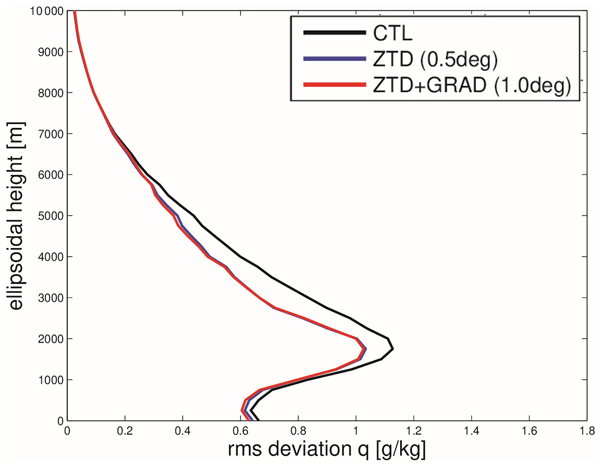
Rohith Thundathil, Florian Zus, Galina Dick, and Jens Wickert
Atmos. Meas. Tech., 18, 4907–4922, https://doi.org/10.5194/amt-18-4907-2025, https://doi.org/10.5194/amt-18-4907-2025, 2025
Short summary
Short summary
Tropospheric gradients provide information on the moisture distribution, whereas zenith total delays provide the overall moisture information along the zenith. When both observations are used together, the model can actuate the moisture fields, correcting their dynamics. Our research shows that, in regions with very few stations, assimilating tropospheric gradients on top of zenith total delay observations can enhance the performance of existing improvements.
Lorenzo Fabris, Nicolas Theys, Lieven Clarisse, Bruno Franco, Jonas Vlietinck, Huan Yu, Hugues Brenot, Thomas Danckaert, Pascal Hedelt, and Michel Van Roozendael
EGUsphere, https://doi.org/10.5194/egusphere-2025-4026, https://doi.org/10.5194/egusphere-2025-4026, 2025
Short summary
Short summary
In this study, we developed an improved algorithm to retrieve the plume height and column density of sulfur dioxide emitted by volcanoes using data from the spectral band 2 of TROPOMI (S-5P). We tested its sensitivity to various conditions and applied it to real volcanic eruptions. Overall, our approach shows high precision, accuracy and sensitivity, and the results are consistent with other satellite measurements.
Florian Zus, Kyriakos Balidakis, Ali Hasan Dogan, Rohith Thundathil, Galina Dick, and Jens Wickert
Geosci. Model Dev., 18, 4951–4964, https://doi.org/10.5194/gmd-18-4951-2025, https://doi.org/10.5194/gmd-18-4951-2025, 2025
Short summary
Short summary
Atmospheric signal propagation effects are one of the largest error sources in the analysis of space geodetic techniques. Inaccuracies in the modelling map into errors in positioning, navigation and timing. We describe the open-source ray-tracing tool DNS and show the two outstanding features of this tool compared to previous model developments: it can handle both the troposphere and the ionosphere, and it does so efficiently. This makes the tool perfectly suited for geoscientific applications.
Endrit Shehaj, Stephen Leroy, Kerri Cahoy, Alain Geiger, Laura Crocetti, Gregor Moeller, Benedikt Soja, and Markus Rothacher
Atmos. Meas. Tech., 18, 57–72, https://doi.org/10.5194/amt-18-57-2025, https://doi.org/10.5194/amt-18-57-2025, 2025
Short summary
Short summary
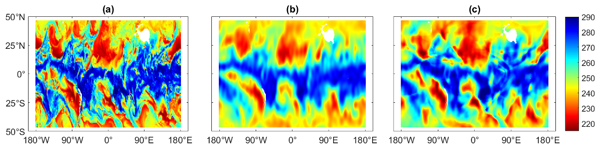
This work investigates whether machine learning (ML) can offer an alternative to existing methods to map radio occultation (RO) products, allowing the extraction of information not visible in direct observations. ML can further improve the results of Bayesian interpolation, a state-of-the-art method to map RO observations. The results display improvements in horizontal and temporal domains, at heights ranging from the planetary boundary layer up to the lower stratosphere, and for all seasons.
Yuanxin Pan, Grzegorz Kłopotek, Laura Crocetti, Rudi Weinacker, Tobias Sturn, Linda See, Galina Dick, Gregor Möller, Markus Rothacher, Ian McCallum, Vicente Navarro, and Benedikt Soja
Atmos. Meas. Tech., 17, 4303–4316, https://doi.org/10.5194/amt-17-4303-2024, https://doi.org/10.5194/amt-17-4303-2024, 2024
Short summary
Short summary
Crowdsourced smartphone GNSS data were processed with a dedicated data processing pipeline and could produce millimeter-level accurate estimates of zenith total delay (ZTD) – a critical atmospheric variable. This breakthrough not only demonstrates the feasibility of using ubiquitous devices for high-precision atmospheric monitoring but also underscores the potential for a global, cost-effective tropospheric monitoring network.
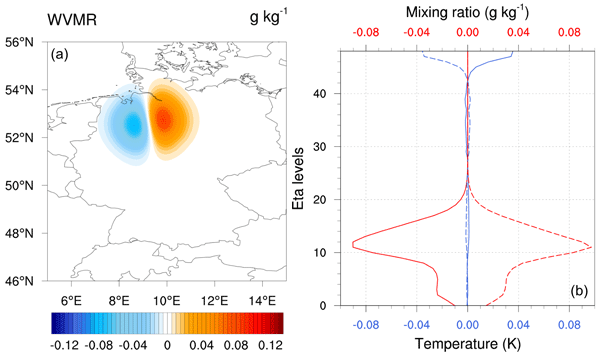
Rohith Thundathil, Florian Zus, Galina Dick, and Jens Wickert
Geosci. Model Dev., 17, 3599–3616, https://doi.org/10.5194/gmd-17-3599-2024, https://doi.org/10.5194/gmd-17-3599-2024, 2024
Short summary
Short summary
Global Navigation Satellite Systems (GNSS) provides moisture observations through its densely distributed ground station network. In this research, we assimilate a new type of observation called tropospheric gradient observations, which has never been incorporated into a weather model. We develop a forward operator for gradient-based observations and conduct an assimilation impact study. The study shows significant improvements in the model's humidity fields.
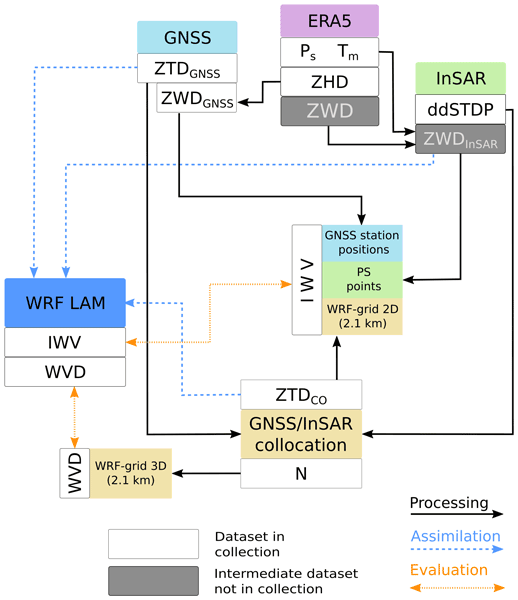
Benjamin Fersch, Andreas Wagner, Bettina Kamm, Endrit Shehaj, Andreas Schenk, Peng Yuan, Alain Geiger, Gregor Moeller, Bernhard Heck, Stefan Hinz, Hansjörg Kutterer, and Harald Kunstmann
Earth Syst. Sci. Data, 14, 5287–5307, https://doi.org/10.5194/essd-14-5287-2022, https://doi.org/10.5194/essd-14-5287-2022, 2022
Short summary
Short summary
In this study, a comprehensive multi-disciplinary dataset for tropospheric water vapor was developed. Geodetic, photogrammetric, and atmospheric modeling and data fusion techniques were used to obtain maps of water vapor in a high spatial and temporal resolution. It could be shown that regional weather simulations for different seasons benefit from assimilating these maps and that the combination of the different observation techniques led to positive synergies.
Matthias Aichinger-Rosenberger, Elmar Brockmann, Laura Crocetti, Benedikt Soja, and Gregor Moeller
Atmos. Meas. Tech., 15, 5821–5839, https://doi.org/10.5194/amt-15-5821-2022, https://doi.org/10.5194/amt-15-5821-2022, 2022
Short summary
Short summary
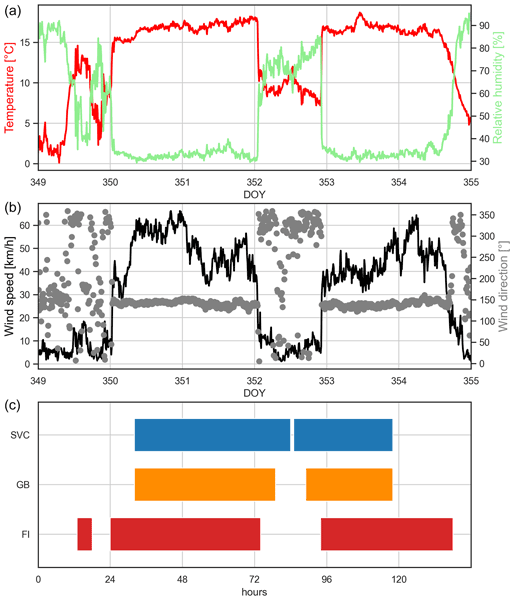
This study develops an innovative approach for the detection and prediction of foehn winds. The approach uses products generated from GNSS (Global Navigation Satellite Systems) in combination with machine learning-based classification algorithms to detect and predict foehn winds at Altdorf, Switzerland. Results are encouraging and comparable to similar studies using meteorological data, which might qualify the method as an additional tool for short-term foehn forecasting in the future.

Nicolas Theys, Christophe Lerot, Hugues Brenot, Jeroen van Gent, Isabelle De Smedt, Lieven Clarisse, Mike Burton, Matthew Varnam, Catherine Hayer, Benjamin Esse, and Michel Van Roozendael
Atmos. Meas. Tech., 15, 4801–4817, https://doi.org/10.5194/amt-15-4801-2022, https://doi.org/10.5194/amt-15-4801-2022, 2022
Short summary
Short summary
Sulfur dioxide plume height after a volcanic eruption is an important piece of information for many different scientific studies and applications. Satellite UV retrievals are useful in this respect, but available algorithms have shown so far limited sensitivity to SO2 height. Here we present a new technique to improve the retrieval of SO2 plume height for SO2 columns as low as 5 DU. We demonstrate the algorithm using TROPOMI measurements and compare with other height estimates.
Karina Wilgan, Galina Dick, Florian Zus, and Jens Wickert
Atmos. Meas. Tech., 15, 21–39, https://doi.org/10.5194/amt-15-21-2022, https://doi.org/10.5194/amt-15-21-2022, 2022
Short summary
Short summary
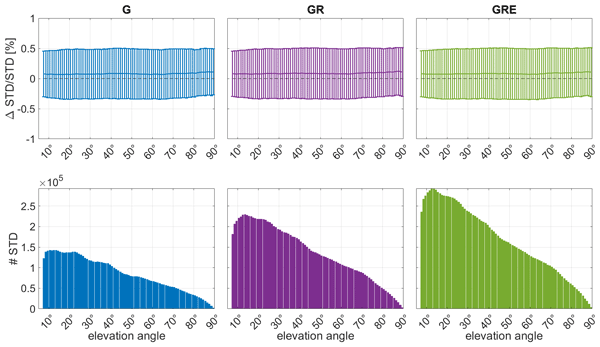
The assimilation of GNSS data in weather models has a positive impact on the forecasts. The impact is still limited due to using only the GPS zenith direction parameters. We calculate and validate more advanced tropospheric products from three satellite systems: the US American GPS, Russian GLONASS and European Galileo. The quality of all the solutions is comparable; however, combining more GNSS systems enhances the observations' geometry and improves the quality of the weather forecasts.
Nicolas Theys, Vitali Fioletov, Can Li, Isabelle De Smedt, Christophe Lerot, Chris McLinden, Nickolay Krotkov, Debora Griffin, Lieven Clarisse, Pascal Hedelt, Diego Loyola, Thomas Wagner, Vinod Kumar, Antje Innes, Roberto Ribas, François Hendrick, Jonas Vlietinck, Hugues Brenot, and Michel Van Roozendael
Atmos. Chem. Phys., 21, 16727–16744, https://doi.org/10.5194/acp-21-16727-2021, https://doi.org/10.5194/acp-21-16727-2021, 2021
Short summary
Short summary
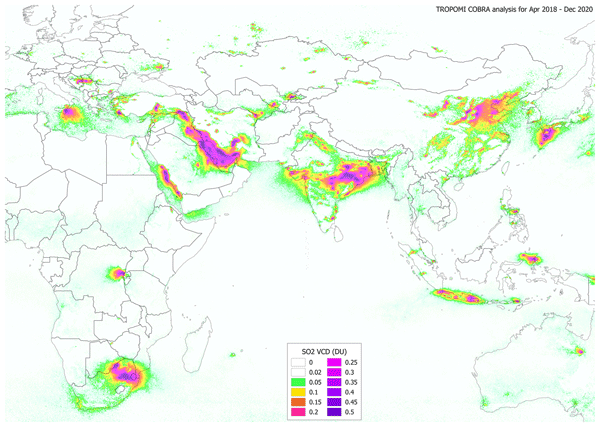
We present a new algorithm to retrieve sulfur dioxide from space UV measurements. We apply the technique to high-resolution TROPOMI measurements and demonstrate the high sensitivity of the approach to weak SO2 emissions worldwide with an unprecedented limit of detection of 8 kt yr−1. This result has broad implications for atmospheric science studies dealing with improving emission inventories and identifying and quantifying missing sources, in the context of air quality and climate.
Hugues Brenot, Nicolas Theys, Lieven Clarisse, Jeroen van Gent, Daniel R. Hurtmans, Sophie Vandenbussche, Nikolaos Papagiannopoulos, Lucia Mona, Timo Virtanen, Andreas Uppstu, Mikhail Sofiev, Luca Bugliaro, Margarita Vázquez-Navarro, Pascal Hedelt, Michelle Maree Parks, Sara Barsotti, Mauro Coltelli, William Moreland, Simona Scollo, Giuseppe Salerno, Delia Arnold-Arias, Marcus Hirtl, Tuomas Peltonen, Juhani Lahtinen, Klaus Sievers, Florian Lipok, Rolf Rüfenacht, Alexander Haefele, Maxime Hervo, Saskia Wagenaar, Wim Som de Cerff, Jos de Laat, Arnoud Apituley, Piet Stammes, Quentin Laffineur, Andy Delcloo, Robertson Lennart, Carl-Herbert Rokitansky, Arturo Vargas, Markus Kerschbaum, Christian Resch, Raimund Zopp, Matthieu Plu, Vincent-Henri Peuch, Michel Van Roozendael, and Gerhard Wotawa
Nat. Hazards Earth Syst. Sci., 21, 3367–3405, https://doi.org/10.5194/nhess-21-3367-2021, https://doi.org/10.5194/nhess-21-3367-2021, 2021
Short summary
Short summary
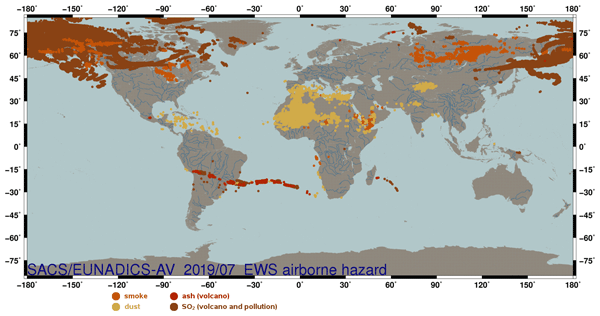
The purpose of the EUNADICS-AV (European Natural Airborne Disaster Information and Coordination System for Aviation) prototype early warning system (EWS) is to develop the combined use of harmonised data products from satellite, ground-based and in situ instruments to produce alerts of airborne hazards (volcanic, dust, smoke and radionuclide clouds), satisfying the requirement of aviation air traffic management (ATM) stakeholders (https://cordis.europa.eu/project/id/723986).

Benjamin Männel, Florian Zus, Galina Dick, Susanne Glaser, Maximilian Semmling, Kyriakos Balidakis, Jens Wickert, Marion Maturilli, Sandro Dahlke, and Harald Schuh
Atmos. Meas. Tech., 14, 5127–5138, https://doi.org/10.5194/amt-14-5127-2021, https://doi.org/10.5194/amt-14-5127-2021, 2021
Short summary
Short summary
Within the MOSAiC expedition, GNSS was used to monitor variations in atmospheric water vapor. Based on 15 months of continuously tracked data, coordinates and hourly zenith total delays (ZTDs) were determined using kinematic precise point positioning. The derived ZTD values agree within few millimeters with ERA5 and terrestrial GNSS and VLBI stations. The derived integrated water vapor corresponds to the frequently launched radiosondes (0.08 ± 0.04 kg m−2, rms of the differences of 1.47 kg m−2).
Cited articles
Alber, C., Ware, R., Rocken, C., and Braun, J.: Obtaining single path phase delays from GPS double differences, Geophys. Res. Lett., 27, 2661–2664, https://doi.org/10.1029/2000gl011525, 2000.
Askne, J. and Nordius, H.: Estimation of Tropospheric Delay for Microwaves from Surface Weather Data, Radio Sci., 22, 379–386, https://doi.org/10.1029/rs022i003p00379, 1987.
US Standard Atmosphere: US Standard Atmosphere, 1976, edited by: the National Oceanic and Atmospheric Administration, the National Aeronautics and Space Administration, and the US Air Force, US Government Printing Office, Washington, D. C., available at: http://ntrs.nasa.gov/archive/nasa/casi.ntrs.nasa.gov/19770009539.pdf (last access: 8 June 2017), 1976.
Bauer, H.-S., Wulfmeyer, V., Schwitalla, T., Zus, F., and Grzeschik, M.: Operational assimilation of GPS slant path delay measurements into the MM5 4DVAR system, Tellus A, 63, 263–282, https://doi.org/10.1111/j.1600-0870.2010.00489.x, 2011.
Bender, M., Dick, G., Wickert, J., Schmidt, T., Shong, S., Gendt, G., Ge, M., and Rothacher, M.: Validation of GPS slant delays using water vapour radiometers and weather models, Meteorol. Z., 6, 807–812, https://doi.org/10.1127/0941-2948/2008/0341, 2008.
Bender, M., Dick, G., Wickert, J., Ramatschi, M., Ge, M., Gendt, G., Rothacher, M., Raabe, A., and Tetzlaff, G.: Estimates of the information provided by GPS slant data observed in Germany regarding tomographic applications, J. Geophys. Res., 114, D06303, https://doi.org/10.1029/2008JD011008, 2009.
Bender, M., Stosius, R., Zus, F., Dick, G., Wickert, J., and Raabe, A.: GNSS water vapour tomography: Expected improvements by combining GPS, GLONASS and Galileo observations, Adv. Space Res., 47, 886–897, https://doi.org/10.1016/j.asr.2010.09.011, 2011.
Bender, M., Stephan, K., Schraff, C., Reich, H., Rhodin, A., and Potthast, R.: GPS Slant Delay Assimilation for Convective Scale NWP, Fifth International Symposium on Data Assimilation (ISDA), University of Reading, UK, July 18–22, 2016.
Bennitt, E. and Jupp, A.: Operational Assimilation of GPS Zenith Total Delay Observations into the Met Office Numerical Weather Prediction Models, Mon. Weather Rev., 140, 2706–2719, https://doi.org/10.1175/MWR-D-11-00156.1, 2012.
Bevis, M., Businger, S., Chiswell, S., Herring, T., Anthes, R., Rocken, C., and Ware, R.: GPS Meteorology: Mapping Zenith Wet Delays onto Precipitable Water, J. Appl. Meteorol., 33, 379–386, https://doi.org/10.1175/1520-0450(1994)033<0379:gmmzwd>2.0.co;2, 1994.
Böhm, J. and Schuh, H.: Vienna mapping functions, in: Proc. 16th Working Meeting on European VLBI for Geodesy and Astrometry, Leipzig, Germany, Verlag des Bundesamtes für Kartographie und Geodäsie, 131–143, 2003.
Böhm, J., Werl, B., and Schuh, H.: Troposphere mapping functions for GPS and very long baseline interferometry from European Centre for Medium-Range Weather Forecasts operational analysis data, J. Geophys. Res., 111, B02406, https://doi.org/10.1029/2005JB003629, 2006a.
Böhm, J., Niell, A., Tregoning, P., and Schuh, H.: Global MappingFunction (GMF): A new empirical mapping function based on numerical weather model data, Geophys. Res. Lett., 33, L07304, https://doi.org/10.1029/2005GL025546, 2006b.
Braun, J., Rocken, C., and Ware, R.: Validation of line-of-sight water vapour measurements with GPS, Radio Sci., 36, 459–472, https://doi.org/10.1029/2000rs002353, 2001.
Braun, J., Rocken, C., and Liljergen, J.: Comparisons of Line-of-Sight Water Vapor Observations Using the Global Positioning System and a Pointing Microwave Radiometer, J. Atmos. Ocean. Tech., 20, 606–612, https://doi.org/10.1175/1520-0426(2003)20<606:colosw>2.0.co;2, 2002.
Brenot, H.: Potential of ground-based GPS measurements for the study of Mediterranean heavy rains, PhD of the French State, http://tel.archives-ouvertes.fr/tel-00012085 (last access: 7 June 2017), 2006.
Brenot, H., Neméghaire, J., Delobbe, L., Clerbaux, N., De Meutter, P., Deckmyn, A., Delcloo, A., Frappez, L., and Van Roozendael, M.: Preliminary signs of the initiation of deep convection by GNSS, Atmos. Chem. Phys., 13, 5425–5449, https://doi.org/10.5194/acp-13-5425-2013, 2013.
Chen, G. and Herring, T. A.: Effects of atmospheric azimuthal asymmetry on the analysis of space geodetic data, J. Geophys. Res., 102, 20489–20502, https://doi.org/10.1029/97JB01739, 1997.
Dach, R., Lutz, S., Walser, P., and Fridez, P. (Eds.): Bernese GNSS Software Version 5.2. User manual, Astronomical Institute, University of Bern, Bern Open Publishing, https://doi.org/10.7892/boris.72297, 2015.
Dee, D. P., Uppala, S. M., Simmons, A. J., Berrisford, P., Poli, P., Kobayashi, S., Andrae, U., Balmaseda, M. A., Balsamo, G., Bauer, P., Bechtold, P., Beljaars, A. C. M., van de Berg, L., Bidlot, J., Bormann, N., Delsol, C., Dragani, R., Fuentes, M., Geer, A. J., Haimberger, L., Healy, S. B., Hersbach, H., Hólm, E. V., Isaksen, L., Kållberg, P., Köhler, M., Matricardi, M., McNally, A. P., Monge-Sanz, B. M., Morcrette, J.-J., Park, B.-K., Peubey, C., de Rosnay, P., Tavolato, C., Thépaut, J.-N., and Vitart, F.: The ERA-Interim reanalysis: Configuration and performance of the data assimilation system, Q. J. Roy. Meteor. Soc., 137, 553–597, https://doi.org/10.1002/qj.828, 2011.
Deng, Z., Bender, M., Zus, F., Ge, M., Dick, G., Ramatschi, M., Wickert, J., Löhnert, U., and Schön, S.: Validation of tropospheric slant path delays derived from single and dual frequency GPS receivers, Radio Sci., 46, RS6007, https://doi.org/10.1029/2011RS004687, 2011.
Douša, J. and Václavovic, P.: Real-time zenith tropospheric delays in support of numerical weather prediction applications. Adv. Space Res., 53, 1347–1358, https://doi.org/10.1016/j.asr.2014.02.021, 2014.
Douša, J., Dick, G., Kacmarík, M., Brožková, R., Zus, F., Brenot, H., Stoycheva, A., Möller, G., and Kaplon, J.: Benchmark campaign and case study episode in central Europe for development and assessment of advanced GNSS tropospheric models and products, Atmos. Meas. Tech., 9, 2989–3008, https://doi.org/10.5194/amt-9-2989-2016, 2016.
De Haan, S., Marel, van der H., and Barlag, S.: Comparison of GPS slant delay measurements to a numerical model: case study of a cold front passage, Phys. Chem. Earth, 27, 317–322, https://doi.org/10.1016/s1474-7065(02)00006-2, 2002.
Flores, A., Rius, A., Vilá-Guearou, J., and Escudero, A.: Spatio-temporal tomography of the lower troposphere using GPS signals, Phys. Chem. Earth A, 26, 405–411, https://doi.org/10.1016/s1464-1895(01)00074-6, 2001.
Gradinarsky, L. P.: Sensing Atmospheric Water Vapor Using Radio Waves, PhD thesis, School of Electrical Engineering, Chalmers University of Technology, Göteborg, Sweden, 2002.
Guerova, G., Bettems, J. M., Brockmann, E., and Matzler, C.: Assimilation of COST 716 Near-Real Time GPS data in the nonhydrostatic limited area model used at MeteoSwiss, Meteorol. Atmos. Phys., 91, 149–164, https://doi.org/10.1007/s00703-005-0110-6, 2006.
Guerova, G., Jones, J., Douša, J., Dick, G., de Haan, S., Pottiaux, E., Bock, O., Pacione, R., Elgered, G., Vedel, H., and Bender, M.: Review of the state of the art and future prospects of the ground-based GNSS meteorology in Europe, Atmos. Meas. Tech., 9, 5385–5406, https://doi.org/10.5194/amt-9-5385-2016, 2016.
Ha, S.-Y, Kuo, Y.-H., Guo, Y.-R., Rocken, C., and Van Hove, T.: Comparison of GPS slant wet delay measurements with model simulations during the passage of a squall line, Geophys. Res. Lett., 29, https://doi.org/10.1029/2002gl015891, 2002.
Hobiger, T., Ichikawa, R., Koyama, Y., and Kondo, T.: Fast and accurate ray-tracing algorithms for real-time space geodetic applications using numerical weather models, J. Geophys. Res.-Atmos., 113, D20302, https://doi.org/10.1029/2008jd010503, 2008.
Kačmařík, M., Douša, J., and Zapletal, J.: Comparison of GPS slant wet delays acquired by different techniques, Acta Geodyn. Geomater., 9, 427–433, 2012.
Kawabata, T., Shoji, Y., Seko, H., and Saito, K.: A Numerical Study on a Mesoscale Convective System over a Subtropical Island with 4D-Var Assimilation of GPS Slant Total Delays, J. Meteorol. Soc. Jpn., 91, 705–721, https://doi.org/10.2151/jmsj.2013-510, 2013.
Lemoine, F. G., Kenyon, S. C., Factor, J. K., Trimmer, R. G., Pavlis, N. K., Chinn, D. S., Cox, C. M., Klosko, S. M., Luthcke, S. B., Torrence, M. H., Wang, Y. M., Williamson, R. G., Pavlis, E. C., Rapp, R. H., and Olson T. R.: The development of the joint NASA GSFC and the National Imagery and Mapping Agency (NIMA) geopotential model EGM96, NASA/TP-1998-206861, https://doi.org/10.1007/978-3-662-03482-8_62, 1998.
Li, X., Zus, F., Lu, C., Dick, G., Ning, T., Ge, M., Wickert, J., and Schuh, H.: Retrieving of atmospheric parameters from multi-GNSS in real time: Validation with water vapor radiometer and numerical weather model, J. Geophys. Res.-Atmos., 120, https://doi.org/10.1002/2015JD023454, 2015a.
Li, X., Zus, F., Lu, C., Ning, T., Dick, G., Ge, M., Wickert, J., and Schuh, H.: Retrieving high-resolution tropospheric gradients from multiconstellation GNSS observations. Geophys. Res. Lett., 42, 4173–4181, https://doi.org/10.1002/2015GL063856, 2015b.
MacMillan, D. S.: Atmospheric gradients from very long baseline interferometry observations, Geophys. Res. Lett., 22, 1041–1044, https://doi.org/10.1029/95GL00887, 1995.
Mahfouf, J.-F., Ahmed, F., Moll, P., and Teferle, F. N.: Assimilation of zenith total delays in the AROME France convective scale model: a recent assessment, Tellus A, 67, 26106, https://doi.org/10.3402/tellusa.v67.26106, 2015.
Möller, G., Wittmann, C., Yan, X., Umnig, E., Joldzic, N., and Weber, R.: 3D ground based GNSS atmospheric tomography, Final Report GNSS-ATom, Austrian Research Promotion Agency (FFG), 9th call, project number 940098, 2016.
Morel, L., Pottiaux, E., Durand, F., Fund, F., Boniface, K., de Oliveira, P.-S., and Van Baelen, J.: Validity and behaviour of tropospheric gradients estimated by GPS in Corsica, Adv. Space Res., 55, 135–149, https://doi.org/10.1016/j.asr.2014.10.004, 2014.
Nafisi, V., Urquhart, L., Santos, M., Nievinski, F., Böhm, J., Wijaya, D., Schuh, H., Ardalan, A., Hobiger, T., Ichikawa, R., Zus, F., Wickert, J., and Gegout, P.: Comparison of ray-tracing packages for troposphere delays, IEEE T. Geosci. Remote, 50, 469–481, https://doi.org/10.1109/TGRS.2011.2160952, 2012.
Rocken C., Sokolovskiy, S., Johnson, J. M., and Hunt, D.: Improved Mapping of Tropospheric Delays, J. Atmos. Ocean. Tech., 18, 1205–1213, https://doi.org/10.1175/1520-0426(2001)018<1205:imotd>2.0.co;2, 2001.
Rueger, J. M.: Refractive index formulae for radio waves, FIG XXII International Congress, USA, 19–26 April 2002.
Saastamoinen, J.: Atmospheric Correction for the Troposphere and Stratosphere in Radio ranging of satellites, Geophy. Monog. Series, 15, 247–251, https://doi.org/10.1029/gm015p0247, 1972.
Schmid, R., Dach, R., Collilieux, X., Jäggi, A., Schmitz, M., and Dilssner, F.: Absolute IGS antenna phase center model igs08.atx: status and potential improvements, J. Geodesy, 90, 343–364, https://doi.org/10.1007/s00190-015-0876-3, 2016.
Shangguan, M., Heise, S., Bender, M., Dick, G., Ramatschi, M., and Wickert, J.: Validation of GPS atmospheric water vapor with WVR data in satellite tracking mode, Ann. Geophys., 33, 55–61, https://doi.org/10.5194/angeo-33-55-2015, 2015.
Shoji, J. Nakamura, H., Iwabuchi, T., Aonashi, K., Seko, H., Mishima, K., Itagaki, A., Ichikawa, R., and Ohtani, R.: Tsukuba GPS dense net campaign observation: Improvement in GPS analysis of slant path delay by stacking one-way postfit phase residuals, J. Meteorol. Soc. Jpn., 82, 301–314, https://doi.org/10.2151/jmsj.2004.301, 2004.
Shoji, Y., Kunii, M., and Saito, K.: Assimilation of Nationwide and Global GPS PWV Data for a Heavy Rain Event on 28 July 2008 in Hokuriku and Kinki, Japan, Scientific Online Letters on the Atmosphere, 5, 45–48, https://doi.org/10.2151/sola.2009-012, 2009.
Shoji, Y., Yamauchi, H., Mashiko, W., and Sato, E.: Estimation of Local-scale Precipitable Water Vapor Distribution Around Each GNSS Station Using Slant Path Delay, Scientific Online Letters on the Atmosphere, 10, 29–33, https://doi.org/10.2151/sola.2014-007, 2014.
Trojáková, A.: The NWP activities at CHMI, Joint 26th ALADIN Workshop & HIRLAM All Staff Meeting 2016, Lisbon, Portugal, 4–8 April 2016.
Václavovic, P. and Douša, J.: Backward smoothing for precise GNSS applications, Adv. Space Res., 56, 627–1634, https://doi.org/10.1016/j.asr.2015.07.020, 2015.
Václavovic, P., Douša, J., and Győri, G.: G-Nut software library – state of development and first results, Acta Geodyn. Geomater., 10, 431–436, https://doi.org/10.13168/AGG.2013.0042, 2013.
Vedel, H. and Huang, X.: Impact of Ground Based GPS Data on Numerical Weather Prediction, J. Meteorol. Soc. Jpn., 82, 459–472, https://doi.org/10.2151/jmsj.2004.459, 2004.
Zumberge, J. F., Heflin, M. B., Jefferson, D. C., Watkins, M. M., and Webb, F. H.: Precise point positioning for the efficient and robust analysis of GPS data from large networks, J. Geophys. Res., 102, 5005–5017, https://doi.org/10.1029/96JB03860, 1997.
Zus, F., Bender, M., Deng, Z., Dick, G., Heise, S., Shang-Guan, M., and Wickert, J.: A methodology to compute GPS slant total delays in a numerical weather model, Radio Sci., 47, RS2018, https://doi.org/10.1029/2011RS004853, 2012.
Zus, F., Douša, J., Dick, G., and Wickert, J.: Station specific NWM based tropo parameters for the Benchmark campaign, ES1206-GNSS4WEC COST Workshop, Iceland, 8–10 March 2016.


