
Articles | Volume 15, issue 14
https://doi.org/10.5194/amt-15-4153-2022
© Author(s) 2022. This work is distributed under
the Creative Commons Attribution 4.0 License.
the Creative Commons Attribution 4.0 License.
https://doi.org/10.5194/amt-15-4153-2022
© Author(s) 2022. This work is distributed under
the Creative Commons Attribution 4.0 License.
the Creative Commons Attribution 4.0 License.
Research article
| 
20 Jul 2022
Research article |
| 20 Jul 2022
| 20 Jul 2022
Inter-comparison of atmospheric boundary layer (ABL) height estimates from different profiling sensors and models in the framework of HyMeX-SOP1
Donato Summa
Consiglio Consiglio Nazionale delle Ricerche – Istituto di Metodologie per l'Analisi Ambientale (CNR-IMAA), 85050 Tito Scalo (Pz), Italy
Scuola di Ingegneria, Università degli Studi della Basilicata, viale dell'Ateneo Lucano 10, 85100 Potenza, Italy
Fabio Madonna
Consiglio Consiglio Nazionale delle Ricerche – Istituto di Metodologie per l'Analisi Ambientale (CNR-IMAA), 85050 Tito Scalo (Pz), Italy
Noemi Franco
Scuola di Ingegneria, Università degli Studi della Basilicata, viale dell'Ateneo Lucano 10, 85100 Potenza, Italy
Benedetto De Rosa
Consiglio Consiglio Nazionale delle Ricerche – Istituto di Metodologie per l'Analisi Ambientale (CNR-IMAA), 85050 Tito Scalo (Pz), Italy
Scuola di Ingegneria, Università degli Studi della Basilicata, viale dell'Ateneo Lucano 10, 85100 Potenza, Italy
Paolo Di Girolamo
CORRESPONDING AUTHOR
Scuola di Ingegneria, Università degli Studi della Basilicata, viale dell'Ateneo Lucano 10, 85100 Potenza, Italy
Related authors
Patrick Chazette, Andreas Behrendt, Adolfo Comerón, Paolo Di Girolamo, Marco Di Paolantonio, Davide Dionisi, Cyrille Flamant, José Luis Gómez-Amo, Jérémy Lagarrigue, Frédéric Laly, Diego Lange, Constantino Muñoz-Porcar, Alejandro Rodríguez-Gómez, Michaël Sicard, Donato Summa, Julien Totems, María Pilar Utrillas, Pedro C. Valdelomar, and Volker Wulfmeyer
Atmos. Meas. Tech., 19, 5223–5242, https://doi.org/10.5194/amt-19-5223-2026, https://doi.org/10.5194/amt-19-5223-2026, 2026
Short summary
Short summary
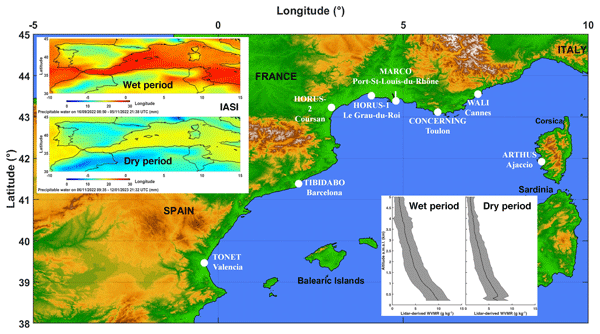
Between October 2022 and January 2023, the Water Vapour Lidar Network Assimilation (WaLiNeAs) campaign was conducted on the western Mediterranean by four European countries. To improve the forecasting of heavy precipitation events, eight ground-based stations equipped with water vapour Raman lidars were strategically deployed. They offered a valuable chance to verify the consistency of the water vapour products of both the Infrared Atmospheric Sounding Interferometer (IASI) and ERA5 reanalysis.
Teresa Laurita, Alessandro Mauceri, Francesco Cardellicchio, Emilio Lapenna, Benedetto De Rosa, Serena Trippetta, Michail Mytilinaios, Davide Amodio, Aldo Giunta, Ermann Ripepi, Canio Colangelo, Nikolaos Papagiannopoulos, Francesca Morrongiello, Claudio Dema, Simone Gagliardi, Carmela Cornacchia, Rosa Maria Petracca Altieri, Aldo Amodeo, Marco Rosoldi, Donato Summa, Gelsomina Pappalardo, and Lucia Mona
Atmos. Meas. Tech., 18, 2373–2396, https://doi.org/10.5194/amt-18-2373-2025, https://doi.org/10.5194/amt-18-2373-2025, 2025
Short summary
Short summary
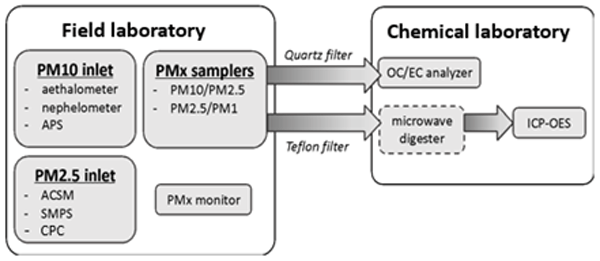
This paper provides an overview of the CIAO Observatory in southern Italy, focusing on the upgrade of its aerosol in situ laboratory in compliance with ACTRIS standard operating procedures. The aim is to provide the aerosol research community with technical details and practical guidance for establishing an in situ aerosol observational site. The paper also discusses the importance of combining in situ and remote sensing measurements for a comprehensive understanding of atmospheric processes.
Fabio Madonna, Benedetto De Rosa, Simone Gagliardi, Ilaria Gandolfi, Yassmina Hesham Essa, Domenico Madonna, Fabrizio Marra, Maria Assunta Menniti, Donato Summa, Emanuele Tramutola, Faezeh Karimian Saracks, Filomena Romano, and Marco Rosoldi
Earth Syst. Dynam. Discuss., https://doi.org/10.5194/esd-2024-32, https://doi.org/10.5194/esd-2024-32, 2024
Revised manuscript not accepted
Short summary
Short summary
Extreme weather events in the Mediterranean have intensified, and understanding their causes is key to improving forecasts. This study used data from the MESSA-DIN measurement campaign in Soverato, Italy (July–September 2021) to analyze the water vapor fluxes effect in extreme weather events as well as the related ERA5 performances. This study highlights a bias in ERA5 reanalysis humidity and the importance of high-resolution data for improving weather predictions.
Patrick Chazette, Andreas Behrendt, Adolfo Comerón, Paolo Di Girolamo, Marco Di Paolantonio, Davide Dionisi, Cyrille Flamant, José Luis Gómez-Amo, Jérémy Lagarrigue, Frédéric Laly, Diego Lange, Constantino Muñoz-Porcar, Alejandro Rodríguez-Gómez, Michaël Sicard, Donato Summa, Julien Totems, María Pilar Utrillas, Pedro C. Valdelomar, and Volker Wulfmeyer
Atmos. Meas. Tech., 19, 5223–5242, https://doi.org/10.5194/amt-19-5223-2026, https://doi.org/10.5194/amt-19-5223-2026, 2026
Short summary
Short summary
Between October 2022 and January 2023, the Water Vapour Lidar Network Assimilation (WaLiNeAs) campaign was conducted on the western Mediterranean by four European countries. To improve the forecasting of heavy precipitation events, eight ground-based stations equipped with water vapour Raman lidars were strategically deployed. They offered a valuable chance to verify the consistency of the water vapour products of both the Infrared Atmospheric Sounding Interferometer (IASI) and ERA5 reanalysis.
Gonzague Romanens, Giovanni Martucci, Marco Rosoldi, Yann Poltera, Cristina Cardós, Natalia Prats, Sunji Ambe, Gessica Cosimato, Antoine Farah, Christian Félix, Ilaria Gandolfi, Alexander Haefele, Miguel Hernández, Masami Iwabuchi, Patrick Jann, Jason Ming Chun Lam, Fabrizio Marra, José María Rodríguez, Yves-Alain Roulet, Yuta Tanaka, Ruud Dirksen, and Fabio Madonna
EGUsphere, https://doi.org/10.5194/egusphere-2026-3215, https://doi.org/10.5194/egusphere-2026-3215, 2026
This preprint is open for discussion and under review for Atmospheric Measurement Techniques (AMT).
Short summary
Short summary
Automatic systems are increasingly used to launch weather balloons, raising questions about the long-term consistency of reference humidity measurements within the Global Climate Observing System Reference Upper-Air Network. We tested how storing balloon instruments inside automatic launch systems for up to two weeks affects humidity measurements under controlled conditions at six international sites. Results show that the impact strongly depends on the instrument type and storage environment.
Abou Bakr Merdji, Juan Cuesta, Fazzal Qayyum, Anton Lopatin, Oleg Dubovik, Durgesh Nandan Piyush, Laaziz El Amraoui, Paolo Di Girolamo, and Charles R. Trepte
Atmos. Meas. Tech., 19, 4669–4701, https://doi.org/10.5194/amt-19-4669-2026, https://doi.org/10.5194/amt-19-4669-2026, 2026
Short summary
Short summary
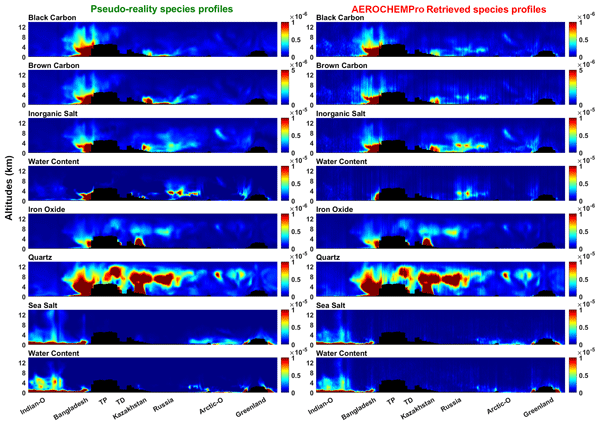
This study presents a novel satellite approach to retrieve the vertical distribution of aerosol chemical species in the atmosphere. By combining spaceborne LIDAR and polarimetric observations, it distinguishes major natural and anthropogenic chemical particle species and their optical properties. Tests with realistic simulations show accurate retrieval of dust, pollution, and sea salt layers, enhancing global monitoring of aerosols relevant to air quality and climate.
Masatomo Fujiwara, Bomin Sun, Anthony Reale, Domenico Cimini, Salvatore Larosa, Lori Borg, Christoph von Rohden, Michael Sommer, Ruud Dirksen, Marion Maturilli, Holger Vömel, Rigel Kivi, Bruce Ingleby, Ryan J. Kramer, Belay Demoz, Fabio Madonna, Fabien Carminati, Owen Lewis, Brett Candy, Christopher Thomas, David Edwards, Noersomadi, Kensaku Shimizu, and Peter Thorne
Atmos. Meas. Tech., 18, 2919–2955, https://doi.org/10.5194/amt-18-2919-2025, https://doi.org/10.5194/amt-18-2919-2025, 2025
Short summary
Short summary
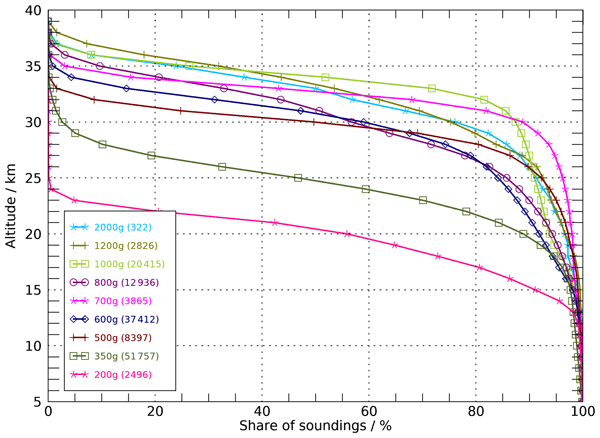
We assess and illustrate the benefits of high-altitude attainment of balloon-borne radiosonde soundings up to and beyond 10 hPa level from various aspects. We show that the extra costs and technical challenges involved in consistent attainment of high ascents are more than outweighed by the benefits for a broad variety of real-time and delayed-mode applications. Consistent attainment of high ascents should therefore be pursued across the balloon observational network.
Teresa Laurita, Alessandro Mauceri, Francesco Cardellicchio, Emilio Lapenna, Benedetto De Rosa, Serena Trippetta, Michail Mytilinaios, Davide Amodio, Aldo Giunta, Ermann Ripepi, Canio Colangelo, Nikolaos Papagiannopoulos, Francesca Morrongiello, Claudio Dema, Simone Gagliardi, Carmela Cornacchia, Rosa Maria Petracca Altieri, Aldo Amodeo, Marco Rosoldi, Donato Summa, Gelsomina Pappalardo, and Lucia Mona
Atmos. Meas. Tech., 18, 2373–2396, https://doi.org/10.5194/amt-18-2373-2025, https://doi.org/10.5194/amt-18-2373-2025, 2025
Short summary
Short summary
This paper provides an overview of the CIAO Observatory in southern Italy, focusing on the upgrade of its aerosol in situ laboratory in compliance with ACTRIS standard operating procedures. The aim is to provide the aerosol research community with technical details and practical guidance for establishing an in situ aerosol observational site. The paper also discusses the importance of combining in situ and remote sensing measurements for a comprehensive understanding of atmospheric processes.
Fabrizio Marra, Emanuele Tramutola, Marco Rosoldi, and Fabio Madonna
EGUsphere, https://doi.org/10.5194/egusphere-2024-2882, https://doi.org/10.5194/egusphere-2024-2882, 2024
Preprint withdrawn
Short summary
Short summary
This article investigates the impact of sampling frequency on ozone partial pressure trends. By analyzing ozonesounding profiles obtained from three different networks within a unified database, the effects at different latitudes and vertical layers in the upper troposphere/lower stratosphere are evaluated. This is significant because the unified database improves both spatial and temporal coverage, allowing for deeper analysis of ozone anomalies and global trends than individual datasets.
Fabio Madonna, Benedetto De Rosa, Simone Gagliardi, Ilaria Gandolfi, Yassmina Hesham Essa, Domenico Madonna, Fabrizio Marra, Maria Assunta Menniti, Donato Summa, Emanuele Tramutola, Faezeh Karimian Saracks, Filomena Romano, and Marco Rosoldi
Earth Syst. Dynam. Discuss., https://doi.org/10.5194/esd-2024-32, https://doi.org/10.5194/esd-2024-32, 2024
Revised manuscript not accepted
Short summary
Short summary
Extreme weather events in the Mediterranean have intensified, and understanding their causes is key to improving forecasts. This study used data from the MESSA-DIN measurement campaign in Soverato, Italy (July–September 2021) to analyze the water vapor fluxes effect in extreme weather events as well as the related ERA5 performances. This study highlights a bias in ERA5 reanalysis humidity and the importance of high-resolution data for improving weather predictions.
José Alex Zenteno-Hernández, Adolfo Comerón, Federico Dios, Alejandro Rodríguez-Gómez, Constantino Muñoz-Porcar, Michaël Sicard, Noemi Franco, Andreas Behrendt, and Paolo Di Girolamo
Atmos. Meas. Tech., 17, 4687–4694, https://doi.org/10.5194/amt-17-4687-2024, https://doi.org/10.5194/amt-17-4687-2024, 2024
Short summary
Short summary
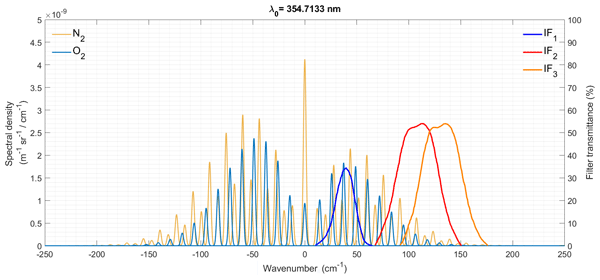
We study how the spectral characteristics of a solid-state laser in an atmospheric temperature profiling lidar using the Raman technique impact the temperature retrieval accuracy. We find that the spectral widening, with respect to a seeded laser, has virtually no impact, while crystal-rod temperature variations in the laser must be kept within a range of 1 K for the uncertainty in the atmospheric temperature below 1 K. The study is carried out through spectroscopy simulations.
Samira Khodayar, Silvio Davolio, Paolo Di Girolamo, Cindy Lebeaupin Brossier, Emmanouil Flaounas, Nadia Fourrie, Keun-Ok Lee, Didier Ricard, Benoit Vie, Francois Bouttier, Alberto Caldas-Alvarez, and Veronique Ducrocq
Atmos. Chem. Phys., 21, 17051–17078, https://doi.org/10.5194/acp-21-17051-2021, https://doi.org/10.5194/acp-21-17051-2021, 2021
Short summary
Short summary
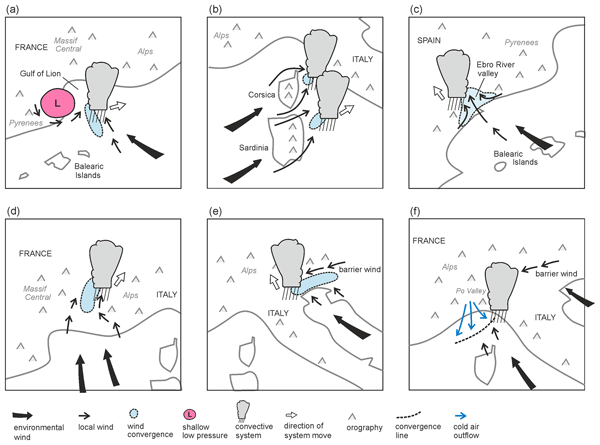
Heavy precipitation (HP) constitutes a major meteorological threat in the western Mediterranean. Every year, recurrent events affect the area with fatal consequences. Despite this being a well-known issue, open questions still remain. The understanding of the underlying mechanisms and the modeling representation of the events must be improved. In this article we present the most recent lessons learned from the Hydrological Cycle in the Mediterranean Experiment (HyMeX).
Marco Rosoldi, Graziano Coppa, Andrea Merlone, Chiara Musacchio, and Fabio Madonna
Atmos. Meas. Tech. Discuss., https://doi.org/10.5194/amt-2021-337, https://doi.org/10.5194/amt-2021-337, 2021
Preprint withdrawn
Short summary
Short summary
A methodology based on tests in climatic chambers was proposed to evaluate the effect of radiosonde models’ change on radiosounding stations’ data series, in terms of measurements accuracy and homogeneity. For Vaisala radiosonde models RS92 and RS41, the noise, the calibration accuracy and the bias of their temperature sensors were quantified independently of the manufacturer. The potential effects of steep thermal changes during radiosondes’ pre-launch phase were also investigated.
Cited articles
Behrendt, A., Pal, S., Aoshima, F., Bender, M., Blyth, A., Corsmeier, U.,
Cuesta, J., Dick, G., Dorninger, M., Flamant, C., Di Girolamo, P., Gorgas,
T., Huang, Y., Kalthoff, N., Khodayar, S., Mannstein, H., and Wulfmeyer, V.:
Observation of Convection Initiation Processes with a Suite of
State-of-the-Art Research Instruments during COPS IOP8b, Q. J. Roy.
Meteor. Soc., 137, 81–100, https://doi.org/10.1002/qj.758, 2011.
Bhawar, R., Di Girolamo, P., Summa, D., Flamant, C., Althausen, D.,
Behrendt, A., Kiemle, C., Bosser, P., Cacciani, M., Champollion, C., Di
Iorio, T., Engelmann, R., Herold, C., Müller, D., Pal, S., Wirth, M.,
and Wulfmeyer, V.: The Water Vapour Intercomparison Effort in the Framework
of the Convective and Orographically-Induced Precipitation Study: Airborne-to-Ground-based and airborne-to-airborne Lidar Systems, Q. J. Roy. Meteor. Soc., 137, 325–348, https://doi.org/10.1002/qj.697, 2011.
Bianco, L. and Wilczak, J. M.: Convective boundary layer depth: improved
measurement by Doppler radar wind profiler using fuzzy logic methods, J.
Atmos. Ocean. Tech., 19, 1745–1758, 2002.
Carlson, T. N. and Ludlam, F. H.: Conditions for the occurrence of severe
local storms, Tellus A, 20, 203–226, https://doi.org/10.1111/j.2153-3490.1968.tb00364.x, 1968.
Che, J. and Zhao, P.: Characteristics of the summer atmospheric boundary layer height over the Tibetan Plateau and influential factors, Atmos. Chem. Phys., 21, 5253–5268, https://doi.org/10.5194/acp-21-5253-2021, 2021.
Cramer, O. P.: Potential temperature analysis for mountainous terrain, J.
Appl. Meteorol., 11, 44–50, 1972.
Dai, C., Wang, Q., Kalogiros, J. A., Lenschow, D. H., Gao, Z., and Zhou, M.: Determining Boundary-Layer Height from Aircraft Measurements, Bound.-Lay. Meteorol., 152, 277–302, https://doi.org/10.1007/s10546-014-9929-z, 2014.
Dai, H., Katherine, K., Milkman, L., and Riis, J.: The Fresh Start Effect: Temporal Landmarks Motivate Aspirational Behavior, Manage. Sci., 60, 2563–2582, https://doi.org/10.1287/mnsc.2014.1901, 2014.
Dang, R., Yang, Y., Li, H., Hu, X.-M., Wang, Z., Huang, Z., Zhou, T., and Zhang, T.: Atmosphere Boundary Layer Height (ABLH) Determination under
Multiple-Layer Conditions Using Micro-Pulse Lidar, Remote Sens., 11, 263, https://doi.org/10.3390/rs11030263, 2019a.
Dang, R., Yang, Y., Hu, X.-M., Wang, Z., and Zhang, S. A.: Review of Techniques for Diagnosing the Atmospheric Boundary Layer Height (ABLH) Using Aerosol Lidar Data, Remote Sens., 11, 1590, https://doi.org/10.3390/rs11131590, 2019b.
Dee, D. P., Fasullo, J., Shea, D., Walsh, J., and National Center for Atmospheric Research Staff (Eds.): The
climate data guide: Atmospheric reanalysis: Overview and comparison tables, NCAR https://climatedataguide.ucar.edu/climate-data/atmospheric-reanalysis-overview-comparison-tables (last access: 12 June 2021), 2016.
De Wekker, S. F. J., Kossmann, M., and Fielder, F.: Observations of daytime
mixed layer heights over mountainous terrain during the TRACT field
campaign, in: Proc. 12th Symp. on Boundary Layers and Turbulence, Vancouver, BC, Canada, 28 July–1 August 1997, Am. Meteor. Soc., 1, 498–499, 1997.
Di Girolamo, P., Marchese, R., Whiteman, D. N., and Demoz, B. B.: Rotational Raman Lidar measurements of atmospheric temperature in the UV, Geophys. Res. Lett., 31, L01106, https://doi.org/10.1029/2003GL018342, 2004.
Di Girolamo, P., Summa, D., and Ferretti, R.: Multiparameter Raman Lidar
Measurements for the Characterization of a Dry Stratospheric Intrusion Event, J. Atmos. Ocean. Tech., 26, 1742–1762, https://doi.org/10.1175/2009JTECHA1253.1, 2009a.
Di Girolamo, P., Summa, D., Lin, R.-F., Maestri, T., Rizzi, R., and Masiello, G.: UV Raman lidar measurements of relative humidity for the characterization of cirrus cloud microphysical properties, Atmos. Chem. Phys., 9, 8799–8811, https://doi.org/10.5194/acp-9-8799-2009, 2009b.
Di Girolamo, P., Summa, D., Bhawar, R., Di Iorio, T., Cacciani, M., Veselovskii, I., Dubovik, O., and Kolgotin, A.: Raman lidar observations of a Saharan dust outbreak event: characterization of the dust optical properties and determination of particle size and microphysical parameters, Atmos. Environ., 50, 66–78, https://doi.org/10.1016/j.atmosenv.2011.12.061, 2012a.
Di Girolamo, P., Summa, D., Cacciani, M., Norton, E. G., Peters, G., and Dufournet, Y.: Lidar and radar measurements of the melting layer: observations of dark and bright band phenomena, Atmos. Chem. Phys., 12, 4143–4157, https://doi.org/10.5194/acp-12-4143-2012, 2012b.
Di Girolamo, P., Flamant, C., Cacciani, M., Richard, E., Ducrocq, V., Summa, D., Stelitano, D., Fourrié, N., and Saïd, F.: Observation of low-level wind
reversals in the Gulf of Lion area and their impact on the water vapour
variability, Q. J. Roy. Meteor. Soc., 142, 153–172, https://doi.org/10.1002/qj.2767, 2016.
Di Girolamo, P., Cacciani, M., Summa, D., Scoccione, A., De Rosa, B., Behrendt, A., and Wulfmeyer, V.: Characterisation of boundary layer turbulent processes by the Raman lidar BASIL in the frame of HD(CP)2 Observational Prototype Experiment, Atmos. Chem. Phys., 17, 745–767, https://doi.org/10.5194/acp-17-745-2017, 2017.
Donner, L. J. and Phillips, V. T.: Boundary layer control on convective available potential energy: Implications for cumulus parameterization, J. Geophys. Res., 108, 4701, https://doi.org/10.1029/2003JD003773, 2003.
Durré, I., Yin, X., Vose, R. S., Applequist, S., and Arnfield, J.: Enhancing the Data Coverage in the Integrated Global Radiosonde
Archive, J. Atmos. Ocean. Tech., 35, 1753–1770, 2018.
Emanuel, K. A., Neelin, J. D., and Bretherton, C. S.: On large-scale circulations in convecting atmospheres, Q. J. Roy. Meteor. Soc., 120, 1111–1143, 1994.
Ek, M. and Mahrt, L.: Daytime Evolution of Relative Humidity at the
Boundary Layer Top, Mon. Weather Rev., 122, 2709–2721, https://doi.org/10.1175/1520-0493(1994)122<2709:DEORHA>2.0.CO;2, 1994.
Esau, I. and Zilitinkevich, S.: On the role of the planetary boundary layer depth in the climate system, Adv. Sci. Res., 4, 63–69, https://doi.org/10.5194/asr-4-63-2010, 2010.
Gage, K. S., Balsley, B. B., Ecklund, W. L., Woodman, R. F., and Avery, S. K.: Wind-profiling Doppler radars for tropical atmosphericresearch, Eos T.
AGU, 71, 1851–1854, 1990.
Gamache, J. F., Houze, R. A., Marks, F. D.: Dual-aircraft investigation
of the inner core of hurricane Norbert. 3. Water-budget, J. Atmos. Sci., 50,
3221–3243, 1993.
Garratt, J.: Review: The atmospheric boundary layer, Earth Sci. Rev., 37,
89–134, 1994.
Garratt, J. R.: The Atmospheric Boundary Layer, Cambridge Atmospheric and
Space Science Series, Cambridge Univ. Press, 335 pp., ISBN 0-521-38052-9, 1992.
Haeffelin, M., Angelini, F., Morille, Y., Martucci, G., O'Dowd, C. D.,
Xueref-Rémy, I., Wastine, B., Frey, S., and Sauvage, L.: Evaluation of
mixing depth retrievals from automatic profiling lidars and ceilometers
inview of future integrated networks in Europe, Bound.-Lay. Meteorol., 143,
49–75, https://doi.org/10.1007/s10546-011-9643-z, 2012.
Hanna, S. R.: The thickness of the planetary boundary layer, Atmos.
Environ., 3, 519–536, https://doi.org/10.1016/0004-6981(69)90042-0, 1969.
Herrera-Mejía, L. and Hoyos, C. D.: Characterization of the atmospheric
boundary layer in a narrow tropical valley using remote-sensing and
radiosonde observations and the WRF model: the Aburrá Valley case-study,
Q. J. Roy. Meteor. Soc., 145, 2641–2665, https://doi.org/10.1002/qj.3583, 2019.
Hersbach, H., Bell, B., Berrisford P., Hirahara S., Horányi, A., Muñoz-Sabater, J., Nicolas, J., Peubey, C., Radu, R., Schepers, D., Simmons, A., Soci, C., Abdalla, S., Abellan, X., Balsamo, G., Bechtold, P., Biavati, G., Bidlot, J., Bonavita, M., De Chiara, G., Dahlgren, P., Dee, D., Diamantakis, M., Dragani, R., Flemming, J., Forbes, R., Fuentes, M., Geer, A., Haimberger, L., Healy, S., Robin J., Hogan, R.J., Hólm, E., Janisková, M., Keeley, S., Laloyaux, P., Lopez, P., Lupu, C., Radnoti, G., De Rosnay, P., Rozum, I., Vamborg, F., Villaume, S., and Thépaut J.-N.: The ERA5 reanalysis, Q. J. Roy. Meteor. Soc., 146, 1999–2049, https://doi.org/10.1002/qj.3803, 2020.
HyMeX: https://www.hymex.org/, last access: 25 July 2021.
Hyun, Y., Kim, K.-E., and Ha, K.-J.: A comparison of methods to estimate the height of stable boundary layer over a temperate grassland, Agr. Forest Meteorol., 132, 132–142, 2005.
Jericevic, A. and Grisogono, B.: The critical bulk Richardson number in urban areas: verification with application in NWP model, Tellus A, 58, 19–27, https://doi.org/10.3402/tellusa.v58i1.14743, 2006.
Joffre, S. M., Kangas, M., Heikinheimo, M., and Kitaigorodskii, S. A.: Variability of the stable and unstable atmospheric boundary-layer height and its scales over a boreal forest, Bound.-Lay. Meteorol., 99, 429–450, 2001.
Lenschow, D. H., Zhou, M., Zeng, X., Chen, L., and Xu, X.: Measurements of fine-scale structure at the top ofmarine stratocumulus, Bound.-Lay. Meteorol., 97, 331–357, 2000.
Li, J., Carlson, B. E., and Lacis, A. A.: A study on the temporal and spatial variability of absorbing aerosols using total ozone mapping spectrometer and ozone monitoring instrument aerosol index data, J. Geophys. Res., 114, D09213, https://doi.org/10.1029/2008JD011278, 2009.
Liu, Z., Chang, J., Li, H., Chen, S., and Dai, T.: Estimating Boundary Layer Height from LiDAR Dataunder Complex AtmosphericConditions Using Machine Learning, Remote Sens., 14, 418, https://doi.org/10.3390/rs14020418, 2022.
Madonna, F., Kivi, R., Dupont, J.-C., Ingleby, B., Fujiwara, M., Romanens, G., Hernandez, M., Calbet, X., Rosoldi, M., Giunta, A., Karppinen, T., Iwabuchi, M., Hoshino, S., von Rohden, C., and Thorne, P. W.: Use of automatic radiosonde launchers to measure temperature and humidity profiles from the GRUAN perspective, Atmos. Meas. Tech., 13, 3621–3649, https://doi.org/10.5194/amt-13-3621-2020, 2020.
Madonna, F., Summa, D., Di Girolamo, P., Marra, F., Wang, Y., and Rosoldi, M.: Assessment of Trends and Uncertainties in the Atmospheric Boundary Layer Height Estimated Using Radiosounding Observations over Europe, Atmosphere, 12, 301, https://doi.org/10.3390/atmos12030301, 2021.
Manninen, A. J., Marke, T., Tuononen, M. J., and O'Connor, E. J.: Atmospheric boundary layer classification with Doppler lidar, J.
Geophys. Res.-Atmos., 123, 8172–8189, https://doi.org/10.1029/2017JD028169, 2018.
Martucci, G., Matthey, R., and Mitev, V.: Comparison between backscatter lidar and radiosonde measurements of the diurnal and nocturnal stratification in the lower troposphere, J. Atmos. Ocean. Tech., 24, 1231–1244, 2007.
Melgarejo, J. W. and Deardorff, J. W.: Stability functions for the boundary layer resistance laws based upon observed boundary-layer heights, J. Atmos. Sci., 31, 1324–1333, 1974.
Morrison, H. G., Thompson, G., and Tatarskii, V.: Impact of cloud microphysics on the development of trailing stratiform precipitation in a simulated squall line: Comparison of one and two-moment schemes, Mon. Weather Rev., 137, 991–1007, https://doi.org/10.1175/2008MWR2556.1, 2009.
Nash, J., Oakley, T., Vömel, H., and Wei, L.: WMO intercomparison of high quality radiosonde systems, Yangjiang, China, 12 July–3 August 2010, World Meteorological Organization (WMO), WMO/TD-No. 1580, 2010.
NOAA NCEI: Integrated Global Radiosonde Archive (IGRA), https://www.ncei.noaa.gov/products/weather-balloon/integrated-global-radiosonde-archive, last access: 16 June 2021.
Oke, T. R.: Boundary Layer Climates, 2nd edn., Halsted Press, New York, 435 pp., 1988.
Pal, S. and Lee, T. R.: Contrasting air mass advection explains significant differences in boundary layer depth seasonal cycles under onshore versus offshore flows, Geophys. Res. Lett., 46, 2846–2853, https://doi.org/10.1029/2018GL081699, 2019.
Saïd, F., Campistron, B., Delbarre, H., Canut, G., Doerenbecher,A.,
Durand, P., Fourrié, N., Lambert, D., and Legain, D.: Offshorewinds
obtained from a network of wind-profiler radars duringHyMeX: 3D Wind Fields during HyMeX, Q. J. Roy. Meteor. Soc., 142, 23–42,
https://doi.org/10.1002/qj.2749, 2016.
Saïd, F., Campistron, B., and Di Girolamo, P.: High-resolution humidity profiles retrieved from wind profiler radar measurements, Atmos. Meas. Tech., 11, 1669–1688, https://doi.org/10.5194/amt-11-1669-2018, 2018.
Seibert, P., Beyrich, F., Gryning, S.-E., Joffre, S., Rasmussen, A., and Tercier, P.: Review and intercomparison of operational methods for the determination of the mixing height, Atmos. Environ., 34, 1001–1027, https://doi.org/10.1016/S1352-2310(99)00349-0, 2000.
Seidel, D. J., Zhang, Y., Beljaars, A., Golaz, J.-C., Jacobson, A. R., and Medeiros, B.: Climatology of the planetary boundary layer over the continental
United States and Europe, J. Geophys. Res., 117, D17106,
https://doi.org/10.1029/2012JD018143, 2012.
Sicard, M., Pérez, C., Rocadenbosch, F., Baldasano, J. M., and
García-Vizcaino, D.: Mixed-layer depth determination in the Barcelona
coastal area from regular lidar measurements: methods, results and
limitations, Bound.-Lay. Meteorol., 119, 135–157, 2006.
Sorbjan, Z.: Structure of the Atmospheric Boundary Layer, New Jersey,
Prentice-Hall, 316 pp., ISBN-10: 0138535574, 1989.
Staudt, K.: Determination of the atmospheric boundary layer height in
complex terrain during SALSA 2005, Dissertation thesis, Department of
Micrometeorology, University of Bayreuth, September 2006.
Stelitano, D., Di Girolamo, P., Scoccione, A., Summa, D., and Cacciani, M.: Characterization of atmospheric aerosol optical properties based on the combined use of a ground-based Raman lidar and an airborne optical particle counter in the framework of the Hydrological Cycle in the Mediterranean Experiment – Special Observation Period 1, Atmos. Meas. Tech., 12, 2183–2199, https://doi.org/10.5194/amt-12-2183-2019, 2019.
Stull, R. B.: An Introduction to Boundary Layer Meteorology, Dordrecht,
Kluwer, 666 pp., ISBN: 978-94-009-3027-8, 1998.
Summa, D., Di Girolamo, P., Stelitano, D., and Cacciani, M.: Characterization of the planetary boundary layer height and structure by Raman lidar: comparison of different approaches, Atmos. Meas. Tech., 6, 3515–3525, https://doi.org/10.5194/amt-6-3515-2013, 2013.
Van Pul, W. A. J., Holtslag, A. A. M., and Swart, D. P. J.: A comparison of
ABL heights inferred routinely from lidar and radiosondes at noontime,
Bound.-Lay. Meteorol., 68, 173–191, 1994.
Vivone, G., D'Amico, G., Summa, D., Lolli, S., Amodeo, A., Bortoli, D., and Pappalardo, G.: Atmospheric boundary layer height estimation from aerosol lidar: a new approach based on morphological image processing techniques, Atmos. Chem. Phys., 21, 4249–4265, https://doi.org/10.5194/acp-21-4249-2021, 2021.
Vogelezang, D. H. P. and Holtslag, A. A. M.: Evaluation and model impacts of alternative boundary-layer height formulations, Bound.-Lay. Meteorol., 81, 245–269, https://doi.org/10.1007/BF02430331, 1996.
Wang, Q., Lenschow, D. H., Pan, L., Schillawski, R. D., Kok, G. L., Prévot, A. S. H., Laursen, K., Russell, L. M., Bandy, A. R., Thornton, D. C., and Suhre, K.: Characteristics of the marine boundary layers during two Lagrangian measurements periods Turbolence
structure, J. Geophys. Res., 104, 21767–21784, https://doi.org/10.1029/1998JD100100, 1999.
Zhang, Y., Seidel, D. J., and Zhang, S.: Trends in Planetary Boundary Layer Height over Europe, J. Climate, 26, 10071–10076, https://doi.org/10.1175/JCLI-D-13-00108.1, 2013.
Zhang, Y., Gao, Z., Li, D., Li, Y., Zhang, N., Zhao, X., and Chen, J.: On the computation of planetary boundary-layer height using the bulk Richardson number method, Geosci. Model Dev., 7, 2599–2611, https://doi.org/10.5194/gmd-7-2599-2014, 2014.
Zilitinkevich, S. and Baklanov, A.: Calculation Of The Height Of The Stable Boundary Layer In Practical Applications, Bound.-Lay. Meteorol., 105, 389–409, https://doi.org/10.1023/A:1020376832738, 2002.
Short summary
The evolution of the atmospheric boundary layer height (ABLH) has an important impact on meteorology. However, the complexity of the phenomena occurring within the ABL and the influence of advection and local accumulation processes often prevent an unambiguous determination of the ABLH. The paper reports results from an inter-comparison effort involving different sensors and techniques to measure the ABLH. Correlations between the ABLH and other atmospheric variables are also assessed.
The evolution of the atmospheric boundary layer height (ABLH) has an important impact on...


