Articles | Volume 19, issue 2
https://doi.org/10.5194/amt-19-565-2026
© Author(s) 2026. This work is distributed under
the Creative Commons Attribution 4.0 License.

https://doi.org/10.5194/amt-19-565-2026
© Author(s) 2026. This work is distributed under
the Creative Commons Attribution 4.0 License.
Extension of the Total Carbon Column Observing Network (TCCON) over the Eastern Mediterranean and Middle East: the Nicosia site in Cyprus
Constantina Rousogenous
CORRESPONDING AUTHOR
Climate and Atmosphere Research Centre (CARE-C), The Cyprus Institute, Nicosia, 2121, Cyprus
Christof Petri
Institute of Environmental Physics (IUP), University of Bremen, Bremen, 28359, Germany
Pierre-Yves Quéhé
Climate and Atmosphere Research Centre (CARE-C), The Cyprus Institute, Nicosia, 2121, Cyprus
Thomas Laemmel
Laboratoire des Sciences du Climat et de l'Environnement (LSCE/IPSL), Université Paris-Saclay, CEA, CNRS, UVSQ, Gif-sur-Yvette, 91191, France
now at: Department of Chemistry, Biochemistry and Pharmaceutical Sciences, University of Bern, Bern, Switzerland
now at: Oeschger Center for Climate Change Research, University of Bern, Bern, Switzerland
Joshua L. Laughner
Jet Propulsion Laboratory, California Institute of Technology, Pasadena, CA 91109, USA
Maximilien Desservettaz
Climate and Atmosphere Research Centre (CARE-C), The Cyprus Institute, Nicosia, 2121, Cyprus
now at: Environmental Futures, School of Science, University of Wollongong, Wollongong, New South Wales, Australia
Michael Pikridas
Climate and Atmosphere Research Centre (CARE-C), The Cyprus Institute, Nicosia, 2121, Cyprus
Michel Ramonet
Laboratoire des Sciences du Climat et de l'Environnement (LSCE/IPSL), Université Paris-Saclay, CEA, CNRS, UVSQ, Gif-sur-Yvette, 91191, France
Efstratios Bourtsoukidis
Climate and Atmosphere Research Centre (CARE-C), The Cyprus Institute, Nicosia, 2121, Cyprus
Matthias Buschmann
Institute of Environmental Physics (IUP), University of Bremen, Bremen, 28359, Germany
Justus Notholt
Institute of Environmental Physics (IUP), University of Bremen, Bremen, 28359, Germany
Thorsten Warneke
Institute of Environmental Physics (IUP), University of Bremen, Bremen, 28359, Germany
Jean-Daniel Paris
Laboratoire des Sciences du Climat et de l'Environnement (LSCE/IPSL), Université Paris-Saclay, CEA, CNRS, UVSQ, Gif-sur-Yvette, 91191, France
Climate and Atmosphere Research Centre (CARE-C), The Cyprus Institute, Nicosia, 2121, Cyprus
Jean Sciare
Climate and Atmosphere Research Centre (CARE-C), The Cyprus Institute, Nicosia, 2121, Cyprus
Mihalis Vrekoussis
Institute of Environmental Physics (IUP), University of Bremen, Bremen, 28359, Germany
Climate and Atmosphere Research Centre (CARE-C), The Cyprus Institute, Nicosia, 2121, Cyprus
Center of Marine Environmental Sciences (MARUM), University of Bremen, Bremen, 28359, Germany
Related authors
Joshua L. Laughner, Geoffrey C. Toon, Joseph Mendonca, Christof Petri, Sébastien Roche, Debra Wunch, Jean-Francois Blavier, David W. T. Griffith, Pauli Heikkinen, Ralph F. Keeling, Matthäus Kiel, Rigel Kivi, Coleen M. Roehl, Britton B. Stephens, Bianca C. Baier, Huilin Chen, Yonghoon Choi, Nicholas M. Deutscher, Joshua P. DiGangi, Jochen Gross, Benedikt Herkommer, Pascal Jeseck, Thomas Laemmel, Xin Lan, Erin McGee, Kathryn McKain, John Miller, Isamu Morino, Justus Notholt, Hirofumi Ohyama, David F. Pollard, Markus Rettinger, Haris Riris, Constantina Rousogenous, Mahesh Kumar Sha, Kei Shiomi, Kimberly Strong, Ralf Sussmann, Yao Té, Voltaire A. Velazco, Steven C. Wofsy, Minqiang Zhou, and Paul O. Wennberg
Earth Syst. Sci. Data, 16, 2197–2260, https://doi.org/10.5194/essd-16-2197-2024, https://doi.org/10.5194/essd-16-2197-2024, 2024
Short summary
Short summary
This paper describes a new version, called GGG2020, of a data set containing column-integrated observations of greenhouse and related gases (including CO2, CH4, CO, and N2O) made by ground stations located around the world. Compared to the previous version (GGG2014), improvements have been made toward site-to-site consistency. This data set plays a key role in validating space-based greenhouse gas observations and in understanding the carbon cycle.
Joshua L. Laughner, Sébastien Roche, Matthäus Kiel, Geoffrey C. Toon, Debra Wunch, Bianca C. Baier, Sébastien Biraud, Huilin Chen, Rigel Kivi, Thomas Laemmel, Kathryn McKain, Pierre-Yves Quéhé, Constantina Rousogenous, Britton B. Stephens, Kaley Walker, and Paul O. Wennberg
Atmos. Meas. Tech., 16, 1121–1146, https://doi.org/10.5194/amt-16-1121-2023, https://doi.org/10.5194/amt-16-1121-2023, 2023
Short summary
Short summary
Observations using sunlight to measure surface-to-space total column of greenhouse gases in the atmosphere need an initial guess of the vertical distribution of those gases to start from. We have developed an approach to provide those initial guess profiles that uses readily available meteorological data as input. This lets us make these guesses without simulating them with a global model. The profiles generated this way match independent observations well.
Stefan Noël, Maximilian Reuter, Michael Buchwitz, Jakob Borchardt, Michael Hilker, Oliver Schneising, Heinrich Bovensmann, John P. Burrows, Antonio Di Noia, Robert J. Parker, Hiroshi Suto, Yukio Yoshida, Matthias Buschmann, Nicholas M. Deutscher, Dietrich G. Feist, David W. T. Griffith, Frank Hase, Rigel Kivi, Cheng Liu, Isamu Morino, Justus Notholt, Young-Suk Oh, Hirofumi Ohyama, Christof Petri, David F. Pollard, Markus Rettinger, Coleen Roehl, Constantina Rousogenous, Mahesh Kumar Sha, Kei Shiomi, Kimberly Strong, Ralf Sussmann, Yao Té, Voltaire A. Velazco, Mihalis Vrekoussis, and Thorsten Warneke
Atmos. Meas. Tech., 15, 3401–3437, https://doi.org/10.5194/amt-15-3401-2022, https://doi.org/10.5194/amt-15-3401-2022, 2022
Short summary
Short summary
We present a new version (v3) of the GOSAT and GOSAT-2 FOCAL products.
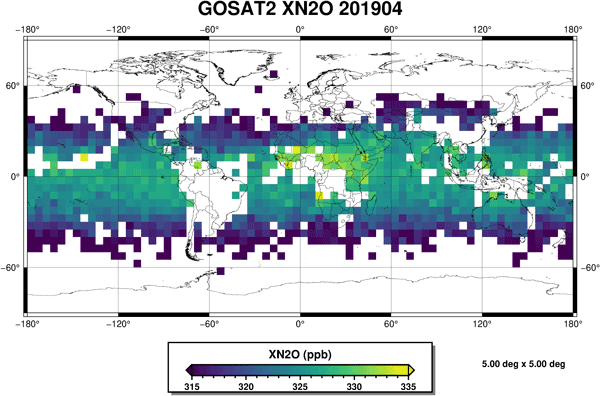
In addition to an increased number of XCO2 data, v3 also includes products for XCH4 (full-physics and proxy), XH2O and the relative ratio of HDO to H2O (δD). For GOSAT-2, we also present first XCO and XN2O results. All FOCAL data products show reasonable spatial distribution and temporal variations and agree well with TCCON. Global XN2O maps show a gradient from the tropics to higher latitudes on the order of 15 ppb.
Mahesh Kumar Sha, Bavo Langerock, Jean-François L. Blavier, Thomas Blumenstock, Tobias Borsdorff, Matthias Buschmann, Angelika Dehn, Martine De Mazière, Nicholas M. Deutscher, Dietrich G. Feist, Omaira E. García, David W. T. Griffith, Michel Grutter, James W. Hannigan, Frank Hase, Pauli Heikkinen, Christian Hermans, Laura T. Iraci, Pascal Jeseck, Nicholas Jones, Rigel Kivi, Nicolas Kumps, Jochen Landgraf, Alba Lorente, Emmanuel Mahieu, Maria V. Makarova, Johan Mellqvist, Jean-Marc Metzger, Isamu Morino, Tomoo Nagahama, Justus Notholt, Hirofumi Ohyama, Ivan Ortega, Mathias Palm, Christof Petri, David F. Pollard, Markus Rettinger, John Robinson, Sébastien Roche, Coleen M. Roehl, Amelie N. Röhling, Constantina Rousogenous, Matthias Schneider, Kei Shiomi, Dan Smale, Wolfgang Stremme, Kimberly Strong, Ralf Sussmann, Yao Té, Osamu Uchino, Voltaire A. Velazco, Corinne Vigouroux, Mihalis Vrekoussis, Pucai Wang, Thorsten Warneke, Tyler Wizenberg, Debra Wunch, Shoma Yamanouchi, Yang Yang, and Minqiang Zhou
Atmos. Meas. Tech., 14, 6249–6304, https://doi.org/10.5194/amt-14-6249-2021, https://doi.org/10.5194/amt-14-6249-2021, 2021
Short summary
Short summary
This paper presents, for the first time, Sentinel-5 Precursor methane and carbon monoxide validation results covering a period from November 2017 to September 2020. For this study, we used global TCCON and NDACC-IRWG network data covering a wide range of atmospheric and surface conditions across different terrains. We also show the influence of a priori alignment, smoothing uncertainties and the sensitivity of the validation results towards the application of advanced co-location criteria.
Denghui Ji, Xiaoyu Sun, Christoph Ritter, and Justus Notholt
Atmos. Meas. Tech., 19, 421–436, https://doi.org/10.5194/amt-19-421-2026, https://doi.org/10.5194/amt-19-421-2026, 2026
Short summary
Short summary
We have developed a new method that uses machine learning to analyse aerosols by combining different instruments measuring at different wavelengths. This method can identify the composition of these aerosols faster and more accurately. We tested it using ground-based data. Our results show that this method can help monitor air quality and better understand the impact of aerosols on the climate.
Joshua L. Laughner, Susan S. Kulawik, and Vivienne H. Payne
Atmos. Meas. Tech., 19, 249–276, https://doi.org/10.5194/amt-19-249-2026, https://doi.org/10.5194/amt-19-249-2026, 2026
Short summary
Short summary
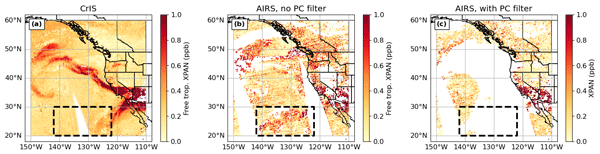
We developed an algorithm to infer peroxyacyl nitrates from an instrument that has been in space for over 20 years. These nitrates can transport pollution significant distances downwind, thus having a long term record of their concentrations can help understand how transport of pollution changed over time. We were able to develop a product for this instrument that produces results compatible with a more recent instrument, allowing them to work together in future analyses.
Nikolai Ponomarev, Michael Steiner, Erik Koene, Pascal Rubli, Stuart Grange, Lionel Constantin, Michel Ramonet, Leslie David, Arash Hamzehloo, Lukas Emmenegger, and Dominik Brunner
Atmos. Chem. Phys., 26, 547–570, https://doi.org/10.5194/acp-26-547-2026, https://doi.org/10.5194/acp-26-547-2026, 2026
Short summary
Short summary
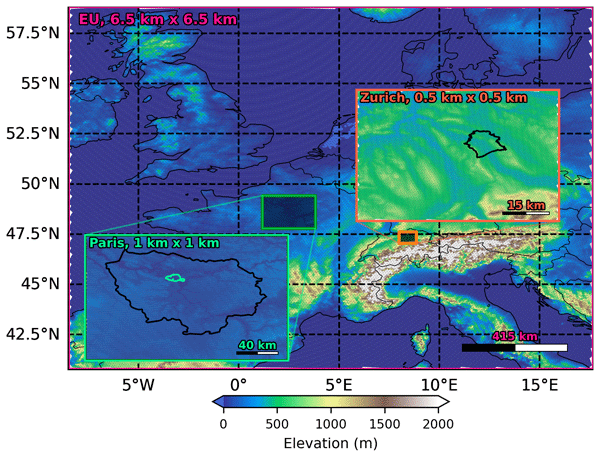
Urban inversions are gaining increasing attention, as cities are major contributors to anthropogenic emissions, making accurate emission estimates at this scale essential for supporting climate action plans and verifying reported emission reductions. We estimated carbon dioxide emissions in Zurich and Paris over one year by combining atmospheric observations with mesoscale model simulations. Our study shows how factors like city size, terrain, and measurement methods affect emission estimates.
Yijuan Zhang, Guy Brasseur, Maria Kanakidou, Claire Granier, Nikos Daskalakis, Alexandros Panagiotis Poulidis, Kun Qu, and Mihalis Vrekoussis
Geosci. Model Dev., 19, 217–237, https://doi.org/10.5194/gmd-19-217-2026, https://doi.org/10.5194/gmd-19-217-2026, 2026
Short summary
Short summary
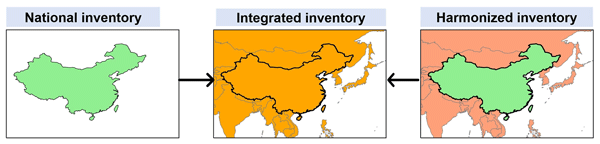
A new inventory of anthropogenic emissions, the China INtegrated Emission Inventory (CINEI), was developed in this study to better represent emission sectors, chemical speciation and spatiotemporal variations in China. Compared to simulations driven by global inventories, CINEI demonstrated better numerical modeling performance in ozone and its precursors (nitrogen dioxide and carbon monoxide). This study provides valuable insights for designing ozone mitigation strategies.
Stefanos Papagiannis, Manousos I. Manousakas, Dimitrios F. Anagnostopoulos, Michael Pipkridas, Rima Baalbaki, Jean Sciare, Niall O'Sullivan, Stig Hellebust, John Wenger, Kirsten N. Fossum, Jurgita Ovadnevaite, Anja Tremper, David Green, Konstantinos Eleftheriadis, and Evangelia Diapouli
EGUsphere, https://doi.org/10.5194/egusphere-2025-5977, https://doi.org/10.5194/egusphere-2025-5977, 2026
This preprint is open for discussion and under review for Atmospheric Measurement Techniques (AMT).
Short summary
Short summary
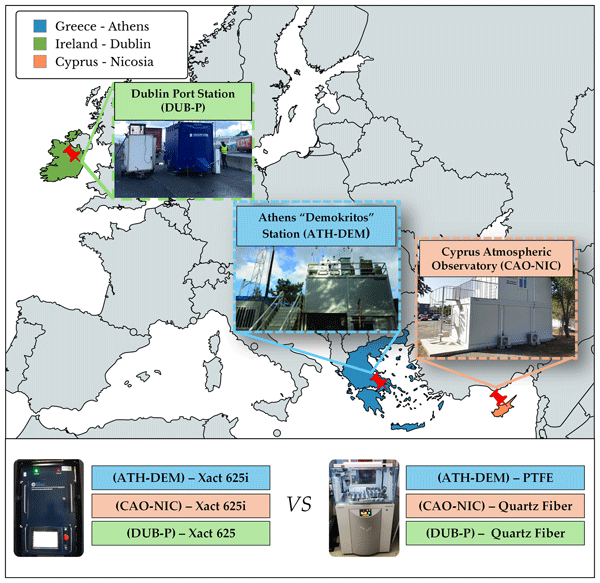
This study compared continuous and benchtop XRF elemental monitors across three European cities to validate air quality measurement consistency. PTFE filters yield strong agreement, but common quartz filters introduce systematic deviations, especially for light elements, due to attenuation effects. We provide practical methodologies to harmonize data from diverse filter types and instruments, which is essential for pollution source tracking and reliable data sharing across monitoring networks.
Roubina Papaconstantinou, Spyros Bezantakos, Michael Pikridas, Moreno Parolin, Melina Stylianou, Chrysanthos Savvides, Jean Sciare, and George Biskos
Atmos. Meas. Tech., 19, 63–78, https://doi.org/10.5194/amt-19-63-2026, https://doi.org/10.5194/amt-19-63-2026, 2026
Short summary
Short summary
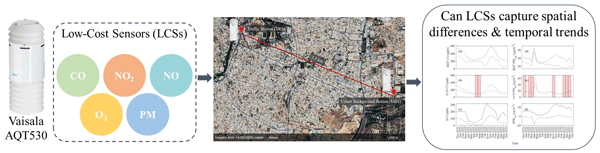
We evaluate the ability of the Vaisala AQT530 (Air Quality Transmitter) monitors, comprising of low-cost sensors, to detect spatial and temporal differences. Collocated with reference instruments over 19 months in Nicosia, results showed that CO and PM (particulate matter) sensors captured daily, hourly, and monthly spatial trends. NO2, NO, and O3 sensors were less reliable due to environmental effects. Still, all sensors tracked monthly temporal variations at the same location, with PM2.5 showing the strongest agreement with reference data.
Siqing Xu, Sebastiaan Luyssaert, Yves Balkanski, Philippe Ciais, Nicolas Viovy, Liang Wan, and Jean Sciare
Geosci. Model Dev., 19, 1–25, https://doi.org/10.5194/gmd-19-1-2026, https://doi.org/10.5194/gmd-19-1-2026, 2026
Short summary
Short summary
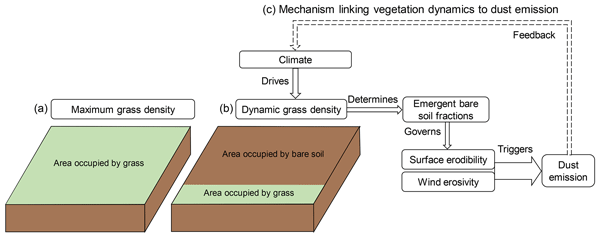
Prescribing a fixed grassland density in the ORCHIDEE model limits its ability to capture grassland dynamics, leading to unrealistic mortality, especially in semi-arid grasslands. We proposed a dynamic density approach where a positive density-precipitation relationship emerges. This method improves spatial pattern, significantly reduces mortality, sustains productivity, and raises the aridity threshold above which frequent mortality events occur in grasslands.
Wenche Aas, Thérèse Salameh, Robert Wegener, Heidi Hellén, Jean-Luc Jaffrezo, Pontus Roldin, Elisabeth Alonso-Blanco, Andres Alastuey, Crist Amelynck, Jgor Arduini, Benjamin Bergmans, Marie Bertrand, Agnes Borbon, Efstratios Bourtsoukidis, Laetitia Bouvier, David Butterfield, Iris Buxbaum, Darius Ceburnis, Anja Claude, Aurélie Colomb, Sophie Darfeuil, James Dernie, Maximilien Desservettaz, Elías Díaz-Ramiro, Marvin Dufresne, René Dubus, Mario Duval, Marie Dury, Anna Font, Kirsten Fossum, Evelyn Freney, Gotzon Gangoiti, Yao Ge, Maria Carmen Gomez, Francisco J. Gómez-Moreno, Marie Gohy, Valérie Gros, Paul Hamer, Bryan Hellack, Hartmut Herrmann, Robert Holla, Adéla Holubová, Niels Jensen, Tuija Jokinen, Matthew Jones, Uwe Käfer, Lukas Kesper, Dieter Klemp, Dagmar Kubistin, Angela Marinoni, Martina Mazzini, Vy Ngoc Thuy Dinh, Jurgita Ovadnevaite, Tuukka Petäjä, Miguel Portillo-Estrada, Jitka Přívozníková, Jean-Philippe Putaud, Stefan Reimann, Laura Renzi, Veronique Riffault, Stuart Ritchie, Chris Robins, Begoña Artíñano Rodríguez de Torres, Laurent Poulain, Julian Rüdiger, Agnieszka Sanocka, Estibaliz Saez de Camara Oleaga, Niels Schoon, Roger Seco, Ivan Simmons, Leïla Simon, David Simpson, Emmanuel Tison, August Thomasson, Svetlana Tsyro, Marsailidh Twigg, Toni Tykkä, Bert Verreyken, Ana Maria Yáñez-Serrano, Sverre Solberg, Karen Yeung, Ilona Ylivinkka, Karl Espen Yttri, Ågot Watne, and Katie Williams
EGUsphere, https://doi.org/10.5194/egusphere-2025-6166, https://doi.org/10.5194/egusphere-2025-6166, 2025
This preprint is open for discussion and under review for Atmospheric Chemistry and Physics (ACP).
Short summary
Short summary
A one-week intensive VOC and organic-tracer campaign during the 2022 European heatwave showed contributions from both biogenic and anthropogenic sources to ozone and SOA peaks, while model–observation differences underline the need for better characterization of sources and formation pathways.
Morgan Reed Raven, Nitai Amiel, Dror L. Angel, James P. Barry, Thomas M. Blattmann, Laura Boicenco, Antoine Crémière, Natalya Evans, Nora Gallarotti, Sebastian Haas, Jan-Hendrik Hehemann, Pranay Lal, David Lordkipanidze, Tiia Luostarinen, Aaron M. Martinez, Allison J. Matzelle, Selma Menabit, Mihaela Muresan, Andreas Neumann, Jean-Daniel Paris, Christopher R. Pearce, Nick Reynard, Daniel L. Sanchez, Florence Schubotz, Violeta Slabakova, Adrian Stanica, Andrew K. Sweetman, Tina Treude, Yoana G. Voynova, and D. Nikolaos Zarokanellos
EGUsphere, https://doi.org/10.5194/egusphere-2025-6086, https://doi.org/10.5194/egusphere-2025-6086, 2025
This preprint is open for discussion and under review for Biogeosciences (BG).
Short summary
Short summary
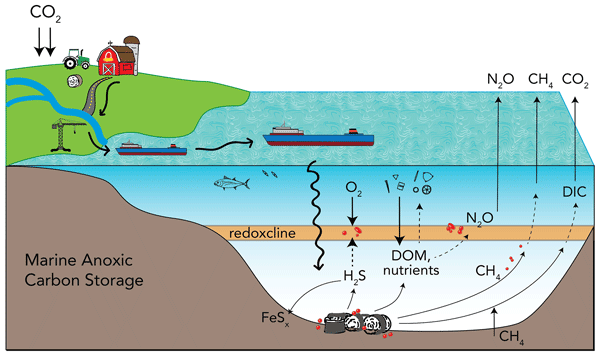
In addition to reducing emissions, vast quantities of CO2 will need to be removed from the atmosphere to meet climate goals. One strategy known as Marine Anoxic Carbon Storage (MACS) would bury plant carbon for thousands of years in parts in the ocean that lack oxygen, where carbon preservation can be highly efficient. We evaluate the environmental and other impacts of hypothetical large-scale MACS deployment from an interdisciplinary, international perspective and present a research roadmap.
Xiaoyu Sun, Mathias Palm, Katrin Müller, Denghui Ji, and Justus Notholt
EGUsphere, https://doi.org/10.5194/egusphere-2025-5394, https://doi.org/10.5194/egusphere-2025-5394, 2025
Short summary
Short summary
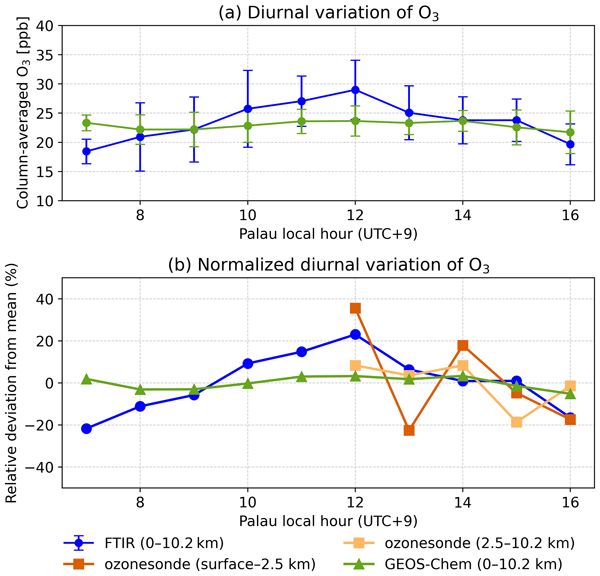
Near-surface ozone over the tropical Pacific is among the lowest on Earth, and this study provides rare observations from this key region. Using sunlight measurements with an infrared spectrometer in Palau, we found that ozone rises in the morning and falls after noon. This daily rhythm and very low levels show how clean ocean air and weak thunderstorms shape atmospheric chemistry and affect Earth’s climate.
Jonas Hachmeister, Debra Wunch, Erin McGee, Kimberly Strong, Rigel Kivi, Justus Notholt, Thorsten Warneke, and Matthias Buschmann
Atmos. Meas. Tech., 18, 7105–7128, https://doi.org/10.5194/amt-18-7105-2025, https://doi.org/10.5194/amt-18-7105-2025, 2025
Short summary
Short summary
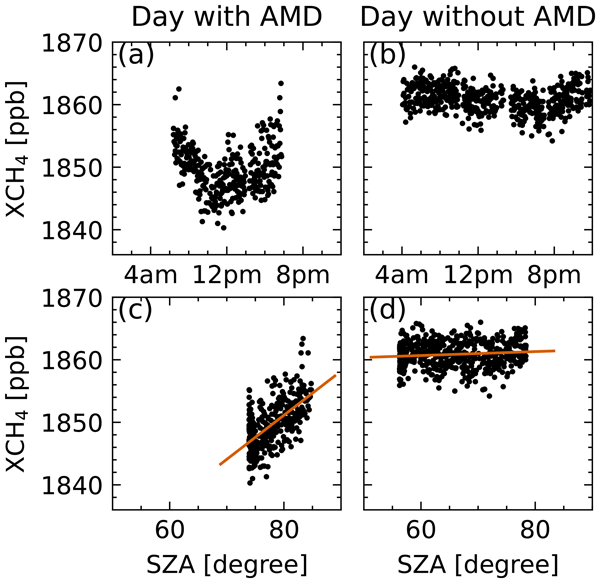
Methane measurements from the Total Carbon Column Observing Network (TCCON) are important for climate research, especially in the Arctic, where few measurements are available. We show that during early spring systematic errors are present in these data that are correlated to the presence of the polar vortex. These errors occur due to the usage of wrong methane prior shapes in the retrieval and can be alleviated by modifying the prior shape accordingly.
Kun Qu, Xuesong Wang, Yu Yan, Xipeng Jin, Ling-Yan He, Xiao-Feng Huang, Xuhui Cai, Jin Shen, Zimu Peng, Teng Xiao, Mihalis Vrekoussis, Maria Kanakidou, Guy P. Brasseur, Nikos Daskalakis, Limin Zeng, and Yuanhang Zhang
Atmos. Chem. Phys., 25, 16983–17007, https://doi.org/10.5194/acp-25-16983-2025, https://doi.org/10.5194/acp-25-16983-2025, 2025
Short summary
Short summary
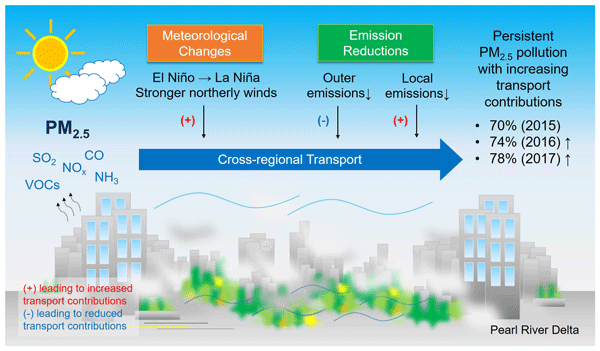
Persistent cold-season PM2.5 pollution in a South China region during 2015–2017 was studied to assess the roles of drastic meteorological and emission changes. We found that meteorological variations, induced by a transition from El Niño to La Niña, were the main cause of persistent pollution, as stronger northerly winds enhanced pollutant transport into the region. In contrast, the effect of rapid emission reductions was limited. Recommendations for air quality improvement were also proposed.
Maria Kezoudi, Alkistis Papetta, Konrad Kandler, Claire L. Ryder, Andreas Leonidou, Christos Keleshis, Chris Stopford, Troy Thornberry, Rodanthi-Elisavet Mamouri, Jean Sciare, and Franco Marenco
EGUsphere, https://doi.org/10.5194/egusphere-2025-5234, https://doi.org/10.5194/egusphere-2025-5234, 2025
Short summary
Short summary
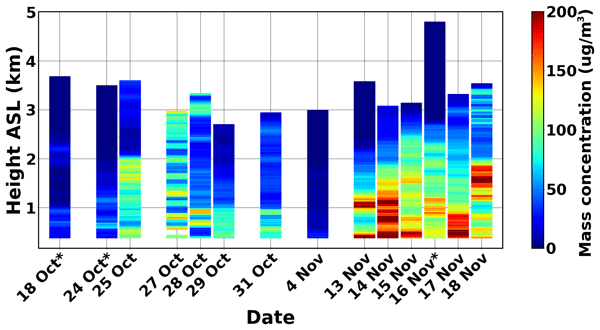
This study demonstrates a cost-efficient methodology using Uncrewed Aerial Systems for quantitative characterization of airborne dust. It enables high-resolution vertical profiling of microphysical and compositional properties of dust layers from the Middle East and North Africa over Cyprus, improving understanding of regional dust transport, source-dependent variability, and impacts on air quality, radiation, and climate.
Camille Yver-Kwok, Michel Ramonet, Leonard Rivier, Jinghui Lian, Claudia Grossi, Roger Curcoll, Dafina Kikaj, Edward Chung, and Ute Karstens
Atmos. Chem. Phys., 25, 16085–16106, https://doi.org/10.5194/acp-25-16085-2025, https://doi.org/10.5194/acp-25-16085-2025, 2025
Short summary
Short summary
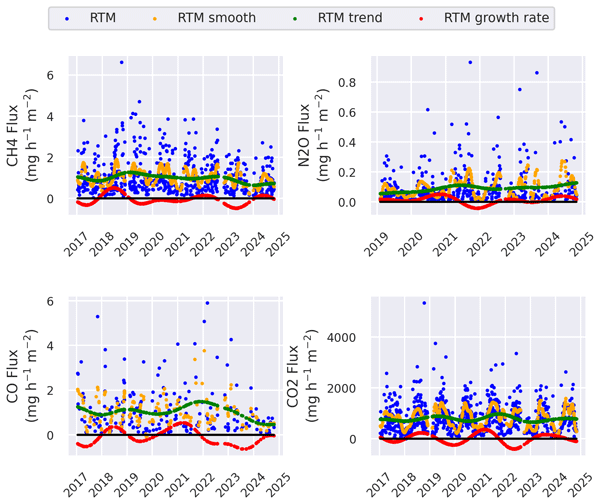
Here, we use greenhouse gas and radon data from a tall tower in France to estimate their fluxes within the station footprint from January 2017 to October 2024 using the Radon Tracer Method. Using the latest radon exhalation maps and standardized radon measurements, we found the greenhouse gas fluxes to be in agreement with the literature. Compared to inventories, there is a general agreement except for carbon dioxide where we show that the biogenic fluxes are not well represented in the model.
Laura Bouillon, Valérie Gros, Morgan Lopez, Nicolas Bonnaire, Carole Philippon, Camille Yver Kwok, Leslie David, Olivier Perrussel, Olivier Sanchez, Simone Kotthaus, Jean-Eudes Petit, Philippe Ciais, and Michel Ramonet
Earth Syst. Sci. Data Discuss., https://doi.org/10.5194/essd-2025-602, https://doi.org/10.5194/essd-2025-602, 2025
Preprint under review for ESSD
Short summary
Short summary
The Saclay observatory, 20 km southwest of Paris, monitored greenhouse and reactive gases, as well as aerosols, over 10 years to assess the impact of urban emissions. By comparing downwind and background conditions, the study revealed significant reductions in pollutants linked to traffic: -35.6 % for CO, -52.3 % for NOₓ, -56.7 % for eBC, and -15 % for CO2. These trends align with emission decrease estimates from AIRPARIF inventories over the same period.
Oliver Schneising, Heinrich Bovensmann, Michael Buchwitz, Matthias Buschmann, Nicholas M. Deutscher, David W. T. Griffith, Jonas Hachmeister, Frank Hase, Laura T. Iraci, Rigel Kivi, Isamu Morino, Hirofumi Ohyama, Christof Petri, Maximilian Reuter, John Robinson, Coleen Roehl, Mahesh Kumar Sha, Kei Shiomi, Kimberly Strong, Ralf Sussmann, Yao Té, Voltaire A. Velazco, Mihalis Vrekoussis, Wei Wang, Thorsten Warneke, Damien Weidmann, Debra Wunch, Minqiang Zhou, and Hartmut Bösch
EGUsphere, https://doi.org/10.5194/egusphere-2025-5422, https://doi.org/10.5194/egusphere-2025-5422, 2025
This preprint is open for discussion and under review for Atmospheric Measurement Techniques (AMT).
Short summary
Short summary
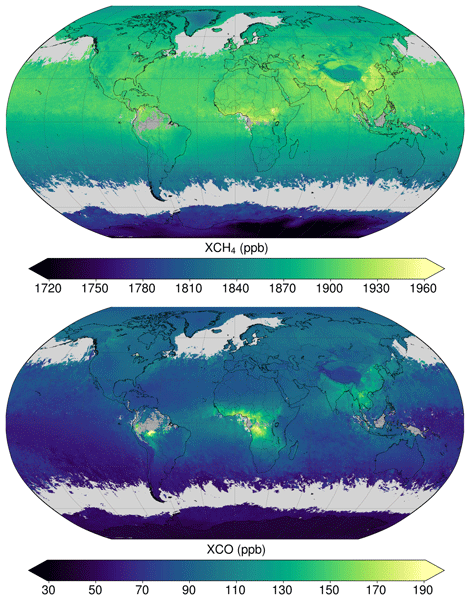
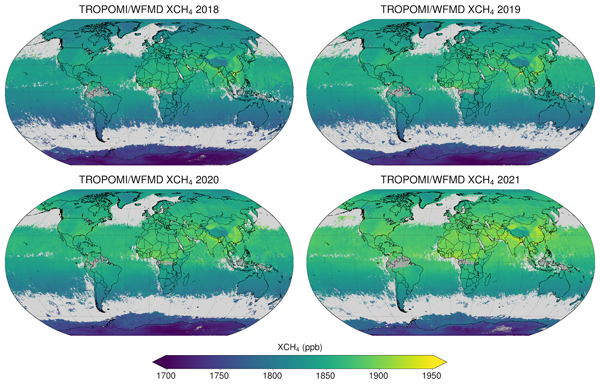
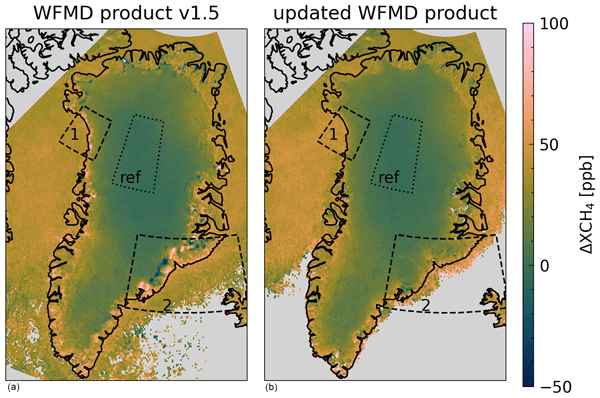
We present an improved version of the TROPOMI/WFMD algorithm for the simultaneous retrieval of atmospheric methane and carbon monoxide from satellite observations. The updated data product combines higher data yield with better precision and accuracy, expanding its suitability for a wider range of scientific applications. These substantial advances are mainly due to refined quality filtering, enabling more reliable identification of cloudy scenes and mitigating specific aerosol-related issues.
Scott D. Chambers, Ute Karstens, Alan D. Griffiths, Stefan Röttger, Arnoud Frumau, Christopher T. Roulston, Peter Sperlich, Felix Vogel, Agnieszka Podstawczyńska, Dafina Kikaj, Maksym Gachkivskyi, Michel Ramonet, Blagoj Mitrevski, Janja Vaupotič, Xuemeng Chen, and Annette Röttger
EGUsphere, https://doi.org/10.5194/egusphere-2025-5042, https://doi.org/10.5194/egusphere-2025-5042, 2025
This preprint is open for discussion and under review for Atmospheric Measurement Techniques (AMT).
Short summary
Short summary
The Radon Tracer Method (RTM) is a top-down approach to estimate greenhouse gas emissions. While simple in principle, incorrect use can complicate interpretation of results. Based on observations from a range of contrasting sites, this article reviews the underlying assumptions and key considerations for applying the RTM. It also introduces the concept of coupling RTM analyses with nocturnal stability classification, to reduce uncertainty of fetch estimates and improve interpretation of results.
Simon Bittner, Andreas Richter, Bianca Zilker, Sebastian Donner, Thomas Wagner, Leonardo M. A. Alvarado, and Mihalis Vrekoussis
EGUsphere, https://doi.org/10.5194/egusphere-2025-5285, https://doi.org/10.5194/egusphere-2025-5285, 2025
Short summary
Short summary
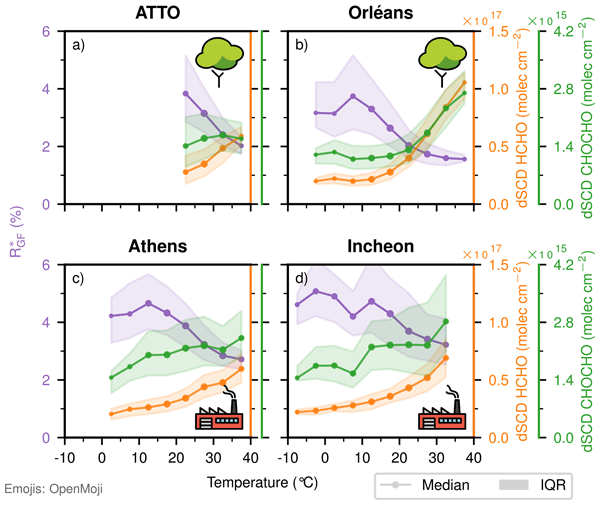
In this study, we revisit an atmospheric proxy (glyoxal-to-formaldehyde ratio, RGF) that was suggested for volatile organic compound source identification and has sparked discussion. Analysing data from four sites in different conditions, we find lower values for rural stations, changes over the day, week, seasons, and changes with temperature. Lastly, we discuss effects that hinder comparisons between different studies. Overall, our incomplete understanding limits the application of RGF.
Anchal Garg, Maximilien Desservettaz, Aliki Christodoulou, Theodoros Christoudias, Vijay Punjaji Kanawade, Chrysanthos Savvides, Mihalis Vrekoussis, Shahid Naqui, Tuija Jokinen, Joseph Byron, Jonathan Williams, Nikos Mihalopoulos, Eleni Liakakou, Jean Sciare, and Efstratios Bourtsoukidis
EGUsphere, https://doi.org/10.5194/egusphere-2025-5124, https://doi.org/10.5194/egusphere-2025-5124, 2025
Short summary
Short summary
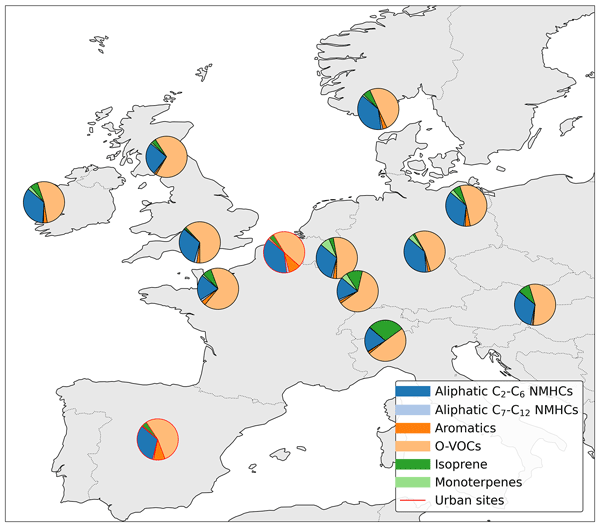
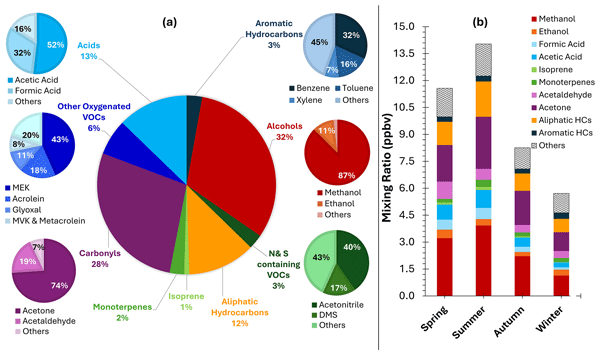
We measured organic gases in Cyprus for over two years to understand how heat, sunlight, wind, and other parameters affect air quality. Natural emissions peaked in summer. Computer models missed some sources, showing gaps in current knowledge. Our results reveal how temperature and regional pollution together shape air chemistry and help predict ozone and aerosol formation in the Eastern Mediterranean.
Andrew Gerald Barr, Jochen Landgraf, Mari Martinez-Velarte, Mihalis Vrekoussis, Ralf Sussmann, Isamu Morino, Kimberly Strong, Minqiang Zhou, Voltaire A. Velazco, Hirofumi Ohyama, Thorsten Warneke, Frank Hase, and Tobias Borsdorff
Atmos. Meas. Tech., 18, 6093–6123, https://doi.org/10.5194/amt-18-6093-2025, https://doi.org/10.5194/amt-18-6093-2025, 2025
Short summary
Short summary
The Greenhouse Gases Observing Satellite-2 (GOSAT-2) is a satellite dedicated to measuring concentrations of greenhouse gases from space. Since its launch, the increase of CH4 and CO2 concentrations in the atmosphere is clear. The datasets obtained from GOSAT-2 are used in the Copernicus atmospheric services to monitor the climate, in light of the Paris Agreement. Here we present robust datasets of these gases from GOSAT-2, including a novel machine learning approach to data quality filtering.
Félix Langot, Cyril Crevoisier, Thomas Lauvaux, Charbel Abdallah, Jérôme Pernin, Xin Lin, Marielle Saunois, Axel Guedj, Thomas Ponthieu, Julien Moyé, Michel Ramonet, Anke Roiger, Klaus-Dirk Gottschaldt, and Alina Fiehn
Atmos. Meas. Tech., 18, 5955–5983, https://doi.org/10.5194/amt-18-5955-2025, https://doi.org/10.5194/amt-18-5955-2025, 2025
Short summary
Short summary
Our study compares outputs from meteorological and atmospheric composition models to data from the MAGIC2021 campaign that took place in Sweden. Our results highlight performance differences among models, revealing strengths and weaknesses of different modelling techniques. We also found that wetland emission inventories overestimated emissions in regional simulations. This work helps to refine methane emission predictions, essential for understanding climate change.
Sarah Ann Rowan, Marc Luetscher, Thomas Laemmel, Anna Harrison, Sönke Szidat, and Franziska A. Lechleitner
Biogeosciences, 22, 6173–6203, https://doi.org/10.5194/bg-22-6173-2025, https://doi.org/10.5194/bg-22-6173-2025, 2025
Short summary
Short summary
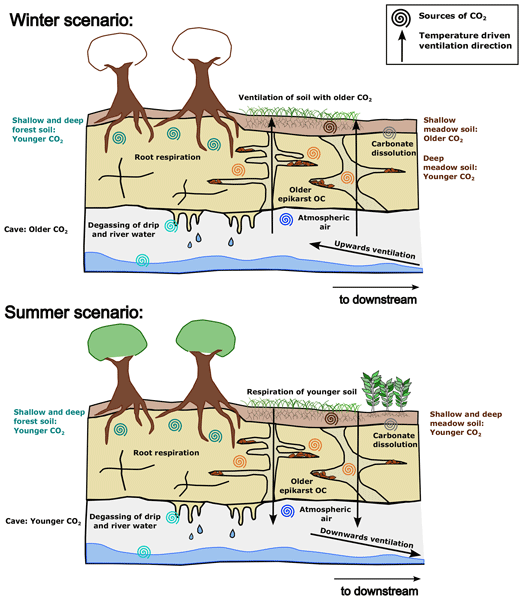
We explored CO2 from the soil to subsurface at Milandre cave, finding very high concentrations at all depths. While forest soils produced modern CO2 year-round, cave and meadow soil CO2 influences vary with temperature-controlled cave ventilation, with older CO2 input in winter from old organic matter stored underground. These findings show that CO2 fluxes in karst systems are highly dynamic, and a better understanding of them is important for accurate carbon cycle modelling.
Josselin Doc, François-Marie Bréon, Morgan Lopez, Yao Té, Pascal Jeseck, Jinghui Lian, Guillaume Nief, Antoine Parent, Hippolyte Leuridan, and Michel Ramonet
EGUsphere, https://doi.org/10.5194/egusphere-2025-4876, https://doi.org/10.5194/egusphere-2025-4876, 2025
This preprint is open for discussion and under review for Atmospheric Chemistry and Physics (ACP).
Short summary
Short summary
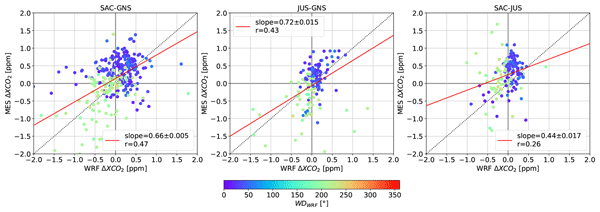
A greenhouse gas monitoring network was set up around Paris. From July 2022 to December 2024, three stations placed along the main wind direction detected differences of 0.5–1 ppm between sites. Compared with WRF-Chem simulations using the Origins.earth inventory, the data suggest that emissions are overestimated by the inventory. A reduction of about 34 % would be needed, a stronger correction than indicated by surface-based studies.
Ann-Kristin Kunz, Samuel Hammer, Patrick Aigner, Laura Bignotti, Lars Borchardt, Jia Chen, Julian Della Coletta, Lukas Emmenegger, Markus Eritt, Xochilt Gutiérrez, Josh Hashemi, Rainer Hilland, Christopher Holst, Armin Jordan, Natascha Kljun, Richard Kneißl, Changxing Lan, Virgile Legendre, Ingeborg Levin, Benjamin Loubet, Matthias Mauder, Betty Molinier, Susanne Preunkert, Michel Ramonet, Stavros Stagakis, and Andreas Christen
EGUsphere, https://doi.org/10.5194/egusphere-2025-4856, https://doi.org/10.5194/egusphere-2025-4856, 2025
Short summary
Short summary
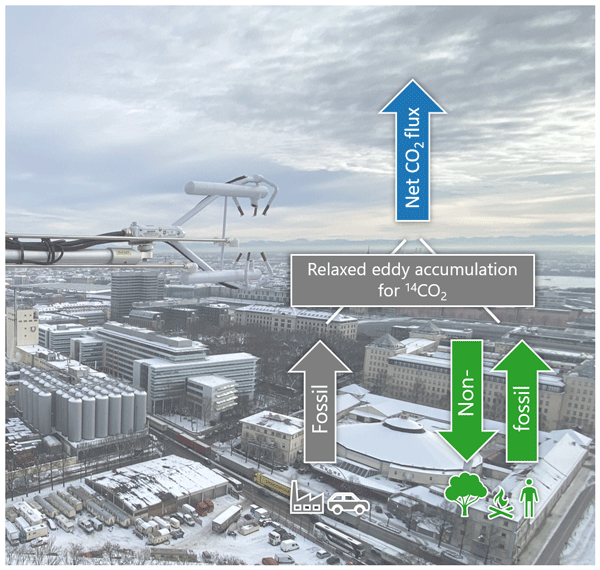
We present radiocarbon (14C)-based fossil fuel CO2 fluxes from relaxed eddy accumulation measurements on tall towers in the cities of Zurich, Paris, and Munich. By separating net CO2 fluxes into fossil and non-fossil components, these data reveal significant and variable contributions from human, plant, and soil respiration, as well as point-source emissions. These unique insights into CO2 flux composition offer crucial information for observation-based validation of urban emission estimates.
Denghui Ji, Christoph Ritter, Xiaoyu Sun, Manuel Moser, Christiane Voigt, Mathias Palm, and Justus Notholt
Atmos. Chem. Phys., 25, 13037–13052, https://doi.org/10.5194/acp-25-13037-2025, https://doi.org/10.5194/acp-25-13037-2025, 2025
Short summary
Short summary
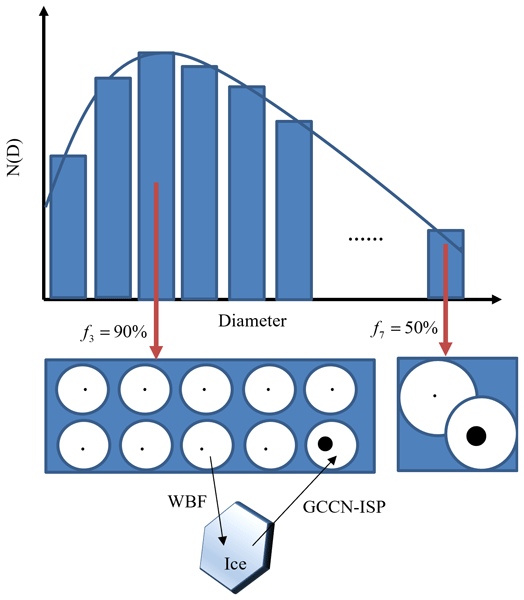
We discovered a process where large aerosols help small water droplets in Arctic clouds grow, even when conditions normally favor ice. Unlike the traditional view, this process may explain how liquid and ice can coexist in cold clouds. Based on theory and aircraft data, our findings provide new insight into the microphysics of mixed-phase clouds, which could improve understanding of how Arctic clouds affect climate.
Jiaxin Wang, Sieglinde Callewaert, Minqiang Zhou, Filip Desmet, Sébastien Conil, Michel Ramonet, Pucai Wang, and Martine De Mazière
EGUsphere, https://doi.org/10.5194/egusphere-2025-4537, https://doi.org/10.5194/egusphere-2025-4537, 2025
Short summary
Short summary
We used a regional atmospheric transport model to simulate carbon dioxide mole fractions over Western Europe. The results show the importance of anthropogenic emission configurations, particularly near large emission sources, as well as the necessity of improving biogenic flux simulations. These findings contribute to enhancing the accuracy of carbon dioxide modeling and carbon budget inversions.
Frank Werner, Kevin W. Bowman, Seungwon Lee, Joshua L. Laughner, Vivienne H. Payne, and James L. McDuffie
EGUsphere, https://doi.org/10.5194/egusphere-2025-4864, https://doi.org/10.5194/egusphere-2025-4864, 2025
This preprint is open for discussion and under review for Atmospheric Measurement Techniques (AMT).
Short summary
Short summary
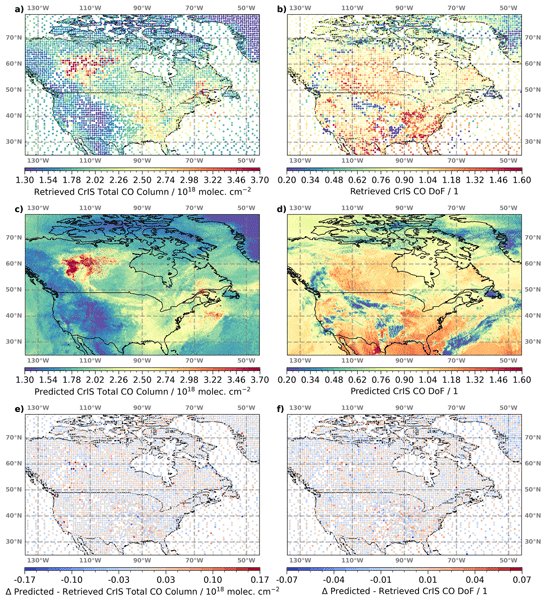
We developed a hybrid machine learning-optimal estimation retrieval system that efficiently and accurately mimics operational retrieval results. Crucially, this algorithm also predicts critical diagnostic variables including observation operators needed for comparison with independent data and ingestion into downstream chemical data assimilation models.
Roeland Van Malderen, Zhou Zang, Kai-Lan Chang, Robin Björklund, Owen R. Cooper, Jane Liu, Eliane Maillard Barras, Corinne Vigouroux, Irina Petropavlovskikh, Thierry Leblanc, Valérie Thouret, Pawel Wolff, Peter Effertz, Audrey Gaudel, David W. Tarasick, Herman G. J. Smit, Anne M. Thompson, Ryan M. Stauffer, Debra E. Kollonige, Deniz Poyraz, Gérard Ancellet, Marie-Renée De Backer, Matthias M. Frey, James W. Hannigan, José L. Hernandez, Bryan J. Johnson, Nicholas Jones, Rigel Kivi, Emmanuel Mahieu, Isamu Morino, Glen McConville, Katrin Müller, Isao Murata, Justus Notholt, Ankie Piters, Maxime Prignon, Richard Querel, Vincenzo Rizi, Dan Smale, Wolfgang Steinbrecht, Kimberly Strong, and Ralf Sussmann
Atmos. Chem. Phys., 25, 9905–9935, https://doi.org/10.5194/acp-25-9905-2025, https://doi.org/10.5194/acp-25-9905-2025, 2025
Short summary
Short summary
Tropospheric ozone is an important greenhouse gas and an air pollutant whose distribution and time variability are mainly governed by anthropogenic emissions and dynamics. In this paper, we assess regional trends of tropospheric ozone column amounts, based on two different approaches of merging or synthesizing ground-based observations and their trends within specific regions. Our findings clearly demonstrate regional trend differences but also consistently higher pre-COVID than post-COVID trends.
Marios Chatziparaschos, Stelios Myriokefalitakis, Nikos Kalivitis, Nikos Daskalakis, Athanasios Nenes, María Gonçalves Ageitos, Montserrat Costa-Surós, Carlos Pérez García-Pando, Mihalis Vrekoussis, and Maria Kanakidou
Atmos. Chem. Phys., 25, 9085–9111, https://doi.org/10.5194/acp-25-9085-2025, https://doi.org/10.5194/acp-25-9085-2025, 2025
Short summary
Short summary
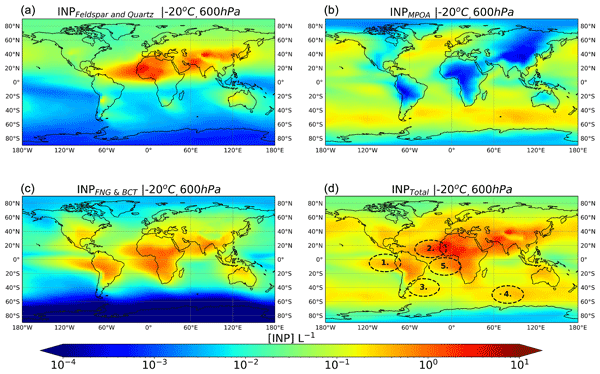
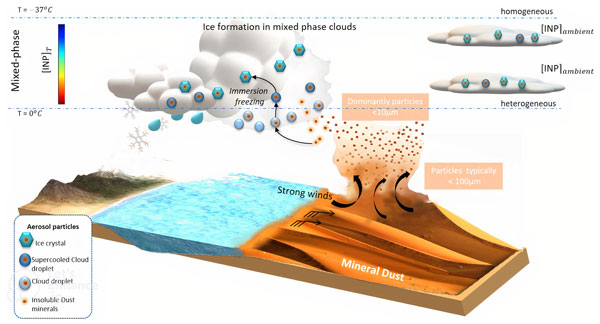
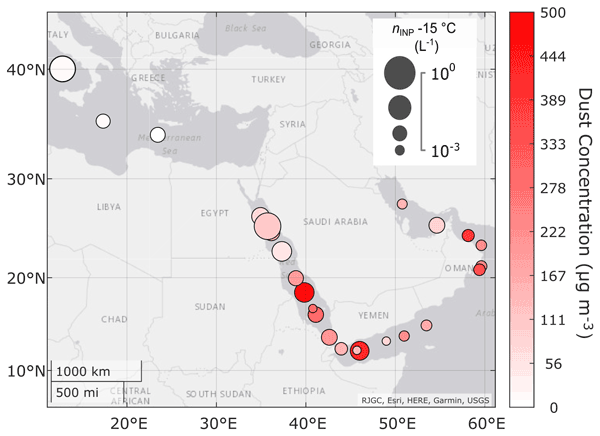
We show distinct seasonal and geographical patterns in the contributions of mineral dust, marine aerosol, and terrestrial biological particles to ice-nucleating particle (INP) concentrations that lead to atmospheric ice formation, a major source of uncertainty in climate projections. Bioaerosols are the major source of INPs at high temperatures, while mineral dust influences the global INP population at lower temperatures. These particles can satisfactorily reproduce INPs in a climate model.
Lukas Heizmann, Mathias Palm, Justus Notholt, and Matthias Buschmann
EGUsphere, https://doi.org/10.5194/egusphere-2025-3691, https://doi.org/10.5194/egusphere-2025-3691, 2025
Short summary
Short summary
Fourier transform infrared emission spectroscopy measures the infrared radiation originating from the thermal emission of the atmosphere. The measured interferograms are transformed into spectra via Fourier transformation. The established method for calibration is strictly speaking only valid for infinitely long interferograms. We quantify the errors caused by this idealization in a case study and find that they are generally below 0.05 % in spectral regions that are of interest for retrievals.
Carley D. Fredrickson, Scott J. Janz, Lok N. Lamsal, Ursula A. Jongebloed, Joshua L. Laughner, and Joel A. Thornton
Atmos. Meas. Tech., 18, 3669–3689, https://doi.org/10.5194/amt-18-3669-2025, https://doi.org/10.5194/amt-18-3669-2025, 2025
Short summary
Short summary
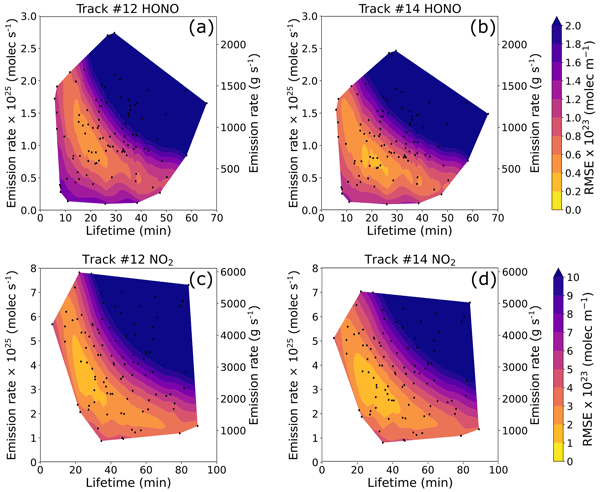
We present an analysis of high-resolution remote sensing measurements of nitrogen-containing trace gases emitted by wildfires. The measurements were made using an instrument on the NASA ER-2 aircraft in the summer of 2019. We find that time-resolved fire intensity is critical to quantify trace gas emissions over a fire's entire lifespan. These findings have implications for improving air pollution forecasts downwind of wildfires using computer models of atmospheric chemistry and meteorology.
Alkistis Papetta, Maria Kezoudi, Holger Baars, Athina Floutsi, Eleni Drakaki, Konrad Kandler, Elena Louca, Theodoros Christoudias, Eleni Marinou, Chris Stopford, Troy Thornberry, Vassilis Amiridis, Jean Sciare, and Franco Marenco
EGUsphere, https://doi.org/10.5194/egusphere-2025-3404, https://doi.org/10.5194/egusphere-2025-3404, 2025
Short summary
Short summary
Dust in the atmosphere affects air quality, weather, and climate, but measuring it is challenging. We used drones and ground-based instruments to study how dust particles interact with light and relate this to their mass. Current methods often underestimate large dust particles, leading to errors in dust quantity. Our results show that regional differences in dust must be considered to improve climate models and satellite observations.
Aki Tsuruta, Akihiko Kuze, Kei Shiomi, Fumie Kataoka, Nobuhiro Kikuchi, Tuula Aalto, Leif Backman, Ella Kivimäki, Maria K. Tenkanen, Kathryn McKain, Omaira E. García, Frank Hase, Rigel Kivi, Isamu Morino, Hirofumi Ohyama, David F. Pollard, Mahesh K. Sha, Kimberly Strong, Ralf Sussmann, Yao Te, Voltaire A. Velazco, Mihalis Vrekoussis, Thorsten Warneke, Minqiang Zhou, and Hiroshi Suto
Atmos. Chem. Phys., 25, 7829–7862, https://doi.org/10.5194/acp-25-7829-2025, https://doi.org/10.5194/acp-25-7829-2025, 2025
Short summary
Short summary
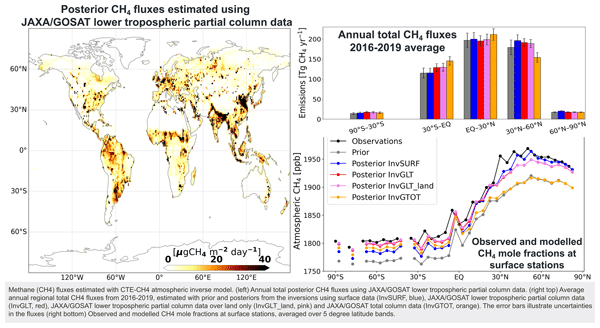
Satellite data bring invaluable information about greenhouse gas emissions globally. We found that a new type of data from the Greenhouse Gas Observing Satellite (GOSAT), which contains information about methane in the lowest layer of Earth's atmosphere, could provide reliable estimates of recent methane emissions when combined with atmospheric modelling. Therefore, the use of such data is encouraged to improve emission quantification methods and advance our understanding of methane cycles.
Alessandro Zanchetta, Steven van Heuven, Joram Hooghiem, Rigel Kivi, Thomas Laemmel, Michel Ramonet, Markus Leuenberger, Peter Nyfeler, Sophia Louise Baartman, Maarten Krol, and Huilin Chen
EGUsphere, https://doi.org/10.5194/egusphere-2025-3079, https://doi.org/10.5194/egusphere-2025-3079, 2025
Short summary
Short summary
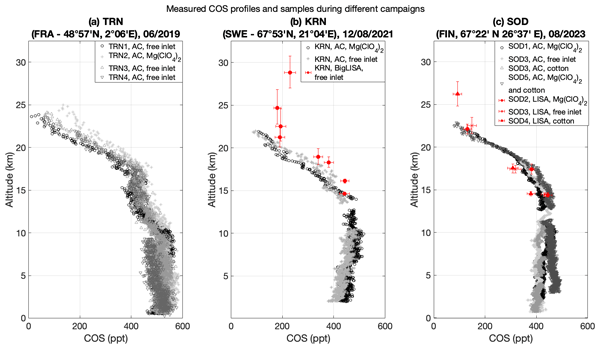
Continuous vertical profiles and discrete stratospheric samples of carbonyl sulfide (COS) were collected deploying the balloon-borne AirCore, LISA and BigLISA samplers and measured on a Quantum Cascade Laser Spectrometer (QCLS). Our measurements show good accordance with previous COS observations. Moreover, laboratory tests of ozone (O3) scrubbers proved squalene to remove O3 very efficiently without biasing the measurements of other trace gases.
Elie Bimenyimana, Jean Sciare, Michael Pikridas, Konstantina Oikonomou, Minas Iakovides, Emily Vasiliadou, Chrysanthos Savvides, and Nikos Mihalopoulos
EGUsphere, https://doi.org/10.5194/egusphere-2025-3234, https://doi.org/10.5194/egusphere-2025-3234, 2025
Short summary
Short summary
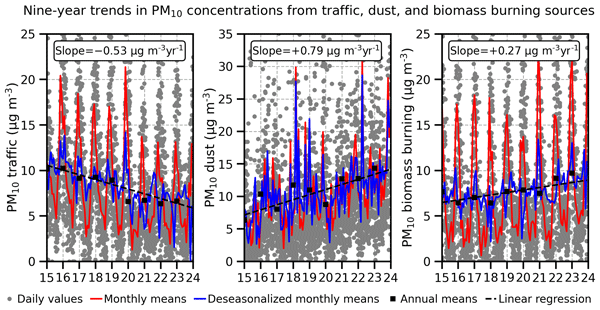
Long-term (2015–2023) source apportionment analysis reveals that reduction in PM10 concentration levels from traffic in Cypriot cities is completely offset by the concomitant increase of uncontrolled PM from local sources (road dust resuspension, and domestic wood burning), along with rising Middle East PM from fossil fuel emissions. This poses a major challenge for Cyprus to comply with the stricter PM10 limits set by the new EU air quality directive.
Roeland Van Malderen, Anne M. Thompson, Debra E. Kollonige, Ryan M. Stauffer, Herman G. J. Smit, Eliane Maillard Barras, Corinne Vigouroux, Irina Petropavlovskikh, Thierry Leblanc, Valérie Thouret, Pawel Wolff, Peter Effertz, David W. Tarasick, Deniz Poyraz, Gérard Ancellet, Marie-Renée De Backer, Stéphanie Evan, Victoria Flood, Matthias M. Frey, James W. Hannigan, José L. Hernandez, Marco Iarlori, Bryan J. Johnson, Nicholas Jones, Rigel Kivi, Emmanuel Mahieu, Glen McConville, Katrin Müller, Tomoo Nagahama, Justus Notholt, Ankie Piters, Natalia Prats, Richard Querel, Dan Smale, Wolfgang Steinbrecht, Kimberly Strong, and Ralf Sussmann
Atmos. Chem. Phys., 25, 7187–7225, https://doi.org/10.5194/acp-25-7187-2025, https://doi.org/10.5194/acp-25-7187-2025, 2025
Short summary
Short summary
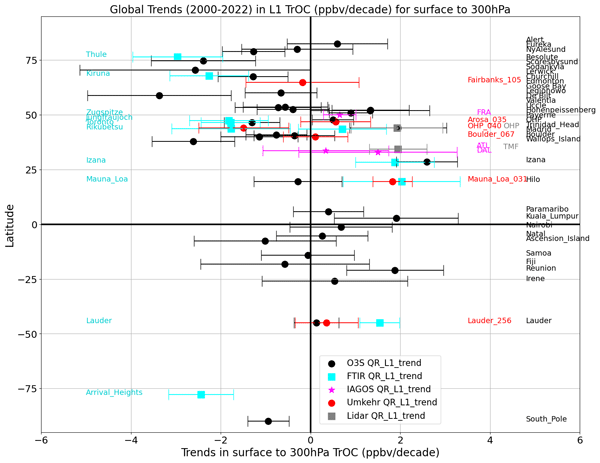
Tropospheric ozone is an important greenhouse gas and is an air pollutant. The time variability of tropospheric ozone is mainly driven by anthropogenic emissions. In this paper, we study the distribution and time variability of ozone from harmonized ground-based observations from five different measurement techniques. Our findings provide clear standard references for atmospheric models and evolving tropospheric ozone satellite data for the 2000–2022 period.
Anthony Rey-Pommier, Alexandre Héraud, Frédéric Chevallier, Philippe Ciais, Theodoros Christoudias, Jonilda Kushta, and Jean Sciare
Earth Syst. Sci. Data, 17, 3329–3351, https://doi.org/10.5194/essd-17-3329-2025, https://doi.org/10.5194/essd-17-3329-2025, 2025
Short summary
Short summary
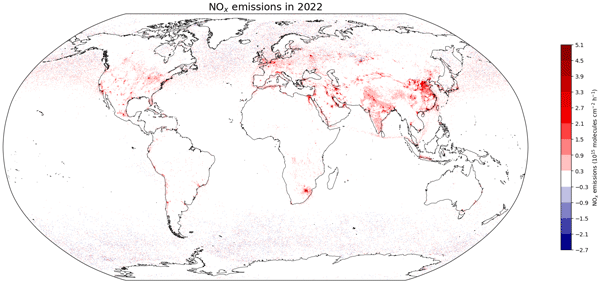
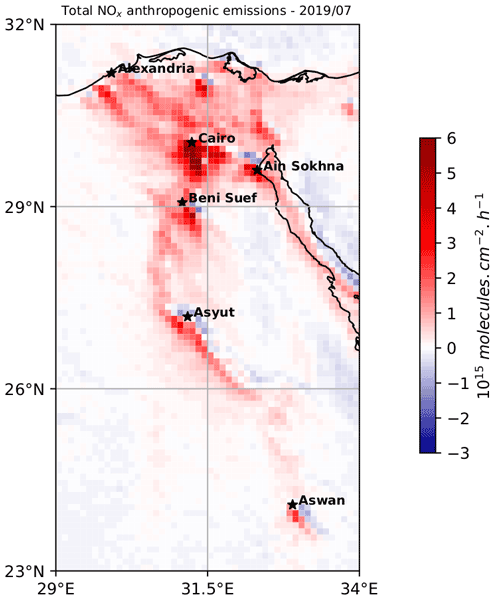
In this study, we estimate emissions of nitrogen oxides (NOx) in 2022 at high resolution at the global scale, using satellite observations. We provide maps of the emissions and identify several types of sources. Our results are similar to the EDGAR emission inventory. However, differences are found in countries with lower observation densities and lower emissions.
Xiaoyu Sun, Katrin Müller, Mathias Palm, Christoph Ritter, Denghui Ji, Tim Balthasar Röpke, and Justus Notholt
Atmos. Chem. Phys., 25, 6881–6902, https://doi.org/10.5194/acp-25-6881-2025, https://doi.org/10.5194/acp-25-6881-2025, 2025
Short summary
Short summary
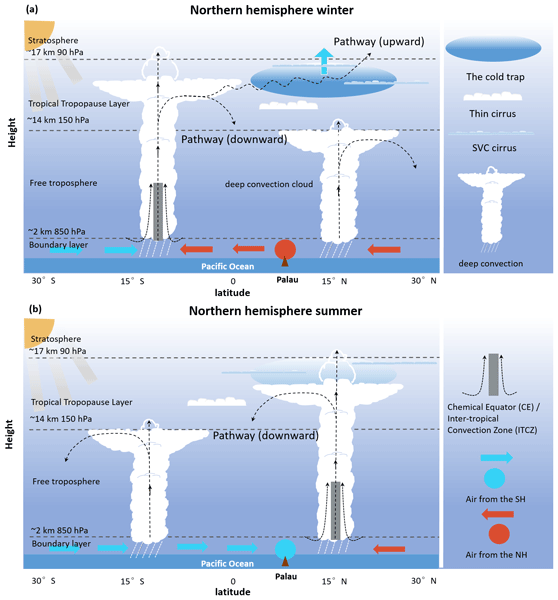
We studied how air moves from the lower atmosphere to the stratosphere over the tropical western Pacific. Using observations and air tracking, we found that, in winter, air ascends and cold temperatures freeze water out, drying it before it enters the stratosphere. In summer, air tends to sink after cloud formation. This process affects water vapor amounts in the stratosphere, influencing the greenhouse effect and climate.
Johann Rasmus Nüß, Nikos Daskalakis, Fabian Günther Piwowarczyk, Angelos Gkouvousis, Oliver Schneising, Michael Buchwitz, Maria Kanakidou, Maarten C. Krol, and Mihalis Vrekoussis
Geosci. Model Dev., 18, 2861–2890, https://doi.org/10.5194/gmd-18-2861-2025, https://doi.org/10.5194/gmd-18-2861-2025, 2025
Short summary
Short summary
We estimate carbon monoxide emissions through inverse modeling, an approach where measurements of tracers in the atmosphere are fed to a model to calculate backwards in time (inverse) where the tracers came from. We introduce measurements from a new satellite instrument and show that, in most places globally, these on their own sufficiently constrain the emissions. This alleviates the need for additional datasets, which could shorten the delay for future carbon monoxide source estimates.
Marielle Saunois, Adrien Martinez, Benjamin Poulter, Zhen Zhang, Peter A. Raymond, Pierre Regnier, Josep G. Canadell, Robert B. Jackson, Prabir K. Patra, Philippe Bousquet, Philippe Ciais, Edward J. Dlugokencky, Xin Lan, George H. Allen, David Bastviken, David J. Beerling, Dmitry A. Belikov, Donald R. Blake, Simona Castaldi, Monica Crippa, Bridget R. Deemer, Fraser Dennison, Giuseppe Etiope, Nicola Gedney, Lena Höglund-Isaksson, Meredith A. Holgerson, Peter O. Hopcroft, Gustaf Hugelius, Akihiko Ito, Atul K. Jain, Rajesh Janardanan, Matthew S. Johnson, Thomas Kleinen, Paul B. Krummel, Ronny Lauerwald, Tingting Li, Xiangyu Liu, Kyle C. McDonald, Joe R. Melton, Jens Mühle, Jurek Müller, Fabiola Murguia-Flores, Yosuke Niwa, Sergio Noce, Shufen Pan, Robert J. Parker, Changhui Peng, Michel Ramonet, William J. Riley, Gerard Rocher-Ros, Judith A. Rosentreter, Motoki Sasakawa, Arjo Segers, Steven J. Smith, Emily H. Stanley, Joël Thanwerdas, Hanqin Tian, Aki Tsuruta, Francesco N. Tubiello, Thomas S. Weber, Guido R. van der Werf, Douglas E. J. Worthy, Yi Xi, Yukio Yoshida, Wenxin Zhang, Bo Zheng, Qing Zhu, Qiuan Zhu, and Qianlai Zhuang
Earth Syst. Sci. Data, 17, 1873–1958, https://doi.org/10.5194/essd-17-1873-2025, https://doi.org/10.5194/essd-17-1873-2025, 2025
Short summary
Short summary
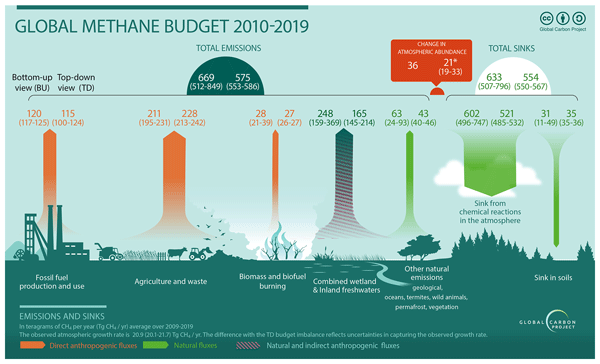
Methane (CH4) is the second most important human-influenced greenhouse gas in terms of climate forcing after carbon dioxide (CO2). A consortium of multi-disciplinary scientists synthesise and update the budget of the sources and sinks of CH4. This edition benefits from important progress in estimating emissions from lakes and ponds, reservoirs, and streams and rivers. For the 2010s decade, global CH4 emissions are estimated at 575 Tg CH4 yr-1, including ~65 % from anthropogenic sources.
Denghui Ji, Mathias Palm, Matthias Buschmann, Kerstin Ebell, Marion Maturilli, Xiaoyu Sun, and Justus Notholt
Atmos. Chem. Phys., 25, 3889–3904, https://doi.org/10.5194/acp-25-3889-2025, https://doi.org/10.5194/acp-25-3889-2025, 2025
Short summary
Short summary
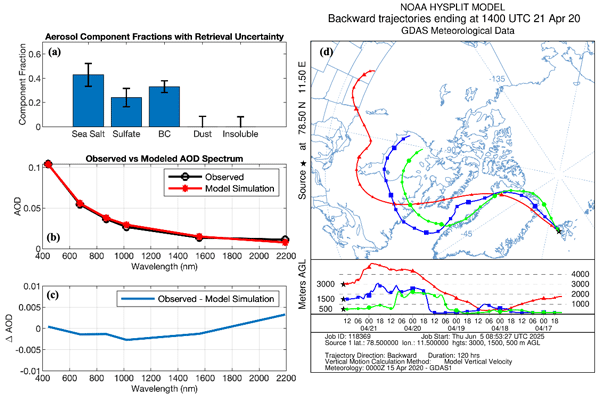
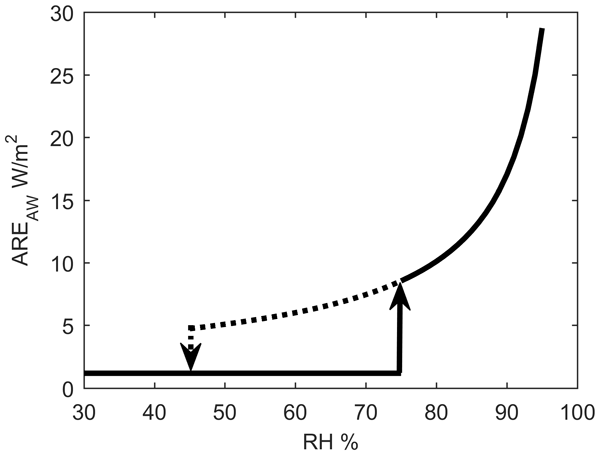
Our study explores how certain aerosols, like sea salt, affect infrared heat radiation in the Arctic, potentially speeding up warming. We used advanced technology to measure aerosol composition and found that these particles grow with humidity, significantly increasing their heat-trapping effect in the infrared region, especially in winter. Our findings suggest these aerosols could be a key factor in Arctic warming, emphasizing the importance of understanding aerosols for climate prediction.
André Ehrlich, Susanne Crewell, Andreas Herber, Marcus Klingebiel, Christof Lüpkes, Mario Mech, Sebastian Becker, Stephan Borrmann, Heiko Bozem, Matthias Buschmann, Hans-Christian Clemen, Elena De La Torre Castro, Henning Dorff, Regis Dupuy, Oliver Eppers, Florian Ewald, Geet George, Andreas Giez, Sarah Grawe, Christophe Gourbeyre, Jörg Hartmann, Evelyn Jäkel, Philipp Joppe, Olivier Jourdan, Zsófia Jurányi, Benjamin Kirbus, Johannes Lucke, Anna E. Luebke, Maximilian Maahn, Nina Maherndl, Christian Mallaun, Johanna Mayer, Stephan Mertes, Guillaume Mioche, Manuel Moser, Hanno Müller, Veronika Pörtge, Nils Risse, Greg Roberts, Sophie Rosenburg, Johannes Röttenbacher, Michael Schäfer, Jonas Schaefer, Andreas Schäfler, Imke Schirmacher, Johannes Schneider, Sabrina Schnitt, Frank Stratmann, Christian Tatzelt, Christiane Voigt, Andreas Walbröl, Anna Weber, Bruno Wetzel, Martin Wirth, and Manfred Wendisch
Earth Syst. Sci. Data, 17, 1295–1328, https://doi.org/10.5194/essd-17-1295-2025, https://doi.org/10.5194/essd-17-1295-2025, 2025
Short summary
Short summary
This paper provides an overview of the HALO–(AC)3 aircraft campaign data sets, the campaign-specific instrument operation, data processing, and data quality. The data set comprises in situ and remote sensing observations from three research aircraft: HALO, Polar 5, and Polar 6. All data are published in the PANGAEA database by instrument-separated data subsets. It is highlighted how the scientific analysis of the HALO–(AC)3 data benefits from the coordinated operation of three aircraft.
Neha Deot, Vijay P. Kanawade, Alkistis Papetta, Rima Baalbaki, Michael Pikridas, Franco Marenco, Markku Kulmala, Jean Sciare, Katrianne Lehtipalo, and Tuija Jokinen
Aerosol Research, 3, 139–154, https://doi.org/10.5194/ar-3-139-2025, https://doi.org/10.5194/ar-3-139-2025, 2025
Short summary
Short summary
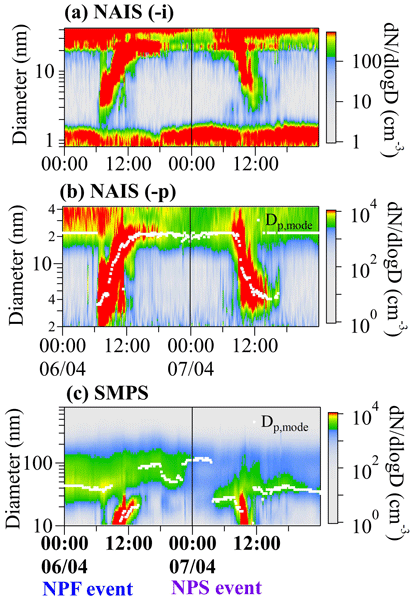
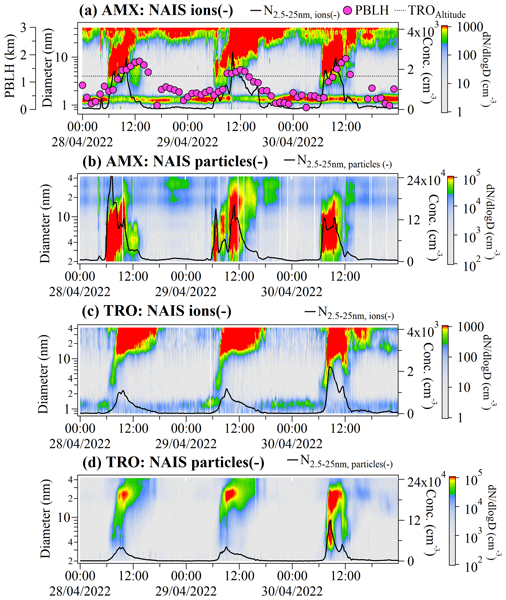
We studied how nanoparticles form in the atmosphere at two different altitudes in Cyprus, focusing on how meteorology impacts this process. Using data from two sites, we found that air from lower regions carries particles up to higher areas, affecting air quality and potentially climate. Our findings help improve understanding of how particles form and grow in the air, which is important for predicting changes in climate and air pollution in the future.
Frank Hase, Paolo Castracane, Angelika Dehn, Omaira Elena García, David W. T. Griffith, Lukas Heizmann, Nicholas B. Jones, Tomi Karppinen, Rigel Kivi, Martine de Mazière, Justus Notholt, and Mahesh Kumar Sha
Atmos. Meas. Tech., 18, 1257–1267, https://doi.org/10.5194/amt-18-1257-2025, https://doi.org/10.5194/amt-18-1257-2025, 2025
Short summary
Short summary
The primary measurement result delivered by a Fourier transform spectrometer is an interferogram, and the spectrum required for further analysis needs to be calculated from the interferogram by Fourier analysis. The paper deals with technical aspects of this process and shows how the reconstruction of the spectrum can be optimized.
Jamal Makkor, Mathias Palm, Matthias Buschmann, Emmanuel Mahieu, Martyn P. Chipperfield, and Justus Notholt
Atmos. Meas. Tech., 18, 1105–1114, https://doi.org/10.5194/amt-18-1105-2025, https://doi.org/10.5194/amt-18-1105-2025, 2025
Short summary
Short summary
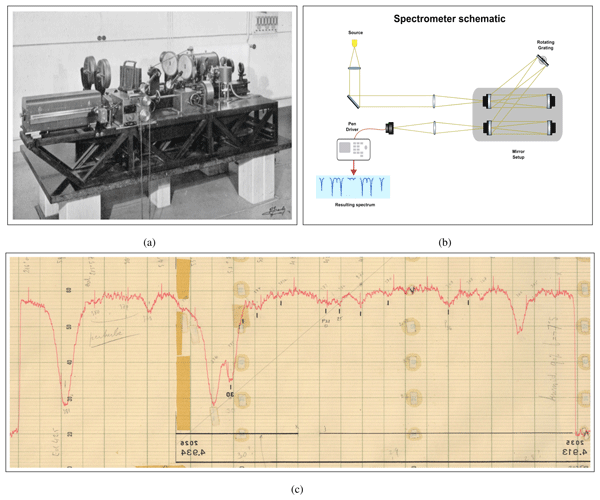
During the years 1950 and 1951, Marcel Migeotte took regular solar measurements in the form of paper rolls at the Jungfraujoch site. These historical spectra proved to be valuable for atmospheric research and needed to be saved for posterity. Therefore, a digitization method which used image-processing techniques was developed to extract them from the historical paper rolls. This allowed them to be saved in a machine-readable format that is easily accessible to the scientific community.
Sebastien Conil, Gilles Bergametti, Laurent Langrene, Morgan Lopez, Olivier Masson, Cyril Pallares, and Michel Ramonet
EGUsphere, https://doi.org/10.5194/egusphere-2025-148, https://doi.org/10.5194/egusphere-2025-148, 2025
Preprint archived
Short summary
Short summary
From 2012 to 2023, hourly surface ozone, trace gases, meteorological parameters, and weekly beryllium-7 and sodium-22 activity were monitored at the OPE station in eastern France. While mean afternoon ozone concentrations showed no significant trend, baseline ozone increased by 0.7 µg·m⁻³ per year. Ozone anomalies were linked to pollutants (CO, NOx, CH4) from November to February, and to Stratosphere-to-Troposphere Transport proxies from April to September.
Giulia Zazzeri, Lukas Wacker, Negar Haghipour, Philip Gautschi, Thomas Laemmel, Sönke Szidat, and Heather Graven
Atmos. Meas. Tech., 18, 319–325, https://doi.org/10.5194/amt-18-319-2025, https://doi.org/10.5194/amt-18-319-2025, 2025
Short summary
Short summary
Radiocarbon (14C) is an optimal tracer of methane (CH4) emissions, as 14C measurements enable distinguishing between fossil methane and biogenic methane. However, these measurements are particularly challenging, mainly due to technical difficulties in the sampling procedure. We made the sample extraction much simpler and time efficient, providing a new technology that can be used by any research group, with the goal of expanding 14C measurements for an improved understanding of methane sources.
Lilian Vallet, Charbel Abdallah, Thomas Lauvaux, Lilian Joly, Michel Ramonet, Philippe Ciais, Morgan Lopez, Irène Xueref-Remy, and Florent Mouillot
Biogeosciences, 22, 213–242, https://doi.org/10.5194/bg-22-213-2025, https://doi.org/10.5194/bg-22-213-2025, 2025
Short summary
Short summary
The 2022 fire season had a huge impact on European temperate forest, with several large fires exhibiting prolonged soil combustion reported. We analyzed CO and CO2 concentration recorded at nearby atmospheric towers, revealing intense smoldering combustion. We refined a fire emission model to incorporate this process. We estimated 7.95 Mteq CO2 fire emission, twice the global estimate. Fires contributed to 1.97 % of France's annual carbon footprint, reducing forest carbon sink by 30 % this year.
Jianing Dai, Guy P. Brasseur, Mihalis Vrekoussis, Maria Kanakidou, Kun Qu, Yijuan Zhang, Hongliang Zhang, and Tao Wang
Atmos. Chem. Phys., 24, 12943–12962, https://doi.org/10.5194/acp-24-12943-2024, https://doi.org/10.5194/acp-24-12943-2024, 2024
Short summary
Short summary
This paper employs a regional chemical transport model to quantify the sensitivity of air pollutants and photochemical parameters to specified emission reductions in China for representative winter and summer conditions. The study provides insights into further air quality control in China with reduced primary emissions.
Pedro Henrique Herig Coimbra, Benjamin Loubet, Olivier Laurent, Laura Bignotti, Mathis Lozano, and Michel Ramonet
Atmos. Meas. Tech., 17, 6625–6645, https://doi.org/10.5194/amt-17-6625-2024, https://doi.org/10.5194/amt-17-6625-2024, 2024
Short summary
Short summary
This study presents direct flux measurements in tall towers using existing slow-response analysers and adding 3D sonic anemometers. This way, we can significantly improve greenhouse gas monitoring with little extra instrumental effort. Slow-response analysers may be used here as the relevant frequency ranges depend on measuring height. Tall towers offer a large footprint, amplifying spatial coverage. The presented concept is a valuable bridge between atmospheric and ecosystem communities.
Marie Lothon, François Gheusi, Fabienne Lohou, Véronique Pont, Serge Soula, Corinne Jambert, Solène Derrien, Yannick Bezombes, Emmanuel Leclerc, Gilles Athier, Antoine Vial, Alban Philibert, Bernard Campistron, Frédérique Saïd, Jeroen Sonke, Julien Amestoy, Erwan Bargain, Pierre Bosser, Damien Boulanger, Guillaume Bret, Renaud Bodichon, Laurent Cabanas, Guylaine Canut, Jean-Bernard Estrampes, Eric Gardrat, Zaida Gomez Kuri, Jérémy Gueffier, Fabienne Guesdon, Morgan Lopez, Olivier Masson, Pierre-Yves Meslin, Yves Meyerfeld, Nicolas Pascal, Eric Pique, Michel Ramonet, Felix Starck, and Romain Vidal
Atmos. Meas. Tech., 17, 6265–6300, https://doi.org/10.5194/amt-17-6265-2024, https://doi.org/10.5194/amt-17-6265-2024, 2024
Short summary
Short summary
The Pyrenean Platform for Observation of the Atmosphere (P2OA) is a coupled plain–mountain instrumented platform in southwestern France for the monitoring of climate variables and the study of meteorological processes in a mountainous region. A comprehensive description of this platform is presented for the first time: its instrumentation, the associated dataset, and a meteorological characterization the site. The potential of the P2OA is illustrated through several examples of process studies.
Noémie Taquet, Wolfgang Stremme, María Eugenia González del Castillo, Victor Almanza, Alejandro Bezanilla, Olivier Laurent, Carlos Alberti, Frank Hase, Michel Ramonet, Thomas Lauvaux, Ke Che, and Michel Grutter
Atmos. Chem. Phys., 24, 11823–11848, https://doi.org/10.5194/acp-24-11823-2024, https://doi.org/10.5194/acp-24-11823-2024, 2024
Short summary
Short summary
We characterize the variability in CO and CO2 emissions over Mexico City from long-term time-resolved Fourier transform infrared spectroscopy solar absorption and surface measurements from 2013 to 2021. Using the average intraday CO growth rate from total columns, the average CO / CO2 ratio and TROPOMI data, we estimate the interannual variability in the CO and CO2 anthropogenic emissions of Mexico City, highlighting the effect of an unprecedented drop in activity due to the COVID-19 lockdown.
Jinghui Lian, Olivier Laurent, Mali Chariot, Luc Lienhardt, Michel Ramonet, Hervé Utard, Thomas Lauvaux, François-Marie Bréon, Grégoire Broquet, Karina Cucchi, Laurent Millair, and Philippe Ciais
Atmos. Meas. Tech., 17, 5821–5839, https://doi.org/10.5194/amt-17-5821-2024, https://doi.org/10.5194/amt-17-5821-2024, 2024
Short summary
Short summary
We have designed and deployed a mid-cost medium-precision CO2 sensor monitoring network in Paris since July 2020. The data are automatically calibrated by a newly implemented data processing system. The accuracies of the mid-cost instruments vary from 1.0 to 2.4 ppm for hourly afternoon measurements. Our model–data analyses highlight prospects for integrating mid-cost instrument data with high-precision measurements to improve fine-scale CO2 emission quantification in urban areas.
Josselin Doc, Michel Ramonet, François-Marie Bréon, Delphine Combaz, Mali Chariot, Morgan Lopez, Marc Delmotte, Cristelle Cailteau-Fischbach, Guillaume Nief, Nathanaël Laporte, Thomas Lauvaux, and Philippe Ciais
EGUsphere, https://doi.org/10.5194/egusphere-2024-2826, https://doi.org/10.5194/egusphere-2024-2826, 2024
Short summary
Short summary
Description of the network for measuring greenhouse gas concentrations in the Paris region and analysis of eight years of continuous monitoring.
Christopher Chan Miller, Sébastien Roche, Jonas S. Wilzewski, Xiong Liu, Kelly Chance, Amir H. Souri, Eamon Conway, Bingkun Luo, Jenna Samra, Jacob Hawthorne, Kang Sun, Carly Staebell, Apisada Chulakadabba, Maryann Sargent, Joshua S. Benmergui, Jonathan E. Franklin, Bruce C. Daube, Yang Li, Joshua L. Laughner, Bianca C. Baier, Ritesh Gautam, Mark Omara, and Steven C. Wofsy
Atmos. Meas. Tech., 17, 5429–5454, https://doi.org/10.5194/amt-17-5429-2024, https://doi.org/10.5194/amt-17-5429-2024, 2024
Short summary
Short summary
MethaneSAT is an upcoming satellite mission designed to monitor methane emissions from the oil and gas (O&G) industry globally. Here, we present observations from the first flight campaign of MethaneAIR, a MethaneSAT-like instrument mounted on an aircraft. MethaneAIR can map methane with high precision and accuracy over a typically sized oil and gas basin (~200 km2) in a single flight. This paper demonstrates the capability of the upcoming satellite to routinely track global O&G emissions.
Henk Eskes, Athanasios Tsikerdekis, Melanie Ades, Mihai Alexe, Anna Carlin Benedictow, Yasmine Bennouna, Lewis Blake, Idir Bouarar, Simon Chabrillat, Richard Engelen, Quentin Errera, Johannes Flemming, Sebastien Garrigues, Jan Griesfeller, Vincent Huijnen, Luka Ilić, Antje Inness, John Kapsomenakis, Zak Kipling, Bavo Langerock, Augustin Mortier, Mark Parrington, Isabelle Pison, Mikko Pitkänen, Samuel Remy, Andreas Richter, Anja Schoenhardt, Michael Schulz, Valerie Thouret, Thorsten Warneke, Christos Zerefos, and Vincent-Henri Peuch
Atmos. Chem. Phys., 24, 9475–9514, https://doi.org/10.5194/acp-24-9475-2024, https://doi.org/10.5194/acp-24-9475-2024, 2024
Short summary
Short summary
The Copernicus Atmosphere Monitoring Service (CAMS) provides global analyses and forecasts of aerosols and trace gases in the atmosphere. On 27 June 2023 a major upgrade, Cy48R1, became operational. Comparisons with in situ, surface remote sensing, aircraft, and balloon and satellite observations show that the new CAMS system is a significant improvement. The results quantify the skill of CAMS to forecast impactful events, such as wildfires, dust storms and air pollution peaks.
Pierre Tulet, Joel Van Baelen, Pierre Bosser, Jérome Brioude, Aurélie Colomb, Philippe Goloub, Andrea Pazmino, Thierry Portafaix, Michel Ramonet, Karine Sellegri, Melilotus Thyssen, Léa Gest, Nicolas Marquestaut, Dominique Mékiès, Jean-Marc Metzger, Gilles Athier, Luc Blarel, Marc Delmotte, Guillaume Desprairies, Mérédith Dournaux, Gaël Dubois, Valentin Duflot, Kevin Lamy, Lionel Gardes, Jean-François Guillemot, Valérie Gros, Joanna Kolasinski, Morgan Lopez, Olivier Magand, Erwan Noury, Manuel Nunes-Pinharanda, Guillaume Payen, Joris Pianezze, David Picard, Olivier Picard, Sandrine Prunier, François Rigaud-Louise, Michael Sicard, and Benjamin Torres
Earth Syst. Sci. Data, 16, 3821–3849, https://doi.org/10.5194/essd-16-3821-2024, https://doi.org/10.5194/essd-16-3821-2024, 2024
Short summary
Short summary
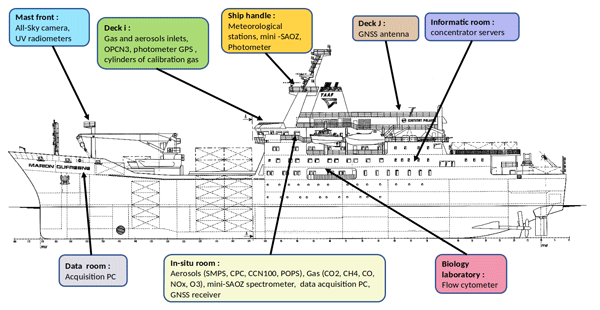
The MAP-IO program aims to compensate for the lack of atmospheric and oceanographic observations in the Southern Ocean by equipping the ship Marion Dufresne with a set of 17 scientific instruments. This program collected 700 d of measurements under different latitudes, seasons, sea states, and weather conditions. These new data will support the calibration and validation of numerical models and the understanding of the atmospheric composition of this region of Earth.
Rodrigo Rivera-Martinez, Pramod Kumar, Olivier Laurent, Gregoire Broquet, Christopher Caldow, Ford Cropley, Diego Santaren, Adil Shah, Cécile Mallet, Michel Ramonet, Leonard Rivier, Catherine Juery, Olivier Duclaux, Caroline Bouchet, Elisa Allegrini, Hervé Utard, and Philippe Ciais
Atmos. Meas. Tech., 17, 4257–4290, https://doi.org/10.5194/amt-17-4257-2024, https://doi.org/10.5194/amt-17-4257-2024, 2024
Short summary
Short summary
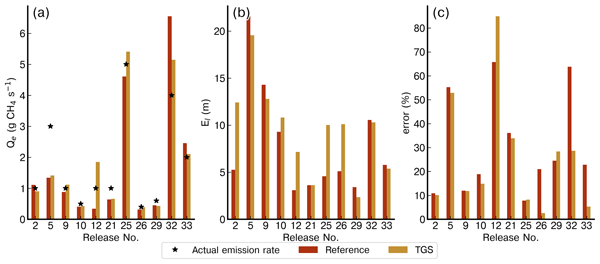
We explore the use of metal oxide semiconductors (MOSs) as a low-cost alternative for detecting and measuring CH4 emissions from industrial facilities. MOSs were exposed to several controlled releases to test their accuracy in detecting and quantifying emissions. Two reconstruction models were compared, and emission estimates were computed using a Gaussian dispersion model. Findings show that MOSs can provide accurate emission estimates with a 25 % emission rate error and a 9.5 m location error.
Hella van Asperen, Thorsten Warneke, Alessandro Carioca de Araújo, Bruce Forsberg, Sávio José Filgueiras Ferreira, Thomas Röckmann, Carina van der Veen, Sipko Bulthuis, Leonardo Ramos de Oliveira, Thiago de Lima Xavier, Jailson da Mata, Marta de Oliveira Sá, Paulo Ricardo Teixeira, Julie Andrews de França e Silva, Susan Trumbore, and Justus Notholt
Biogeosciences, 21, 3183–3199, https://doi.org/10.5194/bg-21-3183-2024, https://doi.org/10.5194/bg-21-3183-2024, 2024
Short summary
Short summary
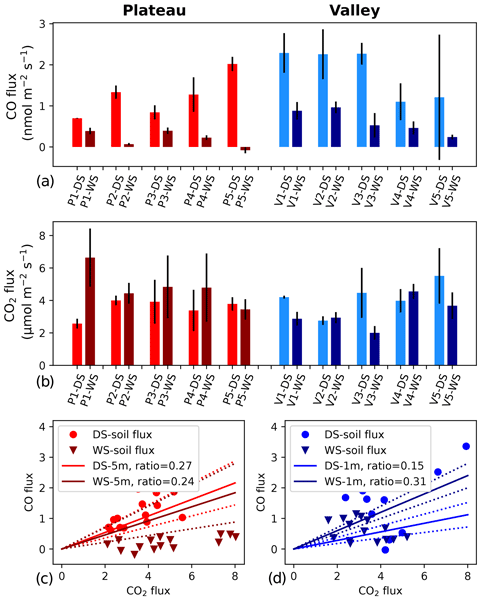
Carbon monoxide (CO) is regarded as an important indirect greenhouse gas. Soils can emit and take up CO, but, until now, uncertainty remains as to which process dominates in tropical rainforests. We present the first soil CO flux measurements from a tropical rainforest. Based on our observations, we report that tropical rainforest soils are a net source of CO. In addition, we show that valley streams and inundated areas are likely additional hot spots of CO in the ecosystem.
Sophie Wittig, Antoine Berchet, Isabelle Pison, Marielle Saunois, and Jean-Daniel Paris
Atmos. Chem. Phys., 24, 6359–6373, https://doi.org/10.5194/acp-24-6359-2024, https://doi.org/10.5194/acp-24-6359-2024, 2024
Short summary
Short summary
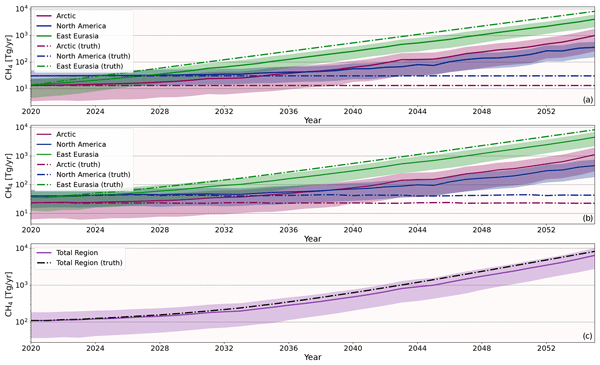
The aim of this work is to analyse how accurately a methane bomb event could be detected with the current and a hypothetically extended stationary observation network in the Arctic. For this, we incorporate synthetically modelled possible future CH4 concentrations based on plausible emission scenarios into an inverse modelling framework. We analyse how well the increase is detected in different Arctic regions and evaluate the impact of additional observation sites in this respect.
Joshua L. Laughner, Geoffrey C. Toon, Joseph Mendonca, Christof Petri, Sébastien Roche, Debra Wunch, Jean-Francois Blavier, David W. T. Griffith, Pauli Heikkinen, Ralph F. Keeling, Matthäus Kiel, Rigel Kivi, Coleen M. Roehl, Britton B. Stephens, Bianca C. Baier, Huilin Chen, Yonghoon Choi, Nicholas M. Deutscher, Joshua P. DiGangi, Jochen Gross, Benedikt Herkommer, Pascal Jeseck, Thomas Laemmel, Xin Lan, Erin McGee, Kathryn McKain, John Miller, Isamu Morino, Justus Notholt, Hirofumi Ohyama, David F. Pollard, Markus Rettinger, Haris Riris, Constantina Rousogenous, Mahesh Kumar Sha, Kei Shiomi, Kimberly Strong, Ralf Sussmann, Yao Té, Voltaire A. Velazco, Steven C. Wofsy, Minqiang Zhou, and Paul O. Wennberg
Earth Syst. Sci. Data, 16, 2197–2260, https://doi.org/10.5194/essd-16-2197-2024, https://doi.org/10.5194/essd-16-2197-2024, 2024
Short summary
Short summary
This paper describes a new version, called GGG2020, of a data set containing column-integrated observations of greenhouse and related gases (including CO2, CH4, CO, and N2O) made by ground stations located around the world. Compared to the previous version (GGG2014), improvements have been made toward site-to-site consistency. This data set plays a key role in validating space-based greenhouse gas observations and in understanding the carbon cycle.
Alexandra Klemme, Thorsten Warneke, Heinrich Bovensmann, Matthias Weigelt, Jürgen Müller, Tim Rixen, Justus Notholt, and Claus Lämmerzahl
Hydrol. Earth Syst. Sci., 28, 1527–1538, https://doi.org/10.5194/hess-28-1527-2024, https://doi.org/10.5194/hess-28-1527-2024, 2024
Short summary
Short summary
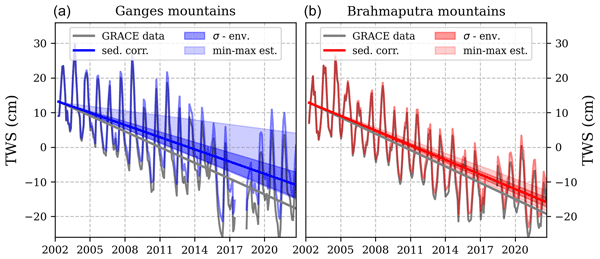
Satellite data help estimate groundwater depletion, but earlier assessments missed mass loss from river sediment. In the Ganges–Brahmaputra–Meghna (GBM) river system, sediment accounts for 4 % of the depletion. Correcting for sediment in the GBM mountains reduces estimated depletion by 14 %. It's important to note that the Himalayas' uplift may offset some sediment-induced mass loss. This understanding is vital for accurate water storage trend assessments and sustainable groundwater management.
Alkistis Papetta, Franco Marenco, Maria Kezoudi, Rodanthi-Elisavet Mamouri, Argyro Nisantzi, Holger Baars, Ioana Elisabeta Popovici, Philippe Goloub, Stéphane Victori, and Jean Sciare
Atmos. Meas. Tech., 17, 1721–1738, https://doi.org/10.5194/amt-17-1721-2024, https://doi.org/10.5194/amt-17-1721-2024, 2024
Short summary
Short summary
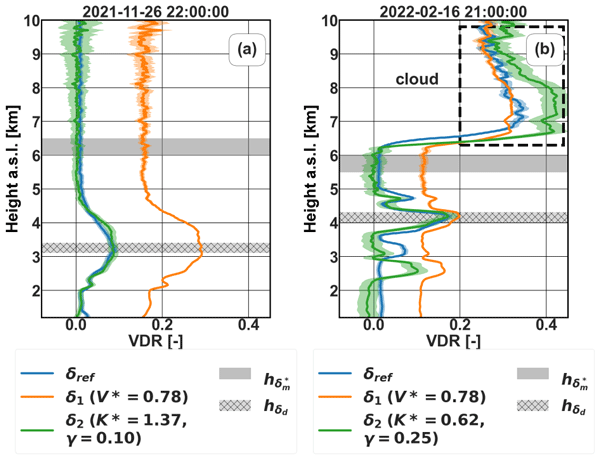
We propose a method to determine depolarization parameters using observations from a reference instrument at a nearby location, needed for systems where a priori knowledge of cross-talk parameters is not available. It uses three-parameter equations to compare VDR between two co-located lidars at dust and molecular layers. It can be applied retrospectively to existing data acquired during campaigns. Its application to Cimel CE376 corrected VDR bias at high- and low-depolarizing layers.
Yunsong Liu, Jean-Daniel Paris, Gregoire Broquet, Violeta Bescós Roy, Tania Meixus Fernandez, Rasmus Andersen, Andrés Russu Berlanga, Emil Christensen, Yann Courtois, Sebastian Dominok, Corentin Dussenne, Travis Eckert, Andrew Finlayson, Aurora Fernández de la Fuente, Catlin Gunn, Ram Hashmonay, Juliano Grigoleto Hayashi, Jonathan Helmore, Soeren Honsel, Fabrizio Innocenti, Matti Irjala, Torgrim Log, Cristina Lopez, Francisco Cortés Martínez, Jonathan Martinez, Adrien Massardier, Helle Gottschalk Nygaard, Paula Agregan Reboredo, Elodie Rousset, Axel Scherello, Matthias Ulbricht, Damien Weidmann, Oliver Williams, Nigel Yarrow, Murès Zarea, Robert Ziegler, Jean Sciare, Mihalis Vrekoussis, and Philippe Bousquet
Atmos. Meas. Tech., 17, 1633–1649, https://doi.org/10.5194/amt-17-1633-2024, https://doi.org/10.5194/amt-17-1633-2024, 2024
Short summary
Short summary
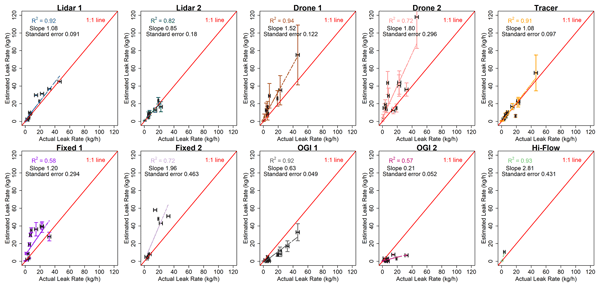
We investigated the performance of 10 methane emission quantification techniques in a blind controlled-release experiment at an inerted natural gas compressor station. We reported their respective strengths, weaknesses, and potential complementarity depending on the emission rates and atmospheric conditions. Additionally, we assess the dependence of emission quantification performance on key parameters such as wind speed, deployment constraints, and measurement duration.
Pramod Kumar, Christopher Caldow, Grégoire Broquet, Adil Shah, Olivier Laurent, Camille Yver-Kwok, Sebastien Ars, Sara Defratyka, Susan Warao Gichuki, Luc Lienhardt, Mathis Lozano, Jean-Daniel Paris, Felix Vogel, Caroline Bouchet, Elisa Allegrini, Robert Kelly, Catherine Juery, and Philippe Ciais
Atmos. Meas. Tech., 17, 1229–1250, https://doi.org/10.5194/amt-17-1229-2024, https://doi.org/10.5194/amt-17-1229-2024, 2024
Short summary
Short summary
This study presents a series of mobile measurement campaigns to monitor the CH4 emissions from an active landfill. These measurements are processed using a Gaussian plume model and atmospheric inversion techniques to quantify the landfill CH4 emissions. The methane emission estimates range between ~0.4 and ~7 t CH4 per day, and their variations are analyzed. The robustness of the estimates is assessed depending on the distance of the measurements from the potential sources in the landfill.
Jean-François Müller, Trissevgeni Stavrakou, Glenn-Michael Oomen, Beata Opacka, Isabelle De Smedt, Alex Guenther, Corinne Vigouroux, Bavo Langerock, Carlos Augusto Bauer Aquino, Michel Grutter, James Hannigan, Frank Hase, Rigel Kivi, Erik Lutsch, Emmanuel Mahieu, Maria Makarova, Jean-Marc Metzger, Isamu Morino, Isao Murata, Tomoo Nagahama, Justus Notholt, Ivan Ortega, Mathias Palm, Amelie Röhling, Wolfgang Stremme, Kimberly Strong, Ralf Sussmann, Yao Té, and Alan Fried
Atmos. Chem. Phys., 24, 2207–2237, https://doi.org/10.5194/acp-24-2207-2024, https://doi.org/10.5194/acp-24-2207-2024, 2024
Short summary
Short summary
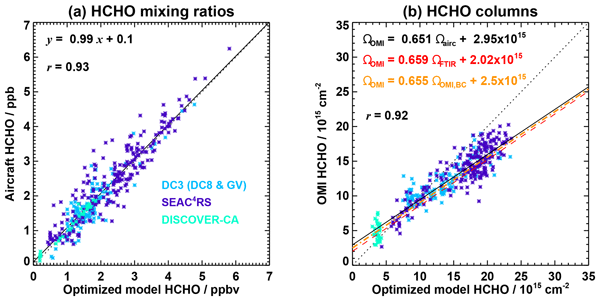
Formaldehyde observations from satellites can be used to constrain the emissions of volatile organic compounds, but those observations have biases. Using an atmospheric model, aircraft and ground-based remote sensing data, we quantify these biases, propose a correction to the data, and assess the consequence of this correction for the evaluation of emissions.
Katrin Müller, Jordis S. Tradowsky, Peter von der Gathen, Christoph Ritter, Sharon Patris, Justus Notholt, and Markus Rex
Atmos. Chem. Phys., 24, 2169–2193, https://doi.org/10.5194/acp-24-2169-2024, https://doi.org/10.5194/acp-24-2169-2024, 2024
Short summary
Short summary
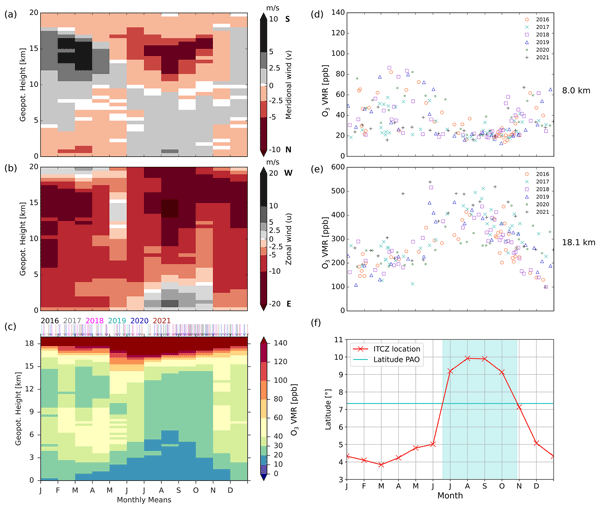
The Palau Atmospheric Observatory is introduced as an ideal site to detect changes in atmospheric composition and dynamics above the remote tropical western Pacific. We focus on the ozone sounding program from 2016–2021, including El Niño 2016. The year-round high convective activity is reflected in dominant low tropospheric ozone and high relative humidity. Their seasonal distributions are unique compared to other tropical sites and are modulated by the Intertropical Convergence Zone.
Nansi Fakhri, Robin Stevens, Arnold Downey, Konstantina Oikonomou, Jean Sciare, Charbel Afif, and Patrick L. Hayes
Atmos. Chem. Phys., 24, 1193–1212, https://doi.org/10.5194/acp-24-1193-2024, https://doi.org/10.5194/acp-24-1193-2024, 2024
Short summary
Short summary
We investigated the chemical composition of atmospheric fine particles, their emission sources, and the potential human health risk associated with trace elements in particles for an urban site in Montréal over a 3-month period (August–November). This study represents the first time that such extensive composition measurements were included in an urban source apportionment study in Canada, and it provides greater resolution of fine-particle sources than has been previously achieved in Canada.
Victoria A. Flood, Kimberly Strong, Cynthia H. Whaley, Kaley A. Walker, Thomas Blumenstock, James W. Hannigan, Johan Mellqvist, Justus Notholt, Mathias Palm, Amelie N. Röhling, Stephen Arnold, Stephen Beagley, Rong-You Chien, Jesper Christensen, Makoto Deushi, Srdjan Dobricic, Xinyi Dong, Joshua S. Fu, Michael Gauss, Wanmin Gong, Joakim Langner, Kathy S. Law, Louis Marelle, Tatsuo Onishi, Naga Oshima, David A. Plummer, Luca Pozzoli, Jean-Christophe Raut, Manu A. Thomas, Svetlana Tsyro, and Steven Turnock
Atmos. Chem. Phys., 24, 1079–1118, https://doi.org/10.5194/acp-24-1079-2024, https://doi.org/10.5194/acp-24-1079-2024, 2024
Short summary
Short summary
It is important to understand the composition of the Arctic atmosphere and how it is changing. Atmospheric models provide simulations that can inform policy. This study examines simulations of CH4, CO, and O3 by 11 models. Model performance is assessed by comparing results matched in space and time to measurements from five high-latitude ground-based infrared spectrometers. This work finds that models generally underpredict the concentrations of these gases in the Arctic troposphere.
Jonas Hachmeister, Oliver Schneising, Michael Buchwitz, John P. Burrows, Justus Notholt, and Matthias Buschmann
Atmos. Chem. Phys., 24, 577–595, https://doi.org/10.5194/acp-24-577-2024, https://doi.org/10.5194/acp-24-577-2024, 2024
Short summary
Short summary
We quantified changes in atmospheric methane concentrations using satellite data and a dynamic linear model approach. We calculated global annual methane increases for the years 2019–2022, which are in good agreement with other sources. For zonal methane growth rates, we identified strong inter-hemispheric differences in 2019 and 2022. For 2022, we could attribute decreases in the global growth rate to the Northern Hemisphere, possibly related to a reduction in anthropogenic emissions.
Paolo Cristofanelli, Cosimo Fratticioli, Lynn Hazan, Mali Chariot, Cedric Couret, Orestis Gazetas, Dagmar Kubistin, Antti Laitinen, Ari Leskinen, Tuomas Laurila, Matthias Lindauer, Giovanni Manca, Michel Ramonet, Pamela Trisolino, and Martin Steinbacher
Atmos. Meas. Tech., 16, 5977–5994, https://doi.org/10.5194/amt-16-5977-2023, https://doi.org/10.5194/amt-16-5977-2023, 2023
Short summary
Short summary
We investigated the application of two automatic methods for detecting spikes due to local emissions in greenhouse gas (GHG) observations at a subset of sites from the ICOS Atmosphere network. We analysed the sensitivity to the spike frequency of using different methods and settings. We documented the impact of the de-spiking on different temporal aggregations (i.e. hourly, monthly and seasonal averages) of CO2, CH4 and CO 1 min time series.
Douglas E. J. Worthy, Michele K. Rauh, Lin Huang, Felix R. Vogel, Alina Chivulescu, Kenneth A. Masarie, Ray L. Langenfelds, Paul B. Krummel, Colin E. Allison, Andrew M. Crotwell, Monica Madronich, Gabrielle Pétron, Ingeborg Levin, Samuel Hammer, Sylvia Michel, Michel Ramonet, Martina Schmidt, Armin Jordan, Heiko Moossen, Michael Rothe, Ralph Keeling, and Eric J. Morgan
Atmos. Meas. Tech., 16, 5909–5935, https://doi.org/10.5194/amt-16-5909-2023, https://doi.org/10.5194/amt-16-5909-2023, 2023
Short summary
Short summary
Network compatibility is important for inferring greenhouse gas fluxes at global or regional scales. This study is the first assessment of the measurement agreement among seven individual programs within the World Meteorological Organization community. It compares co-located flask air measurements at the Alert Observatory in Canada over a 17-year period. The results provide stronger confidence in the uncertainty estimation while using those datasets in various data interpretation applications.
Minqiang Zhou, Bavo Langerock, Mahesh Kumar Sha, Christian Hermans, Nicolas Kumps, Rigel Kivi, Pauli Heikkinen, Christof Petri, Justus Notholt, Huilin Chen, and Martine De Mazière
Atmos. Meas. Tech., 16, 5593–5608, https://doi.org/10.5194/amt-16-5593-2023, https://doi.org/10.5194/amt-16-5593-2023, 2023
Short summary
Short summary
Atmospheric N2O and CH4 columns are successfully retrieved from low-resolution FTIR spectra recorded by a Bruker VERTEX 70. The 1-year measurements at Sodankylä show that the N2O total columns retrieved from 125HR and VERTEX 70 spectra are −0.3 ± 0.7 % with an R value of 0.93. The relative differences between the CH4 total columns retrieved from the 125HR and VERTEX spectra are 0.0 ± 0.8 % with an R value of 0.87. Such a technique can help to fill the gap in NDACC N2O and CH4 measurements.
Jianing Dai, Guy P. Brasseur, Mihalis Vrekoussis, Maria Kanakidou, Kun Qu, Yijuan Zhang, Hongliang Zhang, and Tao Wang
Atmos. Chem. Phys., 23, 14127–14158, https://doi.org/10.5194/acp-23-14127-2023, https://doi.org/10.5194/acp-23-14127-2023, 2023
Short summary
Short summary
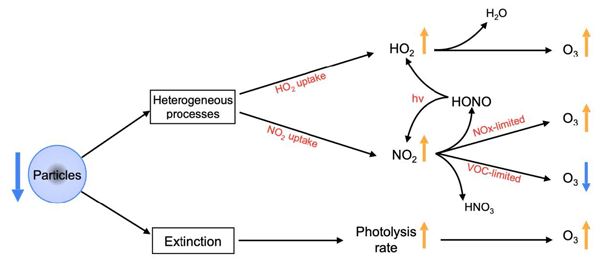
In this study, we used a regional chemical transport model to characterize the different parameters of atmospheric oxidative capacity in recent chemical environments in China. These parameters include the production and destruction rates of ozone and other oxidants, the ozone production efficiency, the OH reactivity, and the length of the reaction chain responsible for the formation of ozone and ROx. They are also affected by the aerosol burden in the atmosphere.
Dien Wu, Joshua L. Laughner, Junjie Liu, Paul I. Palmer, John C. Lin, and Paul O. Wennberg
Geosci. Model Dev., 16, 6161–6185, https://doi.org/10.5194/gmd-16-6161-2023, https://doi.org/10.5194/gmd-16-6161-2023, 2023
Short summary
Short summary
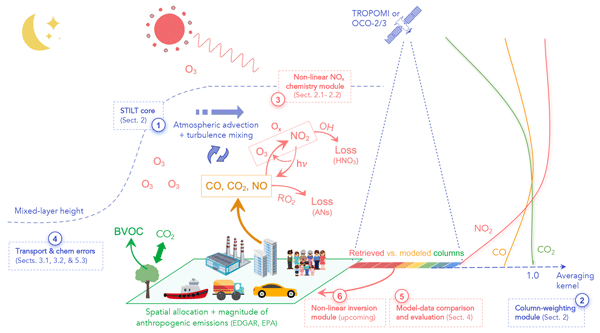
To balance computational expenses and chemical complexity in extracting emission signals from tropospheric NO2 columns, we propose a simplified non-linear Lagrangian chemistry transport model and assess its performance against TROPOMI v2 over power plants and cities. Using this model, we then discuss how NOx chemistry affects the relationship between NOx and CO2 emissions and how studying NO2 columns helps quantify modeled biases in wind directions and prior emissions.
Susanna Strada, Andrea Pozzer, Graziano Giuliani, Erika Coppola, Fabien Solmon, Xiaoyan Jiang, Alex Guenther, Efstratios Bourtsoukidis, Dominique Serça, Jonathan Williams, and Filippo Giorgi
Atmos. Chem. Phys., 23, 13301–13327, https://doi.org/10.5194/acp-23-13301-2023, https://doi.org/10.5194/acp-23-13301-2023, 2023
Short summary
Short summary
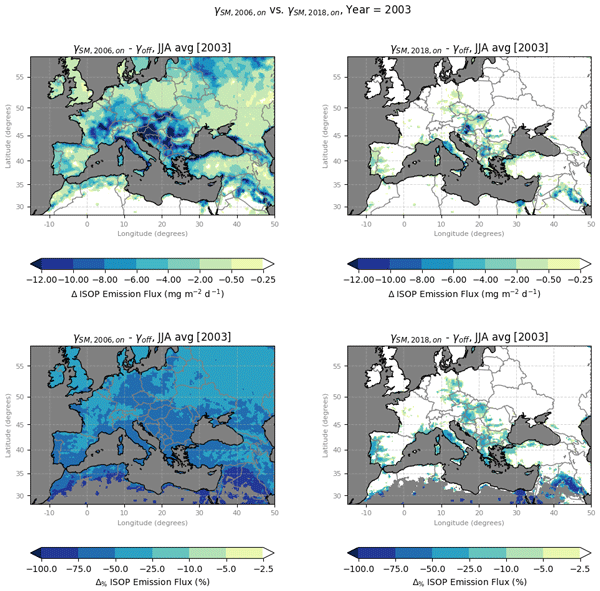
Water deficit modifies emissions of isoprene, an aromatic compound released by plants that influences the production of an air pollutant such as ozone. Numerical modelling shows that, during the warmest and driest summers, isoprene decreases between −20 and −60 % over the Euro-Mediterranean region, while near-surface ozone only diminishes by a few percent. Decreases in isoprene emissions not only happen under dry conditions, but also could occur after prolonged or repeated water deficits.
Jean-Philippe Putaud, Enrico Pisoni, Alexander Mangold, Christoph Hueglin, Jean Sciare, Michael Pikridas, Chrysanthos Savvides, Jakub Ondracek, Saliou Mbengue, Alfred Wiedensohler, Kay Weinhold, Maik Merkel, Laurent Poulain, Dominik van Pinxteren, Hartmut Herrmann, Andreas Massling, Claus Nordstroem, Andrés Alastuey, Cristina Reche, Noemí Pérez, Sonia Castillo, Mar Sorribas, Jose Antonio Adame, Tuukka Petaja, Katrianne Lehtipalo, Jarkko Niemi, Véronique Riffault, Joel F. de Brito, Augustin Colette, Olivier Favez, Jean-Eudes Petit, Valérie Gros, Maria I. Gini, Stergios Vratolis, Konstantinos Eleftheriadis, Evangelia Diapouli, Hugo Denier van der Gon, Karl Espen Yttri, and Wenche Aas
Atmos. Chem. Phys., 23, 10145–10161, https://doi.org/10.5194/acp-23-10145-2023, https://doi.org/10.5194/acp-23-10145-2023, 2023
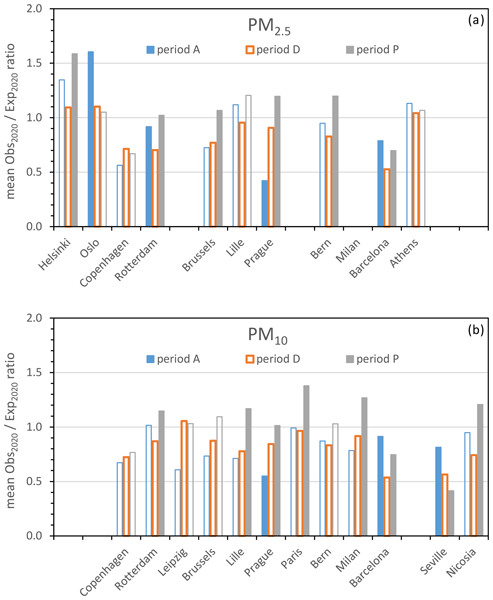
Short summary
Short summary
Many European people are still exposed to levels of air pollution that can affect their health. COVID-19 lockdowns in 2020 were used to assess the impact of the reduction in human mobility on air pollution across Europe by comparing measurement data with values that would be expected if no lockdown had occurred. We show that lockdown measures did not lead to consistent decreases in the concentrations of fine particulate matter suspended in the air, and we investigate why.
Rafaella Chiarella, Matthias Buschmann, Joshua Laughner, Isamu Morino, Justus Notholt, Christof Petri, Geoffrey Toon, Voltaire A. Velazco, and Thorsten Warneke
Atmos. Meas. Tech., 16, 3987–4007, https://doi.org/10.5194/amt-16-3987-2023, https://doi.org/10.5194/amt-16-3987-2023, 2023
Short summary
Short summary
The goal is to establish a window and strategy for xCO2 retrieval from ground-based Fourier transform spectrometers for NDACC. In the study we describe the spectroscopy of the region, the locations and instruments used, and the methods of calculating the retrieved xCO2. We performed tests to assess the sensitivity to diverse factors and sources of errors while comparing the retrieval to a well-established xCO2 retrieval from TCCON.
Sara M. Defratyka, James L. France, Rebecca E. Fisher, Dave Lowry, Julianne M. Fernandez, Semra Bakkaloglu, Camille Yver-Kwok, Jean-Daniel Paris, Philippe Bousquet, Tim Arnold, Chris Rennick, Jon Helmore, Nigel Yarrow, and Euan G. Nisbet
EGUsphere, https://doi.org/10.5194/egusphere-2023-1490, https://doi.org/10.5194/egusphere-2023-1490, 2023
Preprint archived
Short summary
Short summary
We are focused on verification of δ13CH4 measurements in near-source conditions and we have provided an insight into the impact of chosen calculation methods for determined isotopic signatures. Our study offers a step forward for establishing an unified, robust, and reliable analytical technique to determine δ13CH4 of methane sources. Our recommended analytical approach reduces biases and uncertainties coming from measurement conditions, data clustering and various available fitting methods.
Jinghui Lian, Thomas Lauvaux, Hervé Utard, François-Marie Bréon, Grégoire Broquet, Michel Ramonet, Olivier Laurent, Ivonne Albarus, Mali Chariot, Simone Kotthaus, Martial Haeffelin, Olivier Sanchez, Olivier Perrussel, Hugo Anne Denier van der Gon, Stijn Nicolaas Camiel Dellaert, and Philippe Ciais
Atmos. Chem. Phys., 23, 8823–8835, https://doi.org/10.5194/acp-23-8823-2023, https://doi.org/10.5194/acp-23-8823-2023, 2023
Short summary
Short summary
This study quantifies urban CO2 emissions via an atmospheric inversion for the Paris metropolitan area over a 6-year period from 2016 to 2021. Results show a long-term decreasing trend of about 2 % ± 0.6 % per year in the annual CO2 emissions over Paris. We conclude that our current capacity can deliver near-real-time CO2 emission estimates at the city scale in under a month, and the results agree within 10 % with independent estimates from multiple city-scale inventories.
Eliane Gomes Alves, Raoni Aquino Santana, Cléo Quaresma Dias-Júnior, Santiago Botía, Tyeen Taylor, Ana Maria Yáñez-Serrano, Jürgen Kesselmeier, Efstratios Bourtsoukidis, Jonathan Williams, Pedro Ivo Lembo Silveira de Assis, Giordane Martins, Rodrigo de Souza, Sérgio Duvoisin Júnior, Alex Guenther, Dasa Gu, Anywhere Tsokankunku, Matthias Sörgel, Bruce Nelson, Davieliton Pinto, Shujiro Komiya, Diogo Martins Rosa, Bettina Weber, Cybelli Barbosa, Michelle Robin, Kenneth J. Feeley, Alvaro Duque, Viviana Londoño Lemos, Maria Paula Contreras, Alvaro Idarraga, Norberto López, Chad Husby, Brett Jestrow, and Iván Mauricio Cely Toro
Atmos. Chem. Phys., 23, 8149–8168, https://doi.org/10.5194/acp-23-8149-2023, https://doi.org/10.5194/acp-23-8149-2023, 2023
Short summary
Short summary
Isoprene is emitted mainly by plants and can influence atmospheric chemistry and air quality. But, there are uncertainties in model emission estimates and follow-up atmospheric processes. In our study, with long-term observational datasets of isoprene and biological and environmental factors from central Amazonia, we show that isoprene emission estimates could be improved when biological processes were mechanistically incorporated into the model.
Kun Qu, Xuesong Wang, Xuhui Cai, Yu Yan, Xipeng Jin, Mihalis Vrekoussis, Maria Kanakidou, Guy P. Brasseur, Jin Shen, Teng Xiao, Limin Zeng, and Yuanhang Zhang
Atmos. Chem. Phys., 23, 7653–7671, https://doi.org/10.5194/acp-23-7653-2023, https://doi.org/10.5194/acp-23-7653-2023, 2023
Short summary
Short summary
Basic understandings of ozone processes, especially transport and chemistry, are essential to support ozone pollution control, but studies often have different views on their relative importance. We developed a method to quantify their contributions in the ozone mass and concentration budgets based on the WRF-CMAQ model. Results in a polluted region highlight the differences between two budgets. For future studies, two budgets are both needed to fully understand the effects of ozone processes.
Thomas E. Taylor, Christopher W. O'Dell, David Baker, Carol Bruegge, Albert Chang, Lars Chapsky, Abhishek Chatterjee, Cecilia Cheng, Frédéric Chevallier, David Crisp, Lan Dang, Brian Drouin, Annmarie Eldering, Liang Feng, Brendan Fisher, Dejian Fu, Michael Gunson, Vance Haemmerle, Graziela R. Keller, Matthäus Kiel, Le Kuai, Thomas Kurosu, Alyn Lambert, Joshua Laughner, Richard Lee, Junjie Liu, Lucas Mandrake, Yuliya Marchetti, Gregory McGarragh, Aronne Merrelli, Robert R. Nelson, Greg Osterman, Fabiano Oyafuso, Paul I. Palmer, Vivienne H. Payne, Robert Rosenberg, Peter Somkuti, Gary Spiers, Cathy To, Brad Weir, Paul O. Wennberg, Shanshan Yu, and Jia Zong
Atmos. Meas. Tech., 16, 3173–3209, https://doi.org/10.5194/amt-16-3173-2023, https://doi.org/10.5194/amt-16-3173-2023, 2023
Short summary
Short summary
NASA's Orbiting Carbon Observatory 2 and 3 (OCO-2 and OCO-3, respectively) provide complementary spatiotemporal coverage from a sun-synchronous and precession orbit, respectively. Estimates of total column carbon dioxide (XCO2) derived from the two sensors using the same retrieval algorithm show broad consistency over a 2.5-year overlapping time record. This suggests that data from the two satellites may be used together for scientific analysis.
Xiaoyu Sun, Mathias Palm, Katrin Müller, Jonas Hachmeister, and Justus Notholt
Atmos. Chem. Phys., 23, 7075–7090, https://doi.org/10.5194/acp-23-7075-2023, https://doi.org/10.5194/acp-23-7075-2023, 2023
Short summary
Short summary
The tropical western Pacific (TWP) is an active interhemispheric transport region contributing significantly to the global climate. A method to determine the chemical equator was developed by model simulations of a virtual passive tracer to analyze transport in the tropics, with a focus on the TWP region. We compare the chemical equator with tropical rain belts and wind fields and obtain a vertical pattern of interhemispheric transport processes which shows tilt structure in certain seasons.
Sophie Wittig, Antoine Berchet, Isabelle Pison, Marielle Saunois, Joël Thanwerdas, Adrien Martinez, Jean-Daniel Paris, Toshinobu Machida, Motoki Sasakawa, Douglas E. J. Worthy, Xin Lan, Rona L. Thompson, Espen Sollum, and Mikhail Arshinov
Atmos. Chem. Phys., 23, 6457–6485, https://doi.org/10.5194/acp-23-6457-2023, https://doi.org/10.5194/acp-23-6457-2023, 2023
Short summary
Short summary
Here, an inverse modelling approach is applied to estimate CH4 sources and sinks in the Arctic from 2008 to 2019. We study the magnitude, seasonal patterns and trends from different sources during recent years. We also assess how the current observation network helps to constrain fluxes. We find that constraints are only significant for North America and, to a lesser extent, West Siberia, where the observation network is relatively dense. We find no clear trend over the period of inversion.
Aliki Christodoulou, Iasonas Stavroulas, Mihalis Vrekoussis, Maximillien Desservettaz, Michael Pikridas, Elie Bimenyimana, Jonilda Kushta, Matic Ivančič, Martin Rigler, Philippe Goloub, Konstantina Oikonomou, Roland Sarda-Estève, Chrysanthos Savvides, Charbel Afif, Nikos Mihalopoulos, Stéphane Sauvage, and Jean Sciare
Atmos. Chem. Phys., 23, 6431–6456, https://doi.org/10.5194/acp-23-6431-2023, https://doi.org/10.5194/acp-23-6431-2023, 2023
Short summary
Short summary
Our study presents, for the first time, a detailed source identification of aerosols at an urban background site in Cyprus (eastern Mediterranean), a region strongly impacted by climate change and air pollution. Here, we identify an unexpected high contribution of long-range transported pollution from fossil fuel sources in the Middle East, highlighting an urgent need to further characterize these fast-growing emissions and their impacts on regional atmospheric composition, climate, and health.
Harrison A. Parker, Joshua L. Laughner, Geoffrey C. Toon, Debra Wunch, Coleen M. Roehl, Laura T. Iraci, James R. Podolske, Kathryn McKain, Bianca C. Baier, and Paul O. Wennberg
Atmos. Meas. Tech., 16, 2601–2625, https://doi.org/10.5194/amt-16-2601-2023, https://doi.org/10.5194/amt-16-2601-2023, 2023
Short summary
Short summary
We describe a retrieval algorithm for determining limited information about the vertical distribution of carbon monoxide (CO) and carbon dioxide (CO2) from total column observations from ground-based observations. Our retrieved partial column values compare well with integrated in situ data. The average error for our retrieval is 1.51 ppb (~ 2 %) for CO and 5.09 ppm (~ 1.25 %) for CO2. We anticipate that this approach will find broad application for use in carbon cycle science.
Yifan Guan, Gretchen Keppel-Aleks, Scott C. Doney, Christof Petri, Dave Pollard, Debra Wunch, Frank Hase, Hirofumi Ohyama, Isamu Morino, Justus Notholt, Kei Shiomi, Kim Strong, Rigel Kivi, Matthias Buschmann, Nicholas Deutscher, Paul Wennberg, Ralf Sussmann, Voltaire A. Velazco, and Yao Té
Atmos. Chem. Phys., 23, 5355–5372, https://doi.org/10.5194/acp-23-5355-2023, https://doi.org/10.5194/acp-23-5355-2023, 2023
Short summary
Short summary
We characterize spatial–temporal patterns of interannual variability (IAV) in atmospheric CO2 based on NASA’s Orbiting Carbon Observatory-2 (OCO-2). CO2 variation is strongly impacted by climate events, with higher anomalies during El Nino years. We show high correlation in IAV between space-based and ground-based CO2 from long-term sites. Because OCO-2 has near-global coverage, our paper provides a roadmap to study IAV where in situ observation is sparse, such as open oceans and remote lands.
Rodrigo Andres Rivera Martinez, Diego Santaren, Olivier Laurent, Gregoire Broquet, Ford Cropley, Cécile Mallet, Michel Ramonet, Adil Shah, Leonard Rivier, Caroline Bouchet, Catherine Juery, Olivier Duclaux, and Philippe Ciais
Atmos. Meas. Tech., 16, 2209–2235, https://doi.org/10.5194/amt-16-2209-2023, https://doi.org/10.5194/amt-16-2209-2023, 2023
Short summary
Short summary
A network of low-cost sensors is a good alternative to improve the detection of fugitive CH4 emissions. We present the results of four tests conducted with two types of Figaro sensors that were assembled on four chambers in a laboratory experiment: a comparison of five models to reconstruct the CH4 signal, a strategy to reduce the training set size, a detection of age effects in the sensors and a test of the capability to transfer a model between chambers for the same type of sensor.
Antonio G. Bruno, Jeremy J. Harrison, Martyn P. Chipperfield, David P. Moore, Richard J. Pope, Christopher Wilson, Emmanuel Mahieu, and Justus Notholt
Atmos. Chem. Phys., 23, 4849–4861, https://doi.org/10.5194/acp-23-4849-2023, https://doi.org/10.5194/acp-23-4849-2023, 2023
Short summary
Short summary
A 3-D chemical transport model, TOMCAT; satellite data; and ground-based observations have been used to investigate hydrogen cyanide (HCN) variability. We found that the oxidation by O(1D) drives the HCN loss in the middle stratosphere and the currently JPL-recommended OH reaction rate overestimates HCN atmospheric loss. We also evaluated two different ocean uptake schemes. We found them to be unrealistic, and we need to scale these schemes to obtain good agreement with HCN observations.
Pantelis Kiriakidis, Antonis Gkikas, Georgios Papangelis, Theodoros Christoudias, Jonilda Kushta, Emmanouil Proestakis, Anna Kampouri, Eleni Marinou, Eleni Drakaki, Angela Benedetti, Michael Rennie, Christian Retscher, Anne Grete Straume, Alexandru Dandocsi, Jean Sciare, and Vasilis Amiridis
Atmos. Chem. Phys., 23, 4391–4417, https://doi.org/10.5194/acp-23-4391-2023, https://doi.org/10.5194/acp-23-4391-2023, 2023
Short summary
Short summary
With the launch of the Aeolus satellite, higher-accuracy wind products became available. This research was carried out to validate the assimilated wind products by testing their effect on the WRF-Chem model predictive ability of dust processes. This was carried out for the eastern Mediterranean and Middle East region for two 2-month periods in autumn and spring 2020. The use of the assimilated products improved the dust forecasts of the autumn season (both quantitatively and qualitatively).
Denghui Ji, Mathias Palm, Christoph Ritter, Philipp Richter, Xiaoyu Sun, Matthias Buschmann, and Justus Notholt
Atmos. Meas. Tech., 16, 1865–1879, https://doi.org/10.5194/amt-16-1865-2023, https://doi.org/10.5194/amt-16-1865-2023, 2023
Short summary
Short summary
To measuring aerosol components, a Fourier transform infrared spectrometer (FTIS) and a lidar are operated in Ny-Ålesund, Spitsbergen (78° N, 11° E). Using the FTIS, a retrieval algorithm is developed for dust, sea salt, black carbon, and sulfate. The distribution of aerosols or clouds is provided by lidar and used as an indicator for aerosol or cloud retrieval with the FTS. Thus, a two-instrument joint-observation scheme is designed and is used on the data measured from 2019 to the present.
Anna Agustí-Panareda, Jérôme Barré, Sébastien Massart, Antje Inness, Ilse Aben, Melanie Ades, Bianca C. Baier, Gianpaolo Balsamo, Tobias Borsdorff, Nicolas Bousserez, Souhail Boussetta, Michael Buchwitz, Luca Cantarello, Cyril Crevoisier, Richard Engelen, Henk Eskes, Johannes Flemming, Sébastien Garrigues, Otto Hasekamp, Vincent Huijnen, Luke Jones, Zak Kipling, Bavo Langerock, Joe McNorton, Nicolas Meilhac, Stefan Noël, Mark Parrington, Vincent-Henri Peuch, Michel Ramonet, Miha Razinger, Maximilian Reuter, Roberto Ribas, Martin Suttie, Colm Sweeney, Jérôme Tarniewicz, and Lianghai Wu
Atmos. Chem. Phys., 23, 3829–3859, https://doi.org/10.5194/acp-23-3829-2023, https://doi.org/10.5194/acp-23-3829-2023, 2023
Short summary
Short summary
We present a global dataset of atmospheric CO2 and CH4, the two most important human-made greenhouse gases, which covers almost 2 decades (2003–2020). It is produced by combining satellite data of CO2 and CH4 with a weather and air composition prediction model, and it has been carefully evaluated against independent observations to ensure validity and point out deficiencies to the user. This dataset can be used for scientific studies in the field of climate change and the global carbon cycle.
Yu Someya, Yukio Yoshida, Hirofumi Ohyama, Shohei Nomura, Akihide Kamei, Isamu Morino, Hitoshi Mukai, Tsuneo Matsunaga, Joshua L. Laughner, Voltaire A. Velazco, Benedikt Herkommer, Yao Té, Mahesh Kumar Sha, Rigel Kivi, Minqiang Zhou, Young Suk Oh, Nicholas M. Deutscher, and David W. T. Griffith
Atmos. Meas. Tech., 16, 1477–1501, https://doi.org/10.5194/amt-16-1477-2023, https://doi.org/10.5194/amt-16-1477-2023, 2023
Short summary
Short summary
The updated retrieval algorithm for the Greenhouse gases Observing SATellite level 2 product is presented. The main changes in the algorithm from the previous one are the treatment of cirrus clouds, the degradation model of the sensor, solar irradiance, and gas absorption coefficient tables. The retrieval results showed improvements in fitting accuracy and an increase in the data amount over land. On the other hand, there are still large biases of XCO2 which should be corrected over the ocean.
Cameron G. MacDonald, Jon-Paul Mastrogiacomo, Joshua L. Laughner, Jacob K. Hedelius, Ray Nassar, and Debra Wunch
Atmos. Chem. Phys., 23, 3493–3516, https://doi.org/10.5194/acp-23-3493-2023, https://doi.org/10.5194/acp-23-3493-2023, 2023
Short summary
Short summary
We use three satellites measuring carbon dioxide (CO2), carbon monoxide (CO) and nitrogen dioxide (NO2) to calculate atmospheric enhancements of these gases from 27 urban areas. We calculate enhancement ratios between the species and compare those to ratios derived from four globally gridded anthropogenic emission inventories. We find that the global inventories generally underestimate CO emissions in many North American and European cities relative to our observed enhancement ratios.
Nasrin Mostafavi Pak, Jacob K. Hedelius, Sébastien Roche, Liz Cunningham, Bianca Baier, Colm Sweeney, Coleen Roehl, Joshua Laughner, Geoffrey Toon, Paul Wennberg, Harrison Parker, Colin Arrowsmith, Joseph Mendonca, Pierre Fogal, Tyler Wizenberg, Beatriz Herrera, Kimberly Strong, Kaley A. Walker, Felix Vogel, and Debra Wunch
Atmos. Meas. Tech., 16, 1239–1261, https://doi.org/10.5194/amt-16-1239-2023, https://doi.org/10.5194/amt-16-1239-2023, 2023
Short summary
Short summary
Ground-based remote sensing instruments in the Total Carbon Column Observing Network (TCCON) measure greenhouse gases in the atmosphere. Consistency between TCCON measurements is crucial to accurately infer changes in atmospheric composition. We use portable remote sensing instruments (EM27/SUN) to evaluate biases between TCCON stations in North America. We also improve the retrievals of EM27/SUN instruments and evaluate the previous (GGG2014) and newest (GGG2020) retrieval algorithms.
Brendan Byrne, David F. Baker, Sourish Basu, Michael Bertolacci, Kevin W. Bowman, Dustin Carroll, Abhishek Chatterjee, Frédéric Chevallier, Philippe Ciais, Noel Cressie, David Crisp, Sean Crowell, Feng Deng, Zhu Deng, Nicholas M. Deutscher, Manvendra K. Dubey, Sha Feng, Omaira E. García, David W. T. Griffith, Benedikt Herkommer, Lei Hu, Andrew R. Jacobson, Rajesh Janardanan, Sujong Jeong, Matthew S. Johnson, Dylan B. A. Jones, Rigel Kivi, Junjie Liu, Zhiqiang Liu, Shamil Maksyutov, John B. Miller, Scot M. Miller, Isamu Morino, Justus Notholt, Tomohiro Oda, Christopher W. O'Dell, Young-Suk Oh, Hirofumi Ohyama, Prabir K. Patra, Hélène Peiro, Christof Petri, Sajeev Philip, David F. Pollard, Benjamin Poulter, Marine Remaud, Andrew Schuh, Mahesh K. Sha, Kei Shiomi, Kimberly Strong, Colm Sweeney, Yao Té, Hanqin Tian, Voltaire A. Velazco, Mihalis Vrekoussis, Thorsten Warneke, John R. Worden, Debra Wunch, Yuanzhi Yao, Jeongmin Yun, Andrew Zammit-Mangion, and Ning Zeng
Earth Syst. Sci. Data, 15, 963–1004, https://doi.org/10.5194/essd-15-963-2023, https://doi.org/10.5194/essd-15-963-2023, 2023
Short summary
Short summary
Changes in the carbon stocks of terrestrial ecosystems result in emissions and removals of CO2. These can be driven by anthropogenic activities (e.g., deforestation), natural processes (e.g., fires) or in response to rising CO2 (e.g., CO2 fertilization). This paper describes a dataset of CO2 emissions and removals derived from atmospheric CO2 observations. This pilot dataset informs current capabilities and future developments towards top-down monitoring and verification systems.
Joshua L. Laughner, Sébastien Roche, Matthäus Kiel, Geoffrey C. Toon, Debra Wunch, Bianca C. Baier, Sébastien Biraud, Huilin Chen, Rigel Kivi, Thomas Laemmel, Kathryn McKain, Pierre-Yves Quéhé, Constantina Rousogenous, Britton B. Stephens, Kaley Walker, and Paul O. Wennberg
Atmos. Meas. Tech., 16, 1121–1146, https://doi.org/10.5194/amt-16-1121-2023, https://doi.org/10.5194/amt-16-1121-2023, 2023
Short summary
Short summary
Observations using sunlight to measure surface-to-space total column of greenhouse gases in the atmosphere need an initial guess of the vertical distribution of those gases to start from. We have developed an approach to provide those initial guess profiles that uses readily available meteorological data as input. This lets us make these guesses without simulating them with a global model. The profiles generated this way match independent observations well.
Clément Narbaud, Jean-Daniel Paris, Sophie Wittig, Antoine Berchet, Marielle Saunois, Philippe Nédélec, Boris D. Belan, Mikhail Y. Arshinov, Sergei B. Belan, Denis Davydov, Alexander Fofonov, and Artem Kozlov
Atmos. Chem. Phys., 23, 2293–2314, https://doi.org/10.5194/acp-23-2293-2023, https://doi.org/10.5194/acp-23-2293-2023, 2023
Short summary
Short summary
We measured CH4 and CO2 from aircraft over the Russian Arctic. Analyzing our data with the Lagrangian model FLEXPART, we find a sharp east–west gradient in atmospheric composition. Western Siberia is influenced by strong wetland CH4 emissions, deep CO2 gradient from biospheric uptake, and long-range transport from Europe and North America. Eastern flights document less variability. Over the Arctic Ocean, we find a small influence from marine CH4 emissions compatible with reasonable inventories.
Eric Förster, Harald Bönisch, Marco Neumaier, Florian Obersteiner, Andreas Zahn, Andreas Hilboll, Anna B. Kalisz Hedegaard, Nikos Daskalakis, Alexandros Panagiotis Poulidis, Mihalis Vrekoussis, Michael Lichtenstern, and Peter Braesicke
Atmos. Chem. Phys., 23, 1893–1918, https://doi.org/10.5194/acp-23-1893-2023, https://doi.org/10.5194/acp-23-1893-2023, 2023
Short summary
Short summary
The airborne megacity campaign EMeRGe provided an unprecedented amount of trace gas measurements. We combine measured volatile organic compounds (VOCs) with trajectory-modelled emission uptakes to identify potential source regions of pollution. We also characterise the chemical fingerprints (e.g. biomass burning and anthropogenic signatures) of the probed air masses to corroborate the contributing source regions. Our approach is the first large-scale study of VOCs originating from megacities.
Oliver Schneising, Michael Buchwitz, Jonas Hachmeister, Steffen Vanselow, Maximilian Reuter, Matthias Buschmann, Heinrich Bovensmann, and John P. Burrows
Atmos. Meas. Tech., 16, 669–694, https://doi.org/10.5194/amt-16-669-2023, https://doi.org/10.5194/amt-16-669-2023, 2023
Short summary
Short summary
Methane and carbon monoxide are important constituents of the atmosphere in the context of climate change and air pollution. We present the latest advances in the TROPOMI/WFMD algorithm to simultaneously retrieve atmospheric methane and carbon monoxide abundances from space. The changes in the latest product version are described in detail, and the resulting improvements are demonstrated. An overview of the products is provided including a discussion of annual increases and validation results.
Marios Chatziparaschos, Nikos Daskalakis, Stelios Myriokefalitakis, Nikos Kalivitis, Athanasios Nenes, María Gonçalves Ageitos, Montserrat Costa-Surós, Carlos Pérez García-Pando, Medea Zanoli, Mihalis Vrekoussis, and Maria Kanakidou
Atmos. Chem. Phys., 23, 1785–1801, https://doi.org/10.5194/acp-23-1785-2023, https://doi.org/10.5194/acp-23-1785-2023, 2023
Short summary
Short summary
Ice formation is enabled by ice-nucleating particles (INP) at higher temperatures than homogeneous formation and can profoundly affect the properties of clouds. Our global model results show that K-feldspar is the most important contributor to INP concentrations globally, affecting mid-level mixed-phase clouds. However, quartz can significantly contribute and dominates the lowest and the highest altitudes of dust-derived INP, affecting mainly low-level and high-level mixed-phase clouds.
Alkuin M. Koenig, Olivier Magand, Bert Verreyken, Jerome Brioude, Crist Amelynck, Niels Schoon, Aurélie Colomb, Beatriz Ferreira Araujo, Michel Ramonet, Mahesh K. Sha, Jean-Pierre Cammas, Jeroen E. Sonke, and Aurélien Dommergue
Atmos. Chem. Phys., 23, 1309–1328, https://doi.org/10.5194/acp-23-1309-2023, https://doi.org/10.5194/acp-23-1309-2023, 2023
Short summary
Short summary
The global distribution of mercury, a potent neurotoxin, depends on atmospheric transport, chemistry, and interactions between the Earth’s surface and the air. Our understanding of these processes is still hampered by insufficient observations. Here, we present new data from a mountain observatory in the Southern Hemisphere. We give insights into mercury concentrations in air masses coming from aloft, and we show that tropical mountain vegetation may be a daytime source of mercury to the air.
Hao Yin, Youwen Sun, Justus Notholt, Mathias Palm, Chunxiang Ye, and Cheng Liu
Atmos. Chem. Phys., 22, 14401–14419, https://doi.org/10.5194/acp-22-14401-2022, https://doi.org/10.5194/acp-22-14401-2022, 2022
Short summary
Short summary
Improved knowledge of the chemistry and drivers of surface ozone over the Qinghai-Tibet Plateau (QTP) is significant for regulatory and control purposes in this high-altitude region in the Himalayas. Our study investigates the processes and drivers of surface ozone anomalies by using machine-learning model-based meteorological normalization methods between 2015 and 2020 in urban areas over the QTP. This study can provide valuable implication for ozone mitigation over the QTP.
Peter Bergamaschi, Arjo Segers, Dominik Brunner, Jean-Matthieu Haussaire, Stephan Henne, Michel Ramonet, Tim Arnold, Tobias Biermann, Huilin Chen, Sebastien Conil, Marc Delmotte, Grant Forster, Arnoud Frumau, Dagmar Kubistin, Xin Lan, Markus Leuenberger, Matthias Lindauer, Morgan Lopez, Giovanni Manca, Jennifer Müller-Williams, Simon O'Doherty, Bert Scheeren, Martin Steinbacher, Pamela Trisolino, Gabriela Vítková, and Camille Yver Kwok
Atmos. Chem. Phys., 22, 13243–13268, https://doi.org/10.5194/acp-22-13243-2022, https://doi.org/10.5194/acp-22-13243-2022, 2022
Short summary
Short summary
We present a novel high-resolution inverse modelling system, "FLEXVAR", and its application for the inverse modelling of European CH4 emissions in 2018. The new system combines a high spatial resolution of 7 km x 7 km with a variational data assimilation technique, which allows CH4 emissions to be optimized from individual model grid cells. The high resolution allows the observations to be better reproduced, while the derived emissions show overall good consistency with two existing models.
Charlotte M. Beall, Thomas C. J. Hill, Paul J. DeMott, Tobias Köneman, Michael Pikridas, Frank Drewnick, Hartwig Harder, Christopher Pöhlker, Jos Lelieveld, Bettina Weber, Minas Iakovides, Roman Prokeš, Jean Sciare, Meinrat O. Andreae, M. Dale Stokes, and Kimberly A. Prather
Atmos. Chem. Phys., 22, 12607–12627, https://doi.org/10.5194/acp-22-12607-2022, https://doi.org/10.5194/acp-22-12607-2022, 2022
Short summary
Short summary
Ice-nucleating particles (INPs) are rare aerosols that can trigger ice formation in clouds and affect climate-relevant cloud properties such as phase, reflectivity and lifetime. Dust is the dominant INP source, yet few measurements have been reported near major dust sources. We report INP observations within hundreds of kilometers of the biggest dust source regions globally: the Sahara and the Arabian Peninsula. Results show that at temperatures > −15 °C, INPs are dominated by organics.
Marta Via, Gang Chen, Francesco Canonaco, Kaspar R. Daellenbach, Benjamin Chazeau, Hasna Chebaicheb, Jianhui Jiang, Hannes Keernik, Chunshui Lin, Nicolas Marchand, Cristina Marin, Colin O'Dowd, Jurgita Ovadnevaite, Jean-Eudes Petit, Michael Pikridas, Véronique Riffault, Jean Sciare, Jay G. Slowik, Leïla Simon, Jeni Vasilescu, Yunjiang Zhang, Olivier Favez, André S. H. Prévôt, Andrés Alastuey, and María Cruz Minguillón
Atmos. Meas. Tech., 15, 5479–5495, https://doi.org/10.5194/amt-15-5479-2022, https://doi.org/10.5194/amt-15-5479-2022, 2022
Short summary
Short summary
This work presents the differences resulting from two techniques (rolling and seasonal) of the positive matrix factorisation model that can be run for organic aerosol source apportionment. The current state of the art suggests that the rolling technique is more accurate, but no proof of its effectiveness has been provided yet. This paper tackles this issue in the context of a synthetic dataset and a multi-site real-world comparison.
Anthony Rey-Pommier, Frédéric Chevallier, Philippe Ciais, Grégoire Broquet, Theodoros Christoudias, Jonilda Kushta, Didier Hauglustaine, and Jean Sciare
Atmos. Chem. Phys., 22, 11505–11527, https://doi.org/10.5194/acp-22-11505-2022, https://doi.org/10.5194/acp-22-11505-2022, 2022
Short summary
Short summary
Emission inventories for air pollutants can be uncertain in developing countries. In order to overcome these uncertainties, we model nitrogen oxide emissions in Egypt using satellite retrievals. We detect a weekly cycle reflecting Egyptian social norms, an annual cycle consistent with electricity consumption and an activity drop due to the COVID-19 pandemic. However, discrepancies with inventories remain high, illustrating the needs for additional data to improve the potential of our method.
Youwen Sun, Hao Yin, Wei Wang, Changgong Shan, Justus Notholt, Mathias Palm, Ke Liu, Zhenyi Chen, and Cheng Liu
Atmos. Meas. Tech., 15, 4819–4834, https://doi.org/10.5194/amt-15-4819-2022, https://doi.org/10.5194/amt-15-4819-2022, 2022
Short summary
Short summary
This study summarizes an overview of the status and perspective of GHG monitoring in China. This study not only improves our understanding with respect to the status, advances, and challenges of GHG monitoring in China but also presents an outlook for further improving GHG monitoring capacity in China.
Yunsong Liu, Jean-Daniel Paris, Mihalis Vrekoussis, Panayiota Antoniou, Christos Constantinides, Maximilien Desservettaz, Christos Keleshis, Olivier Laurent, Andreas Leonidou, Carole Philippon, Panagiotis Vouterakos, Pierre-Yves Quéhé, Philippe Bousquet, and Jean Sciare
Atmos. Meas. Tech., 15, 4431–4442, https://doi.org/10.5194/amt-15-4431-2022, https://doi.org/10.5194/amt-15-4431-2022, 2022
Short summary
Short summary
This paper details laboratory-based and field developments of a cost-effective and compacted UAV CO2 sensor system to address the challenge of measuring CO2 with sufficient precision and acquisition frequency. We assess its performance extensively through laboratory and field tests and provide a case study in an urban area (Nicosia, Cyprus). We therefore expect that this portable system will be widely used for measuring CO2 emission and distribution in natural or urban environments.
Matthias Schneider, Benjamin Ertl, Qiansi Tu, Christopher J. Diekmann, Farahnaz Khosrawi, Amelie N. Röhling, Frank Hase, Darko Dubravica, Omaira E. García, Eliezer Sepúlveda, Tobias Borsdorff, Jochen Landgraf, Alba Lorente, André Butz, Huilin Chen, Rigel Kivi, Thomas Laemmel, Michel Ramonet, Cyril Crevoisier, Jérome Pernin, Martin Steinbacher, Frank Meinhardt, Kimberly Strong, Debra Wunch, Thorsten Warneke, Coleen Roehl, Paul O. Wennberg, Isamu Morino, Laura T. Iraci, Kei Shiomi, Nicholas M. Deutscher, David W. T. Griffith, Voltaire A. Velazco, and David F. Pollard
Atmos. Meas. Tech., 15, 4339–4371, https://doi.org/10.5194/amt-15-4339-2022, https://doi.org/10.5194/amt-15-4339-2022, 2022
Short summary
Short summary
We present a computationally very efficient method for the synergetic use of level 2 remote-sensing data products. We apply the method to IASI vertical profile and TROPOMI total column space-borne methane observations and thus gain sensitivity for the tropospheric methane partial columns, which is not achievable by the individual use of TROPOMI and IASI. These synergetic effects are evaluated theoretically and empirically by inter-comparisons to independent references of TCCON, AirCore, and GAW.
Jonas Hachmeister, Oliver Schneising, Michael Buchwitz, Alba Lorente, Tobias Borsdorff, John P. Burrows, Justus Notholt, and Matthias Buschmann
Atmos. Meas. Tech., 15, 4063–4074, https://doi.org/10.5194/amt-15-4063-2022, https://doi.org/10.5194/amt-15-4063-2022, 2022
Short summary
Short summary
Sentinel-5P trace gas retrievals rely on elevation data in their calculations. Outdated or inaccurate data can lead to significant errors in e.g. dry-air mole fractions of methane (XCH4). We show that the use of inadequate elevation data leads to strong XCH4 anomalies in Greenland. Similar problems can be expected for other regions with inaccurate elevation data. However, we expect these to be more localized. We show that updating elevation data used in the retrieval solves this issue.
Boris D. Belan, Gerard Ancellet, Irina S. Andreeva, Pavel N. Antokhin, Viktoria G. Arshinova, Mikhail Y. Arshinov, Yurii S. Balin, Vladimir E. Barsuk, Sergei B. Belan, Dmitry G. Chernov, Denis K. Davydov, Alexander V. Fofonov, Georgii A. Ivlev, Sergei N. Kotel'nikov, Alexander S. Kozlov, Artem V. Kozlov, Katharine Law, Andrey V. Mikhal'chishin, Igor A. Moseikin, Sergei V. Nasonov, Philippe Nédélec, Olesya V. Okhlopkova, Sergei E. Ol'kin, Mikhail V. Panchenko, Jean-Daniel Paris, Iogannes E. Penner, Igor V. Ptashnik, Tatyana M. Rasskazchikova, Irina K. Reznikova, Oleg A. Romanovskii, Alexander S. Safatov, Denis E. Savkin, Denis V. Simonenkov, Tatyana K. Sklyadneva, Gennadii N. Tolmachev, Semyon V. Yakovlev, and Polina N. Zenkova
Atmos. Meas. Tech., 15, 3941–3967, https://doi.org/10.5194/amt-15-3941-2022, https://doi.org/10.5194/amt-15-3941-2022, 2022
Short summary
Short summary
The change of the global climate is most pronounced in the Arctic, where the air temperature increases faster than the global average. This is associated with an increase in the concentration of greenhouse gases in the atmosphere. It is important to study how the air composition in the Arctic changes in the changing climate. Thus this integrated experiment was carried out to measure the composition of the troposphere in the Russian sector of the Arctic from on board the aircraft laboratory.
Karine Sartelet, Youngseob Kim, Florian Couvidat, Maik Merkel, Tuukka Petäjä, Jean Sciare, and Alfred Wiedensohler
Atmos. Chem. Phys., 22, 8579–8596, https://doi.org/10.5194/acp-22-8579-2022, https://doi.org/10.5194/acp-22-8579-2022, 2022
Short summary
Short summary
A methodology is defined to estimate number emissions from an inventory providing mass emissions. Number concentrations are simulated over Greater Paris using different nucleation parameterisations (binary, ternary involving sulfuric acid and ammonia, and heteromolecular involving sulfuric acid and extremely low-volatility organics, ELVOCs). The comparisons show that ternary nucleation may not be a dominant process for new particle formation in cities, but they stress the role of ELVOCs.
Philipp Richter, Mathias Palm, Christine Weinzierl, Hannes Griesche, Penny M. Rowe, and Justus Notholt
Earth Syst. Sci. Data, 14, 2767–2784, https://doi.org/10.5194/essd-14-2767-2022, https://doi.org/10.5194/essd-14-2767-2022, 2022
Short summary
Short summary
We present a dataset of cloud optical depths, effective radii and water paths from optically thin clouds observed in the Arctic around Svalbard. The data have been retrieved from infrared spectral radiance measured using a Fourier-transform infrared (FTIR) spectrometer. Besides a description of the measurements and retrieval technique, the data are put into context with results of corresponding measurements from microwave radiometer, lidar and cloud radar.
Sieglinde Callewaert, Jérôme Brioude, Bavo Langerock, Valentin Duflot, Dominique Fonteyn, Jean-François Müller, Jean-Marc Metzger, Christian Hermans, Nicolas Kumps, Michel Ramonet, Morgan Lopez, Emmanuel Mahieu, and Martine De Mazière
Atmos. Chem. Phys., 22, 7763–7792, https://doi.org/10.5194/acp-22-7763-2022, https://doi.org/10.5194/acp-22-7763-2022, 2022
Short summary
Short summary
A regional atmospheric transport model is used to analyze the factors contributing to CO2, CH4, and CO observations at Réunion Island. We show that the surface observations are dominated by local fluxes and dynamical processes, while the column data are influenced by larger-scale mechanisms such as biomass burning plumes. The model is able to capture the measured time series well; however, the results are highly dependent on accurate boundary conditions and high-resolution emission inventories.
Alexandra Klemme, Tim Rixen, Denise Müller-Dum, Moritz Müller, Justus Notholt, and Thorsten Warneke
Biogeosciences, 19, 2855–2880, https://doi.org/10.5194/bg-19-2855-2022, https://doi.org/10.5194/bg-19-2855-2022, 2022
Short summary
Short summary
Tropical peat-draining rivers contain high amounts of carbon. Surprisingly, measured carbon dioxide (CO2) emissions from those rivers are comparatively moderate. We compiled data from 10 Southeast Asian rivers and found that CO2 production within these rivers is hampered by low water pH, providing a natural threshold for CO2 emissions. Furthermore, we find that enhanced carbonate input, e.g. caused by human activities, suspends this natural threshold and causes increased CO2 emissions.
Stefan Noël, Maximilian Reuter, Michael Buchwitz, Jakob Borchardt, Michael Hilker, Oliver Schneising, Heinrich Bovensmann, John P. Burrows, Antonio Di Noia, Robert J. Parker, Hiroshi Suto, Yukio Yoshida, Matthias Buschmann, Nicholas M. Deutscher, Dietrich G. Feist, David W. T. Griffith, Frank Hase, Rigel Kivi, Cheng Liu, Isamu Morino, Justus Notholt, Young-Suk Oh, Hirofumi Ohyama, Christof Petri, David F. Pollard, Markus Rettinger, Coleen Roehl, Constantina Rousogenous, Mahesh Kumar Sha, Kei Shiomi, Kimberly Strong, Ralf Sussmann, Yao Té, Voltaire A. Velazco, Mihalis Vrekoussis, and Thorsten Warneke
Atmos. Meas. Tech., 15, 3401–3437, https://doi.org/10.5194/amt-15-3401-2022, https://doi.org/10.5194/amt-15-3401-2022, 2022
Short summary
Short summary
We present a new version (v3) of the GOSAT and GOSAT-2 FOCAL products.
In addition to an increased number of XCO2 data, v3 also includes products for XCH4 (full-physics and proxy), XH2O and the relative ratio of HDO to H2O (δD). For GOSAT-2, we also present first XCO and XN2O results. All FOCAL data products show reasonable spatial distribution and temporal variations and agree well with TCCON. Global XN2O maps show a gradient from the tropics to higher latitudes on the order of 15 ppb.
George K. Georgiou, Theodoros Christoudias, Yiannis Proestos, Jonilda Kushta, Michael Pikridas, Jean Sciare, Chrysanthos Savvides, and Jos Lelieveld
Geosci. Model Dev., 15, 4129–4146, https://doi.org/10.5194/gmd-15-4129-2022, https://doi.org/10.5194/gmd-15-4129-2022, 2022
Short summary
Short summary
We evaluate the skill of the WRF-Chem model to perform high-resolution air quality forecasts (including ozone, nitrogen dioxide, and fine particulate matter) over the Eastern Mediterranean, during winter and summer. We compare the forecast output to observational data from background and urban locations and the forecast output from CAMS. WRF-Chem was found to forecast the concentrations and diurnal profiles of gas-phase pollutants in urban areas with higher accuracy.
M. Dolores Andrés Hernández, Andreas Hilboll, Helmut Ziereis, Eric Förster, Ovid O. Krüger, Katharina Kaiser, Johannes Schneider, Francesca Barnaba, Mihalis Vrekoussis, Jörg Schmidt, Heidi Huntrieser, Anne-Marlene Blechschmidt, Midhun George, Vladyslav Nenakhov, Theresa Harlass, Bruna A. Holanda, Jennifer Wolf, Lisa Eirenschmalz, Marc Krebsbach, Mira L. Pöhlker, Anna B. Kalisz Hedegaard, Linlu Mei, Klaus Pfeilsticker, Yangzhuoran Liu, Ralf Koppmann, Hans Schlager, Birger Bohn, Ulrich Schumann, Andreas Richter, Benjamin Schreiner, Daniel Sauer, Robert Baumann, Mariano Mertens, Patrick Jöckel, Markus Kilian, Greta Stratmann, Christopher Pöhlker, Monica Campanelli, Marco Pandolfi, Michael Sicard, José L. Gómez-Amo, Manuel Pujadas, Katja Bigge, Flora Kluge, Anja Schwarz, Nikos Daskalakis, David Walter, Andreas Zahn, Ulrich Pöschl, Harald Bönisch, Stephan Borrmann, Ulrich Platt, and John P. Burrows
Atmos. Chem. Phys., 22, 5877–5924, https://doi.org/10.5194/acp-22-5877-2022, https://doi.org/10.5194/acp-22-5877-2022, 2022
Short summary
Short summary
EMeRGe provides a unique set of in situ and remote sensing airborne measurements of trace gases and aerosol particles along selected flight routes in the lower troposphere over Europe. The interpretation uses also complementary collocated ground-based and satellite measurements. The collected data help to improve the current understanding of the complex spatial distribution of trace gases and aerosol particles resulting from mixing, transport, and transformation of pollution plumes over Europe.
Carlos Alberti, Frank Hase, Matthias Frey, Darko Dubravica, Thomas Blumenstock, Angelika Dehn, Paolo Castracane, Gregor Surawicz, Roland Harig, Bianca C. Baier, Caroline Bès, Jianrong Bi, Hartmut Boesch, André Butz, Zhaonan Cai, Jia Chen, Sean M. Crowell, Nicholas M. Deutscher, Dragos Ene, Jonathan E. Franklin, Omaira García, David Griffith, Bruno Grouiez, Michel Grutter, Abdelhamid Hamdouni, Sander Houweling, Neil Humpage, Nicole Jacobs, Sujong Jeong, Lilian Joly, Nicholas B. Jones, Denis Jouglet, Rigel Kivi, Ralph Kleinschek, Morgan Lopez, Diogo J. Medeiros, Isamu Morino, Nasrin Mostafavipak, Astrid Müller, Hirofumi Ohyama, Paul I. Palmer, Mahesh Pathakoti, David F. Pollard, Uwe Raffalski, Michel Ramonet, Robbie Ramsay, Mahesh Kumar Sha, Kei Shiomi, William Simpson, Wolfgang Stremme, Youwen Sun, Hiroshi Tanimoto, Yao Té, Gizaw Mengistu Tsidu, Voltaire A. Velazco, Felix Vogel, Masataka Watanabe, Chong Wei, Debra Wunch, Marcia Yamasoe, Lu Zhang, and Johannes Orphal
Atmos. Meas. Tech., 15, 2433–2463, https://doi.org/10.5194/amt-15-2433-2022, https://doi.org/10.5194/amt-15-2433-2022, 2022
Short summary
Short summary
Space-borne greenhouse gas missions require ground-based validation networks capable of providing fiducial reference measurements. Here, considerable refinements of the calibration procedures for the COllaborative Carbon Column Observing Network (COCCON) are presented. Laboratory and solar side-by-side procedures for the characterization of the spectrometers have been refined and extended. Revised calibration factors for XCO2, XCO and XCH4 are provided, incorporating 47 new spectrometers.
Edward Malina, Ben Veihelmann, Matthias Buschmann, Nicholas M. Deutscher, Dietrich G. Feist, and Isamu Morino
Atmos. Meas. Tech., 15, 2377–2406, https://doi.org/10.5194/amt-15-2377-2022, https://doi.org/10.5194/amt-15-2377-2022, 2022
Short summary
Short summary
Methane retrievals from remote sensing instruments are fundamentally based on spectroscopic parameters, which indicate spectral-line positions, and their characteristics. These parameters are stored in several databases that vary in their make-up. Here we assess how concentrations of methane isotopologues measured from the same Total Carbon Column Observing Network (TCCON) instruments vary across a range of spectral windows using different spectroscopic databases and comment on the implications.
Carlos Alberti, Qiansi Tu, Frank Hase, Maria V. Makarova, Konstantin Gribanov, Stefani C. Foka, Vyacheslav Zakharov, Thomas Blumenstock, Michael Buchwitz, Christopher Diekmann, Benjamin Ertl, Matthias M. Frey, Hamud Kh. Imhasin, Dmitry V. Ionov, Farahnaz Khosrawi, Sergey I. Osipov, Maximilian Reuter, Matthias Schneider, and Thorsten Warneke
Atmos. Meas. Tech., 15, 2199–2229, https://doi.org/10.5194/amt-15-2199-2022, https://doi.org/10.5194/amt-15-2199-2022, 2022
Short summary
Short summary
Satellite and ground-based observations at high latitudes are much sparser than at low or mid latitudes, which makes direct coincident comparisons between remote-sensing observations more difficult. Therefore, a method of scaling continuous CAMS model data to the ground-based observations is developed and used for creating virtual COCCON observations. These adjusted CAMS data are then used for satellite inter-comparison, showing good agreement in both Peterhof and Yekaterinburg cities.
Hanna K. Lappalainen, Tuukka Petäjä, Timo Vihma, Jouni Räisänen, Alexander Baklanov, Sergey Chalov, Igor Esau, Ekaterina Ezhova, Matti Leppäranta, Dmitry Pozdnyakov, Jukka Pumpanen, Meinrat O. Andreae, Mikhail Arshinov, Eija Asmi, Jianhui Bai, Igor Bashmachnikov, Boris Belan, Federico Bianchi, Boris Biskaborn, Michael Boy, Jaana Bäck, Bin Cheng, Natalia Chubarova, Jonathan Duplissy, Egor Dyukarev, Konstantinos Eleftheriadis, Martin Forsius, Martin Heimann, Sirkku Juhola, Vladimir Konovalov, Igor Konovalov, Pavel Konstantinov, Kajar Köster, Elena Lapshina, Anna Lintunen, Alexander Mahura, Risto Makkonen, Svetlana Malkhazova, Ivan Mammarella, Stefano Mammola, Stephany Buenrostro Mazon, Outi Meinander, Eugene Mikhailov, Victoria Miles, Stanislav Myslenkov, Dmitry Orlov, Jean-Daniel Paris, Roberta Pirazzini, Olga Popovicheva, Jouni Pulliainen, Kimmo Rautiainen, Torsten Sachs, Vladimir Shevchenko, Andrey Skorokhod, Andreas Stohl, Elli Suhonen, Erik S. Thomson, Marina Tsidilina, Veli-Pekka Tynkkynen, Petteri Uotila, Aki Virkkula, Nadezhda Voropay, Tobias Wolf, Sayaka Yasunaka, Jiahua Zhang, Yubao Qiu, Aijun Ding, Huadong Guo, Valery Bondur, Nikolay Kasimov, Sergej Zilitinkevich, Veli-Matti Kerminen, and Markku Kulmala
Atmos. Chem. Phys., 22, 4413–4469, https://doi.org/10.5194/acp-22-4413-2022, https://doi.org/10.5194/acp-22-4413-2022, 2022
Short summary
Short summary
We summarize results during the last 5 years in the northern Eurasian region, especially from Russia, and introduce recent observations of the air quality in the urban environments in China. Although the scientific knowledge in these regions has increased, there are still gaps in our understanding of large-scale climate–Earth surface interactions and feedbacks. This arises from limitations in research infrastructures and integrative data analyses, hindering a comprehensive system analysis.
Hao Yin, Youwen Sun, Justus Notholt, Mathias Palm, and Cheng Liu
Atmos. Chem. Phys., 22, 4167–4185, https://doi.org/10.5194/acp-22-4167-2022, https://doi.org/10.5194/acp-22-4167-2022, 2022
Short summary
Short summary
In this study, we quantity the long-term variabilities and the underlying drivers of NO2 from 2005 to 2020 over the Yangtze River Delta (YRD), one of the most densely populated and highly industrialized city clusters in China. We reveal the significant effect of the Action Plan on the Prevention and Control of Air Pollution since 2013 adopted by the Chinese government to reduce NOx pollution. Our study can improve the understanding of pollution control measures on a regional scale.
Nikos Daskalakis, Laura Gallardo, Maria Kanakidou, Johann Rasmus Nüß, Camilo Menares, Roberto Rondanelli, Anne M. Thompson, and Mihalis Vrekoussis
Atmos. Chem. Phys., 22, 4075–4099, https://doi.org/10.5194/acp-22-4075-2022, https://doi.org/10.5194/acp-22-4075-2022, 2022
Short summary
Short summary
Forest fires emit carbon monoxide (CO) that can be transported into the atmosphere far from the sources and reacts to produce ozone (O3) that affects climate, ecosystems and health. O3 is also produced in the stratosphere and can be transported downwards. Using a global numerical model, we found that forest fires can affect CO and O3 even in the South Pacific, the most pristine region of the global ocean, but transport from the stratosphere is a more important O3 source than fires in the region.
Thomas E. Taylor, Christopher W. O'Dell, David Crisp, Akhiko Kuze, Hannakaisa Lindqvist, Paul O. Wennberg, Abhishek Chatterjee, Michael Gunson, Annmarie Eldering, Brendan Fisher, Matthäus Kiel, Robert R. Nelson, Aronne Merrelli, Greg Osterman, Frédéric Chevallier, Paul I. Palmer, Liang Feng, Nicholas M. Deutscher, Manvendra K. Dubey, Dietrich G. Feist, Omaira E. García, David W. T. Griffith, Frank Hase, Laura T. Iraci, Rigel Kivi, Cheng Liu, Martine De Mazière, Isamu Morino, Justus Notholt, Young-Suk Oh, Hirofumi Ohyama, David F. Pollard, Markus Rettinger, Matthias Schneider, Coleen M. Roehl, Mahesh Kumar Sha, Kei Shiomi, Kimberly Strong, Ralf Sussmann, Yao Té, Voltaire A. Velazco, Mihalis Vrekoussis, Thorsten Warneke, and Debra Wunch
Earth Syst. Sci. Data, 14, 325–360, https://doi.org/10.5194/essd-14-325-2022, https://doi.org/10.5194/essd-14-325-2022, 2022
Short summary
Short summary
We provide an analysis of an 11-year record of atmospheric carbon dioxide (CO2) concentrations derived using an optimal estimation retrieval algorithm on measurements made by the GOSAT satellite. The new product (version 9) shows improvement over the previous version (v7.3) as evaluated against independent estimates of CO2 from ground-based sensors and atmospheric inversion systems. We also compare the new GOSAT CO2 values to collocated estimates from NASA's Orbiting Carbon Observatory-2.
Kai Tang, Beatriz Sánchez-Parra, Petya Yordanova, Jörn Wehking, Anna T. Backes, Daniel A. Pickersgill, Stefanie Maier, Jean Sciare, Ulrich Pöschl, Bettina Weber, and Janine Fröhlich-Nowoisky
Biogeosciences, 19, 71–91, https://doi.org/10.5194/bg-19-71-2022, https://doi.org/10.5194/bg-19-71-2022, 2022
Short summary
Short summary
Metagenomic sequencing and freezing experiments of aerosol samples collected on Cyprus revealed rain-related short-term changes of bioaerosol and ice nuclei composition. Filtration experiments showed a rain-related enhancement of biological ice nuclei > 5 µm and < 0.1 µm. The observed effects of rainfall on the composition of atmospheric bioaerosols and ice nuclei may influence the hydrological cycle as well as the health effects of air particulate matter (pathogens, allergens).
Youwen Sun, Hao Yin, Xiao Lu, Justus Notholt, Mathias Palm, Cheng Liu, Yuan Tian, and Bo Zheng
Atmos. Chem. Phys., 21, 18589–18608, https://doi.org/10.5194/acp-21-18589-2021, https://doi.org/10.5194/acp-21-18589-2021, 2021
Short summary
Short summary
This study uses high-resolution nested-grid GEOS-Chem simulation, the eXtreme Gradient Boosting (XGBoost) machine learning method, and the exposure–response relationship to determine the drivers and evaluate the health risks of the unexpected surface O3 enhancements over the Sichuan Basin in 2020. These unexpected O3 enhancements were induced by meteorological anomalies and caused dramatically high health risks.
Joseph Mendonca, Ray Nassar, Christopher W. O'Dell, Rigel Kivi, Isamu Morino, Justus Notholt, Christof Petri, Kimberly Strong, and Debra Wunch
Atmos. Meas. Tech., 14, 7511–7524, https://doi.org/10.5194/amt-14-7511-2021, https://doi.org/10.5194/amt-14-7511-2021, 2021
Short summary
Short summary
Machine learning has become an important tool for pattern recognition in many applications. In this study, we used a neural network to improve the data quality of OCO-2 measurements made at northern high latitudes. The neural network was trained and used as a binary classifier to filter out bad OCO-2 measurements in order to increase the accuracy and precision of OCO-2 XCO2 measurements in the Boreal and Arctic regions.
Dirk Dienhart, John N. Crowley, Efstratios Bourtsoukidis, Achim Edtbauer, Philipp G. Eger, Lisa Ernle, Hartwig Harder, Bettina Hottmann, Monica Martinez, Uwe Parchatka, Jean-Daniel Paris, Eva Y. Pfannerstill, Roland Rohloff, Jan Schuladen, Christof Stönner, Ivan Tadic, Sebastian Tauer, Nijing Wang, Jonathan Williams, Jos Lelieveld, and Horst Fischer
Atmos. Chem. Phys., 21, 17373–17388, https://doi.org/10.5194/acp-21-17373-2021, https://doi.org/10.5194/acp-21-17373-2021, 2021
Short summary
Short summary
We present the first ship-based in situ measurements of formaldehyde (HCHO), hydroxyl radicals (OH) and the OH reactivity around the Arabian Peninsula. Regression analysis of the HCHO production rate and the related OH chemistry revealed the regional HCHO yield αeff, which represents the different chemical regimes encountered. Highest values were found for the Arabian Gulf (also known as the Persian Gulf), which highlights this region as a hotspot of photochemical air pollution.
Jean-Eudes Petit, Jean-Charles Dupont, Olivier Favez, Valérie Gros, Yunjiang Zhang, Jean Sciare, Leila Simon, François Truong, Nicolas Bonnaire, Tanguy Amodeo, Robert Vautard, and Martial Haeffelin
Atmos. Chem. Phys., 21, 17167–17183, https://doi.org/10.5194/acp-21-17167-2021, https://doi.org/10.5194/acp-21-17167-2021, 2021
Short summary
Short summary
The COVID-19 outbreak led to lockdowns at national scales in spring 2020. Large cuts in emissions occurred, but the quantitative assessment of their role from observations is hindered by weather and interannual variability. That is why we developed an innovative methodology in order to best characterize the impact of lockdown on atmospheric chemistry. We find that a local decrease in traffic-related pollutants triggered a decrease of secondary aerosols and an increase in ozone.
Nicole Jacobs, William R. Simpson, Kelly A. Graham, Christopher Holmes, Frank Hase, Thomas Blumenstock, Qiansi Tu, Matthias Frey, Manvendra K. Dubey, Harrison A. Parker, Debra Wunch, Rigel Kivi, Pauli Heikkinen, Justus Notholt, Christof Petri, and Thorsten Warneke
Atmos. Chem. Phys., 21, 16661–16687, https://doi.org/10.5194/acp-21-16661-2021, https://doi.org/10.5194/acp-21-16661-2021, 2021
Short summary
Short summary
Spatial patterns of carbon dioxide seasonal cycle amplitude and summer drawdown timing derived from the OCO-2 satellite over northern high latitudes agree well with corresponding estimates from two models. The Asian boreal forest is anomalous with the largest amplitude and earliest seasonal drawdown. Modeled land contact tracers suggest that accumulated CO2 exchanges during atmospheric transport play a major role in shaping carbon dioxide seasonality in northern high-latitude regions.
Mahesh Kumar Sha, Bavo Langerock, Jean-François L. Blavier, Thomas Blumenstock, Tobias Borsdorff, Matthias Buschmann, Angelika Dehn, Martine De Mazière, Nicholas M. Deutscher, Dietrich G. Feist, Omaira E. García, David W. T. Griffith, Michel Grutter, James W. Hannigan, Frank Hase, Pauli Heikkinen, Christian Hermans, Laura T. Iraci, Pascal Jeseck, Nicholas Jones, Rigel Kivi, Nicolas Kumps, Jochen Landgraf, Alba Lorente, Emmanuel Mahieu, Maria V. Makarova, Johan Mellqvist, Jean-Marc Metzger, Isamu Morino, Tomoo Nagahama, Justus Notholt, Hirofumi Ohyama, Ivan Ortega, Mathias Palm, Christof Petri, David F. Pollard, Markus Rettinger, John Robinson, Sébastien Roche, Coleen M. Roehl, Amelie N. Röhling, Constantina Rousogenous, Matthias Schneider, Kei Shiomi, Dan Smale, Wolfgang Stremme, Kimberly Strong, Ralf Sussmann, Yao Té, Osamu Uchino, Voltaire A. Velazco, Corinne Vigouroux, Mihalis Vrekoussis, Pucai Wang, Thorsten Warneke, Tyler Wizenberg, Debra Wunch, Shoma Yamanouchi, Yang Yang, and Minqiang Zhou
Atmos. Meas. Tech., 14, 6249–6304, https://doi.org/10.5194/amt-14-6249-2021, https://doi.org/10.5194/amt-14-6249-2021, 2021
Short summary
Short summary
This paper presents, for the first time, Sentinel-5 Precursor methane and carbon monoxide validation results covering a period from November 2017 to September 2020. For this study, we used global TCCON and NDACC-IRWG network data covering a wide range of atmospheric and surface conditions across different terrains. We also show the influence of a priori alignment, smoothing uncertainties and the sensitivity of the validation results towards the application of advanced co-location criteria.
Alex Resovsky, Michel Ramonet, Leonard Rivier, Jerome Tarniewicz, Philippe Ciais, Martin Steinbacher, Ivan Mammarella, Meelis Mölder, Michal Heliasz, Dagmar Kubistin, Matthias Lindauer, Jennifer Müller-Williams, Sebastien Conil, and Richard Engelen
Atmos. Meas. Tech., 14, 6119–6135, https://doi.org/10.5194/amt-14-6119-2021, https://doi.org/10.5194/amt-14-6119-2021, 2021
Short summary
Short summary
We present a technical description of a statistical methodology for extracting synoptic- and seasonal-length anomalies from greenhouse gas time series. The definition of what represents an anomalous signal is somewhat subjective, which we touch on throughout the paper. We show, however, that the method performs reasonably well in extracting portions of time series influenced by significant North Atlantic Oscillation weather episodes and continent-wide terrestrial biospheric aberrations.
Pramod Kumar, Grégoire Broquet, Camille Yver-Kwok, Olivier Laurent, Susan Gichuki, Christopher Caldow, Ford Cropley, Thomas Lauvaux, Michel Ramonet, Guillaume Berthe, Frédéric Martin, Olivier Duclaux, Catherine Juery, Caroline Bouchet, and Philippe Ciais
Atmos. Meas. Tech., 14, 5987–6003, https://doi.org/10.5194/amt-14-5987-2021, https://doi.org/10.5194/amt-14-5987-2021, 2021
Short summary
Short summary
This study presents a simple atmospheric inversion modeling framework for the localization and quantification of unknown CH4 and CO2 emissions from point sources based on near-surface mobile concentration measurements and a Gaussian plume dispersion model. It is applied for the estimate of a series of brief controlled releases of CH4 and CO2 with a wide range of rates during the TOTAL TADI-2018 experiment. Results indicate a ~10 %–40 % average error on the estimate of the release rates.
Jean-Daniel Paris, Aurélie Riandet, Efstratios Bourtsoukidis, Marc Delmotte, Antoine Berchet, Jonathan Williams, Lisa Ernle, Ivan Tadic, Hartwig Harder, and Jos Lelieveld
Atmos. Chem. Phys., 21, 12443–12462, https://doi.org/10.5194/acp-21-12443-2021, https://doi.org/10.5194/acp-21-12443-2021, 2021
Short summary
Short summary
We measured atmospheric methane and CO2 by ship in the Middle East. We probe the origin of methane with a combination of light alkane measurements and modeling. We find strong influence from nearby oil and gas production over the Arabian Gulf. Comparing our data to inventories indicates that inventories overestimate sources from the upstream gas industry but underestimate emissions from oil extraction and processing. The Red Sea was under a complex mixture of sources due to human activity.
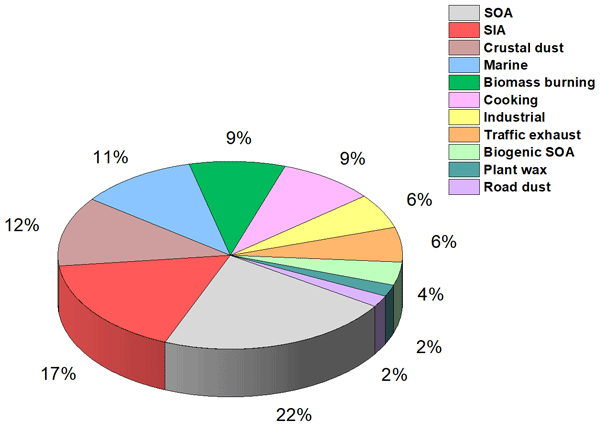
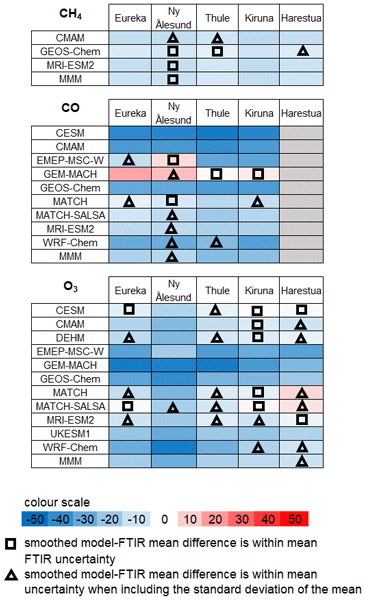
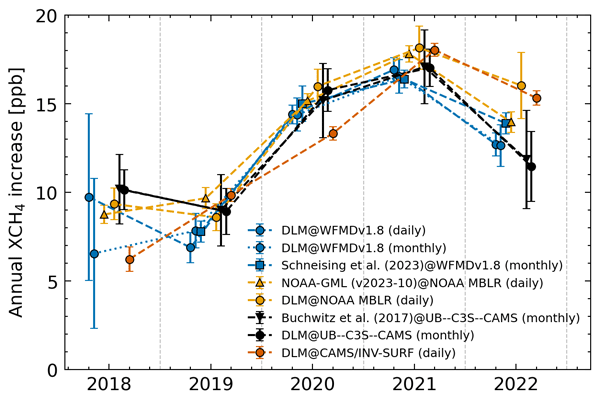
Youwen Sun, Hao Yin, Cheng Liu, Emmanuel Mahieu, Justus Notholt, Yao Té, Xiao Lu, Mathias Palm, Wei Wang, Changgong Shan, Qihou Hu, Min Qin, Yuan Tian, and Bo Zheng
Atmos. Chem. Phys., 21, 11759–11779, https://doi.org/10.5194/acp-21-11759-2021, https://doi.org/10.5194/acp-21-11759-2021, 2021
Short summary
Short summary
The variability, sources, and transport of ethane (C2H6) over eastern China from 2015 to 2020 were studied using ground-based Fourier transform infrared (FTIR) spectroscopy and GEOS-Chem simulations. C2H6 variability is driven by both meteorological and emission factors. The reduction in C2H6 in recent years over eastern China points to air quality improvement in China.
Stefan F. Schreier, Tim Bösch, Andreas Richter, Kezia Lange, Michael Revesz, Philipp Weihs, Mihalis Vrekoussis, and Christoph Lotteraner
Atmos. Meas. Tech., 14, 5299–5318, https://doi.org/10.5194/amt-14-5299-2021, https://doi.org/10.5194/amt-14-5299-2021, 2021
Short summary
Short summary
This paper reports on the evaluation of aerosol profiling products retrieved from ground-based MAX-DOAS instruments using the BOREAS algorithm. Aerosol extinction profiles, near-surface aerosol extinction, and aerosol optical depth are compared to measurements collected with ceilometer, sun photometer, and in situ instruments. We show that these MAX-DOAS aerosol profiling products provide useful information to study spatial and temporal variations above the urban area of Vienna.
Sara M. Defratyka, Jean-Daniel Paris, Camille Yver-Kwok, Daniel Loeb, James France, Jon Helmore, Nigel Yarrow, Valérie Gros, and Philippe Bousquet
Atmos. Meas. Tech., 14, 5049–5069, https://doi.org/10.5194/amt-14-5049-2021, https://doi.org/10.5194/amt-14-5049-2021, 2021
Short summary
Short summary
We consider the possibility of using the CRDS Picarro G2201-i instrument, originally designed for isotopic CH4 and CO2, for measurements of ethane : methane in near-source conditions. The work involved laboratory tests, a controlled release experiment and mobile measurements. We show the potential of determining ethane : methane with 50 ppb ethane uncertainty. The instrument can correctly estimate the ratio in CH4 enhancements of 1 ppm and more, as can be found at strongly emitting sites.
Dmitry V. Ionov, Maria V. Makarova, Frank Hase, Stefani C. Foka, Vladimir S. Kostsov, Carlos Alberti, Thomas Blumenstock, Thorsten Warneke, and Yana A. Virolainen
Atmos. Chem. Phys., 21, 10939–10963, https://doi.org/10.5194/acp-21-10939-2021, https://doi.org/10.5194/acp-21-10939-2021, 2021
Short summary
Short summary
Megacities are a significant source of emissions of various substances in the atmosphere, including carbon dioxide, which is the most important anthropogenic greenhouse gas. In 2019–2020, the Emission Monitoring Mobile Experiment was carried out in St Petersburg, which is the second-largest industrial city in Russia. The results of this experiment, coupled with numerical modelling, helped to estimate the amount of CO2 emitted by the city. This value was twice as high as predicted.
Jinghui Lian, François-Marie Bréon, Grégoire Broquet, Thomas Lauvaux, Bo Zheng, Michel Ramonet, Irène Xueref-Remy, Simone Kotthaus, Martial Haeffelin, and Philippe Ciais
Atmos. Chem. Phys., 21, 10707–10726, https://doi.org/10.5194/acp-21-10707-2021, https://doi.org/10.5194/acp-21-10707-2021, 2021
Short summary
Short summary
Currently there is growing interest in monitoring city-scale CO2 emissions based on atmospheric CO2 measurements, atmospheric transport modeling, and inversion technique. We analyze the various sources of uncertainty that impact the atmospheric CO2 modeling and that may compromise the potential of this method for the monitoring of CO2 emission over Paris. Results suggest selection criteria for the assimilation of CO2 measurements into the inversion system that aims at retrieving city emissions.
Ilya Stanevich, Dylan B. A. Jones, Kimberly Strong, Martin Keller, Daven K. Henze, Robert J. Parker, Hartmut Boesch, Debra Wunch, Justus Notholt, Christof Petri, Thorsten Warneke, Ralf Sussmann, Matthias Schneider, Frank Hase, Rigel Kivi, Nicholas M. Deutscher, Voltaire A. Velazco, Kaley A. Walker, and Feng Deng
Atmos. Chem. Phys., 21, 9545–9572, https://doi.org/10.5194/acp-21-9545-2021, https://doi.org/10.5194/acp-21-9545-2021, 2021
Short summary
Short summary
We explore the utility of a weak-constraint (WC) four-dimensional variational (4D-Var) data assimilation scheme for mitigating systematic errors in methane simulation in the GEOS-Chem model. We use data from the Greenhouse Gases Observing Satellite (GOSAT) and show that, compared to the traditional 4D-Var approach, the WC scheme improves the agreement between the model and independent observations. We find that the WC corrections to the model provide insight into the source of the errors.
Matthieu Dogniaux, Cyril Crevoisier, Raymond Armante, Virginie Capelle, Thibault Delahaye, Vincent Cassé, Martine De Mazière, Nicholas M. Deutscher, Dietrich G. Feist, Omaira E. Garcia, David W. T. Griffith, Frank Hase, Laura T. Iraci, Rigel Kivi, Isamu Morino, Justus Notholt, David F. Pollard, Coleen M. Roehl, Kei Shiomi, Kimberly Strong, Yao Té, Voltaire A. Velazco, and Thorsten Warneke
Atmos. Meas. Tech., 14, 4689–4706, https://doi.org/10.5194/amt-14-4689-2021, https://doi.org/10.5194/amt-14-4689-2021, 2021
Short summary
Short summary
We present the Adaptable 4A Inversion (5AI), an implementation of the optimal estimation (OE) algorithm, relying on the Automatized Atmospheric Absorption Atlas (4A/OP) radiative transfer model, that enables the retrieval of greenhouse gas atmospheric weighted columns from infrared measurements. It is tested on a sample of Orbiting Carbon Observatory-2 observations, and its results satisfactorily compare to several reference products, thus showing the reliability of 5AI OE implementation.
Youwen Sun, Hao Yin, Yuan Cheng, Qianggong Zhang, Bo Zheng, Justus Notholt, Xiao Lu, Cheng Liu, Yuan Tian, and Jianguo Liu
Atmos. Chem. Phys., 21, 9201–9222, https://doi.org/10.5194/acp-21-9201-2021, https://doi.org/10.5194/acp-21-9201-2021, 2021
Short summary
Short summary
We quantified the variability, source, and transport of urban CO over the Himalayas and Tibetan Plateau (HTP) by using measurement, model simulation, and the analysis of meteorological fields. Urban CO over the HTP is dominated by anthropogenic and biomass burning emissions from local, South Asia and East Asia, and oxidation sources. The decreasing trends in surface CO since 2015 in most cities over the HTP are attributed to the reduction in local and transported CO emissions in recent years.
Rima Baalbaki, Michael Pikridas, Tuija Jokinen, Tiia Laurila, Lubna Dada, Spyros Bezantakos, Lauri Ahonen, Kimmo Neitola, Anne Maisser, Elie Bimenyimana, Aliki Christodoulou, Florin Unga, Chrysanthos Savvides, Katrianne Lehtipalo, Juha Kangasluoma, George Biskos, Tuukka Petäjä, Veli-Matti Kerminen, Jean Sciare, and Markku Kulmala
Atmos. Chem. Phys., 21, 9223–9251, https://doi.org/10.5194/acp-21-9223-2021, https://doi.org/10.5194/acp-21-9223-2021, 2021
Short summary
Short summary
This study investigates new particle formation (NPF) in the less represented region of the Mediterranean basin using 1-year measurements of aerosol particles down to ~ 1 nm in diameter. We report a high frequency of NPF and give examples of interesting NPF features. We quantify the strength of NPF events by calculating formation rates and growth rates. We further unveil the atmospheric conditions and variables considered important for the intra-monthly and inter-monthly occurrence of NPF.
Astrid Müller, Hiroshi Tanimoto, Takafumi Sugita, Toshinobu Machida, Shin-ichiro Nakaoka, Prabir K. Patra, Joshua Laughner, and David Crisp
Atmos. Chem. Phys., 21, 8255–8271, https://doi.org/10.5194/acp-21-8255-2021, https://doi.org/10.5194/acp-21-8255-2021, 2021
Short summary
Short summary
Over oceans, high uncertainties in satellite CO2 retrievals exist due to limited reference data. We combine commercial ship and aircraft observations and, with the aid of model calculations, obtain column-averaged mixing ratios of CO2 (XCO2) data over the Pacific Ocean. This new dataset has great potential as a robust reference for XCO2 measured from space and can help to better understand changes in the carbon cycle in response to climate change using satellite observations.
Vincent Michoud, Elise Hallemans, Laura Chiappini, Eva Leoz-Garziandia, Aurélie Colomb, Sébastien Dusanter, Isabelle Fronval, François Gheusi, Jean-Luc Jaffrezo, Thierry Léonardis, Nadine Locoge, Nicolas Marchand, Stéphane Sauvage, Jean Sciare, and Jean-François Doussin
Atmos. Chem. Phys., 21, 8067–8088, https://doi.org/10.5194/acp-21-8067-2021, https://doi.org/10.5194/acp-21-8067-2021, 2021
Short summary
Short summary
A multiphasic molecular characterization of oxygenated compounds has been carried out during the ChArMEx field campaign using offline analysis. It leads to the identification of 97 different compounds in the gas and aerosol phases and reveals the important contribution of organic acids to organic aerosol. In addition, comparison between experimental and theoretical partitioning coefficients revealed in most cases a large underestimation by the theory reaching 1 to 7 orders of magnitude.
Stefan Noël, Maximilian Reuter, Michael Buchwitz, Jakob Borchardt, Michael Hilker, Heinrich Bovensmann, John P. Burrows, Antonio Di Noia, Hiroshi Suto, Yukio Yoshida, Matthias Buschmann, Nicholas M. Deutscher, Dietrich G. Feist, David W. T. Griffith, Frank Hase, Rigel Kivi, Isamu Morino, Justus Notholt, Hirofumi Ohyama, Christof Petri, James R. Podolske, David F. Pollard, Mahesh Kumar Sha, Kei Shiomi, Ralf Sussmann, Yao Té, Voltaire A. Velazco, and Thorsten Warneke
Atmos. Meas. Tech., 14, 3837–3869, https://doi.org/10.5194/amt-14-3837-2021, https://doi.org/10.5194/amt-14-3837-2021, 2021
Short summary
Short summary
We present the first GOSAT and GOSAT-2 XCO2 data derived with the FOCAL retrieval algorithm. Comparisons of the GOSAT-FOCAL product with other data reveal long-term agreement within about 1 ppm over 1 decade, differences in seasonal variations of about 0.5 ppm, and a mean regional bias to ground-based TCCON data of 0.56 ppm with a mean scatter of 1.89 ppm. GOSAT-2-FOCAL data are preliminary only, but first comparisons show that they compare well with the GOSAT-FOCAL results and TCCON.
Holger Winkler, Takayoshi Yamada, Yasuko Kasai, Uwe Berger, and Justus Notholt
Atmos. Chem. Phys., 21, 7579–7596, https://doi.org/10.5194/acp-21-7579-2021, https://doi.org/10.5194/acp-21-7579-2021, 2021
Short summary
Short summary
Sprites are electrical discharges above thunderstorms. We performed model simulations of the chemical processes in sprites to compare them with measurements of chemical perturbations above sprite-producing thunderstorms.
Andrea Cuesta-Mosquera, Griša Močnik, Luka Drinovec, Thomas Müller, Sascha Pfeifer, María Cruz Minguillón, Björn Briel, Paul Buckley, Vadimas Dudoitis, Javier Fernández-García, María Fernández-Amado, Joel Ferreira De Brito, Veronique Riffault, Harald Flentje, Eimear Heffernan, Nikolaos Kalivitis, Athina-Cerise Kalogridis, Hannes Keernik, Luminita Marmureanu, Krista Luoma, Angela Marinoni, Michael Pikridas, Gerhard Schauer, Norbert Serfozo, Henri Servomaa, Gloria Titos, Jesús Yus-Díez, Natalia Zioła, and Alfred Wiedensohler
Atmos. Meas. Tech., 14, 3195–3216, https://doi.org/10.5194/amt-14-3195-2021, https://doi.org/10.5194/amt-14-3195-2021, 2021
Short summary
Short summary
Measurements of black carbon must be conducted with instruments operating in quality-checked and assured conditions to generate reliable and comparable data. Here, 23 Aethalometers monitoring black carbon mass concentrations in European networks were characterized and intercompared. The influence of different aerosol sources, maintenance activities, and the filter material on the instrumental variabilities were investigated. Good agreement and in general low deviations were seen.
Sébastien Roche, Kimberly Strong, Debra Wunch, Joseph Mendonca, Colm Sweeney, Bianca Baier, Sébastien C. Biraud, Joshua L. Laughner, Geoffrey C. Toon, and Brian J. Connor
Atmos. Meas. Tech., 14, 3087–3118, https://doi.org/10.5194/amt-14-3087-2021, https://doi.org/10.5194/amt-14-3087-2021, 2021
Short summary
Short summary
We evaluate CO2 profile retrievals from ground-based near-infrared solar absorption spectra after implementing several improvements to the GFIT2 retrieval algorithm. Realistic errors in the a priori temperature profile (~ 2 °C in the lower troposphere) are found to be the leading source of differences between the retrieved and true CO2 profiles, differences that are larger than typical CO2 variability. A temperature retrieval or correction is critical to improve CO2 profile retrieval results.
Youwen Sun, Hao Yin, Cheng Liu, Lin Zhang, Yuan Cheng, Mathias Palm, Justus Notholt, Xiao Lu, Corinne Vigouroux, Bo Zheng, Wei Wang, Nicholas Jones, Changong Shan, Min Qin, Yuan Tian, Qihou Hu, Fanhao Meng, and Jianguo Liu
Atmos. Chem. Phys., 21, 6365–6387, https://doi.org/10.5194/acp-21-6365-2021, https://doi.org/10.5194/acp-21-6365-2021, 2021
Short summary
Short summary
This study mapped the drivers of HCHO variability from 2015 to 2019 over eastern China. Hydroxyl (OH) radical production rates from HCHO photolysis were evaluated. The relative contributions of emitted and photochemical sources to the observed HCHO abundance were analyzed. Contributions of various emission sources and geographical regions to the observed HCHO summertime enhancements were determined.
Hella van Asperen, João Rafael Alves-Oliveira, Thorsten Warneke, Bruce Forsberg, Alessandro Carioca de Araújo, and Justus Notholt
Biogeosciences, 18, 2609–2625, https://doi.org/10.5194/bg-18-2609-2021, https://doi.org/10.5194/bg-18-2609-2021, 2021
Short summary
Short summary
Termites are insects that are highly abundant in tropical ecosystems. It is known that termites emit CH4, an important greenhouse gas, but their absolute emission remains uncertain. In the Amazon rainforest, we measured CH4 emissions from termite nests and groups of termites. In addition, we tested a fast and non-destructive field method to estimate termite nest colony size. We found that termites play a significant role in an ecosystem's CH4 budget and probably emit more than currently assumed.
Alkuin Maximilian Koenig, Olivier Magand, Paolo Laj, Marcos Andrade, Isabel Moreno, Fernando Velarde, Grover Salvatierra, René Gutierrez, Luis Blacutt, Diego Aliaga, Thomas Reichler, Karine Sellegri, Olivier Laurent, Michel Ramonet, and Aurélien Dommergue
Atmos. Chem. Phys., 21, 3447–3472, https://doi.org/10.5194/acp-21-3447-2021, https://doi.org/10.5194/acp-21-3447-2021, 2021
Short summary
Short summary
The environmental cycling of atmospheric mercury, a harmful global contaminant, is still not sufficiently constrained, partly due to missing data in remote regions. Here, we address this issue by presenting 20 months of atmospheric mercury measurements, sampled in the Bolivian Andes. We observe a significant seasonal pattern, whose key features we explore. Moreover, we deduce ratios to constrain South American biomass burning mercury emissions and the mercury uptake by the Amazon rainforest.
Thomas Blumenstock, Frank Hase, Axel Keens, Denis Czurlok, Orfeo Colebatch, Omaira Garcia, David W. T. Griffith, Michel Grutter, James W. Hannigan, Pauli Heikkinen, Pascal Jeseck, Nicholas Jones, Rigel Kivi, Erik Lutsch, Maria Makarova, Hamud K. Imhasin, Johan Mellqvist, Isamu Morino, Tomoo Nagahama, Justus Notholt, Ivan Ortega, Mathias Palm, Uwe Raffalski, Markus Rettinger, John Robinson, Matthias Schneider, Christian Servais, Dan Smale, Wolfgang Stremme, Kimberly Strong, Ralf Sussmann, Yao Té, and Voltaire A. Velazco
Atmos. Meas. Tech., 14, 1239–1252, https://doi.org/10.5194/amt-14-1239-2021, https://doi.org/10.5194/amt-14-1239-2021, 2021
Short summary
Short summary
This study investigates the level of channeling (optical resonances) of each FTIR spectrometer within the Network for the Detection of Atmospheric Composition Change (NDACC). Since the air gap of the beam splitter is a significant source of channeling, we propose new beam splitters with an increased wedge of the air gap. This study shows the potential for reducing channeling in the FTIR spectrometers operated by the NDACC, thereby increasing the quality of recorded spectra across the network.
Maria V. Makarova, Carlos Alberti, Dmitry V. Ionov, Frank Hase, Stefani C. Foka, Thomas Blumenstock, Thorsten Warneke, Yana A. Virolainen, Vladimir S. Kostsov, Matthias Frey, Anatoly V. Poberovskii, Yuri M. Timofeyev, Nina N. Paramonova, Kristina A. Volkova, Nikita A. Zaitsev, Egor Y. Biryukov, Sergey I. Osipov, Boris K. Makarov, Alexander V. Polyakov, Viktor M. Ivakhov, Hamud Kh. Imhasin, and Eugene F. Mikhailov
Atmos. Meas. Tech., 14, 1047–1073, https://doi.org/10.5194/amt-14-1047-2021, https://doi.org/10.5194/amt-14-1047-2021, 2021
Short summary
Short summary
Fundamental understanding of the major processes driving climate change is a key problem which is to be solved, not only on a global but also on a regional scale. The Emission Monitoring Mobile Experiment (EMME) carried out in 2019 with two portable Bruker EM27/SUN spectrometers as core instruments provided new information on the emissions of greenhouse (CO2, CH4) and reactive (CO, NOx) gases from St. Petersburg (Russia), which is the largest northern megacity with a population of 5 million.
Cécile Debevec, Stéphane Sauvage, Valérie Gros, Thérèse Salameh, Jean Sciare, François Dulac, and Nadine Locoge
Atmos. Chem. Phys., 21, 1449–1484, https://doi.org/10.5194/acp-21-1449-2021, https://doi.org/10.5194/acp-21-1449-2021, 2021
Short summary
Short summary
This study provides a better characterization of the seasonal variations in VOC sources impacting the western Mediterranean region, based on a comprehensive chemical composition measured over 25 months at a representative receptor site (Ersa) and by determining factors controlling their temporal variations. Some insights into dominant drivers for VOC concentration variations in Europe are also provided, built on comparisons of Ersa observations with the concomitant ones of 17 European sites.
Shamil Maksyutov, Tomohiro Oda, Makoto Saito, Rajesh Janardanan, Dmitry Belikov, Johannes W. Kaiser, Ruslan Zhuravlev, Alexander Ganshin, Vinu K. Valsala, Arlyn Andrews, Lukasz Chmura, Edward Dlugokencky, László Haszpra, Ray L. Langenfelds, Toshinobu Machida, Takakiyo Nakazawa, Michel Ramonet, Colm Sweeney, and Douglas Worthy
Atmos. Chem. Phys., 21, 1245–1266, https://doi.org/10.5194/acp-21-1245-2021, https://doi.org/10.5194/acp-21-1245-2021, 2021
Short summary
Short summary
In order to improve the top-down estimation of the anthropogenic greenhouse gas emissions, a high-resolution inverse modelling technique was developed for applications to global transport modelling of carbon dioxide and other greenhouse gases. A coupled Eulerian–Lagrangian transport model and its adjoint are combined with surface fluxes at 0.1° resolution to provide high-resolution forward simulation and inverse modelling of surface fluxes accounting for signals from emission hot spots.
Alba Lorente, Tobias Borsdorff, Andre Butz, Otto Hasekamp, Joost aan de Brugh, Andreas Schneider, Lianghai Wu, Frank Hase, Rigel Kivi, Debra Wunch, David F. Pollard, Kei Shiomi, Nicholas M. Deutscher, Voltaire A. Velazco, Coleen M. Roehl, Paul O. Wennberg, Thorsten Warneke, and Jochen Landgraf
Atmos. Meas. Tech., 14, 665–684, https://doi.org/10.5194/amt-14-665-2021, https://doi.org/10.5194/amt-14-665-2021, 2021
Short summary
Short summary
TROPOMI aboard Sentinel-5P satellite provides methane (CH4) measurements with exceptional temporal and spatial resolution. The study describes a series of improvements developed to retrieve CH4 from TROPOMI. The updated CH4 product features (among others) a more accurate a posteriori correction derived independently of any reference data. The validation of the improved data product shows good agreement with ground-based and satellite measurements, which highlights the quality of the TROPOMI CH4.
Cited articles
Alberti, C., Hase, F., Frey, M., Dubravica, D., Blumenstock, T., Dehn, A., Castracane, P., Surawicz, G., Harig, R., Baier, B. C., Bès, C., Bi, J., Boesch, H., Butz, A., Cai, Z., Chen, J., Crowell, S. M., Deutscher, N. M., Ene, D., Franklin, J. E., García, O., Griffith, D., Grouiez, B., Grutter, M., Hamdouni, A., Houweling, S., Humpage, N., Jacobs, N., Jeong, S., Joly, L., Jones, N. B., Jouglet, D., Kivi, R., Kleinschek, R., Lopez, M., Medeiros, D. J., Morino, I., Mostafavipak, N., Müller, A., Ohyama, H., Palmer, P. I., Pathakoti, M., Pollard, D. F., Raffalski, U., Ramonet, M., Ramsay, R., Sha, M. K., Shiomi, K., Simpson, W., Stremme, W., Sun, Y., Tanimoto, H., Té, Y., Tsidu, G. M., Velazco, V. A., Vogel, F., Watanabe, M., Wei, C., Wunch, D., Yamasoe, M., Zhang, L., and Orphal, J.: Improved calibration procedures for the EM27/SUN spectrometers of the COllaborative Carbon Column Observing Network (COCCON), Atmos. Meas. Tech., 15, 2433–2463, https://doi.org/10.5194/amt-15-2433-2022, 2022.
Amiridis, V., Giannakaki, E., Balis, D. S., Gerasopoulos, E., Pytharoulis, I., Zanis, P., Kazadzis, S., Melas, D., and Zerefos, C.: Smoke injection heights from agricultural burning in Eastern Europe as seen by CALIPSO, Atmos. Chem. Phys., 10, 11567–11576, https://doi.org/10.5194/acp-10-11567-2010, 2010.
Baalbaki, R., Pikridas, M., Jokinen, T., Laurila, T., Dada, L., Bezantakos, S., Ahonen, L., Neitola, K., Maisser, A., Bimenyimana, E., Christodoulou, A., Unga, F., Savvides, C., Lehtipalo, K., Kangasluoma, J., Biskos, G., Petäjä, T., Kerminen, V.-M., Sciare, J., and Kulmala, M.: Towards understanding the characteristics of new particle formation in the Eastern Mediterranean, Atmos. Chem. Phys., 21, 9223–9251, https://doi.org/10.5194/acp-21-9223-2021, 2021.
Babenhauserheide, A., Hase, F., and Morino, I.: Net CO2 fossil fuel emissions of Tokyo estimated directly from measurements of the Tsukuba TCCON site and radiosondes, Atmos. Meas. Tech., 13, 2697–2710, https://doi.org/10.5194/amt-13-2697-2020, 2020.
Baier, B. C., Sweeney, C., and Chen, H.: Chapter 8 – The AirCore atmospheric sampling system, in: Field Measurements for Passive Environmental Remote Sensing, Elsevier, 139–156, https://doi.org/10.1016/B978-0-12-823953-7.00014-9, 2023.
Basha, G., Ratnam, M. V., and Kishore, P.: Asian summer monsoon anticyclone: trends and variability, Atmos. Chem. Phys., 20, 6789–6801, https://doi.org/10.5194/acp-20-6789-2020, 2020.
Bastos, A., O'Sullivan, M., Ciais, P., Makowski, D., Sitch, S., Friedlingstein, P., Chevallier, F., Rödenbeck, C., Pongratz, J., Luijkx, I. T., Patra, P. K., Peylin, P., Canadell, J. G., Lauerwald, R., Li, W., Smith, N. E., Peters, W., Goll, D. S., Jain, A. K., Kato, E., Lienert, S., Lombardozzi, D. L., Haverd, V., Nabel, J. E. M. S., Poulter, B., Tian, H., Walker, A. P., and Zaehle, S.: Sources of Uncertainty in Regional and Global Terrestrial CO2 Exchange Estimates, Global Biogeochem. Cy., 34, e2019GB006393, https://doi.org/10.1029/2019GB006393, 2020.
Bimenyimana, E., Pikridas, M., Oikonomou, K., Iakovides, M., Christodoulou, A., Sciare, J., and Mihalopoulos, N.: Fine aerosol sources at an urban background site in the Eastern Mediterranean (Nicosia; Cyprus): Insights from offline versus online source apportionment comparison for carbonaceous aerosols, Sci. Total Environ., 893, 164741, https://doi.org/10.1016/j.scitotenv.2023.164741, 2023.
Bimenyimana, E., Sciare, J., Oikonomou, K., Iakovides, M., Pikridas, M., Vasiliadou, E., Savvides, C., and Mihalopoulos, N.: Cross-validation of methods for quantifying the contribution of local (urban) and regional sources to PM2.5 pollution: Application in the Eastern Mediterranean (Cyprus), Atmos. Environ., 343, 120975, https://doi.org/10.1016/j.atmosenv.2024.120975, 2025.
Bourtsoukidis, E., Germain-Piaulenne, E., Gros, V., Quéhé, P.-Y., Pikridas, M., Byron, J., Williams, J., Gliddon, D., Mohamed, R., Ekaabi, R., Lelieveld, J., Sciare, J., Teixidó, O., and Paris, J.-D.: Attribution of Excess Methane Emissions Over Marine Environments of the Mediterranean and Arabian Peninsula, J. Geophys. Res.-Atmos., 129, e2024JD041621, https://doi.org/10.1029/2024JD041621, 2024.
Buschmann, M., Deutscher, N. M., Sherlock, V., Palm, M., Warneke, T., and Notholt, J.: Retrieval of xCO2 from ground-based mid-infrared (NDACC) solar absorption spectra and comparison to TCCON, Atmos. Meas. Tech., 9, 577–585, https://doi.org/10.5194/amt-9-577-2016, 2016.
Byrne, B., Baker, D. F., Basu, S., Bertolacci, M., Bowman, K. W., Carroll, D., Chatterjee, A., Chevallier, F., Ciais, P., Cressie, N., Crisp, D., Crowell, S., Deng, F., Deng, Z., Deutscher, N. M., Dubey, M. K., Feng, S., García, O. E., Griffith, D. W. T., Herkommer, B., Hu, L., Jacobson, A. R., Janardanan, R., Jeong, S., Johnson, M. S., Jones, D. B. A., Kivi, R., Liu, J., Liu, Z., Maksyutov, S., Miller, J. B., Miller, S. M., Morino, I., Notholt, J., Oda, T., O'Dell, C. W., Oh, Y.-S., Ohyama, H., Patra, P. K., Peiro, H., Petri, C., Philip, S., Pollard, D. F., Poulter, B., Remaud, M., Schuh, A., Sha, M. K., Shiomi, K., Strong, K., Sweeney, C., Té, Y., Tian, H., Velazco, V. A., Vrekoussis, M., Warneke, T., Worden, J. R., Wunch, D., Yao, Y., Yun, J., Zammit-Mangion, A., and Zeng, N.: National CO2 budgets (2015–2020) inferred from atmospheric CO2 observations in support of the global stocktake, Earth Syst. Sci. Data, 15, 963–1004, https://doi.org/10.5194/essd-15-963-2023, 2023.
Chiarella, R., Buschmann, M., Laughner, J., Morino, I., Notholt, J., Petri, C., Toon, G., Velazco, V. A., and Warneke, T.: A retrieval of xCO2 from ground-based mid-infrared NDACC solar absorption spectra and comparison to TCCON, Atmos. Meas. Tech., 16, 3987–4007, https://doi.org/10.5194/amt-16-3987-2023, 2023.
Christodoulou, A., Stavroulas, I., Vrekoussis, M., Desservettaz, M., Pikridas, M., Bimenyimana, E., Kushta, J., Ivančič, M., Rigler, M., Goloub, P., Oikonomou, K., Sarda-Estève, R., Savvides, C., Afif, C., Mihalopoulos, N., Sauvage, S., and Sciare, J.: Ambient carbonaceous aerosol levels in Cyprus and the role of pollution transport from the Middle East, Atmos. Chem. Phys., 23, 6431–6456, https://doi.org/10.5194/acp-23-6431-2023, 2023.
Ciais, P., Dolman, A. J., Bombelli, A., Duren, R., Peregon, A., Rayner, P. J., Miller, C., Gobron, N., Kinderman, G., Marland, G., Gruber, N., Chevallier, F., Andres, R. J., Balsamo, G., Bopp, L., Bréon, F.-M., Broquet, G., Dargaville, R., Battin, T. J., Borges, A., Bovensmann, H., Buchwitz, M., Butler, J., Canadell, J. G., Cook, R. B., DeFries, R., Engelen, R., Gurney, K. R., Heinze, C., Heimann, M., Held, A., Henry, M., Law, B., Luyssaert, S., Miller, J., Moriyama, T., Moulin, C., Myneni, R. B., Nussli, C., Obersteiner, M., Ojima, D., Pan, Y., Paris, J.-D., Piao, S. L., Poulter, B., Plummer, S., Quegan, S., Raymond, P., Reichstein, M., Rivier, L., Sabine, C., Schimel, D., Tarasova, O., Valentini, R., Wang, R., van der Werf, G., Wickland, D., Williams, M., and Zehner, C.: Current systematic carbon-cycle observations and the need for implementing a policy-relevant carbon observing system, Biogeosciences, 11, 3547–3602, https://doi.org/10.5194/bg-11-3547-2014, 2014.
Dada, L., Ylivinkka, I., Baalbaki, R., Li, C., Guo, Y., Yan, C., Yao, L., Sarnela, N., Jokinen, T., Daellenbach, K. R., Yin, R., Deng, C., Chu, B., Nieminen, T., Wang, Y., Lin, Z., Thakur, R. C., Kontkanen, J., Stolzenburg, D., Sipilä, M., Hussein, T., Paasonen, P., Bianchi, F., Salma, I., Weidinger, T., Pikridas, M., Sciare, J., Jiang, J., Liu, Y., Petäjä, T., Kerminen, V.-M., and Kulmala, M.: Sources and sinks driving sulfuric acid concentrations in contrasting environments: implications on proxy calculations, Atmos. Chem. Phys., 20, 11747–11766, https://doi.org/10.5194/acp-20-11747-2020, 2020.
De Mazière, M., Thompson, A. M., Kurylo, M. J., Wild, J. D., Bernhard, G., Blumenstock, T., Braathen, G. O., Hannigan, J. W., Lambert, J.-C., Leblanc, T., McGee, T. J., Nedoluha, G., Petropavlovskikh, I., Seckmeyer, G., Simon, P. C., Steinbrecht, W., and Strahan, S. E.: The Network for the Detection of Atmospheric Composition Change (NDACC): history, status and perspectives, Atmos. Chem. Phys., 18, 4935–4964, https://doi.org/10.5194/acp-18-4935-2018, 2018.
Deng, Z., Ciais, P., Tzompa-Sosa, Z. A., Saunois, M., Qiu, C., Tan, C., Sun, T., Ke, P., Cui, Y., Tanaka, K., Lin, X., Thompson, R. L., Tian, H., Yao, Y., Huang, Y., Lauerwald, R., Jain, A. K., Xu, X., Bastos, A., Sitch, S., Palmer, P. I., Lauvaux, T., d'Aspremont, A., Giron, C., Benoit, A., Poulter, B., Chang, J., Petrescu, A. M. R., Davis, S. J., Liu, Z., Grassi, G., Albergel, C., Tubiello, F. N., Perugini, L., Peters, W., and Chevallier, F.: Comparing national greenhouse gas budgets reported in UNFCCC inventories against atmospheric inversions, Earth Syst. Sci. Data, 14, 1639–1675, https://doi.org/10.5194/essd-14-1639-2022, 2022.
Deot, N., Kanawade, V. P., Papetta, A., Baalbaki, R., Pikridas, M., Marenco, F., Kulmala, M., Sciare, J., Lehtipalo, K., and Jokinen, T.: Effect of planetary boundary layer evolution on new particle formation events over Cyprus, Aerosol Research, 3, 139–154, https://doi.org/10.5194/ar-3-139-2025, 2025.
Deutscher, N. M., Griffith, D. W. T., Bryant, G. W., Wennberg, P. O., Toon, G. C., Washenfelder, R. A., Keppel-Aleks, G., Wunch, D., Yavin, Y., Allen, N. T., Blavier, J.-F., Jiménez, R., Daube, B. C., Bright, A. V., Matross, D. M., Wofsy, S. C., and Park, S.: Total column CO2 measurements at Darwin, Australia – site description and calibration against in situ aircraft profiles, Atmos. Meas. Tech., 3, 947–958, https://doi.org/10.5194/amt-3-947-2010, 2010.
Eke, M., Cingiroglu, F., and Kaynak, B.: Investigation of 2021 wildfire impacts on air quality in southwestern Turkey, Atmos. Environ., 325, 120445, https://doi.org/10.1016/j.atmosenv.2024.120445, 2024.
European Environment Agency (EEA): Annual European Union greenhouse gas inventory 1990–2022 and inventory document 2024, EEA/PUBL/2024/046, https://www.eea.europa.eu/en/analysis/publications/annual-european-union-greenhouse-gas-inventory (last access: 1 March 2025), 2024.
Fraser, A., Palmer, P. I., Feng, L., Boesch, H., Cogan, A., Parker, R., Dlugokencky, E. J., Fraser, P. J., Krummel, P. B., Langenfelds, R. L., O'Doherty, S., Prinn, R. G., Steele, L. P., van der Schoot, M., and Weiss, R. F.: Estimating regional methane surface fluxes: the relative importance of surface and GOSAT mole fraction measurements, Atmos. Chem. Phys., 13, 5697–5713, https://doi.org/10.5194/acp-13-5697-2013, 2013.
Frey, M., Sha, M. K., Hase, F., Kiel, M., Blumenstock, T., Harig, R., Surawicz, G., Deutscher, N. M., Shiomi, K., Franklin, J. E., Bösch, H., Chen, J., Grutter, M., Ohyama, H., Sun, Y., Butz, A., Mengistu Tsidu, G., Ene, D., Wunch, D., Cao, Z., Garcia, O., Ramonet, M., Vogel, F., and Orphal, J.: Building the COllaborative Carbon Column Observing Network (COCCON): long-term stability and ensemble performance of the EM27/SUN Fourier transform spectrometer, Atmos. Meas. Tech., 12, 1513–1530, https://doi.org/10.5194/amt-12-1513-2019, 2019.
García, O. E., Schneider, M., Sepúlveda, E., Hase, F., Blumenstock, T., Cuevas, E., Ramos, R., Gross, J., Barthlott, S., Röhling, A. N., Sanromá, E., González, Y., Gómez-Peláez, Á. J., Navarro-Comas, M., Puentedura, O., Yela, M., Redondas, A., Carreño, V., León-Luis, S. F., Reyes, E., García, R. D., Rivas, P. P., Romero-Campos, P. M., Torres, C., Prats, N., Hernández, M., and López, C.: Twenty years of ground-based NDACC FTIR spectrometry at Izaña Observatory – overview and long-term comparison to other techniques, Atmos. Chem. Phys., 21, 15519–15554, https://doi.org/10.5194/acp-21-15519-2021, 2021.
Geibel, M. C., Messerschmidt, J., Gerbig, C., Blumenstock, T., Chen, H., Hase, F., Kolle, O., Lavrič, J. V., Notholt, J., Palm, M., Rettinger, M., Schmidt, M., Sussmann, R., Warneke, T., and Feist, D. G.: Calibration of column-averaged CH4 over European TCCON FTS sites with airborne in-situ measurements, Atmos. Chem. Phys., 12, 8763–8775, https://doi.org/10.5194/acp-12-8763-2012, 2012.
Germain-Piaulenne, E., Paris, J.-D., Gros, V., Quéhé, P.-Y., Pikridas, M., Baisnée, D., Berchet, A., Sciare, J., and Bourtsoukidis, E.: Middle East oil and gas methane emissions signature captured at a remote site using light hydrocarbon tracers, Atmospheric Environment: X, 22, 100253, https://doi.org/10.1016/j.aeaoa.2024.100253, 2024.
Gialesakis, N., Kalivitis, N., Kouvarakis, G., Ramonet, M., Lopez, M., Kwok, C. Y., Narbaud, C., Daskalakis, N., Mermigkas, M., Mihalopoulos, N., and Kanakidou, M.: A twenty year record of greenhouse gases in the Eastern Mediterranean atmosphere, Sci. Total Environ., 864, 161003, https://doi.org/10.1016/j.scitotenv.2022.161003, 2023.
Global Carbon Atlas: https://globalcarbonatlas.org/, last access: 1 March 2025.
GMAO: Goddard Earth Observing System for Instrument Teams (GEOS-IT), https://gmao.gsfc.nasa.gov/gmao-products/geos-it/, last access: 1 March 2025.
Gurriaran, L., Tanaka, K., Bayram, I. S., Proestos, Y., Lelieveld, J., and Ciais, P.: Warming-induced increase in power demand and CO2 emissions in Qatar and the Middle East, J. Clean. Prod., 382, 135359, https://doi.org/10.1016/j.jclepro.2022.135359, 2023.
Hedelius, J. K., Feng, S., Roehl, C. M., Wunch, D., Hillyard, P. W., Podolske, J. R., Iraci, L. T., Patarasuk, R., Rao, P., O'Keeffe, D., Gurney, K. R., Lauvaux, T., and Wennberg, P. O.: Emissions and topographic effects on column CO2 ( ) variations, with a focus on the Southern California Megacity, J. Geophys. Res.-Atmos., 122, 7200–7215, https://doi.org/10.1002/2017JD026455, 2017.
Heiskanen, J., Brümmer, C., Buchmann, N., Calfapietra, C., Chen, H., Gielen, B., Gkritzalis, T., Hammer, S., Hartman, S., Herbst, M., Janssens, I. A., Jordan, A., Juurola, E., Karstens, U., Kasurinen, V., Kruijt, B., Lankreijer, H., Levin, I., Linderson, M.-L., Loustau, D., Merbold, L., Myhre, C. L., Papale, D., Pavelka, M., Pilegaard, K., Ramonet, M., Rebmann, C., Rinne, J., Rivier, L., Saltikoff, E., Sanders, R., Steinbacher, M., Steinhoff, T., Watson, A., Vermeulen, A. T., Vesala, T., Vítková, G., and Kutsch, W.: The Integrated Carbon Observation System in Europe, B. Am. Meteorol. Soc., 103, E855–E872, https://doi.org/10.1175/BAMS-D-19-0364.1, 2022.
Janssens-Maenhout, G., Crippa, M., Guizzardi, D., Muntean, M., Schaaf, E., Dentener, F., Bergamaschi, P., Pagliari, V., Olivier, J. G. J., Peters, J. A. H. W., van Aardenne, J. A., Monni, S., Doering, U., Petrescu, A. M. R., Solazzo, E., and Oreggioni, G. D.: EDGAR v4.3.2 Global Atlas of the three major greenhouse gas emissions for the period 1970–2012, Earth Syst. Sci. Data, 11, 959–1002, https://doi.org/10.5194/essd-11-959-2019, 2019.
Karion, A., Sweeney, C., Tans, P., and Newberger, T.: AirCore: An Innovative Atmospheric Sampling System, J. Atmos. Ocean. Tech., 27, 1839–1853, https://doi.org/10.1175/2010JTECHA1448.1, 2010.
Kaskaoutis, D. G., Petrinoli, K., Grivas, G., Kalkavouras, P., Tsagkaraki, M., Tavernaraki, K., Papoutsidaki, K., Stavroulas, I., Paraskevopoulou, D., Bougiatioti, A., Liakakou, E., Rashki, A., Sotiropoulou, R. E. P., Tagaris, E., Gerasopoulos, E., and Mihalopoulos, N.: Impact of peri-urban forest fires on air quality and aerosol optical and chemical properties: The case of the August 2021 wildfires in Athens, Greece, Sci. Total Environ., 907, 168028, https://doi.org/10.1016/j.scitotenv.2023.168028, 2024.
Keeling, R. F. and Graven, H. D.: Insights from Time Series of Atmospheric Carbon Dioxide and Related Tracers, Annu. Rev. Environ. Resour., 46, 85–110, https://doi.org/10.1146/annurev-environ-012220-125406, 2021.
Keppel-Aleks, G., Wennberg, P. O., and Schneider, T.: Sources of variations in total column carbon dioxide, Atmos. Chem. Phys., 11, 3581–3593, https://doi.org/10.5194/acp-11-3581-2011, 2011.
Keppel-Aleks, G., Wennberg, P. O., Washenfelder, R. A., Wunch, D., Schneider, T., Toon, G. C., Andres, R. J., Blavier, J.-F., Connor, B., Davis, K. J., Desai, A. R., Messerschmidt, J., Notholt, J., Roehl, C. M., Sherlock, V., Stephens, B. B., Vay, S. A., and Wofsy, S. C.: The imprint of surface fluxes and transport on variations in total column carbon dioxide, Biogeosciences, 9, 875–891, https://doi.org/10.5194/bg-9-875-2012, 2012.
Kezoudi, M., Keleshis, C., Antoniou, P., Biskos, G., Bronz, M., Constantinides, C., Desservettaz, M., Gao, R.-S., Girdwood, J., Harnetiaux, J., Kandler, K., Leonidou, A., Liu, Y., Lelieveld, J., Marenco, F., Mihalopoulos, N., Močnik, G., Neitola, K., Paris, J.-D., Pikridas, M., Sarda-Esteve, R., Stopford, C., Unga, F., Vrekoussis, M., and Sciare, J.: The Unmanned Systems Research Laboratory (USRL): A New Facility for UAV-Based Atmospheric Observations, Atmosphere, 12, 1042, https://doi.org/10.3390/atmos12081042, 2021a.
Kezoudi, M., Tesche, M., Smith, H., Tsekeri, A., Baars, H., Dollner, M., Estellés, V., Bühl, J., Weinzierl, B., Ulanowski, Z., Müller, D., and Amiridis, V.: Measurement report: Balloon-borne in situ profiling of Saharan dust over Cyprus with the UCASS optical particle counter, Atmos. Chem. Phys., 21, 6781–6797, https://doi.org/10.5194/acp-21-6781-2021, 2021b.
Kleanthous, S., Vrekoussis, M., Mihalopoulos, N., Kalabokas, P., and Lelieveld, J.: On the temporal and spatial variation of ozone in Cyprus, Sci. Total Environ., 476–477, 677–687, https://doi.org/10.1016/j.scitotenv.2013.12.101, 2014.
Korontzi, S., McCarty, J., Loboda, T., Kumar, S., and Justice, C.: Global distribution of agricultural fires in croplands from 3 years of Moderate Resolution Imaging Spectroradiometer (MODIS) data, Global Biogeochem. Cy., 20, GB2021, https://doi.org/10.1029/2005GB002529, 2006.
Laj, P., Lund Myhre, C., Riffault, V., Amiridis, V., Fuchs, H., Eleftheriadis, K., Petäjä, T., Salameh, T., Kivekäs, N., Juurola, E., Saponaro, G., Philippin, S., Cornacchia, C., Alados Arboledas, L., Baars, H., Claude, A., De Mazière, M., Dils, B., Dufresne, M., Evangeliou, N., Favez, O., Fiebig, M., Haeffelin, M., Herrmann, H., Höhler, K., Illmann, N., Kreuter, A., Ludewig, E., Marinou, E., Möhler, O., Mona, L., Eder Murberg, L., Nicolae, D., Novelli, A., O'Connor, E., Ohneiser, K., Petracca Altieri, R. M., Picquet-Varrault, B., Van Pinxteren, D., Pospichal, B., Putaud, J.-P., Reimann, S., Siomos, N., Stachlewska, I., Tillmann, R., Voudouri, K. A., Wandinger, U., Wiedensohler, A., Apituley, A., Comerón, A., Gysel-Beer, M., Mihalopoulos, N., Nikolova, N., Pietruczuk, A., Sauvage, S., Sciare, J., Skov, H., Svendby, T., Swietlicki, E., Tonev, D., Vaughan, G., Zdimal, V., Baltensperger, U., Doussin, J.-F., Kulmala, M., Pappalardo, G., Sorvari Sundet, S., and Vana, M.: Aerosol, Clouds and Trace Gases Research Infrastructure (ACTRIS): The European Research Infrastructure Supporting Atmospheric Science, B. Am. Meteorol. Soc., 105, E1098–E1136, https://doi.org/10.1175/BAMS-D-23-0064.1, 2024.
Lan, X., Mund, J.W., Crotwell, A.M., Thoning, K. W., Moglia, E., Madronich, M., Baugh, K., Petron, G., Crotwell, M.J., Neff, D., Wolter, S., Mefford, T., and DeVogel, S.: Atmospheric Carbon Dioxide Dry Air Mole Fractions from the NOAA GML Carbon Cycle Cooperative Global Air Sampling Network, 1968-2023, Version: 2024-07-30, NOAA GML, https://doi.org/10.15138/wkgj-f215, 2024a.
Lan, X., Mund, J.W., Crotwell, A.M., Thoning, K. W., Moglia, E., Madronich, M., Baugh, K., Petron, G., Crotwell, M.J., Neff, D., Wolter, S., Mefford, T., and DeVogel, S.: Atmospheric Methane Dry Air Mole Fractions from the NOAA GML Carbon Cycle Cooperative Global Air Sampling Network, 1983-2023, Version: 2024-07-30, NOAA GML, https://doi.org/10.15138/VNCZ-M766, 2024b.
Lan, X., Mund, J.W., Crotwell, A.M., Thoning, K. W., Moglia, E., Madronich, M., Baugh, K., Petron, G., Crotwell, M.J., Neff, D., Wolter, S., Mefford, T., and DeVogel, S.: Atmospheric Nitrous Oxide Dry Air Mole Fractions from the NOAA GML Carbon Cycle Cooperative Global Air Sampling Network, 1997–2023, Version: 2024-07-30, NOAA GML, https://doi.org/10.15138/53g1-x417, 2024c.
Laughner, J. L., Roche, S., Kiel, M., Toon, G. C., Wunch, D., Baier, B. C., Biraud, S., Chen, H., Kivi, R., Laemmel, T., McKain, K., Quéhé, P.-Y., Rousogenous, C., Stephens, B. B., Walker, K., and Wennberg, P. O.: A new algorithm to generate a priori trace gas profiles for the GGG2020 retrieval algorithm, Atmos. Meas. Tech., 16, 1121–1146, https://doi.org/10.5194/amt-16-1121-2023, 2023.
Laughner, J. L., Toon, G. C., Mendonca, J., Petri, C., Roche, S., Wunch, D., Blavier, J.-F., Griffith, D. W. T., Heikkinen, P., Keeling, R. F., Kiel, M., Kivi, R., Roehl, C. M., Stephens, B. B., Baier, B. C., Chen, H., Choi, Y., Deutscher, N. M., DiGangi, J. P., Gross, J., Herkommer, B., Jeseck, P., Laemmel, T., Lan, X., McGee, E., McKain, K., Miller, J., Morino, I., Notholt, J., Ohyama, H., Pollard, D. F., Rettinger, M., Riris, H., Rousogenous, C., Sha, M. K., Shiomi, K., Strong, K., Sussmann, R., Té, Y., Velazco, V. A., Wofsy, S. C., Zhou, M., and Wennberg, P. O.: The Total Carbon Column Observing Network's GGG2020 data version, Earth Syst. Sci. Data, 16, 2197–2260, https://doi.org/10.5194/essd-16-2197-2024, 2024.
Lawrence, M. G. and Lelieveld, J.: Atmospheric pollutant outflow from southern Asia: a review, Atmos. Chem. Phys., 10, 11017–11096, https://doi.org/10.5194/acp-10-11017-2010, 2010.
Lelieveld, J., Crutzen, P. J., Ramanathan, V., Andreae, M. O., Brenninkmeijer, C. A. M., Campos, T., Cass, G. R., Dickerson, R. R., Fischer, H., de Gouw, J. A., Hansel, A., Jefferson, A., Kley, D., Lawrence, M. G., Lobert, J. M., Mayol-Bracero, O. L., Mitra, A. P., Novakov, T., Oltmans, S. J., Prather, K. A., Reiner, T., Rodhe, H., Scheeren, H. A., Sikka, D., and Williams, J.: The Indian Ocean Experiment: Widespread Air Pollution from South and Southeast Asia, Science, 291, 1031–1036, https://doi.org/10.1126/science.1057103, 2001.
Lelieveld, J., Berresheim, H., Borrmann, S., Crutzen, P. J., Dentener, F. J., Fischer, H., Feichter, J., Flatau, P. J., Heland, J., Holzinger, R., Korrmann, R., Lawrence, M. G., Levin, Z., Markowicz, K. M., Mihalopoulos, N., Minikin, A., Ramanathan, V., De Reus, M., Roelofs, G. J., Scheeren, H. A., Sciare, J., Schlager, H., Schultz, M., Siegmund, P., Steil, B., Stephanou, E. G., Stier, P., Traub, M., Warneke, C., Williams, J., and Ziereis, H.: Global Air Pollution Crossroads over the Mediterranean, Science, 298, 794–799, https://doi.org/10.1126/science.1075457, 2002.
Lelieveld, J., Bourtsoukidis, E., Brühl, C., Fischer, H., Fuchs, H., Harder, H., Hofzumahaus, A., Holland, F., Marno, D., Neumaier, M., Pozzer, A., Schlager, H., Williams, J., Zahn, A., and Ziereis, H.: The South Asian monsoon–pollution pump and purifier, Science, 361, 270–273, https://doi.org/10.1126/science.aar2501, 2018.
Lucchesi, R.: File Specification for GEOS-5 FP-IT (forward processing for instrument teams), Tech. rep., NASA Goddard Space Flight Center, Greenbelt, MD, USA, GMAO Office Note No. 2 (Version 1.4), 60 pp., http://gmao.gsfc.nasa.gov/pubs/office_notes (last access: 1 March 2025), 2015.
Masoom, A., Fountoulakis, I., Kazadzis, S., Raptis, I.-P., Kampouri, A., Psiloglou, B. E., Kouklaki, D., Papachristopoulou, K., Marinou, E., Solomos, S., Gialitaki, A., Founda, D., Salamalikis, V., Kaskaoutis, D., Kouremeti, N., Mihalopoulos, N., Amiridis, V., Kazantzidis, A., Papayannis, A., Zerefos, C. S., and Eleftheratos, K.: Investigation of the effects of the Greek extreme wildfires of August 2021 on air quality and spectral solar irradiance, Atmos. Chem. Phys., 23, 8487–8514, https://doi.org/10.5194/acp-23-8487-2023, 2023.
Massman, W. J.: A review of the molecular diffusivities of H2O, CO2, CH4, CO, O3, SO2, NH3, N2O, NO, and NO2 in air, O2 and N2 near STP, Atmos. Environ., 32, 1111–1127, https://doi.org/10.1016/S1352-2310(97)00391-9, 1998.
Membrive, O., Crevoisier, C., Sweeney, C., Danis, F., Hertzog, A., Engel, A., Bönisch, H., and Picon, L.: AirCore-HR: a high-resolution column sampling to enhance the vertical description of CH4 and CO2, Atmos. Meas. Tech., 10, 2163–2181, https://doi.org/10.5194/amt-10-2163-2017, 2017.
Mendonca, J., Strong, K., Wunch, D., Toon, G. C., Long, D. A., Hodges, J. T., Sironneau, V. T., and Franklin, J. E.: Using a speed-dependent Voigt line shape to retrieve O2 from Total Carbon Column Observing Network solar spectra to improve measurements of XCO2, Atmos. Meas. Tech., 12, 35–50, https://doi.org/10.5194/amt-12-35-2019, 2019.
Messerschmidt, J., Geibel, M. C., Blumenstock, T., Chen, H., Deutscher, N. M., Engel, A., Feist, D. G., Gerbig, C., Gisi, M., Hase, F., Katrynski, K., Kolle, O., Lavrič, J. V., Notholt, J., Palm, M., Ramonet, M., Rettinger, M., Schmidt, M., Sussmann, R., Toon, G. C., Truong, F., Warneke, T., Wennberg, P. O., Wunch, D., and Xueref-Remy, I.: Calibration of TCCON column-averaged CO2: the first aircraft campaign over European TCCON sites, Atmos. Chem. Phys., 11, 10765–10777, https://doi.org/10.5194/acp-11-10765-2011, 2011.
Messerschmidt, J., Chen, H., Deutscher, N. M., Gerbig, C., Grupe, P., Katrynski, K., Koch, F.-T., Lavrič, J. V., Notholt, J., Rödenbeck, C., Ruhe, W., Warneke, T., and Weinzierl, C.: Automated ground-based remote sensing measurements of greenhouse gases at the Białystok site in comparison with collocated in situ measurements and model data, Atmos. Chem. Phys., 12, 6741–6755, https://doi.org/10.5194/acp-12-6741-2012, 2012.
Meteoblue: Simulated historical climate & weather data for Nicosia, https://www.meteoblue.com/en/weather/historyclimate/climatemodelled/nicosia_cyprus_146268, last access 1 March 2025.
Michaelides, S. C., Tymvios, F. S., and Michaelidou, T.: Spatial and temporal characteristics of the annual rainfall frequency distribution in Cyprus, Atmos. Res., 94, 606–615, https://doi.org/10.1016/j.atmosres.2009.04.008, 2009.
NOAA GML: NOAA Calibration Scales for Various Trace Gases, Scales for WMO GAW CCL , https://gml.noaa.gov/ccl/scales.html, last access: 1 March 2025.
Ntoumos, A., Hadjinicolaou, P., Zittis, G., and Lelieveld, J.: Updated Assessment of Temperature Extremes over the Middle East–North Africa (MENA) Region from Observational and CMIP5 Data, Atmosphere, 11, 813, https://doi.org/10.3390/atmos11080813, 2020.
OPEC: Annual Statistical Bulletin (ASB): https://publications.opec.org/asb (last access: 1 March 2025), 2025.
Pan, L. L., Honomichl, S. B., Kinnison, D. E., Abalos, M., Randel, W. J., Bergman, J. W., and Bian, J.: Transport of chemical tracers from the boundary layer to stratosphere associated with the dynamics of the Asian summer monsoon, J. Geophys. Res.-Atmos., 121, https://doi.org/10.1002/2016JD025616, 2016.
Papetta, A., Marenco, F., Kezoudi, M., Mamouri, R.-E., Nisantzi, A., Baars, H., Popovici, I. E., Goloub, P., Victori, S., and Sciare, J.: Lidar depolarization characterization using a reference system, Atmos. Meas. Tech., 17, 1721–1738, https://doi.org/10.5194/amt-17-1721-2024, 2024.
Paris, J.-D., Riandet, A., Bourtsoukidis, E., Delmotte, M., Berchet, A., Williams, J., Ernle, L., Tadic, I., Harder, H., and Lelieveld, J.: Shipborne measurements of methane and carbon dioxide in the Middle East and Mediterranean areas and the contribution from oil and gas emissions, Atmos. Chem. Phys., 21, 12443–12462, https://doi.org/10.5194/acp-21-12443-2021, 2021.
Park, M., Randel, W. J., Gettelman, A., Massie, S. T., and Jiang, J. H.: Transport above the Asian summer monsoon anticyclone inferred from Aura Microwave Limb Sounder tracers, J. Geophys. Res.-Atmos., 112, 2006JD008294, https://doi.org/10.1029/2006JD008294, 2007.
Pashiardis, S., Kalogirou, S. A., and Pelengaris, A.: Statistical analysis for the characterization of solar energy utilization and inter-comparison of solar radiation at two sites in Cyprus, Appl. Energ., 190, 1138–1158, https://doi.org/10.1016/j.apenergy.2017.01.018, 2017.
Pashiardis, S., Pelengaris, A., and Kalogirou, S. A.: Geographical Distribution of Global Radiation and Sunshine Duration over the Island of Cyprus, Appl. Sci., 13, 5422, https://doi.org/10.3390/app13095422, 2023.
Petri, C., Vrekoussis, M., Rousogenous, C., Warneke, T., Sciare, J., and Notholt, J.: TCCON data from Nicosia (CY), Release GGG2020.R1, Version R1, CaltechDATA [data set], https://doi.org/10.14291/tccon.ggg2020.nicosia01.R1, 2024.
Petron, G., Crotwell, A. M., Madronich, M., Moglia, E., Baugh, K. E., Kitzis, D., Mefford, T., DeVogel, S., Neff, D., Lan, X., Crotwell, M. J., Thoning, K., Wolter, S., and Mund, J. W.: Atmospheric Carbon Monoxide Dry Air Mole Fractions from the NOAA GML Carbon Cycle Cooperative Global Air Sampling Network, 1988-2023, Version: 2024-07-30, NOAA GML, https://doi.org/10.15138/33bv-s284, 2024.
Pikridas, M., Vrekoussis, M., Sciare, J., Kleanthous, S., Vasiliadou, E., Kizas, C., Savvides, C., and Mihalopoulos, N.: Spatial and temporal (short and long-term) variability of submicron, fine and sub-10 µm particulate matter (PM1, PM2.5, PM10) in Cyprus, Atmos. Environ., 191, 79–93, https://doi.org/10.1016/j.atmosenv.2018.07.048, 2018.
Quéhé, P.-Y., Ramonet, M., Paris, J.-D., Hazan, L., Pikridas, M., and Sciare, J.: Two years of CO2 CO and CH4 from The Cyprus Institute at Nicosia, Cyprus, Version 1, Zenodo [data set], https://doi.org/10.5281/zenodo.7788482, 2023.
Quehe, P.-Y., Rousogenous, C., Laemmel, T., Ramonet, M., and Sciare, J.: Greenhouse gases (GHG) profiling over Cyprus with Aircore, Zenodo [data set], https://doi.org/10.5281/zenodo.13132338, 2024.
Randerson, J. T., Thompson, M. V., Conway, T. J., Fung, I. Y., and Field, C. B.: The contribution of terrestrial sources and sinks to trends in the seasonal cycle of atmospheric carbon dioxide, Global Biogeochem. Cy., 11, 535–560, https://doi.org/10.1029/97GB02268, 1997.
Rodgers, C. D. and Connor, B. J.: Intercomparison of remote sounding instruments, J. Geophys. Res.-Atmos., 108, 4116, https://doi.org/10.1029/2002JD002299, 2003.
Rousogenous, C.: Supplementary material for TCCON Nicosia site description manuscript, Zenodo [code], https://doi.org/10.5281/zenodo.15085719, 2025.
Santee, M. L., Manney, G. L., Livesey, N. J., Schwartz, M. J., Neu, J. L., and Read, W. G.: A comprehensive overview of the climatological composition of the Asian summer monsoon anticyclone based on 10 years of Aura Microwave Limb Sounder measurements, J. Geophys. Res.-Atmos., 122, 5491–5514, https://doi.org/10.1002/2016JD026408, 2017.
Scheeren, H. A., Lelieveld, J., Roelofs, G. J., Williams, J., Fischer, H., de Reus, M., de Gouw, J. A., Warneke, C., Holzinger, R., Schlager, H., Klüpfel, T., Bolder, M., van der Veen, C., and Lawrence, M.: The impact of monsoon outflow from India and Southeast Asia in the upper troposphere over the eastern Mediterranean, Atmos. Chem. Phys., 3, 1589–1608, https://doi.org/10.5194/acp-3-1589-2003, 2003.
Schimel, D., Pavlick, R., Fisher, J. B., Asner, G. P., Saatchi, S., Townsend, P., Miller, C., Frankenberg, C., Hibbard, K., and Cox, P.: Observing terrestrial ecosystems and the carbon cycle from space, Glob. Change Biol., 21, 1762–1776, https://doi.org/10.1111/gcb.12822, 2015.
Schimel, D. S.: Terrestrial ecosystems and the carbon cycle, Glob. Change Biol., 1, 77–91, https://doi.org/10.1111/j.1365-2486.1995.tb00008.x, 1995.
Sciare, J., Oikonomou, K., Favez, O., Liakakou, E., Markaki, Z., Cachier, H., and Mihalopoulos, N.: Long-term measurements of carbonaceous aerosols in the Eastern Mediterranean: evidence of long-range transport of biomass burning, Atmos. Chem. Phys., 8, 5551–5563, https://doi.org/10.5194/acp-8-5551-2008, 2008.
Sha, M. K., Langerock, B., Blavier, J.-F. L., Blumenstock, T., Borsdorff, T., Buschmann, M., Dehn, A., De Mazière, M., Deutscher, N. M., Feist, D. G., García, O. E., Griffith, D. W. T., Grutter, M., Hannigan, J. W., Hase, F., Heikkinen, P., Hermans, C., Iraci, L. T., Jeseck, P., Jones, N., Kivi, R., Kumps, N., Landgraf, J., Lorente, A., Mahieu, E., Makarova, M. V., Mellqvist, J., Metzger, J.-M., Morino, I., Nagahama, T., Notholt, J., Ohyama, H., Ortega, I., Palm, M., Petri, C., Pollard, D. F., Rettinger, M., Robinson, J., Roche, S., Roehl, C. M., Röhling, A. N., Rousogenous, C., Schneider, M., Shiomi, K., Smale, D., Stremme, W., Strong, K., Sussmann, R., Té, Y., Uchino, O., Velazco, V. A., Vigouroux, C., Vrekoussis, M., Wang, P., Warneke, T., Wizenberg, T., Wunch, D., Yamanouchi, S., Yang, Y., and Zhou, M.: Validation of methane and carbon monoxide from Sentinel-5 Precursor using TCCON and NDACC-IRWG stations, Atmos. Meas. Tech., 14, 6249–6304, https://doi.org/10.5194/amt-14-6249-2021, 2021.
Stohl, A., Berg, T., Burkhart, J. F., Fjǽraa, A. M., Forster, C., Herber, A., Hov, Ø., Lunder, C., McMillan, W. W., Oltmans, S., Shiobara, M., Simpson, D., Solberg, S., Stebel, K., Ström, J., Tørseth, K., Treffeisen, R., Virkkunen, K., and Yttri, K. E.: Arctic smoke – record high air pollution levels in the European Arctic due to agricultural fires in Eastern Europe in spring 2006, Atmos. Chem. Phys., 7, 511–534, https://doi.org/10.5194/acp-7-511-2007, 2007.
TCCON: Data, https://tccondata.org/, last access: 1 March 2025.
TCCON Wiki: GGG2020 Auxiliary Data, https://tccon-wiki.caltech.edu/Main/AuxiliaryDataGGG2020, last access 1 March 2025.
The Cyprus Institute: Cyprus Atmospheric Observatory (CAO), https://cao.cyi.ac.cy/, last access 1 March 2025a.
The Cyprus Institute: Unmanned Systems Research Laboratory (USRL), https://usrl.cyi.ac.cy/, last access: 1 March 2025b.
Tyrlis, E., Lelieveld, J., and Steil, B.: The summer circulation over the eastern Mediterranean and the Middle East: influence of the South Asian monsoon, Clim. Dynam., 40, 1103–1123, https://doi.org/10.1007/s00382-012-1528-4, 2013.
Vigouroux, C., Blumenstock, T., Coffey, M., Errera, Q., García, O., Jones, N. B., Hannigan, J. W., Hase, F., Liley, B., Mahieu, E., Mellqvist, J., Notholt, J., Palm, M., Persson, G., Schneider, M., Servais, C., Smale, D., Thölix, L., and De Mazière, M.: Trends of ozone total columns and vertical distribution from FTIR observations at eight NDACC stations around the globe, Atmos. Chem. Phys., 15, 2915–2933, https://doi.org/10.5194/acp-15-2915-2015, 2015.
Vrekoussis, M., Pikridas, M., Rousogenous, C., Christodoulou, A., Desservettaz, M., Sciare, J., Richter, A., Bougoudis, I., Savvides, C., and Papadopoulos, C.: Local and regional air pollution characteristics in Cyprus: A long-term trace gases observations analysis, Sci. Total Environ., 845, 157315, https://doi.org/10.1016/j.scitotenv.2022.157315, 2022.
Washenfelder, R. A., Wennberg, P. O., and Toon, G. C.: Tropospheric methane retrieved from ground-based near-IR solar absorption spectra, Geophys. Res. Lett., 30, 2226, https://doi.org/10.1029/2003GL017969, 2003.
World Population Review: Cyprus, https://worldpopulationreview.com/countries/cyprus, last access: 1 March 2025.
Wunch, D., Toon, G. C., Wennberg, P. O., Wofsy, S. C., Stephens, B. B., Fischer, M. L., Uchino, O., Abshire, J. B., Bernath, P., Biraud, S. C., Blavier, J.-F. L., Boone, C., Bowman, K. P., Browell, E. V., Campos, T., Connor, B. J., Daube, B. C., Deutscher, N. M., Diao, M., Elkins, J. W., Gerbig, C., Gottlieb, E., Griffith, D. W. T., Hurst, D. F., Jiménez, R., Keppel-Aleks, G., Kort, E. A., Macatangay, R., Machida, T., Matsueda, H., Moore, F., Morino, I., Park, S., Robinson, J., Roehl, C. M., Sawa, Y., Sherlock, V., Sweeney, C., Tanaka, T., and Zondlo, M. A.: Calibration of the Total Carbon Column Observing Network using aircraft profile data, Atmos. Meas. Tech., 3, 1351–1362, https://doi.org/10.5194/amt-3-1351-2010, 2010.
Wunch, D., Toon, G. C., Blavier, J.-F. L., Washenfelder, R. A., Notholt, J., Connor, B. J., Griffith, D. W. T., Sherlock, V., and Wennberg, P. O.: The Total Carbon Column Observing Network, Philos. T. Roy. Soc. A, 369, 2087–2112, https://doi.org/10.1098/rsta.2010.0240, 2011.
Yadav, R. K.: Relationship between Azores High and Indian summer monsoon, npj Climate and Atmospheric Science, 4, 26, https://doi.org/10.1038/s41612-021-00180-z, 2021.
Yamanouchi, S., Conway, S., Strong, K., Colebatch, O., Lutsch, E., Roche, S., Taylor, J., Whaley, C. H., and Wiacek, A.: Network for the Detection of Atmospheric Composition Change (NDACC) Fourier transform infrared (FTIR) trace gas measurements at the University of Toronto Atmospheric Observatory from 2002 to 2020, Earth Syst. Sci. Data, 15, 3387–3418, https://doi.org/10.5194/essd-15-3387-2023, 2023.
Yihui, D. and Chan, J. C. L.: The East Asian summer monsoon: an overview, Meteorol. Atmos. Phys., 89, 117–142, https://doi.org/10.1007/s00703-005-0125-z, 2005.
Yukhymchuk, Y., Milinevsky, G., Syniavskyi, I., Popovici, I., Unga, F., Sciare, J., Marenco, F., Pikridas, M., and Goloub, P.: Atmospheric Aerosol Outbreak over Nicosia, Cyprus, in April 2019: Case Study, Atmosphere, 13, 1997, https://doi.org/10.3390/atmos13121997, 2022.
Zhou, M., Langerock, B., Wells, K. C., Millet, D. B., Vigouroux, C., Sha, M. K., Hermans, C., Metzger, J.-M., Kivi, R., Heikkinen, P., Smale, D., Pollard, D. F., Jones, N., Deutscher, N. M., Blumenstock, T., Schneider, M., Palm, M., Notholt, J., Hannigan, J. W., and De Mazière, M.: An intercomparison of total column-averaged nitrous oxide between ground-based FTIR TCCON and NDACC measurements at seven sites and comparisons with the GEOS-Chem model, Atmos. Meas. Tech., 12, 1393–1408, https://doi.org/10.5194/amt-12-1393-2019, 2019a.
Zhou, M., Langerock, B., Sha, M. K., Kumps, N., Hermans, C., Petri, C., Warneke, T., Chen, H., Metzger, J.-M., Kivi, R., Heikkinen, P., Ramonet, M., and De Mazière, M.: Retrieval of atmospheric CH4 vertical information from ground-based FTS near-infrared spectra, Atmos. Meas. Tech., 12, 6125–6141, https://doi.org/10.5194/amt-12-6125-2019, 2019b.
Zittis, G., Almazroui, M., Alpert, P., Ciais, P., Cramer, W., Dahdal, Y., Fnais, M., Francis, D., Hadjinicolaou, P., Howari, F., Jrrar, A., Kaskaoutis, D. G., Kulmala, M., Lazoglou, G., Mihalopoulos, N., Lin, X., Rudich, Y., Sciare, J., Stenchikov, G., Xoplaki, E., and Lelieveld, J.: Climate Change and Weather Extremes in the Eastern Mediterranean and Middle East, Rev. Geophys., 60, e2021RG000762, https://doi.org/10.1029/2021RG000762, 2022.
Short summary
The Eastern Mediterranean and Middle East is a greenhouse gas emission hotspot but lacks atmospheric monitoring. Our study introduces the first Total Carbon Column Observing Network site in this region, in Cyprus, providing high-precision columnar measurement of key greenhouse gases. This new dataset enhances global climate monitoring efforts, supports the validation of satellites, will help assess regional emission trends, filling a critical observational gap in this climate-sensitive region.
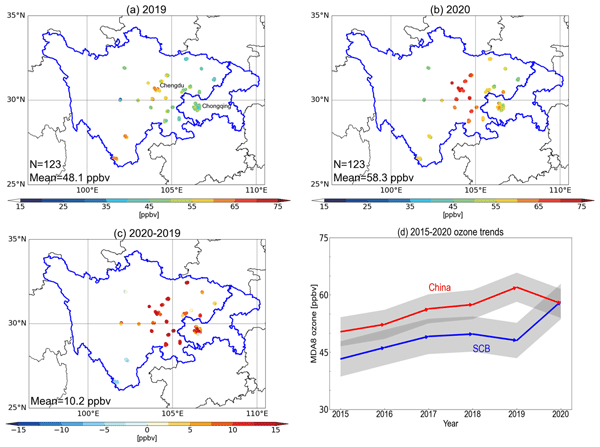
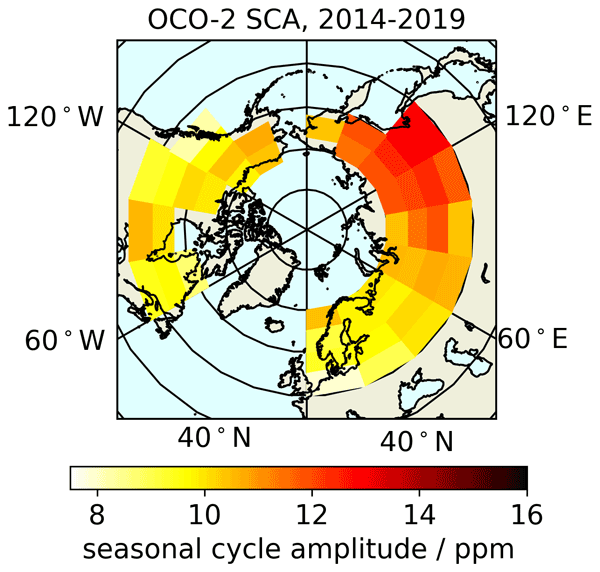
The Eastern Mediterranean and Middle East is a greenhouse gas emission hotspot but lacks...