
Articles | Volume 16, issue 19
https://doi.org/10.5194/amt-16-4319-2023
© Author(s) 2023. This work is distributed under
the Creative Commons Attribution 4.0 License.
the Creative Commons Attribution 4.0 License.
https://doi.org/10.5194/amt-16-4319-2023
© Author(s) 2023. This work is distributed under
the Creative Commons Attribution 4.0 License.
the Creative Commons Attribution 4.0 License.
Research article
| 
04 Oct 2023
Research article |
| 04 Oct 2023
| 04 Oct 2023
A novel inlet for enriching concentrations of reactive organic gases in low sampling flows
Namrata Shanmukh Panji
CORRESPONDING AUTHOR
Department of Civil and Environmental Engineering, Virginia Tech, Blacksburg, VA, 24061, USA
Department of Civil and Environmental Engineering, Virginia Tech, Blacksburg, VA, 24061, USA
Related authors
Namrata Shanmukh Panji, Deborah F. McGlynn, Laura E. R. Barry, Todd M. Scanlon, Manuel T. Lerdau, Sally E. Pusede, and Gabriel Isaacman-VanWertz
Atmos. Chem. Phys., 24, 12495–12507, https://doi.org/10.5194/acp-24-12495-2024, https://doi.org/10.5194/acp-24-12495-2024, 2024
Short summary
Short summary
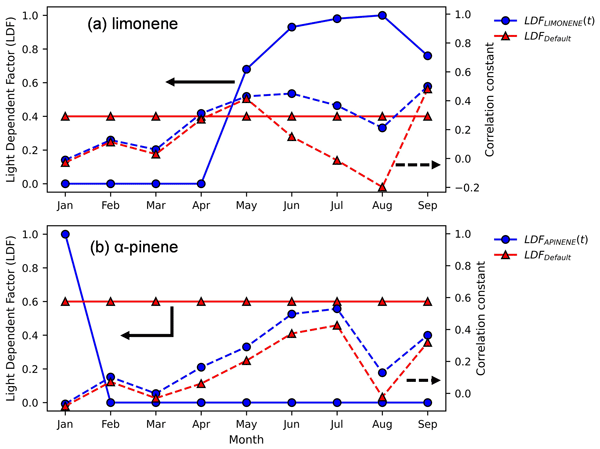
Climate change will bring about changes in parameters that are currently used in global-scale models to calculate biogenic emissions. This study seeks to understand the factors driving these models by comparing long-term datasets of biogenic compounds to modeled emissions. We note that the light-dependent fractions currently used in models do not accurately represent regional observations. We provide evidence for the time-dependent variation in this parameter for future modifications to models.
Lindsay D. Yee, Emily B. Franklin, Robin J. Weber, Jessica Zhao, Tiger Zhang, Stephanie Xu, Isaac Santillan, Fangyuan Li, Coty N. Jen, Haofei Zhang, Yutong Liang, Gabriel Isaacman Van-Wertz, Rebecca A. Wernis, John Offenberg, Michael Lewandowski, Taekyu Joo, Masayuki Takeuchi, Gamze Eris, Weiqi Xu, Nga L. Ng, Yuzhi Chen, John E. Shilling, Mary Alice Upshur, Ariana Gray Bé, Regan J. Thomson, Franz M. Geiger, and Allen H. Goldstein
Atmos. Meas. Tech., 19, 5027–5049, https://doi.org/10.5194/amt-19-5027-2026, https://doi.org/10.5194/amt-19-5027-2026, 2026
Short summary
Short summary
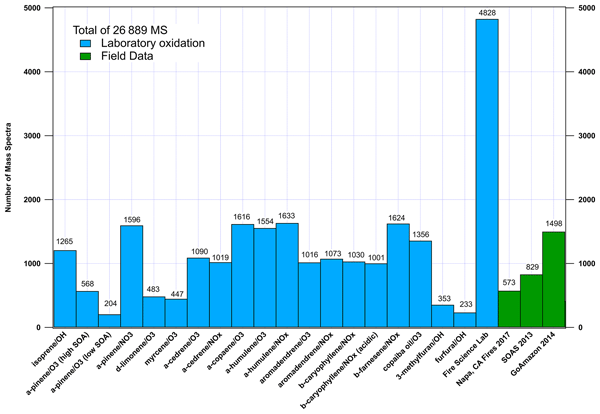
An open-access mass spectral database of identified and unidentified compounds in atmospheric and laboratory-generated organic aerosols is released to aid in future molecular discoveries in the environmental sciences. Identification of air pollution sources and origins is improved using the ~27,000 mass spectral records in the University of California Berkeley Goldstein Library of Organic Biogenic Environmental Spectra (UCB-GLOBES) database.
Namrata Shanmukh Panji, Deborah F. McGlynn, Laura E. R. Barry, Todd M. Scanlon, Manuel T. Lerdau, Sally E. Pusede, and Gabriel Isaacman-VanWertz
Atmos. Chem. Phys., 24, 12495–12507, https://doi.org/10.5194/acp-24-12495-2024, https://doi.org/10.5194/acp-24-12495-2024, 2024
Short summary
Short summary
Climate change will bring about changes in parameters that are currently used in global-scale models to calculate biogenic emissions. This study seeks to understand the factors driving these models by comparing long-term datasets of biogenic compounds to modeled emissions. We note that the light-dependent fractions currently used in models do not accurately represent regional observations. We provide evidence for the time-dependent variation in this parameter for future modifications to models.
Chuanyang Shen, Xiaoyan Yang, Joel Thornton, John Shilling, Chenyang Bi, Gabriel Isaacman-VanWertz, and Haofei Zhang
Atmos. Chem. Phys., 24, 6153–6175, https://doi.org/10.5194/acp-24-6153-2024, https://doi.org/10.5194/acp-24-6153-2024, 2024
Short summary
Short summary
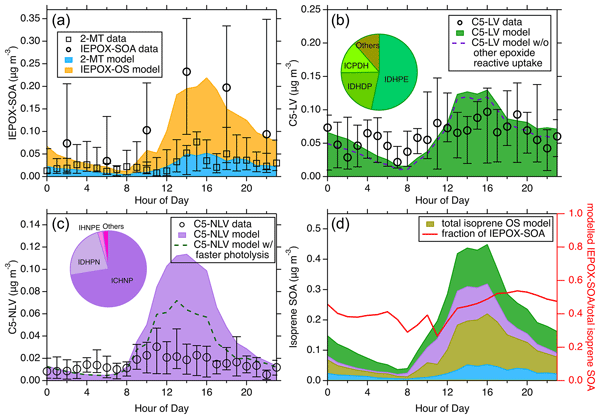
In this work, a condensed multiphase isoprene oxidation mechanism was developed to simulate isoprene SOA formation from chamber and field studies. Our results show that the measured isoprene SOA mass concentrations can be reasonably reproduced. The simulation results indicate that multifunctional low-volatility products contribute significantly to total isoprene SOA. Our findings emphasize that the pathways to produce these low-volatility species should be considered in models.
James F. Hurley, Alejandra Caceres, Deborah F. McGlynn, Mary E. Tovillo, Suzanne Pinar, Roger Schürch, Ksenia Onufrieva, and Gabriel Isaacman-VanWertz
Atmos. Meas. Tech., 16, 4681–4692, https://doi.org/10.5194/amt-16-4681-2023, https://doi.org/10.5194/amt-16-4681-2023, 2023
Short summary
Short summary
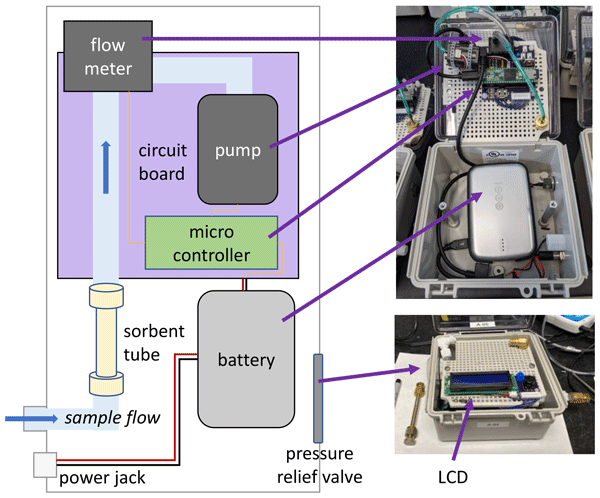
Volatile organic compounds (VOCs) have a wide range of sources and impacts on environments and human health that make them spatially, temporally, and chemically varied. Current methods lack the ability to collect samples in ways that provide spatial and chemical resolution without complex, costly instrumentation. We describe and validate a low-cost, portable VOC sampler and demonstrate its utility in collecting distributed coordinated samples.
Deborah F. McGlynn, Graham Frazier, Laura E. R. Barry, Manuel T. Lerdau, Sally E. Pusede, and Gabriel Isaacman-VanWertz
Biogeosciences, 20, 45–55, https://doi.org/10.5194/bg-20-45-2023, https://doi.org/10.5194/bg-20-45-2023, 2023
Short summary
Short summary
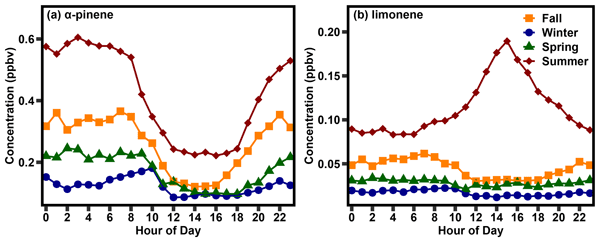
Using a custom-made gas chromatography flame ionization detector, 2 years of speciated hourly biogenic volatile organic compound data were collected in a forest in central Virginia. We identify diurnal and seasonal variability in the data, which is shown to impact atmospheric oxidant budgets. A comparison with emission models identified discrepancies with implications for model outcomes. We suggest increased monitoring of speciated biogenic volatile organic compounds to improve modeled results.
Sungwoo Kim, Brian M. Lerner, Donna T. Sueper, and Gabriel Isaacman-VanWertz
Atmos. Meas. Tech., 15, 5061–5075, https://doi.org/10.5194/amt-15-5061-2022, https://doi.org/10.5194/amt-15-5061-2022, 2022
Short summary
Short summary
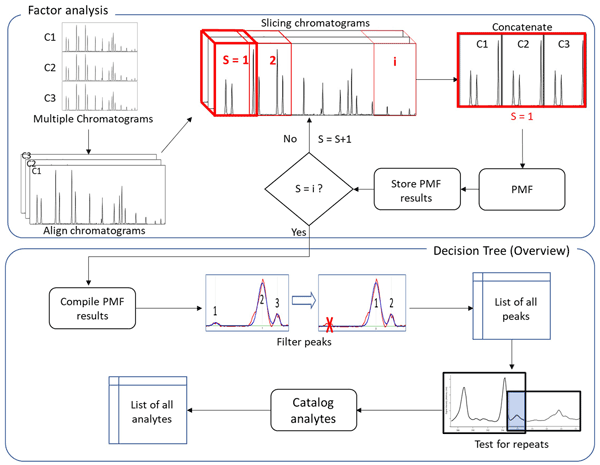
Atmospheric samples can be complex, and current analysis methods often require substantial human interaction and discard potentially important information. To improve analysis accuracy and computational cost of these large datasets, we developed an automated analysis algorithm that utilizes a factor analysis approach coupled with a decision tree. We demonstrate that this algorithm cataloged approximately 10 times more analytes compared to a manual analysis and in a quarter of the analysis time.
Chenyang Bi, Jordan E. Krechmer, Graham O. Frazier, Wen Xu, Andrew T. Lambe, Megan S. Claflin, Brian M. Lerner, John T. Jayne, Douglas R. Worsnop, Manjula R. Canagaratna, and Gabriel Isaacman-VanWertz
Atmos. Meas. Tech., 14, 6835–6850, https://doi.org/10.5194/amt-14-6835-2021, https://doi.org/10.5194/amt-14-6835-2021, 2021
Short summary
Short summary
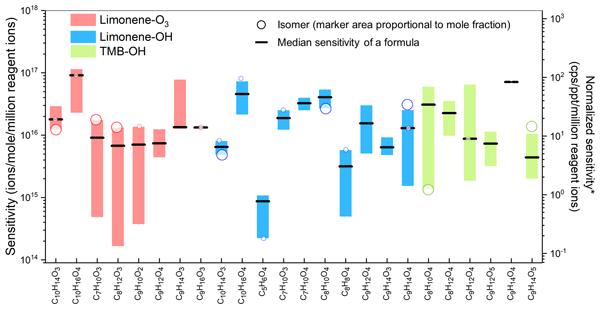
Iodide-adduct chemical ionization mass spectrometry (I-CIMS) has been widely used to analyze airborne organics. In this study, I-CIMS sensitivities of isomers within a formula are found to generally vary by 1 and up to 2 orders of magnitude. Comparisons between measured and predicted moles, obtained using a voltage-scanning calibration approach, show that predictions for individual compounds or formulas might carry high uncertainty, yet the summed moles of analytes agree reasonably well.
Deborah F. McGlynn, Laura E. R. Barry, Manuel T. Lerdau, Sally E. Pusede, and Gabriel Isaacman-VanWertz
Atmos. Chem. Phys., 21, 15755–15770, https://doi.org/10.5194/acp-21-15755-2021, https://doi.org/10.5194/acp-21-15755-2021, 2021
Short summary
Short summary
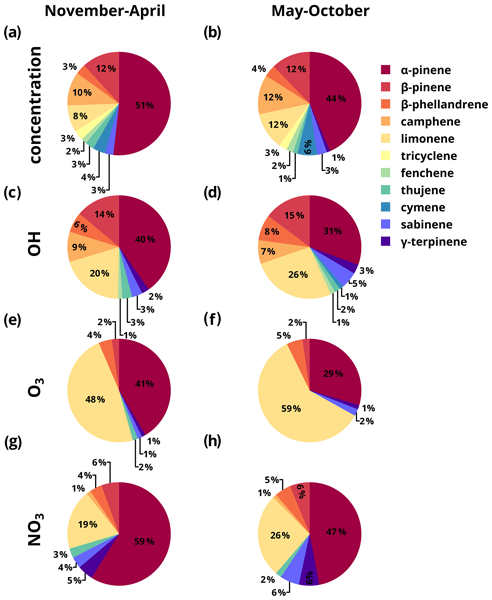
We present 1 year of hourly measurements of chemically resolved Biogenic volatile organic compound (BVOCs) between 15 September 2019 and 15 September 2020, collected at a research tower in central Virginia. Concentrations of a range of BVOCs are described and examined for their impact on atmospheric reactivity. The majority of reactivity comes from α-pinene and limonene, highlighting the importance of both concentration and structure in assessing atmospheric impacts of emissions.

Chenyang Bi, Jordan E. Krechmer, Manjula R. Canagaratna, and Gabriel Isaacman-VanWertz
Atmos. Meas. Tech., 14, 6551–6560, https://doi.org/10.5194/amt-14-6551-2021, https://doi.org/10.5194/amt-14-6551-2021, 2021
Short summary
Short summary
Calibration techniques have been recently developed to log-linearly correlate analyte sensitivity with CIMS operating conditions particularly for compounds without authentic standards. In this work, we examine the previously ignored bias in the log-linear-based calibration method and estimate an average bias of 30 %, with 1 order of magnitude for less sensitive compounds in some circumstances. A step-by-step guide was provided to reduce and even remove the bias.
Cited articles
Bourtsoukidis, E., Helleis, F., Tomsche, L., Fischer, H., Hofmann, R., Lelieveld, J., and Williams, J.: An aircraft gas chromatograph-mass spectrometer System for Organic Fast Identification Analysis (SOFIA): design, performance and a case study of Asian monsoon pollution outflow, Atmos. Meas. Tech., 10, 5089–5105, https://doi.org/10.5194/amt-10-5089-2017, 2017. a
Demeestere, K., Dewulf, J., De Witte, B., and Van Langenhove, H.: Sample
preparation for the analysis of volatile organic compounds in air and water
matrices, J. Chromatogr. A, 1153, 130–144, 2007. a
Deming, B. L., Pagonis, D., Liu, X., Day, D. A., Talukdar, R., Krechmer, J. E., de Gouw, J. A., Jimenez, J. L., and Ziemann, P. J.: Measurements of delays of gas-phase compounds in a wide variety of tubing materials due to gas–wall interactions, Atmos. Meas. Tech., 12, 3453–3461, https://doi.org/10.5194/amt-12-3453-2019, 2019. a
Duran, A., Tuzen, M., and Soylak, M.: Preconcentration of some trace elements
via using multiwalled carbon nanotubes as solid phase extraction adsorbent,
J. Hazard. Mater., 169, 466–471, 2009. a
Ebi, K. L. and McGregor, G.: Climate change, tropospheric ozone and
particulate matter, and health impacts, Environ. Health Persp.,
116, 1449–1455, 2008. a
Haagen-Smit, A. J.: Chemistry and physiology of Los Angeles smog, Ind. Eng. Chem., 44, 1342–1346, 1952. a
Hussain, C. M. and Mitra, S.: Micropreconcentration units based on carbon
nanotubes (CNT), Anal. Bioanal. Chem., 399, 75–89, 2011. a
Hussain, C. M., Saridara, C., and Mitra, S.: Carbon nanotubes as sorbents for
the gas phase preconcentration of semivolatile organics in a microtrap,
Analyst, 133, 1076–1082, 2008. a
Kroll, J. H. and Seinfeld, J. H.: Chemistry of secondary organic aerosol:
Formation and evolution of low-volatility organics in the atmosphere,
Atmos. Environ., 42, 3593–3624, 2008. a
Lemmon, E. W., Jacobsen, R. T., Penoncello, S. G., and Friend, D. G.:
Thermodynamic properties of air and mixtures of nitrogen, argon, and oxygen
from 60 to 2000 K at pressures to 2000 MPa,
J. Phys. Chem. Ref. Data, 29, 331–385, 2000. a
Lerner, B. M., Gilman, J. B., Aikin, K. C., Atlas, E. L., Goldan, P. D., Graus, M., Hendershot, R., Isaacman-VanWertz, G. A., Koss, A., Kuster, W. C., Lueb, R. A., McLaughlin, R. J., Peischl, J., Sueper, D., Ryerson, T. B., Tokarek, T. W., Warneke, C., Yuan, B., and de Gouw, J. A.: An improved, automated whole air sampler and gas chromatography mass spectrometry analysis system for volatile organic compounds in the atmosphere, Atmos. Meas. Tech., 10, 291–313, https://doi.org/10.5194/amt-10-291-2017, 2017. a
Li, Q.-L., Yuan, D.-X., and Lin, Q.-M.: Evaluation of multi-walled carbon
nanotubes as an adsorbent for trapping volatile organic compounds from
environmental samples, J. Chromatogr. A, 1026, 283–288, 2004. a
Mastronardi, F., Gutmann, B., and Kappe, C. O.: Continuous flow generation and
reactions of anhydrous diazomethane using a teflon AF-2400 tube-in-tube
reactor, Org. Lett., 15, 5590–5593, 2013. a
Michulec, M., Wardencki, W., Partyka, M., and Namieśnik, J.: Analytical
techniques used in monitoring of atmospheric air pollutants,
Crit. Rev. Anal. Chem., 35, 117–133, 2005. a
Nannoolal, Y., Rarey, J., Ramjugernath, D., and Cordes, W.: Estimation of pure
component properties: Part 1. Estimation of the normal boiling point of
non-electrolyte organic compounds via group contributions and group
interactions, Fluid Phase Equilib., 226, 45–63, 2004. a
O'Brien, M., Taylor, N., Polyzos, A., Baxendale, I. R., and Ley, S. V.:
Hydrogenation in flow: Homogeneous and heterogeneous catalysis using Teflon
AF-2400 to effect gas–liquid contact at elevated pressure, Chem. Sci.,
2, 1250–1257, 2011. a
Oliver, K. D., Adams, J. R., Daughtrey, E. H., McClenny, W. A., Yoong, M. J.,
Pardee, M. A., Almasi, E. B., and Kirshen, N. A.: Technique for monitoring
toxic VOCs in air: sorbent preconcentration, closed-cycle cooler
cryofocusing, and GC/MS analysis, Environ. Sci. Technol., 30,
1939–1945, 1996. a
Polyzos, A., O'Brien, M., Petersen, T. P., Baxendale, I. R., and Ley, S. V.:
The continuous-flow synthesis of carboxylic acids using CO2 in a tube-in-tube
gas permeable membrane reactor, Angew. Chem.-Ger. Edit, 123, 1222–1225, 2011.
a
Skowerski, K., Czarnocki, S. J., and Knapkiewicz, P.: Tube-In-Tube Reactor as a
Useful Tool for Homo-and Heterogeneous Olefin Metathesis under Continuous
Flow Mode, ChemSusChem, 7, 536–542, 2014. a
Spinelle, L., Gerboles, M., Kok, G., Persijn, S., and Sauerwald, T.: Review of
portable and low-cost sensors for the ambient air monitoring of benzene and
other volatile organic compounds, Sensors, 17, 1520, 2017. a
Topping, D., Barley, M., Bane, M. K., Higham, N., Aumont, B., Dingle, N., and McFiggans, G.: UManSysProp v1.0: an online and open-source facility for molecular property prediction and atmospheric aerosol calculations, Geosci. Model Dev., 9, 899–914, https://doi.org/10.5194/gmd-9-899-2016, 2016. a
Wang, D. and Austin, C.: Determination of complex mixtures of volatile organic
compounds in ambient air: canister methodology, Anal. Bioanal.
Chem., 386, 1099–1120, 2006. a
Zhang, H. and Weber, S. G.: Teflon AF materials, in: Fluorous chemistry,
307–337, Springer, https://doi.org/10.1007/128_2011_249, 2011. a
Short summary
Measuring volatile organic compounds (VOCs) in the atmosphere is crucial for understanding air quality and environmental impact. Since these compounds are present in low concentrations, preconcentration of samples is often necessary for accurate detection. To address this issue, we have developed a novel inlet that uses selective permeation to concentrate organic gases in small sample flows. This device offers a promising approach for accurately detecting low levels of VOCs in the atmosphere.
Measuring volatile organic compounds (VOCs) in the atmosphere is crucial for understanding air...


