
Articles | Volume 8, issue 3
https://doi.org/10.5194/amt-8-1111-2015
© Author(s) 2015. This work is distributed under
the Creative Commons Attribution 3.0 License.
the Creative Commons Attribution 3.0 License.
Special issue:
https://doi.org/10.5194/amt-8-1111-2015
© Author(s) 2015. This work is distributed under
the Creative Commons Attribution 3.0 License.
the Creative Commons Attribution 3.0 License.
Research article
| 
05 Mar 2015
Research article |
| 05 Mar 2015
Total column water vapour measurements from GOME-2 MetOp-A and MetOp-B
M. Grossi
CORRESPONDING AUTHOR
Institut für Methodik der Fernerkundung (IMF), Deutsches Zentrum für Luft- und Raumfahrt (DLR), Oberpfaffenhofen, Germany
P. Valks
Institut für Methodik der Fernerkundung (IMF), Deutsches Zentrum für Luft- und Raumfahrt (DLR), Oberpfaffenhofen, Germany
D. Loyola
Institut für Methodik der Fernerkundung (IMF), Deutsches Zentrum für Luft- und Raumfahrt (DLR), Oberpfaffenhofen, Germany
B. Aberle
Institut für Methodik der Fernerkundung (IMF), Deutsches Zentrum für Luft- und Raumfahrt (DLR), Oberpfaffenhofen, Germany
S. Slijkhuis
Institut für Methodik der Fernerkundung (IMF), Deutsches Zentrum für Luft- und Raumfahrt (DLR), Oberpfaffenhofen, Germany
T. Wagner
MPI Chemistry, Hahn-Meitner-Weg 1, 55128 Mainz, Germany
S. Beirle
MPI Chemistry, Hahn-Meitner-Weg 1, 55128 Mainz, Germany
R. Lang
EUMETSAT, Allee 1, 64295 Darmstadt, Germany
Related authors
No articles found.
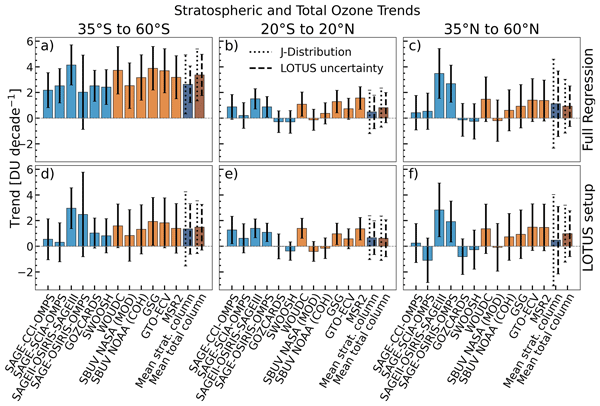
Brian Auffarth, Mark Weber, Alexei Rozanov, Carlo Arosio, John P. Burrows, Melanie Coldewey-Egbers, Sean M. Davis, Doug Degenstein, Kimberlee Dubé, Stacey M. Frith, Lucien Froidevaux, Diego Loyola, Vitali E. Fioletov, Viktoria Sofieva, Ronald van der A, and Jeannette D. Wild
Atmos. Chem. Phys., 26, 13359–13386, https://doi.org/10.5194/acp-26-13359-2026, https://doi.org/10.5194/acp-26-13359-2026, 2026
Short summary
Short summary
This study examines the trends of stratospheric and total ozone between 2000 and 2024, using long-term satellite datasets. Our results show positive trends in the upper stratosphere and a strong ozone recovery in the Southern Hemisphere, while changes in lower altitudes remain mostly small. The total and stratospheric trends show very similar results, indicating that tropospheric ozone contributes little to total column changes, while the stratospheric column is the dominant driver.
Leonardo M. A. Alvarado, Sora Seo, Adrian Doicu, Andreas Richter, and Diego Loyola
EGUsphere, https://doi.org/10.5194/egusphere-2026-4360, https://doi.org/10.5194/egusphere-2026-4360, 2026
This preprint is open for discussion and under review for Atmospheric Measurement Techniques (AMT).
Short summary
Short summary
Chlorine dioxide reveals the chemistry that destroys ozone in the upper atmosphere, but it is hard to measure from space, especially in the dim light of polar winter. We built a new method to analyse satellite measurements that separates the true signal from instrument noise and gives a trustworthy uncertainty for every observation, without extra corrections. It matches an existing product while being more reliable, supporting operational European monitoring and future missions for other gases.
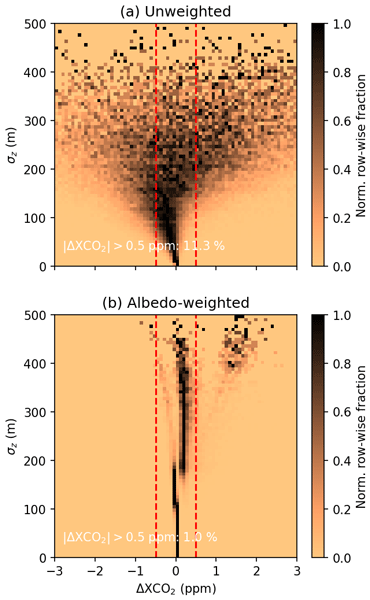
Michael Weimer, Maximilian Reuter, Michael Hilker, Stefan Noël, Michael Buchwitz, Yasjka Meijer, Rüdiger Lang, Julia Marshall, Heinrich Bovensmann, John P. Burrows, and Hartmut Bösch
Atmos. Meas. Tech., 19, 5425–5455, https://doi.org/10.5194/amt-19-5425-2026, https://doi.org/10.5194/amt-19-5425-2026, 2026
Short summary
Short summary
Greenhouse gas column measurements from space using reflected sunlight have to make assumptions about the Earth's surface elevation. Usually, it assumed that the elevation representing the satellite's spatial sample is the unweighted average of high-resolution surface elevation data. We find and show with many examples that the surface elevation should be weighted by the surface reflectance in the respective wavelength bands. This improves errors in the retrieval of trace gases.
Francisco J. Pérez-Invernón, Francisco J. Gordillo-Vázquez, Oscar van der Velde, Joan Montanyà, Jesús Alberto López Trujillo, Nicolau Pineda, Diego Loyola, Sora Seo, Christoph Knote, Alexandre O. Fierro, and Heidi Huntrieser
EGUsphere, https://doi.org/10.5194/egusphere-2026-3308, https://doi.org/10.5194/egusphere-2026-3308, 2026
Short summary
Short summary
Lightning is a major source of atmospheric pollutants. This study uses advanced satellite and ground-based data to show how lightning characteristics, such as length, brightness, and duration, affect the production of these pollutants in storms over Spain’s Ebro Valley.
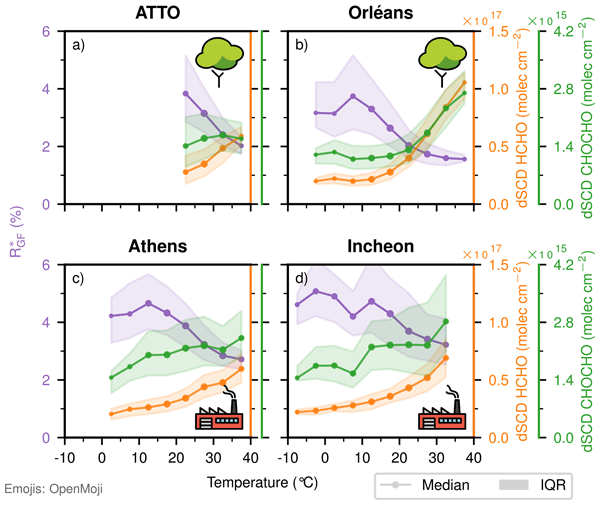
Simon Bittner, Andreas Richter, Bianca Zilker, Sebastian Donner, Thomas Wagner, Alexandros Panagiotis Poulidis, Leonardo Alvarado, and Mihalis Vrekoussis
Atmos. Chem. Phys., 26, 8809–8838, https://doi.org/10.5194/acp-26-8809-2026, https://doi.org/10.5194/acp-26-8809-2026, 2026
Short summary
Short summary
Knowing where air pollutants come from helps assess their impact on human health and climate. One proposed tool is the ratio of two trace gases, glyoxal and formaldehyde, measured from the ground at four sites. This ratio was found to be lower at natural and higher at human-influenced sites, and to vary systematically over the day, season, and with temperature. These patterns suggest that our current understanding of this ratio remains incomplete, limiting its reliable use as a source indicator.
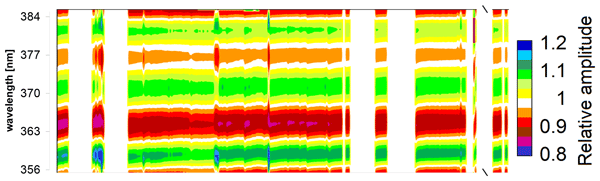
Thomas Wagner, Steffen Beirle, Sebastian Donner, Carl-Fredrik Enell, Myojeong Gu, Bianca Lauster, Ulrich Platt, Janis Pukite, Uwe Raffalski, and Steffen Ziegler
Atmos. Meas. Tech., 19, 4065–4097, https://doi.org/10.5194/amt-19-4065-2026, https://doi.org/10.5194/amt-19-4065-2026, 2026
Short summary
Short summary
The characterisation of spectroscopic properties of Differential Optical Absorption Spectroscopy (DOAS) instruments is important for accurate trace gas retrievals. In this study, we evaluate and extend existing methods for the determination of such properties using high-resolution solar spectra. These methods can be applied to routine observations in the field. Our results and developed techniques are especially important for trend analyses from long-term measurements.
Hongrui Gao, Qin He, Kai Qin, Jhoon Kim, Diego Loyola, Pravash Tiwari, Lingxiao Lu, and Jason Blake Cohen
Earth Syst. Sci. Data Discuss., https://doi.org/10.5194/essd-2026-443, https://doi.org/10.5194/essd-2026-443, 2026
Revised manuscript under review for ESSD
Short summary
Short summary
There are always gaps in satellite records of air pollution because of factors such as clouds and operating conditions. We used a physics-aware deep learning method, producing a gapless 0.05° hourly dataset of tropospheric nitrogen dioxide over Asian pollution hotspots from 2019 to 2024. The dataset can capture sub-daily changes, revealing how traffic, industry, and clean-air policies shaped pollution, supporting health and environment studies.
Erna Frins, Thomas Wagner, Nicolás Casaballe, Sebastian Donner, and Steffen Ziegler
EGUsphere, https://doi.org/10.5194/egusphere-2026-2556, https://doi.org/10.5194/egusphere-2026-2556, 2026
This preprint is open for discussion and under review for Atmospheric Measurement Techniques (AMT).
Short summary
Short summary
We use a hyperspectral camera to show that the absorptions of the oxygen dimer can be well determined from the measured spectra. The retrieved oxygen dimer images together with calibrated radiances are used to determine atmospheric profiles of the aerosol extinction and cloud properties. We also exploit the advantage of the 2D imaging capabilities: the unambiguous distinction between clear and cloudy parts within the recorded image.
Abdalmenem Owda, Melanie Coldewey-Egbers, Sander Slijkhuis, Günter Lichtenberg, and Bernd Aberle
Atmos. Meas. Tech., 19, 3213–3229, https://doi.org/10.5194/amt-19-3213-2026, https://doi.org/10.5194/amt-19-3213-2026, 2026
Short summary
Short summary
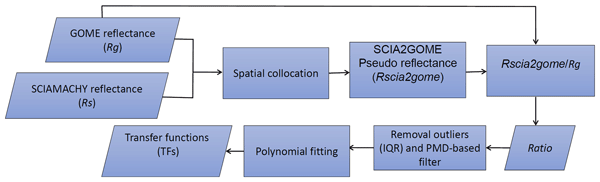
This paper presents, for the first time, a method for cross-calibration of spectrometers using data from the Global Ozone Monitoring Experiment (GOME) and the Scanning Imaging Absorption Spectrometer for Atmospheric Chartography (SCIAMACHY), which operated concurrently for 10 years. The method addresses key challenges compared with optical imagery calibration and integrates Polarization Monitoring Device data to enhance the accuracy and reliability of the cross-calibration process.
Sean Davis, William Ball, Yue Jia, Gabriel Chiodo, Justin Alsing, James Keeble, Hideharu Akiyoshi, Carlo Arosio, Ewa Bednarz, Andreas Chrysanthou, Melanie Coldewey-Egbers, Robert Damadeo, Sandip Dhomse, Mohamadou Diallo, Simone Dietmuller, Roland Eichinger, Stacey Frith, Birgit Hassler, Michaela Hegglin, Daan Hubert, Patrick Jöckel, Béatrice Josse, Natalya Kramarova, Diego Loyola, Eliane Maillard Barras, Marion Marchand, Olaf Morgenstern, David Plummer, Robert Portmann, Karen Rosenlof, Alexei Rozanov, Viktoria Sofieva, Johannes Staehelin, Timofei Sukhodolov, Kleareti Tourpali, Ronald Van der A, H. J. Ray Wang, Krzysztof Wargan, Shingo Watanabe, Mark Weber, Jeannette Wild, Yousuke Yamashita, and Jerry Ziemke
EGUsphere, https://doi.org/10.5194/egusphere-2026-532, https://doi.org/10.5194/egusphere-2026-532, 2026
Short summary
Short summary
This study investigates how tropical ozone levels have changed since 2000 in chemistry climate models and satellite observations to determine how well they agree with one another, and to see if current trends can help predict future levels. At some, satellite records disagree significantly on the magnitude of ozone changes. The study shows a connection between recent ozone trends and future ozone levels, suggesting that satellite measurements could help constrain future ozone changes.
África Barreto, Francisco Quirós, Omaira E. García, Jorge Pereda-de-Pablo, Daniel González-Fernández, Andrés Bedoya-Velásquez, Michael Sicard, Carmen Córdoba-Jabonero, Marco Iarlori, Vincenzo Rizi, Nickolay Krotkov, Simon Carn, Reijo Roininen, Antonio J. Molina-Arias, A. Fernando Almansa, Óscar Álvarez-Losada, Carla Aramo, Juan José Bustos, Romain Ceolato, Adolfo Comerón, Alicia Felpeto, Rosa D. García, Pablo González-Sicilia, Yenny González, Pascal Hedelt, Miguel Hernández, María-Ángeles López-Cayuela, Diego Loyola, Stavros Meletlidis, Constantino Muñoz-Porcar, Ermanno Pietropaolo, Ramón Ramos, Alejandro Rodríguez-Gómez, Roberto Román, Pedro M. Romero-Campos, Martin Stuefer, Carlos Toledano, and Ellsworth J. Welton
Atmos. Meas. Tech., 19, 1385–1406, https://doi.org/10.5194/amt-19-1385-2026, https://doi.org/10.5194/amt-19-1385-2026, 2026
Short summary
Short summary
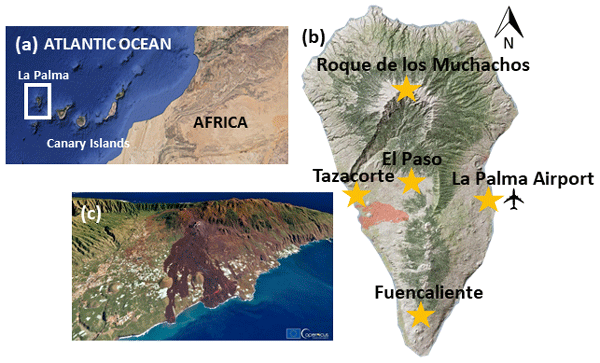
This manuscript describes the instrumental coverage deployed during the Tajogaite eruption (19 September–25 December 2021) by the Instituto Geográfico Nacional (IGN), the Spanish State Meteorological Agency (AEMET), and other Spanish members of ACTRIS (Aerosol, Clouds and Trace Gases Research Infrastructure) to monitor its atmospheric impact. Two complementary methods provide consistent plume height data for future operational surveillance.
Gaia Pinardi, Martina M. Friedrich, Corinne Vigouroux, Bavo Langerock, Isabelle De Smedt, Caroline Fayt, Christian Hermans, Steffen Beirle, Thomas Wagner, Minqiang Zhou, Ting Wang, Pucai Wang, Martine De Mazière, and Michel Van Roozendael
Atmos. Meas. Tech., 19, 1259–1291, https://doi.org/10.5194/amt-19-1259-2026, https://doi.org/10.5194/amt-19-1259-2026, 2026
Short summary
Short summary
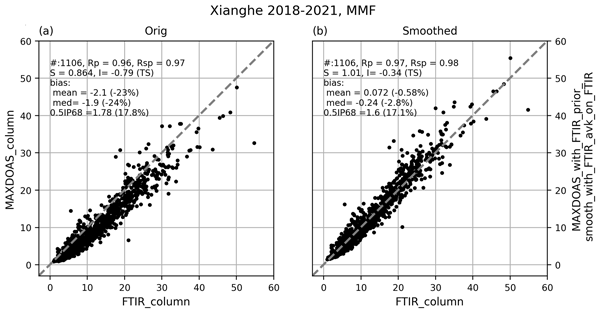
We evaluate ground-based remote-sensing measurements of formaldehyde from three techniques at a suburban site in China. A systematic −20 % bias in Multi-AXis Differential Optical Absorption Spectroscopy compared to direct-sun ultraviolet and infrared data is linked to limited sensitivity above a few kilometers and simplified vertical profiles assumptions. Using model-based priors and accounting for vertical sensitivity removes these differences, improving consistency for satellite validation.

Robert J. D. Spurr, Matt Christi, Nickolay A. Krotkov, Won-Ei Choi, Simon Carn, Can Li, Natalya Kramarova, David Haffner, Eun-Su Yang, Nick Gorkavyi, Alexander Vasilkov, Krzysztof Wargan, Omar Torres, Diego Loyola, Serena Di Pede, J. Pepijn Veefkind, Parker Case, Thomas Schroeder, and Pawan K. Bhartia
Atmos. Meas. Tech., 19, 993–1021, https://doi.org/10.5194/amt-19-993-2026, https://doi.org/10.5194/amt-19-993-2026, 2026
Short summary
Short summary
The submarine eruption of the Hunga volcano released water vapor and sulfur dioxide directly into the stratosphere. The sulfur dioxide formed sulfuric acid aerosols leading to increased scattering of solar ultraviolet radiation (UV), interfering with satellite ozone retrievals. We present a new satellite technique for deriving the amount and height of Hunga aerosols from UV measurements, revealing an unusually low sulfuric acid concentration due to the water-rich conditions in the fresh plume.
Arno Keppens, Daan Hubert, José Granville, Oindrila Nath, Jean-Christopher Lambert, Catherine Wespes, Pierre-François Coheur, Cathy Clerbaux, Anne Boynard, Richard Siddans, Barry Latter, Brian Kerridge, Serena Di Pede, Pepijn Veefkind, Juan Cuesta, Gaelle Dufour, Klaus-Peter Heue, Melanie Coldewey-Egbers, Diego Loyola, Andrea Orfanoz-Cheuquelaf, Swathi Maratt Satheesan, Kai-Uwe Eichmann, Alexei Rozanov, Viktoria F. Sofieva, Jerald R. Ziemke, Antje Inness, Roeland Van Malderen, and Lars Hoffmann
Atmos. Meas. Tech., 18, 6893–6916, https://doi.org/10.5194/amt-18-6893-2025, https://doi.org/10.5194/amt-18-6893-2025, 2025
Short summary
Short summary
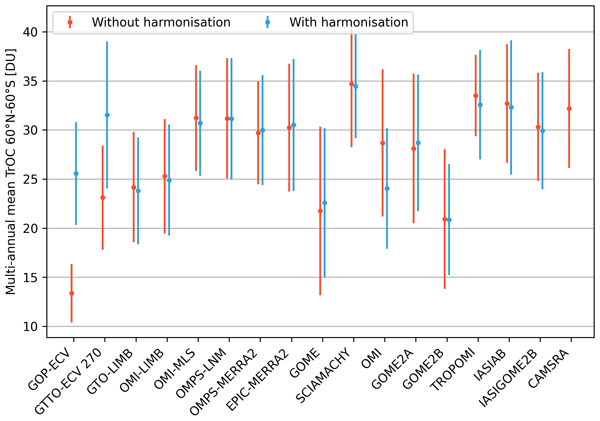
The first Tropospheric Ozone Assessment Report (TOAR) encountered discrepancies between several satellite sensors’ estimates of the distribution and change of ozone in the free troposphere. Therefore, contributing to the second TOAR, we harmonise as much as possible the observational perspective of sixteen tropospheric ozone products from satellites. This only partially accounts for the observed discrepancies, with a reduction of 10–40 % of the inter-product dispersion upon harmonisation.
Melanie Coldewey-Egbers, Diego G. Loyola R., Barry Latter, Richard Siddans, Brian Kerridge, Daan Hubert, Michel van Roozendael, and Michael Eisinger
Atmos. Meas. Tech., 18, 5485–5505, https://doi.org/10.5194/amt-18-5485-2025, https://doi.org/10.5194/amt-18-5485-2025, 2025
Short summary
Short summary
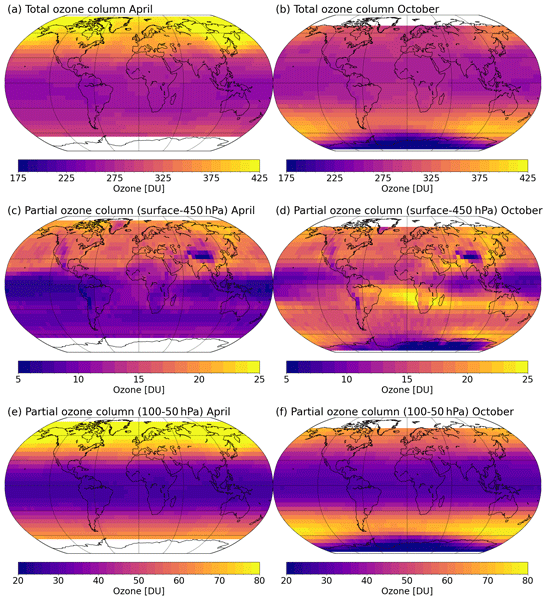
The Global Ozone Monitoring Experiment (GOME)-type Ozone Profile Essential Climate Variable (GOP-ECV) data record provides monthly mean ozone profiles with global coverage from 1995 to 2021 at a spatial resolution of 5° × 5°. Measurements from five nadir-viewing satellite sensors are first harmonized and then merged into a coherent record. The long-term stability of the data record is further improved through scaling the profiles using the GOME-type Total Ozone Essential Climate Variable (GTO-ECV) data record as a reference.
Bianca Lauster, Udo Frieß, Jan-Marcus Nasse, Ulrich Platt, and Thomas Wagner
Atmos. Meas. Tech., 18, 3393–3405, https://doi.org/10.5194/amt-18-3393-2025, https://doi.org/10.5194/amt-18-3393-2025, 2025
Short summary
Short summary
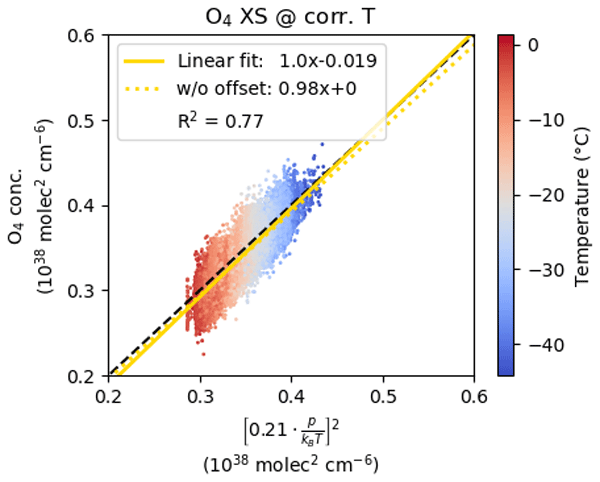
Remote sensing measurements of scattered sunlight use the atmospheric absorption of O2–O2 (or O4) to derive cloud and aerosol properties. However, inconsistencies between measurements and radiative transfer simulations were found recently, and, so far, there has been no consensus on how to deal with these appropriately. In this study, long-term long-path differential optical absorption spectroscopy (LP-DOAS) observations were analysed and very good agreement with laboratory measurements was found.
Michael Weimer, Michael Hilker, Stefan Noël, Max Reuter, Michael Buchwitz, Blanca Fuentes Andrade, Rüdiger Lang, Bernd Sierk, Yasjka Meijer, Heinrich Bovensmann, John P. Burrows, and Hartmut Bösch
Atmos. Meas. Tech., 18, 3321–3340, https://doi.org/10.5194/amt-18-3321-2025, https://doi.org/10.5194/amt-18-3321-2025, 2025
Short summary
Short summary
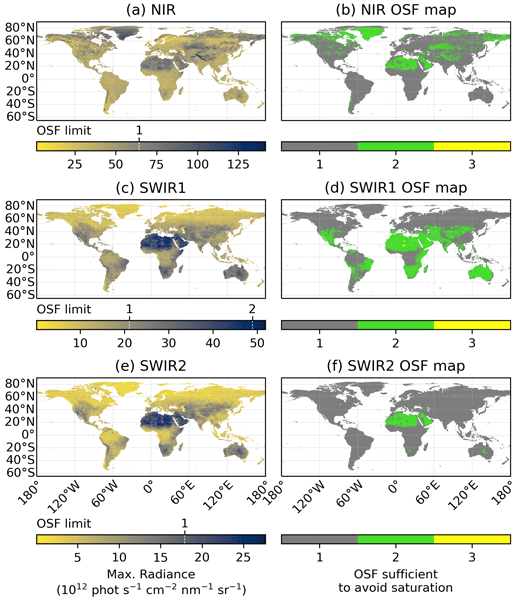
Optical detectors have a maximum signal (saturation). Exceedance means that the measurement has to be discarded. We investigate where saturation will occur for the future European satellite mission dedicated to CO2 monitoring (CO2M) and strategies to avoid saturation. Saturation impacts coverage and precision, both of which are important for estimation of local CO2 emissions. We find that taking two pictures per sampling should be sufficient to avoid saturation for CO2M, with some impact on CO2 precision.
Carlo Arosio, Viktoria Sofieva, Andrea Orfanoz-Cheuquelaf, Alexei Rozanov, Klaus-Peter Heue, Diego Loyola, Edward Malina, Ryan M. Stauffer, David Tarasick, Roeland Van Malderen, Jerry R. Ziemke, and Mark Weber
Atmos. Meas. Tech., 18, 3247–3265, https://doi.org/10.5194/amt-18-3247-2025, https://doi.org/10.5194/amt-18-3247-2025, 2025
Short summary
Short summary
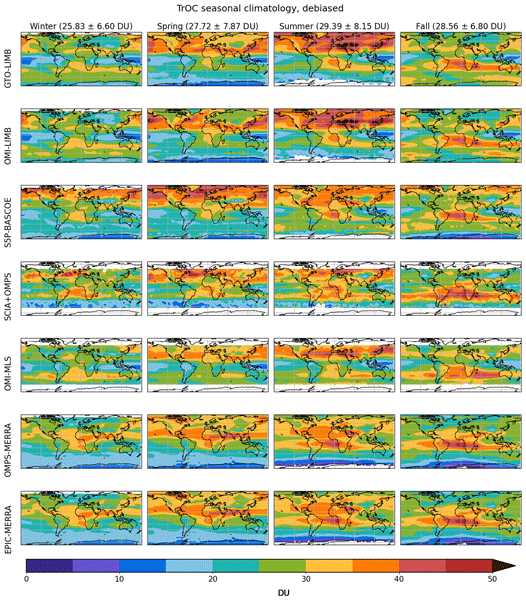
Tropospheric ozone affects air quality and climate, being a pollutant and a greenhouse gas. We analyze satellite data of tropospheric ozone columns obtained by combining two types of observations: one providing stratospheric and the other total ozone. We compare common climatological features and study the influence of the tropopause (troposphere to stratosphere boundary) on the results. We also examine trends over the last 20 years and compare satellite data with ozonesondes to identify drifts.
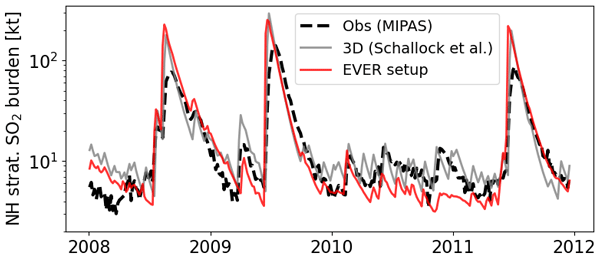
Matthias Kohl, Christoph Brühl, Jennifer Schallock, Holger Tost, Patrick Jöckel, Adrian Jost, Steffen Beirle, Michael Höpfner, and Andrea Pozzer
Geosci. Model Dev., 18, 3985–4007, https://doi.org/10.5194/gmd-18-3985-2025, https://doi.org/10.5194/gmd-18-3985-2025, 2025
Short summary
Short summary
SO2 from explosive volcanic eruptions reaching the stratosphere can oxidize and form sulfur aerosols, potentially persisting for several years. We developed a new submodel, Explosive Volcanic ERuptions (EVER), that seamlessly includes stratospheric volcanic SO2 emissions in global numerical simulations based on a novel standard historical model setup, successfully evaluated with satellite observations. Sensitivity studies on the Nabro eruption in 2011 evaluate different emission methods.
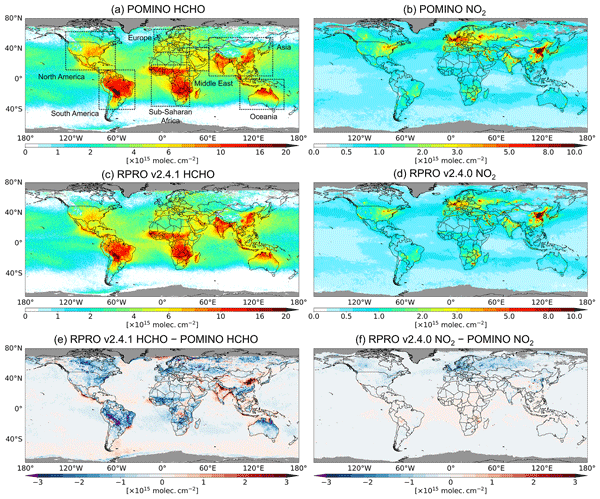
Yuhang Zhang, Huan Yu, Isabelle De Smedt, Jintai Lin, Nicolas Theys, Michel Van Roozendael, Gaia Pinardi, Steven Compernolle, Ruijing Ni, Fangxuan Ren, Sijie Wang, Lulu Chen, Jos Van Geffen, Mengyao Liu, Alexander M. Cede, Martin Tiefengraber, Alexis Merlaud, Martina M. Friedrich, Andreas Richter, Ankie Piters, Vinod Kumar, Vinayak Sinha, Thomas Wagner, Yongjoo Choi, Hisahiro Takashima, Yugo Kanaya, Hitoshi Irie, Robert Spurr, Wenfu Sun, and Lorenzo Fabris
Atmos. Meas. Tech., 18, 1561–1589, https://doi.org/10.5194/amt-18-1561-2025, https://doi.org/10.5194/amt-18-1561-2025, 2025
Short summary
Short summary
We developed an advanced algorithm for global retrieval of TROPOspheric Monitoring Instrument (TROPOMI) HCHO and NO2 vertical column densities with much improved consistency. Sensitivity tests demonstrate the complexity and nonlinear interactions of auxiliary parameters in the air mass factor calculation. An improved agreement is found with measurements from a global ground-based instrument network. The scientific retrieval provides a useful source of information for studies combining HCHO and NO2.
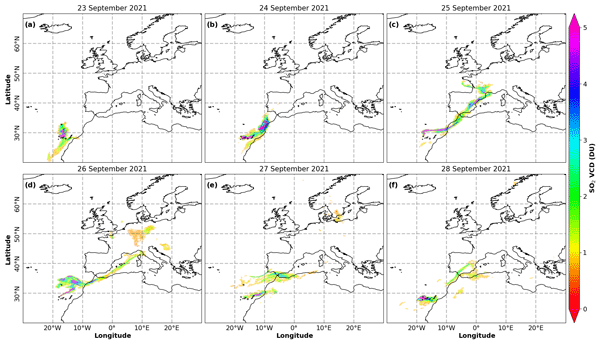
Pascal Hedelt, Jens Reichardt, Felix Lauermann, Benjamin Weiß, Nicolas Theys, Alberto Redondas, Africa Barreto, Omaira Garcia, and Diego Loyola
Atmos. Chem. Phys., 25, 1253–1272, https://doi.org/10.5194/acp-25-1253-2025, https://doi.org/10.5194/acp-25-1253-2025, 2025
Short summary
Short summary
The 2021 volcanic eruption of Tajogaite on La Palma is investigated using ground-based and satellite measurements. In addition, the atmospheric transport of the volcanic cloud towards Europe is studied in detail. The amount of SO2 released during the eruption and the height of the volcanic plume are in excellent agreement among the different measurements. Furthermore, volcanic aerosol microphysical properties could be retrieved using a new retrieval approach based on lidar measurements.
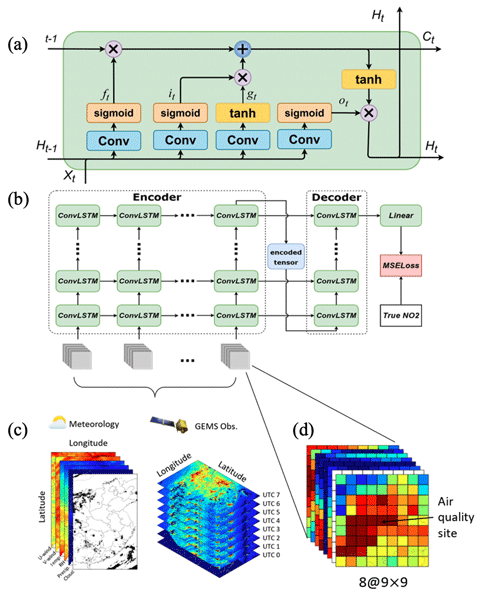
Chengxin Zhang, Xinhan Niu, Hongyu Wu, Zhipeng Ding, Ka Lok Chan, Jhoon Kim, Thomas Wagner, and Cheng Liu
Atmos. Chem. Phys., 25, 759–770, https://doi.org/10.5194/acp-25-759-2025, https://doi.org/10.5194/acp-25-759-2025, 2025
Short summary
Short summary
This research utilizes hourly air pollution observations from the world’s first geostationary satellite to develop a spatiotemporal neural network model for full-coverage surface NO2 pollution prediction over the next 24 hours, achieving outstanding forecasting performance and efficacy. These results highlight the profound impact of geostationary satellite observations in advancing air quality forecasting models, thereby contributing to future models for health exposure to air pollution.
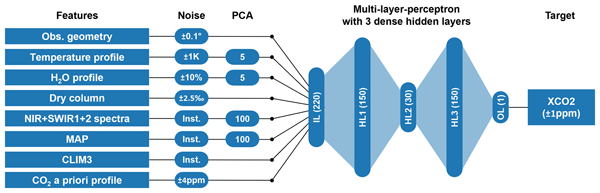
Maximilian Reuter, Michael Hilker, Stefan Noël, Antonio Di Noia, Michael Weimer, Oliver Schneising, Michael Buchwitz, Heinrich Bovensmann, John P. Burrows, Hartmut Bösch, and Ruediger Lang
Atmos. Meas. Tech., 18, 241–264, https://doi.org/10.5194/amt-18-241-2025, https://doi.org/10.5194/amt-18-241-2025, 2025
Short summary
Short summary
Carbon dioxide (CO2) and methane (CH4) are the main anthropogenic greenhouse gases. The European Copernicus CO2 monitoring satellite mission CO2M will provide measurements of their atmospheric concentrations, but the accuracy requirements are demanding and conventional retrieval methods computationally expensive. We present a new retrieval algorithm based on artificial neural networks that has the potential to meet the stringent requirements of the CO2M mission with minimal computational effort.
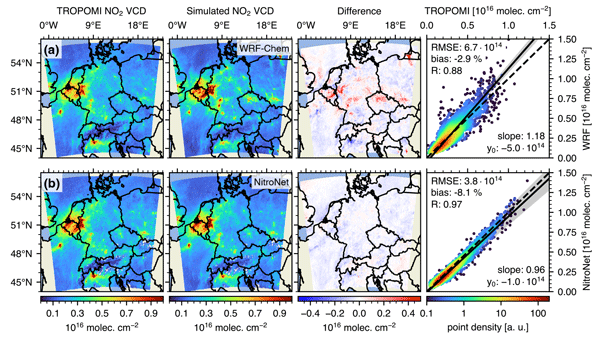
Leon Kuhn, Steffen Beirle, Sergey Osipov, Andrea Pozzer, and Thomas Wagner
Atmos. Meas. Tech., 17, 6485–6516, https://doi.org/10.5194/amt-17-6485-2024, https://doi.org/10.5194/amt-17-6485-2024, 2024
Short summary
Short summary
This paper presents a new machine learning model that allows us to compute NO2 concentration profiles from satellite observations. A neural network was trained on synthetic data from the regional chemistry and transport model WRF-Chem. This is the first model of its kind. We present a thorough model validation study, covering various seasons and regions of the world.
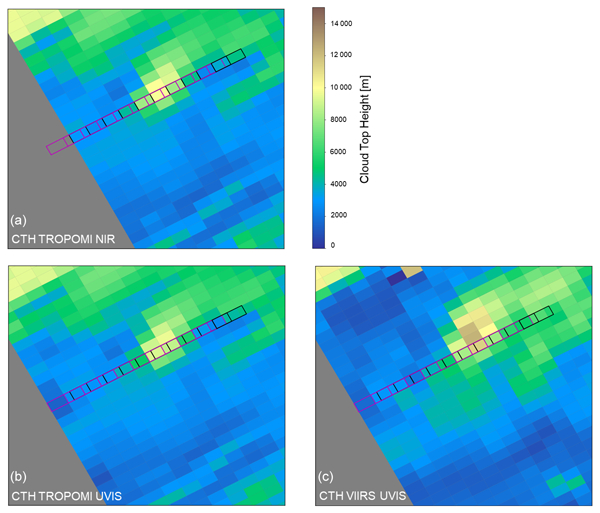
Athina Argyrouli, Diego Loyola, Fabian Romahn, Ronny Lutz, Víctor Molina García, Pascal Hedelt, Klaus-Peter Heue, and Richard Siddans
Atmos. Meas. Tech., 17, 6345–6367, https://doi.org/10.5194/amt-17-6345-2024, https://doi.org/10.5194/amt-17-6345-2024, 2024
Short summary
Short summary
This paper describes a new treatment of the spatial misregistration of cloud properties for Sentinel-5 Precursor, when the footprints of different spectral bands are not perfectly aligned. The methodology exploits synergies between spectrometers and imagers, like TROPOMI and VIIRS. The largest improvements have been identified for heterogeneous scenes at cloud edges. This approach is generic and can also be applied to future Sentinel-4 and Sentinel-5 instruments.
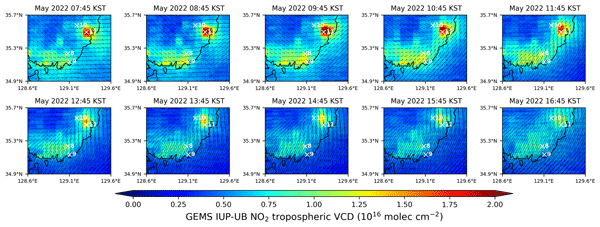
Kezia Lange, Andreas Richter, Tim Bösch, Bianca Zilker, Miriam Latsch, Lisa K. Behrens, Chisom M. Okafor, Hartmut Bösch, John P. Burrows, Alexis Merlaud, Gaia Pinardi, Caroline Fayt, Martina M. Friedrich, Ermioni Dimitropoulou, Michel Van Roozendael, Steffen Ziegler, Simona Ripperger-Lukosiunaite, Leon Kuhn, Bianca Lauster, Thomas Wagner, Hyunkee Hong, Donghee Kim, Lim-Seok Chang, Kangho Bae, Chang-Keun Song, Jong-Uk Park, and Hanlim Lee
Atmos. Meas. Tech., 17, 6315–6344, https://doi.org/10.5194/amt-17-6315-2024, https://doi.org/10.5194/amt-17-6315-2024, 2024
Short summary
Short summary
Instruments for air quality observations on geostationary satellites provide multiple observations per day and allow for the analysis of the diurnal variation of important air pollutants such as nitrogen dioxide (NO2) over large areas. The South Korean instrument GEMS, launched in February 2020, is the first instrument in geostationary orbit and covers a large part of Asia. Our investigations show the observed diurnal evolution of NO2 at different measurement sites.
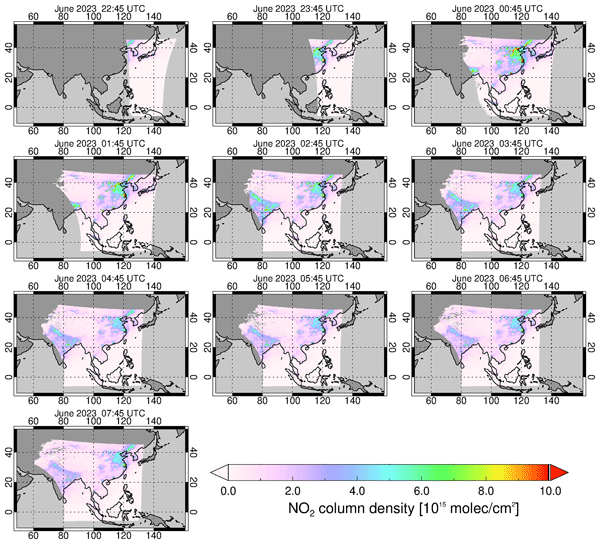
Sora Seo, Pieter Valks, Ronny Lutz, Klaus-Peter Heue, Pascal Hedelt, Víctor Molina García, Diego Loyola, Hanlim Lee, and Jhoon Kim
Atmos. Meas. Tech., 17, 6163–6191, https://doi.org/10.5194/amt-17-6163-2024, https://doi.org/10.5194/amt-17-6163-2024, 2024
Short summary
Short summary
In this study, we developed an advanced retrieval algorithm for tropospheric NO2 columns from geostationary satellite spectrometers and applied it to GEMS measurements. The DLR GEMS NO2 retrieval algorithm follows the heritage from previous and existing algorithms, but improved approaches are applied to reflect the specific features of geostationary satellites. The DLR GEMS NO2 retrievals demonstrate a good capability for monitoring diurnal variability with a high spatial resolution.
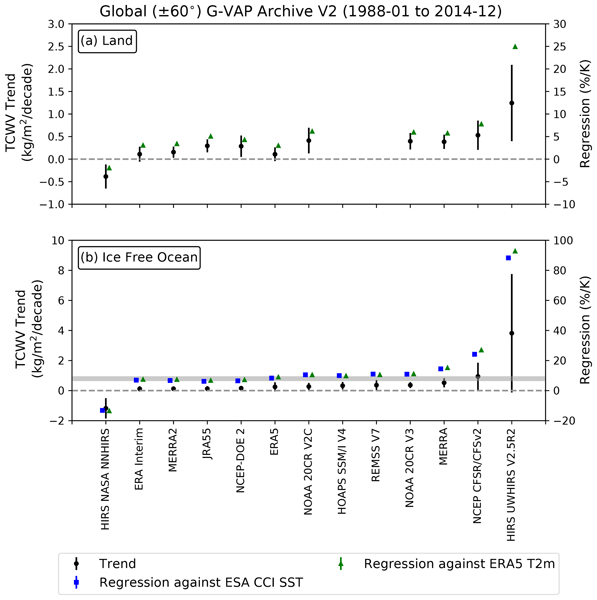
Tim Trent, Marc Schröder, Shu-Peng Ho, Steffen Beirle, Ralf Bennartz, Eva Borbas, Christian Borger, Helene Brogniez, Xavier Calbet, Elisa Castelli, Gilbert P. Compo, Wesley Ebisuzaki, Ulrike Falk, Frank Fell, John Forsythe, Hans Hersbach, Misako Kachi, Shinya Kobayashi, Robert E. Kursinski, Diego Loyola, Zhengzao Luo, Johannes K. Nielsen, Enzo Papandrea, Laurence Picon, Rene Preusker, Anthony Reale, Lei Shi, Laura Slivinski, Joao Teixeira, Tom Vonder Haar, and Thomas Wagner
Atmos. Chem. Phys., 24, 9667–9695, https://doi.org/10.5194/acp-24-9667-2024, https://doi.org/10.5194/acp-24-9667-2024, 2024
Short summary
Short summary
In a warmer future, water vapour will spend more time in the atmosphere, changing global rainfall patterns. In this study, we analysed the performance of 28 water vapour records between 1988 and 2014. We find sensitivity to surface warming generally outside expected ranges, attributed to breakpoints in individual record trends and differing representations of climate variability. The implication is that longer records are required for high confidence in assessing climate trends.
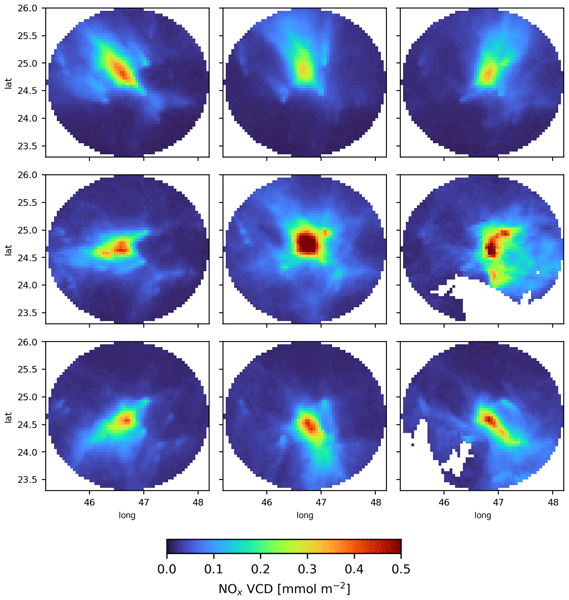
Steffen Beirle and Thomas Wagner
Atmos. Meas. Tech., 17, 3439–3453, https://doi.org/10.5194/amt-17-3439-2024, https://doi.org/10.5194/amt-17-3439-2024, 2024
Short summary
Short summary
We present a new method for estimating emissions and lifetimes for nitrogen oxides emitted from large cities by using satellite NO2 observations combined with wind fields. The estimate is based on the simultaneous evaluation of the downwind plumes for opposing wind directions. This allows us to derive seasonal mean emissions and lifetimes for 100 cities around the globe.
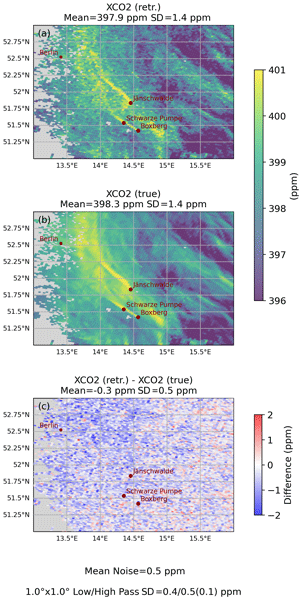
Stefan Noël, Michael Buchwitz, Michael Hilker, Maximilian Reuter, Michael Weimer, Heinrich Bovensmann, John P. Burrows, Hartmut Bösch, and Ruediger Lang
Atmos. Meas. Tech., 17, 2317–2334, https://doi.org/10.5194/amt-17-2317-2024, https://doi.org/10.5194/amt-17-2317-2024, 2024
Short summary
Short summary
FOCAL-CO2M is one of the three operational retrieval algorithms which will be used to derive XCO2 and XCH4 from measurements of the forthcoming European CO2M mission. We present results of applications of FOCAL-CO2M to simulated spectra, from which confidence is gained that the algorithm is able to fulfil the challenging requirements on systematic errors for the CO2M mission (spatio-temporal bias ≤ 0.5 ppm for XCO2 and ≤ 5 ppb for XCH4).
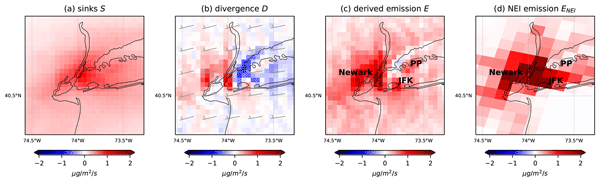
Fei Liu, Steffen Beirle, Joanna Joiner, Sungyeon Choi, Zhining Tao, K. Emma Knowland, Steven J. Smith, Daniel Q. Tong, Siqi Ma, Zachary T. Fasnacht, and Thomas Wagner
Atmos. Chem. Phys., 24, 3717–3728, https://doi.org/10.5194/acp-24-3717-2024, https://doi.org/10.5194/acp-24-3717-2024, 2024
Short summary
Short summary
Using satellite data, we developed a coupled method independent of the chemical transport model to map NOx emissions across US cities. After validating our technique with synthetic data, we charted NOx emissions from 2018–2021 in 39 cities. Our results closely matched EPA estimates but also highlighted some inconsistencies in both magnitude and spatial distribution. This research can help refine strategies for monitoring and managing air quality.
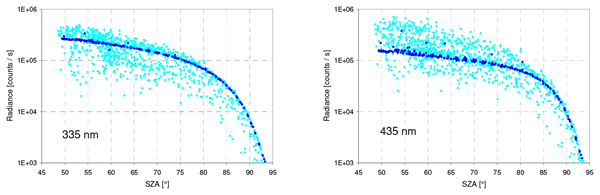
Thomas Wagner and Jānis Puķīte
Atmos. Meas. Tech., 17, 277–297, https://doi.org/10.5194/amt-17-277-2024, https://doi.org/10.5194/amt-17-277-2024, 2024
Short summary
Short summary
We present a radiance calibration method based on the comparison of measurements and radiative transfer simulations of the zenith-scattered sun radiance during twilight. Cloud-free conditions are required. The method can be applied to measurements in the filed, and no laboratory measurements are required. The accuracy is estimated to range from about 4 % at 340 nm to about 10 % at 700 nm.
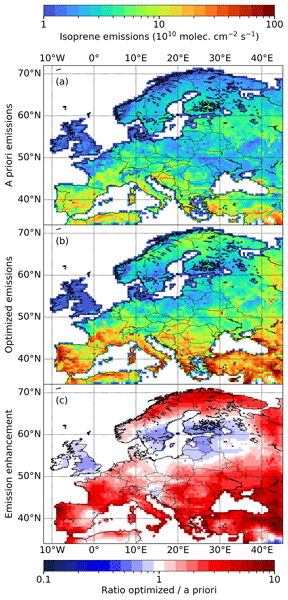
Glenn-Michael Oomen, Jean-François Müller, Trissevgeni Stavrakou, Isabelle De Smedt, Thomas Blumenstock, Rigel Kivi, Maria Makarova, Mathias Palm, Amelie Röhling, Yao Té, Corinne Vigouroux, Martina M. Friedrich, Udo Frieß, François Hendrick, Alexis Merlaud, Ankie Piters, Andreas Richter, Michel Van Roozendael, and Thomas Wagner
Atmos. Chem. Phys., 24, 449–474, https://doi.org/10.5194/acp-24-449-2024, https://doi.org/10.5194/acp-24-449-2024, 2024
Short summary
Short summary
Natural emissions from vegetation have a profound impact on air quality for their role in the formation of harmful tropospheric ozone and organic aerosols, yet these emissions are highly uncertain. In this study, we quantify emissions of organic gases over Europe using high-quality satellite measurements of formaldehyde. These satellite observations suggest that emissions from vegetation are much higher than predicted by models, especially in southern Europe.
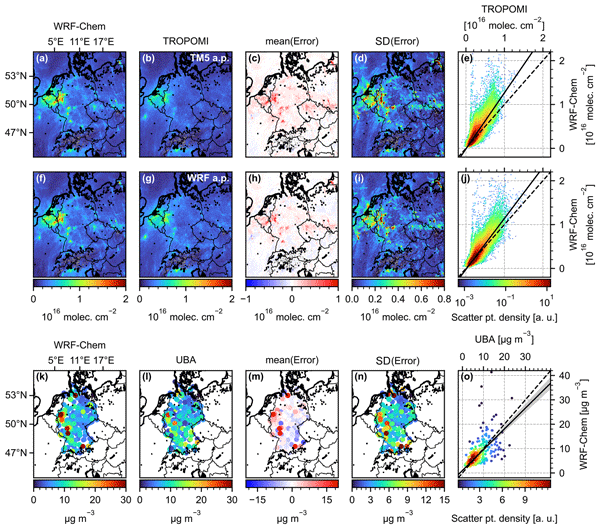
Leon Kuhn, Steffen Beirle, Vinod Kumar, Sergey Osipov, Andrea Pozzer, Tim Bösch, Rajesh Kumar, and Thomas Wagner
Atmos. Chem. Phys., 24, 185–217, https://doi.org/10.5194/acp-24-185-2024, https://doi.org/10.5194/acp-24-185-2024, 2024
Short summary
Short summary
NO₂ is an important air pollutant. It was observed that the WRF-Chem model shows significant deviations in NO₂ abundance when compared to measurements. We use a 1-month simulation over central Europe to show that these deviations can be mostly resolved by reparameterization of the vertical mixing routine. In order to validate our results, they are compared to in situ, satellite, and MAX-DOAS measurements.
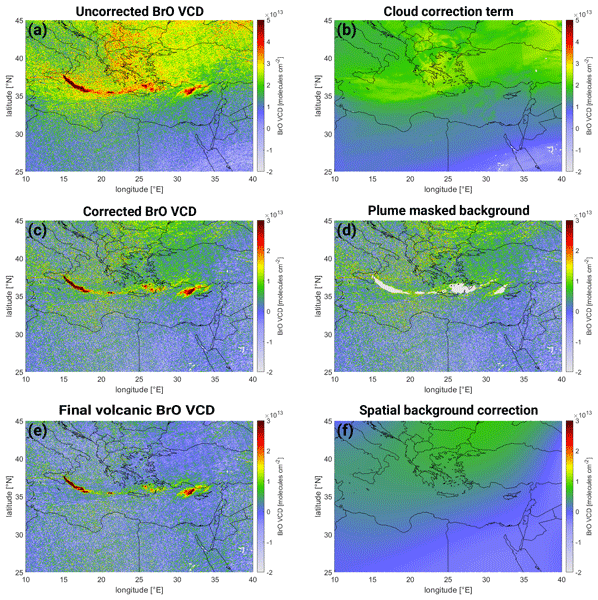
Simon Warnach, Holger Sihler, Christian Borger, Nicole Bobrowski, Steffen Beirle, Ulrich Platt, and Thomas Wagner
Atmos. Meas. Tech., 16, 5537–5573, https://doi.org/10.5194/amt-16-5537-2023, https://doi.org/10.5194/amt-16-5537-2023, 2023
Short summary
Short summary
BrO inside volcanic gas plumes but can be used in combination with SO2 to characterize the volcanic property and its activity state. High-quality satellite observations can provide a global inventory of this important quantity. This paper investigates how to accurately detect BrO inside volcanic plumes from the satellite UV spectrum. A sophisticated novel non-volcanic background correction scheme is presented, and systematic errors including cross-interference with formaldehyde are minimized.
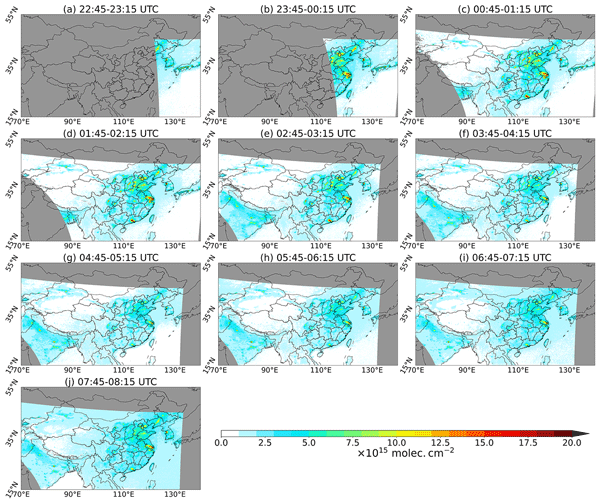
Yuhang Zhang, Jintai Lin, Jhoon Kim, Hanlim Lee, Junsung Park, Hyunkee Hong, Michel Van Roozendael, Francois Hendrick, Ting Wang, Pucai Wang, Qin He, Kai Qin, Yongjoo Choi, Yugo Kanaya, Jin Xu, Pinhua Xie, Xin Tian, Sanbao Zhang, Shanshan Wang, Siyang Cheng, Xinghong Cheng, Jianzhong Ma, Thomas Wagner, Robert Spurr, Lulu Chen, Hao Kong, and Mengyao Liu
Atmos. Meas. Tech., 16, 4643–4665, https://doi.org/10.5194/amt-16-4643-2023, https://doi.org/10.5194/amt-16-4643-2023, 2023
Short summary
Short summary
Our tropospheric NO2 vertical column density product with high spatiotemporal resolution is based on the Geostationary Environment Monitoring Spectrometer (GEMS) and named POMINO–GEMS. Strong hotspot signals and NO2 diurnal variations are clearly seen. Validations with multiple satellite products and ground-based, mobile car and surface measurements exhibit the overall great performance of the POMINO–GEMS product, indicating its capability for application in environmental studies.
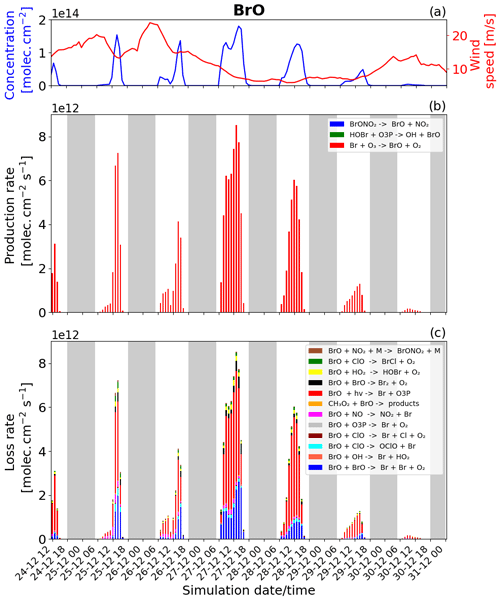
Herizo Narivelo, Paul David Hamer, Virginie Marécal, Luke Surl, Tjarda Roberts, Sophie Pelletier, Béatrice Josse, Jonathan Guth, Mickaël Bacles, Simon Warnach, Thomas Wagner, Stefano Corradini, Giuseppe Salerno, and Lorenzo Guerrieri
Atmos. Chem. Phys., 23, 10533–10561, https://doi.org/10.5194/acp-23-10533-2023, https://doi.org/10.5194/acp-23-10533-2023, 2023
Short summary
Short summary
Volcanic emissions emit large quantities of gases and primary aerosols that can play an important role in atmospheric chemistry. We present a study of the fate of volcanic bromine emissions from the eruption of Mount Etna around Christmas 2018. Using a numerical model and satellite observations, we analyse the impact of the volcanic plume and how it modifies the composition of the air over the whole Mediterranean basin, in particular on tropospheric ozone through the bromine-explosion cycle.
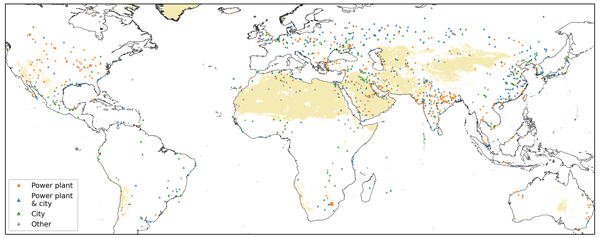
Steffen Beirle, Christian Borger, Adrian Jost, and Thomas Wagner
Earth Syst. Sci. Data, 15, 3051–3073, https://doi.org/10.5194/essd-15-3051-2023, https://doi.org/10.5194/essd-15-3051-2023, 2023
Short summary
Short summary
We present a catalog of nitrogen oxide emissions from point sources (like power plants or metal smelters) based on satellite observations of NO2 combined with meteorological wind fields.
Christian Borger, Steffen Beirle, and Thomas Wagner
Earth Syst. Sci. Data, 15, 3023–3049, https://doi.org/10.5194/essd-15-3023-2023, https://doi.org/10.5194/essd-15-3023-2023, 2023
Short summary
Short summary
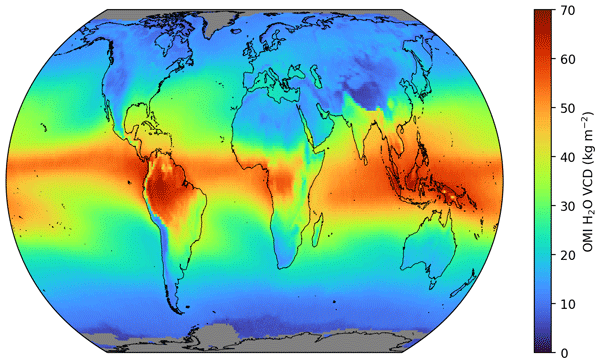
This study presents a long-term data set of monthly mean total column water vapour (TCWV) based on measurements of the Ozone Monitoring Instrument (OMI) covering the time range from January 2005 to December 2020. We describe how the TCWV values are retrieved from UV–Vis satellite spectra and demonstrate that the OMI TCWV data set is in good agreement with various different reference data sets. Moreover, we also show that it fulfills typical stability requirements for climate data records.
Ka Lok Chan, Pieter Valks, Klaus-Peter Heue, Ronny Lutz, Pascal Hedelt, Diego Loyola, Gaia Pinardi, Michel Van Roozendael, François Hendrick, Thomas Wagner, Vinod Kumar, Alkis Bais, Ankie Piters, Hitoshi Irie, Hisahiro Takashima, Yugo Kanaya, Yongjoo Choi, Kihong Park, Jihyo Chong, Alexander Cede, Udo Frieß, Andreas Richter, Jianzhong Ma, Nuria Benavent, Robert Holla, Oleg Postylyakov, Claudia Rivera Cárdenas, and Mark Wenig
Earth Syst. Sci. Data, 15, 1831–1870, https://doi.org/10.5194/essd-15-1831-2023, https://doi.org/10.5194/essd-15-1831-2023, 2023
Short summary
Short summary
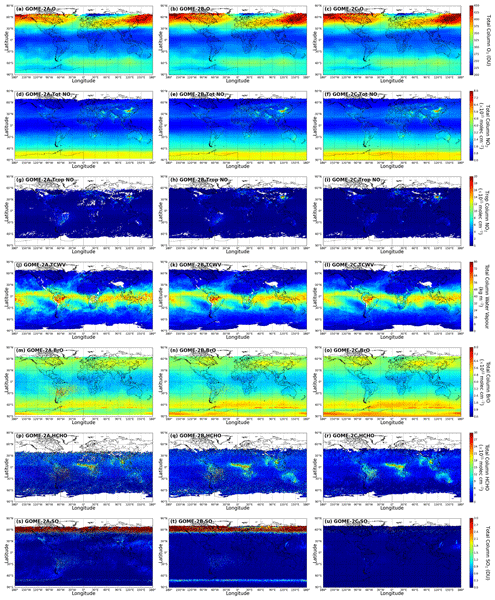
This paper presents the theoretical basis as well as verification and validation of the Global Ozone Monitoring Experiment-2 (GOME-2) daily and monthly level-3 products.
Thomas Wagner, Simon Warnach, Steffen Beirle, Nicole Bobrowski, Adrian Jost, Janis Puķīte, and Nicolas Theys
Atmos. Meas. Tech., 16, 1609–1662, https://doi.org/10.5194/amt-16-1609-2023, https://doi.org/10.5194/amt-16-1609-2023, 2023
Short summary
Short summary
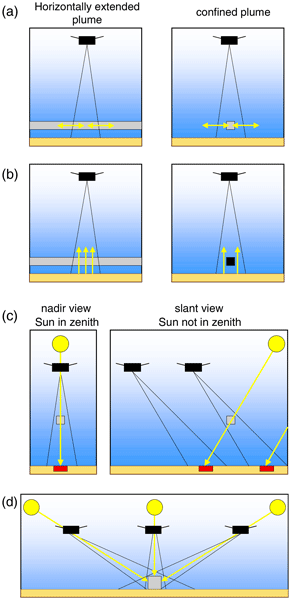
We investigate 3D effects of volcanic plumes on the retrieval results of satellite and ground-based UV–Vis observations. With its small ground pixels of 3.5 x 5.5 km², the TROPOMI instrument can detect much smaller volcanic plumes than previous instruments. At the same time, 3D effects become important. The effect of horizontal photon paths especially can lead to a strong underestimation of the derived plume contents of up to > 50 %, which can be further increased for strong absorbers like SO2.
Siyang Cheng, Xinghong Cheng, Jianzhong Ma, Xiangde Xu, Wenqian Zhang, Jinguang Lv, Gang Bai, Bing Chen, Siying Ma, Steffen Ziegler, Sebastian Donner, and Thomas Wagner
Atmos. Chem. Phys., 23, 3655–3677, https://doi.org/10.5194/acp-23-3655-2023, https://doi.org/10.5194/acp-23-3655-2023, 2023
Short summary
Short summary
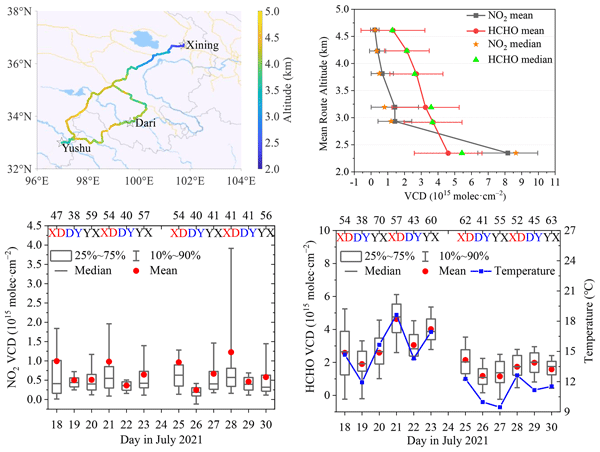
We made mobile MAX-DOAS measurements in the background atmosphere over the Tibetan Plateau in summer 2021. We retrieved the tropospheric NO2 and HCHO vertical column densities (VCDs) along extended driving routes and found a decreasing trend of the VCDs with altitude. Elevated NO2 VCDs along the driving routes could be attributed to enhanced traffic emissions from the towns crossed. The spatio-temporal distribution of the HCHO VCDs correlated strongly with the surface temperature.
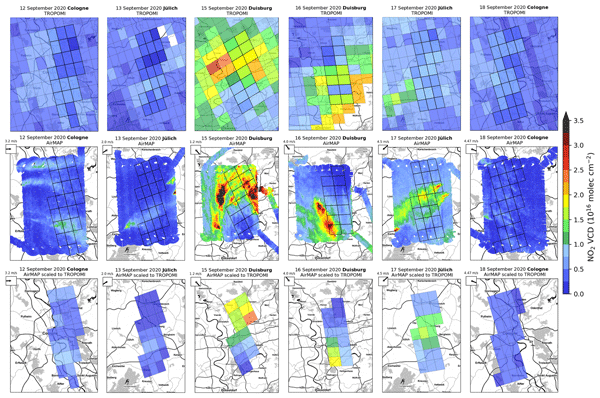
Kezia Lange, Andreas Richter, Anja Schönhardt, Andreas C. Meier, Tim Bösch, André Seyler, Kai Krause, Lisa K. Behrens, Folkard Wittrock, Alexis Merlaud, Frederik Tack, Caroline Fayt, Martina M. Friedrich, Ermioni Dimitropoulou, Michel Van Roozendael, Vinod Kumar, Sebastian Donner, Steffen Dörner, Bianca Lauster, Maria Razi, Christian Borger, Katharina Uhlmannsiek, Thomas Wagner, Thomas Ruhtz, Henk Eskes, Birger Bohn, Daniel Santana Diaz, Nader Abuhassan, Dirk Schüttemeyer, and John P. Burrows
Atmos. Meas. Tech., 16, 1357–1389, https://doi.org/10.5194/amt-16-1357-2023, https://doi.org/10.5194/amt-16-1357-2023, 2023
Short summary
Short summary
We present airborne imaging DOAS and ground-based stationary and car DOAS measurements conducted during the S5P-VAL-DE-Ruhr campaign in the Rhine-Ruhr region. The measurements are used to validate spaceborne NO2 data products from the Sentinel-5 Precursor TROPOspheric Monitoring Instrument (TROPOMI). Auxiliary data of the TROPOMI NO2 retrieval, such as spatially higher resolved a priori NO2 vertical profiles, surface reflectivity, and cloud treatment are investigated to evaluate their impact.

Katerina Garane, Ka Lok Chan, Maria-Elissavet Koukouli, Diego Loyola, and Dimitris Balis
Atmos. Meas. Tech., 16, 57–74, https://doi.org/10.5194/amt-16-57-2023, https://doi.org/10.5194/amt-16-57-2023, 2023
Short summary
Short summary
In this work, 2.5 years of TROPOMI/S5P Total Column Water Vapor (TCWV) observations retrieved from the blue wavelength band are validated against co-located precipitable water measurements from NASA AERONET, which uses Cimel Sun photometers globally. Overall, the TCWV product agrees well on a global scale with the ground-based dataset (Pearson correl. coefficient 0.909) and has a mean relative bias of −2.7 ± 4.9 % with respect to the AERONET observations for moderate albedo and cloudiness.
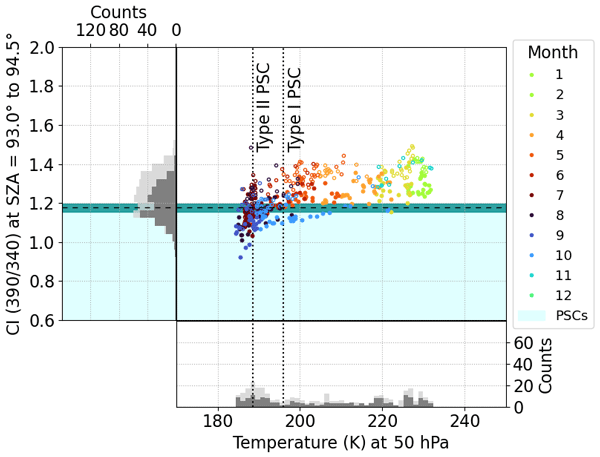
Bianca Lauster, Steffen Dörner, Carl-Fredrik Enell, Udo Frieß, Myojeong Gu, Janis Puķīte, Uwe Raffalski, and Thomas Wagner
Atmos. Chem. Phys., 22, 15925–15942, https://doi.org/10.5194/acp-22-15925-2022, https://doi.org/10.5194/acp-22-15925-2022, 2022
Short summary
Short summary
Polar stratospheric clouds (PSCs) are an important component in ozone chemistry. Here, we use two differential optical absorption spectroscopy (DOAS) instruments in the Antarctic and Arctic to investigate the occurrence of PSCs based on the colour index, i.e. the colour of the zenith sky. Additionally using radiative transfer simulations, the variability and the seasonal cycle of PSC occurrence are analysed and an unexpectedly high signal during spring suggests the influence of volcanic aerosol.
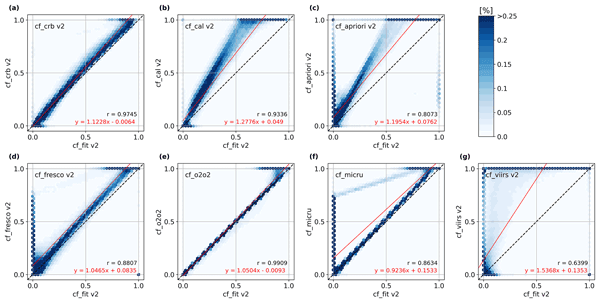
Miriam Latsch, Andreas Richter, Henk Eskes, Maarten Sneep, Ping Wang, Pepijn Veefkind, Ronny Lutz, Diego Loyola, Athina Argyrouli, Pieter Valks, Thomas Wagner, Holger Sihler, Michel van Roozendael, Nicolas Theys, Huan Yu, Richard Siddans, and John P. Burrows
Atmos. Meas. Tech., 15, 6257–6283, https://doi.org/10.5194/amt-15-6257-2022, https://doi.org/10.5194/amt-15-6257-2022, 2022
Short summary
Short summary
The article investigates different S5P TROPOMI cloud retrieval algorithms for tropospheric trace gas retrievals. The cloud products show differences primarily over snow and ice and for scenes under sun glint. Some issues regarding across-track dependence are found for the cloud fractions as well as for the cloud heights.
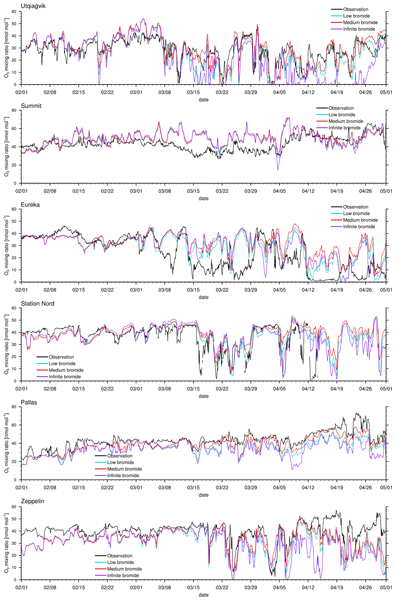
Maximilian Herrmann, Moritz Schöne, Christian Borger, Simon Warnach, Thomas Wagner, Ulrich Platt, and Eva Gutheil
Atmos. Chem. Phys., 22, 13495–13526, https://doi.org/10.5194/acp-22-13495-2022, https://doi.org/10.5194/acp-22-13495-2022, 2022
Short summary
Short summary
Ozone depletion events (ODEs) are a common occurrence in the boundary layer during Arctic spring. Ozone is depleted by bromine species in an autocatalytic reaction cycle. Previous modeling studies assumed an infinite bromine source at the ground. An alternative emission scheme is presented in which a finite amount of bromide in the snow is tracked over time. The Weather Research and Forecasting model coupled with Chemistry (WRF-Chem) is used to study ODEs in the Arctic from February to May 2019.
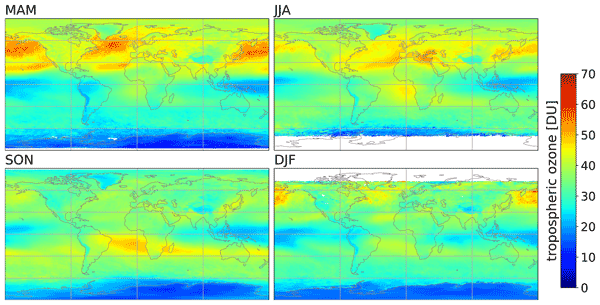
Klaus-Peter Heue, Diego Loyola, Fabian Romahn, Walter Zimmer, Simon Chabrillat, Quentin Errera, Jerry Ziemke, and Natalya Kramarova
Atmos. Meas. Tech., 15, 5563–5579, https://doi.org/10.5194/amt-15-5563-2022, https://doi.org/10.5194/amt-15-5563-2022, 2022
Short summary
Short summary
To retrieve tropospheric ozone column information, we subtract stratospheric column data of BASCOE from TROPOMI/S5P total ozone columns.
The new S5P-BASCOE data agree well with existing tropospheric data like OMPS-MERRA-2. The data are also compared to ozone soundings.
The tropospheric ozone columns show the expected temporal and spatial patterns. We will also apply the algorithm to future UV nadir missions like Sentinel 4 or 5 or to recent and ongoing missions like GOME_2 or OMI.

Christian Borger, Steffen Beirle, and Thomas Wagner
Atmos. Chem. Phys., 22, 10603–10621, https://doi.org/10.5194/acp-22-10603-2022, https://doi.org/10.5194/acp-22-10603-2022, 2022
Short summary
Short summary
In this study, we analyse trends of total column water vapour (TCWV) using multiple years of satellite observations and find, on the global average, an increase in the TCWV amount by about 0.21 % per year. Further investigations of the hydrological cycle reveal that the assumption of temporally invariant relative humidity is not always fulfilled and that the response of the global water vapour turnover time to global warming is 2 to 3 times higher than previously reported values.
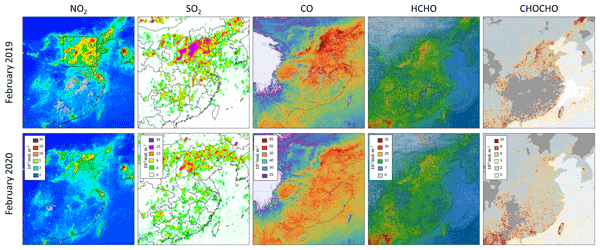
Pieternel F. Levelt, Deborah C. Stein Zweers, Ilse Aben, Maite Bauwens, Tobias Borsdorff, Isabelle De Smedt, Henk J. Eskes, Christophe Lerot, Diego G. Loyola, Fabian Romahn, Trissevgeni Stavrakou, Nicolas Theys, Michel Van Roozendael, J. Pepijn Veefkind, and Tijl Verhoelst
Atmos. Chem. Phys., 22, 10319–10351, https://doi.org/10.5194/acp-22-10319-2022, https://doi.org/10.5194/acp-22-10319-2022, 2022
Short summary
Short summary
Using the COVID-19 lockdown periods as an example, we show how Sentinel-5P/TROPOMI trace gas data (NO2, SO2, CO, HCHO and CHOCHO) can be used to understand impacts on air quality for regions and cities around the globe. We also provide information for both experienced and inexperienced users about how we created the data using state-of-the-art algorithms, where to get the data, methods taking meteorological and seasonal variability into consideration, and insights for future studies.
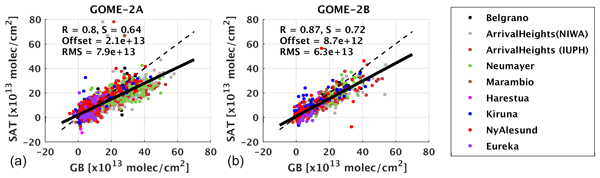
Gaia Pinardi, Michel Van Roozendael, François Hendrick, Andreas Richter, Pieter Valks, Ramina Alwarda, Kristof Bognar, Udo Frieß, José Granville, Myojeong Gu, Paul Johnston, Cristina Prados-Roman, Richard Querel, Kimberly Strong, Thomas Wagner, Folkard Wittrock, and Margarita Yela Gonzalez
Atmos. Meas. Tech., 15, 3439–3463, https://doi.org/10.5194/amt-15-3439-2022, https://doi.org/10.5194/amt-15-3439-2022, 2022
Short summary
Short summary
We report on the GOME-2A and GOME-2B OClO dataset (2007 to 2016, from the EUMETSAT's AC SAF) validation using data from nine NDACC zenith-scattered-light DOAS (ZSL-DOAS) instruments distributed in both the Arctic and Antarctic. Specific sensitivity tests are performed on the ground-based data to estimate the impact of the different OClO DOAS analysis settings and their typical errors. Good agreement is found for both the inter-annual variability and the overall OClO seasonal behavior.
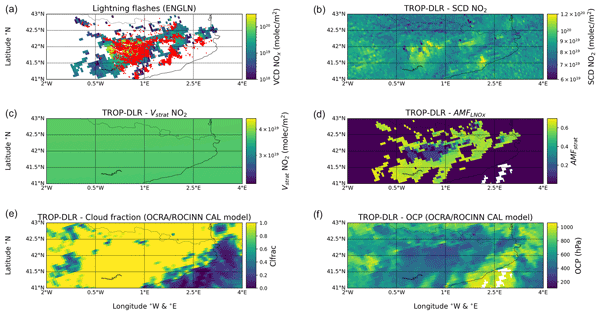
Francisco J. Pérez-Invernón, Heidi Huntrieser, Thilo Erbertseder, Diego Loyola, Pieter Valks, Song Liu, Dale J. Allen, Kenneth E. Pickering, Eric J. Bucsela, Patrick Jöckel, Jos van Geffen, Henk Eskes, Sergio Soler, Francisco J. Gordillo-Vázquez, and Jeff Lapierre
Atmos. Meas. Tech., 15, 3329–3351, https://doi.org/10.5194/amt-15-3329-2022, https://doi.org/10.5194/amt-15-3329-2022, 2022
Short summary
Short summary
Lightning, one of the major sources of nitrogen oxides in the atmosphere, contributes to the tropospheric concentration of ozone and to the oxidizing capacity of the atmosphere. In this work, we contribute to improving the estimation of lightning-produced nitrogen oxides in the Ebro Valley and the Pyrenees by using two different TROPOMI products and comparing the results.

Mark Weber, Carlo Arosio, Melanie Coldewey-Egbers, Vitali E. Fioletov, Stacey M. Frith, Jeannette D. Wild, Kleareti Tourpali, John P. Burrows, and Diego Loyola
Atmos. Chem. Phys., 22, 6843–6859, https://doi.org/10.5194/acp-22-6843-2022, https://doi.org/10.5194/acp-22-6843-2022, 2022
Short summary
Short summary
Long-term trends in column ozone have been determined from five merged total ozone datasets spanning the period 1978–2020. We show that ozone recovery due to the decline in stratospheric halogens after the 1990s (as regulated by the Montreal Protocol) is evident outside the tropical region and amounts to half a percent per decade. The ozone recovery in the Northern Hemisphere is however compensated for by the negative long-term trend contribution from atmospheric dynamics since the year 2000.
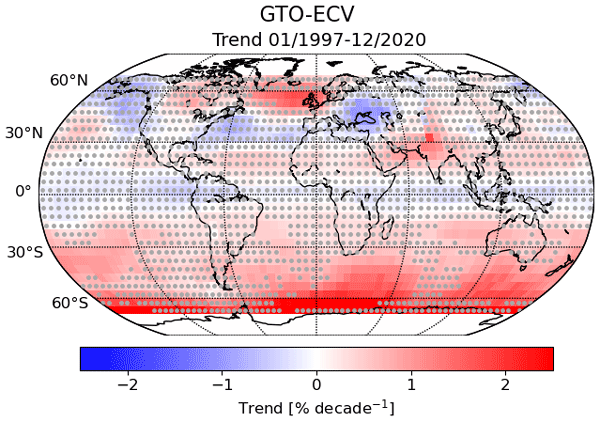
Melanie Coldewey-Egbers, Diego G. Loyola, Christophe Lerot, and Michel Van Roozendael
Atmos. Chem. Phys., 22, 6861–6878, https://doi.org/10.5194/acp-22-6861-2022, https://doi.org/10.5194/acp-22-6861-2022, 2022
Short summary
Short summary
Monitoring the long-term evolution of ozone and the evaluation of trends is essential to assess the efficacy of the Montreal Protocol and its amendments. The first signs of recovery as a consequence of decreasing amounts of ozone-depleting substances have been reported, but the impact needs to be investigated in more detail. In the Southern Hemisphere significant positive trends were found, but in the Northern Hemisphere the expected increase is still not yet visible.
Maria-Elissavet Koukouli, Konstantinos Michailidis, Pascal Hedelt, Isabelle A. Taylor, Antje Inness, Lieven Clarisse, Dimitris Balis, Dmitry Efremenko, Diego Loyola, Roy G. Grainger, and Christian Retscher
Atmos. Chem. Phys., 22, 5665–5683, https://doi.org/10.5194/acp-22-5665-2022, https://doi.org/10.5194/acp-22-5665-2022, 2022
Short summary
Short summary
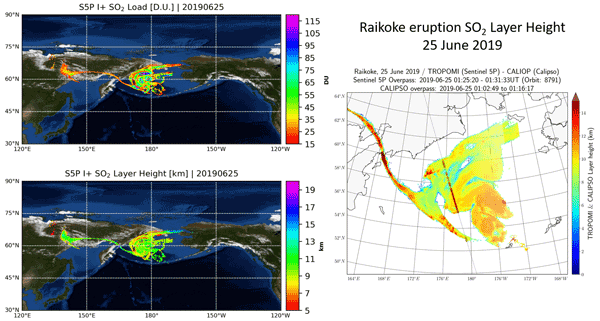
Volcanic eruptions eject large amounts of ash and trace gases into the atmosphere. The use of space-borne instruments enables the global monitoring of volcanic SO2 emissions in an economical and risk-free manner. The main aim of this paper is to present its extensive verification, accomplished within the ESA S5P+I: SO2LH project, over major recent volcanic eruptions, against collocated space-borne measurements, as well as assess its impact on the forecasts provided by CAMS.
Gerrit Kuhlmann, Ka Lok Chan, Sebastian Donner, Ying Zhu, Marc Schwaerzel, Steffen Dörner, Jia Chen, Andreas Hueni, Duc Hai Nguyen, Alexander Damm, Annette Schütt, Florian Dietrich, Dominik Brunner, Cheng Liu, Brigitte Buchmann, Thomas Wagner, and Mark Wenig
Atmos. Meas. Tech., 15, 1609–1629, https://doi.org/10.5194/amt-15-1609-2022, https://doi.org/10.5194/amt-15-1609-2022, 2022
Short summary
Short summary
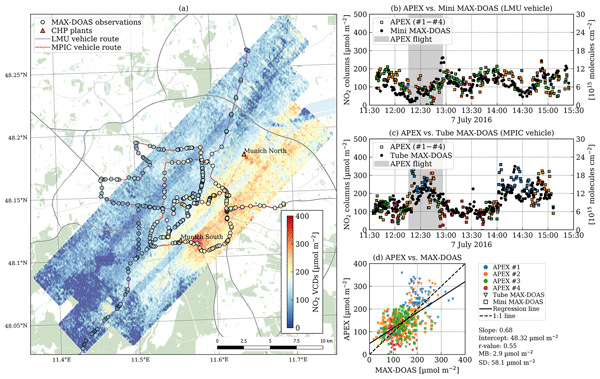
Nitrogen dioxide (NO2) is an air pollutant whose concentration often exceeds air quality guideline values, especially in urban areas. To map the spatial distribution of NO2 in Munich, we conducted the Munich NO2 Imaging Campaign (MuNIC), where NO2 was measured with stationary, mobile, and airborne in situ and remote sensing instruments. The campaign provides a unique dataset that has been used to compare the different instruments and to study the spatial variability of NO2 and its sources.
Leon Kuhn, Jonas Kuhn, Thomas Wagner, and Ulrich Platt
Atmos. Meas. Tech., 15, 1395–1414, https://doi.org/10.5194/amt-15-1395-2022, https://doi.org/10.5194/amt-15-1395-2022, 2022
Short summary
Short summary
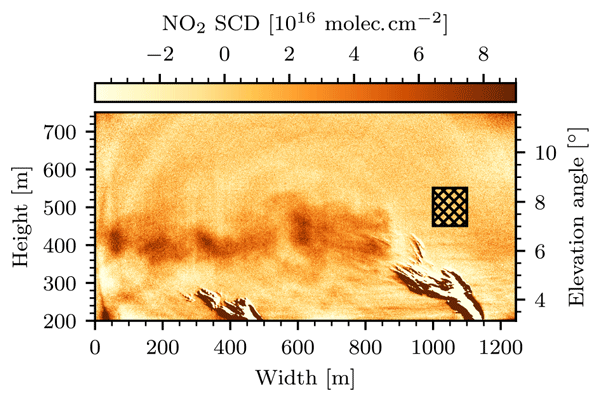
We present a novel instrument for imaging measurements of NO2 with high spatiotemporal resolution based on gas correlation spectroscopy, called the GCS NO2 camera. The instrument works by placing two gas cells (cuvettes) in front of two photosensor arrays, one filled with air and one filled with a high concentration of NO2, acting as a non-dispersive spectral filter. NO2 images are then generated on the basis of the signal ratio of the two channels in the spectral region of 430–445 nm.
Dimitris Karagkiozidis, Martina Michaela Friedrich, Steffen Beirle, Alkiviadis Bais, François Hendrick, Kalliopi Artemis Voudouri, Ilias Fountoulakis, Angelos Karanikolas, Paraskevi Tzoumaka, Michel Van Roozendael, Dimitris Balis, and Thomas Wagner
Atmos. Meas. Tech., 15, 1269–1301, https://doi.org/10.5194/amt-15-1269-2022, https://doi.org/10.5194/amt-15-1269-2022, 2022
Short summary
Short summary
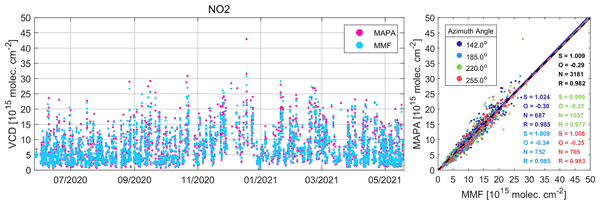
In this study we focus on the retrieval of aerosol, NO2, and HCHO vertical profiles from multi-axis differential optical absorption spectroscopy (MAX-DOAS) observations for the first time over Thessaloniki, Greece. We use two independent inversion algorithms for the profile retrievals. We evaluate their performance, we intercompare their results, and we validate their products with ancillary data, measured by other co-located reference instruments.
Steffen Beirle, Christian Borger, Steffen Dörner, Vinod Kumar, and Thomas Wagner
Atmos. Meas. Tech., 15, 987–1006, https://doi.org/10.5194/amt-15-987-2022, https://doi.org/10.5194/amt-15-987-2022, 2022
Short summary
Short summary
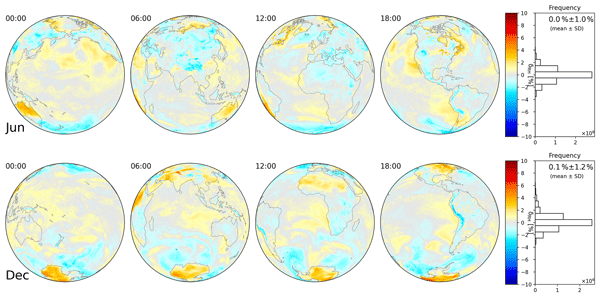
We present a formalism that relates the vertical column density (VCD) of the oxygen collision complex O4 to surface values of temperature and pressure, based on physical laws. In addition, we propose an empirical modification which also accounts for surface relative humidity (RH). This allows for simple and quick but still accurate calculation of the O4 VCD without the need for constructing full vertical profiles, which is expected to be useful in particular for MAX-DOAS applications.
Antje Inness, Melanie Ades, Dimitris Balis, Dmitry Efremenko, Johannes Flemming, Pascal Hedelt, Maria-Elissavet Koukouli, Diego Loyola, and Roberto Ribas
Geosci. Model Dev., 15, 971–994, https://doi.org/10.5194/gmd-15-971-2022, https://doi.org/10.5194/gmd-15-971-2022, 2022
Short summary
Short summary
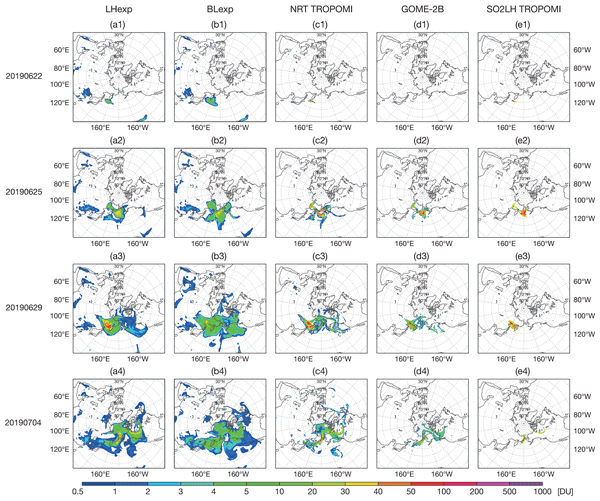
This paper describes the way that the Copernicus Atmosphere Monitoring Service (CAMS) produces forecasts of volcanic SO2. These forecasts are provided routinely every day. They are created by blending SO2 data from satellite instruments (TROPOMI and GOME-2) with the CAMS model. We show that the quality of the CAMS SO2 forecasts can be improved if additional information about the height of volcanic plumes is provided in the satellite data.
Fei Liu, Zhining Tao, Steffen Beirle, Joanna Joiner, Yasuko Yoshida, Steven J. Smith, K. Emma Knowland, and Thomas Wagner
Atmos. Chem. Phys., 22, 1333–1349, https://doi.org/10.5194/acp-22-1333-2022, https://doi.org/10.5194/acp-22-1333-2022, 2022
Short summary
Short summary
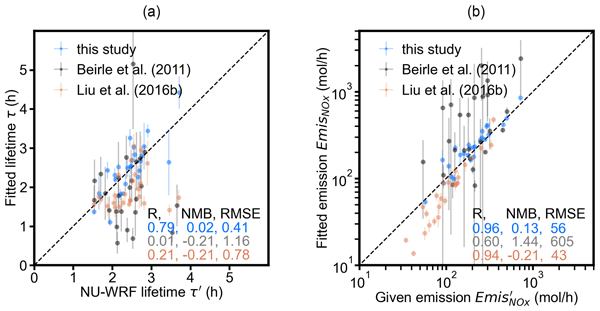
In this work, we present a novel method to infer NOx emissions and lifetimes based on tropospheric NO2 observations together with reanalysis wind fields for cities located in polluted backgrounds. We evaluate the accuracy of the method using synthetic NO2 observations derived from a high-resolution model simulation. Our work provides an estimate for uncertainties in satellite-derived emissions inferred from chemical transport model (CTM)-independent approaches.
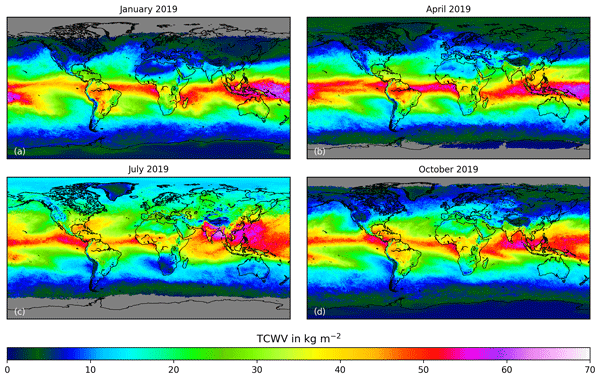
Tobias Küchler, Stefan Noël, Heinrich Bovensmann, John Philip Burrows, Thomas Wagner, Christian Borger, Tobias Borsdorff, and Andreas Schneider
Atmos. Meas. Tech., 15, 297–320, https://doi.org/10.5194/amt-15-297-2022, https://doi.org/10.5194/amt-15-297-2022, 2022
Short summary
Short summary
We applied the air-mass-corrected differential optical absorption spectroscopy (AMC-DOAS) method to derive total column water vapour (TCWV) from Sentinel-5P measurements and compared it to independent data sets. The correlation coefficients of typically more than 0.9 and the small deviations up to 2.5 kg m−2 reveal good agreement between our data product and other TCWV data sets. In particular for the different Sentinel-5P water vapour products, the deviations are around 1 kg m−2.
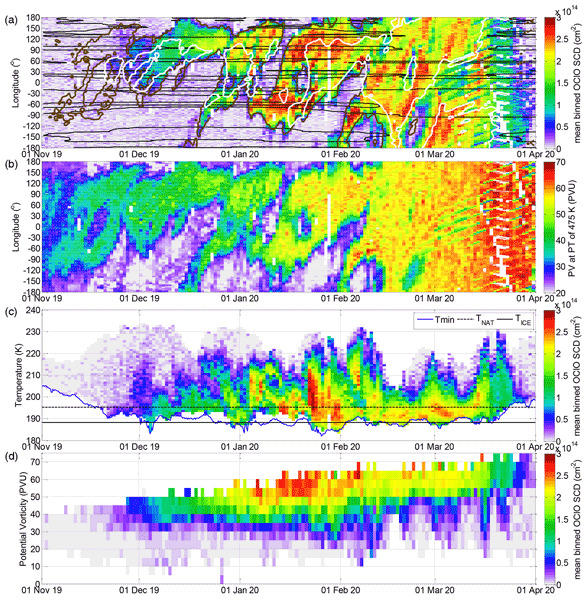
Jānis Puķīte, Christian Borger, Steffen Dörner, Myojeong Gu, and Thomas Wagner
Atmos. Chem. Phys., 22, 245–272, https://doi.org/10.5194/acp-22-245-2022, https://doi.org/10.5194/acp-22-245-2022, 2022
Short summary
Short summary
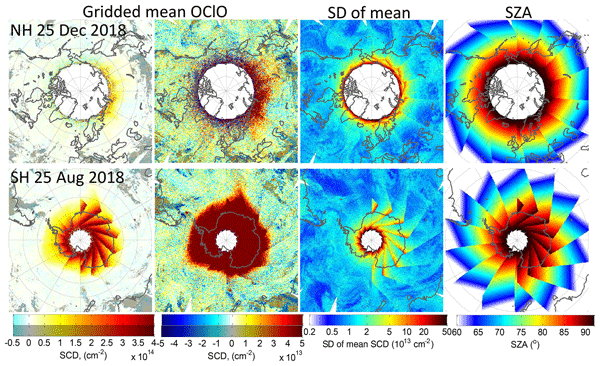
Chlorine dioxide (OClO) is an indicator for chlorine activation. New OClO data by TROPOMI (S5P) are interpreted in a meteorological context and related to CALIOP PSC observations. We report very high OClO levels for the northern hemispheric winter 2019/20 with an extraordinarily long period with a stable polar vortex. A minor stratospheric warming in the Southern Hemisphere was also observed in September 2019, where usual OClO values rapidly deactivated 1–2 weeks earlier.
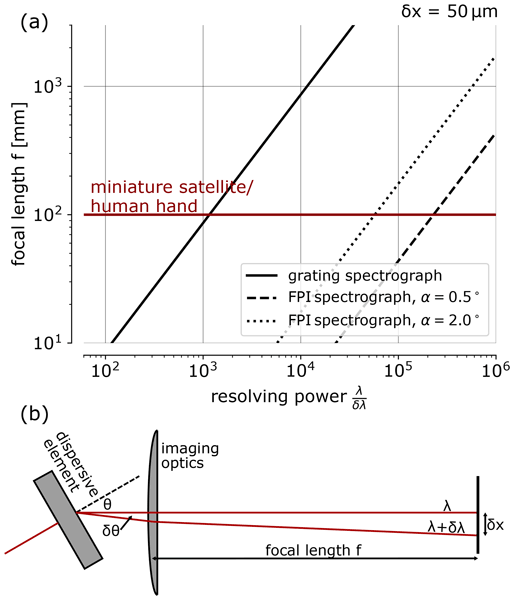
Jonas Kuhn, Nicole Bobrowski, Thomas Wagner, and Ulrich Platt
Atmos. Meas. Tech., 14, 7873–7892, https://doi.org/10.5194/amt-14-7873-2021, https://doi.org/10.5194/amt-14-7873-2021, 2021
Short summary
Short summary
We propose spectrograph implementations using Fabry–Pérot interferometers for atmospheric trace gas remote sensing. Compared with widely used grating spectrographs, we find substantial light throughput and mobility advantages for high resolving powers. Besides lowering detection limits and increasing the spatial and temporal resolution of many atmospheric trace gas measurements, this approach might enable remote sensing of further important gases such as tropospheric OH radicals.
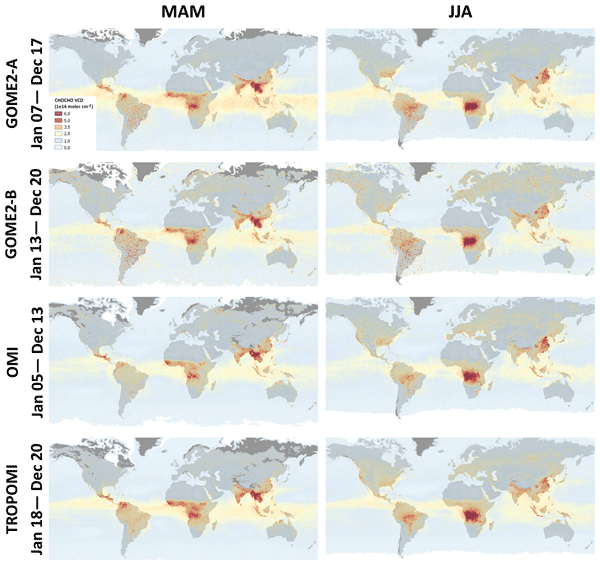
Christophe Lerot, François Hendrick, Michel Van Roozendael, Leonardo M. A. Alvarado, Andreas Richter, Isabelle De Smedt, Nicolas Theys, Jonas Vlietinck, Huan Yu, Jeroen Van Gent, Trissevgeni Stavrakou, Jean-François Müller, Pieter Valks, Diego Loyola, Hitoshi Irie, Vinod Kumar, Thomas Wagner, Stefan F. Schreier, Vinayak Sinha, Ting Wang, Pucai Wang, and Christian Retscher
Atmos. Meas. Tech., 14, 7775–7807, https://doi.org/10.5194/amt-14-7775-2021, https://doi.org/10.5194/amt-14-7775-2021, 2021
Short summary
Short summary
Global measurements of glyoxal tropospheric columns from the satellite instrument TROPOMI are presented. Such measurements can contribute to the estimation of atmospheric emissions of volatile organic compounds. This new glyoxal product has been fully characterized with a comprehensive error budget, with comparison with other satellite data sets as well as with validation based on independent ground-based remote sensing glyoxal observations.
Jānis Puķīte, Christian Borger, Steffen Dörner, Myojeong Gu, Udo Frieß, Andreas Carlos Meier, Carl-Fredrik Enell, Uwe Raffalski, Andreas Richter, and Thomas Wagner
Atmos. Meas. Tech., 14, 7595–7625, https://doi.org/10.5194/amt-14-7595-2021, https://doi.org/10.5194/amt-14-7595-2021, 2021
Short summary
Short summary
Chlorine dioxide (OClO) is used as an indicator for chlorine activation. We present a new differential optical absorption spectroscopy retrieval algorithm for OClO from measurements of TROPOMI on the Sentinel-5P satellite. To achieve a substantially improved accuracy for the weak absorber OClO, we consider several additional fit parameters accounting for various higher-order spectral effects. The retrieved OClO slant column densities are compared with ground-based zenith sky measurements.
Daan Hubert, Klaus-Peter Heue, Jean-Christopher Lambert, Tijl Verhoelst, Marc Allaart, Steven Compernolle, Patrick D. Cullis, Angelika Dehn, Christian Félix, Bryan J. Johnson, Arno Keppens, Debra E. Kollonige, Christophe Lerot, Diego Loyola, Matakite Maata, Sukarni Mitro, Maznorizan Mohamad, Ankie Piters, Fabian Romahn, Henry B. Selkirk, Francisco R. da Silva, Ryan M. Stauffer, Anne M. Thompson, J. Pepijn Veefkind, Holger Vömel, Jacquelyn C. Witte, and Claus Zehner
Atmos. Meas. Tech., 14, 7405–7433, https://doi.org/10.5194/amt-14-7405-2021, https://doi.org/10.5194/amt-14-7405-2021, 2021
Short summary
Short summary
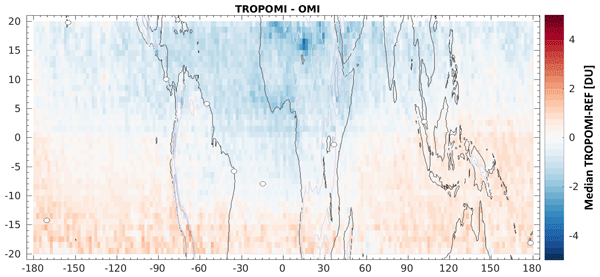
We assess the first 2 years of TROPOMI tropical tropospheric ozone column data. Comparisons to reference measurements by ozonesonde and satellite sensors show that TROPOMI bias (−0.1 to +2.3 DU) and precision (1.5 to 2.5 DU) meet mission requirements. Potential causes of bias and its spatio-temporal structure are discussed, as well as ways to identify sampling errors. Our analysis of known geophysical patterns demonstrates the improved performance of TROPOMI with respect to its predecessors.
Song Liu, Pieter Valks, Gaia Pinardi, Jian Xu, Ka Lok Chan, Athina Argyrouli, Ronny Lutz, Steffen Beirle, Ehsan Khorsandi, Frank Baier, Vincent Huijnen, Alkiviadis Bais, Sebastian Donner, Steffen Dörner, Myrto Gratsea, François Hendrick, Dimitris Karagkiozidis, Kezia Lange, Ankie J. M. Piters, Julia Remmers, Andreas Richter, Michel Van Roozendael, Thomas Wagner, Mark Wenig, and Diego G. Loyola
Atmos. Meas. Tech., 14, 7297–7327, https://doi.org/10.5194/amt-14-7297-2021, https://doi.org/10.5194/amt-14-7297-2021, 2021
Short summary
Short summary
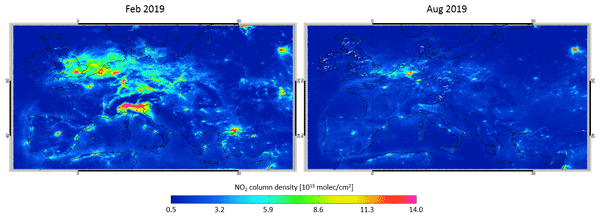
In this work, an improved tropospheric NO2 retrieval algorithm from TROPOMI measurements over Europe is presented. The stratospheric estimation is implemented with correction for the dependency of the stratospheric NO2 on the viewing geometry. The AMF calculation is implemented using improved surface albedo, a priori NO2 profiles, and cloud correction. The improved tropospheric NO2 data show good correlations with ground-based MAX-DOAS measurements.
Nicolas Theys, Vitali Fioletov, Can Li, Isabelle De Smedt, Christophe Lerot, Chris McLinden, Nickolay Krotkov, Debora Griffin, Lieven Clarisse, Pascal Hedelt, Diego Loyola, Thomas Wagner, Vinod Kumar, Antje Innes, Roberto Ribas, François Hendrick, Jonas Vlietinck, Hugues Brenot, and Michel Van Roozendael
Atmos. Chem. Phys., 21, 16727–16744, https://doi.org/10.5194/acp-21-16727-2021, https://doi.org/10.5194/acp-21-16727-2021, 2021
Short summary
Short summary
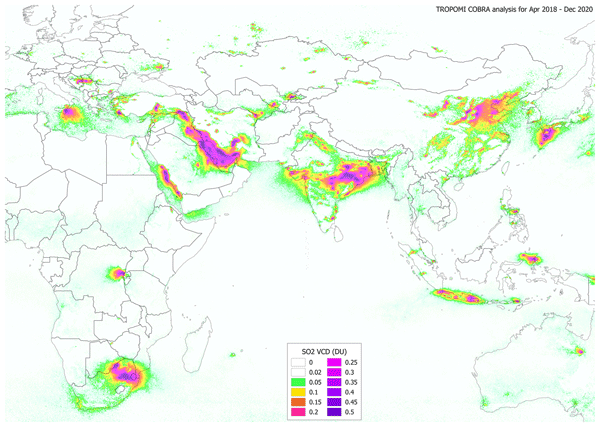
We present a new algorithm to retrieve sulfur dioxide from space UV measurements. We apply the technique to high-resolution TROPOMI measurements and demonstrate the high sensitivity of the approach to weak SO2 emissions worldwide with an unprecedented limit of detection of 8 kt yr−1. This result has broad implications for atmospheric science studies dealing with improving emission inventories and identifying and quantifying missing sources, in the context of air quality and climate.
Ulrich Platt, Thomas Wagner, Jonas Kuhn, and Thomas Leisner
Atmos. Meas. Tech., 14, 6867–6883, https://doi.org/10.5194/amt-14-6867-2021, https://doi.org/10.5194/amt-14-6867-2021, 2021
Short summary
Short summary
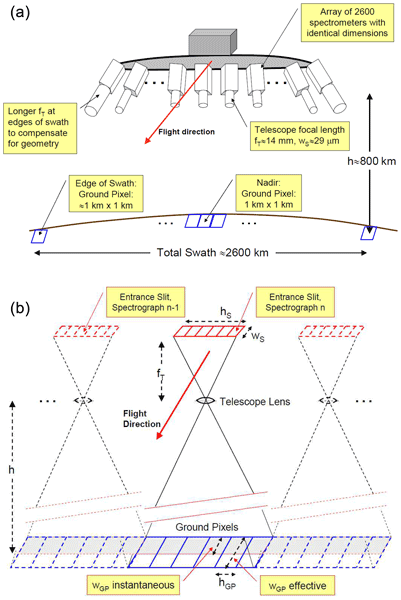
Absorption spectroscopy of scattered sunlight is extremely useful for the analysis of atmospheric trace gas distributions. A central parameter for the achievable sensitivity of spectroscopic instruments is the light throughput, which can be enhanced in a number of ways. We present new ideas and considerations of how instruments could be optimized. Particular emphasis is on arrays of massively parallel instruments. Such arrays can reduce the size and weight of instruments by orders of magnitude.
Cited articles
Andersson, A., Fennig, K., Klepp, C., Bakan, S., Graßl, H., and Schulz, J.: The Hamburg Ocean Atmosphere Parameters and Fluxes from Satellite Data – HOAPS-3, Earth Syst. Sci. Data, 2, 215–234, https://doi.org/10.5194/essd-2-215-2010, 2010.
Antón, M., Loyola, D., Román, R., and Vömel, H.: Validation of GOME-2/MetOp-A total water vapour column using reference radiosonde data from GRUAN network, Atmos. Meas. Tech. Discuss., 7, 9573–9601, https://doi.org/10.5194/amtd-7-9573-2014, 2014.
Bauer, P. and P. Schlüssel: Rainfall, total water, ice water, and water vapour over sea from polarized microwave simulations and Special Sensor Microwave/Imager data, J. Geophys. Res., 98, 20737–20759, 1993.
Bentamy, A., Katsaros, K. B., Mestas-Nunez, A. M., Drennan, W. M., Forde, B. E., and Roquet, H.: Satellite estimates of wind speed and latent heat flux over the global oceans, J. Climate, 16, 637–655, 2003.
Bevis, M., Businger, S., Herring, T. A., Rocken, C., Anthes, R. A., and Ware, R. H.: GPS meteorology: Remote sensing of atmospheric water-vapor using the Global Positioning System, J. Geophys. Res., 97,15, 787–15,801, 1992.
Bevis, M., Businger, S., Chiswell, S., Herring, T. A., Anthes, R. A., Rocken, C., and Ware, R. H.: GPS meteorology: Mapping zenith wet delays onto precipitable water, J. Appl. Meteorol., 33, 379–386, 1994.
Bovensmann, H., Burrows, J. P., Buchwitz, M., Frerick, J., Noël, S., Rozanov, V. V., Chance K. V., and Goede, A. H. P.: SCIAMACHY – Mission objectives and measurement modes, J. Atmos. Sci., 56, 127–150, 1999.
Burrows, J. P., Weber, M., Buchwitz, M., Rozanov, V., Ladstätter-Weißenmayer, A., Richter, A., de Beek, R., Hoogen, R., Bramstedt, K., Eichmann, K.-U., Eisinger, M., and Perner, D.: The Global Ozone Monitoring Experiment (GOME): Mission Concept and First Scientific Results, J. Atmos. Sci., 56, 151–175, 1999.
Callies, J., Corpaccioli, E., Eisinger, M., Hahne, A., and Lefebvre, A.: GOME-2 – MetOp's Second Generation Sensor for Operational Ozone Monitoring, ESA Bulletin, No. 102, 2000.
Casadio, S., Zehner, C., Piscane, G., and Putz, E.: Emperical Retrieval of Atmospheric Airmass factor (ERA) for the Measurement of Water Vapor Vertical Content using GOME Data, Geophys. Res. Lett. 27, 1483–1486, 2000.
Chaboureau, J., Alain, C., and Nolle, A. S.: Remote sensing of the vertical distribution of atmospheric water vapour from the TOVS observations: Method and validation, J. Geophys. Res.-Atmos., (1984–2012), 103, 8743–8752, 1998.
Clerbaux, C., Boynard, A., Clarisse, L., George, M., Hadji-Lazaro, J., Herbin, H., Hurtmans, D., Pommier, M., Razavi, A., Turquety, S., Wespes, C., and Coheur, P.-F.: Monitoring of atmospheric composition using the thermal infrared IASI/MetOp sounder, Atmos. Chem. Phys., 9, 6041–6054, https://doi.org/10.5194/acp-9-6041-2009, 2009.
Cox, C. and W. H. Munk: Measurements of the roughness of the sea surface from photographs of the sun's glitter, J. Opt. Soc. Am., 44, 838–850, 1954.
Dai, A., Wang, J., Ware, R. H., and Hove, T. V.: Diurnal variation in water vapour over North America and its implications for sampling errors in radiosonde humidity, J. Geophys. Res., 107, 11.1–11.14, https://doi.org/10.1029/2001JD000642, 2002.
Deblonde G.: NWP SAF User's Guide: Standalone 1D-var scheme for the SSM/I, SSMIS and AMSU, NWPSAF-MO-UD-001 Version 1.0, 22 August, 2001.
Dee, D. P., Uppala, S. M., Simmons, A. J., Berrisford, P., Poli, P., Kobayashi, S., Andrae, U., Balmaseda, M. A., Balsamo, G., Bauer, P., Bechtold, P., Beljaars, A. C. M., van de Berg, L., Bidlot, J., Bormann, N., Delsol, C., Dragani, R., Fuentes, M., Geer, A. J., Haimberger, L., Healy, S. B., Hersbach, H., Hólm, E. V., Isaksen, L., Kållberg, P., Köhler, M., Matricardi, M., McNally, A. P., Monge-Sanz, B. M., Morcrette, J. J., Park, B. K., Peubey, C., de Rosnay, P., Tavolato, C., Thépaut, J. N., and Vitart, F.:: The ERA-Interim reanalysis: Configuration and performance of the data assimilation system. Quart. J. Roy. Meteor. Soc., 137, 553–597, 2011a.
Dee, D., Berrisford, P., Bosilovich, M. G., Chelliah, M., Compo, G., Ebita, A., Jones, P. D., Kobayashi, S., Kumar, A., Rutledge, G., Saha, S., Sato, H., Simmons, A., Smith, C. and Vose, R.: The use of reanalysis data for monitoring the state of the climate [in The State of the Climate in 2010], Bull. Amer. Meteor. Soc., 92, S34–S35, 2011b.
Dee, D. P. and Uppala, S.: Variational bias correction of satellite radiance data in the ERA-Interim reanalysis, Q. J. R. Meteorol. Soc., 135: 1830–841, https://doi.org/10.1002/qj.493, 2009.
Deutschmann, T., Beirle, S., Frieß, U., Grzegorski, M., Kern, C., Kritten, L., Platt, U., Pukite, J., Wagner, T., Werner, B., Pfeilsticker, K.: The Monte Carlo Atmospheric Radiative Transfer Model McArtim: Introduction and Validation of Jacobians and 3D Features, J. Quant. Spectr. Rad. Transf., 112, 1119–1137, https://doi.org/10.1016/j.jqsrt.2010.12.009, 2011.
du Piesanie, A., Piters, A. J. M., Aben, I., Schrijver, H., Wang, P., and Noël, S.: Validation of two independent retrievals of SCIAMACHY water vapour columns using radiosonde data, Atmos. Meas. Tech. Discuss., 6, 665–702, https://doi.org/10.5194/amtd-6-665-2013, 2013.
Fennig, K., Andersson, A., Bakan, S., Klepp, C., and Schroeder, M.: Hamburg Ocean Atmosphere Parameters and Fluxes from Satellite Data – HOAPS 3.2 – Monthly Means / 6-Hourly Composites, Satellite Application Facility on Climate Monitoring, https://doi.org/10.5676/EUM_SAF_CM/HOAPS/V001, 2012.
Fournier, N., Stammes, P., de Graaf, M., van der A, R., Piters, A., Grzegorski, M., and Kokhanovsky, A.: Improving cloud information over deserts from SCIAMACHY Oxygen A-band measurements, Atmos. Chem. Phys., 6, 163–172, https://doi.org/10.5194/acp-6-163-2006, 2006.
Gaffen, D. J., Barnett, T. P., and Elliott, W. P.: Space and time scales of global tropospheric moisture, J. Clim., 4, 989–1008, 1991.
Gomer, T., Brauers, T., Heintz, F., Stutz, J., and Platt, U.: MFC user manual, version 1.98, inhouse publication, Institut für Umweltphysik, University of Heidelberg, Germany, 1–173, 1993.
Grossi, M., Kalakoski, N., and Valks, P.: O3M SAF ORR Validation Report, SAF/O3M/DLR/ORR/H2O, Issue 01/2013, 1–29, 2013.
Grzegorski, M.: Cloud retrieval from UV/VIS satellite instruments (SCIAMACHY and GOME), PhD thesis, University of Heidelberg, 1–215, 2009.
Grzegorski, M., Frankenberg, C., Platt, U., Wenig, M., Fournier, N., Stammes, P., and Wagner, T.: Determination of cloud parameters from SCIAMACHY data for the correction of tropospheric trace gases, in: ESA-publication SP-572 (CD-ROM), Proceedings of the ENVISAT & ERS Symposium, 6–10 September 2004, Salzburg, Austria, 2004.
Herman, J. R., Bhartia, P. K., Torres, O., Hsu, C., Seftor, C., and Celarier, E. A.: Global distributions of UV-absorbing aerosols from Nimbus-7 TOMS data, J. Geophys. Res., 102, 16911–16922, 1997.
Hilton, F., Armante, R., August, T., Barnet, C., Bouchard, A., Camy-Peyret, C., Capelle, V., Clarisse, L., Clerbaux, C., Coheur, P.-F., Collard, A., Crevoisier, C., Dufour, G., Edwards, D., Faijan, F., Fourrié, N., Gambacorta, A., Goldberg, M., Guidard, V., Hurtmans, D., Illingworth, S., Jacquinet-Husson, N., Kerzenmacher, T., Klaes, D., Lavanant, L., Masiello, G., Matricardi, M., McNally, A., Newman, S., Pavelin, E., Payan, S., Péuignot, E., Peyridieu, S., Phulpin, T., Remedios, J., Schlüssel, P., Serio, C., Strow, L., Stubenrauch, C., Taylor, J., Tobin, D., Wolf, W., and Zhou, D.: Hyperspectral Earth Observation from IASI: Five Years of Accomplishments, Bull. Am. Meteorol. Soc., 93, 347–370, https://doi.org/10.1175/BAMS-D-11-00027.1, 2012.
Hovila, J. and Hassinen, S.: Service Specification Document Issue 1.1, SAF/O3M/FMI/RQ/SESP/001, http://o3msaf.fmi.fi/docs/O3M_AF_Service_Specification.pdf (last access: 3 March 2015), 2013
Kalakoski, N., Wagner, T., Mies, K., Beirle, S., Slijkhuis, S., and Loyola, D.: O3M SAF Validation Report, Offline Total Water Vapor, SAF/O3M/FMI/VR/H2O/111, 1–43, 2011.
Kalakoski, N., Kujanpää, J., Sofieva, V., Tamminen, J., Grossi, M., and Valks, P.: Comparison of GOME-2/Metop total column water vapour with ground-based and in situ measurements, Atmos. Meas. Tech. Discuss., 7, 12517–12543, https://doi.org/10.5194/amtd-7-12517-2014, 2014.
Koelemeijer, R. B. A., Haan, J. F. D., and Stammes, P.: A database of spectral surface reflectivity in the range 335–772 nm derived from 5.5 years of GOME observations, J. Geophys. Res., 108, 4070 , https://doi.org/10.1029/2002JD002429, 2003.
Lang, R., Williams, J. E., van der Zande, W. J., and Maurellis, A. N.: Application of the Spectral Structure Parameterization technique: retrieval of total water vapour columns from GOME, Atmos. Chem. Phys., 3, 145–160, https://doi.org/10.5194/acp-3-145-2003, 2003.
Lang, R., Casadio S., Maurellis, A. N., and Lawrence M. G.: Evaluation of the GOME Water Vapor Climatology 1995-2002, J. Geophys. Res. 112, D12110, https://doi.org/10.1029/2006JD008246, 2007.
Learner, R., Schermaul, R., Tennyson, J., Zobov, N., Ballard, J., Newnham, D., and Wickett, M.: Measurement of H2O Absorption Cross-Sections for the Exploitation of GOME data, ESTEC Contract No 13312/9/NL/SF, Final Presentation, 2000.
Li, J., Wolf, W. W., Menzel, W. P., Zhang, W., Huang, H. L., and Achtor, T. H.: Global soundings of the atmosphere from ATOVS measurements: The algorithm and validation, J. Appl. Meteorol., 39, 1248–1268, 2000.
Li, Z., Fielding, E. J., Cross, P. and Muller, J.-P.: Interferometric synthetic aperture radar atmospheric correction: MEdium Resolution Imaging Spectrometer and Advanced Synthetic Aperture Radar integration, Geophys. Res. Lett., 33, L06816, https://doi.org/10.1029/2005GL025299, 2006.
Lichtenberg, G., Bovensmann, H., Van Roozendael, M., Doicu, A., Eichmann, K.-U., Hess, M., Hrechanyy, S., Kokhanovsky, A., Lerot, C., Noel, S., Richter, A., Rozanov, A., Schreier, F. and Tilstra, L.G.: SCIAMACHY Offline Level 1b-2 Processor ATBD (ENV-ATB-QWG-SCIA-0085, issue 1A), 1–137, 2010.
Lindstrot, R., Preusker, R., Diedrich, H., Doppler, L., Bennartz, R., and Fischer, J.: 1-D-Var retrieval of daytime total columnar water vapour from MERIS measurements, Atmos. Meas. Tech. Discuss., 4, 6811–6844, https://doi.org/10.5194/amtd-4-6811-2011, 2011.
Lindstrot, R., Preusker, R., Diedrich, H., Doppler, L., Bennartz, R., and Fischer, J.: 1D-Var retrieval of daytime total columnar water vapour from MERIS measurements, Atmos. Meas. Tech., 5, 631–646, https://doi.org/10.5194/amt-5-631-2012, 2012.
Loyola, D., Valks, P., Ruppert, T., Richter, A., Wagner, T., Thomas, W., van der A, R., and Meisner, R.: The 1997 El Niño impact on clouds, water vapour, aerosols and reactive trace gases in the troposphere, as measured by the Global Ozone Monitoring Experiment, Adv. Geosci., 6, 267–272, https://doi.org/10.5194/adgeo-6-267-2006, 2006.
Loyola, D., Thomas, W., Livschitz, Y., Ruppert, T., Albert, P., and Hollmann, R.: Cloud properties derived from GOME/ERS-2 backscatter data for trace gas retrieval, IEEE T. Geosci. Sens., 45, 2747–2758, 2007.
Loyola D., Thomas, W., Spurr, R., Mayer, B.: Global patterns in daytime cloud properties derived from GOME backscatter UV-VIS measurements, Int. J. Remote Sens., 31, 4295–4318, 2010.
Loyola D., Koukouli M. E., Valks P., Balis D. S., Hao N., Van Roozendael M., Spurr R. J. D., Zimmer W., Kiemle S., Lerot C., Lambert J.-C: The GOME-2 total column ozone product: Retrieval algorithm and ground-based validation, J. Geophys. Res., 116, D07302, 2011.
Maurellis, A. N., Lang, R., Van der Zande, W. J., Ubachs, W, and Aben, I: Precipitable Water Column Retrieval from GOME, Geophys. Res. Lett., 27, 903–906, 2000.
Mieruch, S., Noël, S., Bovensmann, H., and Burrows, J. P.: Analysis of global water vapour trends from satellite measurements in the visible spectral range, Atmos. Chem. Phys., 8, 491–504, https://doi.org/10.5194/acp-8-491-2008, 2008.
Mieruch, S., Schröder, M., Noël, S., and Schulz, J.: Comparison of monthly means of global total column water vapour retrieved from independent satellite observations, J. Geophys. Res., 115, D23310, https://doi.org/10.1029/2010JD013946, 2010.
Minschwaner, K., and Dessler, A. E.: Water vapor feedback in the tropical upper troposphere: Model results and observations, J. Clim., 17, 1272–1282, 2004.
Munro, R., Eisinger, M., Anderson, C., Callies, J., Corpaccioli, E., Lang, R., Lefebvre, A., Livschitz, Y., and Perez Albinana, A.: GOME-2 on MetOp: From in-orbit verification to routine operations, in: Proceedings of EUMETSAT Meteorological Satellite Conference, Helsinki, Finland, 12–6 June, 1–8, 2006.
Noël, S., Buchwitz, M., Bovensmann, H., Hoogen, R., and Burrows, J. P.: Atmospheric Water Vapor Amounts Retrieved from GOME Satellite Data, Geophys. Res. Lett. 26, 1841 pp., 1999.
Noël, S., Mieruch, S., Bovensmann, H., and Burrows, J. P.: Preliminary results of GOME-2 water vapour retrievals and first applications in polar regions, Atmos. Chem. Phys., 8, 1519–1529, https://doi.org/10.5194/acp-8-1519-2008, 2008.
Ogawa, T., Shimoda, H., Hayashi, M., Imasu, R., Ono, A., Nishinomiya, S., and Kobayashi, H.: IMG, Interferometric measurement of greenhouse gases from space, Adv. Space. Res., 14, 25–28, 1994.
Phalippou, L.: Variational retrieval of humidity profile, wind speed and cloud liquid-water path with the SSM/I: Potential for numerical weather prediction, Q. J. R. Meteor. Soc., 122, 327–355, 1996.
Platt, U.: Differential optical absorption spectroscopy (DOAS), in Air Monitoring by Spectroscopic Techniques, Chem. Anal. Ser., vol. 127, edited by: Sigrist, M. W., 27–84, John Wiley, Hoboken, N. J., 1994.
Rocken, C., Ware, R. H., Van Hove, T., Solheim, F., Alber, C., and Johnson, J.: Sensing atmospheric water vapour with the Global Positioning System, Geophys. Res. Lett., 20, 2631–2634, 1993.
Rocken, C., Van Hove, T., and Ware R. H.,: Near real-time GPS sensing of atmospheric water vapour, Geophys. Res. Lett., 24, 3221–3224, 1997.
Rocken, C., Kuo, Y.-H.,Schreiner, W., Hunt, D., Sokolovskiy, S., and McCormick, C.: COSMIC system description, Terr. Atmos. Oceanic Sci., 11, 21–52, 2000.
Rothman, L. S., Gordon, I. E., Barbe, A., Benner, D. Chris, Bernath, P. F., Birk, M., Boudon, V., Brown, L. R., Campargue, A., Champion, J. P., Chance, K., Coudert, L. H., Dana, V., Devi, V. M., Fally, S., Flaud, J.-M., Gamache, R. R., Goldman, A., Jacquemart, D., Kleiner, I., Lacome, N., Lafferty, W. J., Mandin, J.-Y., Massie, S. T., Mikhailenko, S. N., Miller, C. E., Moazzen-Ahmadi, N., Naumenko, O. V., Nikitin, A. V., Orphal, J., Perevalov, V. I., Perrin, A., Predoi-Cross, A., Rinsland, C. P., Rotger, M., Šimečková, M., Smith, M. A. H., Sung, K., Tashkun, S. A., Tennyson, J., Toth, R. A., Vandaele, A. C., and Van der Auwera, J.: The HITRAN 2008 molecular spectroscopic database, J Quant Spectrosc Radiat Transfer, 110, 533–72, 2009.
Schröder, M., Slijkhuis, S., and Wagner, T.: DUE GLOBVAPOUR Algorithm Theoretical Baseline Document (ATBD) for L3 GOME+SCIAMACHY+GOME-2, Issue 3, Revision 0, 19 January 2012a.
Shephard, M. W, Herman, R. L., Fisher, B. M., Cady-Pereira, K. E., Clough, S. A., Payne, V. H., Whiteman, D. N., Comer, J. P., Vömel, H., Miloshevich, L. M., Forno, R., Adam, M., Osterman, G. B., Eldering, A., Worden, J. R., Brown, L. R., Worden, H. M., Kulawik, S. S., Rider, D. M., Goldman, A., Beer, R., Bowman, K. W., Rodgers, C. D., Luo, M., Rinsland, C. P., Lampel, M., and Gunson, M. R.: Comparison of Tropospheric Emission Spectrometer Nadir Water Vapor Retrievals with In Situ Measurements, J. Geophys. Res., 113, D15S24, https://doi.org/10.1029/2007JD008822, 2008.
Slijkhuis, S., Beirle, S., Kalakoski, N., Mies, K., Wagner, T., Noël, S., Schulz, J.: Comparison of H2O retrievals from GOME and GOME-2, Proc. Eumetsat, 55 pp., 2009.
Solomon, S., Miller, H. L., Smith, J. P., Sanders, R. W., Mount, G. H., Schmeltekopf, A. L., and Noxon, J. F: Atmospheric NO3 1. Measurement Technique and the Annual Cycle, J. Geophys. Res., 94, 11041–11048, 1989.
Spurr, R., de Haan, J. F., van Oss, R., and Vasilkov, A.: Discrete ordinate radiative transfer in a stratified medium with first order rotational Raman scattering, J. Quant. Spectrosc. Radiat. Transfer, 109, 404–425, 2008.
Susskind, J., Barnet, C. D., and Blaisdell, J. M.: Retrieval of atmospheric and surface parameters from AIRS/AMSU/HSB data in the presence of clouds, IEEE T. Geosci. Remote Sens., 41, 390–409, 2003.
Torres, O., Bhartia, P. K., Herman, J. R., Ahmad, Z., and Gleason, J. F.: Derivation of aerosol properties from satellite measurements of backscattered ultraviolet radiation: Theoretical basis, J. Geophys. Res., 103, 17099–17110, 1998.
Trenberth, K. E. and Stepaniak, D. P.: Co-variability of components of poleward atmospheric energy transports on seasonal and interannual timescales, J. Climate, 16, 3691–3705, 2003.
Trenberth, K. E., Smith, L., Qian, T., Dai, A., and Fasullo, J.: Estimates of the global water budget and its annual cycle using observational and model data, J. Hydrometeor., 8, 758–769, 2007.
Valks, P., Loyola, D., Hao, N., Rix M., and Slijkhuis, S.: Algorithm Theoretical Basis Document for GOME-2 Total Column Products of Ozone, Minor Trace Gases and Cloud Properties (GDP 4.5 for O3M-SAF OTO and NTO), DLR/GOME-2/ATBD/01, Iss./Rev.: 2/GG, 2012.
Van Roozendael, M., Fayt, C., Lambert, J.-C., Pundt, I., Wagner, T., Richter, A., and Chance, K.: Development of a bromine oxide product from GOME, in Proceedings of the European Symposium on Atmospheric Measurements From Space (ESAMS 99), 18 to 22 Jan., ESTEC, Noordwijk, Netherlands, Rep. WPP-161, 543–547, Eur. Space Agency, Noordwijk, Netherlands, 1999.
Wagner, T., Otten, C., Pfeilsticker, K., Pundt, I., and Platt, U.: DOAS moonlight observation of atmospheric NO3 and NO2 in the Arctic winter, Geophys. Res. Lett, 27, 3441–3444, 2000.
Wagner, T., Heland, J., Zöger, M., and Platt, U.: A fast H2O total column density product from GOME – Validation with in situ aircraft measurements, Atmos. Chem. Phys., 3, 651–663, https://doi.org/10.5194/acp-3-651-2003, 2003.
Wagner, T., Beirle, S., Grzegorski, M., Sanghavi, S., and Platt, U.: El-Nino induced anomalies in global data sets of total column precipitable water and cloud cover derived from GOME on ERS-2, J. Geophys. Res., 110, https://doi.org/10.1029/2005JD005972, 1642, 2005.
Wagner, T., Beirle, S., Grzegorski, M., and Platt, U: Global trends (1996–2003) of total column precipitable water observed by Global Ozone Monitoring Experiment (GOME) on ERS-2 and their relation to near-surface temperature, J. Geophys. Res. 111, D12102 , https://doi.org/10.1029/2005JD006523, 2006.
Wagner, T., Beirle, S., Deutschmann, T., Grzegorski, M., and Platt, U.: Satellite monitoring of different vegetation types by differential optical absorption spectroscopy (DOAS) in the red spectral range, Atmos. Chem. Phys., 7, 69–79, https://doi.org/10.5194/acp-7-69-2007, 2007.
Wagner, T., Beirle, S., and Deutschmann, T.: Three-dimensional simulation of the Ring effect in observations of scattered sun light using Monte Carlo radiative transfer models, Atmos. Meas. Tech., 2, 113–124, https://doi.org/10.5194/amt-2-113-2009, 2009.
Wagner, T., Beirle, S., and Mies, C.: Description of the MPI-Mainz H2O retrieval (Version 5.0, March 2011), technical document, http://www.sciamachy.org/products/H2O/H2Ovc_IUP_AD.pdf (last access: 3 March 2015), 2011.
Wang, J., Cole, H. L., Carlson, D. J., Miller, E. R., Beierle, K., Paukkunen, A., and Laine, T. K.: Corrections of humidity measurement errors from the Vaisala RS80 radiosonde-Application to TOGA COARE data, J. Atmos. Oceanic Technol., 19, 981–1002, 2002.
Wentz, F. J.: A well-calibrated ocean algorithm for SSM/I, J. Geophys. Res., 102, No. C4, 8703–8718, 1997.
Wentz, F. J.: SSM/I Version-7 Calibration Report, report number 011012, Remote Sensing Systems, Santa Rosa, CA, 46 pp., 2013.
Worden, J., Kulawik, S., Frankenberg, C., Payne, V., Bowman, K., Cady-Peirara, K., Wecht, K., Lee, J.-E., and Noone, D.: Profiles of CH4, HDO, H2O, and N2O with improved lower tropospheric vertical resolution from Aura TES radiances, Atmos. Meas. Tech., 5, 397–411, https://doi.org/10.5194/amt-5-397-2012, 2012.


Special issue